Content Menu
● How to Choose the Right Pizza Box Size
>> Pizza Box Size Planning Table
>> Measure Real Pizzas, Not Just Menu Descriptions
● Pizza Box Materials: Corrugated Board, Kraft, and White Liners
>> Corrugated Pizza Boxes for Delivery
>> Kraft and White Outer Liners
>> Grease Resistance Requires a Complete Specification
● Ventilation and Heat Retention: Finding the Right Balance
>> Match Ventilation to the Pizza Style
>> Test the Box Inside the Delivery Bag
● A Practical Five-Step Pizza Box Testing Process
>> 1. Define the Delivery Scenario
>> 2. Compare Candidate Structures
>> 3. Load and Transport Consistently
>> 4. Record Results Against Agreed Criteria
>> 5. Approve the Final Printed Construction
● Food-Contact Safety and PFAS: What Buyers Should Check
>> Ask for Market-Relevant Evidence
>> Understand the U.S. PFAS Update
>> Printing Safety Goes Beyond the Food-Facing Surface
● Custom Printed Pizza Boxes That Support Your Brand
>> Build a Clear Design Hierarchy
>> Choose Printing Around the Actual Order
>> Make QR Codes Useful
● Are Pizza Boxes Recyclable?
● Compare Total Packaging Cost, Not Just Unit Price
● Start Your Custom Pizza Box Project with XingKun
● Frequently Asked Questions About Pizza Boxes
>> What Size Box Should I Use for a 12-Inch Pizza?
>> Is Kraft Better Than Corrugated Cardboard?
>> Do Pizza Boxes Need Ventilation Holes?
>> Can Greasy Pizza Boxes Be Recycled?
>> What Should I Send a Custom Pizza Box Manufacturer?
>> Can I Use Any Printing Ink Inside a Pizza Box?
● References
Choosing the right pizza boxes means balancing size, strength, ventilation, food-contact suitability, and branding. Whether you need standard takeaway packaging or custom printed pizza boxes, the best choice is the one that protects your product throughout its actual delivery journey.
At Shenzhen XingKun Packing Products Co., Ltd., we bring more than 20 years of printing and packaging manufacturing experience, serving brands and distributors across over 30 countries and regions.
Our recommendation is to begin with the pizza and its delivery conditions—not the artwork. An attractive box cannot compensate for crushed toppings, a weak base, or an unsuitable food-contact surface.
This guide explains how to specify, test, and purchase pizza packaging with greater confidence.
How to Choose the Right Pizza Box Size
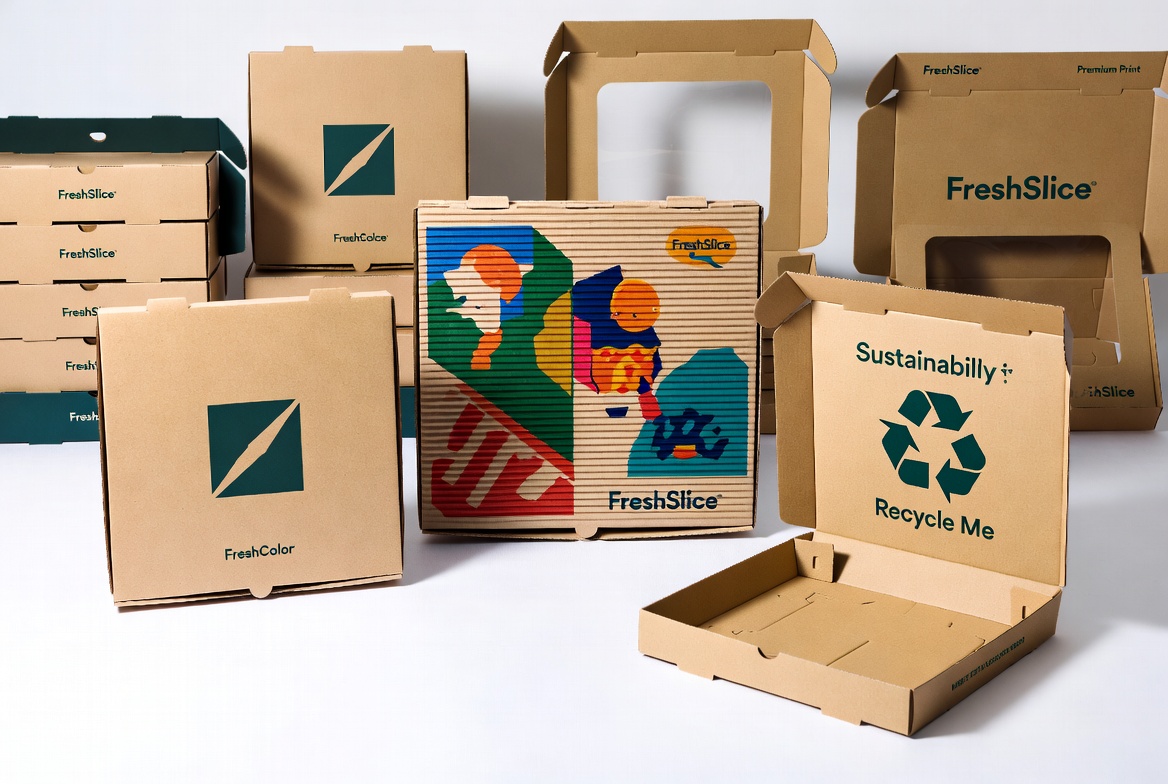
Pizza box dimensions should match the finished product, including its widest diameter, crust height, and toppings.
Do not assume that "small," "medium," or "large" means the same thing across suppliers. Likewise, a listed dimension may describe internal space, external measurements, or a nominal product size.
Pizza Box Size Planning Table
Use the following examples to begin a supplier discussion. They are planning references, not universal specifications.
| Pizza diameter | Nominal box size to discuss | What to verify |
| 10 inches | 10-inch pizza box | Usable internal width and crust clearance |
| 12 inches | 12-inch pizza box | Fit across several freshly baked pizzas |
| 14 inches | 14-inch pizza box | Sidewall clearance and base stability |
| 16 inches | 16-inch pizza box | Loaded stacking strength |
| 18 inches | 18-inch pizza box | Delivery bag fit and handling stability |
A nominal 12-inch box does not automatically guarantee the internal clearance your pizza requires. Ask for the finished internal length, width, and height.
Measure Real Pizzas, Not Just Menu Descriptions
Measure several pizzas during normal production. Hand-stretched dough and different topping combinations can produce variation.
Record:
- Maximum finished diameter.
- Maximum height, including toppings.
- Typical loaded weight.
- Space required by any liner or support.
- Dimensions of delivery bags and storage shelves.
The pizza should fit without being compressed. However, excessive empty space can allow movement during transport.
For deep-dish or heavily topped pizzas, lid clearance deserves particular attention. Confirm that the closed lid does not touch the food under the intended stacking load.
Pizza Box Materials: Corrugated Board, Kraft, and White Liners
A common purchasing mistake is treating "kraft" and "corrugated" as competing material categories.
Corrugated describes a construction: a fluted paper layer bonded between liners. Kraft describes a paper type or liner choice. A pizza box can therefore be both kraft and corrugated.
Corrugated Pizza Boxes for Delivery
Corrugated board provides a structure that can support the pizza and resist handling damage. Its performance depends on the complete specification, not simply its thickness.
Discuss:
- Liner and fluting grades.
- Board construction.
- Resistance to moisture-related weakening.
- Loaded compression performance.
- Folding and locking consistency.
A thicker board is not automatically the best option. The objective is sufficient performance without unnecessary material, storage, or freight costs.
Kraft and White Outer Liners
Brown kraft liners offer a natural-looking presentation. White outer liners can provide a different background for printed colors and detailed graphics.
Neither appearance proves food-contact suitability or environmental superiority.
Choose the outer liner for your visual requirements, then evaluate the food-facing liner, inks, adhesives, and any barrier treatment separately.
Grease Resistance Requires a Complete Specification
For oily pizzas, discuss whether the packaging needs a suitable grease-resistant liner or barrier.
Do not purchase by vague descriptions such as "premium food-grade cardboard." Ask what the material is intended to contact, under which temperature conditions, and for how long.
If a liner is added, include it in the packaging trial. It becomes part of the complete food-contact system.
Ventilation and Heat Retention: Finding the Right Balance
Hot pizza releases moisture. Packaging that retains too much steam can create condensation, while excessive ventilation can increase heat loss.
The challenge is balancing these effects for your menu and delivery operation.
Match Ventilation to the Pizza Style
Thin-crust pizzas, heavily topped pizzas, and deep-dish products may behave differently inside the same box.
Rather than assuming one vent arrangement works for everything, compare samples using representative products.
Observe:
- Condensation beneath the lid.
- Crust texture on arrival.
- Temperature at opening.
- Grease penetration.
- Lid and base deformation.
A visual inspection of an empty box cannot reveal these problems. The packaging must be evaluated with hot food inside.
Test the Box Inside the Delivery Bag
Delivery bags change the conditions around the box. A design that performs well on a countertop may behave differently inside an insulated carrier.
Use your normal delivery bag, stacking arrangement, and handling process during testing. Include a longer journey that still falls within your intended service window.
Packaging trials assess delivery quality; they do not replace applicable food-safety procedures.
A Practical Five-Step Pizza Box Testing Process
Before approving a large order, conduct a controlled comparison. This validation step connects the packaging specification to real operating conditions.
1. Define the Delivery Scenario
Select representative pizzas and document their diameter, weight, topping profile, and usual delivery duration.
Include the product most likely to challenge the box—not just the easiest pizza to package.
2. Compare Candidate Structures
Request samples with clearly documented differences.
For example, compare two board constructions or two ventilation layouts. Keep other variables consistent so the results remain useful.
3. Load and Transport Consistently
Use similar pizzas, handling methods, and delivery conditions for each candidate.
Test boxes individually and in the intended stack. Check whether the bottom box deforms or the upper boxes press the lid into toppings.
4. Record Results Against Agreed Criteria
| Test area | Observation | Approval question |
| Fit | Sidewall and lid contact | Does the pizza fit without compression? |
| Handling | Base sagging or movement | Can staff carry the loaded box securely? |
| Moisture | Condensation and softening | Does the structure remain serviceable? |
| Presentation | Topping displacement | Does the pizza arrive acceptably? |
| Assembly | Folding time and mislocks | Can staff assemble boxes consistently? |
Set acceptance criteria before reviewing results. This prevents attractive printing from distracting buyers from functional problems.
5. Approve the Final Printed Construction
A plain structural sample is useful, but it is not the entire finished product.
Confirm the production board, print system, coatings, and any liner. Retain an approved sample and specification for future comparison.
This workflow is a recommended evaluation method, not a claim that every configuration has already been tested by XingKun.
Food-Contact Safety and PFAS: What Buyers Should Check
Food-contact suitability depends on the complete packaging and its intended use. A general supplier statement should not replace product-specific documentation.
Ask for Market-Relevant Evidence
Before purchasing custom pizza boxes, request:
- Material identification and intended-use information.
- Supporting food-contact compliance documentation.
- Relevant testing where required.
- Ink, adhesive, and coating information.
- Batch traceability details.
- Confirmation of applicable temperature and contact-time limitations.
A report should correspond to the proposed construction. Evidence for a different coating or substrate may not adequately support your order.
Understand the U.S. PFAS Update
In February 2024, the U.S. Food and Drug Administration announced that PFAS-containing grease-proofing substances for paper and paperboard food packaging were no longer being sold by manufacturers into the U.S. market.
In January 2025, the agency determined that 35 related food contact notifications were no longer effective because those uses had been abandoned.
These developments concern specific grease-proofing uses. They should not be described as a universal ban covering every PFAS application.
For U.S. orders, also check destination-specific requirements. Ask suppliers to distinguish "no intentionally added PFAS" from broader absence claims and explain the evidence supporting their wording.
Printing Safety Goes Beyond the Food-Facing Surface
Ink components can potentially transfer through a substrate or by contact between printed and unprinted surfaces during stacking.
European food-contact requirements address the finished material, while industry guidance emphasizes suitable ink selection, manufacturing controls, and information sharing.
Keep standard decorative printing away from direct food contact unless the complete application has been specifically assessed.
Custom Printed Pizza Boxes That Support Your Brand
Custom pizza packaging should make your brand recognizable while remaining practical for staff and customers.
Build a Clear Design Hierarchy
Prioritize:
1. Brand name and logo.
2. A concise, distinctive message.
3. Ordering information or a useful QR code.
4. Clear disposal guidance.
A crowded lid can weaken readability. Reserve smaller side panels for secondary details rather than giving every element equal prominence.
Choose Printing Around the Actual Order
Discuss print quantity, artwork complexity, substrate, color expectations, and repeat-order requirements before selecting a process.
Ask for a proof that clearly identifies what it can verify. A digital artwork approval confirms layout, but may not reproduce the exact appearance of ink on the chosen board.
Where color consistency matters, agree on references and tolerances with the supplier.
Make QR Codes Useful
A QR code can connect customers to reordering, menu information, or a feedback form.
Test it on the finished printed sample. Confirm scanning under ordinary indoor lighting and check that the destination works smoothly on mobile devices.
Do not promise that printing a code will automatically increase repeat orders. Measure usage and customer behavior after launch.
Are Pizza Boxes Recyclable?
Many corrugated pizza boxes can be recycled after leftover food and non-paper accessories are removed.
Research highlighted by The Recycling Partnership found that typical grease and residual cheese do not prevent corrugated pizza box recycling.
However, collection rules vary. Coatings, liners, and mixed-material components can also affect acceptance.
For clearer customer instructions:
- Remove leftover pizza and crusts.
- Separate plastic supports and sauce containers.
- Check local recycling requirements.
- Avoid unsupported "100% recyclable everywhere" claims.
Recycled content and recyclability describe different things. Likewise, a brown appearance does not prove recycled content, and biodegradability does not establish suitability for a particular composting system.
Use environmental wording that matches documented material properties and the destination market's disposal infrastructure.
Compare Total Packaging Cost, Not Just Unit Price
The lowest quoted price may not produce the lowest operating cost.
Compare:
- Box price.
- Printing and tooling charges.
- Assembly labor.
- Freight and storage.
- Damage or rejection rates.
- Inventory tied up in slow-moving designs.
A custom shape may look distinctive but require more storage space or handling. A standardized structure may simplify purchasing across several locations.
For export orders, request packed carton dimensions, quantity per carton, shipment terms, and delivery timing. These details make quotations more comparable.
Start Your Custom Pizza Box Project with XingKun
The right pizza box combines reliable fit, appropriate materials, practical printing, and evidence relevant to its intended use.
Send Shenzhen XingKun Packing Products Co., Ltd. your pizza dimensions, estimated order volume, destination market, delivery conditions, and artwork.
Request a proposal covering the structure, material specification, print options, documentation, sample approval, and quotation terms. Evaluate the sample with your actual pizzas before confirming production.
Frequently Asked Questions About Pizza Boxes
What Size Box Should I Use for a 12-Inch Pizza?
Start by discussing a nominal 12-inch pizza box, then verify usable internal dimensions against actual baked pizzas. Confirm sidewall clearance, lid height, and delivery performance before ordering.
Is Kraft Better Than Corrugated Cardboard?
They are not mutually exclusive. Kraft can be used as a liner in corrugated board. Compare the complete construction, food-contact suitability, printing requirements, and tested performance.
Do Pizza Boxes Need Ventilation Holes?
Ventilation may help manage steam, but the best arrangement depends on the pizza and delivery conditions. Test candidate designs rather than assuming more holes always improve results.
Can Greasy Pizza Boxes Be Recycled?
Typical grease residue does not automatically prevent corrugated box recycling. Remove leftover food and non-paper items, then follow local collection guidance.
What Should I Send a Custom Pizza Box Manufacturer?
Provide finished pizza dimensions, order quantity, delivery conditions, destination market, artwork, and any required liner or barrier. Include the requested documentation and approval process.
Can I Use Any Printing Ink Inside a Pizza Box?
No. Direct food-contact printing requires a suitable, specifically assessed application. Standard decorative inks should not be assumed suitable for contact with hot, greasy food.
References
1. Custom Box Makers. "The Ultimate Guide to Pizza Boxes: Size, Material, And Customization." Original article supplied for restructuring. Used to identify the existing coverage and gaps; its size table and unsupported environmental suggestions were not adopted as universal guidance. [customboxmakers]
2. U.S. Food and Drug Administration. "FDA Announces PFAS Used in Grease-Proofing Agents for Food Packaging No Longer Being Sold in the U.S." February 28, 2024. Supports the discussion of the U.S. market phase-out of PFAS-containing grease-proofing substances. [fda]
3. U.S. Food and Drug Administration. "Authorized Uses of PFAS in Food Contact Applications." Supports the January 2025 determination concerning 35 food contact notifications, intended-use considerations, and the distinction between intentionally used substances and potential contamination. [fda]
4. European Printing Ink Association, EuPIA. "Guideline on Printing Inks Applied to Food Contact Materials." April 2020; first amendment May 2023. Supports the discussion of ink migration, set-off, intended applications, technical information, and supply-chain compliance responsibilities. [eupia]
5. The Recycling Partnership. "Pizza Box Recycling." Summarizes research on corrugated pizza box recyclability and explains that typical grease and residual cheese do not prevent recycling. Supports the recycling section, subject to local collection requirements. [recyclingpartnership]
6. American Forest & Paper Association. "Is a Pizza Box Recyclable?" October 23, 2025. Supports consumer instructions to remove leftover food, liners, plastic supports, and other non-paper accessories. [afandpa]


