Content Menu
● Introduction
● Why Display Stand Material Matters
● Main Display Stand Materials Compared
● When Cardboard Is the Best Choice
● When Acrylic Creates More Impact
● When Metal Is Worth the Investment
● When Wood or MDF Adds Value
● When Plastic Is the Practical Option
● How to Choose the Right Material
● Common Mistakes to Avoid
● Industry View From Manufacturing Practice
● Final Recommendation
● FAQ
>> 1. What is the most cost-effective display stand material?
>> 2. Which material is best for heavy products?
>> 3. Are cardboard display stands environmentally friendly?
>> 4. Is acrylic better than plastic for retail displays?
>> 5. How do I decide which material to use?
>> 6. Can display stands be customized for different industries?
● References
Introduction
A display stand is more than a product holder. It is a silent salesperson, a brand statement, and a practical retail tool that can influence how customers notice and interact with your products.
For retail promotions, the material matters as much as the structure itself. The right choice can improve visibility, support product weight, reduce shipping cost, and strengthen the shopping experience. The wrong choice can lead to waste, weak presentation, or higher replacement costs.
This guide compares the most common display stand materials in a clear and practical way. It also includes selection tips, common mistakes to avoid, and answers to frequently asked questions.
Why Display Stand Material Matters
Different materials create different results in store. Some are ideal for short-term promotions, while others are better for long-term fixtures.
Material choice affects:
- Durability: whether the stand can handle repeated use.
- Visual impact: how premium, modern, or eye-catching it looks.
- Load capacity: how well it supports the product.
- Shipping efficiency: how easy it is to pack, transport, and store.
- Sustainability: whether it can be reused or recycled.
A good display stand should fit the product and the retail setting. It should not only look attractive, but also work well in real store conditions.
Main Display Stand Materials Compared
Each material has its own strengths. The best choice depends on the purpose of the promotion.
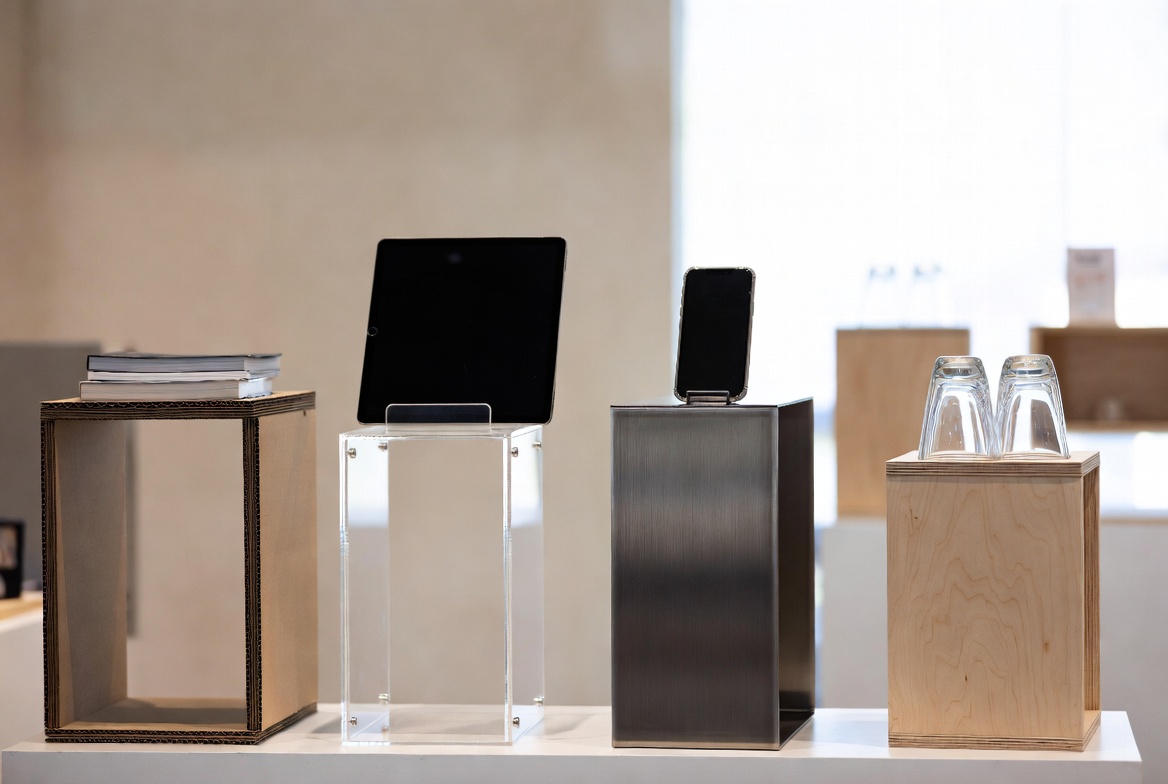
| Material | Best For | Main Strengths | Main Limitations |
| Corrugated cardboard | Temporary promotions, seasonal campaigns, fast-moving consumer goods | Lightweight, low cost, easy to print, recyclable | Less durable, weaker against moisture |
| Acrylic | Cosmetics, electronics, jewelry, countertop displays | Clear, modern, polished appearance | Can scratch easily, not ideal for rough handling |
| Metal | Heavy products, long-term displays, high-traffic stores | Strong, durable, reusable | Heavier, usually more expensive |
| Wood / MDF | Premium retail, boutique brands, natural-product displays | Warm look, strong brand character | Heavier, may need more finishing care |
| Plastic | Flexible promotions, damp environments, budget-friendly displays | Lightweight, moldable, practical | Can look less premium, sustainability varies |
For many retail promotions, cardboard is the most efficient choice. For premium displays, acrylic, wood, or metal may create a stronger impression.
When Cardboard Is the Best Choice
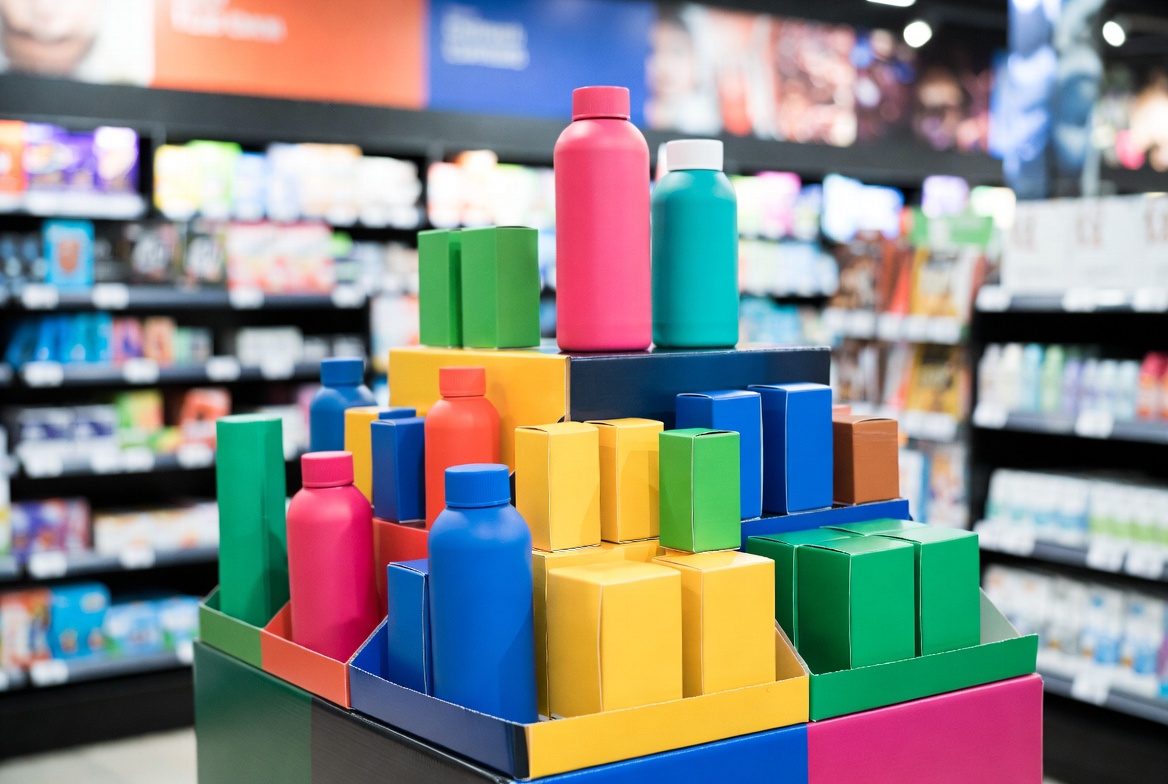
Corrugated cardboard is one of the most practical materials for short-term retail promotions. It is often used for product launches, holiday campaigns, supermarket promotions, and temporary point-of-sale displays.
Its biggest advantages are speed and cost control. Cardboard display stands are easy to produce in large quantities, ship flat, and assemble quickly in-store. They also allow vivid printing, which makes them ideal for eye-catching retail graphics.
Cardboard works best when:
- The promotion lasts only a short time.
- The products are light or medium-weight.
- The brand wants strong print visibility.
- Cost and shipping efficiency are important.
- The display should be recyclable after use.
For exporters and brand owners managing multiple retail locations, cardboard often offers the best balance between performance and practicality.
When Acrylic Creates More Impact
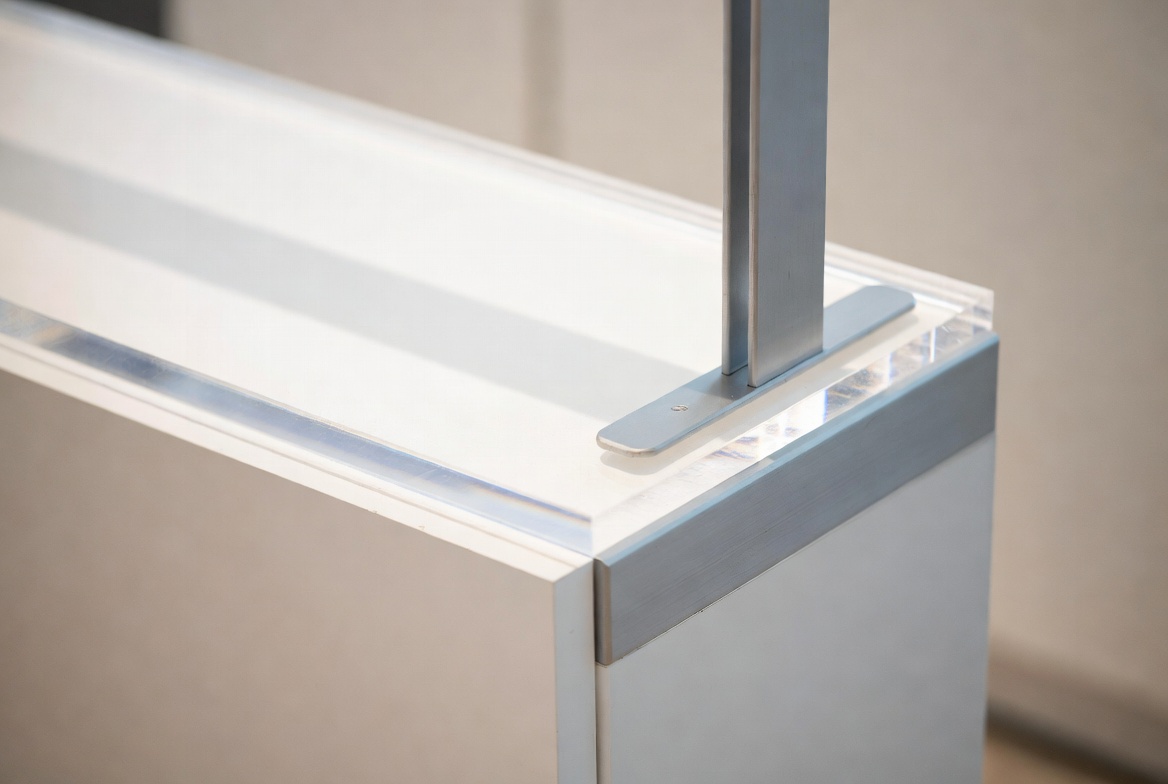
Acrylic is a strong choice for products that need a clean and premium look. It is commonly used in beauty counters, electronics displays, and product showcases where transparency helps the product stand out.
This material gives a neat and polished appearance. It works well when the display itself should stay visually quiet while the product remains the focus.
Acrylic is a good fit when:
- The brand wants a modern and refined image.
- The display will stay indoors.
- The products are small or visually appealing.
- Reuse matters more than low initial cost.
The main drawback is that acrylic can scratch more easily than metal or wood. It is best suited to controlled retail environments with careful handling.
When Metal Is Worth the Investment
Metal is the most suitable choice for strong, reusable, and long-lasting retail displays. It is often used in stores that need to support heavier products or high foot traffic.
Although it usually costs more at the start, metal can offer better value over time because it lasts longer and can be reused across multiple campaigns.
Metal is ideal for:
- Heavy products.
- Long-term retail installations.
- High-traffic store environments.
- Modular display systems.
- Promotions that need repeated setup and takedown.
If the display must survive frequent use, metal is often the safest and most durable option.
When Wood or MDF Adds Value
Wood and MDF are commonly chosen for displays that need a warm, natural, or premium appearance. These materials are often used by boutique brands, artisan products, organic goods, and specialty retailers.
Wood creates a more authentic and crafted feel. MDF is often used when a similar visual effect is needed at a lower cost.
Wood or MDF is a strong choice when:
- The brand story emphasizes craftsmanship.
- The display should feel natural or upscale.
- The retail environment uses warm textures.
- The display may be reused more than once.
The main trade-off is weight and maintenance. These materials are usually heavier than cardboard and may need more care in transport and storage.
When Plastic Is the Practical Option
Plastic display stands are useful when flexibility and moisture resistance are important. They are often seen in supermarkets, promotional counters, and environments where the display may need frequent cleaning.
Plastic can be shaped in many ways, which makes it flexible for custom designs. It is also lightweight and practical for transport.
Plastic is worth considering when:
- The display needs custom molded shapes.
- The environment is humid or frequently cleaned.
- The budget is limited, but cardboard is not strong enough.
- A reusable display is needed at moderate cost.
Plastic may not create the same premium feeling as acrylic, wood, or metal, but it can be a smart choice for practical retail use.
How to Choose the Right Material
The best way to choose a display stand material is to match it to the campaign goal. A display that works well for one promotion may be a poor fit for another.
Use this simple process:
1. Define the campaign length.
Short-term promotions often suit cardboard, while long-term installations usually need metal, wood, or acrylic.
2. Check the product weight.
Lightweight products can use cardboard or acrylic, while heavier products need stronger support.
3. Consider the brand style.
Premium brands often prefer acrylic or wood, while value-driven campaigns may favor cardboard or plastic.
4. Review the store environment.
Moisture, cleaning frequency, and customer traffic all affect material performance.
5. Think about recycling or reuse.
Reusable and recyclable materials may reduce waste and improve overall value.
This approach helps buyers avoid choosing a material based only on appearance or price.
Common Mistakes to Avoid
Many retail teams make avoidable mistakes when selecting display materials.
Some common problems include:
- Choosing the cheapest material without checking durability.
- Using cardboard for a heavy product.
- Selecting a premium material for a very short campaign.
- Ignoring the store environment.
- Overlooking shipping and assembly requirements.
- Forgetting disposal or recycling needs.
A well-chosen display stand should support the campaign from production to in-store use. It should be visually effective, operationally simple, and commercially sensible.
Industry View From Manufacturing Practice
From a manufacturing perspective, the best display stand is the one that matches the lifecycle of the promotion.
For example:
- A seasonal snack promotion may perform best with corrugated cardboard.
- A beauty counter may benefit more from acrylic.
- A hardware or beverage display may need metal.
- A boutique brand may prefer wood or MDF for storytelling.
In real projects, material choice affects both customer attention and store operations. A display that looks attractive but breaks quickly creates problems for retailers. A display that is durable but unattractive may fail to drive interest. The most effective option usually balances both sides.
Final Recommendation
There is no single best display stand material for every retail promotion. The right choice depends on what you are selling, how long the display will be used, and how it should look in the store.
As a general rule:
- Choose cardboard for short-term, high-volume, and cost-sensitive promotions.
- Choose acrylic for premium product presentation.
- Choose metal for strength and long-term use.
- Choose wood or MDF for natural, warm, or boutique branding.
- Choose plastic for flexible and practical applications.
If you want the display to support both brand presentation and retail performance, the material should be selected early in the planning stage, not at the final production stage.
If you are planning a retail promotion and need a custom display stand solution, work with a manufacturer that can balance structure, printing quality, packaging, and retail presentation in one production process.
FAQ
1. What is the most cost-effective display stand material?
Corrugated cardboard is usually the most cost-effective choice for short-term retail promotions because it is lightweight, printable, and easy to produce at scale.
2. Which material is best for heavy products?
Metal is usually the best choice for heavy products because it offers strong structural support and long-term durability.
3. Are cardboard display stands environmentally friendly?
Cardboard display stands are often considered a more environmentally friendly option when they are made with recyclable materials and designed for recovery after use.
4. Is acrylic better than plastic for retail displays?
Acrylic usually looks more premium and clear, while plastic is often chosen for flexibility, practical use, and lower cost.
5. How do I decide which material to use?
Start with the campaign duration, product weight, brand image, store environment, and budget. Then choose the material that best fits those needs.
6. Can display stands be customized for different industries?
Yes. Display stands can be customized in size, shape, color, structure, and printing to suit many industries, including cosmetics, electronics, food, hardware, and more.
References
1. [What is the best material for display stands?]
2. [Top 5 Display Stand Materials and Their Benefits]
3. [Choosing Materials for Retail Displays]
4. [Best Eco-Friendly Display Stands: Sustainable Choices for Retailers]
5. [Are Cardboard Display Stands Eco-Friendly?]
6. [Point of Sale Displays London]
7. [Point of Sale Solutions]


