Content Menu
● Understanding Cardboard and Acrylic Display Stands
● Why This Decision Matters for Retailers
● Key Differences at a Glance
>> Comparison of Cardboard vs Acrylic Display Stands
● Durability and Lifespan in Real Retail Environments
● Visual Merchandising Impact and Brand Perception
● Cost, ROI, and Budget Planning
● Sustainability and Environmental Considerations
● Ease of Logistics, Assembly, and Store Operations
● Practical Use Cases: When Cardboard Shines
● Practical Use Cases: When Acrylic Is the Better Choice
● Expert Framework: How to Choose the Right Display for Your Store
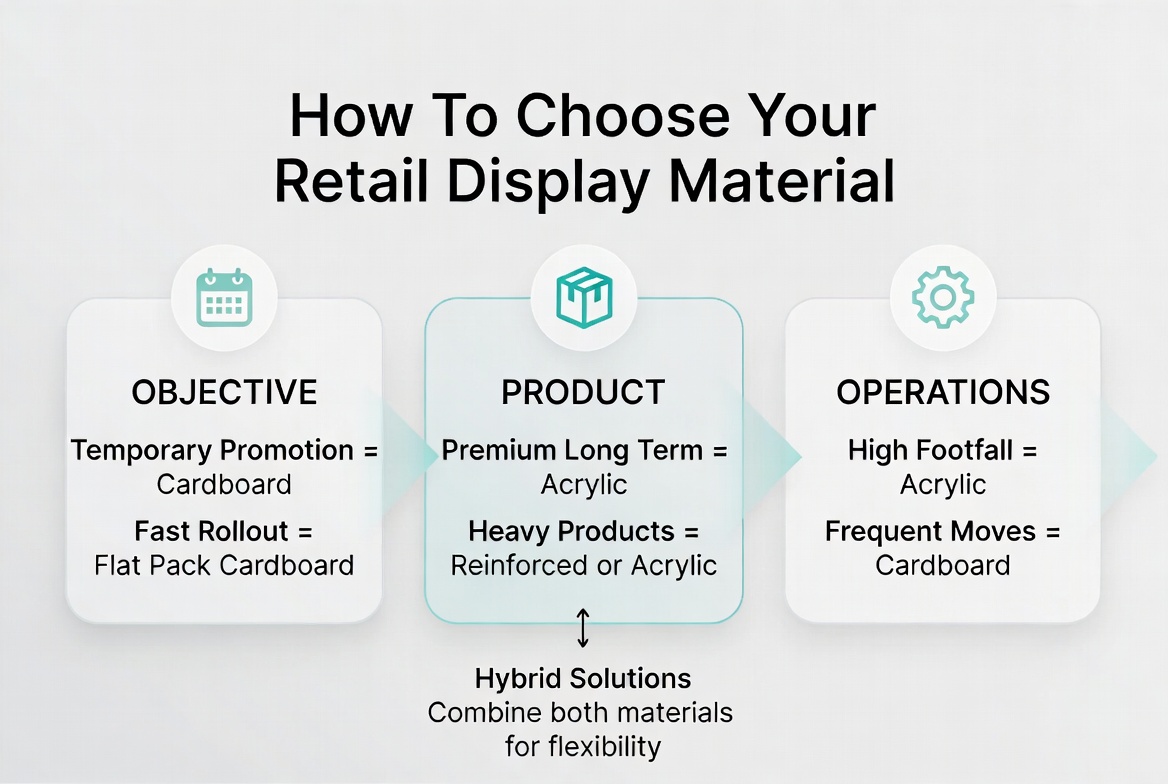
>> Step 1: Define the Display Objective
>> Step 2: Evaluate Product Characteristics
>> Step 3: Factor in Store Operations and Budget
● Emerging Trends and Hybrid Solutions
● How an Experienced Manufacturer Adds Value
● Which Is Better for Retail Stores?
● Frequently Asked Questions (FAQ)
● References
If you run a retail store today, both cardboard display stands and acrylic display stands can boost sales—but the "better" option depends on your goals, budget, and how long you need the display to work on the shop floor. Drawing on more than 20 years of experience in printing and packaging at Shenzhen XingKun Packing Products Co., Ltd., this guide walks you through a practical, expert-level comparison to help you choose confidently. [theimaginegroup]
Understanding Cardboard and Acrylic Display Stands
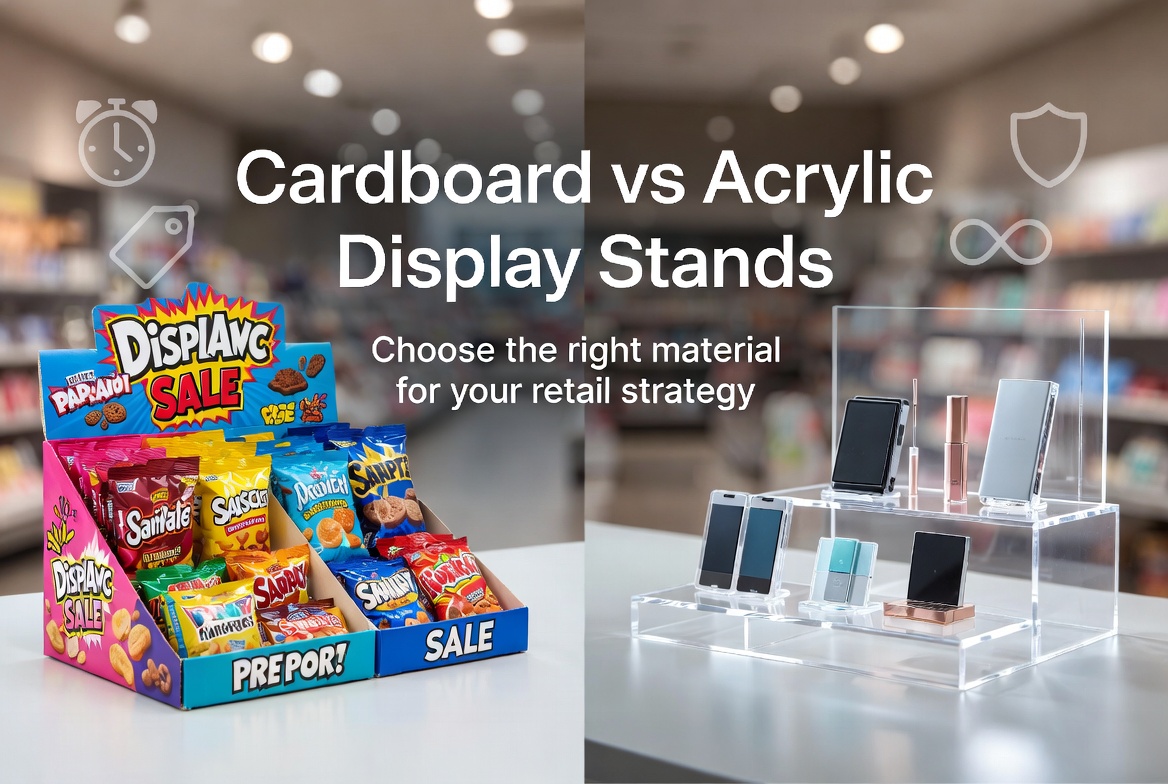
Cardboard display stands (often corrugated cardboard) are typically used as temporary or semi-permanent retail fixtures for promotions, seasonal campaigns, and product launches. Acrylic display stands, by contrast, are rigid plastic structures, usually transparent or colored, used as permanent or long-term fixtures to showcase products in a premium, tidy way. [wowpopdisplay]
Cardboard displays are widely used in supermarkets, convenience stores, and FMCG promotions because they are lightweight, easy to assemble, and cost-effective. Acrylic stands are popular in cosmetics, electronics, luxury goods, and specialty retail where visual clarity and perceived value are key. [grandfly]
Why This Decision Matters for Retailers
Choosing between cardboard and acrylic is not just a materials decision—it directly affects merchandising impact, lifecycle cost, and sustainability performance. The wrong choice can mean stands that wear out too quickly, fail to support the product weight, or do not align with brand positioning. [creativedisplaysnow]
From a retail strategy perspective, the purpose of the display—short-term promotion vs long-term merchandising—is the starting point. As a commercial print and packaging partner, we often begin by asking clients: "Is this display temporary or permanent, and what customer behavior do you want to influence?" [theimaginegroup]
Key Differences at a Glance
Comparison of Cardboard vs Acrylic Display Stands
| Factor | Cardboard Display Stands | Acrylic Display Stands |
| Typical usage | Temporary or semi-permanent promotions, seasonal campaigns (theimaginegroup) | Permanent or long-term merchandising, premium product display (wowpopdisplay) |
| Visual style | Fully printable surfaces, high-impact graphics, branding-heavy (grandfly) | Clean, transparent or colored, minimalist premium look (wowpopdisplay) |
| Durability | Moderate; sensitive to moisture and heavy impact (otarapack) | High; more resistant to impact and long-term use than cardboard (wowpopdisplay) |
| Customization | Flexible shapes, sizes, and print finishes; easy to change frequently (grandfly) | Custom shapes possible but more costly; better for standardized modules (wowpopdisplay) |
| Sustainability | Recyclable and often made from paper-based materials (otarapack) | Longer lifespan but petroleum-based plastic; recycling depends on local systems (wowpopdisplay) |
| Cost | Low upfront cost; ideal for large-scale campaigns (grandfly) | Higher upfront cost; better ROI over long-term use (wowpopdisplay) |
| Assembly and logistics | Flat-packed, lightweight, low shipping cost, quick to assemble (otarapack) | Pre-assembled or semi-assembled, higher protection needs in transport (wowpopdisplay) |
| Branding flexibility | Full-surface printing, seasonal design refreshes easily (grandfly) | Limited printed area; branding often via decals or attached panels (wowpopdisplay) |
| Typical sectors | FMCG, snacks, beverages, personal care, promotional islands (otarapack) | Cosmetics, jewelry, electronics, premium accessories (wowpopdisplay) |
Durability and Lifespan in Real Retail Environments
Acrylic display stands generally offer greater structural durability than cardboard because they resist bending, crushing, and everyday handling better. Retailers using acrylic in cosmetics or electronics often keep the same stands in use for months or years, changing only the product assortment and signage. [apexstoresolutions]
Cardboard stands are more vulnerable to moisture, rough handling, and heavy loads, so they are usually specified for campaigns with a defined timeframe—such as 4–12 weeks in supermarkets. However, modern corrugated structures and reinforced designs can significantly extend lifespan when they are used indoors and handled correctly. [otarapack]
From a practical standpoint, if your store environment involves frequent cleaning, high humidity, or heavy products, acrylic or reinforced hybrid solutions may be more reliable. [apexstoresolutions]
Visual Merchandising Impact and Brand Perception
In-store displays must grab attention quickly because most shoppers make decisions in seconds. Cardboard stands excel here by allowing bold, full-color graphics, large brand logos, and promotional messages printed directly on the structure. [gadsby.co]
Acrylic displays rely more on product visibility and lighting rather than printed graphics. Clear acrylic allows products to appear "floating" or framed by minimal structures, which works especially well for cosmetics, jewelry, and premium accessories. [wowpopdisplay]
From a brand perception angle:
- Cardboard stands support campaign-driven storytelling (e.g., seasonal themes, co-branded promotions, limited editions). [grandfly]
- Acrylic stands signal permanent brand presence and premium positioning, especially when paired with lighting and high-quality graphics panels. [apexstoresolutions]
Cost, ROI, and Budget Planning
Cardboard displays typically involve lower upfront unit costs, particularly when produced at scale and flat-packed for shipping. This makes them ideal for nationwide promotions or frequent design refreshes where cost per campaign must stay tight. [chinese.alibaba]
Acrylic stands require higher initial investment because of material cost and fabrication complexity. However, when used as permanent fixtures, retailers can amortize this cost over a longer period, making acrylic cost-effective on a per-month basis. [wowpopdisplay]
A practical budgeting approach we recommend to clients is:
1. Assign temporary promotions (1–3 months) to cardboard displays.
2. Assign core ranges and hero products to acrylic or other long-life structures. [creativedisplaysnow]
This hybrid strategy balances flexibility, cost control, and long-term brand consistency.
Sustainability and Environmental Considerations
Sustainability is increasingly a decision driver for retailers and brands. Corrugated cardboard displays are typically made from paper-based materials and are recyclable in standard paper streams in many markets. They also support responsible sourcing through certifications like FSC, when specified. [otarapack]
Acrylic is a petroleum-based plastic, and while it has a longer usable lifespan, its end-of-life recycling options are more limited and often depend on local specialty recyclers. For brands with strict sustainability KPIs, this trade-off must be weighed against the durability and premium look benefits of acrylic. [otarapack]
In practice, many retailers adopt a mixed strategy: use recyclable cardboard for campaign-heavy secondary placements and reserve acrylic for high-value, long-life fixtures where replacement frequency is low. [theimaginegroup]
Ease of Logistics, Assembly, and Store Operations
Cardboard displays are designed to ship flat, minimizing volume and shipping cost, and can often be assembled in-store by staff in a few minutes using pre-cut slots and tabs. This is especially valuable in large campaigns where hundreds of stands must be deployed quickly. [chinese.alibaba]
Acrylic displays usually ship as pre-assembled or partially assembled units, requiring careful packaging and handling to prevent scratches and damage. Store staff may need more time to set them up, especially if they integrate lighting or metal fixtures. [wowpopdisplay]
From an operations standpoint:
- If you rely heavily on field merchandisers or store staff with limited time, cardboard can reduce friction in deployment. [creativedisplaysnow]
- If your fixtures are part of a long-term store redesign, acrylic's one-time setup can be justified. [apexstoresolutions]
Practical Use Cases: When Cardboard Shines
Cardboard display stands are particularly effective in the following scenarios:
- Short-term promotions and product launches: FMCG brands use cardboard floor displays and endcap units to highlight new flavors, seasonal SKUs, or bundled offers. [otarapack]
- Impulse areas and checkout zones: Lightweight, compact cardboard units are easy to rotate in and out of high-traffic spots to test new offers. [gadsby.co]
- Trade shows and pop-up events: Portable, brand-heavy cardboard displays support quick install and dismantling, often with unique shapes and die-cuts. [grandfly]
Because cardboard is so printing-friendly, it's also ideal for complex storytelling and multi-panel messaging where you want every surface to work as a communication channel. [gadsby.co]
Practical Use Cases: When Acrylic Is the Better Choice
Acrylic display stands are strong performers when:
- You need long-term, stable fixtures that match store fittings and survive daily traffic and cleaning. [wowpopdisplay]
- You sell high-margin, visually-driven products like cosmetics, electronics, jewelry, accessories, or collectibles. [apexstoresolutions]
- You want to leverage lighting, transparency, and modern aesthetics to elevate perceived value. [wowpopdisplay]
Retailers often use acrylic for tiered stands, risers, and product organizers on counters, shelves, and within locked cabinets, where clarity and product visibility matter more than printed graphics. [apexstoresolutions]
Expert Framework: How to Choose the Right Display for Your Store
Drawing from industry best practices, a structured decision framework helps retailers avoid trial and error. [theimaginegroup]
Step 1: Define the Display Objective
Ask these key questions before choosing a material:
- Is this display for a limited-time promotion or a permanent product line? [theimaginegroup]
- Do you want to drive impulse purchases, highlight premium positioning, or educate customers? [creativedisplaysnow]
- Where will the display stand (entrance, aisle, checkout, cosmetics area), and how much traffic and touching will it face? [creativedisplaysnow]
These answers usually indicate whether temporary cardboard or permanent acrylic is better aligned with your goals. [theimaginegroup]
Step 2: Evaluate Product Characteristics
Consider:
- Product weight and size (heavy items may need acrylic or reinforced structures) [otarapack]
- Required visibility (transparent acrylic vs fully printed cardboard) [grandfly]
- Need for modular reconfiguration (acrylic risers and trays vs single-piece cardboard units) [wowpopdisplay]
Step 3: Factor in Store Operations and Budget
Balance:
- Installation time and complexity for store staff or merchandisers. [otarapack]
- Budget for initial rollout and ongoing refreshes (campaign frequency). [grandfly]
- Sustainability expectations from your brand and retail partners. [grandfly]
Emerging Trends and Hybrid Solutions
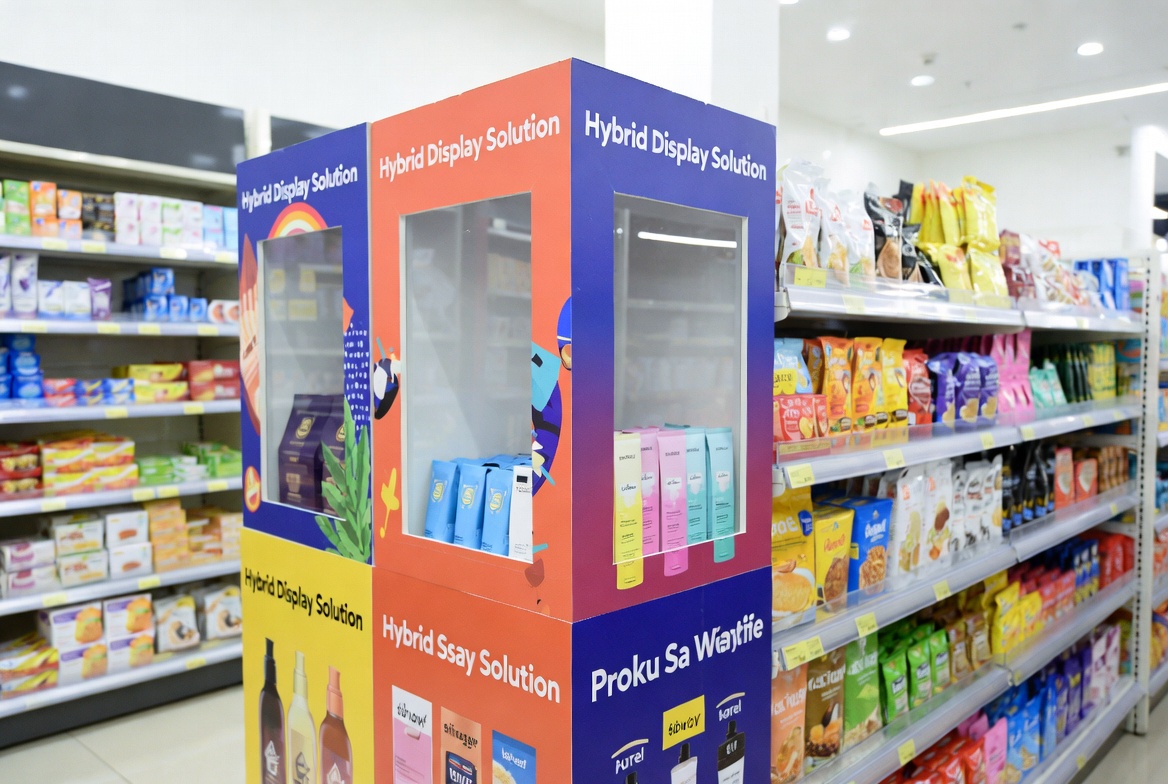
Recent retail trends show a rise in hybrid display solutions, combining materials to capture the strengths of both cardboard and acrylic. [gadsby.co]
Examples include:
- Cardboard floor stands with acrylic shelves or windows, providing structural clarity while maintaining printed branding. [otarapack]
- Acrylic countertop units with interchangeable cardboard back panels, allowing campaigns to change while the main structure stays in place. [grandfly]
This approach delivers design flexibility, cost control, and visual impact, and it aligns with retailers who want both sustainable options and premium aesthetics. [theimaginegroup]
How an Experienced Manufacturer Adds Value
As a printing and packaging manufacturer with over 20 years of experience serving brands and distributors in more than 30 countries, Shenzhen XingKun Packing Products Co., Ltd. supports clients from concept to delivery with:
- Material consulting: Matching cardboard or acrylic (or hybrid) structures to your retail strategy, product type, and budget.
- Structural engineering: Ensuring stands hold the required load and withstand real-world store conditions.
- Graphic production and printing: High-impact, brand-consistent artwork optimized for both cardboard and rigid substrates.
- Global logistics support: Flat-packing and kitting programs that align with retailer rollouts.
Our role is to help you choose the best-fit display solution, not just a single material.
Which Is Better for Retail Stores?
There is no one-size-fits-all winner; instead, the best choice depends on your timeframe, brand positioning, and operational reality. [creativedisplaysnow]
Use this simplified decision rule:
- Choose cardboard display stands if you want cost-effective, highly branded, easily changeable structures for short to mid-term campaigns.
- Choose acrylic display stands if you need durable, premium-looking, reusable fixtures for long-term merchandising and high-value products.
Many successful retailers combine both: cardboard for campaign agility, acrylic for permanent brand presence. [otarapack]
Frequently Asked Questions (FAQ)
1. Are cardboard display stands strong enough for heavy products?
Cardboard stands can be engineered with reinforced corrugated structures to support moderate weights, but for very heavy products, acrylic or metal components may be safer. [wowpopdisplay]
2. Do acrylic display stands scratch easily?
Acrylic is more scratch-prone than glass, so it requires appropriate cleaners and non-abrasive cloths; however, in retail practice it still offers good long-term clarity when maintained correctly. [reddit]
3. Can cardboard and acrylic displays be customized for brand guidelines?
Yes. Cardboard allows full-surface printing for color, logos, and messages, while acrylic customizations often involve shaped structures, colored panels, decals, and printed backboards. [grandfly]
4. How often should retailers refresh their display stands?
Temporary cardboard displays often align with campaign cycles (e.g., seasonal or quarterly), while acrylic fixtures can remain in place for years, with only graphics and products updated. [creativedisplaysnow]
5. Which option is more environmentally friendly?
Cardboard is widely recyclable and often contains recycled content, making it a strong fit for many sustainability strategies, while acrylic's advantage lies more in its long usable life than its recyclability. [wowpopdisplay]
References
1. Grand Fly Display – "A Buyer's Guide to Choosing the Right Cardboard Displays for Your Business" (2025)
https://grandfly.com/a-buyers-guide-to-choosing-the-right-cardboard-displays-for-your-business/ [grandfly]
2. Otarapack – "The Four Common Types of Display Stands" (2025)
https://www.otarapack.com/blogs/blog/the-four-common-types-of-display-stands [otarapack]
3. The Imagine Group – "How to Choose the Right In-Store Displays" (2023)
https://www.theimaginegroup.com/insights/choosing-the-right-in-store-displays [theimaginegroup]
4. Creative Displays Now – "Best Practices for Setting Up Retail Displays" (2024)
https://www.creativedisplaysnow.com/how-to-set-up-a-retail-display-stand-the-right-way/ [creativedisplaysnow]
5. WOW POP Display – "How to Pick the Perfect Acrylic Display Stand" (2023)
https://www.wowpopdisplay.com/resources/how-to-pick-the-perfect-acrylic-display-stand.html [wowpopdisplay]
6. Jayi Acrylic – "Acrylic Boxes vs Cardboard Boxes: Which Is Better for Retail Display?" (2024)
https://www.jayiacrylic.com/news/acrylic-boxes-vs-cardboard-boxes-which-is-better-for-retail-display/ [jayiacrylic]
7. Gadsby – "Cost-Effective Retail Display Ideas" (2025)
https://www.gadsby.co.uk/blog/cost-effective-retail-display-ideas [gadsby.co]
8. Apex Display – "9 Tips for Choosing Retail Displays (& 3 examples)"
https://apexdisplay.com.au/9-tips-for-choosing-retail-displays-3-examples/ [apexdisplay.com]
9. Customized Cardboard Display Stand Listing – Alibaba
https://chinese.alibaba.com/product-detail/Customized-Cardboard-Display-Stand-Easy-Assembly-1601433073472.html [chinese.alibaba]
10. Comparative Analysis of Acrylic and Glass Cosmetic Display Stands – Apex Store Solutions (2025)
https://www.apexstoresolutions.com/news/comparative-analysis-of-acrylic-and-glass-cosmetic-display-stands/ [apexstoresolutions]


