Content Menu
● Aluminum vs. Stainless Steel Nameplates at a Glance
● Aluminum Nameplates: Lightweight Identification with Flexible Design
>> What Anodizing Adds
>> Printed Aluminum and Photosensitive Aluminum Are Different
● Stainless Steel Nameplates: Grade Selection Comes First
>> 304 vs. 316 Stainless Steel Nameplates
>> Surface Finish and Installation Geometry Matter
● Outdoor Nameplates: Separate Metal Durability from Graphic Durability
● Match the Marking Process to the Information
>> Etching and Engraving
>> Printing and Laser Marking
● Attachment Can Determine Nameplate Service Life
>> Adhesive Mounting
>> Mechanical Mounting and Dissimilar Metals
● A Five-Step Nameplate Validation Plan
>> Step 1: Describe the Real Environment
>> Step 2: Define What Must Remain Readable
>> Step 3: Obtain Production-Equivalent Samples
>> Step 4: Test Relevant Exposure Combinations
>> Step 5: Agree on Acceptance Criteria
● Three Practical Material-Selection Scenarios
>> Lightweight Electronic Equipment
>> Coastal Machinery
>> Frequently Cleaned Process Equipment
● Compare Total Cost, Not Just Unit Price
● Specify Your Next Custom Nameplate with Confidence
● Frequently Asked Questions
>> Are aluminum nameplates suitable for outdoor use?
>> Is 316 stainless steel always necessary?
>> Can stainless steel nameplates rust or stain?
>> Which material is better for barcodes and QR codes?
>> How long will a metal nameplate last?
>> What should I provide when requesting a quotation?
● References
Choosing between aluminum vs. stainless steel nameplates starts with one question: what must remain readable throughout your product's working life? Aluminum often suits lightweight equipment identification and colorful branding. Stainless steel frequently suits demanding mechanical environments, but neither material guarantees lasting performance without the right finish, marking process, and attachment.
At Shenzhen XingKun Packing Products Co., Ltd., we bring more than 20 years of printing and packaging manufacturing experience to custom nameplates and other printed products. We serve brands and distributors across more than 30 countries and regions.
Our recommendation is to evaluate the complete identification system—not simply the metal. A plate can remain intact while its lettering fades, its adhesive lifts, or its barcode becomes unreadable.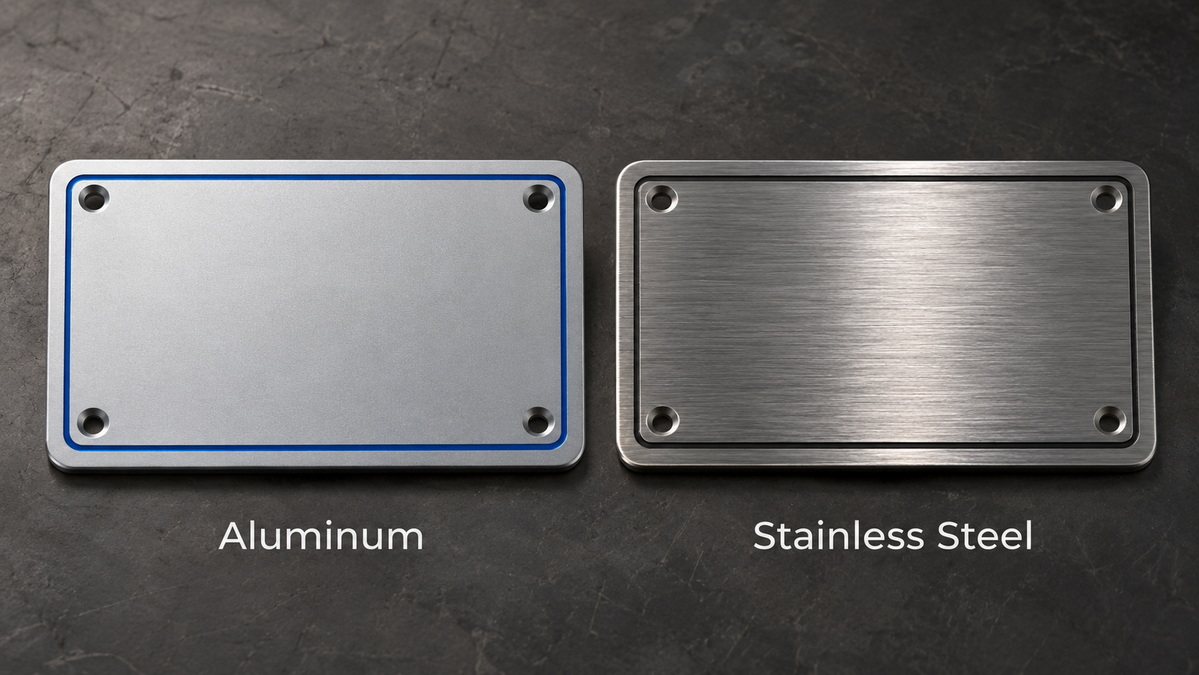
Aluminum vs. Stainless Steel Nameplates at a Glance
The following comparison provides a starting point, not a substitute for application testing.
| Selection factor | Aluminum nameplates | Stainless steel nameplates |
| Weight | Lightweight; useful where added mass matters | Heavier for equivalent dimensions |
| Mechanical performance | Easy to fabricate; thin plates can dent | Often preferred for demanding mechanical exposure |
| Corrosion considerations | Alloy, anodizing, sealing, and environment matter | Grade, finish, chlorides, and crevices matter |
| Graphics | Suitable for printing, anodizing, engraving, and specialized photographic processes | Suitable for etching, engraving, laser marking, and printing |
| Outdoor readability | Depends on the complete finish and image system | Depends on marking method and any added color |
| Purchasing priorities | Confirm coating, graphics, and attachment | Confirm grade, surface finish, and marking depth |
The most useful comparison is between two complete specifications. "Aluminum" and "stainless steel" alone leave too many performance variables undefined.
Aluminum Nameplates: Lightweight Identification with Flexible Design
Aluminum nameplates are worth considering when weight, visual flexibility, and fabrication efficiency are important.
They suit equipment identification plates, control-panel overlays, asset tags, and branded product badges. Their relatively low weight also helps when producing large quantities of labels or attaching plates to lightweight housings.
What Anodizing Adds
Anodizing creates a protective aluminum oxide layer through an electrochemical process. This layer can incorporate color, and appropriate sealing helps protect the finished surface.
However, anodized aluminum is not one uniform product.
Coating thickness, dye selection, sealing quality, and operating conditions all influence performance. Some dyes lose color under sunlight, so a vivid indoor sample does not establish outdoor suitability.
For outdoor aluminum nameplates, ask the supplier to identify the finish system and explain its supporting exposure evidence.
Printed Aluminum and Photosensitive Aluminum Are Different
Surface-printed graphics and photosensitive anodized aluminum should not be treated as interchangeable.
In specialized photosensitive aluminum systems, the image is formed within the anodic layer and sealed. This differs from placing ink on top of the finished metal.
That distinction matters for serialized equipment plates and machine-readable codes exposed to abrasion or cleaning.
Nevertheless, evidence for a proprietary photographic material cannot automatically support claims about ordinary printed aluminum. Specify the exact process rather than requesting only a "durable aluminum label."
Stainless Steel Nameplates: Grade Selection Comes First
Stainless steel nameplates are often considered for machinery, process equipment, and locations where mechanical damage or aggressive cleaning may threaten identification.
Their corrosion resistance comes from a chromium-rich passive surface film. This protection is effective in many environments, but stainless steel is not corrosion-proof.
304 vs. 316 Stainless Steel Nameplates
Grade 304 is widely used for general-purpose applications. Grade 316 contains molybdenum, which improves resistance to pitting and crevice corrosion in chloride-containing environments.
For coastal equipment or salt exposure, 316 may be a more suitable starting point than 304. It is not a guarantee against corrosion.
Temperature, deposited salts, cleaning practices, finish, and trapped moisture can change the outcome. Continuous seawater exposure requires a more demanding assessment than occasional coastal spray.
A purchase order stating only "stainless steel" leaves this important decision unresolved.
Surface Finish and Installation Geometry Matter
A suitable grade can still perform poorly when water collects behind the plate or contamination remains on its surface.
Consider the entire assembly:
- Can moisture drain away?
- Will cleaning chemicals remain around fasteners?
- Are there narrow gaps that trap contaminants?
- Could fabrication introduce carbon-steel contamination?
- Can maintenance staff clean the installed plate?
The buying question is not simply whether stainless steel lasts longer. It is whether the selected grade, finish, and installation suit the actual exposure.
Outdoor Nameplates: Separate Metal Durability from Graphic Durability
One common purchasing mistake is treating a sound metal substrate as proof of lasting readability.
An outdoor plate must withstand several different challenges:
- Sunlight affecting inks or dyes.
- Abrasion reducing contrast.
- Chemicals attacking graphics or coatings.
- Moisture affecting the metal or attachment.
- Dirt obscuring small text and codes.
Stainless steel itself is not generally selected against because it "lacks UV resistance." The more relevant concern is how sunlight affects the plate's graphics, paint fills, coatings, or adhesive.
Likewise, anodizing does not make every aluminum color permanently fade-resistant.
For both materials, request evidence for the finished construction—not just the base metal.
Match the Marking Process to the Information
A decorative logo and a permanent serial number may need different treatments, even on the same plate.
Etching and Engraving
Etching removes material chemically, while engraving cuts into the surface mechanically or through an appropriate laser process.
Recessed information can remain physically present after surface color wears away. However, remaining present is not the same as remaining easy to read.
If contrast depends on paint filling the recesses, assess that paint separately. Confirm that character size, depth, and contrast suit the intended viewing conditions.
Printing and Laser Marking
Printing offers flexibility for brand colors and detailed artwork. Its durability depends on ink chemistry, preparation, curing, protection, and exposure.
Laser marking also describes several different results. A shallow surface mark and a deeper engraved mark may respond differently to abrasion and cleaning.
For barcode nameplates, require verification on production-equivalent samples. A code that scans before installation may become unreliable after glare, dirt, chemical wiping, or wear changes its appearance.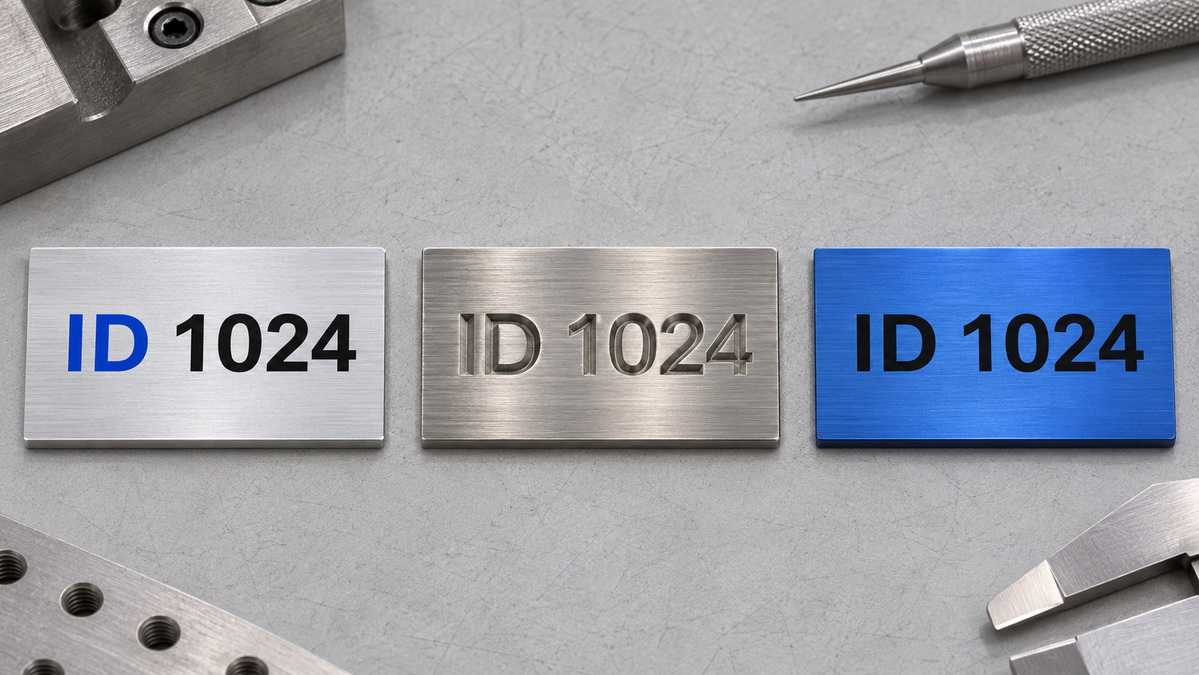
Attachment Can Determine Nameplate Service Life
Even an excellent metal plate fails its purpose when it detaches.
Adhesive selection should account for the mounting surface, texture, cleanliness, temperature, and exposure. Powder-coated housings, bare metal, and textured plastics may require different solutions.
Do not assume one adhesive works equally well across all equipment finishes.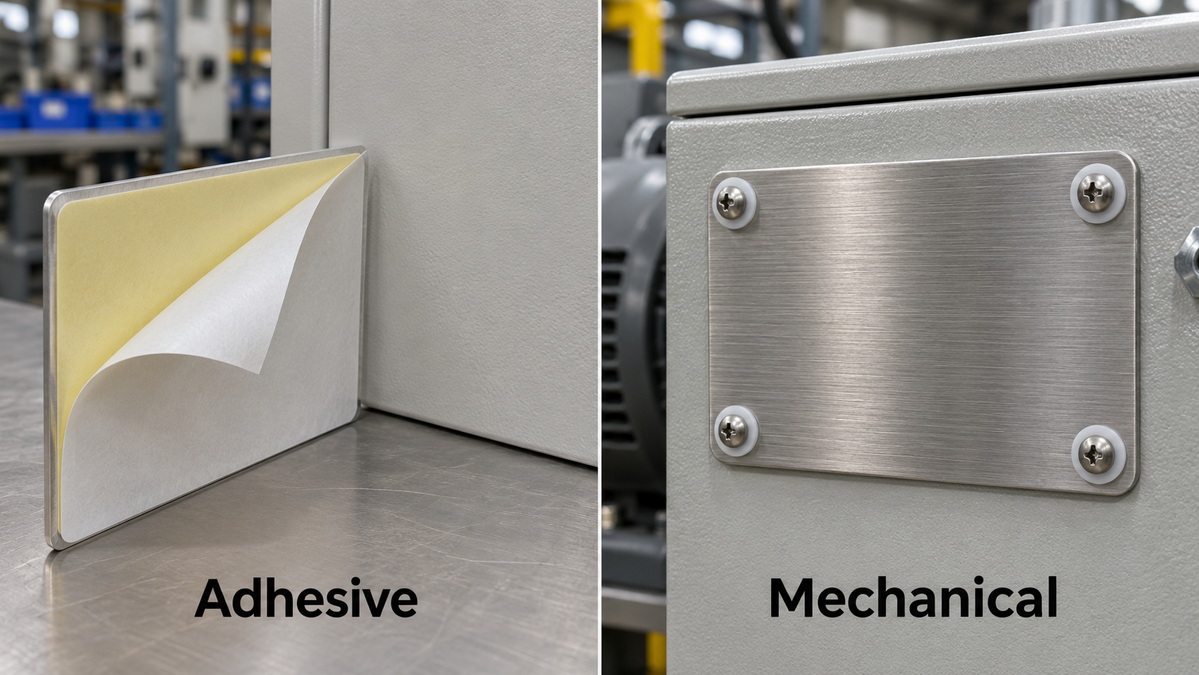
Adhesive Mounting
Provide the supplier with the actual mounting surface or a representative sample.
Then confirm:
1. Required cleaning and preparation.
2. Application temperature and pressure.
3. Bond-development time before service.
4. Resistance to expected fluids and cleaning.
5. Performance on curved or textured areas.
Evaluate the installed assembly, including edges where lifting may begin.
Mechanical Mounting and Dissimilar Metals
Rivets and screws offer another attachment route, but hole placement, access, and surrounding moisture still matter.
When dissimilar metals are electrically connected in the presence of an electrolyte, galvanic corrosion can occur.
Suitable isolation measures may reduce this risk. Adhesive films can provide a barrier, but fasteners or exposed contact points may bypass it. Review the whole assembly rather than assuming tape alone solves the problem.
A Five-Step Nameplate Validation Plan
The strongest purchasing decision comes from a written specification and representative testing.
Step 1: Describe the Real Environment
Record indoor or outdoor use, operating temperatures, cleaning products, salt exposure, abrasion, and mounting details.
Avoid vague descriptions such as "harsh conditions." Identify actual chemicals, concentrations, contact times, and cleaning frequency where possible.
Step 2: Define What Must Remain Readable
Separate essential information from decorative elements.
Serial numbers, ratings, warnings, and machine-readable codes may require stricter acceptance criteria than a background color or cosmetic finish.
Step 3: Obtain Production-Equivalent Samples
Samples should use the intended alloy or grade, thickness, finish, marking process, and attachment.
A presentation sample made with a different ink or adhesive does not validate the proposed order.
Step 4: Test Relevant Exposure Combinations
Consider cleaning, rubbing, temperature changes, outdoor weathering, and moisture exposure as appropriate.
Where relevant, evaluate sequences such as chemical cleaning followed by abrasion. Avoid converting accelerated test hours directly into guaranteed field years without a justified correlation.
Step 5: Agree on Acceptance Criteria
Define readability before testing begins.
Criteria may include legible mandatory text, successful code verification, acceptable color change, secure attachment, and no unacceptable corrosion.
Photograph samples before and after evaluation, and record the test conditions. This creates a repeatable basis for approval and future orders.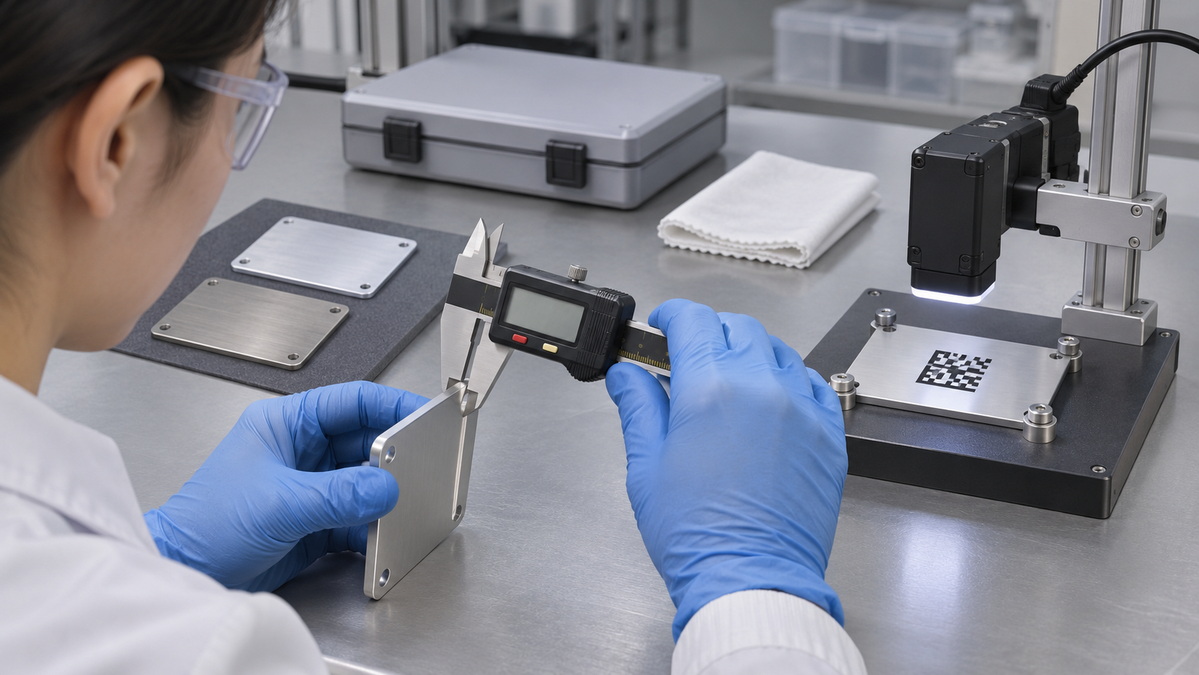
Three Practical Material-Selection Scenarios
These examples illustrate decision-making; they are not customer case studies.
Lightweight Electronic Equipment
For equipment with limited weight allowance and mostly indoor exposure, aluminum may be a practical starting point.
Focus validation on brand-color consistency, handling abrasion, cleaning compatibility, and adhesion to the housing finish.
Coastal Machinery
For machinery exposed to airborne salts, assess 316 stainless steel alongside suitable aluminum constructions.
The decision should include drainage, fasteners, graphic durability, maintenance, and actual exposure severity—not simply distance from the coastline.
Frequently Cleaned Process Equipment
For equipment receiving repeated chemical cleaning, begin with the cleaning specification.
Evaluate the metal, marking, any color fill, and attachment against that chemistry. A corrosion-resistant substrate does not establish that the finished nameplate will tolerate every cleaner.
Compare Total Cost, Not Just Unit Price
A lower plate price can become expensive if identification fails after installation.
Compare quotations using the same dimensions, material specification, graphics, attachment, quantity, and acceptance requirements.
Then consider:
- Artwork and tooling charges.
- Variable-data preparation.
- Installation labor.
- Inspection and sample approval.
- Replacement access and downtime.
- Packaging and shipment protection.
Do not assume aluminum is always cheaper or stainless steel always provides better value. Processing complexity and order requirements can change the comparison.
Specify Your Next Custom Nameplate with Confidence
Shenzhen XingKun Packing Products Co., Ltd. supports brands and distributors seeking custom nameplates alongside other printing and packaging products.
Send your drawing, quantity, artwork, mounting-surface details, and operating conditions for a focused quotation discussion. If material selection remains open, request a comparison of suitable aluminum and stainless steel constructions, then approve representative samples before production.
The objective is dependable identification that remains readable, securely attached, and appropriate for your equipment.
Frequently Asked Questions
Are aluminum nameplates suitable for outdoor use?
Yes, when the alloy, finish, graphics, and attachment suit the exposure. Confirm color stability and readability for the specific construction rather than relying on the word "anodized."
Is 316 stainless steel always necessary?
No. Grade selection depends on the environment. Grade 304 may suit many general applications, while 316 offers improved chloride-related corrosion resistance. More severe conditions may require further assessment.
Can stainless steel nameplates rust or stain?
Yes. Chlorides, contamination, trapped moisture, and unsuitable grade selection can cause staining or localized corrosion. Appropriate design, fabrication, and cleaning help reduce those risks.
Which material is better for barcodes and QR codes?
Either can work. Contrast, marking quality, code dimensions, surface glare, and exposure matter more than the material name alone. Verify codes on finished samples before and after relevant testing.
How long will a metal nameplate last?
There is no universal lifespan. Service life depends on the substrate, graphics, attachment, environment, and maintenance. Request construction-specific evidence and validate performance under representative conditions.
What should I provide when requesting a quotation?
Provide drawings, dimensions, quantity, artwork, variable data, mounting details, operating conditions, and acceptance requirements. Include cleaning chemicals and a target service period where available.
References
1. American Nameplate. "Aluminum vs. Stainless Steel Nameplate." Published January 23, 2020. Original comparison used to identify the topic scope and opportunities for deeper material-selection guidance. [american-nameplate]
2. World Stainless. "Corrosion Properties." Explains passive-film protection, pitting, crevice corrosion, chloride exposure, and other stainless steel corrosion mechanisms. [worldstainless]
3. Atlas Steels, hosted by World Stainless. "Stainless Steels Grade Datasheets." Provides grade-specific information, including the role of molybdenum in 316 and limitations in chloride environments. [worldstainless]
4. Aluminum Anodizers Council. "A Conclusive FAQ Guide for Anodized Aluminum." Discusses anodic coatings, sealing, coloring methods, and factors affecting lightfastness. [anodizing]
5. Metalphoto. "Design Guide: Because Durability Really Matters." Describes photosensitive anodized aluminum construction, sealed photographic graphics, and limitations affecting additional colors. Product-specific information is not treated as evidence for all aluminum nameplates. [metalphoto]
6. 3M. "Solutions for Your Assembly Challenges." Covers surface preparation, application-specific adhesion testing, and adhesive barriers for reducing dissimilar-metal corrosion. [multimedia.3m]


