Content Menu
● What Are Corrugated Display Stands?
● What Are Foam Board Displays?
● Side‑by‑Side Comparison for Supermarket Use
>> Performance Comparison Table
● When Corrugated Display Stands Are the Better Choice
>> Load, Safety, and Compliance
>> Flexibility for Promotions and Modular Merchandising
● When Foam Board Displays Make More Sense
>> High‑Impact Messaging and Brand Storytelling
>> Lightweight, Fast‑Change Signage
● Sustainability and 2026 Retail Packaging Trends
>> Corrugated Displays and Circular Systems
>> Foam Board and Environmental Considerations
● Expert Design Tips for Supermarket Display Success
>> Align Display Type With Shopper Journey
>> Visual Merchandising and UX Considerations
● Practical Criteria to Choose Between Corrugated and Foam Board
>> Step‑by‑Step Decision Checklist
● Why Work With a Specialist Manufacturer
● Supermarket‑Focused Use Cases (From the Field)
>> Case‑Style Scenario 1 – Beverage Launch
>> Case‑Style Scenario 2 – Healthy Snacking Zone
● Clear CTA – Plan Your Next Supermarket Display Program
● FAQs About Corrugated vs Foam Board Displays for Supermarkets
● References
Corrugated display stands and foam board displays each play a distinct role in supermarket merchandising, but they excel in different scenarios, budgets, and branding strategies. This article compares them from a practical, expert, and manufacturer's point of view, with a focus on real-world supermarket use cases and long-term ROI. [hawver]
Supermarkets today expect display solutions that are not only eye‑catching but also efficient, sustainable, and easy to roll out across multiple locations. For brands and retailers, choosing between corrugated display stands and foam board displays is no longer a simple "cost vs aesthetics" question; it is about lifecycle performance, shopper behavior, and supply chain practicality. [sintopfixtures]
As a manufacturer with over 20 years of experience in printed packaging and retail display solutions, Shenzhen XingKun Packing Products Co., Ltd. has seen both materials succeed and fail depending on how they are specified, engineered, and implemented in-store. This guide shares that hands-on perspective so supermarket buyers, category managers, and brand owners can choose the right display format for each campaign. [xkdisplay]
What Are Corrugated Display Stands?
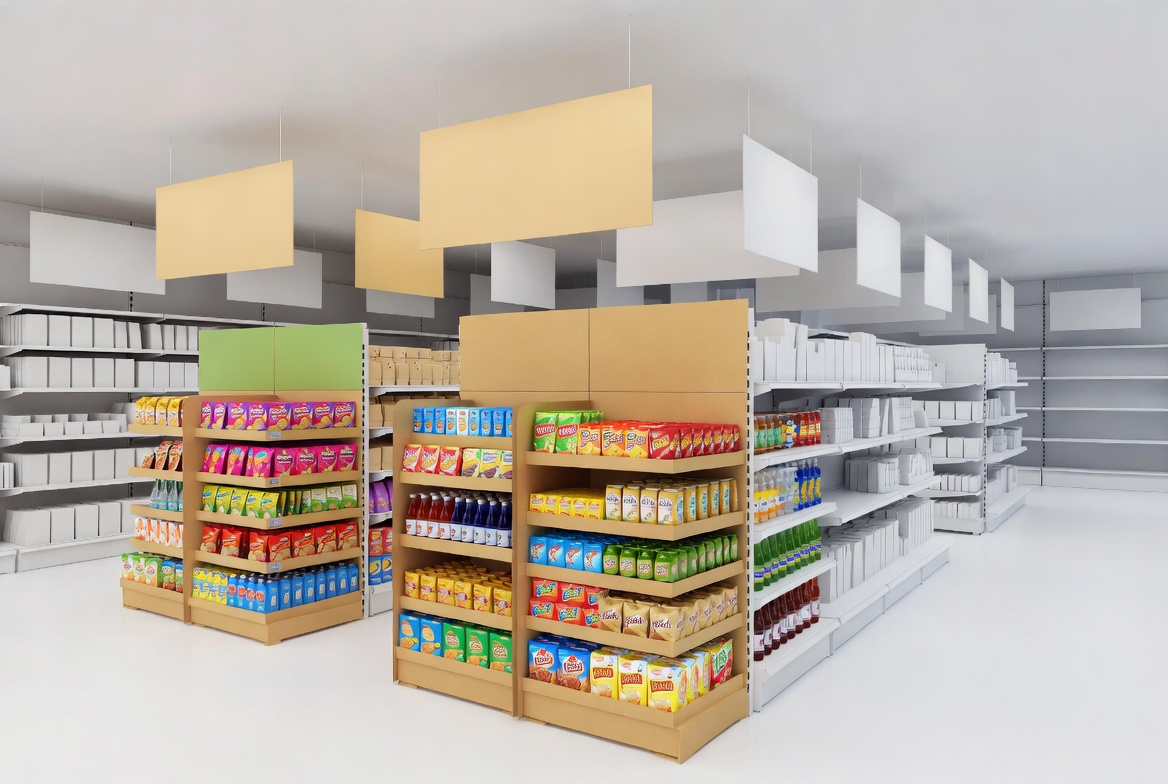
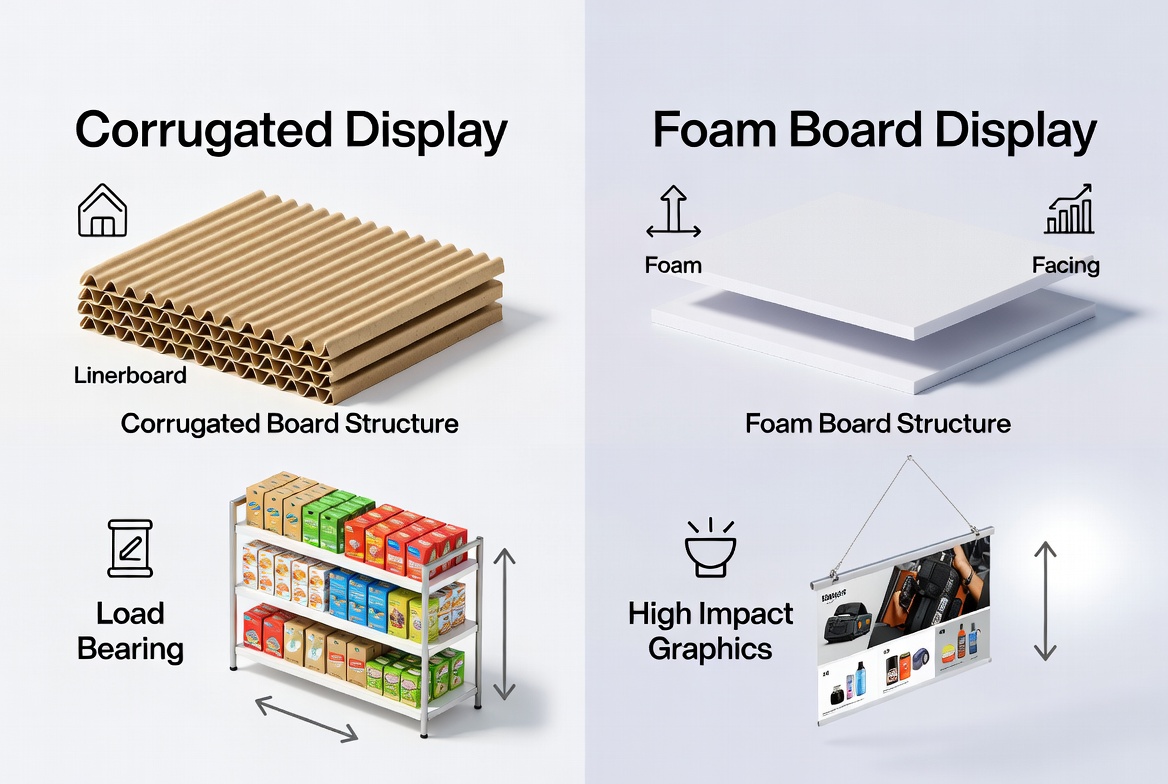
Corrugated display stands are point-of-purchase (POP) or point-of-sale (POS) units made from multi-layer corrugated board, typically with a fluted core sandwiched between linerboards. They are widely used as floor stands, end‑cap displays, pallet wraps, and countertop displays in supermarkets. [creativedisplaysnow]
Key characteristics:
- Structure: 3+ layers with a fluted middle for strength and shock absorption. [hawver]
- Formats: Floor stands, dump bins, side‑kick displays, pallet displays, and tiered shelves. [creativedisplaysnow]
- Printing: High‑quality CMYK, spot colors, and special finishes (gloss, matte, varnish) for brand storytelling. [xkdisplay]
Because corrugated displays are relatively light yet structurally robust, they are ideal for high‑turnover SKUs such as beverages, snacks, promotional bundles, and seasonal products. [sintopfixtures]
What Are Foam Board Displays?
Foam board displays are made from a lightweight foam core laminated with paper or plastic facings, delivering a smooth, flat surface for high‑resolution graphics. In supermarkets, they are commonly used for signage, hanging graphics, shelf‑top displays, and decorative backdrops rather than heavy product loading. [creativedisplaysnow]
Key characteristics:
- Structure: Rigid foam core (often polystyrene or similar) with printable facings.
- Formats: Hanging boards, aisle headers, wall graphics, topper signs, and light product showcases. [creativedisplaysnow]
- Printing: Very smooth surface suitable for photo‑quality imagery and fine text. [creativedisplaysnow]
Foam board's main strength is visual impact at eye level, not load‑bearing capacity, which makes it attractive for promotional messaging and brand imagery in key supermarket zones. [sintopfixtures]
Side‑by‑Side Comparison for Supermarket Use
Performance Comparison Table
| Factor | Corrugated Display Stands | Foam Board Displays |
| Load‑bearing capacity | High – supports multiple product tiers and heavy items. (hawver) | Low–medium – mainly for graphics, light products only. (creativedisplaysnow) |
| Durability in busy aisles | Good structural integrity under repeated shopper contact. (hawver) | More prone to dents, warping, and edge damage. (creativedisplaysnow) |
| Visual print quality | Strong branding, good color; slightly more texture. (xkdisplay) | Very smooth surface, excellent for photo‑real graphics. (creativedisplaysnow) |
| Typical supermarket applications | Floor stands, dump bins, pallet displays, end‑caps. (creativedisplaysnow) | Aisle signage, headers, wall panels, shelf‑top toppers. (creativedisplaysnow) |
| Installation complexity | Tool‑free folding, tab‑locking, often flat‑packed. (xkdisplay) | Easy mounting/hanging, but more sensitive to handling. (creativedisplaysnow) |
| Cost per unit | Generally low to medium; highly cost‑effective for volume. (creativedisplaysnow) | Low material cost but less reusable for structural tasks. (creativedisplaysnow) |
| Sustainability potential | High – paper‑based, compatible with circular systems. (greenhousegrower) | Mixed – foam cores can be harder to recycle. (zenpack) |
| Campaign duration | Short‑to‑medium term; can be engineered for months of use. (hawver) | Best for short‑term messaging and seasonal graphics. (creativedisplaysnow) |
When Corrugated Display Stands Are the Better Choice
For most product‑loaded supermarket campaigns, corrugated display stands are the more practical workhorse. [creativedisplaysnow]
Load, Safety, and Compliance
Supermarkets prioritize shopper safety and planogram stability; displays must not collapse when fully stocked or bumped by shopping carts. Corrugated displays, with their fluted core, withstand vertical loads and minor impacts better than foam board, especially for: [donracks]
- Beverages, canned goods, and multi‑packs.
- Heavy personal care or household items (detergent, cleaning fluids).
- Bulk or family‑size snack packs and promotional bundles. [donracks]
Properly engineered corrugated structures distribute weight across columns, shelves, and base pads, which reduces sagging and tipping risk in high‑traffic supermarket aisles. [hawver]
Flexibility for Promotions and Modular Merchandising
Corrugated displays support modular components such as detachable headers, changeable side panels, and stackable trays. That allows brands and retailers to: [creativedisplaysnow]
- Re‑skin graphics for new promotions without redesigning the entire structure.
- Test different price points, hero SKUs, or cross‑merchandising layouts. [creativedisplaysnow]
- Adapt footprint to different store layouts, including narrow aisles and end‑caps. [donracks]
From a manufacturer's standpoint, we frequently refine die‑cuts and locking mechanisms to reduce assembly time for store staff while maintaining structural strength and visual consistency across hundreds of locations. [xkdisplay]
When Foam Board Displays Make More Sense
Foam board displays excel when the display's job is to communicate rather than carry. [creativedisplaysnow]
High‑Impact Messaging and Brand Storytelling
Foam board creates a smooth, premium canvas for:
- Aisle‑top branding and category navigation signs.
- High‑resolution food photography and lifestyle imagery.
- Directional messaging (e.g., "Fresh Bakery," "New Organic Range"). [sintopfixtures]
Because shoppers process most in‑store information visually, clear, high‑contrast signage can significantly influence dwell time and purchase decisions. Foam board works best where print quality and lightweight installation outweigh the need for heavy product support. [sintopfixtures]
Lightweight, Fast‑Change Signage
Foam board is ideal for short‑term campaigns such as:
- Weekly or monthly price promotions.
- Limited‑time seasonal events (e.g., holiday themes).
- Brand takeovers of specific supermarket zones. [sintopfixtures]
Its light weight simplifies hanging, replacing, and relocating graphics without disrupting store operations, which is a key UX factor for over‑stretched supermarket teams. [sintopfixtures]
Sustainability and 2026 Retail Packaging Trends
Sustainability and circularity are now core decision drivers for both retailers and brands. In 2026, packaging and display programs increasingly favor single‑material systems and plastic‑free or low‑plastic solutions that support recycling and carbon reduction targets. [greenhousegrower]
Corrugated Displays and Circular Systems
Corrugated board aligns strongly with circularity trends:
- Primarily fiber‑based, widely collected and recycled in existing paper waste streams. [zenpack]
- Compatible with "connected packaging" approaches that help track reuse and recycling data across the supply chain. [greenhousegrower]
- Easier to communicate as a sustainable choice to eco‑conscious shoppers via on‑display messaging. [zenpack]
For long‑term partners, we often standardize corrugated substrates and print specifications to reduce material complexity and simplify recycling for supermarket chains. [zenpack]
Foam Board and Environmental Considerations
Foam board can be more challenging to manage at end‑of‑life:
- Mixed materials (foam core plus facings) may require specialized recycling. [zenpack]
- Some foam cores are derived from fossil‑based plastics, which may not align with retailers' plastic‑reduction goals. [zenpack]
That said, when foam board is used strategically for long‑running signage and carefully consolidated for recycling, its impact can be mitigated. However, for high‑volume, frequently replaced supermarket campaigns, corrugated displays typically offer a clearer sustainability story. [greenhousegrower]
Expert Design Tips for Supermarket Display Success
Align Display Type With Shopper Journey
Based on retail layout best practices, supermarkets should place high‑turnover and essential items where they naturally intersect with shopper flow while using displays to highlight higher‑margin products. [donracks]
- Use corrugated floor stands near aisle entries or power aisles to showcase high‑margin or new products at eye level. [creativedisplaysnow]
- Support these with foam board signage above the aisle, reinforcing the campaign theme and directing traffic. [sintopfixtures]
- For checkout zones, compact corrugated displays with bold headers can drive impulse purchases, supported by small foam board call‑outs. [donracks]
This layered approach combines structural holding power with high‑visibility messaging, improving both UX and conversion.
Visual Merchandising and UX Considerations
Effective supermarket displays are easy to navigate, visually balanced, and not overwhelming. [donracks]
- Keep fonts readable and clean; avoid cluttered layouts on both corrugated and foam surfaces. [creativedisplaysnow]
- Use consistent color blocking that aligns with brand identity but maintains enough white space to avoid visual fatigue. [creativedisplaysnow]
- Place prices clearly on or near the display to remove friction in buying decisions. [creativedisplaysnow]
In practice, our design team often prototypes both corrugated and foam components together, testing line of sight, color contrast, and shopper flow before mass production. [xkdisplay]
Practical Criteria to Choose Between Corrugated and Foam Board
Step‑by‑Step Decision Checklist
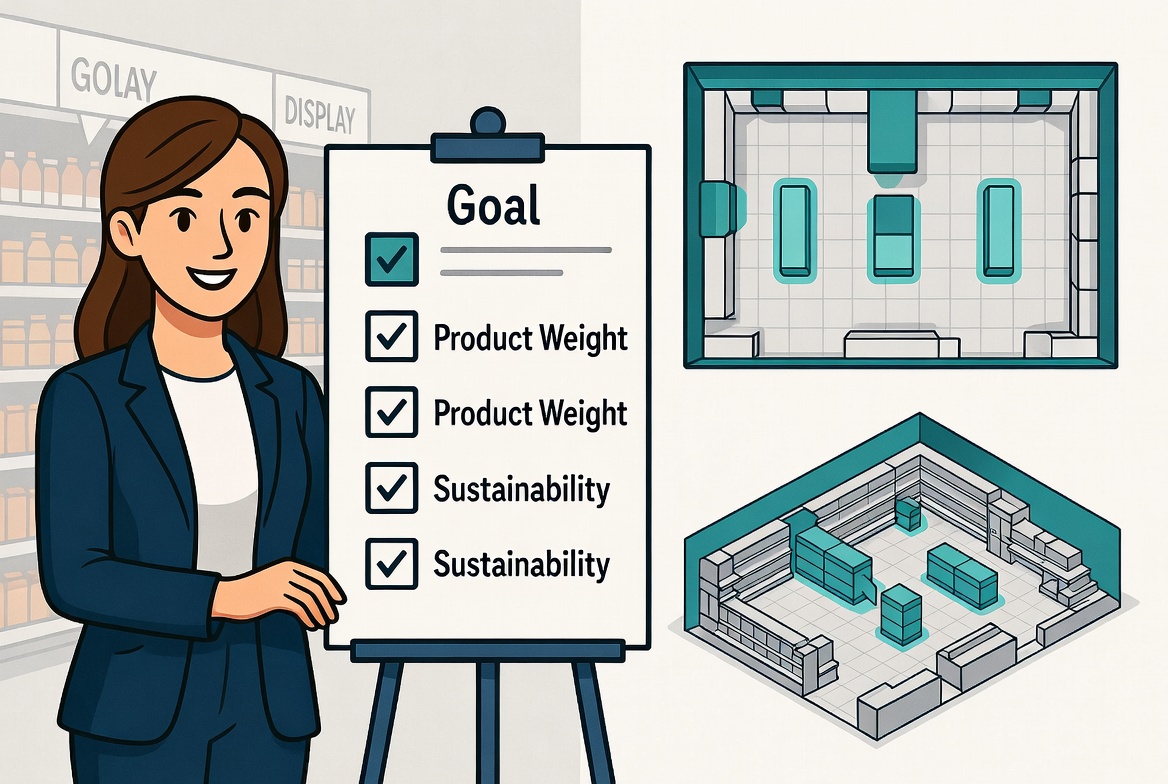
Use this simple process when planning your next supermarket campaign:
1. Define the primary goal
Is the goal to move units (volume), build awareness, or support navigation? For unit movement, corrugated is usually the default; for awareness and navigation, foam board is often better. [creativedisplaysnow]
2. Assess product weight and packaging
Heavy or bulky products call for corrugated stands; lightweight or no-product displays can rely on foam board. [hawver]
3. Consider campaign length and refresh frequency
Longer campaigns and modular reuse favor corrugated; rapid weekly/monthly refreshes may use foam board signage to minimize cost and setup time. [creativedisplaysnow]
4. Evaluate sustainability requirements
If your retailer or brand has strict sustainability KPIs, fiber‑based corrugated usually better supports recycling and circularity metrics. [greenhousegrower]
5. Plan logistics and installation
Corrugated can be flat‑packed with printed assembly guides; foam board requires protection from bending and edge damage during transport. [xkdisplay]
By following these steps with your display manufacturer, you significantly reduce the risk of underperforming in‑store campaigns and unplanned replacement costs.
Why Work With a Specialist Manufacturer
Supermarket display projects become truly effective when structural engineering, printing, logistics, and on‑site realities are handled by an experienced partner. [xkdisplay]
With over 20 years in custom printed packaging and display production, Shenzhen XingKun Packing Products Co., Ltd.:
- Develops both corrugated display stands and foam‑related printed components tuned to supermarket conditions.
- Optimizes dielines for strength, quick assembly, and efficient palletization.
- Balances cost, print quality, and sustainability to fit each retailer's standards and brand guidelines. [xkdisplay]
Because we serve brands and distributors in more than 30 countries and regions, we also help adapt display programs to different regional supermarket formats, from hypermarkets to convenience‑style outlets. [xkdisplay]
Supermarket‑Focused Use Cases (From the Field)
Case‑Style Scenario 1 – Beverage Launch
A beverage brand launching a new flavor across national supermarkets needs:
- High‑capacity displays near entrances and power aisles.
- Strong branding and flavor imagery.
- A campaign window of 8–12 weeks.
Solution: Corrugated floor stands with reinforced shelves and a bold printed header, supported by foam board aisle fins for extra visibility. This combination keeps stock secure while amplifying message reach across the aisle. [creativedisplaysnow]
Case‑Style Scenario 2 – Healthy Snacking Zone
A retailer wants to reorganize a "healthy snacks" section with mixed third‑party brands:
- Need clear navigation and lifestyle messaging.
- Limited floor space for additional structures.
- Desire for a consistent look across brands.
Solution: Modular corrugated side‑kick displays added to existing shelving, paired with standardized foam board category signage and iconography. This creates a coherent experience without major fixture changes. [donracks]
Clear CTA – Plan Your Next Supermarket Display Program
If you are planning a supermarket campaign and are unsure whether corrugated display stands or foam board displays (or a combination of both) will generate the best results, the safest path is to prototype with a specialist.
Shenzhen XingKun Packing Products Co., Ltd. can help you:
- Audit current supermarket displays and identify quick wins.
- Engineer corrugated and foam solutions aligned with retailer guidelines.
- Produce, pack, and ship ready‑to‑install kits for multi‑store rollouts. [xkdisplay]
You can share your product specs, campaign duration, and sustainability requirements, and we will recommend a display mix that balances impact, cost, and operational simplicity for your supermarket partners.
FAQs About Corrugated vs Foam Board Displays for Supermarkets
Q1. Are corrugated display stands strong enough for heavy products like beverages or detergents?
Yes. Properly engineered corrugated displays can handle significant vertical load and are widely used for beverages, canned goods, and household products in supermarkets. [hawver]
Q2. Can foam board displays be used as floor stands in supermarkets?
Foam board is generally not recommended as the main structural material for floor stands in busy supermarket environments because it can dent and deform under load and impact. [creativedisplaysnow]
Q3. Which material is better for sustainable supermarket campaigns?
Corrugated displays usually have an advantage because they are fiber‑based, compatible with established paper recycling streams, and align with circularity and carbon‑reduction trends. [greenhousegrower]
Q4. How often should supermarkets refresh their displays?
Retail experts recommend refreshing displays and signage at least a few times per year and more frequently during seasonal or promotional campaigns to keep layouts relevant and visually engaging. [sintopfixtures]
Q5. Can I combine corrugated and foam board in one supermarket campaign?
Yes. Many of the most effective supermarket campaigns combine corrugated floor stands for product loading with foam board signage for high‑impact visuals and navigation, delivering both structural and communication benefits. [creativedisplaysnow]
References
1. Hawver Display – "The Important Difference Between Cardboard Displays and Corrugated Display Materials." [https://www.hawver.com/resources/industry-articles/important-difference-between-cardboard-displays-and-corrugated-display] [hawver]
2. Creative Displays Now – "Best Practices for Setting Up Retail Displays." [https://www.creativedisplaysnow.com/how-to-set-up-a-retail-display-stand-the-right-way/] [creativedisplaysnow]
3. Creative Displays Now – "Corrugated Cardboard Display Stands for Your Business." [https://www.creativedisplaysnow.com/display-solutions/display-stands/] [creativedisplaysnow]
4. Sintop Fixtures – "How to Optimize Retail Grocery Shelving and Store Layout Design." [https://www.sintopfixtures.com/news/how-to-optimize-retail-grocery-shelving-and-store-layout-design] [sintopfixtures]
5. Donracks – "How to Organise Shop Shelves in Supermarkets to Display Products." [https://www.donracks.com/blog/how-to-organise-shop-shelves-in-supermarkets-to-display-products/] [donracks]
6. Greenhouse Grower – "Top Retail Packaging Trends to Expect in 2026." [https://www.greenhousegrower.com/management/top-retail-packaging-trends-to-expect-in-2026/] [greenhousegrower]
7. Zenpack – "Packaging Design Trends 2026: Accessibility, Circularity, Localization." [https://www.zenpack.us/blog/packaging-trends/] [zenpack]
8. Shenzhen XingKun Packing Products Co., Ltd. – Company and product overview (Display Stands, EVA foam and related printed products). [https://www.xkdisplay.com/zh-CN/display-stand.html] [xkdisplay]


