Content Menu
● What Do We Mean by "Custom Display Stands" and "Standard Displays"?
● Cost Structures: Upfront vs Lifetime Cost
>> Upfront cost comparison
>> Lifetime cost and cost‑per‑campaign
● Seven Key Cost Drivers to Compare
>> 1. Design and Engineering Cost
>> 2. Materials, Board Grade, and Printing
>> 3. Manufacturing Efficiency and Waste Reduction
>> 4. Shipping, Storage, and Logistics Cost
>> 5. Assembly Time and Labor Cost In‑Store
>> 6. Marketing Performance and ROI
>> 7. Risk, Quality Control, and Long‑Term Flexibility
● Cost Scenarios: When Each Option Saves More
>> When standard displays are more cost‑effective
>> When custom display stands save more cost overall
● Manufacturer Case Insight: How XingKun Optimizes Cost for Custom Stands
● Practical Steps to Decide: Custom vs Standard (Step‑by‑Step)
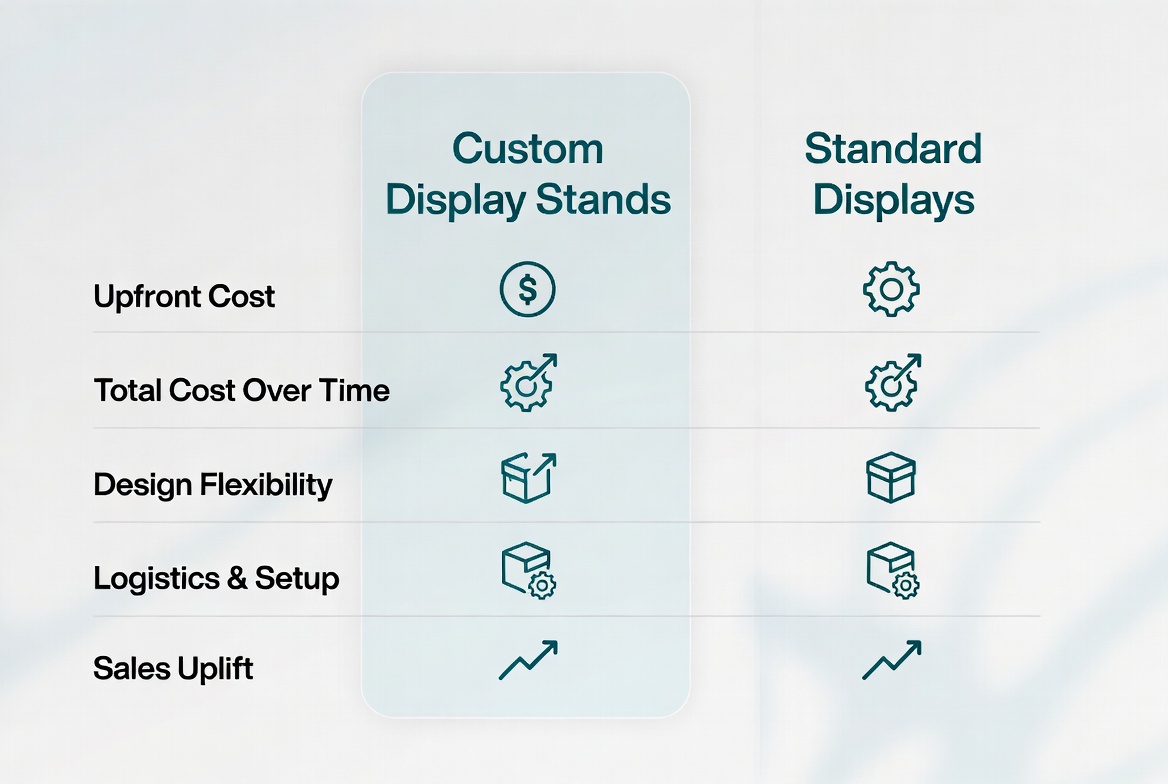
● Comparison Table: Custom Display Stands vs Standard Displays
● When to Talk to XingKun About Custom Stands
● Clear Call to Action
● Frequently Asked Questions (FAQ)
● References
Custom display stands can often deliver lower total cost over time for brands with ongoing campaigns, while standard displays usually win on very tight, short-term budgets. For a manufacturer like Shenzhen XingKun Packing Products Co., Ltd., the real cost advantage depends on order volume, lifecycle, logistics, and how smartly the display is engineered and produced. [american-image]
What Do We Mean by "Custom Display Stands" and "Standard Displays"?
Custom display stands are tailor‑made units designed around a specific product, brand, or campaign. They can be fully bespoke or semi‑custom modular structures with custom graphics, dimensions, materials, and structural details. [cardboard-display-stand]
Standard displays use pre‑designed, off‑the‑shelf structures (for example, classic floor stands, PDQ countertops, or standard pallet displays) with limited options for size, materials, and layout, and usually only the graphics are customized. [displayit]
From XingKun's perspective as a professional display stand and packaging producer, both approaches use similar core processes—structural design, printing, die‑cutting, and finishing—but differ in how much time and engineering is invested per project. [xkdisplay]
Cost Structures: Upfront vs Lifetime Cost
When comparing Custom Display Stands vs Standard Displays, the first mistake many buyers make is looking only at upfront unit price, not total cost over the whole campaign.
Upfront cost comparison
- Standard displays
- Lower design and engineering cost because they reuse existing structures. [american-image]
- Faster quoting and sampling, often with simplified tooling or no new tooling at all.
- Ideal when you need a quick solution with limited budget.
- Custom display stands
- Higher initial investment due to structural design time, prototyping, and custom tooling. [feeds.perfectimprints]
- More engineering hours, especially when optimizing for shipping, assembly, and durability.
- Unit price may be higher for small volumes, but this gap narrows significantly at scale. [cardboard-display-stand]
Lifetime cost and cost‑per‑campaign
For brands that use displays in multiple campaigns or repeat orders, custom stands tend to become more cost‑efficient per use because:
- The same custom tooling and structure can be reused, changing only graphics.
- Optimized dimensions reduce material waste and shipping volume, lowering per‑unit logistics costs. [blog.performpkg]
- Better structural stability reduces damage, returns, and in‑store failures.
Industry analyses for trade show and retail displays show that custom systems, while more expensive initially, can significantly reduce cost‑per‑show or cost‑per‑campaign versus repeatedly buying or renting generic displays. [feeds.perfectimprints]
Seven Key Cost Drivers to Compare
1. Design and Engineering Cost
Standard displays:
- Design cost is spread across many buyers; you pay mainly for artwork placement and minor adjustments. [displayit]
- Less time spent in structural 3D modeling, stress testing, and sample iterations.
Custom display stands:
- Higher design input: packaging engineers must optimize size, load‑bearing, and assembly for your specific product mix. [cardboard-display-stand]
- For a manufacturer like XingKun with in‑house structural design, this phase can actually *save* you cost if it prevents over‑engineering and excessive material use. [cn.linkedin]
Expert insight (manufacturer's perspective):
Over 20+ years of projects, we often see that well‑engineered custom stands reduce board grade, printing passes, and assembly time—offsetting part of the initial design fee in the first production run alone. [xkdisplay]
2. Materials, Board Grade, and Printing
Standard displays usually rely on common, fixed material specs—standard corrugated grades, pre‑set flute types, and simplified printing zones. [cardboard-display-stand]
Custom display stands allow you to:
- Align material grade with realistic load requirements, avoiding unnecessary over‑specification.
- Optimize printing area so that only the most visible faces use high‑coverage or special finishes, while hidden surfaces use more economical prints. [cardboard-display-stand]
- Combine offset, flexo, or digital printing strategies to hit both branding and cost targets.
A practical example:
- Switching from full‑coverage printing on all panels to targeted high‑impact zones on a custom design can cut ink usage and printing passes, significantly reducing costs while maintaining shelf impact. [blog.performpkg]
3. Manufacturing Efficiency and Waste Reduction
From a plant‑side view, custom display stands can be more cost‑efficient when:
- Die‑lines are optimized to maximize sheet utilization.
- Fold and lock mechanisms are engineered for faster machine speeds and fewer manual steps.
A standardized design might seem cheaper, but if it leads to excess off‑cuts, complex gluing steps, or slow packing lines, your true cost per unit can rise. [blog.performpkg]
XingKun's long experience in display stands and packaging means many of our "custom" solutions are actually built on internal modular libraries—we reuse proven joints, tabs, and structures to keep design time low and production highly efficient. [cn.linkedin]
4. Shipping, Storage, and Logistics Cost
Logistics is where Custom Display Stands vs Standard Displays show clear cost differences.
- Standard displays
- Often ship in fixed carton sizes, not necessarily optimized for your product dimensions.
- May require more volume per unit if not designed for knock‑down (flat‑pack) efficiency.
- Custom display stands
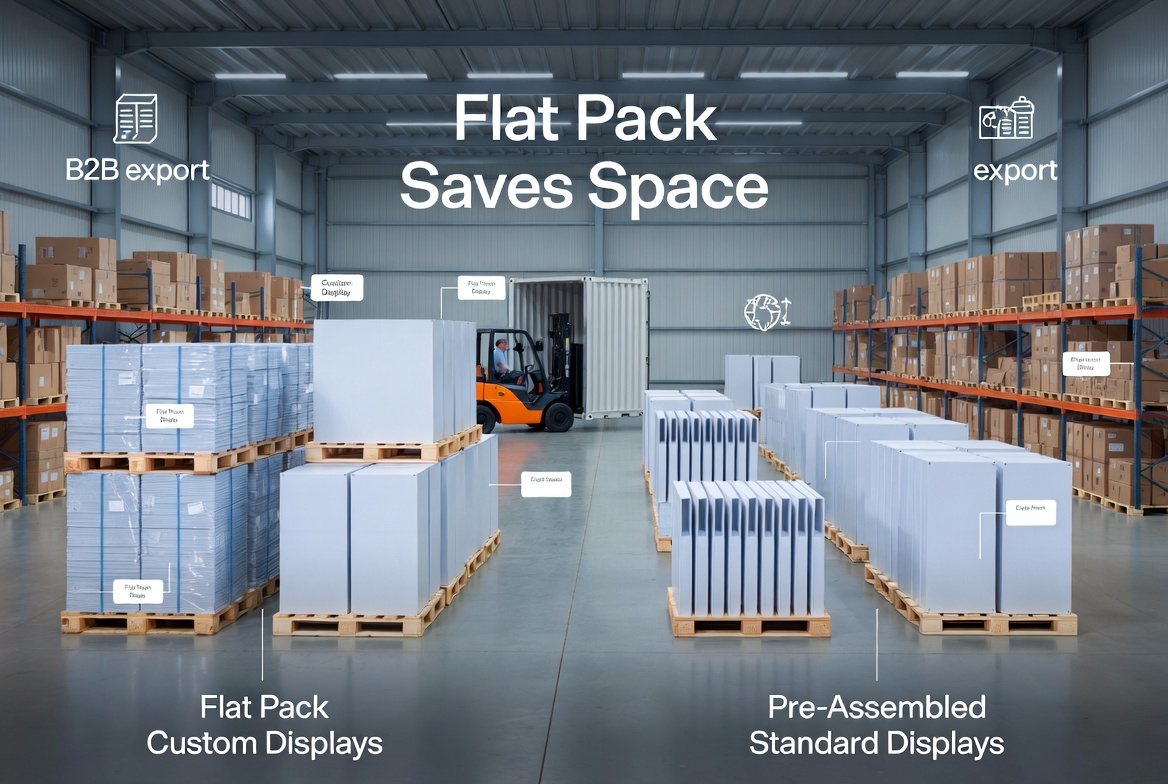
- Can be engineered to ship flat, assemble on‑site, and minimize empty space in master cartons. [cardboard-display-stand]
- This reduces freight charges (especially for international shipments) and warehouse storage needs. [blog.performpkg]
For international customers of Shenzhen XingKun Packing Products, shifting from bulky pre‑assembled structures to custom knock‑down designs has repeatedly led to double‑digit percentage savings on shipping costs, particularly when consolidating containers by optimized carton sizes. [xkdisplay]
5. Assembly Time and Labor Cost In‑Store
Retailers and merchandisers care about how long it takes to assemble a display. Every extra minute is labor cost.
- Generic standard displays may be unfamiliar to staff, with generic instructions that do not match your product layout.
- Custom display stands can be designed with intuitive, step‑by‑step assembly, minimal loose parts, clear coding, and printed instructions. [cardboard-display-stand]
When XingKun engineers a custom stand, we frequently optimize:
- Number of locking tabs and folds.
- Sequence of assembly (base first, then shelves, then header).
- Color‑coded or numbered panels that reduce error and assembly time.
If your displays are used across hundreds of stores, even a one‑minute reduction in assembly time per unit represents a meaningful labor saving.
6. Marketing Performance and ROI
Pure cost is only half of the equation. The other half is revenue generated or influenced by the display.
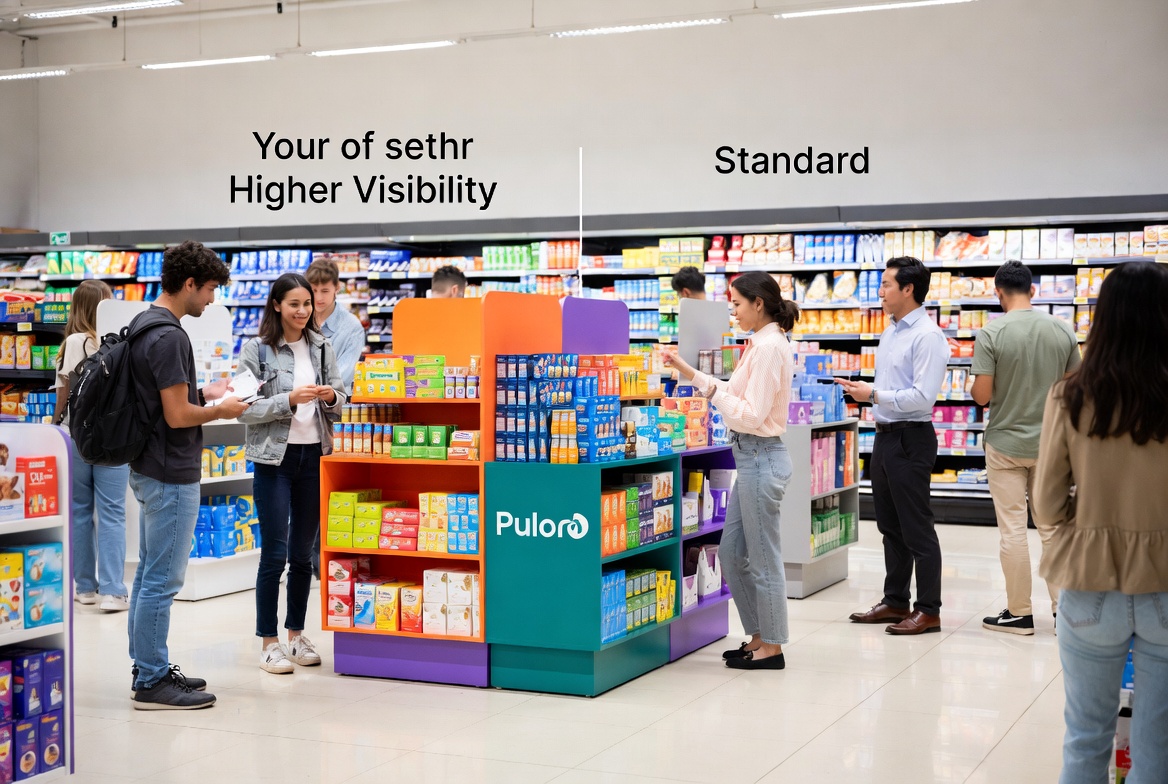
Studies in retail and trade show environments show that custom displays tend to attract more attention, differentiate the brand, and increase engagement, which can boost conversion and lift in sales. [fileserver-az.core.ac]
Custom displays can:
- Present your product information and usage scenarios more clearly, aligned with consumer psychology. [fileserver-az.core.ac]
- Tell a brand story that is impossible with generic shapes and limited graphics.
- Integrate functional features like product testers, interactive panels, or multi‑SKU organization.
When you include incremental sales and brand impact in your ROI model, custom stands often deliver better cost‑per‑sale even if the unit price is higher. [american-image]
7. Risk, Quality Control, and Long‑Term Flexibility
From a risk‑management angle:
- Standard displays
- Lower planning risk, but limited flexibility if retailers or product sizes change.
- May not be optimized for your exact load or store conditions, increasing the chance of bending, tipping, or product damage.
- Custom display stands
- Allow stress testing and tailored quality control procedures based on your specific environment. [blog.performpkg]
- Structural reserves can be built into critical joints, shelves, and hooks.
Because XingKun operates across more than 30 countries and regions, our engineers have firsthand data on what works in different climates, store formats, and logistics chains—knowledge we embed into custom designs to reduce failure rates and replacement costs. [shippingonline]
Cost Scenarios: When Each Option Saves More
When standard displays are more cost‑effective
You are likely to save more with standard displays when:
1. Your order quantity is low (e.g., small test run or limited regional launch).
2. The campaign duration is short, and displays will not be reused.
3. Product dimensions fit existing structures with minimal compromise.
4. Brand differentiation is not critical (supporting SKU, not hero product).
In these situations, spending time and engineering budget on customization may not pay back within the campaign.
When custom display stands save more cost overall
You are likely to save more with custom display stands when:
1. Order quantity is medium to large, and you plan to reorder or roll out globally.
2. Displays will be used across multiple campaigns, with swappable graphics.
3. Shipping and warehousing costs are significant, especially for export.
4. Brand positioning and shelf competition are strong, and you need maximum visibility.
5. You want to reduce labor costs via quick, intuitive assembly.
Across these scenarios, custom stands often deliver lower total cost of ownership by combining optimized materials, flat‑pack logistics, and higher sales performance. [feeds.perfectimprints]
Manufacturer Case Insight: How XingKun Optimizes Cost for Custom Stands
As Shenzhen XingKun Packing Products Co., Ltd., we specialize in display stands, packaging boxes, and other printed products, serving brands and distributors in over 30 countries. Based on this experience, here is how we typically turn "custom" into "cost‑efficient" rather than "expensive": [shippingonline]
1. Start from proven internal structures
- We rarely design from a blank page.
- Instead, we adapt tested display stand architectures, reducing design risk and time.
2. Engineer around logistics
- Dimensional design always considers container loading, pallet patterns, and flat‑pack thickness.
- This often leads to double‑digit percentage reductions in freight cost for export clients. [blog.performpkg]
3. Optimize printing strategy
- High‑impact faces use premium graphics; hidden panels are simplified.
- This balances brand presence with ink and process savings. [cardboard-display-stand]
4. Prototype fast, fail early
- We provide structural samples for testing with actual products.
- Weak points are fixed before mass production, reducing damages and reprints later.
For many international customers, the final result is a custom display that is only slightly higher in unit cost than a standard option but performs substantially better in both logistics and sales. [xkdisplay]
Practical Steps to Decide: Custom vs Standard (Step‑by‑Step)
If you are a brand or distributor evaluating Custom Display Stands vs Standard Displays, use this 5‑step process to reach a cost‑focused decision:
1. Define your campaign horizon
- Is this a one‑time promotion or an ongoing program for 12–36 months?
- Longer horizons favor custom stands.
2. Estimate realistic order volumes
- Get pricing scenarios at 500, 1,000, 3,000, and 5,000+ units.
- Ask your manufacturer to show how unit cost changes with quantity.
3. Model full landed cost
- Include shipping, duties, local transport, storage, and assembly labor.
- Compare flat‑pack custom designs vs pre‑assembled standard units.
4. Estimate revenue impact
- Benchmark expected sales uplift from improved visibility or brand blocking.
- Run a simple scenario: if custom displays lift sales by just 5–10%, does that offset higher cost?
5. Run a pilot, then scale
- Test a smaller run of custom stands in key markets.
- Use real‑world sales and logistics data to decide your global rollout strategy.
XingKun can support you through each of these steps, from cost modeling to structural sampling and pilot rollouts. [cn.linkedin]
Comparison Table: Custom Display Stands vs Standard Displays
| Aspect | Custom Display Stands | Standard Displays |
| Upfront unit price | Higher for small runs, more competitive at scale (american-image) | Lower for small, short‑term orders (american-image) |
| Design and engineering | Tailored to product, logistics, and brand; more engineering hours (cardboard-display-stand) | Minimal structural changes, mainly artwork placement (american-image) |
| Material and printing efficiency | Optimized board grade and print coverage for cost and impact (cardboard-display-stand) | Fixed specs; may not match exact needs |
| Logistics (shipping, storage) | Can be engineered for flat‑pack and carton optimization (cardboard-display-stand) | Fixed formats may use more volume |
| Assembly and labor | Faster, intuitive assembly possible, reducing labor cost | Assembly varies; may be slower or less intuitive |
| Marketing performance | Higher differentiation and brand storytelling potential (american-image) | Limited visual impact and flexibility |
| Best use cases | Medium–large volumes, long campaigns, export programs | Small tests, short‑term offers, constrained budgets |
When to Talk to XingKun About Custom Stands
On a practical level, you should consider talking to Shenzhen XingKun Packing Products Co., Ltd. about a custom display stand solution when:
- You are planning an international rollout and need cost‑optimized export packaging and displays. [shippingonline]
- You manage multiple SKUs and need a modular stand that adapts to different product mixes.
- You want to lower total cost by reducing freight volume, material waste, and in‑store assembly time, not just unit price.
With more than 20 years of experience in printing and packaging for global brands and distributors, XingKun combines structural design, printing expertise, and export know‑how to help you choose the right balance between custom and standard displays. [cn.linkedin]
Clear Call to Action
If you are currently evaluating Custom Display Stands vs Standard Displays and want to understand which option will really save more cost for your next campaign, the next step is simple:
Contact Shenzhen XingKun Packing Products Co., Ltd. with your product dimensions, target markets, and expected order volume. Our team can:
- Provide a side‑by‑side cost model comparing standard and custom options for your exact scenario.
- Develop a structural concept and prototype focused on logistics savings and shelf impact.
- Help you design a phased rollout plan that starts with a pilot and scales globally if the ROI meets your target.
Frequently Asked Questions (FAQ)
1. Are custom display stands always more expensive than standard displays?
Not necessarily. While custom stands often have higher upfront design and tooling costs, they can become cheaper per campaign when reused, especially if they reduce shipping volume and improve sales performance. [feeds.perfectimprints]
2. How can I estimate the real cost difference between custom and standard displays?
Build a total cost model that includes unit price, freight, duties, storage, assembly labor, and expected sales uplift. This holistic view often shows that custom solutions are more competitive than they first appear. [feeds.perfectimprints]
3. What information does XingKun need to quote a custom display?
Typically: product dimensions, weight, number of SKUs, target markets, desired campaign duration, estimated quantities, and any retailer guidelines. This allows the engineering team to design for both performance and cost. [xkdisplay]
4. Can custom displays still be produced quickly for urgent promotions?
Yes. By building on proven structural templates and internal design libraries, an experienced manufacturer can deliver custom or semi‑custom stands within tight timelines while maintaining cost control. [cn.linkedin]
5. How do I reduce the cost of my existing cardboard display stands?
Work with your supplier to increase order quantity where possible, choose material grades more precisely, optimize the printable area, adjust dimensions to reduce waste and freight, and consider knock‑down designs to ship flat. [blog.performpkg]
References
1. American Image Displays – "Custom Trade Show Displays: Cost Vs. Value"
https://american-image.com/custom-trade-show-displays-cost-vs-value/ [american-image]
2. Perfect Imprints – "5 Reasons Why Custom Trade Show Displays Are Worth It"
https://feeds.perfectimprints.com/blog/custom-trade-show-displays [feeds.perfectimprints]
3. Cardboard Display Stand – "How To Reduce The Cost Of Cardboard Display Stands"
https://www.cardboard-display-stand.com/news/how-to-reduce-the-cost-of-cardboard-display-st-85000405.html [cardboard-display-stand]
4. Perform Packaging – "7 Strategic Ways to Reduce Packaging Costs and Boost Your Bottom Line"
https://blog.performpkg.com/7-strategic-ways-to-reduce-packaging-costs-and-boost-your-bottom-line [blog.performpkg]
5. XINGKUN – Official Website
https://www.xkdisplay.com [xkdisplay]
6. LinkedIn – XingKun Packing Products Co Ltd Company Profile
https://cn.linkedin.com/company/xingkun-printing-products [cn.linkedin]
7. Shenzhen Xingkun Packing Products Co., Ltd Address Listing
http://www.shippingonline.cn/yellowpages/temp1/index.asp?solid=fdehdhi [shippingonline]
8. CORE – "消费者角度的展示性包装设计思考"
https://fileserver-az.core.ac.uk/download/343508264.pdf [fileserver-az.core.ac]


