Content Menu
● What Are Custom Egg Labels?
● Why Custom Egg Carton Labels Matter for Food Brands
>> Build Recognition at the Shelf
>> Support Private-Label Flexibility
>> Improve Traceability and Inventory Control
● Custom Egg Label Materials and Adhesives
>> Paper Labels for Dry or Low-Moisture Applications
>> BOPP and PP Labels for Moisture Resistance
>> Adhesive Selection Is Critical
● Essential Information for Egg Carton Labels
>> Typical Custom Egg Label Content Checklist
>> Avoid Unsupported Marketing Claims
● How to Design High-Converting Custom Egg Labels
>> Create a Clear Visual Hierarchy
>> Use Contrast for Refrigerated Retail Environments
>> Plan for Variable Data Early
● A Step-by-Step Custom Egg Label Buying Process
>> Step 1: Define the Carton and Market
>> Step 2: Choose Label Shape and Size
>> Step 3: Confirm Material, Adhesive, and Finish
>> Step 4: Review Artwork and Compliance Copy
>> Step 5: Test Before Full Production
● Why Work With XingKun for Custom Egg Labels?
● Conclusion
● FAQ
>> 1. What is the best material for custom egg labels?
>> 2. Can custom egg labels be applied to molded pulp cartons?
>> 3. What information should be on an egg carton label?
>> 4. Are waterproof egg labels necessary?
>> 5. Can XingKun produce private-label egg carton stickers?
>> 6. Can I add a barcode or QR code to custom egg labels?
>> 7. What file format is best for custom egg label printing?
● References
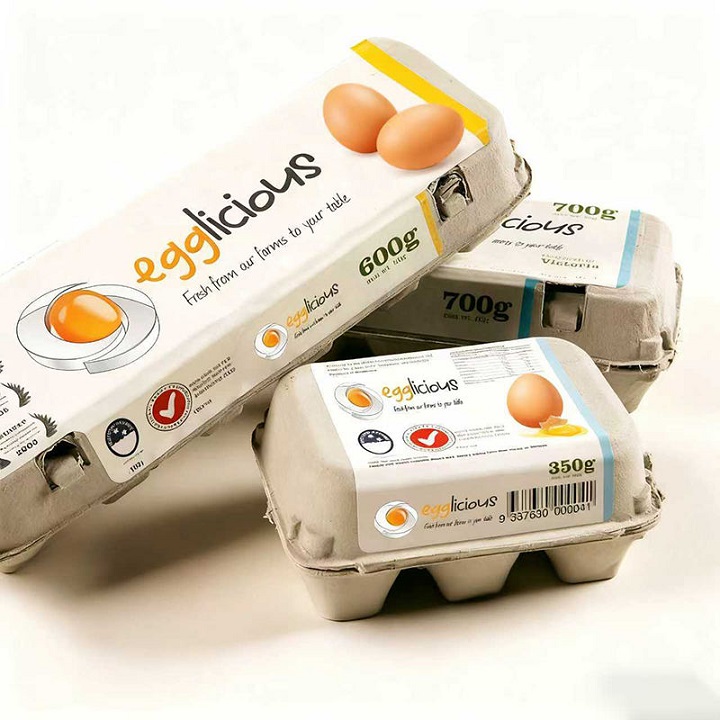
Custom egg labels help egg producers, farms, food brands, wholesalers, and private-label retailers turn ordinary egg cartons into recognizable, retail-ready products. The right label must do more than look attractive: it needs to adhere reliably to paper pulp, plastic, foam, or coated cartons; remain legible in refrigerated handling; support traceability; and leave room for required product information.
For brands sourcing from China, XingKun provides OEM and ODM custom printing solutions for custom egg carton labels, including roll labels, sheet labels, die-cut stickers, waterproof labels, and premium branded packaging labels. A successful label program combines compliant information, carton-compatible adhesive, durable materials, and a clear visual hierarchy—not simply a logo on a sticker.
What Are Custom Egg Labels?
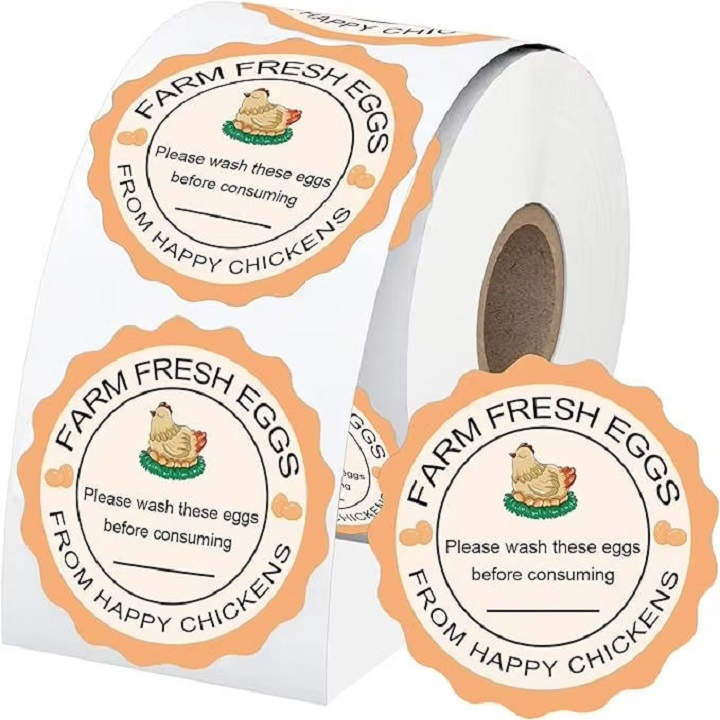
Custom egg labels are printed adhesive labels applied to egg cartons, egg trays, clamshell packs, or retail sleeves. They are commonly used by:
- Egg farms and local producers
- Organic and free-range egg brands
- Supermarkets and grocery private labels
- Food distributors and wholesalers
- Poultry-product manufacturers
- Gift-pack and specialty food brands
- Producers selling through farmers' markets, restaurants, and e-commerce channels
A custom egg carton label can carry functional information such as the brand name, egg quantity, grade, size, origin, packing date, storage guidance, barcode, batch code, and nutrition-related information. It can also communicate a brand story—for example, "Farm Fresh," "Cage Free," "Organic," "Pasture Raised," or "Locally Produced"—provided that these claims are accurate and appropriate for the destination market.
The strongest egg labels balance three goals: shelf visibility, operational reliability, and regulatory readiness.
Why Custom Egg Carton Labels Matter for Food Brands
Eggs are frequently sold in crowded refrigerated displays where many cartons have similar shapes, colors, and product formats. A label often becomes the most flexible and cost-efficient part of the packaging system for differentiating variants, seasonal products, retailer programs, and regional launches.
Build Recognition at the Shelf
A well-designed custom egg label makes it easier for shoppers to identify the product quickly. The front-facing label should normally make the following easy to scan:
- Brand name or farm name
- Product identity, such as "Large Brown Eggs"
- Pack count, such as 6, 10, 12, or 18 eggs
- Key verified product attribute
- Main visual cue, including a logo, farm illustration, color code, or quality seal
For a multi-SKU egg range, a consistent label system improves navigation. For example, a producer may use:
| Product type |
Suggested color cue |
Key front-label message |
| Standard fresh eggs |
Yellow or warm orange |
Fresh eggs for everyday meals |
| Free-range eggs |
Green |
Free-range hens |
| Organic eggs |
Natural kraft or deep green |
Certified organic, where applicable |
| Omega-3 eggs |
Blue |
Nutritional product positioning |
| Premium gift eggs |
Black, gold, or textured finish |
Premium farm selection |
A clear color architecture can reduce shopper confusion and helps distributors manage multiple products without redesigning every carton structure.
Support Private-Label Flexibility
For wholesalers and retailers, labels offer an efficient private-label strategy. Instead of developing a different molded carton for every customer, a supplier can use standardized cartons and apply different custom egg labels for each retailer, country, promotional campaign, or product category.
This approach can support:
- Lower packaging-development complexity
- Faster artwork changes
- Seasonal label campaigns
- Regional language versions
- Trial runs for new brands
- Retailer-specific branding
- Variable barcode and SKU information
For example, the same 12-egg pulp carton may be supplied to three retailers with three different label designs, each featuring a unique brand, product description, UPC/EAN barcode, and local language content.
Improve Traceability and Inventory Control
Labels can support supply-chain visibility when they include batch numbers, pack dates, best-before dates, QR codes, barcodes, and internal production codes. GS1 notes that GS1-128 barcodes are commonly used on higher-level packaging and can carry detailed data such as batch or lot numbers, serial numbers, and expiration dates, making them useful in shipping, receiving, and warehouse operations. [gs1us]
For egg producers and distributors, traceability labeling can help with:
- Lot identification
- Complaint investigation
- Stock rotation
- Retail replenishment
- Warehouse scanning
- Product withdrawal procedures
- Production-date tracking
Important: Barcode quality is not only a graphic-design issue. The barcode must have enough quiet zone, contrast, correct dimensions, and a suitable surface finish to scan reliably after printing and application.
Custom Egg Label Materials and Adhesives
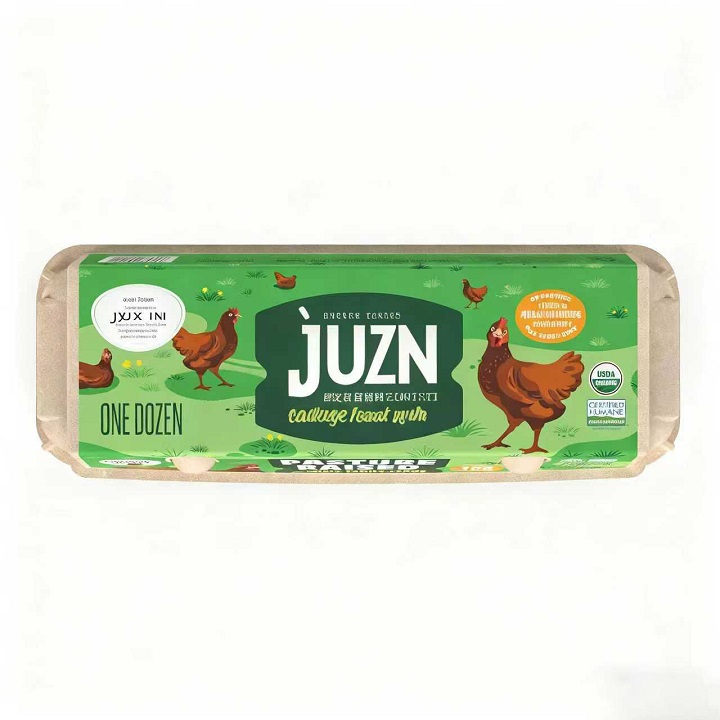
Choosing the wrong label material can cause peeling, wrinkling, smudging, edge lifting, or unreadable information. The right solution depends on carton material, storage temperature, moisture exposure, application method, and desired shelf appearance.
Paper Labels for Dry or Low-Moisture Applications
Paper labels are a practical option for many dry, clean, room-temperature carton applications. They are widely used when brands want a natural, traditional, or cost-effective look.
Common paper options include:
- Gloss coated paper for bright colors and a smooth finish
- Matte paper for a softer, premium appearance
- Uncoated paper for writable surfaces
- Textured paper for artisanal or farm-style branding
- Kraft paper for a rustic, natural visual identity
Paper labels can work well on cartons that are stored and handled in controlled environments. However, ordinary paper labels may not be ideal where condensation, refrigeration, damp handling, or repeated abrasion is expected.
BOPP and PP Labels for Moisture Resistance
BOPP and PP labels are common choices for refrigerated food packaging because they offer better moisture resistance than standard paper. They can also provide a clean, high-definition printed appearance.
These labels are especially suitable for:
- Plastic egg cartons
- PET clamshells
- Refrigerated retail displays
- Moisture-prone distribution environments
- Labels that require longer durability
- Labels with barcodes or variable data that must remain legible
A white BOPP label is often selected when a brand needs vibrant color, opacity, durability, and a polished appearance. A clear BOPP label can create a "no-label" look on transparent plastic packs, while metallic or specialty films can support premium presentation.
Adhesive Selection Is Critical
A beautiful label can still fail if the adhesive does not match the carton surface. Egg cartons are commonly made from molded pulp, plastic, foam, or coated board, and each surface behaves differently.
Consider these factors before choosing an adhesive:
1. Carton substrate: Is the carton molded fiber, PET, PP, foam, coated paperboard, or another material?
2. Application temperature: Will labels be applied before or after refrigerated storage?
3. Service temperature: Will cartons be stored in chilled conditions?
4. Surface condition: Is the carton dry, dusty, rough, textured, or slightly moist?
5. Application method: Will labels be hand-applied or machine-applied?
6. Removal needs: Does the brand need permanent adhesion, repositionability, or clean removability?
For molded pulp cartons, label testing is particularly important because the surface can be uneven and fibrous. A label that adheres well to smooth plastic may perform poorly on recycled pulp fiber.
Expert recommendation: Before mass production, test the actual label material and adhesive on the final carton using real storage conditions. Test immediately after application, after 24 hours, after refrigeration, and after normal transport simulation.
Essential Information for Egg Carton Labels
The required information varies by market, product type, and sales channel. Brands should always verify local food-labeling rules with a qualified regulatory adviser or the relevant government authority before printing.
For U.S. shell eggs, FDA guidance states that shell eggs not specifically processed to destroy all live *Salmonellae* must carry a safe handling statement. The guidance specifies that the statement must be prominent and conspicuous, placed in a hairline box, and use a minimum type size of one-sixteenth inch; the words "SAFE HANDLING INSTRUCTIONS" must appear in bold capital letters. [fda]
Typical Custom Egg Label Content Checklist
A custom egg label may include:
- Brand name
- Product identity
- Egg quantity
- Egg size and grade, where applicable
- Net quantity statement
- Farm, producer, packer, or distributor information
- Country or place of origin, where required
- Packing date
- Best-before or use-by date
- Batch or lot code
- Storage instructions
- Safe handling statement
- Nutrition information, where required
- Barcode
- Allergen or food-safety information, where applicable
- Sustainability or certification marks
- QR code for farm story, recipes, traceability, or product information
FDA guidance for applicable U.S. shell eggs specifies this safe-handling wording:
> "SAFE HANDLING INSTRUCTIONS: To prevent illness from bacteria: keep eggs refrigerated, cook eggs until yolks are firm, and cook foods containing eggs thoroughly." [fda]
The FDA also states that covered shell eggs must be held at retail at 45°F / 7.2°C or below. [fda]
Avoid Unsupported Marketing Claims
Food-label claims can carry legal, commercial, and reputational risks. Claims such as "organic," "free-range," "cage-free," "antibiotic-free," "pasture-raised," "humane," or "high omega-3" should be supported by the producer's actual standards, records, certifications, and relevant local requirements.
Egg-label terminology can be confusing to consumers. Penn State Extension notes that egg carton labels describe a variety of housing and production terms, reinforcing the importance of clear, substantiated brand communication rather than vague packaging claims. [extension.psu]
A good rule is simple: if the claim cannot be verified, do not print it.
How to Design High-Converting Custom Egg Labels
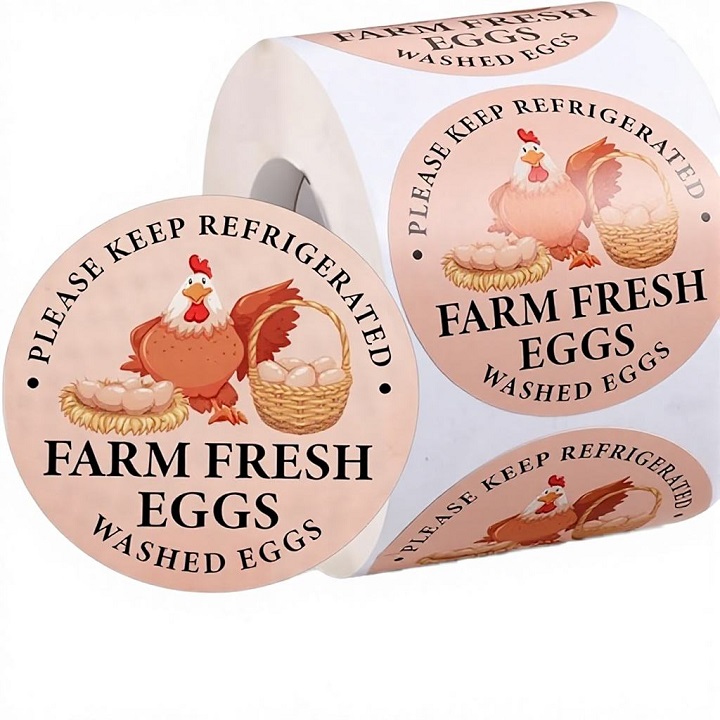
A label should be designed for real retail conditions—not just for viewing on a computer screen. Customers may see it from several feet away, under cool lighting, beside competing products, and through a refrigerator door.
Create a Clear Visual Hierarchy
Use the front of the label to answer the shopper's first questions in seconds:
1. What is this product?
2. Which brand sells it?
3. How many eggs are inside?
4. What makes this variant different?
5. Is there a key trust signal I should notice?
A practical visual hierarchy may look like this:
- Top: Brand logo or farm name
- Center: Product name, such as "Free-Range Large Brown Eggs"
- Prominent badge: "12 Eggs" or "Large"
- Supporting area: Verified product attribute and visual illustration
- Side or back: Barcode, lot code, storage information, and required details
Avoid placing too many messages on the front panel. A crowded label can make the product look less premium and make compliance information harder to read.
Use Contrast for Refrigerated Retail Environments
Refrigerator lighting can reduce the impact of pale colors and fine typography. Use sufficient contrast between the background and essential text.
For example:
- Dark green text on a light cream background can support a natural premium look.
- Black text on white supports strong barcode readability.
- White text on a dark color can look bold but must be large enough to remain readable.
- Fine gold foil may be attractive, but it should not replace critical text or barcode areas.
When using QR codes or barcodes, avoid reflective lamination, textured surfaces, extreme curvature, and low-contrast printing in the scan area.
Plan for Variable Data Early
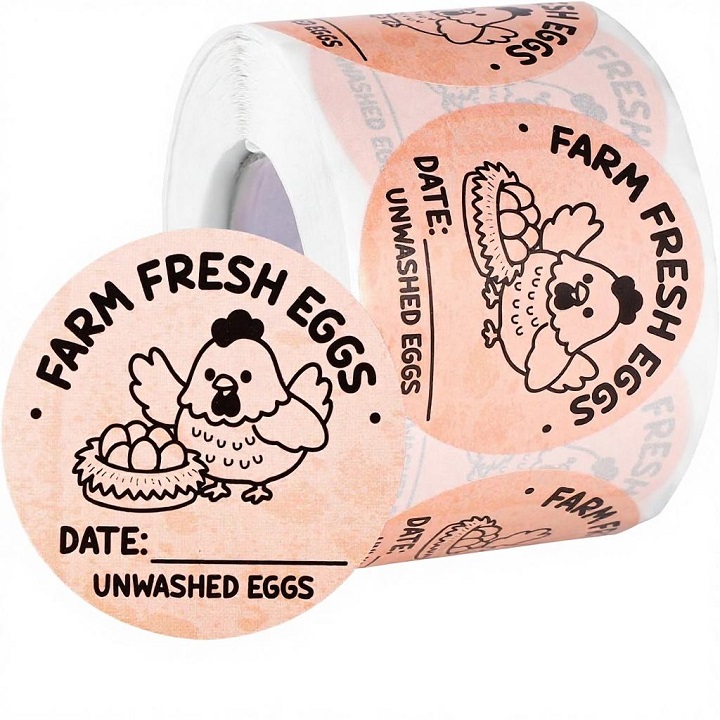
Many egg brands require variable information, including dates, lot numbers, farm codes, or regional identifiers. Plan the print process before finalizing artwork.
Options may include:
- Leaving a blank thermal-transfer print area
- Adding an inkjet-printable zone
- Printing consecutive serial or batch codes
- Using variable-data digital printing
- Applying a second small date label
- Integrating a QR code linked to changing product information
This planning prevents a common production problem: producing visually excellent labels with no suitable space for practical coding.
A Step-by-Step Custom Egg Label Buying Process
Working with a professional custom label manufacturer should be structured and measurable. At XingKun, the best projects begin with technical details, not only artwork.
Step 1: Define the Carton and Market
Provide the carton type, carton dimensions, application position, destination market, product quantity, storage conditions, and required label content.
Key questions include:
- What carton material will be used?
- What is the label application area?
- Will the product be refrigerated?
- Will labels be applied manually or automatically?
- Which languages are required?
- Is the label for direct food contact, or only for the outer carton?
- Does the customer need recyclable, compostable, or premium material options?
Step 2: Choose Label Shape and Size
Popular formats include:
- Rectangle labels for lids and side panels
- Oval labels for artisan or farm brands
- Circle labels for seals or small packs
- Custom die-cut labels for distinctive brand shapes
- Wrap-around labels for plastic clamshells
- Tamper-evident labels for premium packs
The label should fit the available area while preserving a safe margin from folds, vents, carton edges, and uneven pulp texture.
Step 3: Confirm Material, Adhesive, and Finish
Choose the face stock and adhesive according to the carton material and cold-chain requirements. Then select a finish that supports the intended brand image.
Common finishing options include:
- Gloss lamination
- Matte lamination
- UV varnish
- Spot UV
- Foil stamping
- Embossing
- Soft-touch lamination
- Clear window effects
- Permanent or freezer-grade adhesive options
For egg labels, durability and legibility should take priority over decorative effects.
Step 4: Review Artwork and Compliance Copy
Before production, review:
- Spelling, translations, and country-specific language
- Product count and size statements
- Barcode number and scan specification
- Required handling statements
- Certification logos and approvals
- Date-code area
- Brand ownership and trademark usage
- Bleed, safe margin, die line, and color profile
Never approve label artwork based only on an on-screen preview. Request a physical proof, digital proof with specifications, or production sample whenever possible.
Step 5: Test Before Full Production
Apply samples to the actual egg carton. Check adhesion, edge lift, print quality, barcode scanning, refrigerated performance, and appearance after transport.
A simple test protocol can include:
- Initial adhesion test after application
- 24-hour adhesion check
- Refrigeration exposure check
- Moisture or condensation observation
- Rub-resistance test
- Barcode scan test
- Carton opening and closing test
- Transit-carton abrasion check
This small validation step can prevent expensive relabeling, retailer rejection, or product presentation failures.
Why Work With XingKun for Custom Egg Labels?
XingKun serves overseas brands, wholesalers, and manufacturers with OEM and ODM custom printing and packaging solutions. For buyers sourcing custom egg labels from China, the value is not limited to producing stickers. The objective is to develop label specifications that fit the carton, the product environment, the logistics process, and the retail positioning.
A professional custom-label project should include:
- Artwork and structural guidance
- Custom label size and die-cut shape
- Material and finish selection
- Roll, sheet, or individual-label formats
- Brand color management
- Barcode and variable-data planning
- Sample confirmation before mass production
- Flexible packaging solutions for multi-SKU programs
XingKun can support labels for egg cartons as part of a broader custom packaging program, including printed boxes, stickers, paper packaging, inserts, cards, books, and promotional materials. This can help brands maintain visual consistency across retail packaging, shipping cartons, point-of-sale materials, and marketing inserts.
Conclusion
Custom egg labels are a practical branding, compliance, and supply-chain tool for farms, egg producers, distributors, wholesalers, and private-label retailers. The right label should make the product easier to recognize, communicate accurate product information, withstand real storage conditions, and support reliable retail operations.
To create better custom egg carton labels, start with the actual carton material and product environment. Then select a suitable label stock and adhesive, build a clean visual hierarchy, protect barcode readability, reserve space for traceability data, and validate the label through physical testing. For regulated food markets, always confirm the final label content with the appropriate local food-labeling authority or regulatory adviser.
Ready to create custom egg labels for your farm, retail brand, or wholesale program? Contact XingKun with your carton dimensions, label size, artwork, order quantity, destination market, and storage requirements to receive a tailored material and printing recommendation.
FAQ
1. What is the best material for custom egg labels?
The best material depends on the carton and storage conditions. Paper labels can suit dry, room-temperature applications, while BOPP or PP labels are usually more suitable for refrigerated, moisture-prone, or plastic-carton applications. Always test the final label on the actual carton before mass production.
2. Can custom egg labels be applied to molded pulp cartons?
Yes. Molded pulp egg cartons can use custom labels, but their textured and fibrous surface requires a compatible adhesive. A sample adhesion test is strongly recommended because labels that work on smooth plastic may not adhere equally well to molded pulp.
3. What information should be on an egg carton label?
Typical information includes the brand, product identity, egg quantity, producer or distributor details, date or lot code, storage guidance, barcode, and market-required food information. Requirements vary by country, so brands should verify local rules before printing.
4. Are waterproof egg labels necessary?
Waterproof or moisture-resistant labels are recommended when cartons may experience refrigeration, condensation, damp handling, or extended cold-chain distribution. BOPP or PP materials generally provide better moisture resistance than standard paper labels.
5. Can XingKun produce private-label egg carton stickers?
Yes. XingKun can support OEM and ODM private-label egg carton stickers with custom sizes, shapes, materials, finishes, colors, barcodes, and packaging formats. This is useful for retailers, distributors, and wholesalers managing multiple brands or product variants.
6. Can I add a barcode or QR code to custom egg labels?
Yes. Barcodes and QR codes can be printed on custom egg labels. Keep enough white space around the barcode, use strong contrast, avoid distortion, and test scanning on the actual finished label. QR codes can link to recipes, farm information, traceability pages, certifications, or promotional campaigns.
7. What file format is best for custom egg label printing?
Vector artwork is preferred, typically AI, PDF, EPS, or editable SVG. Images should be high resolution, commonly 300 DPI at final print size. The file should include bleed, safe margins, correct colors, fonts converted to outlines where appropriate, and a separate die line for custom-shaped labels.
References
1. U.S. Food and Drug Administration. "[Small Entity Compliance Guide: Safe Handling Statements on Labeling of Shell Eggs and Refrigeration of Shell Eggs Held for Retail Distribution]." Guidance covering safe handling statement requirements, placement, type size, and refrigeration requirements for applicable shell eggs. [fda]
2. GS1 US. "[Standards for Foodservice and Retail Grocery]." Reference on GS1-128 use for higher-level packaging and encoded supply-chain information such as batch, lot, serial, and expiration data. [gs1us]
3. Penn State Extension. "[Egg Carton Labels]." Educational resource explaining common egg carton claims and production terminology. [extension.psu]
4. North Carolina State University Extension. "[Shell Eggs—Food Safety for Processors]." Guidance on shell-egg safety controls and temperature management. [foodsafetyprocessors.ces.ncsu]
5. National Agricultural Law Center. "[Food Foundations: Regulation of Eggs]." Overview of U.S. egg regulation and general packaging-labeling considerations. [nationalaglawcenter]
6. XingKun. "[Egg Labels]." Product reference page for custom egg-label sourcing and packaging requirements. The page could not be retrieved during this research session, so product-specific claims should be verified with XingKun before publication.


