Content Menu
● What Is Cross Merchandising?
● Why Cross Merchandising Displays Work
>> Improve Product Discovery
>> Increase Units Per Transaction
>> Support Faster Decisions
>> Make Better Use of Store Space
● Build Product Pairings Around Real Shopper Needs
● Choose the Right Retail Display Format
>> Countertop Displays for Add-On Purchases
>> Floor Displays for Seasonal Campaigns
>> Shelf Displays for Category Relevance
● Design a Display That Explains the Bundle
● A Five-Step Cross Merchandising Plan
>> 1. Define One Measurable Goal
>> 2. Select One Shopper Occasion
>> 3. Match Products by Use, Not Just Category
>> 4. Place the Unit Where the Need Appears
>> 5. Test, Measure, and Refresh
● Avoid These Common Mistakes
>> Weak Product Logic
>> Too Many Products
>> Unclear Signage
>> Ignoring Practical Production Details
>> No Measurement Plan
● Work With a Display Manufacturing Partner
● FAQs
>> 1. What is the difference between cross merchandising and bundling?
>> 2. Which products work best for cross merchandising displays?
>> 3. Where should a cross merchandising display be placed?
>> 4. How many products should be included in one display?
>> 5. How can retailers measure display performance?
>> 6. Can custom cardboard displays support heavy products?
>> 7. How long does it take to develop a custom retail display?
● References
Cross merchandising displays help shoppers see a complete solution—not just a single product. When complementary items are presented together in a clear, attractive retail display, brands can make product discovery easier, increase units per transaction, and create a more useful in-store experience.
For retail teams, the objective is not simply to place more products in one location. It is to create a logical buying moment: *"I'm buying this, so I may also need that."* A well-designed cross merchandising display turns that moment into an intuitive, low-friction decision.
At Shenzhen XingKun Packing Products Co., Ltd., we have spent more than 20 years producing custom printed packaging and display stands for brands and distributors in over 30 countries and regions. From countertop displays and shelf-ready packaging to floor displays and promotional standees, we have seen that the most effective displays connect product, shopper mission, and retail environment.
What Is Cross Merchandising?
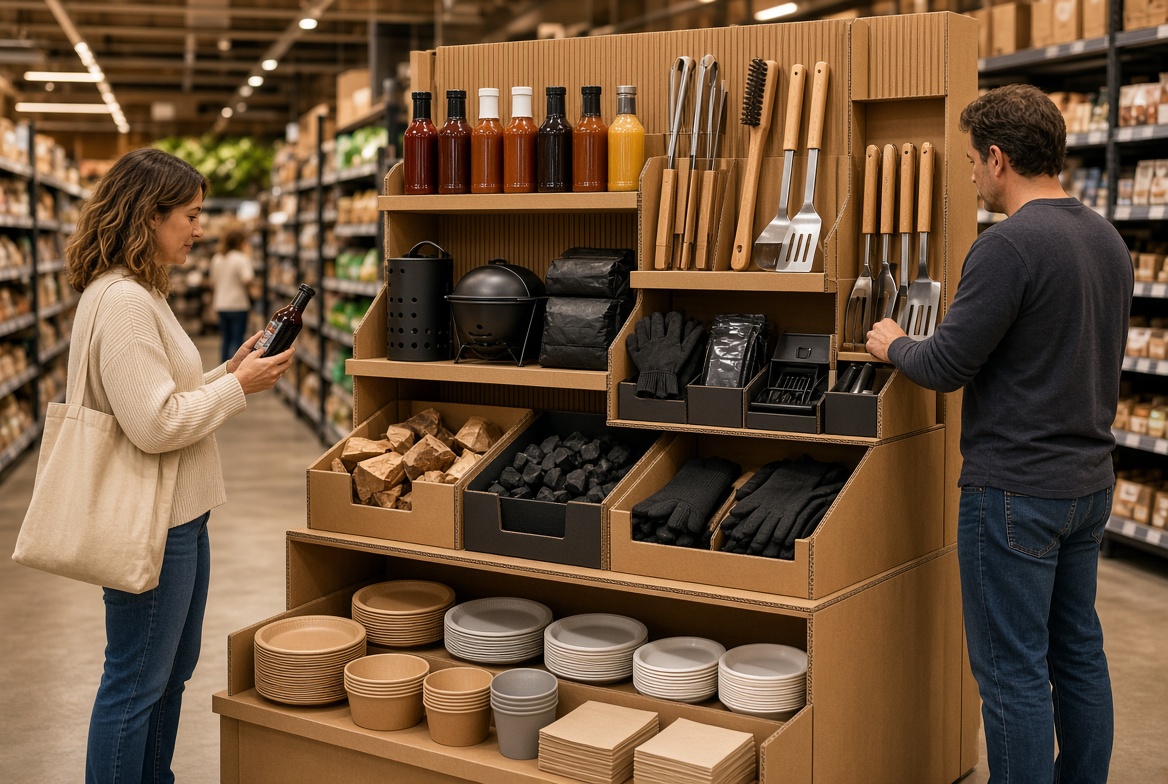
Cross merchandising, sometimes called secondary product placement, is the practice of displaying products from different but related categories together. The items should solve the same shopper need, support the same activity, or belong to the same seasonal occasion.
For example:
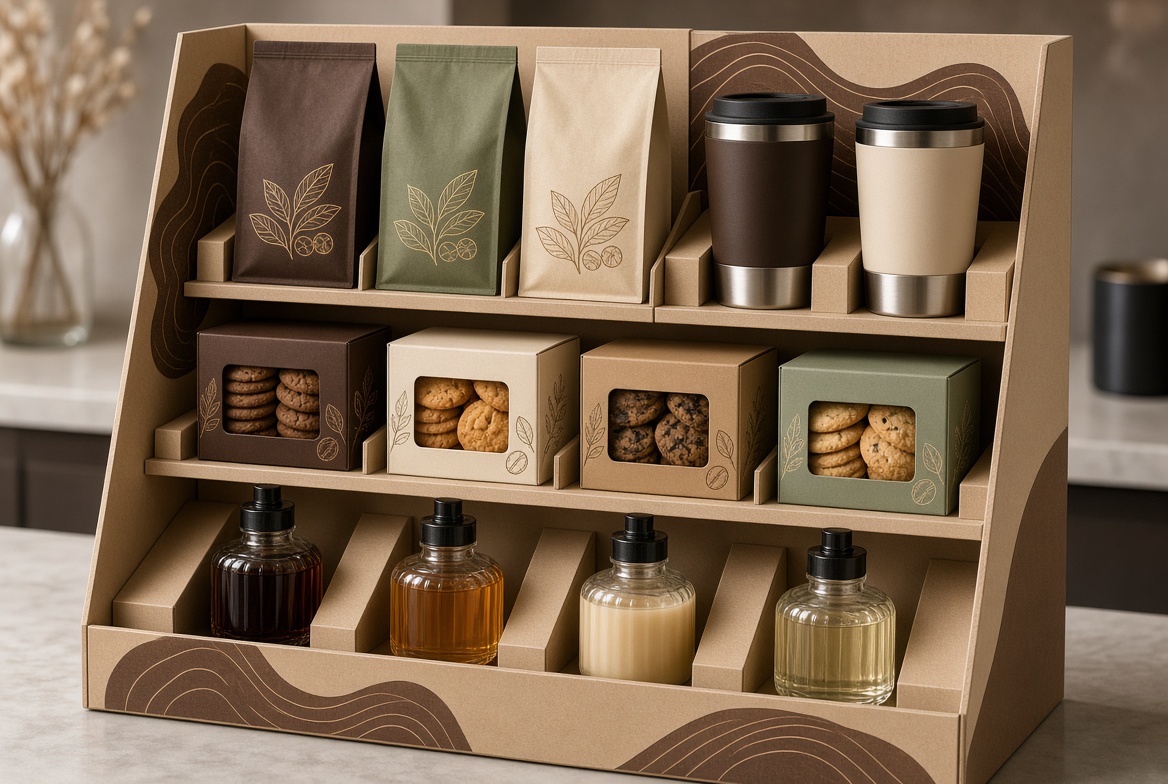
- A coffee display paired with biscuits, syrups, and reusable cups
- A sunscreen display placed with sunglasses, beach towels, and after-sun products
- A smartphone display combined with chargers, cases, screen protectors, and earbuds
- A grilling display featuring charcoal, sauces, disposable plates, and cooking tools
- A gift display combining greeting cards, candles, wrapping paper, and small accessories
The purpose is simple: reduce the mental effort required to find complementary products. Rather than asking shoppers to visit several aisles, a display presents a ready-made solution in one convenient location.
Research on product bundles suggests that presenting complementary products as a unified offering can increase overall purchases, partly because shoppers perceive the items as belonging together.
Why Cross Merchandising Displays Work
Shoppers do not always enter a store with a complete shopping list. They may remember a missing item when they see it, discover a better way to use a product, or make an unplanned purchase because the solution is immediately clear.
A strategically positioned display can influence those decisions by making product relationships visible.
Improve Product Discovery
New, seasonal, or less-visible products can benefit from being placed next to high-demand items. For example, a newly launched spice blend may gain attention when displayed beside popular grilling products rather than sitting alone in a crowded seasoning aisle.
This approach gives emerging products access to existing traffic and helps shoppers understand their use case quickly.
Increase Units Per Transaction
A cross merchandising display encourages customers to add relevant items to their basket. The goal is not to create confusion or pressure; it is to offer a helpful prompt at the correct point in the journey.
A shopper buying a bottle of wine may appreciate seeing a small display of corkscrews, gift bags, and snack pairings nearby. The display turns separate items into a complete occasion.
Support Faster Decisions
Strong retail displays answer three questions in seconds:
1. What is this for?
2. What goes with it?
3. Why should I buy it now?
When the display communicates these answers through product selection, hierarchy, color, graphics, and messaging, customers can make decisions with less searching and less hesitation.
Make Better Use of Store Space
A cross merchandising unit can turn an entrance, aisle end, checkout area, or unused side space into a focused selling opportunity. Research has found that display location can significantly affect shopper behavior, while displays placed nearer to the focal category can have a stronger influence on purchase behavior.
Build Product Pairings Around Real Shopper Needs
The most successful cross merchandising programs start with shopper behavior—not with an assumption that two products "look good" together.
A strong pairing is based on a real usage connection. It should help a shopper complete a task, prepare for an event, solve a problem, or enjoy an activity.
| Shopper Mission | Primary Product | Complementary Products | Display Theme |
| Host a dinner party | Wine | Glasses, snacks, napkins, corkscrews | "Ready for Tonight" |
| Start a home project | Paint | Brushes, tape, rollers, drop cloths | "Everything for a Better Finish" |
| Travel comfortably | Luggage | Neck pillows, adapters, luggage tags | "Travel Essentials" |
| Protect a new phone | Smartphone | Case, cable, earbuds, screen protector | "Set Up Your New Device" |
| Prepare for outdoor grilling | Meat or grill | Sauce, charcoal, utensils, disposable plates | "Weekend Grill Kit" |
Before selecting products, review available sales and shopper data. Look for items frequently purchased in the same transaction, seasonal buying patterns, repeated customer questions, and common staff recommendations.
Useful questions include:
- Which items are commonly purchased together?
- Which product requires accessories or refills?
- What do shoppers frequently forget?
- Which products are bought for the same event or activity?
- Which slow-moving item can add value to a popular purchase?
- What seasonal need can the display solve?
A display should feel like a service to the shopper. If the relationship between products needs a long explanation, the pairing is probably too weak.
Choose the Right Retail Display Format
The right format depends on product dimensions, store layout, campaign duration, replenishment needs, and the level of visual impact required.
Countertop Displays for Add-On Purchases
Countertop display stands work particularly well for small, lightweight, impulse-friendly products. They are commonly used near checkout areas, service counters, and product demonstration zones.
Good applications include:
- Beauty accessories
- Gift cards and greeting cards
- Phone accessories
- Small snacks
- Travel-size products
- Batteries and replacement parts
A countertop display should be compact, stable, and easy for staff to refill. Keep the key message short. Shoppers should understand the offer while standing several feet away.
Floor Displays for Seasonal Campaigns
Floor displays are suitable for larger assortments, promotional bundles, and high-traffic areas. They can create a strong visual destination near entrances, aisle ends, or wide store walkways.
Use them for:
- Holiday campaigns
- Product launches
- Back-to-school collections
- Sports and outdoor promotions
- Beverage and snack pairings
- Home improvement projects
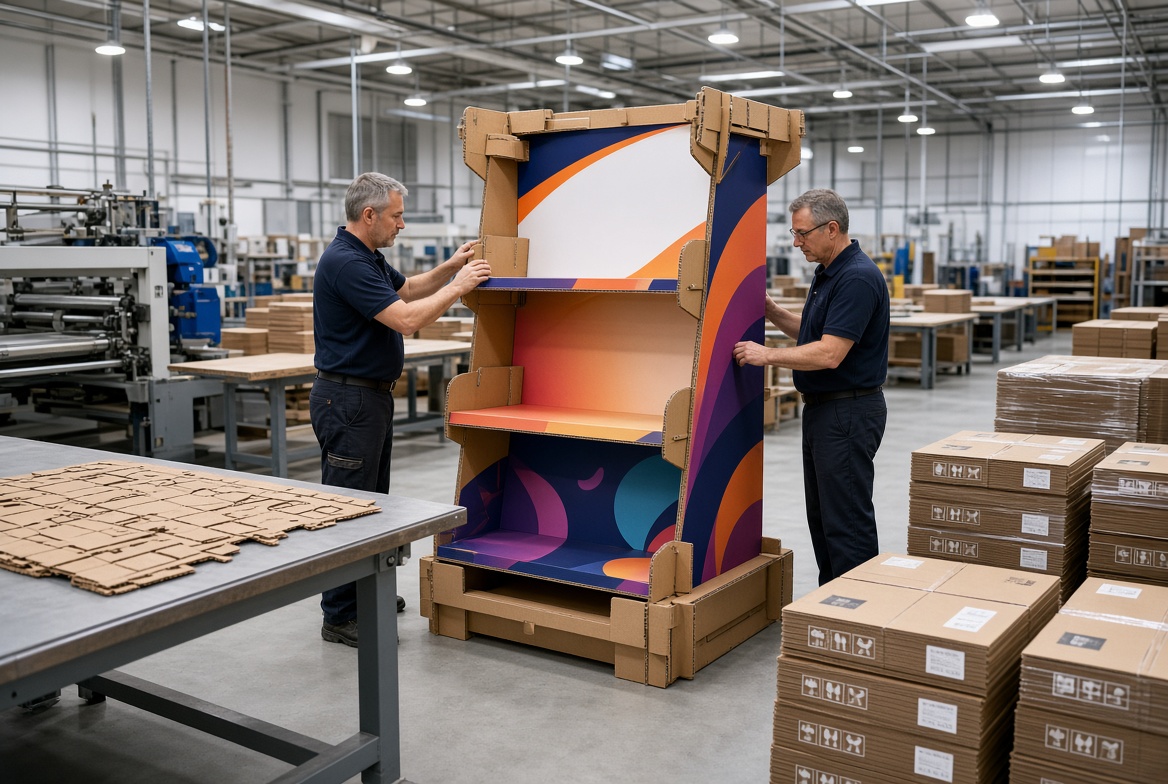
For export brands and retailers, custom printed floor displays can also simplify campaign consistency across multiple locations. A well-engineered unit should arrive efficiently packed, assemble quickly, hold the intended product weight, and maintain its appearance through the campaign period.
Shelf Displays for Category Relevance
Shelf-ready displays and shelf trays work well when the cross-sell relationship needs to remain close to the primary product category. For example, a shelf display for coffee pods can include a nearby tray of biscuits or reusable filters.
This format helps brands capture attention without requiring a separate promotional area.
Design a Display That Explains the Bundle
A display is more than a product holder. It is a visual communication tool. Customers should understand the concept before they need to read detailed copy.
Use these design principles when developing a cross merchandising display:
- Lead with one clear occasion. "Movie Night," "Travel Ready," and "BBQ Weekend" are easier to understand than generic promotional phrases.
- Show the primary product first. It should remain the visual anchor.
- Use a clear hierarchy. Present the main item, supporting items, price message, and callout in a logical order.
- Limit assortment complexity. Too many SKUs can weaken the story and make replenishment harder.
- Use color intentionally. Coordinated color blocks can connect products from different categories.
- Add practical guidance. A short usage suggestion, recipe, checklist, or bundle recommendation can make the display more useful.
- Make products easy to pick up. Accessible product placement is as important as attractive graphics.
- Design for replenishment. Retail staff need to understand quickly where each SKU belongs.
A practical rule is to create one dominant message and one shopper action. For example: "Build Your Summer Picnic" with a simple prompt such as "Choose your drink, snack, and outdoor essential."
A Five-Step Cross Merchandising Plan
1. Define One Measurable Goal
Start with a specific result. Do you want to introduce a new product, increase basket value, improve sell-through for a seasonal range, or move a complementary accessory?
Avoid trying to solve every challenge with one display. A focused goal produces a clearer design and a more meaningful performance review.
2. Select One Shopper Occasion
Build the campaign around a real moment: weekend cooking, school preparation, holiday gifting, travel, pet care, home organization, or outdoor activities.
The occasion should guide every decision, including product selection, headline, display shape, graphic style, and placement.
3. Match Products by Use, Not Just Category
A successful combination is based on functionality. A bottle opener beside beverages is logical. A random collection of discounted items is not cross merchandising—it is simply mixed stock.
Product compatibility matters more than the number of items displayed.
4. Place the Unit Where the Need Appears
Placement should align with shopper behavior. Consider entrances for seasonal themes, aisle ends for high-visibility offers, category adjacencies for logical add-ons, and checkout zones for small, low-consideration purchases.
Academic research on in-store displays has found that different display locations can produce different effects, with front end-cap displays showing a particularly strong impact on category purchase in one study.
5. Test, Measure, and Refresh
Do not judge a display only by appearance. Evaluate performance against a comparable baseline period or comparable store group.
Track:
- Sales of the primary item
- Sales of the complementary item
- Units per transaction
- Average transaction value
- Sell-through rate
- Stock replenishment frequency
- Store staff feedback
- Customer comments or observed behavior
Refresh creative, products, or messaging when the campaign loses relevance, the season changes, or inventory shifts. A display should remain useful, not become background noise.
Avoid These Common Mistakes
Even a visually impressive retail display can underperform if it is poorly matched to the shopper journey.
Weak Product Logic
Putting products together because they are both on promotion is rarely enough. Shoppers need to immediately understand the shared use case.
Too Many Products
A display with too many product types can look cluttered and make the decision harder. Prioritize a small, purposeful range that supports one clear occasion.
Unclear Signage
Avoid vague headlines such as "Special Offer" when a more useful message is possible. "Complete Your Coffee Break" is more specific and gives the customer a reason to explore the display.
Ignoring Practical Production Details
The display must work beyond the design stage. Consider product weight, shelf dimensions, transportation, assembly, retail environment, replenishment, durability, and recycling requirements before production.
No Measurement Plan
Without a baseline and defined metrics, it is difficult to know whether the campaign created incremental sales or simply moved purchases from another part of the store.
Work With a Display Manufacturing Partner
A cross merchandising campaign needs more than attractive artwork. It requires structural design, material selection, print quality, product-fit testing, efficient packing, and reliable production control.
Shenzhen XingKun Packing Products Co., Ltd. produces custom display stands and printed packaging for brands, distributors, and retail programs worldwide. With over 20 years of manufacturing experience and service support for customers across more than 30 countries and regions, we help turn retail concepts into practical, production-ready display solutions.
Whether you need a countertop unit for accessories, a shelf-ready display for a product launch, or a large-format floor display for a seasonal campaign, our team can support the process from concept development through printing, manufacturing, and delivery.
Contact XingKun today to discuss your retail display requirements and request a customized solution for your next cross merchandising campaign.
FAQs
1. What is the difference between cross merchandising and bundling?
Cross merchandising places complementary products together in a store, but the items can still be purchased separately. Bundling usually sells several products as one pre-defined package or offer.
2. Which products work best for cross merchandising displays?
Products with a clear shared use case work best. Examples include coffee and snacks, phones and accessories, grills and cooking supplies, or skincare and travel-size toiletry bags.
3. Where should a cross merchandising display be placed?
The best location depends on the campaign objective. Common options include store entrances, aisle ends, next to the main category, fitting rooms, service counters, and checkout areas.
4. How many products should be included in one display?
There is no universal number, but the assortment should remain focused and easy to understand. Start with one hero product and a limited range of complementary items that support the same shopper occasion.
5. How can retailers measure display performance?
Measure changes in sales, units per transaction, average transaction value, sell-through, stock movement, and performance of the featured products compared with a baseline period or comparable store group.
6. Can custom cardboard displays support heavy products?
Yes, depending on the structural design, board grade, product weight, product distribution, and reinforcement requirements. Heavy products may require reinforced corrugated board, internal supports, shelves, dividers, or a different display structure.
7. How long does it take to develop a custom retail display?
Timing varies based on complexity, artwork readiness, sampling, materials, quantity, testing, and shipping requirements. Early planning helps ensure sufficient time for structural development, sample approval, and campaign rollout.
References
- [Creative Displays Now — The Ultimate Guide to Cross-Merchandising Retail Displays]
- [Journal of Retailing and Consumer Services — Beyond Bundles: Choosing Product Bundles Increases Shopping Basket Size]
- [Singapore Management University — Impact of Different Types of In-Store Displays on Consumer Purchase Behavior]
- [Croatian Academic Research Repository — The Impact of the Position of Shopper Marketing Stands]
- [SSRN — Cross-Category Effects of Aisle and Display Placements]
- [POPAI — Shopper Engagement Study]


