Content Menu
● Reusable Tote Bags vs Disposable Packaging Bags at a Glance
● What Is a Reusable Tote Bag?
● What Are Disposable Packaging Bags?
● Environmental Impact Depends on Reuse
● Cost Comparison: Unit Price vs Lifetime Value
● Branding Value: A Tote Bag Travels With the Customer
● Product Protection and Operational Fit
● How to Choose the Right Bag
>> 1. Identify the expected use cycle
>> 2. Match the material to the product
>> 3. Design for reuse, not just appearance
>> 4. Reduce unnecessary packaging layers
>> 5. Plan for end-of-life communication
● Material Selection Matters More Than Labels
● Industry Trend: Packaging Waste Is Driving Change
● Work With an Experienced Tote Bag Manufacturer
● FAQ
>> Are reusable tote bags always better than disposable packaging bags?
>> Which tote bag material is best for promotional use?
>> Are paper bags more sustainable than plastic packaging bags?
>> How many times should a reusable tote bag be used?
>> What information should I provide when ordering custom tote bags?
>> Can a business use reusable and disposable bags together?
● References
When comparing reusable tote bags vs disposable packaging bags, the best option is not determined by material alone. It depends on the bag's intended use, carrying capacity, number of reuse cycles, branding purpose, distribution model, and end-of-life route.
At Shenzhen XingKun Packing Products Co., Ltd., we have spent more than 20 years producing printed tote bags and packaging products for brands and distributors in over 30 countries and regions. From a manufacturing perspective, the strongest packaging choice is the one that fits the product journey—not simply the one with the lowest unit price or the most appealing sustainability claim.
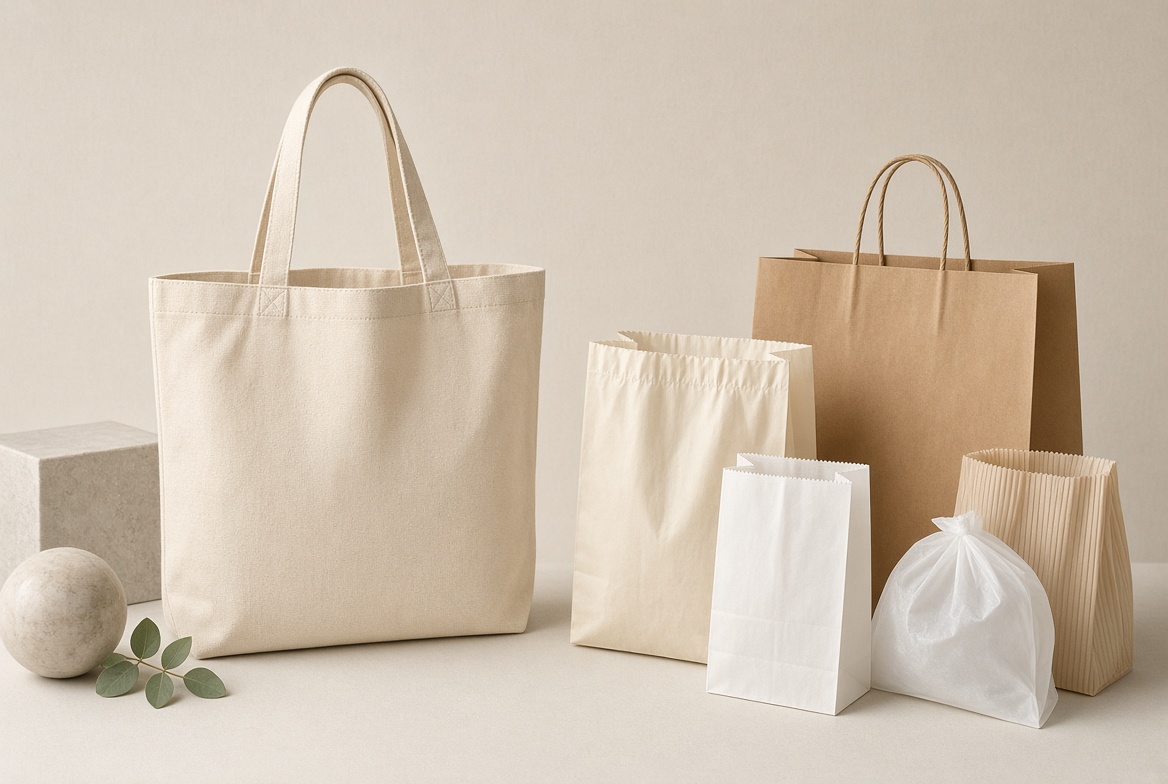
A reusable tote bag can create lasting brand exposure and reduce per-use impact when customers use it repeatedly. A disposable packaging bag can remain practical for food delivery, hygiene-sensitive products, lightweight retail goods, and high-volume fulfillment. The right decision requires a full comparison.
Reusable Tote Bags vs Disposable Packaging Bags at a Glance
| Factor |
Reusable Tote Bags |
Disposable Packaging Bags |
| Primary purpose |
Repeated carrying, retail promotion, gifting, events |
One-time or limited-use packaging and delivery |
| Typical materials |
Cotton, canvas, non-woven PP, RPET, jute, recycled fabric |
HDPE, LDPE, paper, kraft paper, compostable films |
| Initial unit cost |
Usually higher |
Usually lower |
| Cost per use |
Can decrease substantially with repeated use |
Typically remains tied to one transaction |
| Branding lifespan |
Long-term, visible after purchase |
Short-term, usually discarded after delivery |
| Carrying strength |
Often designed for heavier loads |
Varies widely by thickness and material |
| Storage requirement |
More space per unit |
Compact and efficient for mass distribution |
| Best for |
Retail brands, exhibitions, premium products, loyalty campaigns |
E-commerce, takeaway, grocery, protective inner packaging |
| Environmental result |
Stronger when genuinely reused many times |
Depends on material reduction, recycling access, and disposal behavior |
The main difference is simple: a tote bag is a reusable brand asset, while a disposable packaging bag is usually a transaction-level logistics tool.
What Is a Reusable Tote Bag?
A reusable tote bag is a durable carry bag intended for multiple uses. It may be made from cotton, canvas, non-woven polypropylene, woven polypropylene, recycled PET fabric, jute, or other durable materials.
For brands, tote bags are more than shopping bags. They can function as:
- Retail carry bags
- Promotional giveaways
- Event merchandise
- Corporate gift packaging
- Subscription-box inserts
- Museum, bookstore, and lifestyle merchandise
- Reusable grocery or market bags
A well-made printed tote bag should have enough structural strength for its expected load. This includes suitable fabric weight, reinforced handles, reliable stitching, print durability, and dimensions that match the customer's actual items.
For example, a cosmetics brand may use a small RPET tote bag for a holiday gift set. The customer may then use that bag for travel, errands, or daily storage. Every reuse extends the brand's visibility beyond the original purchase.
What Are Disposable Packaging Bags?
Disposable packaging bags are primarily designed for short-term product containment, protection, transport, and presentation. They may be used once, reused occasionally by consumers, or recycled where collection systems allow.
Common formats include:
- Poly mailers for e-commerce shipping
- LDPE or HDPE retail bags
- Kraft paper shopping bags
- Food-delivery bags
- Garment packaging bags
- Die-cut handle bags
- Plastic zip bags
- Compostable packaging bags
- Protective inner bags for industrial products
Disposable bags remain important because they can be lightweight, space-efficient, moisture-resistant, and cost-effective for large order volumes. In many supply chains, especially e-commerce and food delivery, a durable reusable bag may not be the most practical option.
The key is to avoid treating every disposable bag as identical. Material thickness, recycled content, printing method, product weight, local waste infrastructure, and distribution distance can all change the outcome.
Environmental Impact Depends on Reuse
A common mistake is assuming that every reusable tote bag is automatically better than every disposable packaging bag. In practice, reusable bags have their own production footprint, especially when made from heavier materials such as cotton or thick fabric.
The advantage comes from actual repeated use.
A United Nations Environment Programme review of life-cycle assessments found that reusable bags generally achieve lower impacts than single-use bags when they are reused enough times. The reuse threshold differs by material, production method, and impact category. Reusable LDPE bags may perform better after roughly 5–10 uses, while durable non-woven polypropylene bags may require around 10–20 uses. Cotton bags generally need substantially more reuse cycles because cotton cultivation and processing can be resource-intensive.
This means the right question is not, "Is this bag reusable?" Instead, ask:
1. Will customers want to keep it?
2. Is it durable enough to be reused?
3. Does the design make reuse convenient?
4. Is the material appropriate for the brand's product and audience?
5. Can the bag avoid becoming a one-time giveaway with a higher material footprint?
A reusable tote bag must earn repeat use through practical design. A fashionable but uncomfortable bag may be used once. A simple tote with strong handles, useful dimensions, and an attractive print can remain in a customer's routine for years.
Cost Comparison: Unit Price vs Lifetime Value
Disposable packaging bags usually offer the lowest upfront cost. They are especially suitable where packaging is required for every shipment, order, or takeaway transaction.
However, unit price is not the full commercial picture.
| Cost Consideration |
Reusable Tote Bags |
Disposable Packaging Bags |
| Purchase cost |
Higher due to materials and construction |
Lower for standard formats |
| Printing investment |
Often higher, especially for multi-color branding |
Usually economical for simple logos and large runs |
| Marketing value |
Can continue after the sale |
Often ends at delivery or unboxing |
| Repeat exposure |
Potentially high |
Usually limited |
| Shipping volume |
Can require more warehouse space |
Often easier to pack flat in large quantities |
| Suitable order model |
Campaign-based, retail, premium launches |
Daily fulfillment, low-margin items, high-volume shipping |
For a brand selling premium apparel, reusable tote bags can reduce the need for separate promotional merchandise. The bag itself becomes a branded product experience.
For a high-volume online seller shipping low-value accessories, a lightweight disposable mailer may still be the more commercially sensible choice. In this case, the company can improve the packaging system through size optimization, recycled-content materials, and reducing unnecessary secondary packaging.
Branding Value: A Tote Bag Travels With the Customer
Reusable tote bags offer one major advantage that disposable packaging rarely matches: long-term public visibility.
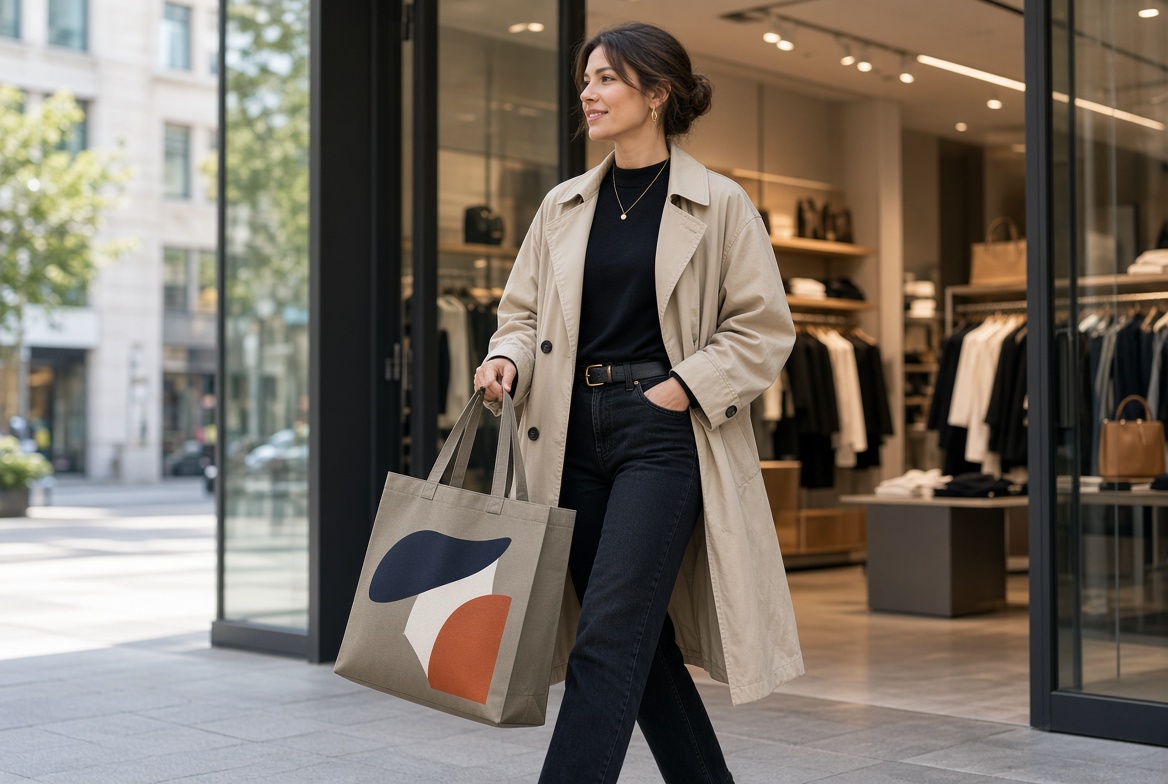
When a customer carries a branded tote to work, school, a supermarket, gym, or travel destination, the bag becomes a moving brand touchpoint. Unlike a digital advertisement, it can reach people in real-life environments over many months.
A tote bag works particularly well when:
- The design looks good enough to carry in public
- The logo is visible but not overly promotional
- The bag has a useful size and handle length
- The fabric suits everyday use
- The printed message connects with the brand's identity
For example, an organic skincare company may choose a natural cotton tote with a minimal one-color design. A tech event organizer may use a non-woven PP tote for brochures, samples, and attendee gifts. A fashion retailer may select a premium canvas bag with woven labels and reinforced handles to support a higher-end customer experience.
Disposable packaging bags can also carry branding effectively, but their role is often concentrated at the point of delivery. They are valuable for recognition, unboxing, and basic customer communication, but they are less likely to generate ongoing exposure.
Product Protection and Operational Fit
The packaging decision should begin with the product's needs.
Disposable packaging bags may be the better choice when a business needs:
- Moisture resistance for shipping
- Tamper-evident sealing
- Hygienic product separation
- Compact storage in warehouses
- Fast packing processes
- Lightweight packaging for freight control
- Single-order e-commerce fulfillment
Reusable tote bags may be the better choice when a business needs:
- Stronger carrying capacity
- A premium retail presentation
- Gift-ready packaging
- Event distribution
- Retail merchandise
- A reusable alternative to traditional shopping bags
- A long-lasting promotional item
For many businesses, the most effective approach is not choosing one format exclusively. It is creating a two-layer packaging strategy.
A clothing brand, for instance, may ship garments in a protective recyclable poly mailer, then offer a reusable tote as a premium add-on, loyalty reward, store purchase bag, or campaign gift. This prevents the reusable item from being forced into a role where lightweight protective packaging is necessary.
How to Choose the Right Bag
Before selecting materials or requesting a quotation, define the bag's job. A clear brief reduces cost mistakes, quality issues, and sustainability claims that do not match real usage.
1. Identify the expected use cycle
Ask whether the bag is intended for one shipment, several shopping trips, or hundreds of public uses. If the customer is unlikely to reuse it, avoid using unnecessary heavy materials.
2. Match the material to the product
Use moisture-resistant materials for shipping-sensitive goods. Choose stronger fabrics for heavier retail items. Select paper or fabric formats when presentation and tactile experience matter most.
3. Design for reuse, not just appearance
A reusable tote should have reinforced handles, sufficient bottom width, balanced dimensions, and durable printing. A bag that tears, fades, or feels awkward will not deliver repeated value.
4. Reduce unnecessary packaging layers
Review whether each bag, insert, wrap, or protective component has a clear function. Right-sizing packaging can reduce material use and shipping inefficiency without compromising product protection.
5. Plan for end-of-life communication
If a bag includes recycled content, is recyclable, or is designed for reuse, communicate that clearly and accurately. Avoid vague claims such as "eco-friendly" without explaining the material or recommended handling.
Material Selection Matters More Than Labels
Words such as "reusable," "recyclable," "biodegradable," and "compostable" should not be used as shortcuts. Each description has practical limitations.
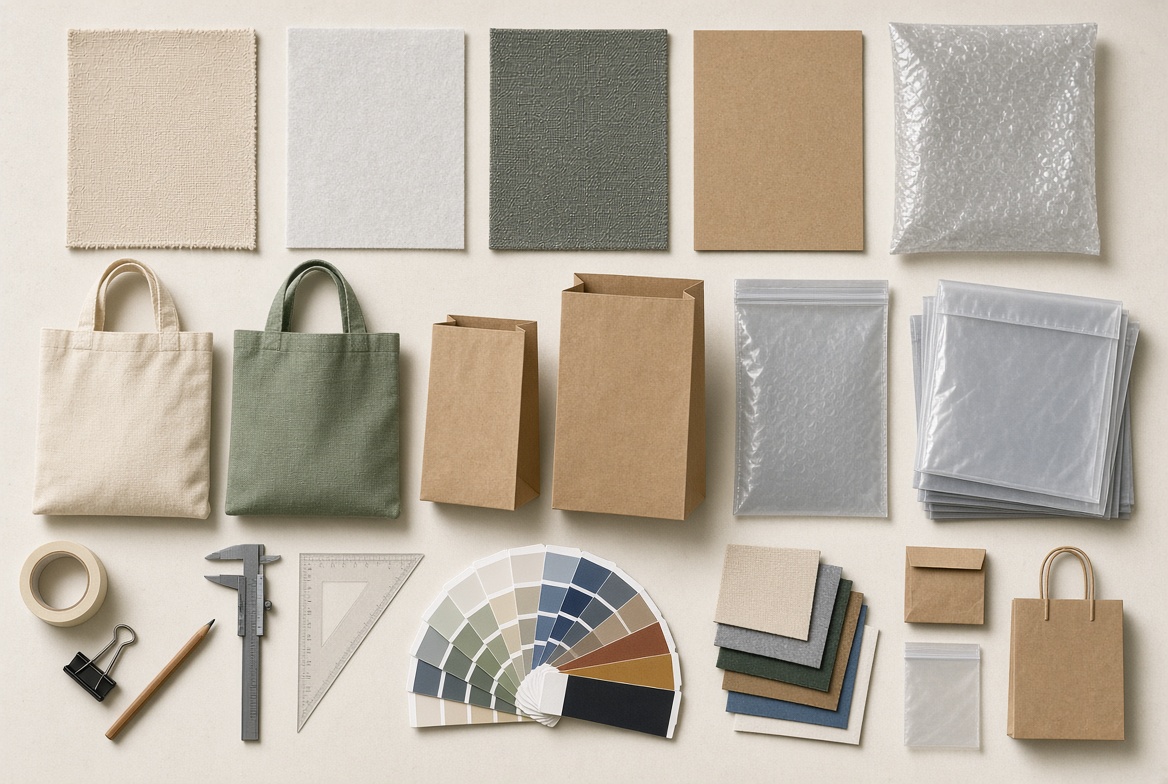
A recycled-content poly bag may support material circularity, but its recycling outcome still depends on local collection and processing systems. A compostable bag may require specific industrial composting conditions that are unavailable to many consumers. A cotton tote may look natural and premium, but its environmental performance relies heavily on long-term repeated use.
The strongest approach is honest material matching:
- Use cotton or canvas where customers are likely to reuse the bag frequently.
- Use non-woven PP or RPET when durability, cost control, and promotional scale are important.
- Use lightweight poly mailers when shipment protection and logistics efficiency are essential.
- Use paper bags where paper-based presentation fits the product, while considering load capacity and moisture exposure.
- Use recycled materials where supply, quality, and end-of-life pathways support the claim.
Industry Trend: Packaging Waste Is Driving Change
Packaging reduction is becoming a commercial and operational priority across global markets. In the European Union, packaging waste reached an estimated 79.7 million tonnes in 2023, equal to 177.8 kg per person. The same data shows that average consumption of lightweight plastic carrier bags was 65 bags per person in 2023, down by 30 bags compared with 2018.
These figures show why brands are reassessing bag choices. The response should not be to replace every disposable bag with a heavier alternative. Instead, businesses should minimize unnecessary packaging, improve reusable designs, use suitable recycled materials, and select formats that fit their actual product journey.
For importers, retailers, and distributors, this creates a clear procurement opportunity: choose packaging that can satisfy customer expectations, support brand differentiation, and remain operationally realistic.
Work With an Experienced Tote Bag Manufacturer
Reusable tote bags and disposable packaging bags both have a role in modern commerce. The best choice depends on whether your priority is long-term branding, protective performance, unit cost, retail experience, shipping efficiency, or repeat use.
Shenzhen XingKun Packing Products Co., Ltd. supports brands and distributors with custom printed tote bags, paper bags, packaging bags, and other printed packaging products. With more than 20 years of production experience and service experience across more than 30 countries and regions, we help customers turn packaging requirements into practical, consistent, and brand-ready products.
Contact our team today to discuss your bag size, material, printing requirements, order quantity, target market, and intended application. We can help you choose a reusable tote bag, disposable packaging bag, or combined packaging solution that fits your product and brand goals.
FAQ
Are reusable tote bags always better than disposable packaging bags?
No. Reusable tote bags perform best when customers genuinely reuse them many times. If a durable bag is used only once, its higher material and production footprint may not be justified.
Which tote bag material is best for promotional use?
Non-woven polypropylene and RPET are often practical choices for large promotional campaigns because they balance cost, durability, printability, and everyday usability. Canvas or cotton may be more suitable for premium retail and lifestyle brands.
Are paper bags more sustainable than plastic packaging bags?
Not automatically. Paper bags may support a paper-based brand presentation, but they can require more material and may be less resistant to moisture. The better choice depends on bag weight, recycled content, reuse rate, product requirements, and disposal conditions.
How many times should a reusable tote bag be used?
The required number varies by material and the environmental category being measured. Research reviewed by UNEP indicates that reusable LDPE bags may need roughly 5–10 uses, non-woven polypropylene bags about 10–20 uses, and cotton bags significantly more frequent reuse to deliver comparative benefits.
What information should I provide when ordering custom tote bags?
Provide bag dimensions, intended product weight, material preference, quantity, logo files, print colors, handle style, finishing requirements, target market, and delivery deadline. These details help the manufacturer recommend a suitable specification.
Can a business use reusable and disposable bags together?
Yes. Many brands use protective disposable packaging for shipping and offer reusable tote bags for retail purchases, premium campaigns, events, subscription programs, or customer loyalty rewards. This approach can match each bag type to the job it performs best.
References
- [United Nations Environment Programme — Single-use Plastic Bags and Their Alternatives: Recommendations from Life Cycle Assessments]
- [United Nations Environment Programme — Single-use Plastics: A Roadmap for Sustainability]
- [UNEP Life Cycle Initiative — Single-use Plastic Products and Their Alternatives]
- [European Commission — Packaging Waste]
- [Eurostat — Packaging Waste Statistics]
- [European Commission — Proposal for Packaging and Packaging Waste Regulation]0677_EN.pdf)


