Content Menu
● What Is a Big-Box Store?
● Why Big-Box Stores Matter for Brand Growth
>> Reach More Shoppers Where They Buy
>> Build Trust Through Retail Presence
>> Create More Opportunities for Product Discovery
● Physical Retail Creates a Different Buying Experience
>> Shoppers Can See and Evaluate the Product
>> In-Store Displays Can Encourage Impulse Purchases
● The Big-Box Retail Readiness Test
>> Prove That Demand Already Exists
>> Confirm Your Unit Economics Before Scaling
>> Prepare for Retail Operations, Not Just the Pitch
● Why Product Displays Influence Retail Success
>> A Display Should Support the Buying Decision
>> Design for Speed, Clarity, and Replenishment
● How to Choose the Right Retail Partner
● A Practical Plan for Entering Big-Box Retail
>> 1. Study the Retail Environment
>> 2. Build a Buyer-Focused Sales Story
>> 3. Create a Retail-Ready Display Concept
>> 4. Plan for the First 90 Days
● Turn Retail Placement Into Long-Term Growth
● Frequently Asked Questions
>> 1. Why should a brand sell products in big-box stores?
>> 2. What products are suitable for big-box retail?
>> 3. What do retail buyers look for in a new product?
>> 4. Why are custom display stands important in retail stores?
>> 5. How can a brand prepare for a large retail order?
>> 6. Can a display stand be customized for different retail formats?
● References
For growing brands, selling products in big-box stores can turn a promising product into a recognizable retail brand. A successful placement in a major retailer does more than create a new sales channel. It puts your product in front of high-intent shoppers, strengthens buyer confidence, expands market reach, and creates opportunities for repeat purchases.
However, large-scale retail is not simply about getting a purchase order. It is about proving that your product can earn its place on the shelf. Retail buyers need confidence in your pricing, product demand, fulfillment capacity, packaging quality, and in-store presentation. Consumers need a clear reason to notice, understand, and choose your product within seconds.
For brands ready to scale, big-box retail can be a powerful growth engine. The brands that benefit most are those that combine a strong product with dependable operations and retail-ready display solutions.
What Is a Big-Box Store?
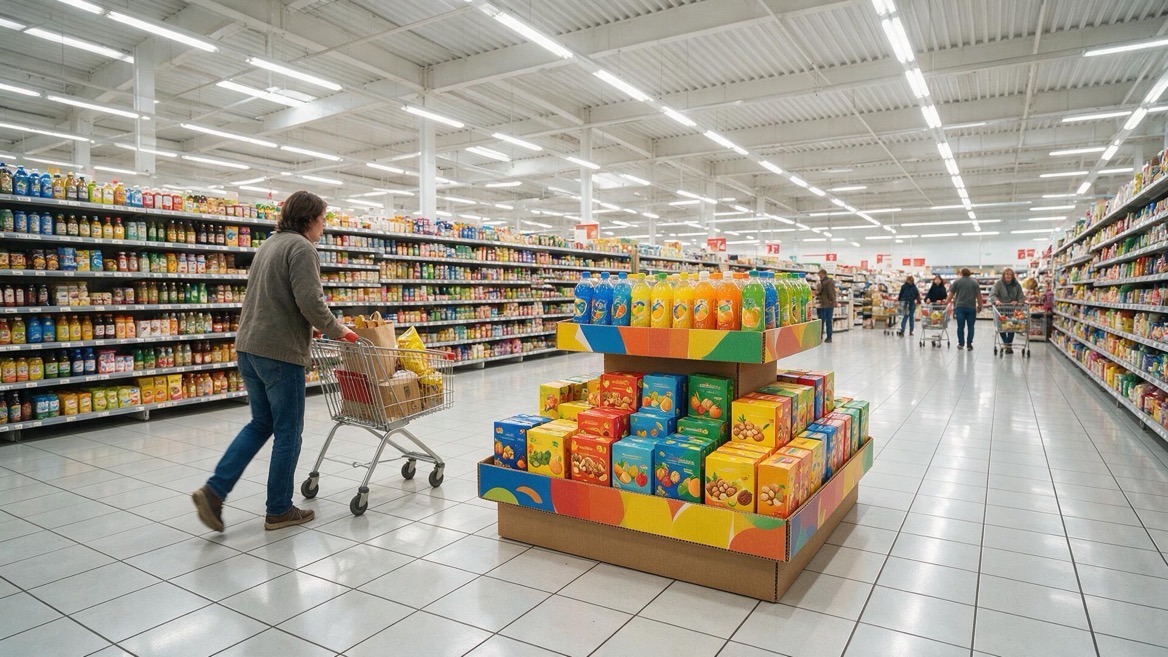
A big-box store is a large-format retail business that sells a broad selection of products, often at competitive prices and high sales volumes. These retailers may operate hundreds or thousands of locations, supported by national distribution networks, established shopper traffic, and large promotional budgets.
Common big-box retail formats include:
- Mass merchants and supercenters
- Warehouse clubs
- Home improvement retailers
- Specialty retail chains
- Grocery and consumable-product retailers
- Pharmacy and health-focused chains
For suppliers, the attraction is clear: one approved product can gain access to a much wider customer base than most independent retail accounts can provide.
Yet scale also raises the standard. Large retailers expect suppliers to meet strict requirements related to product consistency, barcodes, packaging, logistics, inventory planning, and delivery performance.
Why Big-Box Stores Matter for Brand Growth
A major retailer can give a product immediate visibility. Shoppers already trust the retail environment, understand the store's value proposition, and visit with a purchase mindset.
For a newer brand, that environment can reduce the hesitation customers may feel when trying an unfamiliar product. If shoppers see a product in a retailer they already know, they may perceive it as more accessible, credible, and convenient to buy.
Reach More Shoppers Where They Buy
Big-box stores attract broad audiences across multiple locations. This gives suppliers access to shoppers who may never discover their products through direct sales, social media, trade events, or smaller specialty retailers.
Retail placement can support brand expansion in several ways:
- It increases physical product visibility.
- It creates local availability across multiple markets.
- It makes repeat purchases more convenient.
- It helps shoppers discover products during routine store visits.
- It may also expand digital visibility through the retailer's online store.
For many categories, physical availability matters because consumers want immediate access. They do not always want to wait for shipping, pay delivery fees, or take a chance on an unfamiliar item without seeing it first.
Build Trust Through Retail Presence
Retail placement does not automatically guarantee trust, but it can help accelerate it. Large retailers have established buying standards, supplier procedures, and customer-service expectations. When a product appears in that environment, shoppers may view the brand as more legitimate and easier to purchase again.
This is especially valuable for brands entering competitive product categories. Consumers often have many choices, limited time, and little patience for confusing claims. A well-presented product in a familiar retail setting can make the buying decision feel lower-risk.
Trust becomes stronger when the shelf experience supports the product promise. Clear packaging, readable benefits, quality materials, and an organized display all communicate that the brand is prepared for retail.
Create More Opportunities for Product Discovery
Online shoppers often arrive with a specific search in mind. In-store shoppers are more likely to browse categories, compare options, and discover products they did not plan to buy.
That discovery advantage is particularly important for:
- New product launches
- Seasonal products
- Giftable products
- Consumables
- Products with strong visual appeal
- Products that benefit from demonstration
- Products with an easy-to-understand value proposition
A shopper may enter a store for household essentials and leave with a product they noticed near an aisle end, checkout area, promotional zone, or themed seasonal display.
This is where retail displays become commercially important. They do not merely hold products. They create an interruption in the shopper's routine and make a brand easier to notice.
Physical Retail Creates a Different Buying Experience
Physical retail offers something that digital product listings cannot fully replicate: direct interaction. Shoppers can see the scale of a product, examine packaging, compare colors, read key information, and assess perceived quality before buying.
For many products, this interaction helps remove purchase barriers.
Shoppers Can See and Evaluate the Product
A strong product image can help online, but a physical product creates a more complete impression. In-store shoppers can evaluate the packaging, materials, size, finish, and product presentation in real time.
This matters when purchase decisions depend on:
- Texture or material quality
- Product size and dimensions
- Color accuracy
- Packaging design
- Product features
- Gift-ready presentation
- Comparison with competing products
If shoppers can understand the product quickly, they are more likely to feel comfortable making a purchase.
In-Store Displays Can Encourage Impulse Purchases
Many retail purchases are unplanned. They happen because a product is visible, relevant, well-priced, and easy to understand at the moment a shopper sees it.
An effective display helps create that moment. It can move products away from crowded shelves and place them in a more noticeable retail location. For brands, this creates an opportunity to communicate product value before the shopper walks away.
A display should answer three questions quickly:
1. What is this product?
2. Why should I care?
3. Why should I buy it now?
If the display cannot answer these questions within a few seconds, the shopper may continue walking.
The Big-Box Retail Readiness Test
Before approaching a large retailer, brands should assess whether their business can support the opportunity. A large order may look exciting on paper, but it can damage a business if the supplier cannot fulfill it profitably and consistently.
Retail readiness should be evaluated across five areas.
| Readiness Area | Key Question | Why It Matters |
| Product demand | Is there evidence customers want the product? | Buyers need confidence that the item can sell |
| Pricing structure | Can the product support wholesale margins and promotions? | Retail sales must remain profitable |
| Production capacity | Can you scale output without reducing quality? | Stockouts and delays can damage the relationship |
| Packaging compliance | Is the product ready for transport, shelving, and scanning? | Packaging affects logistics and shopper experience |
| Merchandising plan | Can the product stand out in-store? | Visibility supports sell-through and repeat orders |
Prove That Demand Already Exists
Retail buyers do not only evaluate the product itself. They evaluate the likelihood that it will move from shelf to checkout.
Brands should prepare evidence such as:
- Sales performance in smaller retail locations
- Repeat-purchase activity
- Direct sales trends
- Product reviews and customer feedback
- Category demand
- Seasonal sales patterns
- Social engagement or community interest
- Demonstration results from events or pop-ups
The goal is not to claim that a product is "the best." The goal is to show why a defined group of shoppers is likely to buy it.
A clear demand story is more persuasive than a broad promise.
Confirm Your Unit Economics Before Scaling
Large retailers often expect competitive pricing, promotional flexibility, and reliable supply. That means brands need to understand the full cost of selling through retail before agreeing to a major program.
Your calculation should account for:
- Product manufacturing cost
- Packaging cost
- Display cost
- Freight and warehousing
- Distributor or retailer margins
- Promotional discounts
- Returns or damaged goods
- Retail compliance expenses
- Payment terms and cash-flow pressure
A retail order can increase revenue while reducing cash reserves if payment is delayed and inventory must be produced upfront. Brands should evaluate both profitability and cash-flow timing before committing.
Prepare for Retail Operations, Not Just the Pitch
A polished sales presentation may win interest, but retail execution determines whether the relationship lasts.
Suppliers should be ready to discuss:
- Production lead times
- Minimum order quantities
- Quality-control procedures
- Packaging specifications
- Shipping carton requirements
- Barcode and labeling processes
- Inventory planning
- Reorder capability
- Display assembly and replenishment
Retailers want partners who can solve problems before they reach the sales floor. Clear operational planning makes a brand easier to work with and reduces risk for the buyer.
Why Product Displays Influence Retail Success
Shelf space is competitive. Even a strong product can be overlooked if its packaging blends into the category, its benefits are unclear, or its presentation is inconsistent.
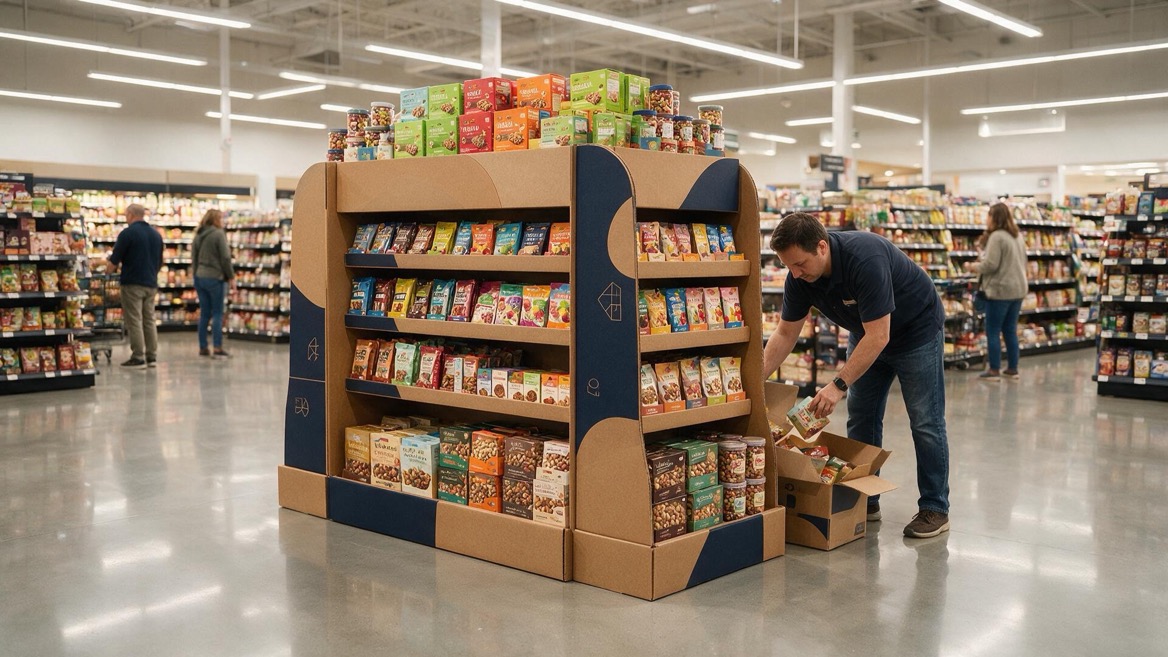
Custom display stands help brands create a stronger in-store presence. They can organize products, communicate key messages, support promotions, and make items easier to browse.
A Display Should Support the Buying Decision
The best retail display is not necessarily the most complicated. It is the one that makes the product easier to notice and easier to buy.
A retail-ready display should consider:
- Product size and weight
- Number of stock-keeping units
- Store footprint restrictions
- Replenishment needs
- Consumer viewing angle
- Brand colors and visual hierarchy
- Promotional messaging
- Assembly requirements
- Shipping protection
- Sustainability goals
For example, a countertop display may work well for compact products, accessories, samples, or impulse-buy items. A floor display may be more suitable for larger product ranges, seasonal promotions, or high-volume campaigns.
The correct format depends on where the display will be placed and how customers shop that category.
Design for Speed, Clarity, and Replenishment
Retail teams have limited time. A display that is difficult to assemble, confusing to stock, or easily damaged can create unnecessary friction.
A practical display program should prioritize:
- Fast setup
- Clear product organization
- Strong structural stability
- Efficient packing
- Easy replenishment
- Consistent brand presentation
For international brands and distributors, packaging engineering also matters. Displays must arrive safely after shipping, store correctly, and perform reliably at the point of sale.
At Shenzhen XingKun Packing Products Co., Ltd., we apply more than 20 years of printing and packaging production experience to develop display stands, retail packaging, and printed products for brand and distribution partners. Our team supports projects from structural development and material selection to production and export delivery for customers across more than 30 countries and regions.
How to Choose the Right Retail Partner
Not every large retailer is the right fit. A brand should choose retail partners based on its target audience, product positioning, supply capability, and long-term goals.
Before approaching a retailer, ask:
- Does this retailer attract my ideal customer?
- Is my price point appropriate for this store?
- Does my product fill a category gap?
- Can I compete visually with current shelf products?
- Can I meet the retailer's volume expectations?
- Does the retailer's image fit my brand positioning?
- Is there a seasonal opportunity for my product?
- Can I support in-store promotions if needed?
A premium product may struggle in a retail environment built mainly around low-price comparisons. Likewise, a high-volume consumable product may not receive enough exposure in a narrow specialty channel.
The goal is not simply to get listed. It is to find a retail environment where the product has a realistic chance to perform.
A Practical Plan for Entering Big-Box Retail
The strongest retail programs begin before the buyer meeting. Use this process to prepare a more credible approach.
1. Study the Retail Environment
Visit stores, review the category, and observe how competing products are presented. Pay attention to price points, packaging styles, shelf placement, promotions, and display formats.
Look for gaps that your product can fill. Your advantage may be better design, a clearer use case, stronger value, improved functionality, or a more compelling visual presentation.
2. Build a Buyer-Focused Sales Story
Your sales materials should focus on the retailer's opportunity, not only your company history.
A strong presentation includes:
- Product overview
- Target customer
- Retail price and wholesale price
- Competitive advantage
- Sales proof or demand indicators
- Production capacity
- Packaging and display concept
- Launch support plan
- Clear next step
Keep the message practical. Buyers need to understand how the product can help their category perform.
3. Create a Retail-Ready Display Concept
Do not treat the display as an afterthought. Include it in your launch plan from the beginning.
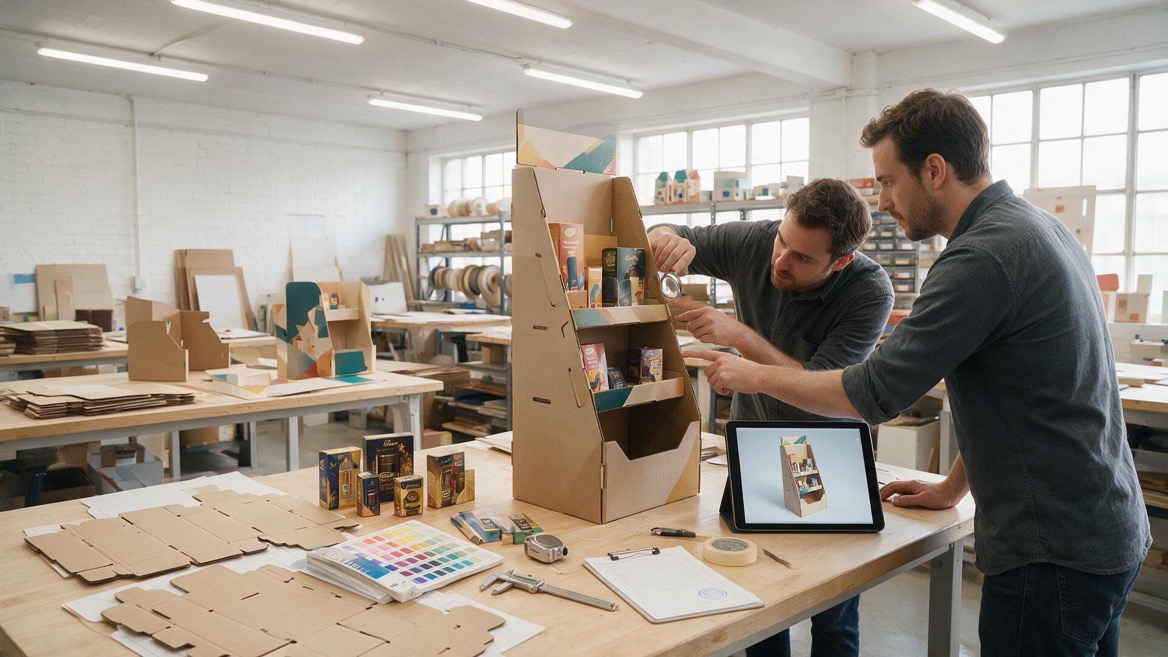
Show how the product can be presented in-store, where it may be placed, how customers will understand it, and how store teams can replenish it. A visual display concept can help buyers picture the product in their retail environment.
4. Plan for the First 90 Days
The first retail period is critical. Brands should monitor inventory, sales activity, product condition, shopper response, and store-level execution.
Use early results to identify:
- Which locations perform best
- Which products sell fastest
- Whether the display is easy to maintain
- Whether pricing is clear
- Whether packaging communicates enough value
- Whether additional promotion is needed
The objective is not just to launch. It is to create enough momentum to support reorders and broader distribution.
Turn Retail Placement Into Long-Term Growth
Getting products into big-box stores can expand awareness, improve accessibility, and create meaningful sales opportunities. But retail success depends on much more than having a good product.
Brands need a clear demand story, realistic pricing, scalable production, retail-compliant packaging, and a display strategy that helps shoppers notice the product quickly.
A well-engineered display stand can support all of these goals. It protects products, communicates brand value, improves product visibility, and helps create a better shopping experience.
If you are preparing a retail launch, planning a seasonal promotion, or looking to improve shelf impact, Shenzhen XingKun Packing Products Co., Ltd. can help you develop custom display stands and printed packaging solutions built for real retail environments.
Contact our team today to discuss your display structure, packaging requirements, artwork, production timeline, and export delivery needs.
Frequently Asked Questions
1. Why should a brand sell products in big-box stores?
Big-box stores can provide broad customer reach, stronger brand visibility, convenient access for shoppers, and the potential for larger purchase orders. They can also help brands build recognition in multiple markets at once.
2. What products are suitable for big-box retail?
Products with broad consumer appeal, competitive pricing, reliable supply, clear benefits, and repeat-purchase potential are often good candidates. Consumables, household products, seasonal items, pet products, beauty products, accessories, and giftable items can be well suited when supported by the right retail strategy.
3. What do retail buyers look for in a new product?
Retail buyers typically look for customer demand, category relevance, product differentiation, profitable pricing, dependable supply, retail-ready packaging, and a clear plan for in-store sales performance.
4. Why are custom display stands important in retail stores?
Custom display stands help products attract attention in crowded retail environments. They organize merchandise, communicate product benefits, support promotions, and can encourage unplanned purchases.
5. How can a brand prepare for a large retail order?
Brands should confirm production capacity, review profit margins, prepare compliant packaging, plan logistics, establish quality-control procedures, and ensure sufficient cash flow to support inventory and payment cycles.
6. Can a display stand be customized for different retail formats?
Yes. Display stands can be developed as countertop displays, floor displays, pallet displays, shelf-ready packaging, dump bins, and other formats based on product dimensions, store requirements, campaign objectives, and shipment conditions.
References
1. [Creative Displays Now — Why Market Your Products in Big-Box Stores?]
2. [Creative Displays Now — How to Get Your Product Into Big-Box Stores]
3. [Shopify — How To Get Your Product in Stores: 10 Steps]
4. [Forbes — How To Sell Directly To Big-Box Retail]
5. [Forbes — How To Sell Your Product Into a Big Box Retailer]
6. [SCORE — How to Get Your Product Into Stores]
7. [Mr. Checkout — 5 Steps to Getting Your Product Into Big Box Retailers]


