Content Menu
● Why Enamel Pin Size Matters
● Custom Enamel Pin Size Chart
● 0.75-Inch Enamel Pins: Small, Clean, and Cost-Efficient
>> Best applications
>> When to choose 0.75 inches
>> Limitations
● 1-Inch Enamel Pins: The Industry Standard
>> Best applications
>> Why 1 inch works so well
>> Design tips for 1-inch pins
● 1.25-Inch Enamel Pins: The Best All-Round Size
>> Best applications
>> Why brands choose 1.25 inches
● 1.5-Inch Enamel Pins: Ideal for Detailed Artwork
>> Best applications
>> Advantages
>> Trade-offs
● 2-Inch Enamel Pins: Statement and Collector Pieces
>> Best applications
>> When 2 inches is the right choice
>> Important considerations
● How to Choose the Right Pin Size: A 5-Step Process
● Size, Enamel Type, and Detail: What Changes?
● Common Size Mistakes to Avoid
>> 1. Choosing size before simplifying artwork
>> 2. Using tiny text
>> 3. Ignoring metal-line thickness
>> 4. Overusing colors
>> 5. Forgetting the backing
● Material, Plating, and Finish Recommendations
● Sample Recommendations by Business Type
● Quality-Control Checklist Before Production
● Conclusion
● FAQ
>> 1. What is the most popular custom enamel pin size?
>> 2. Is a 0.75-inch enamel pin too small?
>> 3. What size enamel pin is best for anime or character merchandise?
>> 4. Are 2-inch enamel pins too big?
>> 5. Should I choose soft enamel or hard enamel?
>> 6. How do I know whether my artwork is suitable for a small pin?
● References
Choosing the right custom enamel pin size is one of the most important decisions in a pin project. For most brands, 1 inch to 1.25 inches offers the best balance of visibility, wearability, production cost, and design clarity; 1.5 inches is ideal for detailed artwork, while 0.75 inches and 2 inches serve more specialized purposes. [shopify]
At XingKun, we manufacture custom enamel pins and related branded merchandise for overseas brands, wholesalers, and producers through OEM and ODM services. From a factory perspective, the best pin size is not simply the largest size you can afford—it is the size that preserves your logo, character, text, and enamel color areas while remaining practical for the end user. [amball]
Explore XingKun's custom badge and enamel pin capabilities here: [Custom Badges & Enamel Pins].
Why Enamel Pin Size Matters
Pin size affects far more than appearance. It influences:
- Legibility: Small text, thin lines, and fine facial details can disappear at smaller sizes.
- Production feasibility: Every color area must be separated by raised metal lines, and extremely fine details may not reproduce cleanly. [enamelpins]
- Cost: Larger pins require more metal, enamel, plating, packaging material, and sometimes a more complex mold.
- Wearability: A 2-inch pin may look impressive, but it can feel heavy on a shirt, cap, or lanyard. [gumtoo]
- Perceived value: A well-proportioned 1.25-inch hard enamel pin can feel more premium than an oversized but poorly detailed pin.
In custom manufacturing, we often see brands choose a size based only on a digital mockup. On screen, a 0.75-inch pin can look detailed because it is displayed at 400% scale. In real life, however, the same design may lose readability when reduced to approximately 19 mm.
Rule of thumb: design for the physical size first, then create the digital presentation around it.
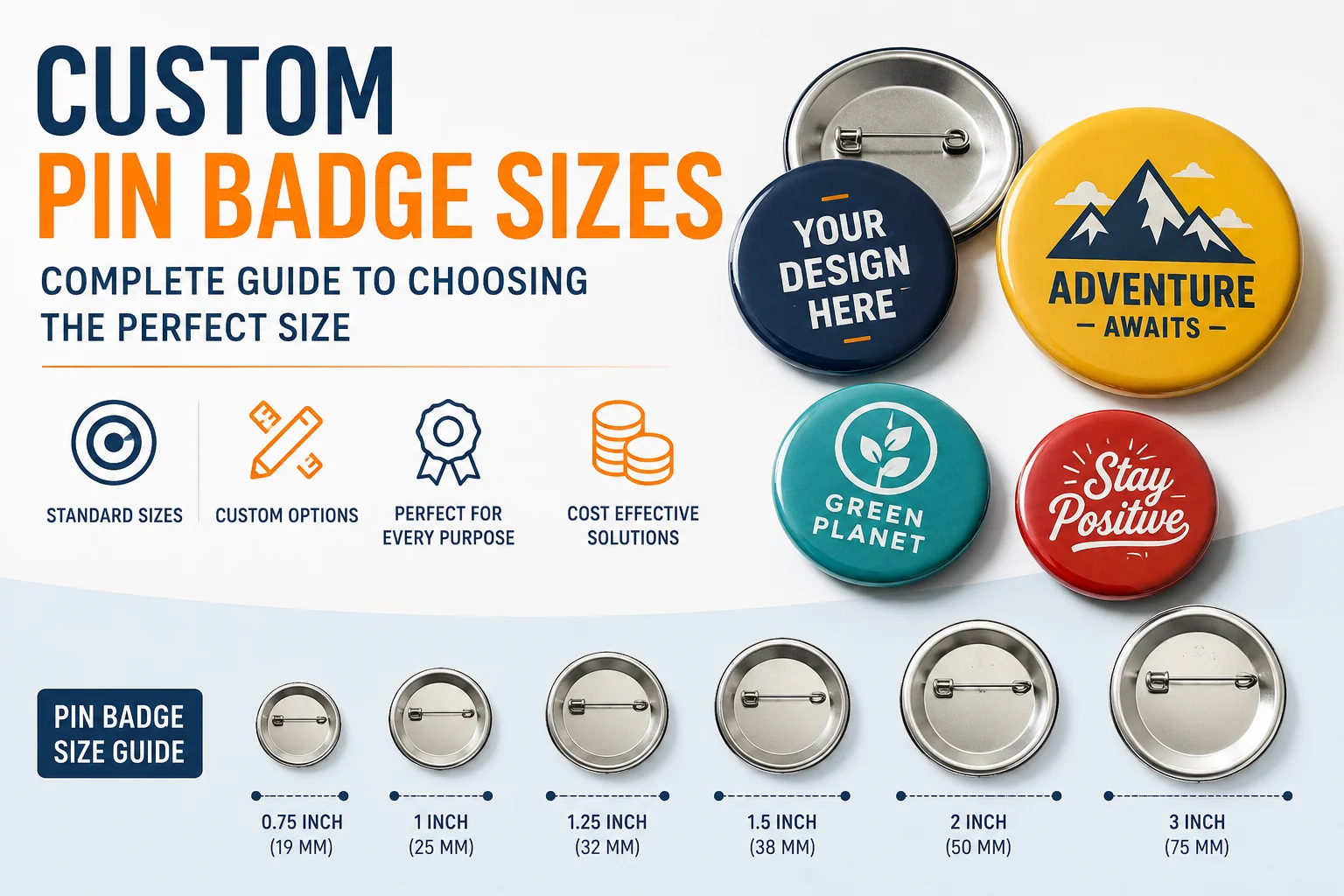
Custom Enamel Pin Size Chart
The table below is a practical starting point for brands planning custom soft enamel, hard enamel, die-struck, or printed pins.
| Pin Size |
Metric Equivalent |
Best Use Cases |
Design Considerations |
| 0.75 inch |
19 mm |
Minimal logos, icons, initials, corporate lapel pins, event giveaways |
Use bold shapes, limited text, and simple color separation. |
| 1 inch |
25.4 mm |
Brand logos, mascots, simple characters, promotional pins |
The industry’s most versatile “standard” size; suitable for many everyday designs. |
| 1.25 inch |
31.8 mm |
Character merchandise, artist pins, club badges, retail collections |
Provides extra space for facial features, short text, and moderate detail. |
| 1.5 inch |
38.1 mm |
Detailed illustrations, collectible pins, text-heavy designs |
A strong choice when artwork includes fine lines, gradients simulated with enamel, or multiple elements. |
| 2 inches |
50.8 mm |
Statement pins, collector editions, large character art, display merchandise |
Best for bold artwork and premium releases; consider weight, backing strength, and price. |
Most professional enamel pin manufacturers produce pins from roughly 0.5 inches to 3 inches, but the most commonly ordered sizes are 1, 1.25, and 1.5 inches. [threadbird]
0.75-Inch Enamel Pins: Small, Clean, and Cost-Efficient
A 0.75-inch enamel pin measures about 19 mm. It is an excellent option when the goal is subtlety, uniformity, or large-volume distribution. [vograce]
Best applications
- Corporate lapel pins
- Employee recognition badges
- Minimalist brand logos
- Simple icons and monograms
- Event giveaways
- Multi-pin sets where several pins are worn together
When to choose 0.75 inches
Choose this size when your design has:
- One clear focal symbol
- Fewer than three or four enamel colors
- No small text
- Thick outlines and simple silhouettes
- A professional or understated branding objective
Limitations
At 19 mm, there is limited room for detailed characters, small typography, or complex backgrounds. Fine lines may fill in during production, and tiny color areas can become difficult to separate cleanly. Manufacturers commonly require enclosed color areas and minimum metal-line thicknesses, so a design that looks feasible on screen may need simplification at this size. [enamelpins]
Factory recommendation: For a 0.75-inch pin, avoid text smaller than approximately 2 mm in height unless you are using printing, laser engraving, or another specialized process.
1-Inch Enamel Pins: The Industry Standard
A 1-inch enamel pin measures 25.4 mm and is widely considered the industry standard. It is large enough to communicate a logo or simple character clearly, yet small enough to remain comfortable on clothing, hats, bags, and lanyards. [shopify]
Best applications
- Brand merchandise
- Conference and trade-show giveaways
- School and club badges
- Simple mascot pins
- Retail starter collections
- Employee and membership pins
Why 1 inch works so well
The 1-inch format gives designers enough space for:
- A recognizable logo
- A simplified character or mascot
- A short brand name
- Basic enamel color separation
- A clean metal border
It also tends to be cost-efficient because it uses less material than larger formats while still delivering strong perceived value.
Design tips for 1-inch pins
- Keep the main subject centered.
- Use a maximum of one short line of text.
- Avoid thin decorative borders.
- Simplify facial features and small accessories.
- Request a physical-size proof before mass production.
For first-time pin buyers, we usually recommend beginning with a 1-inch soft enamel pin if budget is the priority, or a 1-inch hard enamel pin if a smoother, jewelry-like finish is more important. Soft enamel leaves color slightly below the raised metal lines, creating a textured effect, while hard enamel is polished flush for a smooth surface. [shopify]

1.25-Inch Enamel Pins: The Best All-Round Size
A 1.25-inch enamel pin measures approximately 32 mm. In our experience, this is often the most versatile size for brands that want more visual impact than a 1-inch pin without moving into a heavy collector format. [vograce]
Best applications
- Anime, gaming, and character merchandise
- Artist-series pins
- Café, brewery, and lifestyle brand merchandise
- Retail capsule collections
- Fundraising pins
- Limited-edition releases
Why brands choose 1.25 inches
This size gives artwork more breathing room. It is especially useful for:
- Character faces with eyes, expressions, and hair details
- Short slogans or product names
- Circular badge layouts with a border
- Designs combining a mascot and a logo
- Pins intended to be sold rather than simply given away
A 1.25-inch pin is still light enough for daily wear, but it reads clearly from a greater distance than a 0.75-inch or 1-inch pin. That makes it a strong choice for merchandise that must attract attention at retail or at events.
Expert insight: If your design includes both a character and a brand name, 1.25 inches is often the smallest size we recommend. At 1 inch, one of the two elements usually has to be reduced until it loses impact.
1.5-Inch Enamel Pins: Ideal for Detailed Artwork
A 1.5-inch enamel pin measures about 38 mm. It is one of the best choices for detailed illustrations, collectible designs, and pins that need to communicate more information. [shopify]
Best applications
- Detailed anime or game characters
- Illustrated landscapes and scenes
- Pins with multiple design elements
- Commemorative event pins
- Premium retail merchandise
- Collector sets
Advantages
At 1.5 inches, you can preserve:
- More accurate character proportions
- More color zones
- More detailed backgrounds
- Larger and more readable text
- More complex shapes and cutouts
This size is particularly effective for hard enamel pins, where smooth color fills and polished metal lines create a premium finish. Hard enamel is produced through repeated heat curing and polishing until the enamel sits flush with the metal. [shopify]
Trade-offs
A 1.5-inch pin costs more than a 1-inch or 1.25-inch pin because it uses more material and may require more production time. It is also less subtle when worn on formal clothing. For backpacks, denim jackets, tote bags, and display cards, however, it is often the ideal size. [gumtoo]
2-Inch Enamel Pins: Statement and Collector Pieces
A 2-inch enamel pin measures 50.8 mm. This is a statement size, best reserved for designs that genuinely benefit from a larger canvas. [vograce]
Best applications
- Limited collector editions
- Large character portraits
- Convention exclusives
- Premium gift-box merchandise
- Display-oriented pin sets
- Anniversary or milestone releases
When 2 inches is the right choice
Choose a 2-inch pin when:
- The design contains fine illustration details that cannot be simplified.
- The pin is intended as a collectible rather than an everyday wearable.
- The product will be presented on a backing card or in a gift box.
- The brand wants a high-impact, premium merchandise item.
- The target customer values display value over subtle wearability.
Important considerations
A 2-inch pin is not automatically better. It can become heavier, more expensive, and less comfortable on lightweight fabrics. For shirts, caps, and lanyards, a 1-inch to 1.5-inch pin is usually more practical. [pinlord]
For large pins, pay extra attention to:
- Backing type: Two rubber clutches, locking backs, or magnetic backing may be appropriate.
- Card strength: Use a thicker backing card to prevent bending.
- Packaging: A poly bag may be insufficient for premium collector releases.
- Shipping weight: Larger orders can noticeably increase freight cost.
How to Choose the Right Pin Size: A 5-Step Process
Use this process before requesting a quotation.
1. Define the wearing scenario. Will the pin be worn on a shirt, cap, bag, lanyard, jacket, or displayed on a card?
2. Audit the artwork at actual size. Print the design at 19 mm, 25 mm, 32 mm, 38 mm, and 51 mm. Do not judge it only on a computer screen.
3. Identify the smallest critical detail. This may be a letter, eye, logo mark, facial expression, or thin outline.
4. Choose the smallest size that preserves that detail. Avoid choosing a larger size unless it adds commercial value.
5. Request a production-ready proof. The proof should show final size, plating, enamel colors, metal lines, attachment, and packaging. Reviewing these details before production helps prevent costly mistakes. [pinlord]
Size, Enamel Type, and Detail: What Changes?
Pin size interacts with the manufacturing process. The same artwork may perform differently in soft enamel, hard enamel, die-struck metal, or printed epoxy pins.
| Factor |
0.75–1 Inch |
1.25–1.5 Inches |
2 Inches and Larger |
| Best design style |
Simple icons and logos |
Characters and moderately detailed art |
Highly detailed or statement artwork |
| Text |
Very limited; keep it large and short |
Short text becomes practical |
More room for slogans and dates |
| Color areas |
Keep them large and distinct |
More flexibility for layered design |
Suitable for complex compositions |
| Typical use |
Corporate, events, giveaways |
Retail merchandise and collections |
Collector and premium releases |
| Cost tendency |
Lower |
Moderate |
Higher |
| Wearability |
Excellent |
Strong |
More display-oriented |
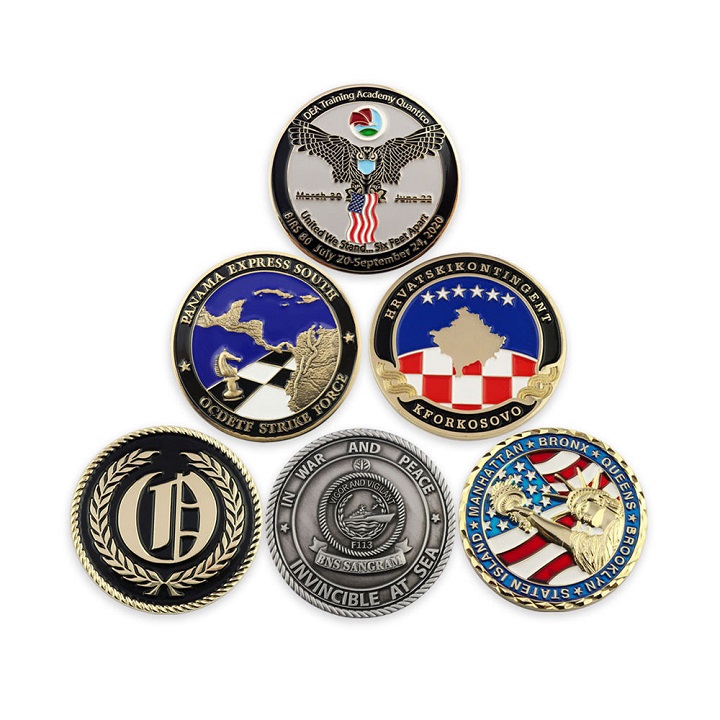
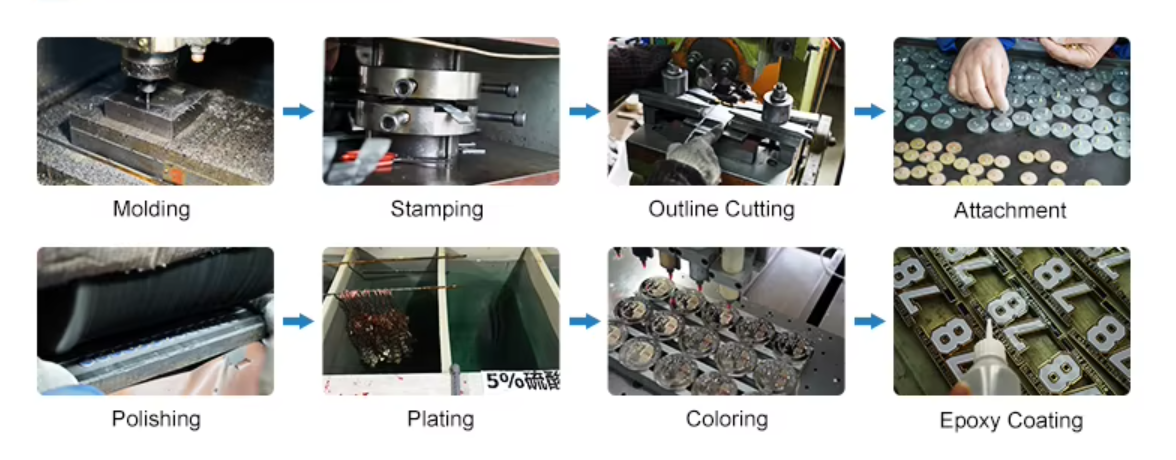
Enamel pins are generally made by stamping a design into metal with a die, plating the base, and filling recessed areas with enamel. Raised metal lines separate colors and form the visual structure of the pin. [threadbird]
Common Size Mistakes to Avoid
1. Choosing size before simplifying artwork
A detailed illustration may need to be redesigned for a 1-inch pin. Reducing artwork does not automatically make it production-ready.
2. Using tiny text
Text is one of the first elements to fail at small sizes. If the words matter, enlarge the pin, simplify the wording, or use a larger format.
3. Ignoring metal-line thickness
Each enamel color area must be enclosed by metal. Industry guidance commonly points to minimum metal-line thicknesses around 0.08 mm to 0.1 mm, though many factories prefer thicker lines for durability and clarity. [enamelpins]
4. Overusing colors
More colors can increase cost and complicate production. At smaller sizes, fewer, bolder color areas usually create a cleaner result.
5. Forgetting the backing
A large or heavy pin needs an appropriate attachment. A single rubber clutch may not provide enough support for a 2-inch collector pin.
Material, Plating, and Finish Recommendations
Size should be selected together with material and finish.
- Soft enamel: Best for textured, dimensional designs and cost-effective promotional merchandise.
- Hard enamel: Best for smooth, premium, jewelry-like pins and detailed retail products.
- Die-struck pins: Best for all-metal logos, luxury branding, and minimalist designs.
- Printed pins: Best for photographic artwork, gradients, or highly complex color transitions.
Common base materials include zinc alloy, iron, brass, and copper, while popular plating options include gold, silver, black nickel, and antique finishes. [gs-jj]
For a 1-inch to 1.25-inch brand pin, we often recommend hard enamel with gold, silver, or black nickel plating. For a 1.5-inch to 2-inch collector pin, soft enamel with antique plating can create a more tactile, collectible feel.
Sample Recommendations by Business Type
| Business Type |
Recommended Size |
Recommended Style |
Reason |
| Corporate brand |
0.75–1 inch |
Hard enamel or die-struck |
Professional, subtle, durable |
| Event organizer |
1–1.25 inches |
Soft enamel |
Cost-effective and highly visible |
| Anime or gaming brand |
1.25–1.5 inches |
Hard enamel |
Better character detail and retail appeal |
| Artist or creator |
1.25–1.5 inches |
Soft or hard enamel |
Balances artistic detail with wearability |
| Café or lifestyle brand |
1–1.25 inches |
Soft enamel |
Friendly, collectible, easy to bundle |
| Luxury or anniversary release |
1.5–2 inches |
Hard enamel, special plating |
Premium presentation and collectibility |
Quality-Control Checklist Before Production
Before approving mass production, confirm the following:
- Final pin size in both inches and millimeters
- Actual-size PDF or printed proof
- Vector artwork in AI, PDF, EPS, or SVG format
- Pantone color references where possible
- Enamel type: soft, hard, die-struck, or printed
- Plating color and finish
- Attachment type and quantity
- Packaging format
- Quantity and delivery schedule
- Sample approval before bulk manufacturing
A production proof should clearly show the final artwork, size, plating, colors, and backing before production begins. [pinlord]
Conclusion
The best custom enamel pin size depends on your artwork, audience, budget, and intended use. 0.75 inches works best for simple logos and professional badges; 1 inch remains the most versatile standard; 1.25 inches is often the strongest all-round choice for merchandise; 1.5 inches suits detailed artwork; and 2 inches is best for collector and statement pieces. [shopify]
For most brands, we recommend starting with a 1-inch or 1.25-inch enamel pin. These sizes provide enough space for a recognizable design while remaining comfortable, attractive, and commercially practical. Before production, always review an actual-size proof and confirm enamel type, plating, attachment, and packaging with your manufacturer.
If you are planning a custom enamel pin project, XingKun can support you from artwork evaluation and size selection to sampling, mass production, and export packaging. [View our custom badge and enamel pin services.]
FAQ
1. What is the most popular custom enamel pin size?
The most popular size is typically 1 inch, followed closely by 1.25 inches and 1.5 inches. These sizes balance visibility, detail, comfort, and cost. [shopify]
2. Is a 0.75-inch enamel pin too small?
Not necessarily. A 0.75-inch pin is ideal for simple logos, initials, icons, and minimalist designs. It becomes too small when the artwork includes detailed characters, small text, or complex color separation. [shopify]
3. What size enamel pin is best for anime or character merchandise?
For anime, gaming, and character merchandise, 1.25 inches to 1.5 inches is usually best. This range gives enough space for facial expressions, hair details, accessories, and short text. [vograce]
4. Are 2-inch enamel pins too big?
A 2-inch pin is not too big if it is designed as a collector item, statement accessory, or premium gift. However, it may be too heavy or conspicuous for everyday wear on a shirt, cap, or lanyard. [pinlord]
5. Should I choose soft enamel or hard enamel?
Choose soft enamel for a textured, dimensional look and generally lower cost. Choose hard enamel for a smooth, polished, premium finish. Hard enamel is polished until the enamel is flush with the metal lines. [shopify]
6. How do I know whether my artwork is suitable for a small pin?
Print the artwork at its actual finished size. If small text, thin lines, or fine details are difficult to see, simplify the design or increase the pin size. Also request a factory proof showing metal lines, enamel areas, plating, and attachment. [pinlord]
References
1. Shopify — [How To Make Enamel Pins: Complete Guide]
2. Am Ball — [How to Design an Enamel Pin That Can Be Manufactured]
3. EnamelPins.com — [Enamel Pin Guide]
4. Vograce — [Pin Size Chart & Guide: Standard Sizes & How to Choose]
5. CreatePins — [Complete Enamel Pin Design Guide]
6. Threadbird — [Explore Enamel Pins]
7. Alibaba Industry Insights — [Enamel Pin Factory: Composition, Standards and Production]
8. CreatePins — [Custom Enamel Pins | Hard, Soft Enamel Pins]
9. GS-JJ — [Custom Enamel Pins | Hard, Soft Enamel Pins]
10. GS-JJ — [Custom Soft Enamel Pins]
11. Pinlord — [How to Design Enamel Pins & Make a Production-Ready Pin Mockup]
12. Gumtoo — [What Enamel Pin Size Should You Choose?]
13. Enamel Pin Custom — [Enamel Pin Design Tips: Create Production-Ready Artwork]
14. XingKun — [Custom Badges & Enamel Pins]


