Content Menu
● What Are Rigid and Folding Gift Boxes?
>> Rigid gift boxes: premium structure and durability
>> Folding gift boxes: lightweight and efficient
● Rigid vs Folding Gift Boxes: Quick Comparison
● Rigid Gift Box Advantages
>> 1. Stronger premium perception
>> 2. Better protection and stacking strength
>> 3. A memorable unboxing experience
>> 4. Reusability and longer product life
>> 5. More room for premium finishing
● Folding Gift Box Advantages
>> 1. Lower material and production cost
>> 2. Flat-pack shipping and storage
>> 3. Faster fulfillment for high-volume operations
>> 4. Strong graphic communication
>> 5. Flexible structural design
● Cost: Compare Total Landed Cost
>> Rigid box cost drivers
>> Folding box cost drivers
● Sustainability and Recyclability
>> Neither format is automatically sustainable
>> Design for recycling from the beginning
>> FSC and other documentation
● How to Choose the Right Box
>> Step 1: Define the product and risk
>> Step 2: Clarify the brand position
>> Step 3: Estimate annual volume
>> Step 4: Calculate storage and freight
>> Step 5: Test the structure
>> Step 6: Review sustainability requirements
>> Step 7: Compare business results
● Which Box Is Better for Different Products?
● XingKun's OEM and ODM Approach
● Conclusion
● FAQ
>> 1. Are rigid gift boxes more expensive than folding gift boxes?
>> 2. Which box is more environmentally friendly?
>> 3. Can folding gift boxes look luxurious?
>> 4. Are rigid boxes suitable for e-commerce?
>> 5. Are folding boxes strong enough for playing cards and puzzles?
>> 6. Do rigid boxes require more manual assembly?
>> 7. What should I send a packaging factory for an accurate quotation?
● References
When choosing between rigid gift boxes and folding gift boxes, brand owners are usually balancing more than appearance. The right packaging affects product protection, perceived value, unit cost, storage, shipping, sustainability, and the customer unboxing experience. For luxury products and memorable gifting, rigid boxes often deliver a stronger premium impression. For efficient production, e-commerce fulfillment, and larger volumes, folding gift boxes can provide better overall value.
At Shenzhen XingKun Packing Products Co., Ltd., we work with overseas brands, wholesalers, and manufacturers on custom OEM and ODM packaging, including rigid gift boxes, folding cartons, playing card boxes, puzzle boxes, book packaging, and sticker packaging. Based on practical packaging development experience, this guide explains how to make the decision according to your product, market, budget, and growth plans.
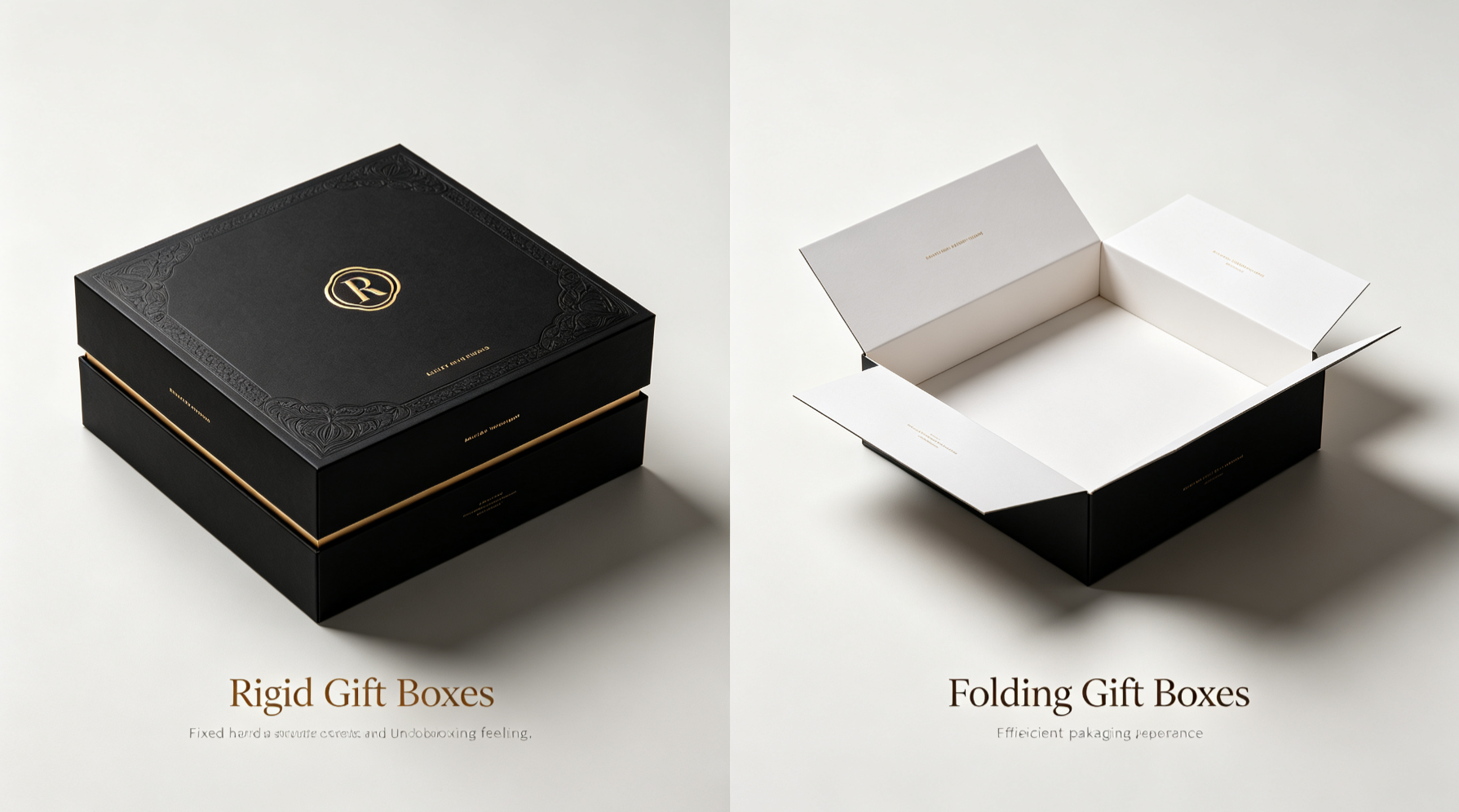
What Are Rigid and Folding Gift Boxes?
Rigid gift boxes: premium structure and durability
Rigid gift boxes, also called set-up boxes, are manufactured from thick paperboard that is wrapped with printed paper. Unlike a folding carton, a rigid box is normally delivered in its final three-dimensional form rather than folded flat. Paperboard Packaging Council describes rigid boxes as generally using approximately 36- to 120-point board, while folding cartons commonly use 10- to 36-point board. [paperbox]
Typical rigid box structures include:
- Two-piece lid-and-base boxes.
- Shoulder-neck boxes.
- Drawer-style boxes.
- Magnetic closure boxes.
- Book-style boxes.
- Collapsible rigid boxes.
- Rigid boxes with ribbon, foil, or fabric handles.
Rigid construction gives the package a solid hand-feel. It also creates a strong platform for premium printing, specialty finishes, inserts, and reusable packaging design.
Folding gift boxes: lightweight and efficient
Folding gift boxes are produced from paperboard that is printed, die-cut, creased, folded, and glued. They are generally shipped and stored flat, then assembled before filling. Folding cartons can use virgin or recycled grades such as SBS, FBB, CUK, and CRB/WLC, depending on the application and desired appearance. [paperbox]
Common folding gift box structures include:
- Straight-tuck-end boxes.
- Reverse-tuck-end boxes.
- Auto-lock bottom boxes.
- Crash-lock boxes.
- Pillow boxes.
- Sleeve-and-tray cartons.
- Window boxes.
- Mailer-style folding boxes.
- Book-shaped folding cartons.
Because folding gift boxes use less material and occupy less space during transportation, they are widely used for retail products, subscription boxes, cosmetics, toys, snacks, stationery, and e-commerce packaging.
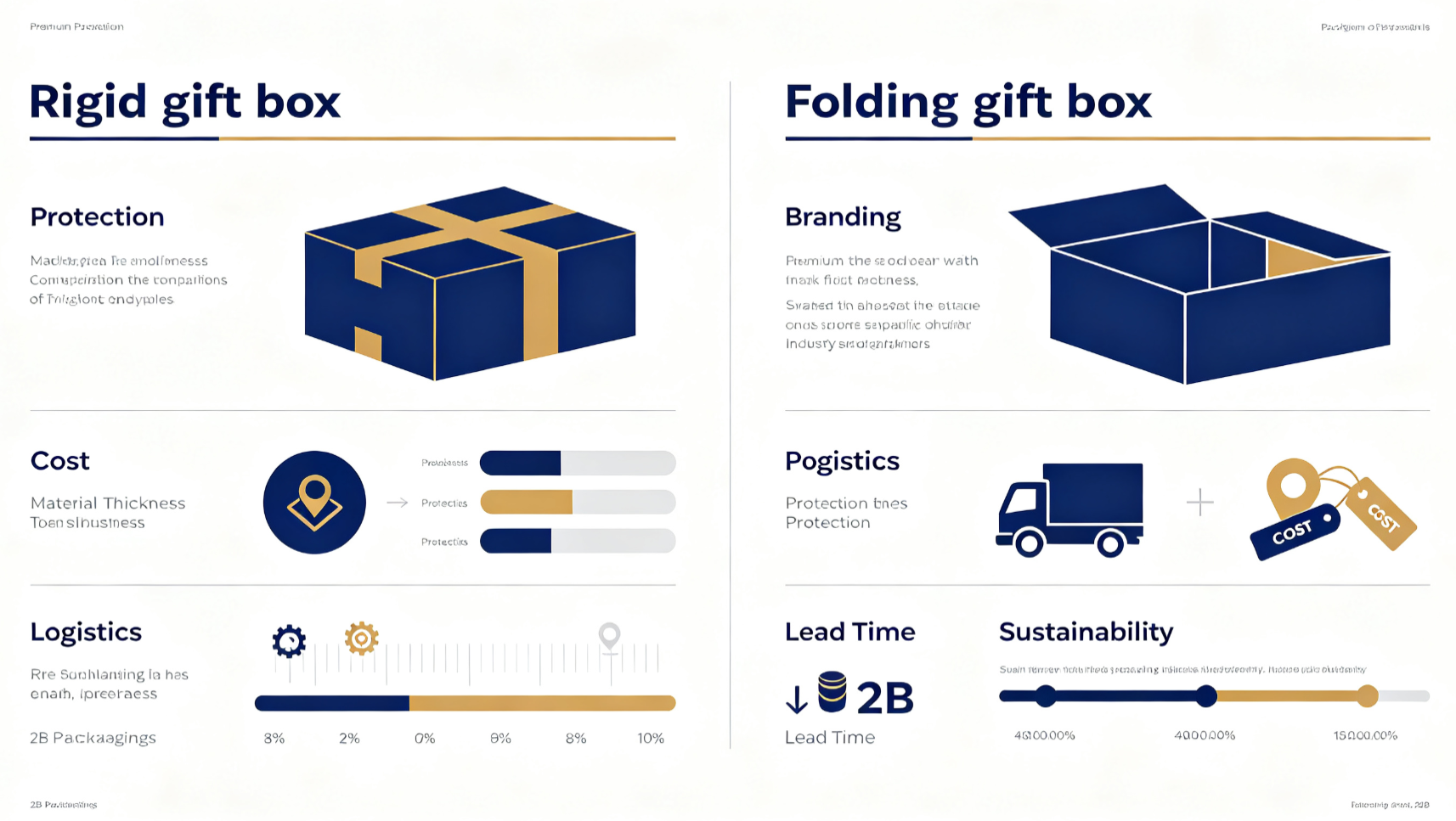
Rigid vs Folding Gift Boxes: Quick Comparison
| Factor |
Rigid Gift Boxes |
Folding Gift Boxes |
| Premium appearance |
Excellent |
Very good with high-quality printing and finishing |
| Structural strength |
Very high |
Moderate to high, depending on board and design |
| Product protection |
Strong for fragile or high-value products |
Suitable for lightweight and moderately protected products |
| Unit cost |
Usually higher |
Usually lower |
| Shipping efficiency |
Lower because boxes often ship assembled |
Higher because cartons ship flat |
| Storage requirement |
Higher |
Lower |
| Assembly at packing site |
Minimal |
Usually required |
| Short-run suitability |
Often favorable for premium prototypes or smaller runs |
Best value at medium to high volumes |
| Sustainability profile |
Can be recyclable but uses more material |
Often lighter and more efficient to ship |
| Best for |
Luxury gifts, electronics, jewelry, collectibles |
Retail, e-commerce, food, cosmetics, promotional products |
| Reusability |
High potential |
Usually limited |
| Unboxing impact |
Strong and tactile |
Fast, colorful, and space-efficient |
There is no universally superior box. The better format is the one that supports your product positioning and total supply-chain economics.
Rigid Gift Box Advantages
1. Stronger premium perception
A rigid gift box communicates value before the customer sees the product. Its thicker walls, firm corners, and substantial weight can make the package feel more like a keepsake than disposable packaging.
This is particularly useful for:
- Luxury cosmetics.
- Jewelry and watches.
- Premium tea and spirits.
- High-end electronics.
- Corporate gifts.
- Wedding and festival gifts.
- Limited-edition collectibles.
- Premium playing cards.
- Collector's editions of books or puzzles.
For a premium product, packaging is part of the product experience. A rigid box can help justify a higher selling price when the design, materials, and finishing are consistent with the brand promise.
2. Better protection and stacking strength
Rigid boxes generally resist compression, bending, and impact better than lightweight folding cartons. This is useful when the product is heavy, fragile, or intended to remain inside the package for long-term storage.
A rigid structure can protect:
- Glass bottles.
- Metal components.
- Ceramic products.
- Thick card decks.
- Puzzle pieces and accessories.
- Collectible figures.
- Premium stationery sets.
However, rigid construction does not eliminate the need for internal protection. The box may still require a molded pulp insert, paperboard divider, EVA tray, foam, or custom insert. The correct solution depends on the product's weight, drop-test requirements, and shipping environment.
3. A memorable unboxing experience
Rigid boxes open slowly and deliberately. A magnetic flap, ribbon pull, drawer mechanism, or layered insert can guide the customer through the product reveal.
This makes rigid packaging suitable for brands that depend on:
- Social-media unboxing content.
- Gift-giving rituals.
- Collector behavior.
- Repeat packaging use.
- Emotional storytelling.
- Premium retail presentation.
An effective unboxing experience should not be complicated for its own sake. Every structural element should support a purpose, such as protection, presentation, storage, or brand recognition.
4. Reusability and longer product life
Customers are more likely to reuse a sturdy rigid box for jewelry, documents, accessories, toys, or household storage. Reuse can extend the practical life of the packaging and reinforce brand visibility after the initial purchase.
A reusable box works best when it has:
- Durable paper wrapping.
- Strong hinges or magnetic closures.
- A clean interior.
- A useful size and shape.
- A design that remains attractive after the product is removed.
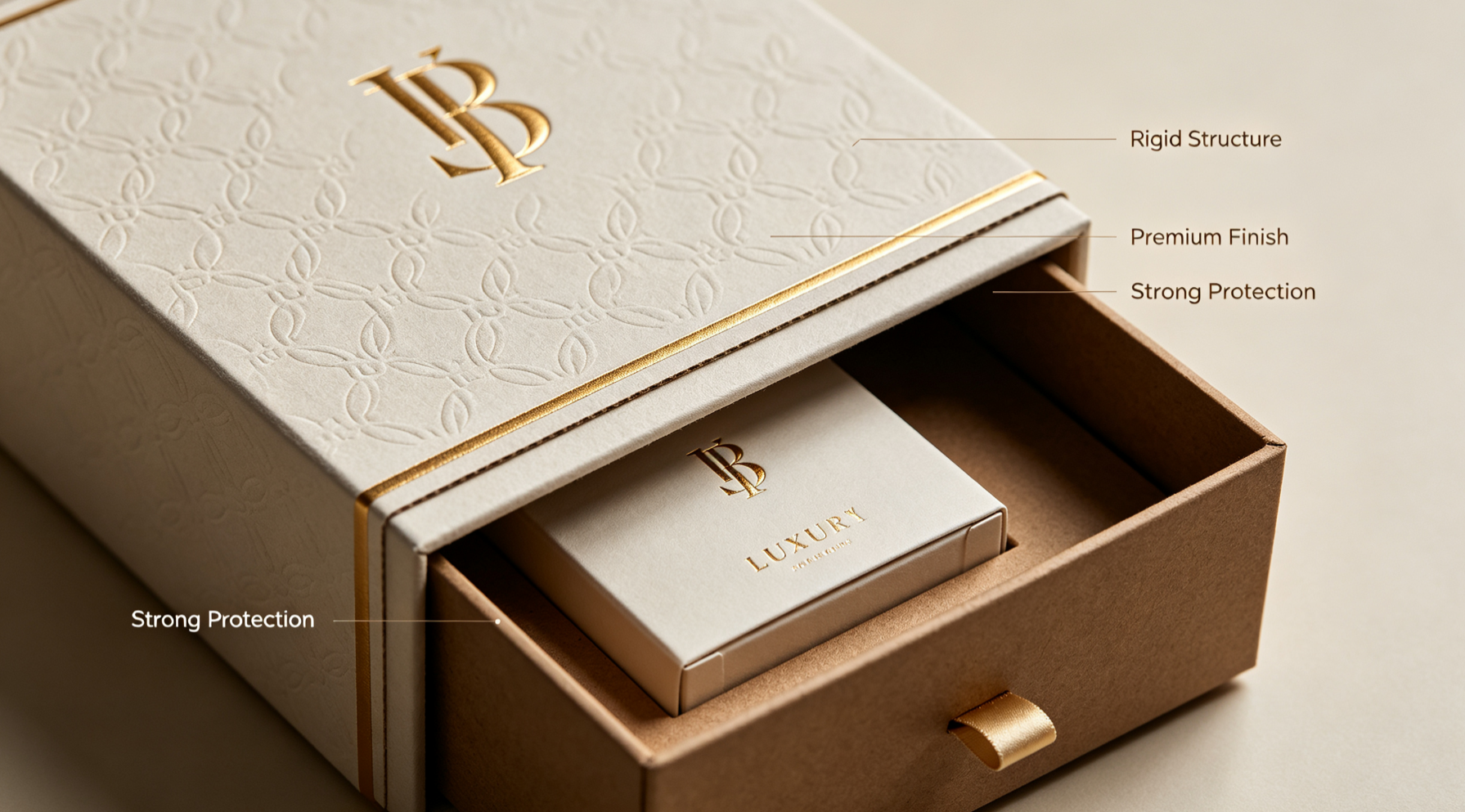
5. More room for premium finishing
Rigid boxes support a broad range of decorative options, including:
- Hot foil stamping.
- Embossing and debossing.
- Spot UV.
- Soft-touch lamination.
- Textured paper.
- Colored edges.
- Metallic paper.
- Fabric or specialty wraps.
- Printed and fitted inserts.
These finishes can create visual hierarchy. For example, a brand may use a matte black wrap, a restrained gold foil logo, and a molded paper insert rather than covering every surface with decoration.
Folding Gift Box Advantages
1. Lower material and production cost
Folding gift boxes usually consume less board than rigid boxes and can be produced efficiently on automated printing, die-cutting, and gluing equipment. Since many carton blanks can be printed and processed together on a sheet, production speed and material utilization are often favorable. [paperbox]
This makes folding boxes attractive for:
- New product launches.
- Seasonal promotions.
- Fast-moving consumer goods.
- Large retail programs.
- Subscription packaging.
- Promotional campaigns.
- Products with narrow margins.
A folding box is not automatically inexpensive. Complex die lines, windows, inserts, specialty papers, multiple finishes, and low order quantities can raise the cost significantly. Nevertheless, its basic structure usually offers a more economical starting point.
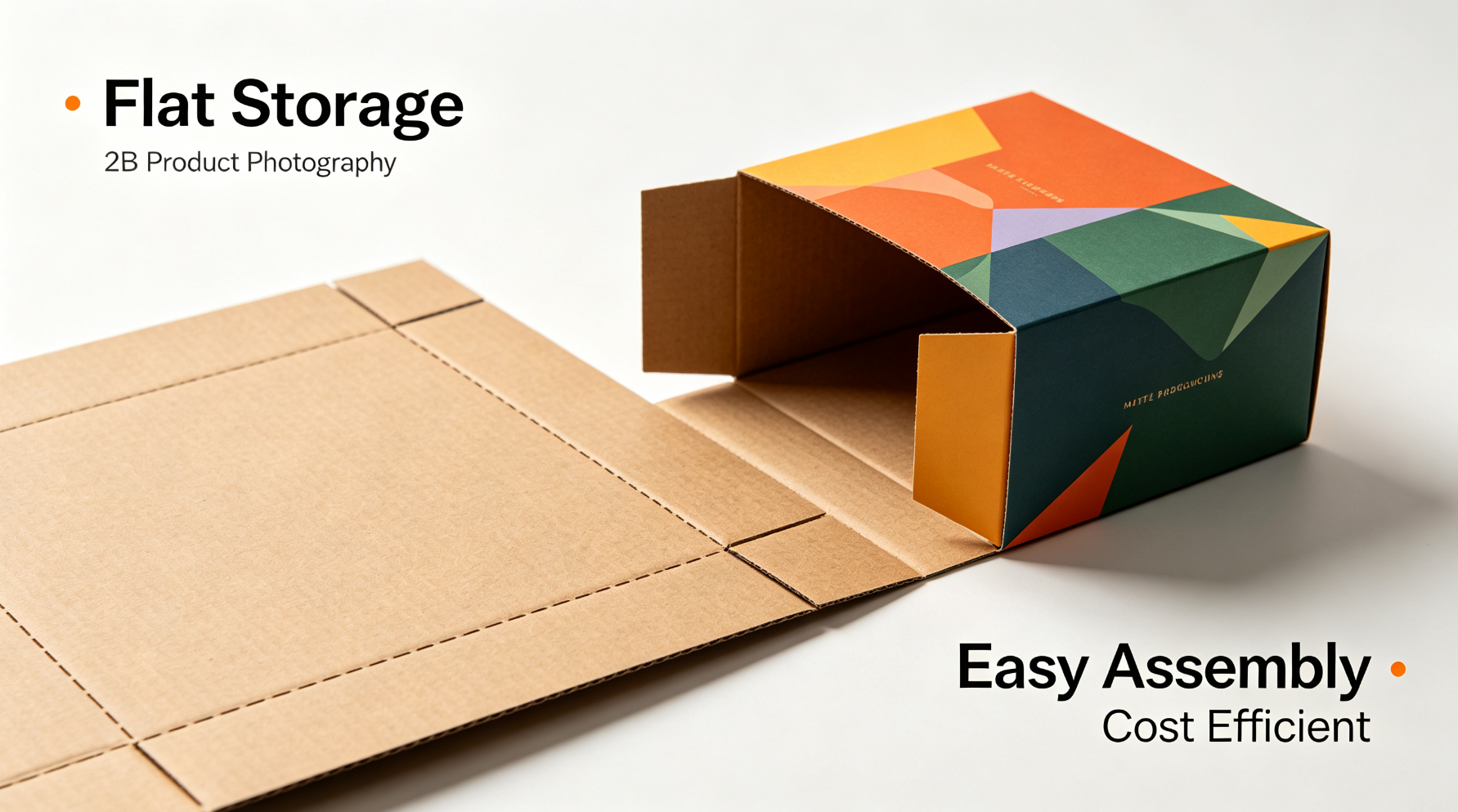
2. Flat-pack shipping and storage
The most important operational advantage of a folding gift box is that it can be shipped and stored flat. This reduces:
- Freight volume.
- Warehouse space.
- Handling complexity.
- Packaging inventory costs.
- Risk of storing large empty volumes.
Paperboard Packaging Council specifically notes that folding cartons take up little space in storage and shipping because they fold flat. [paperbox]
For international brands importing packaging from China, flat packing can be especially valuable. Freight costs, container utilization, and warehouse dimensions may have a meaningful effect on the total landed cost.
3. Faster fulfillment for high-volume operations
Folding cartons can be integrated into semi-automatic or automatic packing lines. Once the carton is formed, the product can be inserted, closed, labeled, and shipped quickly.
This is particularly useful for:
- Retail replenishment.
- High-volume online orders.
- Standardized product lines.
- Contract packing.
- Promotional bundles.
- Products requiring frequent packaging changes.
If the package will be assembled manually, the labor cost must be included in the comparison. A lower factory price does not always produce a lower delivered cost if the carton is difficult to form or requires extra manual handling.
4. Strong graphic communication
A folding gift box provides broad printable panels for brand identity and product information. High-quality offset printing can deliver:
- Full-color illustrations.
- Product instructions.
- Brand storytelling.
- Regulatory information.
- Barcodes and QR codes.
- Multilingual copy.
- Promotional messages.
This is valuable for products sold through retail shelves or online product photography. With accurate color management and appropriate proofing, folding cartons can achieve a highly polished appearance without the cost of a traditional rigid setup box.
5. Flexible structural design
Modern folding cartons can be more sophisticated than a basic tuck box. A structural packaging designer can create:
- Reveal windows.
- Layered openings.
- Multi-compartment interiors.
- Locking tabs.
- Hanging features.
- Tear strips.
- Display-ready designs.
- Child-resistant or tamper-evident features where appropriate.
The key is to select the structure according to product weight and use conditions. A visually attractive die line can still fail if the locking tabs open during transport or the panels crack along the creases.
Cost: Compare Total Landed Cost
The factory unit price is only one part of the packaging budget. A reliable comparison should include:
\[
\text{Total landed cost} =
\text{factory price}
+ \text{tooling}
+ \text{finishing}
+ \text{assembly}
+ \text{freight}
+ \text{storage}
+ \text{damage}
+ \text{pack-out labor}
\]
Rigid box cost drivers
Rigid gift boxes tend to cost more because of:
- Thicker paperboard.
- Additional wrapping paper.
- Separate box-making steps.
- Manual or semi-automatic assembly.
- More complex inserts.
- Higher dimensional shipping volume.
- Premium materials and finishes.
Their higher cost may be justified if the package increases perceived value, supports a premium price, reduces product damage, or encourages reuse.
Folding box cost drivers
Folding gift box costs are influenced by:
- Paperboard grade and thickness.
- Sheet size and nesting efficiency.
- Printing colors.
- Die-cutting and creasing.
- Gluing points.
- Window film.
- Coatings and laminations.
- Insert requirements.
- Assembly labor.
- Order quantity.
At medium and high volumes, folding boxes often provide a stronger cost advantage. At very small volumes, however, the difference may narrow because setup, proofing, tooling, and minimum-order charges are distributed across fewer units.
Sustainability and Recyclability
Neither format is automatically sustainable
It is misleading to label every rigid box as unsustainable or every folding carton as environmentally superior. The result depends on:
- Fiber source.
- Board weight.
- Recycled content.
- Coatings and laminations.
- Adhesives.
- Inks.
- Inserts.
- Manufacturing waste.
- Shipping distance.
- Reuse rate.
- Local collection and recycling systems.
The Paperboard Packaging Council describes paperboard packaging as renewable and recyclable, while also distinguishing the different material and construction characteristics of folding cartons and rigid boxes. [paperbox]
In practical terms, folding cartons often benefit from lower material use and flat-pack freight efficiency. Rigid boxes may compensate partly through durability, reuse, and longer service life.
Design for recycling from the beginning
For export brands, sustainability claims should be supported by material documentation rather than vague language. Consider:
- Uncoated or recyclable paper wraps where appropriate.
- Paper-based inserts instead of mixed-material foam.
- Avoiding unnecessary plastic windows.
- Limiting difficult-to-separate laminations.
- Choosing compatible adhesives.
- Requesting recycled or responsibly sourced board options.
- Confirming the local recycling pathway in the destination market.
The EU Packaging and Packaging Waste Regulation, Regulation (EU) 2025/40, entered into force on 11 February 2025 and generally applies from 12 August 2026. The European Commission states that all packaging placed on the EU market must be recyclable by 2030, subject to the regulation's requirements and implementation details. [eur-lex.europa]
This does not mean that a box can be marketed as compliant merely because it is made from paper. Brands should evaluate the complete packaging unit, including coatings, windows, magnets, ribbons, inserts, and attached components.
FSC and other documentation
If responsible forest sourcing matters to your buyers, ask the supplier whether the relevant paperboard and printed paper are available under an FSC Chain of Custody system. FSC identifies Chain of Custody certification as a mechanism used for verifying material movement through the supply chain. [us.fsc]
Also request:
- Board specifications.
- Recycled-content information.
- Certification scope.
- Test reports where required.
- Ink and coating information.
- Recyclability declarations.
- Country-specific compliance documents.
A professional packaging supplier should be able to explain which claims apply to the actual material selected—not simply provide a generic sustainability slogan.
How to Choose the Right Box
Use this seven-step process before approving production.
Step 1: Define the product and risk
Record the product's dimensions, weight, fragility, surface sensitivity, and expected shelf life. A rigid box may be suitable for a fragile glass item, while a folding carton may be sufficient for a lightweight card deck.
Step 2: Clarify the brand position
Ask whether the packaging should feel:
- Luxury and collectible.
- Practical and affordable.
- Eco-conscious and minimal.
- Playful and giftable.
- Retail-ready.
- Protective and technical.
The answer often identifies the correct format before pricing begins.
Step 3: Estimate annual volume
Do not compare only the first purchase order. Estimate:
- Initial launch quantity.
- Monthly demand.
- Seasonal peaks.
- Reorder frequency.
- Expected product growth.
- Number of sizes or variations.
A folding box may be ideal for a fast-growing SKU, while a rigid box may be effective for a limited-edition product with a higher margin.
Step 4: Calculate storage and freight
Request carton dimensions for both the empty packaging and the packed product. Compare:
- Units per master carton.
- Master-carton dimensions.
- Gross weight.
- Pallet quantity.
- Container utilization.
- Warehouse volume.
- Assembly location.
This step frequently changes the decision for brands importing packaging internationally.
Step 5: Test the structure
Before bulk production, conduct:
- Sample assembly.
- Closure testing.
- Product-fit testing.
- Compression testing.
- Drop testing where necessary.
- Rub and scuff testing.
- Humidity or temperature evaluation for sensitive applications.
- Packing-line trials.
A sample should be tested in conditions that resemble actual distribution, not only inspected on a design table.
Step 6: Review sustainability requirements
Confirm whether the target market or customer requires:
- FSC-certified materials.
- Recycled content.
- Plastic reduction.
- Recyclability evidence.
- Specific labeling.
- Food-contact compliance.
- Child-safety features.
- Extended producer responsibility information.
Requirements vary by product and market, so the brand owner should define the compliance target before materials are finalized.
Step 7: Compare business results
Choose the design that best supports the full commercial objective:
- Does it protect the product?
- Does it communicate the intended value?
- Does it fit the retail or shipping channel?
- Does it meet the cost target?
- Does it support repeat orders?
- Does it reduce damage and returns?
- Does it create a better customer experience?
Which Box Is Better for Different Products?
| Product or use case |
Recommended format |
Reason |
| Luxury jewelry |
Rigid gift box |
Strong presentation, protection, and reuse |
| Premium playing cards |
Rigid or premium folding box |
Rigid for collectors; folding for volume |
| Standard playing cards |
Folding box |
Efficient, printable, and economical |
| Jigsaw puzzles |
Folding carton or rigid setup box |
Depends on piece count, retail position, and storage |
| Printed books |
Folding sleeve, carton, or rigid box |
Depends on edition value and protection needs |
| Cosmetics gift set |
Rigid or high-end folding box |
Both support inserts and visual branding |
| Subscription products |
Folding mailer-style box |
Flat-pack efficiency and easy fulfillment |
| Corporate gifts |
Rigid box |
Strong presentation and perceived value |
| High-volume retail product |
Folding carton |
Lower cost and efficient logistics |
| Limited-edition collector set |
Rigid box |
Premium feel, durability, and long-term storage |
For custom playing cards, the box should protect corners and prevent deck movement while preserving print quality. For jigsaw puzzles, the structure must prevent piece loss and withstand repeated handling. For printed books, the packaging should protect the cover and edges without adding unnecessary dimensional weight.
XingKun's OEM and ODM Approach
A capable packaging factory should contribute more than a price quotation. At XingKun, a useful development process can include:
1. Reviewing the product dimensions and packaging objectives.
2. Recommending rigid or folding structures.
3. Selecting paperboard and wrapping-paper options.
4. Preparing dielines or structural concepts.
5. Producing digital, white, or printed prototypes.
6. Checking color, finishing, fit, and closure performance.
7. Confirming production specifications and quality standards.
8. Managing printing, die-cutting, gluing, box making, and packing.
9. Coordinating inspection and shipment preparation.
For overseas brands, clear communication is essential. The quotation should identify the board grade, thickness, dimensions, printing method, finish, insert material, packaging method, quantity, and delivery terms. This reduces the risk of comparing different specifications under the same product name.
A strong OEM/ODM partner should also help identify cost-saving alternatives without damaging the customer experience. Examples include changing the opening structure, reducing unnecessary wrap coverage, adjusting the insert, optimizing sheet nesting, or switching from an assembled rigid box to a collapsible rigid construction.
Conclusion
Rigid gift boxes and folding gift boxes serve different commercial purposes. Rigid boxes are generally better for luxury positioning, premium unboxing, fragile products, collectibles, and reusable packaging. Folding gift boxes are generally better for cost efficiency, flat-pack logistics, high-volume production, retail distribution, and e-commerce fulfillment.
The best decision should be based on total landed cost, product protection, brand positioning, supply-chain efficiency, sustainability requirements, and customer expectations. A carefully engineered folding carton can look premium, while a well-designed rigid box can create lasting value beyond the initial purchase.
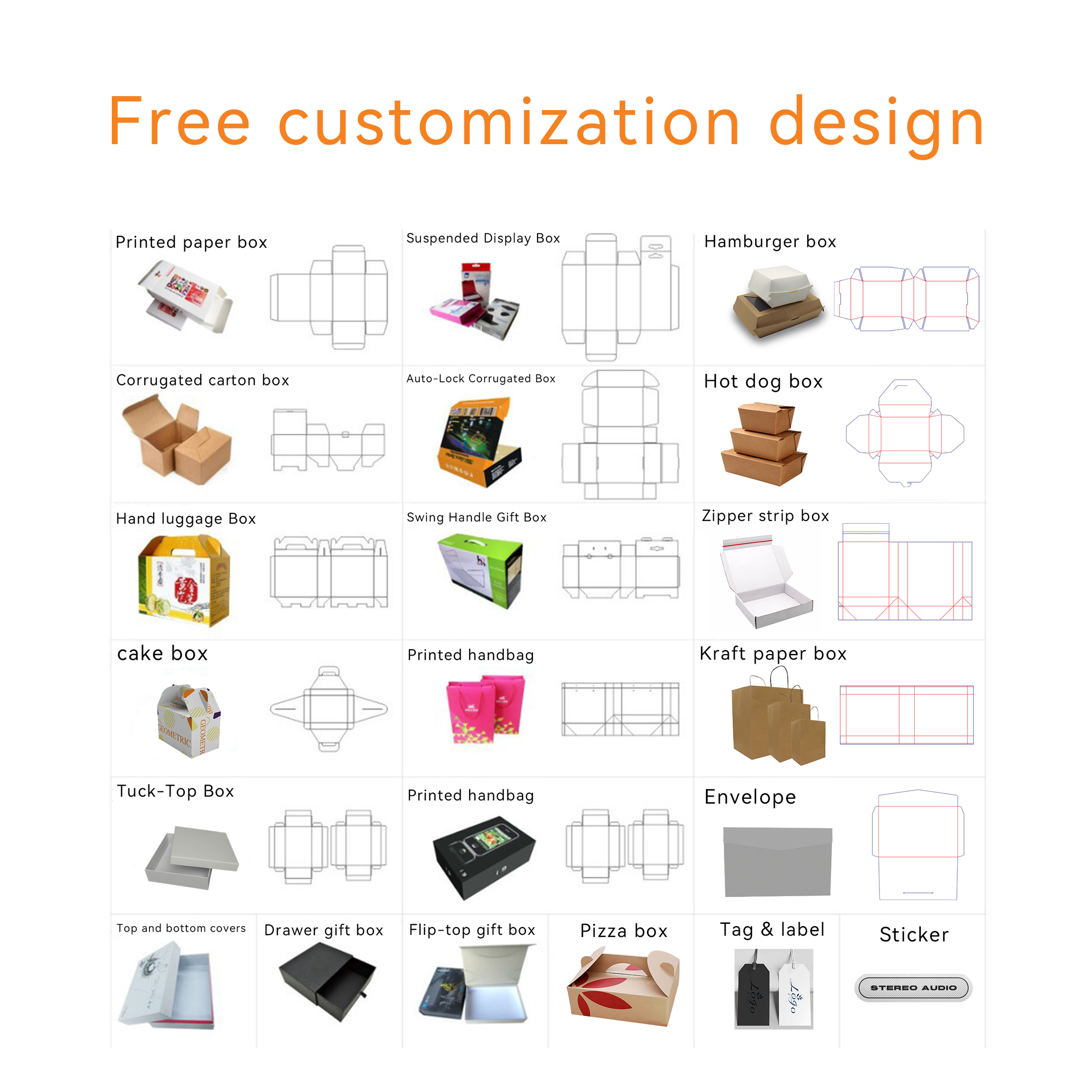
If you are comparing packaging formats for a new product, send XingKun your product dimensions, target quantity, destination market, preferred materials, and brand references. Our team can help evaluate rigid and folding structures and recommend an OEM/ODM solution suited to your product and budget.
FAQ
1. Are rigid gift boxes more expensive than folding gift boxes?
Usually, yes. Rigid boxes normally use thicker board and require additional wrapping and box-making processes. They may also cost more to ship and store because they are commonly transported assembled. Folding gift boxes are often more economical, especially for medium and high production volumes.
2. Which box is more environmentally friendly?
Neither format is automatically better in every situation. Folding boxes often use less material and ship flat, which can improve freight efficiency. Rigid boxes may be reused more frequently because of their durability. The best option depends on board weight, recycled content, coatings, inserts, shipping distance, reuse, and local recycling infrastructure.
3. Can folding gift boxes look luxurious?
Yes. Premium paperboard, precise color reproduction, foil stamping, embossing, soft-touch coating, textured paper, and sophisticated structural design can make a folding gift box look highly premium. Folding cartons are often a practical choice when the brand wants luxury graphics with efficient logistics.
4. Are rigid boxes suitable for e-commerce?
They can be, but shipping protection must be considered carefully. Rigid boxes provide strong product presentation, yet their greater volume and weight can increase freight costs. They may require an additional corrugated shipping carton to prevent damage during parcel delivery.
5. Are folding boxes strong enough for playing cards and puzzles?
They can be, provided the board thickness, dimensions, closure, and internal fit are correctly engineered. Standard playing cards commonly use folding cartons, while premium or collectible decks may benefit from rigid construction. Puzzle packaging should be tested for weight, handling, stacking, and piece retention.
6. Do rigid boxes require more manual assembly?
Many rigid boxes are delivered already formed, so they usually require less assembly during product packing. However, the factory may use more manual or semi-automatic work during manufacturing. Folding boxes are generally efficient to manufacture but require forming before filling.
7. What should I send a packaging factory for an accurate quotation?
Provide the product size, box style, quantity, destination country, board preference, printing requirements, finish, insert design, and expected delivery schedule. Product photos or reference samples are also helpful. The more complete the specification, the more meaningful the quotation comparison will be.
References
1. Paperboard Packaging Council. "What is Paperboard Packaging?" [Read the source]
2. Paperboard Packaging Council. "ECMA Statement on Recyclability." [Read the source]
3. Smithers. "The Future of Folding Cartons to 2030." [Read the source]
4. Smithers. "Smithers Forecasts Extra Growth in $132.8 Billion Folding Carton Packaging Market." [Read the source]
5. European Commission. "Packaging Waste." [Read the source]
6. European Union. "Regulation (EU) 2025/40 on Packaging and Packaging Waste." [Read the source]
7. International Organization for Standardization. "ISO 18601:2013—Packaging and the Environment." [Read the source]
8. Forest Stewardship Council. "Packaging and Chain of Custody Certification." [Read the source]


