Content Menu
● Why Custom Tote Bags Break
● Choose the Right Tote Bag Material
>> Cotton Tote Bags for Everyday Retail Use
>> Non-Woven Polypropylene Tote Bags
>> RPET and Recycled Fabric Options
● Reinforce Handles Before They Fail
>> Use Box-X Stitching for High-Stress Areas
>> Avoid Short, Narrow, Unsupported Handles
● Strengthen the Seams and Bottom Panel
>> Build Seams for the Actual Load
>> Add Reinforcement Where Stress Concentrates
● Match Bag Capacity to Real Use
>> Create a Load Profile Before Production
● Protect the Printed Design
>> Select the Printing Method Carefully
● Use a Practical Quality-Control Plan
>> A Five-Step Tote Bag Inspection Process
● Common Mistakes to Avoid
● Build a Tote Bag That Lasts
● Frequently Asked Questions
>> What is the best material for heavy-duty custom tote bags?
>> What GSM is suitable for reusable non-woven tote bags?
>> Why do tote bag handles tear first?
>> Can screen printing make a tote bag less durable?
>> Should custom tote bags be load tested before bulk production?
>> Are gusseted tote bags stronger than flat tote bags?
● References
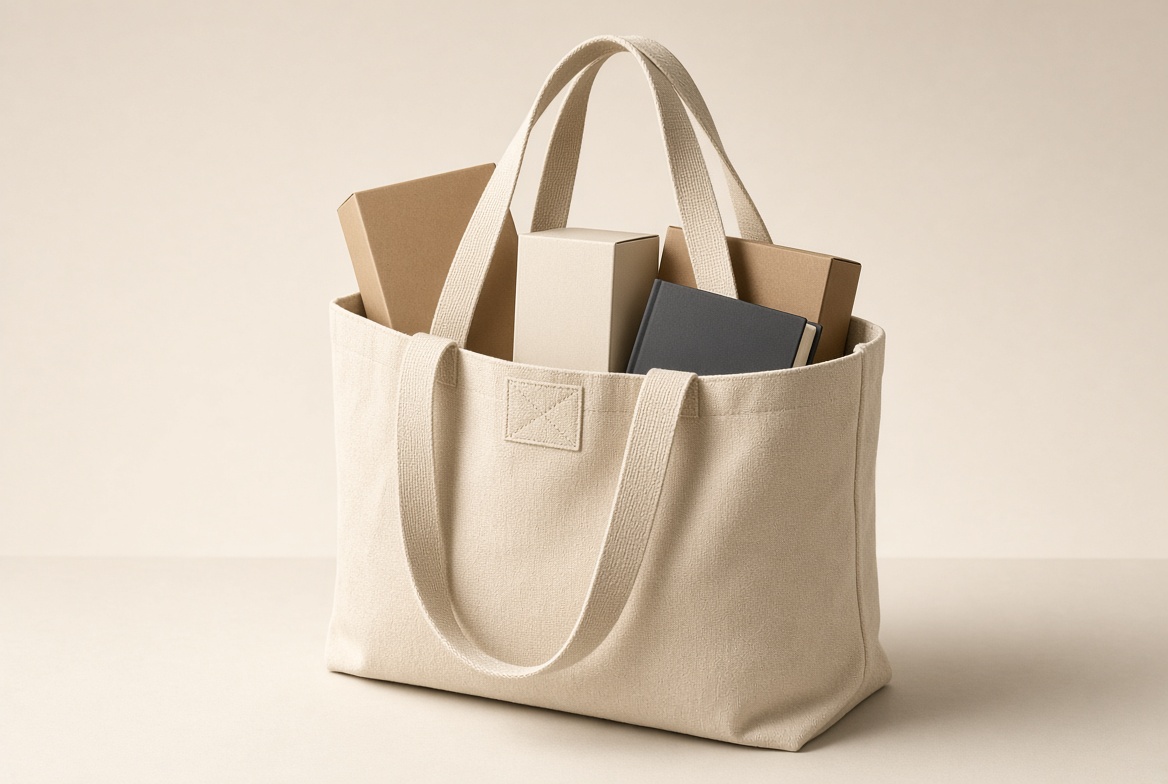
A custom tote bag should carry more than a logo—it should carry the real weight of the customer's purchase, daily essentials, or event materials without torn handles, split seams, damaged fabric, or faded printing. To prevent custom tote bags from breaking, brands must match the material, structure, handle design, printing process, and quality-control plan to the bag's intended load and reuse frequency.
At Shenzhen XingKun Packing Products Co., Ltd., our experience producing printed packaging and tote bags for brands and distributors in more than 30 countries has shown that most bag failures are predictable. They usually begin with an underspecified material, unsupported handles, weak seam construction, or a design that looks attractive on screen but does not reflect real-life handling.
Why Custom Tote Bags Break
A tote bag rarely fails for only one reason. A low-GSM fabric may stretch first, but the actual break may occur at the handle stitching. A durable canvas body may survive repeated use, while a poor-quality ink layer cracks after folding. A bag may pass a quick visual inspection but fail after being loaded, lifted, dropped, and carried.
The most common failure points include:
- Handle attachment areas, especially where handles meet the bag body
- Side seams and bottom seams, which carry concentrated load
- Thin or low-density materials, which tear when overloaded
- Unreinforced corners, where stress builds during carrying
- Poor thread quality or inconsistent stitching
- Printing layers that crack, peel, or weaken the substrate
- Incorrect bag size, which encourages users to overfill it
The key principle is simple: a tote bag is a load-bearing printed product. Its construction should be engineered around what customers will actually put inside it—not only how it will look in a product photo.
Choose the Right Tote Bag Material
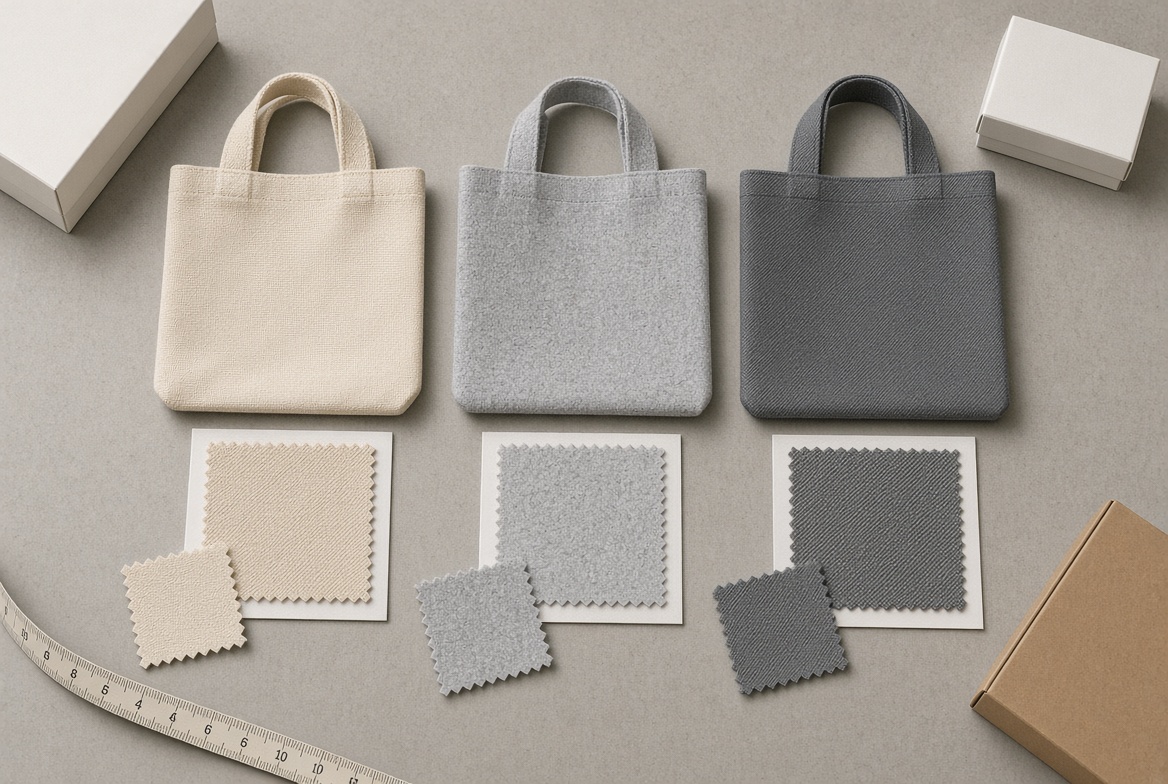
Material selection is the first and most important decision for preventing tote bag damage. Fabric weight, fiber type, surface treatment, and intended usage all influence durability.
Cotton Tote Bags for Everyday Retail Use
Cotton is popular because it feels natural, accepts many printing methods, and supports a premium brand image. However, not all cotton tote bags are suitable for the same purpose.
A lightweight cotton tote may work for brochures, samples, cosmetics, or clothing. It is not the right choice for bottled products, heavy grocery items, books, or promotional gift sets.
For standard retail applications, consider cotton canvas rather than thin plain cotton. Canvas has a denser construction and typically provides better resistance to stretching and tearing.
| Cotton Tote Type | Suitable Use | Breakage Risk | Recommended Construction |
| Lightweight cotton | Events, leaflets, light giveaways | Higher | Reinforced handle stitch |
| Medium-weight cotton | Apparel, accessories, retail packaging | Moderate | Box-X handle stitching |
| Heavy canvas | Books, groceries, gift boxes, daily carry | Lower | Reinforced base and wide handles |
| Laminated cotton | Premium retail, moisture-sensitive products | Lower | Strong seams and edge finishing |
For a reusable branded tote bag, fabric selection should start with the planned load. If the bag will carry a 5 kg gift set, designing it around a 2 kg promotional-bag specification is a costly mistake.
Non-Woven Polypropylene Tote Bags
Non-woven polypropylene is lightweight, cost-efficient, and widely used for supermarkets, exhibitions, promotional campaigns, and reusable shopping bags. It is made from thermally bonded polypropylene fibers rather than traditional woven yarns.
For light promotional applications, lower-GSM non-woven material may be sufficient. For more demanding retail use, a stronger specification is necessary. Industry guidance commonly places reusable non-woven tote bags in the 80–120 GSM range, while thinner options below 60 GSM are more vulnerable to tearing under heavier loads.
A useful rule of thumb:
- 40–60 GSM: Light promotional use only
- 70–80 GSM: Standard event and retail giveaway bags
- 80–100 GSM: Reusable retail and grocery applications
- 100–120 GSM: Heavy-duty shopping, bulk items, and frequent reuse
Material GSM alone does not guarantee strength. A bag with higher GSM can still fail if its handles are heat-sealed poorly or its side seams are inconsistent. Buyers should evaluate material and construction together.
RPET and Recycled Fabric Options
RPET tote bags can provide a strong sustainability message while maintaining a polished retail appearance. However, recycled material should still be evaluated for tensile performance, stitch retention, print adhesion, and color consistency.
When using RPET, ask the manufacturer for clear material information, pre-production samples, and confirmation that the chosen handle and seam design suits the actual bag load. Sustainability claims are more credible when the product remains useful for repeated use.
Reinforce Handles Before They Fail
Handles are the most frequent failure point in custom tote bags because they transfer the entire load from the bag body to the user's hand or shoulder. A beautiful bag with weak handles will quickly become a negative brand experience.
Use Box-X Stitching for High-Stress Areas
For sewn tote bags, Box-X stitching is one of the most reliable handle reinforcement methods. It spreads lifting force across a larger area than a simple straight stitch.
The stitch pattern typically combines a square outline with diagonal crossing lines. This design helps reduce localized stress where the handle joins the tote body.
For bags intended to carry heavier products, use:
- Wide cotton webbing or polypropylene webbing handles
- Reinforcement patches behind handle attachment points
- Box-X stitching or bar-tack stitching
- Double stitching along high-stress seams
- Strong polyester thread with consistent tension
- A larger handle attachment area
A narrow handle sewn into a thin bag body can tear even when the handle itself is strong. The handle, thread, stitch pattern, and body fabric must work as one system.
Avoid Short, Narrow, Unsupported Handles
Short handles are often used to create a compact retail appearance, but they may concentrate pressure on a small section of fabric. Narrow handles can also become uncomfortable when customers carry heavier items.
For heavier tote bags, choose wider handles and allow enough handle length for the intended use:
- Hand-carry handles for lightweight product packaging
- Shoulder-length handles for groceries, apparel, books, and daily use
- Webbing handles for heavier or repeatedly used bags
- Integrated fabric handles only when the bag body is sufficiently strong
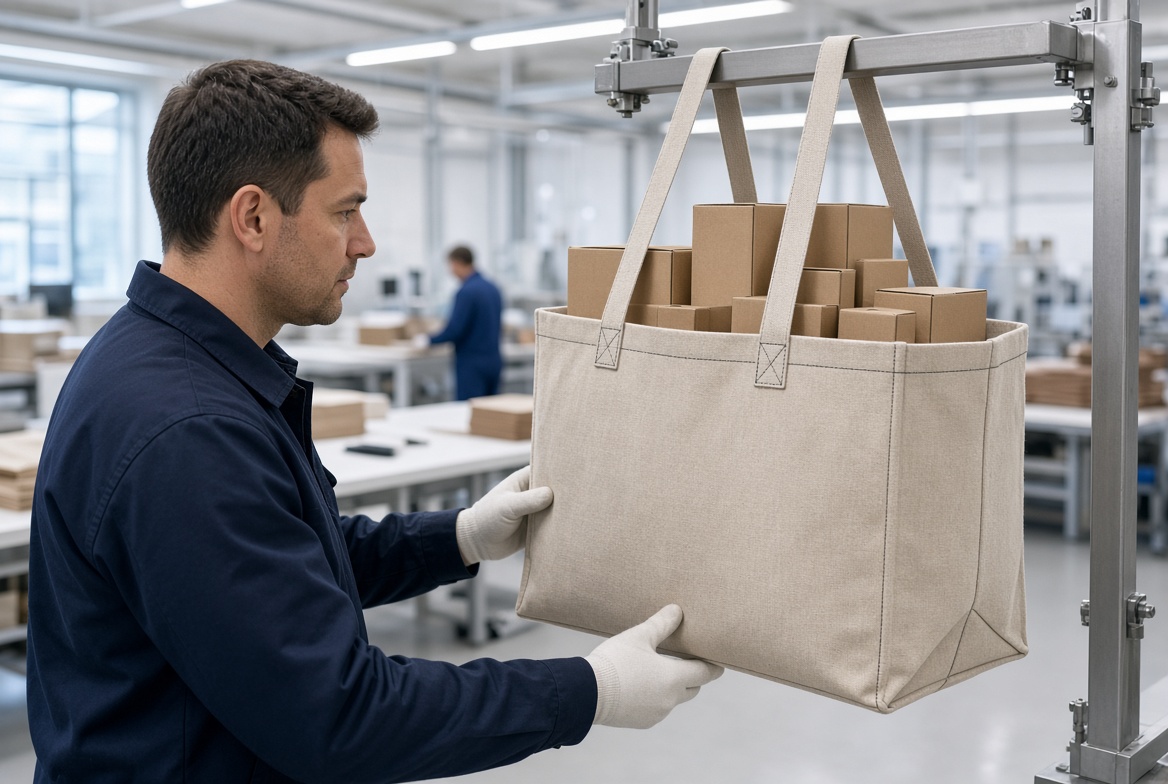
A practical factory test is to load the finished bag, suspend it by the handles, and inspect for seam separation, handle pull-through, or bottom deformation. A 30-minute static-load test is commonly used as an internal screening method for reusable bags.
Strengthen the Seams and Bottom Panel
A tote bag may appear strong from the front, but side seams and base seams often determine whether it survives real use. When consumers carry rigid boxes, bottles, books, or unevenly shaped products, stress shifts toward corners and the bottom panel.
Build Seams for the Actual Load
For light-use tote bags, a standard stitched seam may be enough. For retail bags that carry heavier or irregularly shaped products, use stronger seam construction.
Recommended options include:
- Double-stitched side seams for improved tear resistance
- Overlocked interior seams to reduce fraying
- Wider seam allowances for better stitch holding power
- Reinforced bottom seams for boxed or heavy products
- Bottom gussets to distribute load more evenly
- Cardboard or PP base inserts for premium product presentation
A gusseted tote is often more durable than a flat tote when carrying bulkier products. It allows the contents to sit naturally instead of forcing the side seams to stretch outward.
Add Reinforcement Where Stress Concentrates
The weakest point is not always visible. In our production experience, the most important locations to reinforce are:
1. Handle attachment zones
2. Bottom corners
3. Side seams near the gusset
4. Fold lines near laminated areas
5. Areas with dense print coverage
For example, a wine retailer may select a 280 GSM canvas tote with a gusseted base, webbing handles, and a reinforced bottom board. The bag may cost more than a basic flat cotton tote, but it is far less likely to fail when carrying glass bottles. That protects the product, the customer experience, and the brand's reputation.
Match Bag Capacity to Real Use
Many tote bags break because the expected load was never clearly defined during product development. "Reusable" is not a load specification. A tote bag designed for a trade-show brochure is fundamentally different from one designed for grocery items or premium gift boxes.
Create a Load Profile Before Production
Before confirming material and construction, define:
- What products will go inside the bag?
- What is the maximum expected weight?
- Will the products have sharp corners or rigid edges?
- Will consumers carry the bag by hand or on the shoulder?
- Will the tote be reused daily, occasionally, or only once?
- Will it be exposed to moisture, sunlight, or folding during storage?
A bag should be tested using representative products whenever possible. A tote filled with soft textiles behaves very differently from one filled with ceramic containers, books, or bottled drinks.
For non-woven reusable bags, some supplier specifications use an 80 GSM construction for moderate loads and move toward 100–120 GSM for heavier-duty use. One industry guide suggests approximately 8 kg at 80 GSM, 12 kg at 100 GSM, and 15 kg at 120 GSM, although actual capacity depends heavily on handle attachment and seam quality.
Protect the Printed Design
Printing should enhance a tote bag without reducing its performance. Heavy ink coverage, unsuitable curing conditions, poor surface preparation, or an incorrect printing process can cause cracking, peeling, color transfer, or stiffness.
Select the Printing Method Carefully
Different printing methods suit different tote bag materials and artwork requirements.
| Printing Method | Best For | Durability Consideration |
| Screen printing | Bold logos, solid colors, large production runs | Requires proper curing to resist cracking |
| Heat transfer | Detailed artwork, small runs, color gradients | Must use a compatible film and controlled temperature |
| Digital printing | Complex designs, photographic images | Requires suitable fabric coating and ink compatibility |
| Offset printing | Laminated paper or PP tote bags | Best for high-detail full-color artwork |
| Foil stamping | Premium packaging-style effects | Should avoid high-flex zones and fold lines |
For custom printed tote bags, do not place dense ink coverage directly over fold lines, gusset edges, or areas repeatedly bent during carrying. This is especially important for laminated bags and heat-transfer designs.
A strong design specification includes print size, ink type, color reference, artwork placement, curing requirement, and acceptable appearance after folding. Request a pre-production sample before approving bulk production.
Use a Practical Quality-Control Plan
Quality control should not begin when cartons are ready to ship. It should begin with approved specifications and continue through material inspection, sampling, production checks, and final packing.
A Five-Step Tote Bag Inspection Process
1. Confirm the approved specification
Record material type, GSM, dimensions, handle size, stitch pattern, print position, and packing requirements.
2. Inspect incoming materials
Check fabric consistency, webbing strength, thread color, lamination quality, and print material compatibility.
3. Approve a pre-production sample
Verify the bag's feel, structure, print color, handle placement, and real carrying comfort.
4. Perform load and seam tests
Fill bags with representative weight, suspend them, lift them repeatedly, and inspect handle attachment, side seams, and the bottom panel.
5. Conduct final random inspection
Check dimensions, print quality, sewing consistency, odor, contamination, packing count, and carton strength.
For higher-risk applications, add a simple drop test. Fill the bag to its rated load and drop it from a controlled height onto a firm surface. This helps identify weak seams, sharp product edges, and poor base construction before the tote reaches customers.
Common Mistakes to Avoid
The cheapest tote bag is not always the most economical choice. If it tears after one use, it can waste the original product cost, reduce repeat use, and damage brand trust.
Avoid these common mistakes:
- Choosing fabric based on price alone
- Treating GSM as the only strength indicator
- Using simple straight stitching for heavy handles
- Ignoring the effect of boxed, sharp, or glass products
- Selecting narrow handles for high-load applications
- Skipping pre-production samples
- Testing an empty bag instead of a loaded bag
- Using unverified artwork placement on gussets and fold areas
- Approving bulk production without a clear quality standard
Build a Tote Bag That Lasts
The most durable custom tote bag is not necessarily the heaviest or most expensive one. It is the bag with the right balance of material, handle construction, seam reinforcement, capacity planning, and printing method.
For a promotional campaign, a lightweight non-woven tote may be appropriate. For a retail brand that expects repeat use, a reinforced cotton canvas, RPET, or high-GSM non-woven tote can create a stronger impression and longer product life. The correct choice depends on the load, user behavior, brand positioning, and budget.
Shenzhen XingKun Packing Products Co., Ltd. can help turn your tote bag concept into a production-ready specification—from material selection and logo printing to handle reinforcement, sampling, and bulk quality checks. Contact our team to discuss your custom tote bag project and request a tailored recommendation based on your product weight, desired style, and target market.
Frequently Asked Questions
What is the best material for heavy-duty custom tote bags?
Heavy cotton canvas, RPET fabric, and higher-GSM non-woven polypropylene are common choices. The best option depends on expected load, desired appearance, reuse frequency, and printing requirements. For heavy items, reinforced handles and seams matter as much as the material itself.
What GSM is suitable for reusable non-woven tote bags?
For many reusable retail applications, 80–120 GSM is a practical range. Bags below 60 GSM are generally better suited to lightweight promotional use, while 100–120 GSM is often selected for heavier, repeated-use applications.
Why do tote bag handles tear first?
Handles experience concentrated lifting force. They may tear because the fabric is too thin, the stitch pattern is weak, the thread quality is poor, or the attachment area lacks reinforcement. Box-X stitching, wider webbing, and backing patches can significantly improve handle durability.
Can screen printing make a tote bag less durable?
It can if the ink layer is too thick, poorly cured, or placed over high-flex zones. Correct ink selection, controlled curing, and smart artwork placement help maintain both print quality and bag flexibility.
Should custom tote bags be load tested before bulk production?
Yes. Load testing helps identify weak handles, seam separation, base deformation, and material tearing before full production. Testing should use realistic products or equivalent weight rather than an empty bag.
Are gusseted tote bags stronger than flat tote bags?
A gusset does not automatically make a bag stronger, but it can improve load distribution and capacity. When combined with reinforced seams and a suitable material, a gusseted structure is often better for boxed, bulky, or heavier items.
References
1. [Clemson University — Evaluation of Durability of Nonwoven Polypropylene Grocery Bags]
2. [Reusable Bags Alliance — Reusable Bag Testing Protocol]
3. [NOVOLEX — Non-Woven Reusable Bags Product Information]
4. [Ukugi — Non-Woven Bag GSM, Stitch Strength and Recyclability]
5. [Wovenary — Wholesale Custom Non-Woven Tote Bags]
6. [Alibaba SmartBuy — How to Choose Non-Woven Polypropylene Bags]


