Content Menu
● Why Custom Bottle Labels Matter for Product Success
● Custom Bottle Label Types by Application
>> Beverage Bottle Labels
>> Cosmetic and Personal-Care Bottle Labels
>> Food, Sauce, and Oil Bottle Labels
>> Supplement and Pharmaceutical-Adjacent Bottle Labels
● Choosing the Right Bottle Label Material
>> When Paper Bottle Labels Still Make Sense
● Adhesive Selection: The Detail That Prevents Label Failure
>> Common Bottle Label Adhesive Options
● How to Design Custom Bottle Labels That Convert
>> Use a Clear Visual Hierarchy
>> Design for Curved Bottle Surfaces
>> Build a Print-Ready Artwork File
● Finishes That Make Bottle Labels Look Premium
● Compliance and Label Content: What Brands Must Check
>> Important Compliance Note
● A Seven-Step Bottle Label Development Process
● Custom Bottle Labels from XingKun
● Conclusion
● FAQ
>> 1.What is the best material for waterproof custom bottle labels?
>> 2.Can I use paper labels for refrigerated bottles?
>> 3.What file format should I provide for custom bottle label printing?
>> 4.How do I prevent a bottle label from peeling off?
>> 5.Can clear bottle labels still use white text and graphics?
>> 6.What information should be included on a food or beverage bottle label?
>> 7.Are custom bottle labels supplied on rolls or sheets?
● References
Custom bottle labels do much more than identify a product. They protect essential information, support shelf recognition, communicate brand quality, and must survive real handling conditions—from refrigerator condensation and water exposure to oil, abrasion, shipping, and repeated consumer use.
For beverage brands, cosmetics companies, supplement sellers, food manufacturers, candle makers, and private-label businesses, the right custom bottle label is a balance of material, adhesive, print method, bottle shape, finish, regulatory content, and budget. At XingKun, we help overseas brands, wholesalers, and manufacturers develop OEM and ODM packaging solutions, including tailored labels for glass, plastic, metal, and specialty bottles.
This guide explains how to specify custom printed bottle labels that look premium, apply efficiently, and remain readable throughout the product's intended lifecycle.
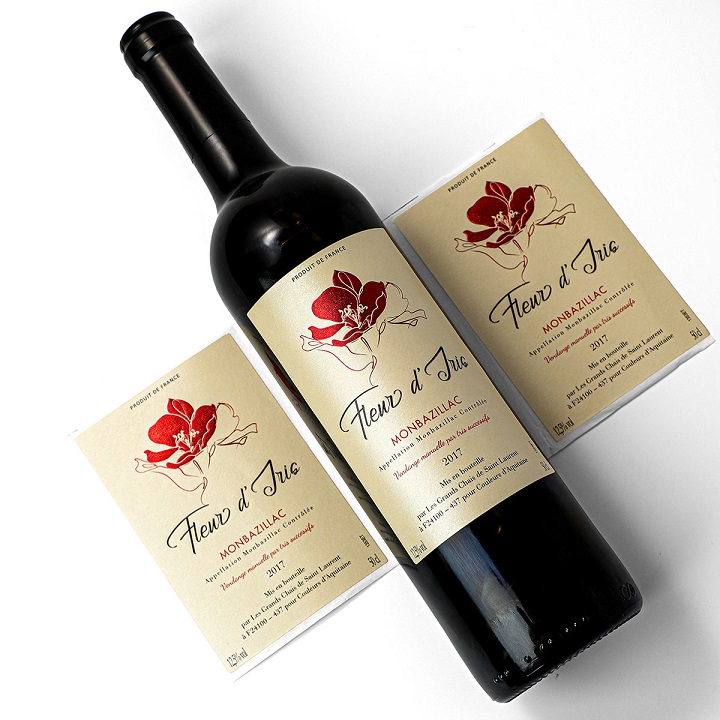
Why Custom Bottle Labels Matter for Product Success
A bottle label is often the first physical interaction a consumer has with your product. Before they test the beverage, skincare formula, essential oil, sauce, or supplement, they judge its appearance, clarity, and perceived quality from the package.
Well-engineered custom bottle labels help brands:
- Create consistent shelf presence across product ranges.
- Communicate product names, ingredients, instructions, and warnings clearly.
- Differentiate flavors, scents, variants, or sizes.
- Improve perceived product value through premium materials and finishes.
- Protect printed graphics against moisture, oil, friction, and transport.
- Support barcode scanning, lot-code printing, and inventory control.
- Meet applicable labeling requirements in target markets.
For many products, the label must remain attached and legible through normal distribution, storage, and use. The FDA explicitly states that certain device labels and container labels must remain in place and legible under customary conditions of distribution, storage, and use—a useful durability principle for any product-label specification. [fda]
A low-cost label that wrinkles in a refrigerator, peels in a bathroom, or becomes unreadable after oil contact can create a far higher commercial cost than the material savings it initially delivers.
Custom Bottle Label Types by Application
The best label solution depends first on the product environment, not merely on the bottle's appearance. A label for a dry glass candle jar has very different technical needs from a label for a chilled water bottle or a body wash used in a humid shower.
Beverage Bottle Labels
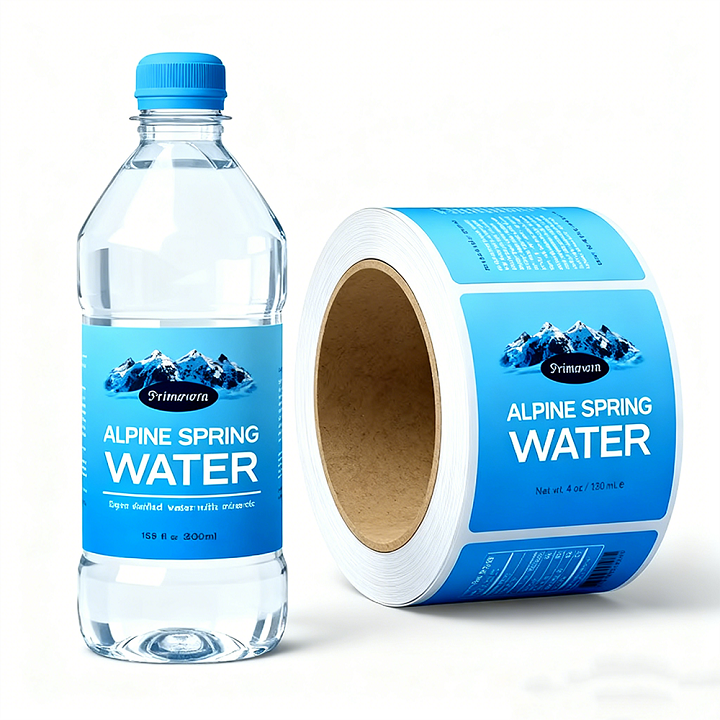
Beverages face condensation, cold storage, ice buckets, handling, and sometimes high-speed filling operations. In many cases, paper is not suitable unless protected with a laminate and used under controlled conditions.
Common beverage-label options include:
- White BOPP labels for opaque, durable graphics.
- Clear BOPP labels for a no-label-look effect on transparent bottles.
- Metallic film labels for premium energy drinks, spirits, and specialty beverages.
- Paper labels for dry, short-life, or craft-oriented products.
- Shrink sleeves when 360-degree decoration or complex bottle contours are required.
For water, juice, sparkling beverages, and refrigerated drinks, waterproof films such as BOPP, PET, and vinyl are commonly recommended because bottles are exposed to moisture, cold surfaces, and frequent handling. [bluelabelpackaging]
Cosmetic and Personal-Care Bottle Labels
Shampoo, lotion, serum, body wash, essential oil, and skincare labels must often resist water, oil, fragrance ingredients, and regular hand contact. Premium appearance also matters because customers may associate label quality with formula quality.
Recommended options include:
- White or clear BOPP for everyday personal-care packaging.
- PET labels for stronger chemical and temperature resistance.
- Vinyl labels for flexible application on curved or squeeze bottles.
- Soft-touch lamination for a premium tactile effect.
- Foil stamping for luxury skincare, fragrance, and gift-set products.
For a clear cosmetic bottle, a transparent label with selective white ink can create a refined floating-graphic effect while keeping key text readable.
Food, Sauce, and Oil Bottle Labels
Sauce bottles, spice containers, honey jars, cooking-oil bottles, and condiment packaging need labels that can withstand grease, handling, and occasional splashing. The label design also needs room for legally required product information.
A practical specification may include:
- Film label stock instead of uncoated paper.
- Permanent adhesive designed for the bottle substrate.
- Gloss or matte lamination for stain and abrasion resistance.
- High-contrast text for ingredients and nutrition information.
- Reserved space for batch codes and expiry dates.
- A barcode area with adequate quiet zones and contrast.
In the United States, FDA food-labeling guidance covers required statements under federal food-labeling laws. Depending on the product and applicable exemptions, food labels may need to include the statement of identity, net quantity, ingredient information, allergen declarations, nutrition information, and manufacturer or distributor details. [fda]
Supplement and Pharmaceutical-Adjacent Bottle Labels
Supplement labels must combine branding with dense information. Small bottle diameters make typography, layout hierarchy, and label construction especially important.
For these projects, prioritize:
- Legible small text, rather than decorative typography.
- Strong contrast between text and background.
- Space for regulatory copy, directions, warnings, and supplement facts.
- Durable label film and adhesive.
- Lot number and expiry-date compatibility.
- Artwork review by the brand's legal or regulatory team before printing.
A packaging printer can help produce accurate artwork, but the product owner remains responsible for ensuring that label claims and regulated content are compliant in every sales market.
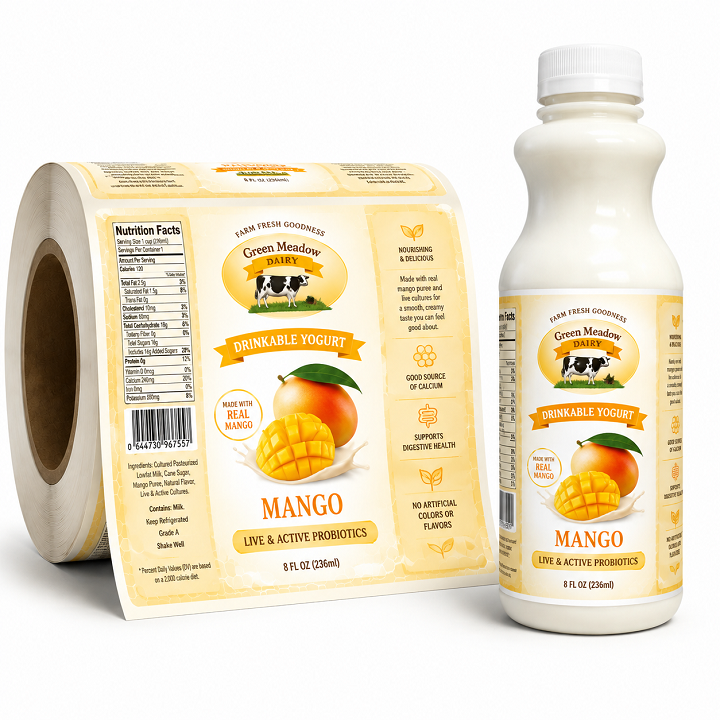
Choosing the Right Bottle Label Material
Material selection is the foundation of label performance. Do not choose a label stock based only on price or appearance. Instead, evaluate moisture exposure, bottle texture, surface energy, storage temperature, application conditions, and expected product life.
| Label material |
Best for |
Key strengths |
Main limitations |
| Paper |
Dry products, candles, craft beverages, short-use items |
Affordable, natural look, strong print appearance |
Can absorb moisture, tear, stain, or wrinkle |
| White BOPP |
Beverages, cosmetics, food, household products |
Water-resistant, oil-resistant, durable, versatile |
Less natural-looking than textured paper |
| Clear BOPP |
Transparent bottles, premium no-label look |
Clear appearance, moisture resistance |
Requires careful artwork and white-ink planning |
| PET film |
Chemical-resistant and demanding applications |
Strong durability, resistance to moisture and chemicals |
Usually higher material cost |
| Vinyl |
Curved bottles, outdoor or highly durable applications |
Flexible, conformable, weather-resistant |
Can cost more and may not suit every recycling goal |
| Metallized film |
Premium retail products |
Metallic visual effect, shelf impact |
May complicate barcode contrast and recycling strategy |
BOPP—biaxially oriented polypropylene—is one of the most widely used materials for custom bottle labels because it handles moisture well and offers good resistance to chemicals and tearing. Industry guidance commonly identifies BOPP, PET, and vinyl as strong choices for labels exposed to wet or cold conditions. [bluelabelpackaging]
When Paper Bottle Labels Still Make Sense
Paper is not automatically a poor choice. It can be the best option when a brand wants a tactile, artisanal, natural, or premium wine-style presentation.
Choose paper labels when:
- The bottle stays dry during normal use.
- The product is sold at ambient temperature.
- The brand aesthetic benefits from texture or a handcrafted feel.
- The label will not be rubbed, soaked, or refrigerated for long periods.
- Budget is a major consideration.
If you use paper for a product that may encounter moisture, ask your printer about varnish, lamination, or a more suitable film alternative. A laminated paper label may improve protection, but it generally will not match the wet-strength performance of a film label.
Adhesive Selection: The Detail That Prevents Label Failure
A premium label material can still fail if the adhesive is wrong. Adhesive choice should be based on the bottle material, application environment, temperature, and product lifecycle.
The same artwork may be applied to:
- Smooth PET beverage bottles.
- Glass sauce bottles.
- HDPE shampoo bottles.
- Low-energy polypropylene containers.
- Curved aluminum bottles.
- Frosted or textured glass.
Each surface behaves differently.
Common Bottle Label Adhesive Options
- Permanent adhesive: Suitable for most standard bottle-label applications.
- Water-resistant adhesive: Important for chilled beverages and humid environments.
- Cold-temperature adhesive: Used when labels are applied or stored in cold conditions.
- Removable adhesive: Appropriate for temporary promotions, reusable containers, or retail price labels.
- High-tack adhesive: Helpful for difficult surfaces, textured containers, or curved bottles.
- Oil-resistant adhesive: Useful for food oils, sauces, and oily personal-care products.
Before full production, conduct an application test using the actual bottle, actual product, actual storage conditions, and intended label material. This is especially important for refrigerated drinks, frozen products, oily bottles, squeeze containers, and containers with heavy curvature.
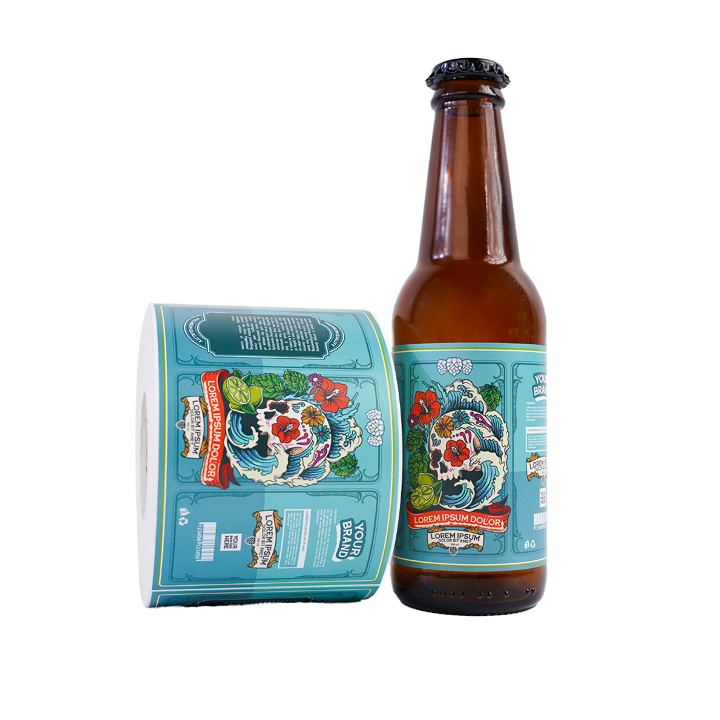
How to Design Custom Bottle Labels That Convert
A successful bottle label must work at two distances: from several feet away on a shelf and from a few inches away in the customer's hand.
At shelf distance, the consumer should quickly understand:
- What the product is.
- Which brand made it.
- Which flavor, scent, benefit, or variant it offers.
- Why it is different from alternatives.
At close range, the consumer should be able to find product details, directions, ingredients, warnings, barcodes, and brand contact information without strain.
Use a Clear Visual Hierarchy
A practical front-label hierarchy often follows this order:
1. Brand name or logo.
2. Product name.
3. Main variant, flavor, scent, or functional benefit.
4. Key differentiator or product claim.
5. Net contents, where required or appropriate.
6. Supporting visual elements.
Avoid placing every message at the same visual weight. When every element is large, nothing is prominent.
For example, a cold-brew coffee label may prioritize:
Brand → "Cold Brew Coffee" → "Colombian Dark Roast" → "Smooth & Low Acid" → 330 ml
The ingredients, nutrition details, barcode, and company address can then be placed on the back or side panel, subject to the relevant market's labeling rules.
Design for Curved Bottle Surfaces
Bottle labels are usually viewed on a curved surface, which changes how text and graphics appear. If a label is too wide for a narrow bottle, the side areas may disappear from the consumer's direct view.
Use these design rules:
- Keep essential text near the center-facing area.
- Do not place small text too close to the left and right label edges.
- Avoid very thin lines that may distort visually on curved surfaces.
- Request a physical mock-up or digital bottle mock-up before approving production.
- Check that the barcode remains on a sufficiently flat area for scanning.
- Consider front-and-back labels instead of one wide wraparound label for narrow bottles.
Build a Print-Ready Artwork File
For professional custom bottle label printing, provide:
- Vector logo files, preferably AI, EPS, PDF, or SVG.
- CMYK artwork for standard offset or digital production workflows.
- Pantone references when exact spot-color matching is required.
- High-resolution images, typically 300 dpi at final print size.
- Bleed area, commonly 2–3 mm depending on the production specification.
- Clearly marked die line or label size.
- Correct barcode file and quiet zone.
- Separate layers for foil, white ink, spot UV, embossing, or varnish.
Always ask the printer for a final proof. For high-value launches, request a physical sample or pre-production proof rather than relying only on a screen preview.
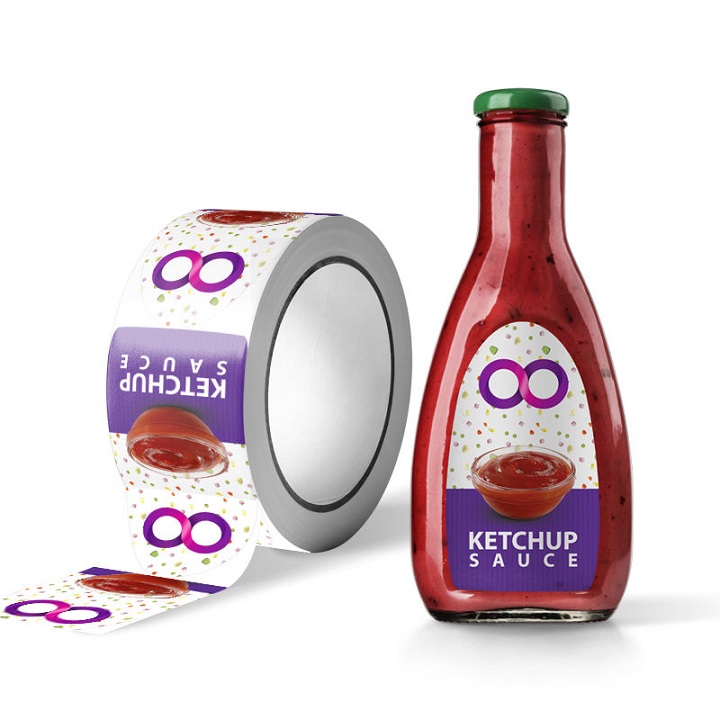
Finishes That Make Bottle Labels Look Premium
The right finish can make a standard custom printed bottle label feel significantly more premium without redesigning the full artwork.
| Finish |
Visual effect |
Best use |
| Gloss lamination |
Bright, polished, color-enhancing |
Beverages, children’s products, vibrant food packaging |
| Matte lamination |
Smooth, refined, modern |
Skincare, supplements, premium food products |
| Soft-touch lamination |
Velvety tactile feel |
Luxury cosmetics, gift packaging, boutique brands |
| Foil stamping |
Metallic accent |
Logos, borders, premium product names |
| Spot UV |
Glossy raised-looking contrast |
Highlighting logos or selected graphics |
| Embossing |
Physical raised texture |
High-end cosmetic or gift products |
| Clear label with white ink |
No-label look with readable artwork |
Glass bottles, clear PET bottles, premium beverages |
A common premium combination is matte BOPP + gold foil + spot UV. It can give skincare, essential oil, supplement, or specialty beverage brands a polished retail appearance while retaining the durability of a film label.
Compliance and Label Content: What Brands Must Check
Custom bottle labels should be designed for the target market—not only for the factory's home market. Requirements vary by country, product category, product claims, language, container size, and retail channel.
For U.S. food products, FDA guidance explains that mandatory label statements can include the product identity and net quantity on the principal display panel, with additional information commonly placed on the information panel. [fda]
Depending on the product and destination market, your label may need:
- Product identity or common name.
- Net weight or net volume.
- Ingredient list.
- Allergen statement.
- Nutrition Facts panel.
- Manufacturer, importer, packer, or distributor information.
- Country-of-origin information where applicable.
- Directions for use.
- Safety warnings.
- Storage conditions.
- Batch, lot, or production code.
- Expiration date, best-before date, or use-by date.
- Barcode, QR code, recycling information, or certification marks.
Important Compliance Note
This article provides packaging and print guidance, not legal advice. Before printing labels for food, beverages, cosmetics, supplements, alcohol, medical products, or regulated goods, have your final label reviewed by a qualified regulatory professional familiar with your destination market.
Alcohol products, for example, may be governed by authorities and requirements that differ from those for ordinary non-alcoholic beverages. Your compliance team should verify the correct rules before release.
A Seven-Step Bottle Label Development Process
The most efficient bottle-label projects begin with engineering questions, not decoration choices.
1. Define the product environment. Identify moisture, oil, refrigeration, freezing, outdoor exposure, chemical contact, and expected shelf life.
2. Measure the actual bottle. Confirm label panel height, diameter, curvature, seams, ridges, and available flat areas.
3. Choose material and adhesive together. Pair the face stock with the bottle substrate and application conditions.
4. Create a hierarchy-led design. Make the brand, product name, and variant easy to recognize quickly.
5. Prepare compliant label copy. Verify required information, claims, languages, and market-specific details.
6. Request a proof and test sample. Check color, readability, adhesion, scan performance, and alignment on the real bottle.
7. Approve production specifications. Confirm size, quantity, roll direction, core size, finish, packaging, delivery timeline, and quality standard.
This process reduces avoidable problems such as incorrect label winding direction, poor barcode scanning, material mismatch, edge lifting, weak adhesion, or missing regulated content.
Custom Bottle Labels from XingKun
XingKun provides OEM and ODM packaging support for international brands, wholesalers, and manufacturers. For custom bottle label projects, our team can help evaluate the practical details that affect final performance: bottle dimensions, label material, adhesive behavior, printing method, finishing options, and production quantities.
A strong quotation request should include:
- Bottle photos and dimensions.
- Desired label size and shape.
- Product category and use environment.
- Target market or destination country.
- Material preference, if known.
- Required finish, such as matte, gloss, foil, or clear film.
- Artwork files or design concept.
- Estimated order quantity.
- Whether labels are supplied in rolls, sheets, or individual pieces.
- Required delivery date.
If you are developing a new beverage, cosmetic, food, supplement, or private-label product, do not wait until the final production stage to consider the label. Early material and application testing can protect your launch schedule and reduce rework.
Conclusion
The best custom bottle labels combine brand impact with real-world durability. Start by understanding the product environment, bottle surface, target market, and regulatory needs. Then select the appropriate material, adhesive, design hierarchy, print finish, and testing method.
For dry, decorative applications, paper may offer the right aesthetic and cost balance. For refrigerated drinks, cosmetics, food products, and wet environments, film-based options such as BOPP, PET, or vinyl are often more reliable. The right label is not simply the one that looks attractive in a digital mock-up—it is the one that remains attractive, readable, and securely applied throughout the customer experience.
Contact XingKun with your bottle size, product application, artwork, target quantity, and desired finish to receive a tailored custom bottle label recommendation and quotation.
FAQ
1.What is the best material for waterproof custom bottle labels?
For many waterproof applications, white BOPP, clear BOPP, PET, and vinyl are strong options. BOPP is especially common for beverage and personal-care labels because it resists moisture, oil, and tearing. The final choice should also account for bottle material, adhesive, storage temperature, and exposure to chemicals. [bluelabelpackaging]
2.Can I use paper labels for refrigerated bottles?
Paper labels can be used in some cases, but they are generally less suitable for refrigerated bottles with condensation. Moisture can cause paper to wrinkle, stain, tear, or lift. For chilled beverages, film labels with moisture-resistant adhesive are usually the safer choice.
3.What file format should I provide for custom bottle label printing?
Vector artwork is preferred, including AI, EPS, editable PDF, or SVG files. Use CMYK colors for standard print workflows, provide high-resolution images at 300 dpi, include bleed, and identify special layers for white ink, foil, spot UV, or other finishing processes.
4.How do I prevent a bottle label from peeling off?
Choose an adhesive that matches the bottle surface and product environment. Test the label on the actual container before mass production, especially if the product will be refrigerated, exposed to moisture, squeezed, filled hot, or stored in oily conditions.
5.Can clear bottle labels still use white text and graphics?
Yes. Clear labels can use white ink beneath selected design elements so that text, logos, and colors remain visible on clear bottles or dark liquids. This is a popular solution for a premium no-label appearance.
6.What information should be included on a food or beverage bottle label?
Requirements depend on the market and product category. In the U.S., FDA food-labeling guidance addresses required statements that may include product identity, net quantity, ingredient information, allergen declarations, nutrition information, and business details. Verify the final label with a qualified compliance professional before printing. [fda]
7.Are custom bottle labels supplied on rolls or sheets?
Both formats are possible. Roll labels are typically preferred for automatic or semi-automatic labeling machines, while sheet labels may suit smaller manual applications. Confirm your labeling method, roll direction, core size, and machine requirements before production.
References
1. U.S. Food and Drug Administration. [Guidance for Industry: Food Labeling Guide]. This FDA guidance outlines food-labeling statements and regulatory considerations under U.S. federal law. [fda]
2. U.S. Food and Drug Administration. [Quality System Regulation Labeling Requirements]. The guidance notes that labels must remain attached and legible under customary distribution, storage, and use conditions for regulated medical-device contexts. [fda]
3. Blue Label Packaging. [A Guide to Water Bottle Labels: Material, Application, and Print Quality]. Industry guidance on waterproof material options including BOPP, PET, and vinyl for water bottle applications. [bluelabelpackaging]
4. ARRYS. [The Ultimate Guide to Bottle Labels]. Industry overview of paper, BOPP, vinyl, PET, and label-material performance considerations. [arrsys]
5. XingKun Packing Products Co., Ltd. [Custom Bottle Labels]. Product reference page supplied for this article; page content could not be retrieved during research, so specific product claims were not relied upon.


