Content Menu
● What Is the Best Metal for a Nameplate?
● Why Material Selection Matters for Metal Nameplates
● Aluminum Nameplates: Lightweight, Durable, and Highly Versatile
>> Best Uses for Aluminum Nameplates
>> Advantages of Aluminum Nameplates
>> Aluminum Finishes to Consider
● Stainless Steel Nameplates: Built for Tough Environments
>> Best Uses for Stainless Steel Nameplates
>> Key Benefits of Stainless Steel
>> 304 vs. 316 Stainless Steel for Nameplates
● Brass and Bronze Nameplates for Premium Branding
>> Brass Nameplates
>> Bronze Nameplates
● Choose the Right Manufacturing Process
>> Etched Metal Nameplates
>> Engraved Metal Nameplates
>> Screen-Printed Metal Nameplates
>> Photo-Anodized Aluminum Nameplates
>> Embossed Metal Nameplates
● A Five-Step Nameplate Selection Process
>> 1. Define the Operating Environment
>> 2. Identify the Information That Must Remain Legible
>> 3. Select the Best Material and Thickness
>> 4. Match the Finish to Visibility Needs
>> 5. Plan the Mounting Method Early
● Common Mistakes to Avoid
>> Choosing by Appearance Alone
>> Ignoring Contrast and Readability
>> Using the Wrong Adhesive
>> Failing to Include Variable Data Requirements
>> Treating Samples as Optional
● Custom Metal Nameplates From XingKun
● Frequently Asked Questions
>> What is the best metal for outdoor nameplates?
>> Is aluminum or stainless steel better for equipment nameplates?
>> What is the best process for permanent serial number plates?
>> Can metal nameplates be made with custom logos and colors?
>> Are adhesive-backed metal nameplates durable?
>> What information should I provide when requesting a nameplate quote?
>> Can brass nameplates be used outdoors?
● References
Choosing the best metal nameplate is not simply a matter of selecting a material that looks attractive. A nameplate may carry a serial number, safety instruction, technical rating, certification mark, operating guide, company logo, or asset-identification code. If it fades, corrodes, detaches, or becomes unreadable, the cost can extend far beyond replacing a small metal tag.
For more than 20 years, Shenzhen XingKun Packing Products Co., Ltd. has produced custom nameplates and other printed packaging products for brands and distributors across more than 30 countries and regions. From our production experience, the right metal nameplate begins with a clear understanding of the application: environment, durability requirement, information type, mounting method, visual expectations, and production volume.
This guide explains how to select the best metal nameplate material and finishing process for industrial equipment, machinery, electronics, vehicles, branded products, and decorative applications.
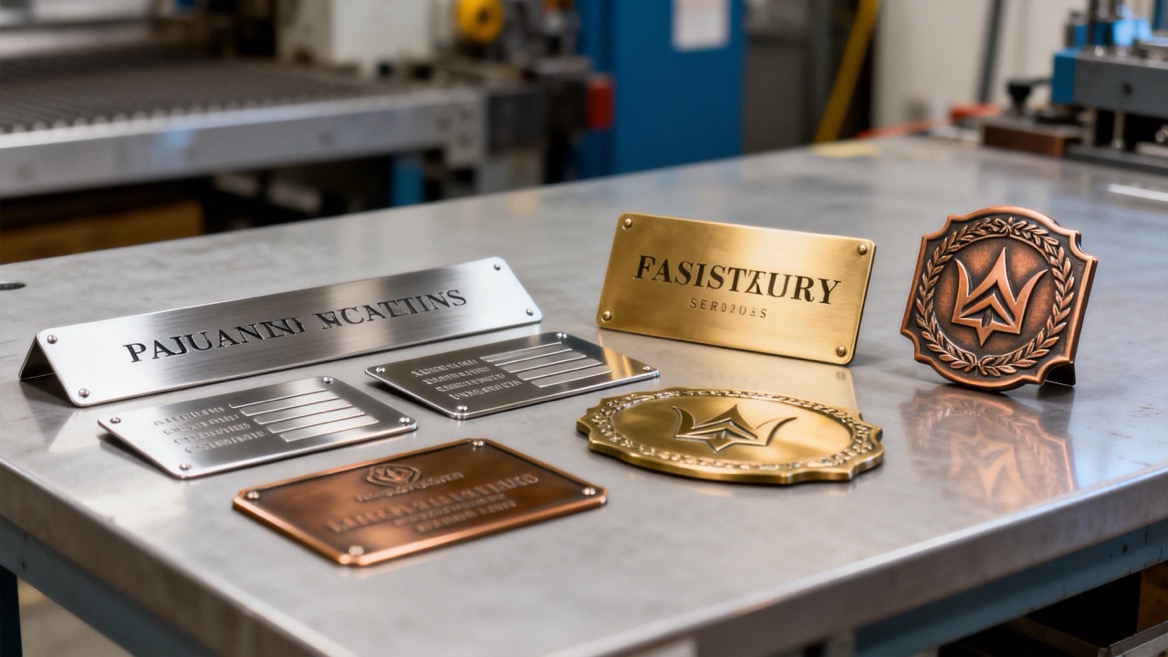
What Is the Best Metal for a Nameplate?
There is no single "best" metal nameplate for every project. The ideal choice depends on where the plate will be used and what it must withstand.
For many standard industrial applications, anodized aluminum nameplates offer an excellent balance of durability, weight, cost efficiency, and design flexibility. For demanding environments involving salt, chemicals, high temperatures, moisture, or heavy abrasion, stainless steel nameplates are often the stronger long-term solution.
For premium decorative projects, brass and bronze nameplates provide a distinctive appearance that aluminum and stainless steel cannot fully replicate.
The key is to specify the metal based on performance requirements rather than appearance alone.
| Nameplate Material | Best For | Key Advantages | Main Considerations |
| Aluminum | Equipment labels, control panels, asset tags, electronics, outdoor identification | Lightweight, versatile, corrosion-resistant after appropriate finishing, economical | May not be ideal for severe abrasion or highly aggressive chemical environments |
| Stainless steel | Machinery, marine equipment, industrial assets, outdoor installations | Excellent resistance to heat, moisture, corrosion, chemicals, and wear | Heavier and usually more expensive than aluminum |
| Brass | Luxury products, office signs, awards, furniture, decorative branding | Warm gold tone, refined appearance, easy to form | Better suited to protected or indoor settings |
| Bronze | Plaques, heritage signs, architectural projects, premium identification | Rich reddish-brown tone, decorative value, good corrosion resistance | Usually selected for aesthetics rather than lightweight industrial use |
| Cold-rolled steel | Heavy-duty industrial labels and embossed plates | Strong, rigid, suitable for deep embossing | Needs suitable surface protection in corrosive environments |
| Monel | Marine, chemical, and specialty corrosion-resistant applications | Strong corrosion resistance and good formability | Higher material cost and more specialized sourcing |
| Nickel silver | Decorative plates and non-magnetic applications | Silver-like appearance, strength, non-magnetic properties | Less common for general-purpose industrial labeling |
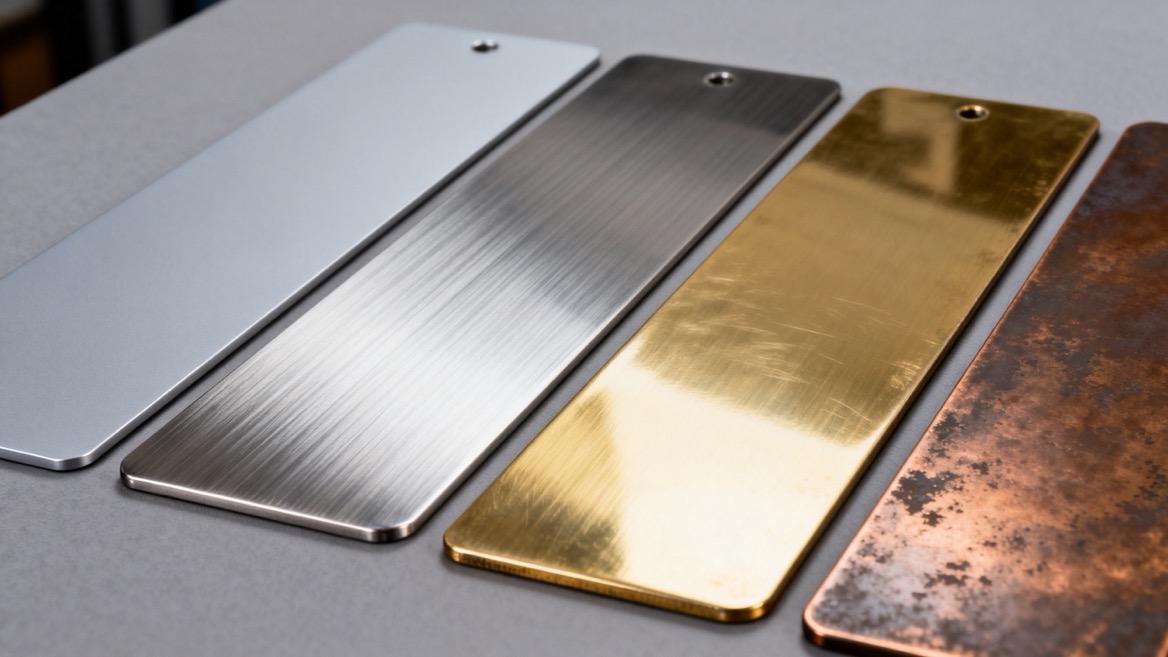
Why Material Selection Matters for Metal Nameplates
A nameplate often performs a critical function. It may help an operator identify a machine, locate a replacement part, follow a safety instruction, verify an electrical rating, or trace an item through a supply chain.
A poorly selected plate can fail in several ways:
- Printed information becomes difficult to read.
- The metal surface corrodes or stains.
- The adhesive loses strength under heat or moisture.
- A polished finish produces glare in outdoor light.
- A plate bends, scratches, or tears during normal use.
- A logo or decorative finish loses its premium appearance.
- A serial number cannot be identified during maintenance or inspection.
For example, a decorative brass plate may look excellent on an indoor display cabinet. However, it would not be the most practical choice for an outdoor pump operating near saltwater, cleaning chemicals, and regular physical contact. In that case, a properly finished stainless steel plate would usually provide better service life.
The best result comes from treating the nameplate as a functional product component—not just a printed accessory.
Aluminum Nameplates: Lightweight, Durable, and Highly Versatile
Aluminum remains one of the most widely used materials for custom metal nameplates. It is lightweight, workable, and compatible with many finishing and printing processes. It is especially useful when a project requires readable technical information without adding unnecessary weight to equipment or products.
Aluminum sheet and plate used in industrial applications can be specified under ASTM B209/B209M, a standard covering aluminum and aluminum-alloy flat sheet, coiled sheet, and plate. This helps buyers communicate material expectations more clearly when sourcing custom components.
Best Uses for Aluminum Nameplates
Aluminum nameplates are commonly selected for:
- Machinery identification plates.
- Electrical control panels.
- Computer and electronics labels.
- Asset tracking plates.
- Equipment serial number tags.
- Utility and infrastructure labels.
- Aerospace-related components where weight matters.
- Consumer appliance labels.
- Outdoor equipment identification.
- Branded metal logo plates.
Advantages of Aluminum Nameplates
Lightweight construction is one of aluminum's greatest strengths. It can reduce the overall weight of a product while still delivering a professional metallic appearance.
Flexible production options make it suitable for screen printing, digital printing, photo-anodized processes, embossing, engraving, etching, and custom die cutting.
Good corrosion performance can be achieved through anodizing and protective surface treatments. Anodizing creates an oxide layer that improves the metal's corrosion resistance, hardness, and wear resistance.
Cost control is another reason aluminum is common in large-volume industrial labeling. Compared with many premium alloys, it can provide an efficient balance between performance and budget.
Aluminum Finishes to Consider
The finish affects both appearance and readability. A nameplate that looks attractive under office lighting may create reflections when installed outdoors or near strong work lights.
Common aluminum nameplate finishes include:
- Brushed aluminum: A commercial, textured appearance that can reduce visible fingerprints and improve visual depth.
- Milled aluminum: A subtle grain pattern suitable for industrial equipment and branded product plates.
- Polished aluminum: A bright, reflective surface for premium decorative use.
- Clear anodized aluminum: A clean metallic appearance with an added protective anodic layer.
- Colored anodized aluminum: Suitable for brand-focused labels, panels, warning tags, and color-coded identification.
For applications where abrasion and corrosion resistance matter, anodic coating thickness should be specified rather than assumed. The Aluminum Anodizers Council notes that Architectural Class II anodic coatings, typically 0.4 to 0.7 mil thick, provide greater corrosion and abrasion resistance than thinner decorative coatings.
Stainless Steel Nameplates: Built for Tough Environments
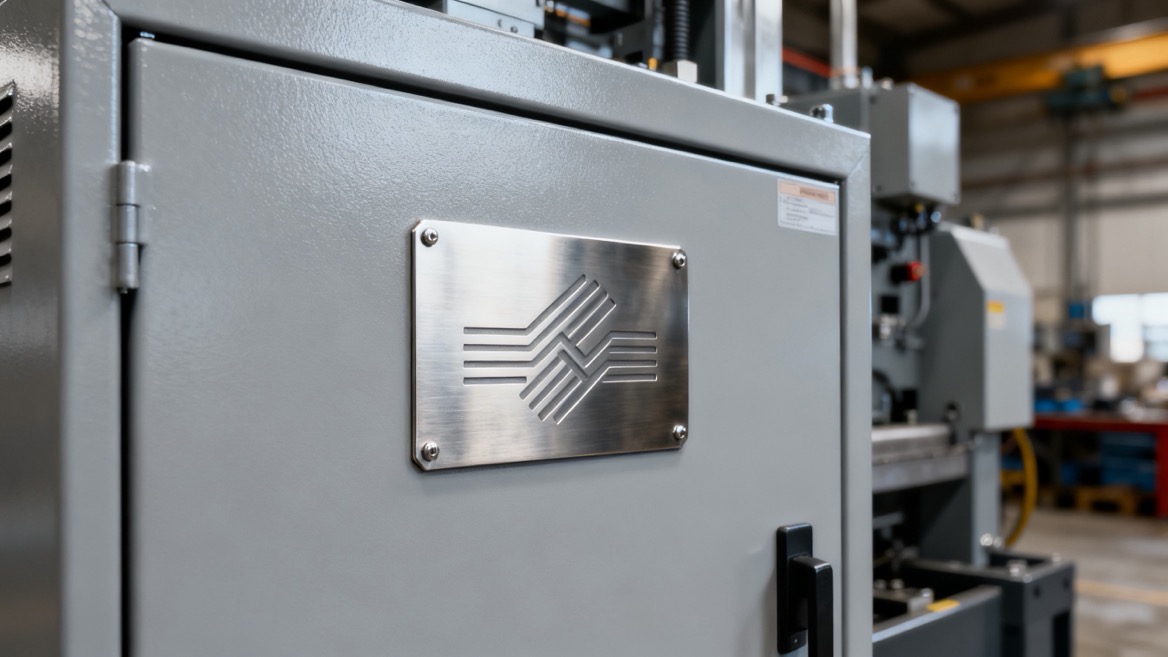
When the application involves harsh conditions, stainless steel is often the preferred choice. It is heavier than aluminum, but that extra weight is frequently justified by its strength, resistance to damage, and long-term appearance.
Stainless steel nameplates are widely used in industrial, transportation, marine, medical, food-processing, military-support, and outdoor environments where the plate must remain legible for years.
Best Uses for Stainless Steel Nameplates
Stainless steel is especially suitable for:
- Heavy machinery and manufacturing equipment.
- Outdoor control cabinets.
- Chemical-processing equipment.
- Marine and coastal installations.
- Vehicle and trailer identification.
- Safety labels in high-contact areas.
- Equipment exposed to heat and washdown.
- Durable serial number and data plates.
- Industrial pumps, valves, motors, and compressors.
- High-end appliance and architectural branding.
Key Benefits of Stainless Steel
Strong corrosion resistance makes stainless steel reliable in many challenging locations. Grade selection is important, especially when chlorides, salt spray, or chemical exposure are present.
High wear resistance supports applications where plates are frequently handled, cleaned, rubbed, or exposed to moving equipment.
Heat and moisture resistance make it a practical option for equipment operating in hot, humid, or outdoor conditions.
A professional industrial appearance gives machinery and premium products a strong, durable visual identity.
304 vs. 316 Stainless Steel for Nameplates
Not all stainless steels perform identically. Two of the most common grades are 304 and 316.
| Stainless Steel Grade | Suitable Environment | Practical Nameplate Recommendation |
| 304 stainless steel | Indoor industrial settings, general outdoor applications, moderate moisture and non-corrosive environments | A strong option for general machinery labels, equipment tags, and standard outdoor identification |
| 316 stainless steel | Marine areas, coastal sites, chemical facilities, chloride-rich environments, saltwater exposure | Recommended when corrosion risk is high and replacement would be expensive or disruptive |
Grade 304 typically contains approximately 18% chromium and 8% nickel, delivering strong corrosion resistance for many indoor and non-corrosive environments. Grade 316 includes approximately 2% to 3% molybdenum, which improves resistance to chlorides, saltwater, and certain chemicals.
For a manufacturer or distributor, the important question is not "Which grade is better?" but rather "What will the nameplate encounter during its service life?" Selecting 316 for a standard indoor office label may add cost without meaningful benefit. Selecting 304 for a coastal installation may create a preventable durability risk.
Brass and Bronze Nameplates for Premium Branding
Brass and bronze are chosen primarily for their visual character. They bring warmth, weight, and a traditional sense of quality to a product or environment.
These materials are especially effective when the nameplate is part of the brand experience rather than purely a technical information label.
Brass Nameplates
Brass usually offers a gold or yellow-toned appearance. It is often used for:
- Hotel and office signage.
- Premium furniture labels.
- Luxury packaging and product branding.
- Recognition plaques.
- Decorative logo plates.
- Door and room identification.
- High-end consumer goods.
A brushed or lightly milled brass finish can create a classic appearance, while engraving or etching can add depth and permanence. Brass is malleable, which gives designers useful flexibility for shaping and forming custom plates.
However, brass should be selected carefully for exposed outdoor environments. Its appearance can change over time, especially where moisture, air pollution, or frequent handling are involved. A clear protective coating may help preserve the intended finish.
Bronze Nameplates
Bronze offers a richer reddish-brown or copper-toned appearance. It is often associated with heritage, craftsmanship, and architectural permanence.
Typical applications include:
- Memorial and commemorative plaques.
- Architectural signage.
- Premium product identification.
- Building and room markers.
- Museum and display labels.
- Custom brand emblems.
- Decorative equipment plates.
Bronze has useful corrosion and fatigue resistance, but it is most often selected because of its distinctive appearance. It is a strong option when a project needs a more traditional or artistic look than brushed steel or silver aluminum can provide.
Choose the Right Manufacturing Process
The material alone does not determine whether a nameplate will perform well. The production process also affects readability, durability, color quality, tactile feel, and long-term resistance to wear.
Etched Metal Nameplates
Etched nameplates use a chemical process to create recessed graphics, text, numbers, or logos in the metal surface. The recessed areas can be filled with enamel or epoxy color for stronger contrast.
Etched metal plates are commonly used for:
- Industrial control labels.
- Machinery data plates.
- Safety information.
- Serial number identification.
- Directional signage.
- Outdoor equipment labels.
A major benefit is that the information is physically recessed into the metal rather than sitting only on the surface.
Engraved Metal Nameplates
Engraving removes material through mechanical tools or laser processes. It can create crisp, permanent text, logos, variable data, and serial numbers.
Engraved plates are useful when the project requires:
- Individual serial numbers.
- Asset identification.
- Low-volume customization.
- Deep, durable markings.
- High-value equipment labeling.
- Personalization or traceability.
For variable information, engraving can be particularly practical because each plate can carry unique text without changing the fundamental design.
Screen-Printed Metal Nameplates
Screen printing applies ink through a mesh screen. It is a cost-effective process for repeat designs, bold graphics, color blocks, warning symbols, and larger production runs.
Screen-printed metal nameplates can work well for interior and exterior use when the ink system, protective coating, substrate, and application environment are properly matched.
This process is commonly selected for:
- Control panels.
- Appliance labels.
- Branded equipment plates.
- Instruction labels.
- Product logos.
- Color-coded industrial graphics.
Photo-Anodized Aluminum Nameplates
Photo-anodized aluminum is a highly durable choice for applications requiring detailed graphics, photographs, fine text, barcodes, QR codes, or long-lasting information.
In this process, the image is sealed into the anodic layer rather than printed only on top of the surface. This makes it especially suitable for nameplates that need to remain readable after long-term exposure to weather, cleaning, handling, and UV light.
Embossed Metal Nameplates
Embossed plates feature raised letters, numbers, borders, or graphics. They provide a tactile and highly durable result because the design is formed directly into the metal.
Embossed nameplates are suitable for:
- Durable serial plates.
- Safety identification.
- Utility markers.
- Vehicle tags.
- Heavy-duty industrial labels.
- Applications where paint or ink may eventually wear away.
The raised design can remain identifiable even when the surface becomes dirty, scratched, or weathered.
A Five-Step Nameplate Selection Process
Before requesting a quotation, use this practical checklist to define your project more accurately.
1. Define the Operating Environment
Ask where the nameplate will be installed.
Consider:
- Indoor or outdoor use.
- Exposure to rain, UV light, salt air, humidity, or temperature changes.
- Contact with oils, solvents, cleaning agents, fuel, or chemicals.
- Abrasion from tools, hands, cables, moving parts, or frequent cleaning.
- Risk of impact, vibration, or bending.
A plate installed on an indoor electronic device has very different requirements from one installed on agricultural machinery or coastal infrastructure.
2. Identify the Information That Must Remain Legible
Determine which content is essential throughout the product lifecycle.
Examples include:
- Model number.
- Serial number.
- Voltage and power ratings.
- Safety warnings.
- Operating instructions.
- Certification symbols.
- Barcode or QR code.
- Brand logo.
- Installation data.
- Maintenance instructions.
If the nameplate carries compliance-related or safety-critical information, prioritize permanence and contrast over decorative appearance.
3. Select the Best Material and Thickness
Thickness affects rigidity, durability, mounting, and perceived quality. A very thin plate may be appropriate for a lightweight product label, while a thicker plate may be needed for machinery, outdoor installations, or embossed designs.
When evaluating thickness, consider:
- Whether the plate needs to bend around a curved surface.
- Whether it will be riveted, screwed, welded, or attached with adhesive.
- Whether the installation surface vibrates.
- Whether users will touch or clean the plate frequently.
- Whether the plate needs to resist impact.
4. Match the Finish to Visibility Needs
A highly polished surface can look premium but may produce glare. A brushed or matte finish may provide better readability in factories, outdoor sites, or strong lighting conditions.
For technical labels, contrast is often more important than shine.
For decorative branding, surface appearance may carry more weight—but legibility should still be protected.
5. Plan the Mounting Method Early
The mounting method should be decided during the design stage, not after the plates have been manufactured.
Common options include:
- Pressure-sensitive adhesive.
- Screws.
- Rivets.
- Holes for mechanical fastening.
- Welding.
- Slots or tabs.
- Magnetic attachment for temporary applications.
Adhesive-backed aluminum plates can work very well on smooth, clean, stable surfaces. However, high heat, textured surfaces, oily substrates, outdoor exposure, or high vibration may require mechanical fastening for better long-term reliability.
Common Mistakes to Avoid
Many nameplate problems can be prevented during specification and design.
Choosing by Appearance Alone
A gold brass finish may be visually appealing, but it may not suit an environment with salt, chemicals, or constant handling. Always evaluate the actual operating conditions first.
Ignoring Contrast and Readability
Small text, low contrast, excessive glare, or crowded layouts can make a technically durable plate functionally ineffective.
A good rule is simple: if an operator cannot quickly read the key information from a normal working distance, the design needs improvement.
Using the Wrong Adhesive
Even the best metal plate can fail if the adhesive is not matched to the surface, temperature range, chemical exposure, and installation method.
Failing to Include Variable Data Requirements
If every plate needs a unique serial number, QR code, batch number, or asset ID, mention this at the quotation stage. This affects production planning and the recommended marking process.
Treating Samples as Optional
A physical sample helps verify:
- Material thickness.
- Color accuracy.
- Surface texture.
- Adhesive performance.
- Hole placement.
- Readability.
- Fit on the final product.
- Resistance to handling and installation.
For high-volume production, approving a sample before mass manufacturing can prevent costly rework.
Custom Metal Nameplates From XingKun
A custom metal nameplate should support both your product's performance and your brand image. Whether you need durable machinery plates, branded aluminum labels, stainless steel serial tags, engraved metal logos, decorative brass plates, or color-printed equipment panels, the specification should be built around real-world use.
At Shenzhen XingKun Packing Products Co., Ltd., we work with global brands and distributors to develop custom printed and packaging products based on their material, size, finishing, artwork, quantity, and application needs. Our team can help you evaluate the right direction before production, especially when your project requires a balance between durability, appearance, cost, and delivery efficiency.
Send us your artwork, dimensions, required quantity, installation method, and usage environment to request a practical nameplate recommendation and custom quotation.
Frequently Asked Questions
What is the best metal for outdoor nameplates?
Stainless steel is often the best choice for demanding outdoor conditions because it offers strong resistance to moisture, corrosion, abrasion, and temperature changes. Anodized aluminum is also an excellent option when lower weight and cost efficiency are important.
Is aluminum or stainless steel better for equipment nameplates?
Aluminum is generally better for lightweight, versatile, and economical equipment labels. Stainless steel is better for heavy-duty machinery, harsh industrial environments, marine exposure, chemical contact, or applications requiring exceptional long-term durability.
What is the best process for permanent serial number plates?
Engraving, etching, embossing, and photo-anodized aluminum are all strong options. The best choice depends on the metal, the required depth or detail, the production quantity, and the operating environment.
Can metal nameplates be made with custom logos and colors?
Yes. Custom metal nameplates can include logos, color printing, serial numbers, QR codes, barcodes, raised text, etched text, branded finishes, and custom shapes. Screen printing and photo-anodized aluminum are especially useful for detailed color graphics.
Are adhesive-backed metal nameplates durable?
They can be very durable when the adhesive is selected for the correct surface and operating conditions. For high heat, vibration, rough surfaces, oil exposure, or outdoor industrial environments, mechanical fastening such as screws or rivets may offer greater security.
What information should I provide when requesting a nameplate quote?
Provide the plate dimensions, material preference, thickness, quantity, artwork, color requirements, finishing process, mounting method, operating environment, and whether variable data such as serial numbers or QR codes are required.
Can brass nameplates be used outdoors?
Brass can be used outdoors, but its surface may age or develop a patina over time. If maintaining a bright, polished finish is important, consider a suitable protective coating and discuss the environment with the manufacturer before production.
References
1. [American Nameplate — Metal Nameplate Materials and Uses]
2. [ASTM International — ASTM B209/B209M Standard Specification for Aluminum and Aluminum-Alloy Sheet and Plate]
3. [Wiley — Corrosion Resistance of Anodized and Composite-Coated Aluminum Alloys]
4. [Aluminum Anodizers Council — Specifying Anodized Aluminum]
5. [Ryerson — 304 vs. 316 Stainless Steel: Differences, Corrosion, Cost and Uses]
6. [Rolled Alloys — 304 vs. 316 Stainless Steel Corrosion Resistance, Properties and Applications]
7. [Anoplate — How Anodizing Increases Corrosion Resistance]


