Content Menu
● What Is a Nameplate?
● Why Custom Nameplates Matter to Manufacturers
● Main Types of Nameplates
>> Industrial Equipment Nameplates
>> Machine Identification Plates
>> Safety Warning Nameplates
>> Logo Nameplates and Brand Badges
>> Serial Number and Asset Tags
>> Control Panel and Instruction Plates
● Custom Nameplate Materials Compared
● How to Choose the Right Nameplate Material
>> Ask These Questions Before Requesting a Quote
>> Expert Tip: Specify the "Failure Mode"
● Printing, Marking, and Finishing Options
>> Screen Printing
>> Etching
>> Engraving
>> Laser Marking
>> Anodizing and Protective Coatings
● Common Nameplate Applications by Industry
● A Practical Nameplate Specification Checklist
>> Sample Approval Is Essential
● How to Work With a Custom Nameplate Manufacturer
● Create a Nameplate That Performs as Well as It Looks
● Frequently Asked Questions
>> What is the best material for a durable outdoor nameplate?
>> Are aluminum nameplates better than stainless steel nameplates?
>> Can nameplates include serial numbers, QR codes, and barcodes?
>> What attachment method should I choose for a nameplate?
>> What is the difference between etched and engraved nameplates?
>> Can a nameplate be made in custom shapes and colors?
>> How do I request a quotation for custom nameplates?
● References
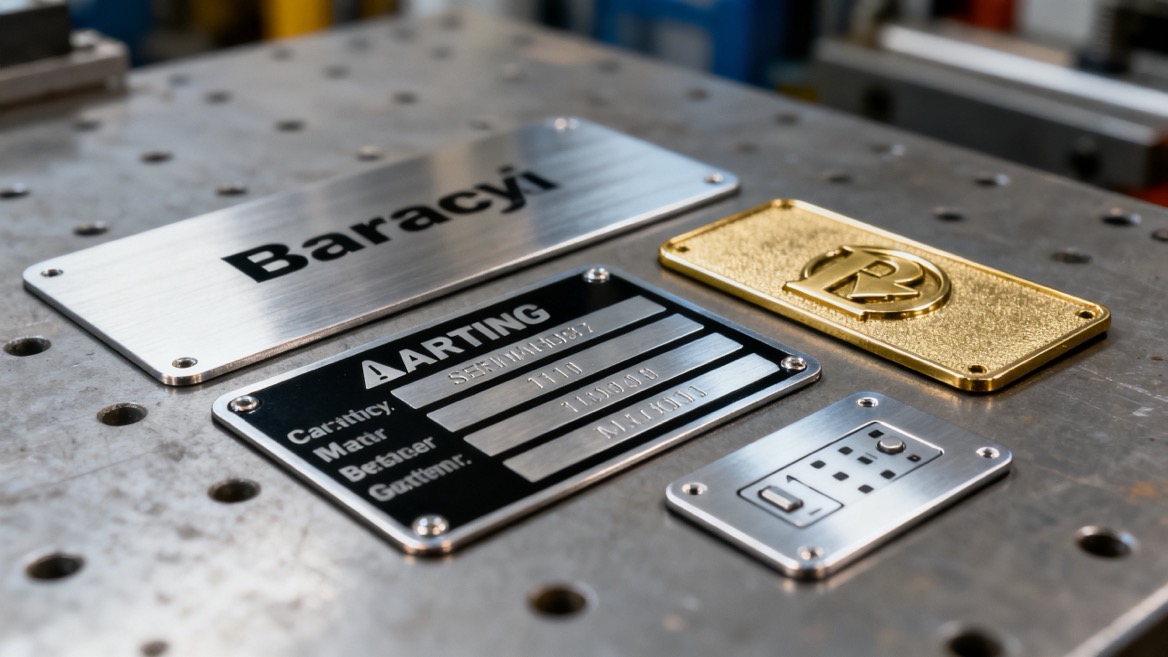
A custom nameplate is far more than a small piece of branded metal or printed film. It can carry a product's identity, operating instructions, safety warnings, traceability data, and brand value throughout years of real-world use.
For equipment makers, appliance brands, industrial distributors, and packaging buyers, choosing the right nameplate means balancing durability, readability, appearance, compliance needs, mounting method, and total cost. Shenzhen XingKun Packing Products Co., Ltd. has more than 20 years of experience producing nameplates and a broad range of printed and packaging products, serving brands and distributors across more than 30 countries and regions. In practice, the best result comes from designing the nameplate around its actual working environment—not simply choosing the most attractive material.
What Is a Nameplate?
A nameplate is a permanent or semi-permanent identification component applied to a product, machine, panel, package, or facility. It communicates essential information in a visible, durable format.
Depending on the application, a nameplate may display:
- Brand names and logos
- Model numbers
- Serial numbers
- Product specifications
- Voltage, wattage, pressure, or load ratings
- Barcodes and QR codes
- Safety instructions and warning symbols
- Operating directions
- Regulatory marks
- Asset identification numbers
- Decorative product branding
In industrial environments, nameplates help users identify equipment correctly, operate it safely, and maintain it efficiently. On consumer products, they can add a premium visual detail while still communicating traceability and compliance information.
A well-made metal nameplate, plastic nameplate, or durable label should remain legible for the expected life of the product. That requirement becomes especially important when the information concerns safety, servicing, electrical ratings, or serial-number tracking.
Why Custom Nameplates Matter to Manufacturers
For a manufacturer, nameplates are often one of the last components applied before shipment. Yet they can have an outsized impact on product perception and post-sale usability.
A poorly selected label may peel, fade, scratch, corrode, or become unreadable. When that happens, the customer may lose important product information, maintenance teams may struggle to identify replacement parts, and the product itself can appear lower quality than it really is.
A properly specified custom nameplate helps businesses achieve several goals:
- Build a consistent brand identity across equipment, components, packaging, and accessories.
- Improve product traceability through serial numbers, lot codes, QR codes, and barcodes.
- Support safer operation by keeping warning messages and operating instructions close to the relevant hazard or control.
- Protect product information in environments involving moisture, abrasion, chemicals, heat, oils, or sunlight.
- Create a more premium appearance through brushed metal, embossed details, raised lettering, domed finishes, or engraved graphics.
- Reduce replacement and rework costs by selecting the right material and attachment method from the start.
For example, a decorative badge on an indoor consumer appliance may prioritize metallic appearance and cost efficiency. A rating plate for outdoor electrical equipment must prioritize long-term legibility, adhesion, weather resistance, and reliable data reproduction.
Main Types of Nameplates
The phrase "nameplate" covers many product formats. The best type depends on what information must be displayed, where the part will be installed, and how long it must remain usable.
Industrial Equipment Nameplates
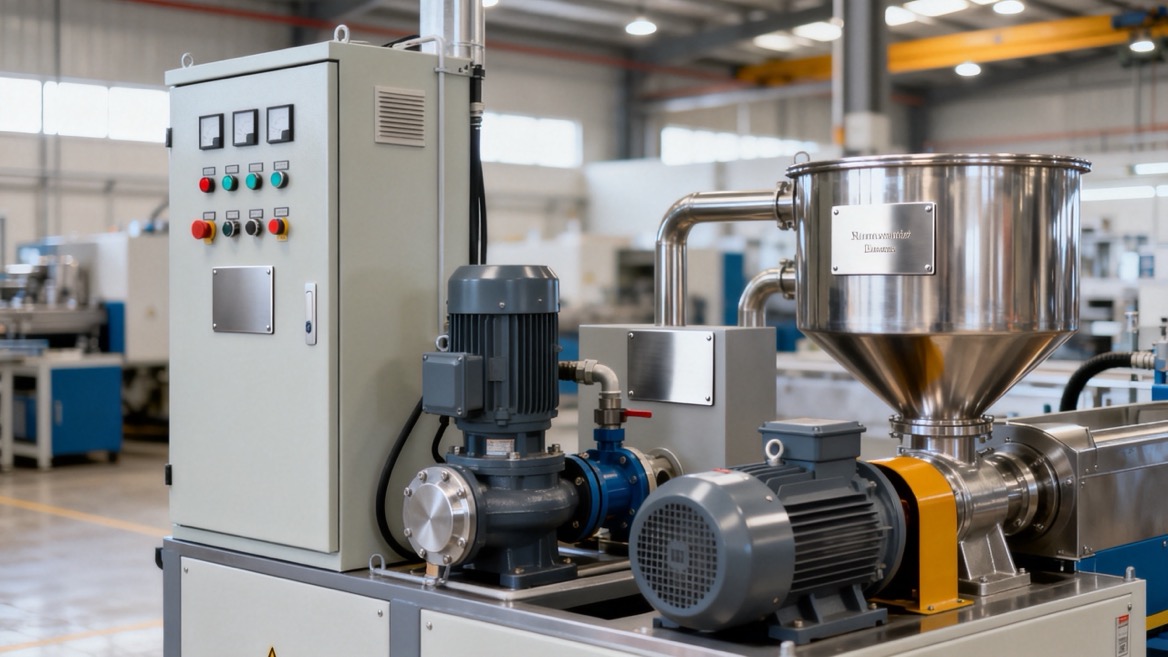
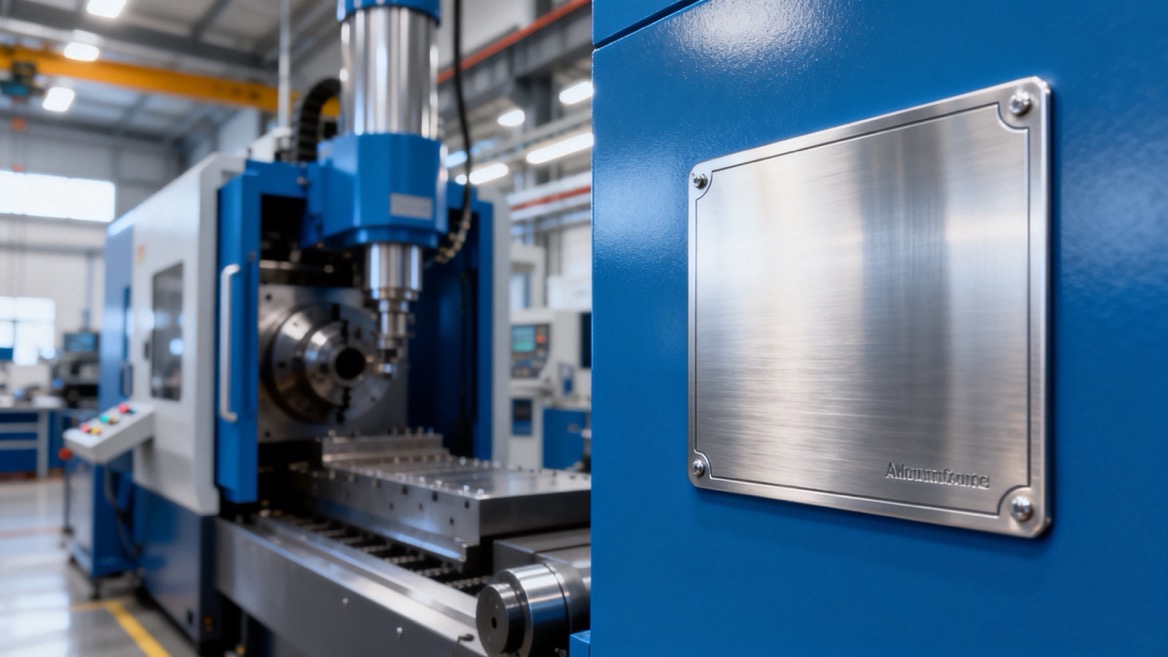
Industrial nameplates are used on machinery, pumps, motors, control panels, generators, compressors, valves, cabinets, and tools. They commonly include technical ratings, model details, manufacturer information, serial numbers, and operating data.
These nameplates usually need high resistance to abrasion, oil, cleaning agents, outdoor exposure, and repeated handling. Aluminum, stainless steel, etched metal, and durable printed constructions are common choices.
Machine Identification Plates
Machine identification plates provide permanent information used for inventory control, servicing, warranty management, and replacement-part ordering.
Typical information includes:
- Machine model
- Serial number
- Manufacturing date
- Electrical ratings
- Product origin
- Barcode or QR code
- Internal asset number
- Maintenance reference data
When a code must scan reliably, the contrast, print method, surface finish, and quiet-zone space around the barcode should be specified early in the design stage.
Safety Warning Nameplates
Safety nameplates communicate hazards, mandatory actions, operating limits, or maintenance instructions. They may be used near hot surfaces, electrical panels, moving parts, pinch points, chemical areas, emergency controls, and restricted access points.
Safety information must remain clear and closely associated with the relevant hazard. OSHA's accident-prevention sign and tag requirements address the use of signs and tags for identifying hazards in the workplace.
For safety-focused projects, buyers should evaluate:
- Required signal words, such as Danger, Warning, or Caution
- Required symbols and language versions
- Viewing distance and text size
- Indoor or outdoor exposure
- Cleaning chemicals and oils
- Heat, humidity, abrasion, and UV exposure
- Whether the nameplate must remain permanently attached
Logo Nameplates and Brand Badges
Logo nameplates are widely used on appliances, electronics, furniture, cosmetics packaging, automotive accessories, promotional products, and premium consumer goods.
Their primary role is visual. However, they must still withstand handling, shipping, cleaning, and normal use. Common options include:
- Brushed aluminum badges
- Electroformed nickel logos
- Embossed aluminum plates
- Domed resin labels
- Screen-printed metal badges
- Acrylic nameplates
- Plastic nameplates with metallic finishes
- Adhesive-backed decorative labels
A logo badge should reproduce the brand accurately. That means controlling color, logo proportions, edge shape, surface texture, and attachment position.
Serial Number and Asset Tags
Serialized nameplates support identification at scale. They are commonly used by equipment manufacturers, rental companies, logistics providers, laboratories, schools, hospitals, and maintenance teams.
Sequential numbering, variable data, barcodes, QR codes, and laser-marked identification can all be incorporated. For demanding applications, etched or laser-marked metal tags can offer stronger long-term data retention than surface-only printing.
Control Panel and Instruction Plates
Control panels require a nameplate or graphic overlay that helps users understand buttons, switches, screens, and operating positions immediately.
A successful control-panel nameplate combines:
- Clear text hierarchy
- Accurate symbols
- High contrast
- Wear-resistant printing
- Precise cutouts and holes
- Stable mounting
- Consistent color control
For high-use interfaces, reverse printing behind a clear protective layer can help preserve graphics from direct abrasion.
Custom Nameplate Materials Compared
Material selection is one of the most important decisions in any nameplate project. The correct option depends on the exposure conditions, visual expectations, production quantity, shape complexity, and budget.
| Material | Best suited for | Key advantages | Considerations |
| Aluminum | Equipment labels, appliances, panels, outdoor identification | Lightweight, versatile, corrosion-resistant, easy to form | May need anodizing, coating, or protective finishing for demanding use |
| Stainless steel | Harsh environments, food equipment, marine, industrial machinery | Strong, durable, premium appearance, excellent corrosion resistance | Higher material and processing cost |
| Brass | Plaques, premium branding, decorative signs | Warm gold-toned appearance, classic aesthetic, good formability | Can tarnish over time and may require protective finishing |
| Nickel or nickel-silver | Decorative badges, premium logos, detailed branding | Bright metallic appearance, refined visual effect | Usually selected more for appearance than low-cost volume production |
| Cold-rolled steel | Indoor industrial plates and painted applications | Strong, economical, readily available | Requires suitable protection against rust and corrosion |
| Plastic or acrylic | Indoor labels, control panels, retail products | Lightweight, color-flexible, cost-effective | May not suit high heat, chemical exposure, or heavy abrasion |
| Polyester label stock | Product labels, graphic overlays, variable-data labels | Flexible, high-quality print, suitable for adhesive applications | Performance depends heavily on adhesive, ink, laminate, and surface preparation |
Aluminum and stainless steel are frequently selected because both offer useful corrosion-resistance characteristics. Aluminum and stainless materials form protective surface layers, while carbon steel generally needs paint, plating, or another protective treatment to prevent rusting.
How to Choose the Right Nameplate Material
The most reliable method is to begin with the application environment, then work backward to material, marking process, finish, and attachment.
Ask These Questions Before Requesting a Quote
1. Where will the nameplate be used?
Indoor, outdoor, marine, high-humidity, refrigerated, high-temperature, oily, chemical-exposure, or abrasive environments each require different solutions.
2. How long must it last?
A promotional product label may only need to look good during normal consumer use. An industrial identification plate may need to remain readable for many years.
3. What information must remain legible?
Brand graphics, safety text, serial numbers, QR codes, barcodes, and fine technical details may require different print or marking methods.
4. How will it be mounted?
Common attachment options include pressure-sensitive adhesive, screws, rivets, holes, slots, tabs, clips, or embedded placement.
5. What surface will receive the nameplate?
Adhesion can vary significantly on powder-coated metal, textured plastic, low-surface-energy plastics, painted surfaces, glass, wood, and curved components.
6. What environmental exposure is expected?
Consider water, salt, sunlight, oils, fuel, cleaning chemicals, finger contact, friction, vibration, and extreme temperatures.
7. What visual result is required?
Choose whether the part should look industrial, premium, decorative, modern, understated, metallic, tactile, or highly visible.
Expert Tip: Specify the "Failure Mode"
Instead of only stating, "We need a durable nameplate," describe what must not happen during use.
For example:
- The barcode must still scan after repeated cleaning.
- The warning text must remain readable outdoors.
- The plate cannot peel from a powder-coated surface.
- The logo cannot scratch during normal product handling.
- The serial number must remain visible after oil exposure.
- The nameplate cannot corrode in a coastal environment.
This approach gives a manufacturer practical criteria for recommending the right construction.
Printing, Marking, and Finishing Options
The material alone does not determine nameplate performance. The marking method and surface treatment are equally important.
Screen Printing
Screen printing is suitable for solid colors, logos, instructional graphics, and larger production volumes. It can be applied to metal, plastic, and film substrates.
It is a strong option when brand color consistency and clean graphic reproduction matter. Protective coatings or laminates may be added when the printed surface will face abrasion or chemical exposure.
Etching
Etched metal nameplates create recessed text, graphics, or data directly in the metal surface. Color can be added to the recessed areas for contrast.
Etching is widely valued for industrial applications because the information is less vulnerable to surface wear than ordinary top-surface printing.
Engraving
Engraving mechanically removes material to create permanent marks. It works well for serial numbers, variable data, asset tags, identification plates, and personalized applications.
Engraved nameplates are especially useful when data permanence is more important than multicolor decoration.
Laser Marking
Laser marking can create precise serial numbers, logos, codes, and technical information. It is often chosen for variable-data work, small text, and durable identification.
The final appearance depends on the material, coating, laser settings, and required contrast. Samples are important, particularly for machine-readable codes.
Anodizing and Protective Coatings
Anodizing can improve aluminum's surface durability and corrosion resistance while creating a stable base for certain marking methods. Protective topcoats, laminates, and clear finishes can also help defend against UV exposure, abrasion, chemicals, and moisture.
For permanent product-identification applications, label systems may be evaluated for durability and environmental conditioning under UL's marking and labeling program. UL identifies UL 969 as a standard covering marking and labeling systems used for permanent nameplates or markings.
Common Nameplate Applications by Industry
Custom nameplates appear in nearly every product sector. Their design requirements change according to the product environment and customer expectations.
| Industry | Common nameplate uses | Primary priorities |
| Industrial machinery | Rating plates, serial labels, warning plates, control panels | Legibility, durability, oil and abrasion resistance |
| Electrical equipment | Voltage labels, terminal markers, compliance labels | Accurate data, heat resistance, adhesion |
| Appliances | Brand badges, model labels, instruction plates | Appearance, cleaning resistance, long-term readability |
| Automotive | Emblems, VIN-related tags, component labels | Vibration resistance, heat, weatherability |
| Medical devices | Equipment identification, operating labels, asset tags | Precision, cleaning resistance, traceability |
| Consumer electronics | Logo badges, regulatory labels, decorative plates | Fine detail, premium look, strong adhesion |
| Logistics and warehousing | Asset tags, rack labels, safety signs | Barcode scanning, visibility, durability |
| Furniture and fixtures | Branded badges, care labels, decorative plaques | Surface compatibility, visual quality |
A Practical Nameplate Specification Checklist
A complete specification reduces sampling delays, quotation revisions, and production risk. When preparing artwork or an inquiry, include the following details whenever possible:
- Product name and application
- Material preference, if known
- Finished size in millimeters or inches
- Thickness requirement
- Shape and corner style
- Hole diameter and location
- Adhesive or mechanical mounting requirement
- Artwork file in AI, PDF, EPS, or high-resolution vector format
- Pantone or other color references
- Surface finish, such as matte, gloss, brushed, mirror, or textured
- Required numbering, barcode, or QR code format
- Expected environment and exposure conditions
- Quantity per design
- Packaging requirements
- Target delivery date
- Any relevant drawings, test expectations, or customer specifications
Sample Approval Is Essential
A digital proof confirms layout, spelling, dimensions, and color intent. A physical sample goes further by allowing the buyer to inspect the actual material, thickness, edge quality, adhesion, color, tactile feel, and finish.
For projects involving difficult environments, testing a sample on the real product surface is highly recommended. A label that performs well on smooth stainless steel may behave differently on textured powder coating or molded plastic.
How to Work With a Custom Nameplate Manufacturer
The strongest supplier relationship starts with clear technical communication. A capable manufacturer should help translate your application requirements into a workable nameplate construction.
A typical project workflow looks like this:
1. Share the application details and artwork.
2. Confirm the material, dimensions, marking method, finish, and mounting approach.
3. Review a digital proof for content and layout accuracy.
4. Approve a physical sample when performance or appearance is critical.
5. Confirm production quantity, packaging, and delivery schedule.
6. Begin mass production after final approval.
7. Inspect the first delivered batch against the approved sample and specification.
For international sourcing, buyers should also confirm export packaging, labeling, lead time, communication channels, artwork confidentiality, and quality-control procedures before placing a high-volume order.
At Shenzhen XingKun Packing Products Co., Ltd., our experience in custom printing and packaging production helps customers connect the nameplate design to the larger product presentation. This may include coordinating branded labels, packaging inserts, product stickers, instruction materials, cartons, and other printed components for a more consistent final product experience.
Create a Nameplate That Performs as Well as It Looks
The right nameplate protects product information, strengthens brand presentation, and helps users interact with equipment safely and confidently. Do not select a material only by appearance or initial price. Consider the full operating environment, expected product lifespan, mounting surface, data requirements, and customer experience.
If you need custom metal nameplates, industrial identification plates, logo badges, serial-number tags, safety labels, or coordinated printed packaging components, contact Shenzhen XingKun Packing Products Co., Ltd. Share your artwork, technical requirements, quantity, and application details, and our team can help develop a practical, production-ready solution for your market.
Frequently Asked Questions
What is the best material for a durable outdoor nameplate?
Stainless steel and properly finished aluminum are common choices for outdoor nameplates. The best option depends on the location, expected moisture, salt exposure, UV exposure, chemical contact, mounting method, and required appearance. For harsh environments, request samples and test the selected construction under realistic conditions.
Are aluminum nameplates better than stainless steel nameplates?
Neither is universally better. Aluminum is lightweight, versatile, and often more economical. Stainless steel offers greater strength and is commonly selected for demanding industrial, marine, food-equipment, or high-wear environments. The right decision depends on exposure, budget, thickness, and visual expectations.
Can nameplates include serial numbers, QR codes, and barcodes?
Yes. Custom nameplates can include variable serial numbers, barcodes, QR codes, model numbers, asset IDs, and manufacturing dates. For scanning reliability, ensure the code has enough contrast, sufficient size, and a clear area around it.
What attachment method should I choose for a nameplate?
Use adhesive backing for clean, simple installation on compatible surfaces. Choose screws, rivets, holes, or other mechanical fastening when the application involves high vibration, difficult surface conditions, heavy weight, or long-term outdoor exposure. Surface testing is recommended before final production.
What is the difference between etched and engraved nameplates?
Etching uses a controlled chemical process to recess graphics or text into metal, often allowing color filling. Engraving removes material mechanically or with a laser. Both can provide durable identification, but the best choice depends on the required detail, material, color, quantity, and performance needs.
Can a nameplate be made in custom shapes and colors?
Yes. Nameplates can be produced in custom sizes, shapes, thicknesses, colors, finishes, and mounting configurations. Options may include rounded corners, custom cutouts, embossed logos, brushed surfaces, glossy coatings, metallic finishes, and adhesive backing.
How do I request a quotation for custom nameplates?
Prepare your artwork, finished dimensions, material preference, quantity, mounting method, color requirements, and application conditions. The more complete the information, the more accurately a manufacturer can recommend a suitable solution and provide a reliable quotation.
References
- [American Nameplate — Different Types of Nameplates, Nameplate Materials & More] [american-nameplate]
- [Occupational Safety and Health Administration — 29 CFR 1910.145: Specifications for Accident Prevention Signs and Tags] [osha]
- [UL Solutions — Marking and Labeling Systems Program] [ul]
- [Protolabs — Finding the Right Corrosion-Resistant Metals] [protolabs]
- [ANSI Webstore — UL 969 Ed. 6-2025: Marking and Labeling Systems] [webstore.ansi]
- [American Nameplate — Metal Nameplate Materials & Uses] [american-nameplate]


