Content Menu
● What Does Nameplate Thickness Actually Mean?
>> Understanding Inches, Millimeters, and Mils
● Aluminum Nameplate Thickness Chart
● Why Thicker Nameplates Are Not Always More Durable
>> Rigidity Is Different From Readability
>> Plate Size Changes the Result
>> Alloy and Temper Also Matter
● How to Choose Nameplate Thickness in Five Steps
>> 1. Define the Installation Surface
>> 2. Describe the Operating Environment
>> 3. Choose the Attachment Method
>> 4. Confirm Marking and Information Requirements
>> 5. Approve a Representative Sample
● Adhesive-Backed Nameplates: Thickness Is Only One Variable
>> Surface Preparation Matters
>> A Thicker Plate Cannot Correct a Poor Bond
● Specify Base Thickness and Installed Thickness Separately
● A Practical Comparison: Curved Housing Versus Flat Equipment Panel
>> Curved Motor Housing
>> Flat Industrial Equipment Panel
● How to Validate a Nameplate Before Volume Production
● What to Include in a Custom Nameplate Quotation Request
● Discuss Your Nameplate Requirements With XingKun
● Frequently Asked Questions About Nameplate Thickness
>> What is the best thickness for an aluminum nameplate?
>> Is a thicker nameplate always stronger and more durable?
>> What is the difference between 0.020 inch and 20 mils?
>> Can thin aluminum nameplates be used outdoors?
>> Should adhesive thickness be included on the drawing?
>> Can the same thickness be used for every product model?
● References
Choosing the right nameplate thickness means balancing rigidity, surface fit, mounting requirements, readability, and cost. A thicker plate can provide greater resistance to bending, but it is not automatically the best choice. Thin aluminum can suit curved equipment housings, while thicker plates may work better for larger, mechanically mounted identification panels.
For equipment manufacturers, distributors, and purchasing teams, the practical question is not simply, "How thick should a nameplate be?" It is, "Which construction will remain attached, readable, and appropriate for this application?"
What Does Nameplate Thickness Actually Mean?
Nameplate thickness normally describes the thickness of the base material. It does not necessarily include adhesive, protective coatings, or other layers.
That distinction matters when a plate must fit inside a recess, sit close to a moving component, or align with a surrounding panel.
For an adhesive-backed nameplate, distinguish between:
- Base metal thickness.
- Adhesive thickness.
- Any additional permanent layers.
- Total installed thickness.
The release liner is removed before installation, so it should not be included in the installed stack.
Understanding Inches, Millimeters, and Mils
Suppliers may quote thickness in inches, millimeters, or mils. One mil equals 0.001 inch; it does not mean one millimeter.
For example, 0.020-inch aluminum is 20 mils thick, equivalent to 0.508 mm.
Put the unit beside every thickness value on your drawing. A number without a unit creates avoidable uncertainty, especially when international teams exchange specifications.
Aluminum Nameplate Thickness Chart
The following table provides practical starting points, not universal performance classifications. Material alloy, temper, plate dimensions, and mounting conditions can change how the finished part behaves.
| Aluminum thickness | Metric equivalent, rounded | Typical selection starting point | Main consideration |
| 0.002 in | 0.051 mm | Thin foil identification labels | Requires suitable handling and adhesive support |
| 0.008 in | 0.203 mm | Lightweight equipment and control labels | More body than very thin foil |
| 0.012 in | 0.305 mm | Low-profile identification plates | Balance between conformity and rigidity |
| 0.016 in | 0.406 mm | General identification applications | Confirm flatness and installation fit |
| 0.020 in | 0.508 mm | Equipment nameplates and rating plates | Useful candidate for adhesive or mechanical mounting |
| 0.032 in | 0.813 mm | Plates needing additional rigidity | Evaluate size, edge exposure, and mounting |
| 0.063 in | 1.600 mm | Larger identification panels | Often considered for screw or bracket mounting |
| 0.125 in | 3.175 mm | Specialized heavy-section plates | Confirm availability and manufacturing requirements |
These dimensions reflect examples used in commercial nameplate manufacturing. They are not a promise that every supplier offers every thickness.
When requesting quotations, identify the required thickness and permitted alternatives separately. Otherwise, two suppliers may price different constructions that appear identical in a purchasing spreadsheet.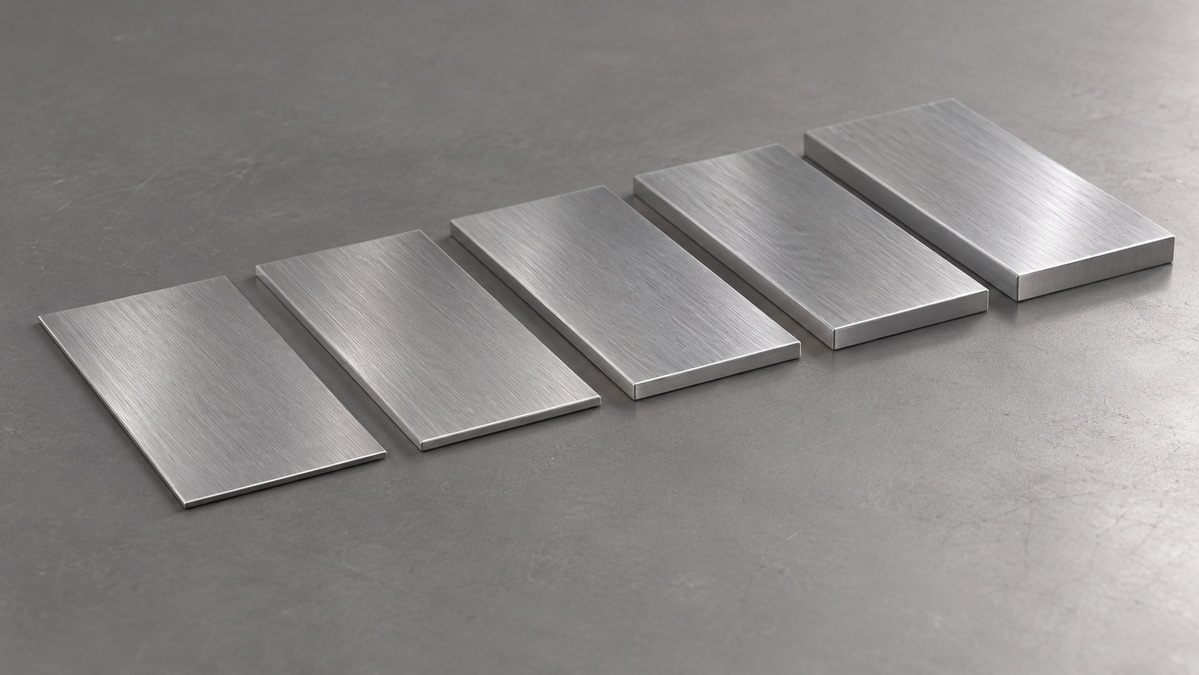
Why Thicker Nameplates Are Not Always More Durable
Thickness primarily influences the mechanical behavior of the substrate. Long-term identification performance also depends on the marking, finish, adhesive, and operating environment.
Rigidity Is Different From Readability
A rigid plate can still become unreadable if its image deteriorates. Conversely, a thin plate can retain excellent legibility when its marking system suits the exposure.
Photosensitive anodized aluminum illustrates this distinction. Its image is sealed within the anodized layer, and its manufacturer offers the material in multiple thicknesses.
The useful lesson is not that one proprietary process fits every project. It is that image protection must be evaluated separately from metal thickness.
Plate Size Changes the Result
A small plate and a large panel made from the same material thickness will not necessarily feel equally rigid.
Compare the complete geometry:
- Overall length and width.
- Unsupported areas.
- Hole locations.
- Cutouts.
- Mounting surface contact.
Avoid approving thickness from a tiny material swatch alone. A full-size sample reveals installation and handling issues that a small coupon may hide.
Alloy and Temper Also Matter
"Aluminum" is not a complete material specification. Alloy and temper affect forming and mechanical behavior.
If the plate must conform to a curved housing, ask the supplier to evaluate the material condition alongside thickness. Increasing thickness without reviewing formability may make the installation harder rather than better.
How to Choose Nameplate Thickness in Five Steps
A practical selection process starts with the application and ends with a verified construction.
1. Define the Installation Surface
Identify whether the plate will attach to flat metal, curved tubing, painted equipment, textured powder coating, or plastic.
For curved surfaces, provide the actual radius or a representative component. A photograph helps explain the location but cannot replace dimensional information.
Check whether edges could lift, protrude, catch on clothing, or interfere with cleaning.
2. Describe the Operating Environment
List the exposures that the finished nameplate must withstand:
- Indoor or outdoor service.
- Operating temperature range.
- Cleaning chemicals and contact duration.
- Moisture or salt exposure.
- Abrasion and repeated handling.
- Vibration and impact.
Avoid broad descriptions such as "weatherproof" or "chemical-resistant." Identify the conditions that matter so the supplier can propose relevant materials and validation methods.
3. Choose the Attachment Method
For adhesive mounting, evaluate the complete bond between the plate, adhesive, and actual equipment surface.
For mechanical mounting, specify hole size, hole position, fastener type, and available installation clearance.
Do not assume a thick plate needs screws or that a thin plate must use adhesive. The appropriate method depends on geometry, service conditions, and assembly requirements.
4. Confirm Marking and Information Requirements
Supply the artwork and variable-data requirements before finalizing construction.
Check:
- Smallest text size.
- Serial-number format.
- Barcode or two-dimensional code requirements.
- Contrast and finish.
- Any later engraving or stamping.
More information does not automatically require thicker metal. It may require a larger plate, improved layout, or a different marking process.
5. Approve a Representative Sample
Evaluate the proposed thickness at the intended finished size, using the selected marking and attachment system.
Approve appearance and installation together. A visually attractive sample is not enough if it fails to sit correctly on the equipment.
Adhesive-Backed Nameplates: Thickness Is Only One Variable
One common purchasing mistake is treating adhesive as an interchangeable backing.
Adhesive selection must account for surface texture, surface chemistry, temperature, and the flexibility of both joined components.
Surface Preparation Matters
Bonding surfaces generally need to be clean, dry, and free from contamination.
For many VHB tape applications, manufacturer guidance recommends cleaning with an equal-parts mixture of isopropyl alcohol and water. However, heavy oils, certain plastics, porous materials, and other substrates can require different preparation.
Follow the selected adhesive's instructions and applicable solvent precautions. Do not assume one cleaning method is compatible with every paint or plastic.
A Thicker Plate Cannot Correct a Poor Bond
A rigid nameplate cannot compensate for an unsuitable adhesive or contaminated surface.
Textured coatings may also require a different adhesive construction from smooth metal. Application pressure, installation temperature, and the time allowed for bond development should follow the relevant product guidance.
For purchasing teams, the useful requirement is verified attachment, not simply "strong adhesive."
Request the adhesive manufacturer and product designation where traceability is important.
Specify Base Thickness and Installed Thickness Separately
This often-overlooked detail can prevent fit problems during assembly.
Consider a plate installed inside a shallow recess. Even when the metal matches the drawing, an unspecified adhesive layer can change how far the assembly projects.
Your specification should distinguish:
| Specification item | What to define |
| Base material | Material type, alloy, and temper where required |
| Metal thickness | Nominal value, unit, and tolerance |
| Adhesive | Product designation and relevant thickness |
| Installed stack | Maximum total permanent thickness |
| Fit requirements | Recess depth, clearance, and permitted projection |
| Edge condition | Required finishing and acceptable burr condition |
This approach makes quotations easier to compare and reduces assumptions between engineering, purchasing, and production.
It also gives inspectors a clearer basis for acceptance.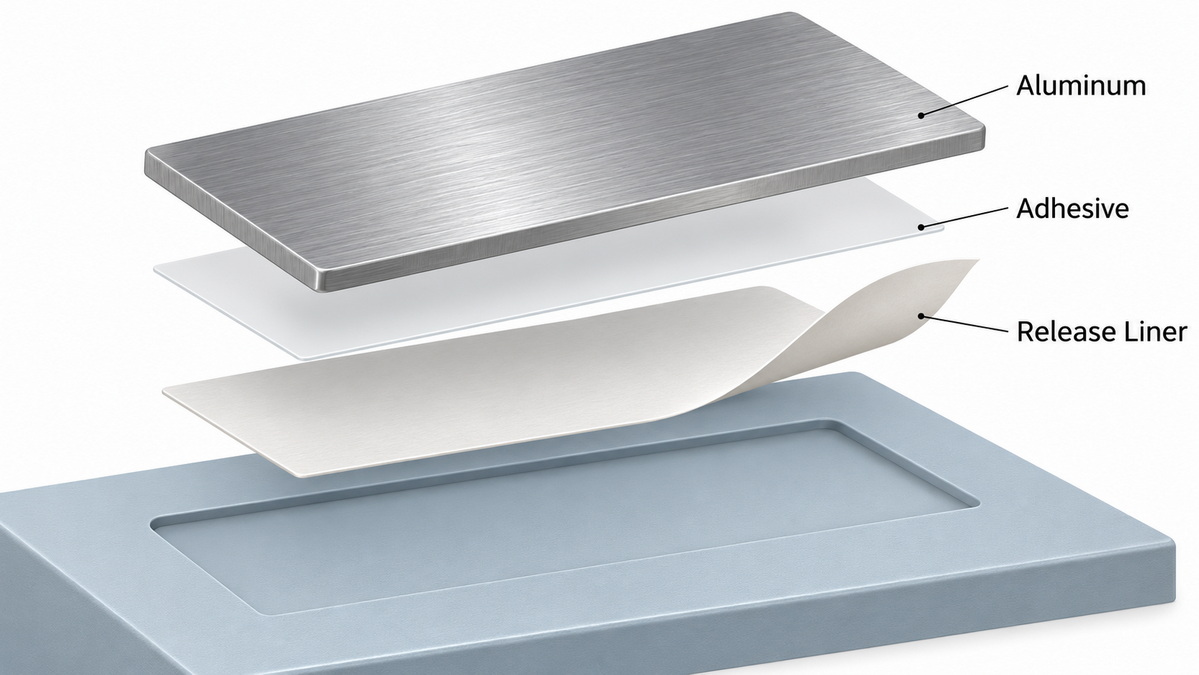
A Practical Comparison: Curved Housing Versus Flat Equipment Panel
The following examples illustrate a selection process, not reported customer projects.
Curved Motor Housing
A compact motor requires a permanent identification plate on a curved exterior.
The first priority is surface conformity. Start by evaluating a thin aluminum construction with an appropriate adhesive rather than selecting a thick plate solely for perceived quality.
The sample review should examine edge lifting, readable information, surface contact, and resistance to the actual cleaning products.
If the construction does not fit reliably, consider a smaller plate, another location, or a different mounting arrangement.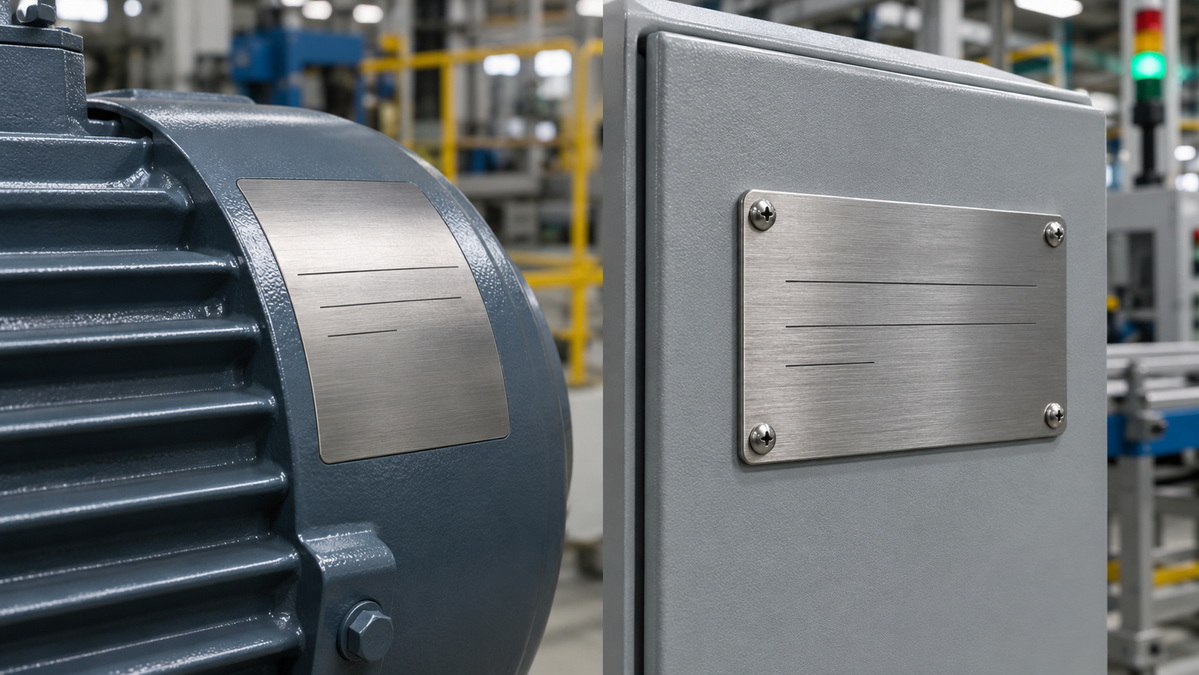
Flat Industrial Equipment Panel
A larger machine requires an identification plate on a flat panel with designated mounting holes.
Here, increased rigidity may be useful during handling and installation. Compare candidate thicknesses at full size and check hole alignment, fastener clearance, edge condition, and legibility.
The deciding factor is the assembled result, not whether the loose plate feels heavy.
These examples show why the same manufacturer may appropriately use several nameplate thicknesses across one product range.
How to Validate a Nameplate Before Volume Production
Create an acceptance checklist before ordering samples.
| Check | What to evaluate |
| Dimensions | Length, width, thickness, and hole positions |
| Installation | Surface contact, fit, and attachment |
| Edge quality | Burrs, sharp edges, and exposed corners |
| Information | Correct artwork, serial data, and readable text |
| Exposure | Relevant cleaners, moisture, and temperature conditions |
| Traceability | Approved drawing and construction revision |
Define exposure conditions and acceptance criteria with the responsible engineering team. A casual wipe test should not be presented as proof of long-term chemical resistance.
Likewise, published performance figures for one manufacturer's material should not be transferred to another construction without supporting evidence.
Keep an approved sample and record the material, marking process, adhesive, and drawing revision used.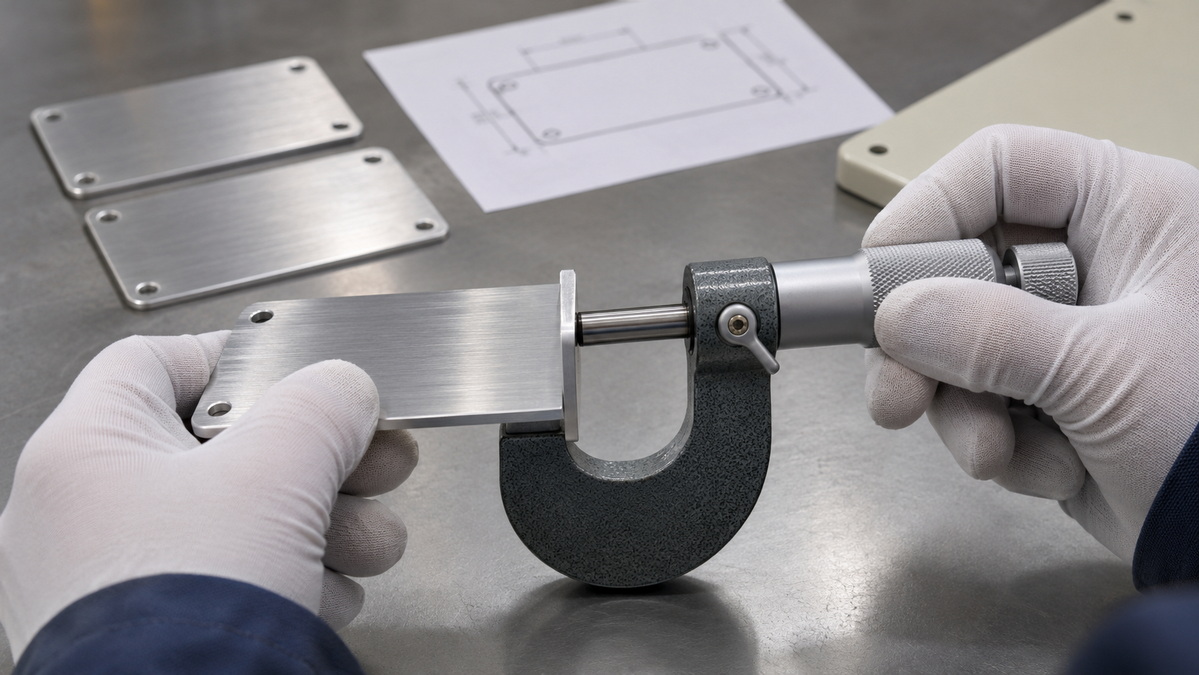
What to Include in a Custom Nameplate Quotation Request
A complete request helps suppliers recommend an appropriate construction instead of guessing from a photograph.
Provide:
1. Finished dimensions and artwork.
2. Required material and proposed thickness.
3. Thickness tolerance and installed-clearance limits.
4. Surface shape, material, and coating.
5. Adhesive or mechanical mounting details.
6. Environmental exposures.
7. Quantity and variable-data requirements.
8. Sample approval and packaging requirements.
Also identify which requirements are mandatory and which are open to supplier recommendations.
A useful supplier conversation compares practical alternatives against the same application requirements. It does not simply select the thickest option or the lowest unit price.
Discuss Your Nameplate Requirements With XingKun
Shenzhen XingKun Packing Products Co., Ltd. is a printing and packaging manufacturer with more than 20 years of experience, producing nameplates and other printed products. The company has served brands and distributors across more than 30 countries and regions.
For your next custom nameplate project, share your drawing, installation-surface details, operating conditions, quantity, and preferred attachment method with XingKun.
Request a review of material thickness, marking construction, and mounting compatibility before approving a production sample.
Frequently Asked Questions About Nameplate Thickness
What is the best thickness for an aluminum nameplate?
There is no universal best thickness. A 0.020-inch plate is a useful candidate for many general applications, but curved surfaces, large dimensions, installation clearance, and attachment requirements may justify another option.
Is a thicker nameplate always stronger and more durable?
Greater thickness generally increases rigidity when other variables remain comparable. However, finished durability also depends on the material, marking, finish, attachment, and exposure conditions. Thickness alone cannot predict service life.
What is the difference between 0.020 inch and 20 mils?
They describe the same thickness. One mil equals 0.001 inch, so 20 mils equals 0.020 inch, or 0.508 mm.
Can thin aluminum nameplates be used outdoors?
Potentially, yes. Outdoor suitability depends on the complete construction, including image protection and attachment. Confirm evidence for the specific material and adhesive rather than relying on thickness alone.
Should adhesive thickness be included on the drawing?
Yes, when installation fit or total projection matters. Identify the base metal thickness separately from the adhesive and total installed stack. Exclude the removable release liner from installed thickness.
Can the same thickness be used for every product model?
Sometimes, but it should be validated across the relevant applications. Differences in plate dimensions, surface curvature, environmental exposure, and mounting can make a single thickness unsuitable for an entire range.
References
1. [American Nameplate — "Different Thicknesses of Nameplates and Their Uses," April 7, 2021]. Original article reviewed; provides the commercial aluminum thickness examples and general application starting points. Its thickness descriptions are treated as supplier guidance rather than universal engineering classifications. [american-nameplate]
2. [Metalphoto — Product Brochure]. Manufacturer documentation supporting the distinction between substrate thickness and image durability, including the sealed-image construction and available material thicknesses. Its product-specific performance claims are not attributed to XingKun products. [metalphoto]
3. [Metalphoto — Design Guide]. Technical guidance on thickness selection, temper availability, fastening methods, and adhesive considerations. Supports evaluating material condition and attachment together. [metalphoto]
4. [3M — "Surface Preparation for 3M VHB Tape Applications"]. Manufacturer guidance on clean, dry bonding surfaces, the commonly recommended IPA/water cleaning mixture, and exceptions requiring additional preparation. [3m]
5. [3M — Adhesive Transfer Tape 467MP Technical Data Sheet]. Supports the discussion of surface preparation, textured surfaces, and situations where a different or thicker adhesive construction may be necessary. [multimedia.3m]
6. [3M — VHB Tape Design Guide]. Supports the discussion of application pressure, surface preparation, and bond-strength development after installation. [multimedia.3m]


