Content Menu
● What Are Temporary Display Stands?
● What Are Permanent Retail Displays?
● Side‑by‑Side Comparison – Temporary vs Permanent
>> Key Differences at a Glance
● Cost, ROI, and Lifecycle Considerations
>> Temporary Display Economics
>> Permanent Display Economics
● UX and Shopper Behavior – How Each Display Type Performs
>> Temporary Displays – Capturing Attention Fast
>> Permanent Displays – Delivering Consistency and Trust
● Design and Material Choices From a Manufacturer's Perspective
>> Temporary Display Design Priorities
>> Permanent Display Design Priorities
● Sustainability and Environmental Impact
● Strategic Use Cases – When to Choose Which?
>> When Temporary Display Stands Are the Better Choice
>> When Permanent Retail Displays Win
● Expert Insight – A Hybrid Display Strategy That Actually Works
● Practical Selection Checklist for Retail and Brand Teams
● How Shenzhen XingKun Packing Products Co., Ltd. Adds Value
● Call to Action – Plan Your Next Display Program
● FAQs: Temporary Display Stands vs Permanent Retail Displays
● References
Temporary display stands and permanent retail displays each play a distinct, strategic role in modern retail environments, and the most profitable brands rarely choose just one. This guide compares them in depth and shows how a specialist manufacturer like Shenzhen XingKun Packing Products Co., Ltd. can help retailers design the right mix for their stores. [xkdisplay]
In fast‑moving retail, the question is not simply "which is better?" but when and where to use temporary display stands versus permanent retail displays. As a manufacturer with over 20 years of display and packaging experience serving clients in more than 30 countries, Shenzhen XingKun Packing Products Co., Ltd. brings a practical, factory‑floor perspective to this comparison. [xkdisplay]
From a user‑experience and ROI standpoint, retailers that match the right display type to the right product life cycle usually see better sell‑through, higher brand recall, and more efficient use of floor space. The sections below break down key differences by structure, cost, lifecycle, sustainability, branding flexibility, and practical use cases, so decision‑makers can choose confidently. [ranktracker]
What Are Temporary Display Stands?
Temporary display stands are short‑term, promotion‑driven displays typically made from cardboard, corrugated board, or lightweight composite materials. They are designed for rapid assembly, easy transport, and quick removal after a campaign or season ends. [chinese.alibaba]
From our production experience, temporary stands work best when you want to: [xkdisplay]
- Launch limited‑time offers or seasonal campaigns
- Test new SKUs or packaging in store
- Support trade promotions and in‑store events
- Create impulse‑buy zones near checkout
Because they are usually printed with high‑impact graphics and brand colors, visual storytelling is their main strength – you can change the message as often as your promotions change. [ranktracker]
What Are Permanent Retail Displays?
Permanent retail displays are long‑term fixtures built from durable materials such as metal, wood, acrylic, or high‑density plastics. They stay on the shop floor for months or even years, supporting core product lines and reinforcing brand presence over time. [xkdisplay]
Permanent displays are ideal when retailers want to: [ranktracker]
- Anchor flagship products or hero categories
- Deliver a consistent brand experience across many stores
- Integrate displays with store fixtures and traffic flow
- Reduce frequent replacement and setup labor
These fixtures often combine custom structures with integrated lighting, shelving, or digital elements, making them a strategic part of store design, not just a marketing add‑on. [xkdisplay]
Side‑by‑Side Comparison – Temporary vs Permanent
Key Differences at a Glance
| Factor | Temporary Display Stands | Permanent Retail Displays |
| Typical materials | Cardboard, corrugated board, foam, lightweight board (xkdisplay) | Metal, wood, acrylic, durable plastics (xkdisplay) |
| Intended lifespan | Weeks to a few months (xkdisplay) | 1–5 years or more (xkdisplay) |
| Main purpose | Promotions, seasonal, product launches (xkdisplay) | Core range visibility, brand building (xkdisplay) |
| Upfront cost | Lower unit cost (xkdisplay) | Higher initial investment (xkdisplay) |
| Flexibility | High – graphics and structure easy to change (xkdisplay) | Moderate – changes require redesign or retrofit (xkdisplay) |
| Assembly | Quick, often flat‑packed, tool‑free (xkdisplay) | May require tools or professional installation (xkdisplay) |
| Sustainability | Easily recyclable when using paper‑based materials (xkdisplay) | Long life reduces waste but harder to recycle (xkdisplay) |
| Best for | Short runs, campaigns, smaller budgets (xkdisplay) | Long‑term programs, consistent brand zones (xkdisplay) |
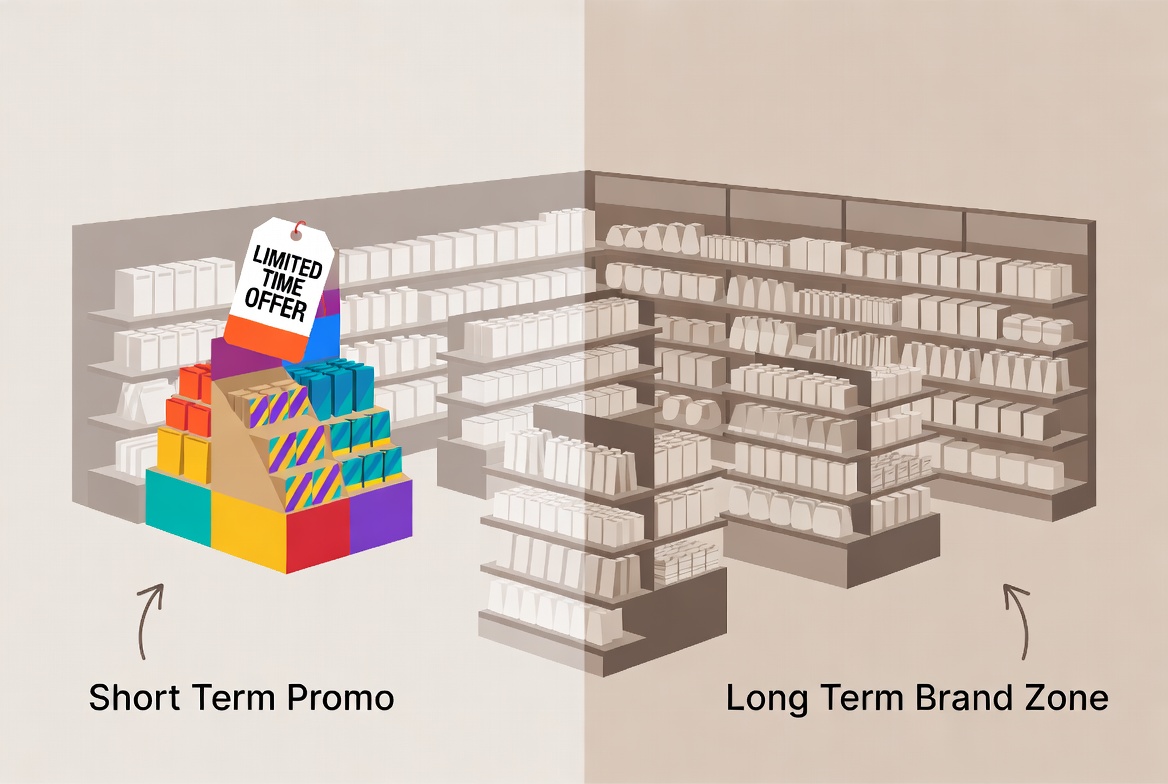
This comparison highlights a practical rule: temporary displays win on agility and speed, while permanent fixtures win on consistency and durability. Most mature retail programs deliberately combine both. [ranktracker]
Cost, ROI, and Lifecycle Considerations
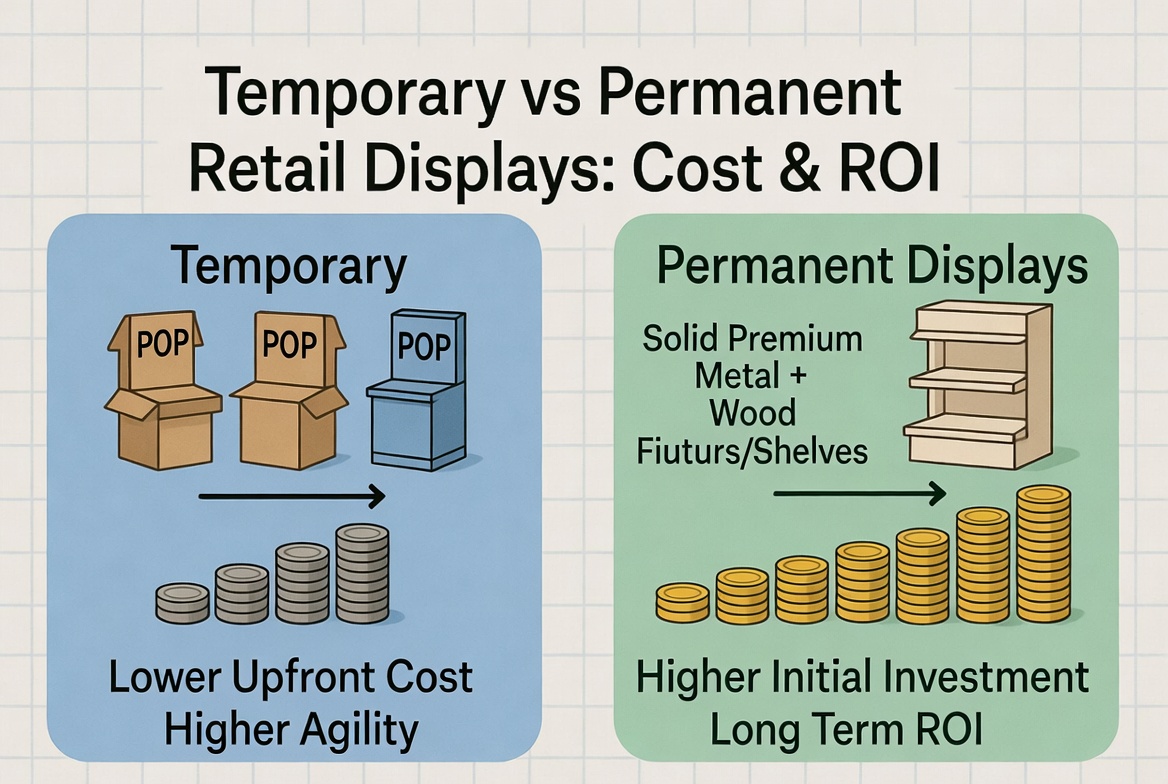
From an investment standpoint, decision‑makers should evaluate total lifecycle cost, not just unit price. [ranktracker]
Temporary Display Economics
For temporary display stands, cost drivers include: [chinese.alibaba]
- Material choice (standard corrugated vs premium cardboard)
- Print complexity (full‑color, special finishes, spot UV, etc.)
- Structural complexity (headers, shelves, hooks, dump bins)
- Quantity and shipping (flat‑packed vs pre‑assembled)
Because they are lower cost per unit, temporary stands are ideal for A/B testing different designs or placements, and for campaigns where sales uplift is concentrated in a short period. When well‑designed, even a short‑life stand can deliver a strong ROI through incremental sales and brand visibility. [xkdisplay]
Permanent Display Economics
Permanent retail displays require higher upfront investment, but the cost is amortized over a longer period. Key cost factors include: [xkdisplay]
- Structural engineering and prototyping
- Durable materials and finishes
- Integrated lighting or digital elements
- Installation, maintenance, and occasional refurbishment
When spread across years of use and many product cycles, the cost per month or per impression can be very competitive, especially in high‑traffic locations. For brands with stable hero products, permanent displays often become a long‑term asset rather than an expense. [ranktracker]
UX and Shopper Behavior – How Each Display Type Performs
From a user‑experience perspective, both display types shape how shoppers move, see, and decide. [xkdisplay]
Temporary Displays – Capturing Attention Fast
Temporary stands excel at interrupting shopper routines and driving impulse decisions. Retailers typically position them: [ranktracker]
- At aisle ends (end caps)
- Near checkout or high‑traffic zones
- In themed areas for seasonal campaigns
Effective temporary displays use: [xkdisplay]
- Clear, bold headlines (e.g., "Limited Time Offer")
- Strong contrast and color blocking
- Simple product groupings and pricing visibility
Because they are short‑term, you can afford to be more experimental and push creative boundaries without worrying about long‑term store harmony. [ranktracker]
Permanent Displays – Delivering Consistency and Trust
Permanent fixtures shape the baseline experience shoppers expect every time they enter the store. They help: [xkdisplay]
- Build brand recognition through consistent colors, logos, and forms
- Provide reliable navigation and product organization
- Support premium brand positioning with higher‑end materials
In our factory practice, brands that invest in permanent displays often see stronger perceived quality and higher average basket value, particularly in categories like electronics, cosmetics, and premium food. [ranktracker]
Design and Material Choices From a Manufacturer's Perspective
As a producer of both display stands and broader printed packaging, we see how design decisions affect real‑world performance, not just aesthetics. [xkdisplay]
Temporary Display Design Priorities
When we design temporary display stands for clients, key priorities include: [chinese.alibaba]
- Strength vs weight – ensuring corrugated structures handle product load but remain easy to ship
- Tool‑free assembly with clear, printed instructions directly on components
- Efficient nesting and flat‑packing to reduce logistics cost
- Print layouts that align with die‑cutting to avoid critical design elements on folds
Paper‑based solutions also align well with retailers' growing demand for recyclable materials, especially in Europe and North America. [chinese.alibaba]
Permanent Display Design Priorities
For permanent fixtures, we emphasize: [xkdisplay]
- Structural safety and compliance with store standards
- Surfaces that resist scratching and are easy to clean
- Modular components that allow updates without full replacement
- Integration with lighting, digital screens, or sensor‑based interaction where relevant
Even when we primarily supply printed components, coordinated design with metal or wood partners ensures that graphics, structure, and user flow work together. [ranktracker]
Sustainability and Environmental Impact
Sustainability is no longer a "nice to have" – many global brands now require clear environmental considerations in display production. [ranktracker]
- Temporary displays: When made from FSC‑certified cardboard or corrugated board, they can be recycled through existing paper streams, significantly reducing landfill. [chinese.alibaba]
- Permanent displays: While harder to recycle due to mixed materials, their long lifespan means fewer units produced and disposed of over time. [xkdisplay]
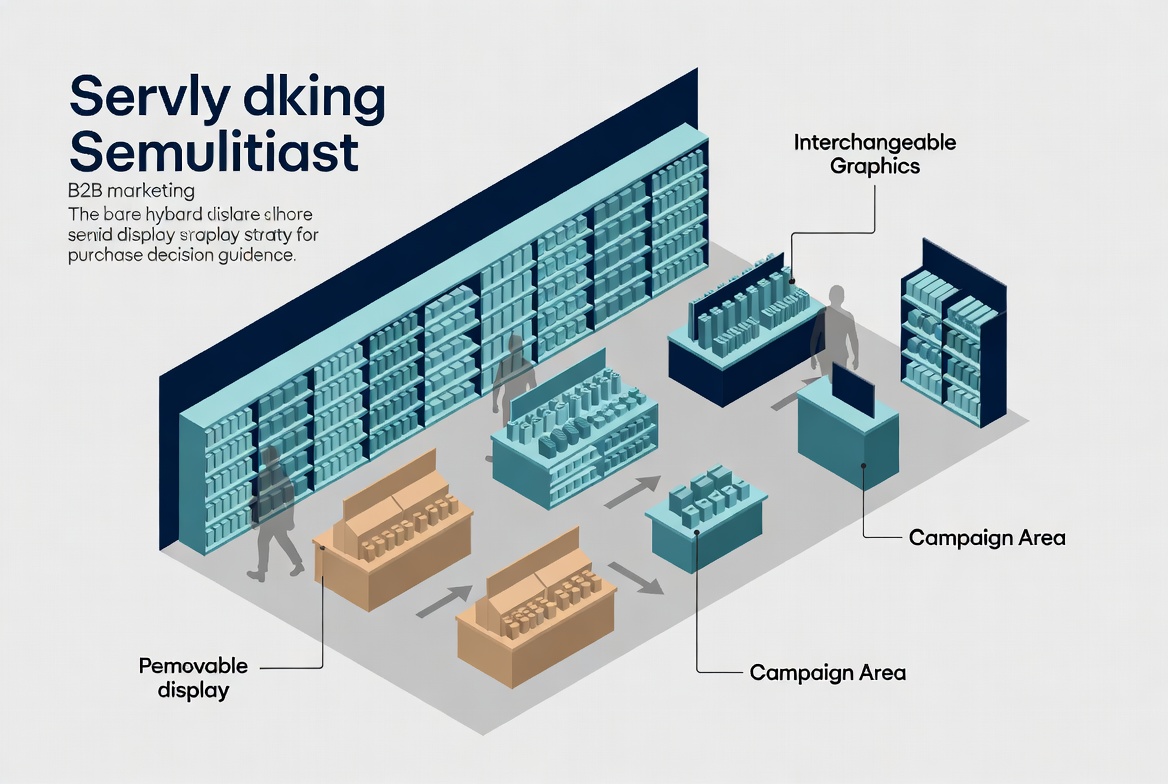
A practical approach is hybrid design: use durable frames for long life, combined with interchangeable printed panels that can be updated seasonally at low cost and with minimal material usage. This is an area where experienced print manufacturers can add real value in engineering replaceable graphic sets. [xkdisplay]
Strategic Use Cases – When to Choose Which?
When Temporary Display Stands Are the Better Choice
Temporary stands are typically the better option when: [xkdisplay]
1. You need speed to market
2. The promotion or product has a defined end date
3. You are testing pricing, packaging, or messaging
4. Budget is limited, and you want the maximum number of placements
5. Retailers require quick setup by in‑store staff
In these situations, well‑designed cardboard stands can transform a standard shelf presence into a standout promotion in days, not months. [chinese.alibaba]
When Permanent Retail Displays Win
Permanent displays are recommended when: [ranktracker]
1. You have stable SKUs with long product life cycles
2. Branding and category leadership are strategic priorities
3. You want to secure dedicated branded floor space
4. Store environments are premium and require high‑end finishes
5. You plan to roll out across many locations with consistent execution
Investment into permanent fixtures often goes hand in hand with broader category management and retail partnership strategies. [xkdisplay]
Expert Insight – A Hybrid Display Strategy That Actually Works
From our experience working with international brands and distributors, the most effective approach is rarely "temporary or permanent" but a planned hybrid system. An example that many categories can adapt: [xkdisplay]
1. Use permanent retail displays as the backbone for your core range in key locations, providing stability, navigation, and high perceived value. [ranktracker]
2. Layer temporary display stands around seasonal themes, new product trials, and targeted promotions, especially near checkout or in promotional islands. [xkdisplay]
3. Design permanent units with interchangeable printed headers, shelf strips, and side panels produced from flexible print substrates, allowing quarterly visual refresh without replacing the entire structure. [xkdisplay]
A manufacturing partner with strong print, structural design, and export logistics capabilities can coordinate this system so that campaigns roll out smoothly across multiple regions. [xkdisplay]
Practical Selection Checklist for Retail and Brand Teams
To make the decision more concrete, work through the following questions before choosing display types: [ranktracker]
1. Campaign duration – Is this a 4‑week promotion or a multi‑year program?
2. Product life cycle – Are SKUs stable or changing every season?
3. Budget structure – Do you have CAPEX for fixtures or only OPEX for campaigns?
4. Store environment – Mass retail, convenience, or premium boutique?
5. Sustainability policies – Do you or your retail partners have specific material rules?
6. Logistics and assembly – Who assembles the display and how much time do they have?
If most answers point toward short‑term, low‑risk, and highly dynamic needs, temporary stands are likely the right starting point. If they point to long‑term brand building and category leadership, permanent fixtures will create more strategic value. [chinese.alibaba]
How Shenzhen XingKun Packing Products Co., Ltd. Adds Value
As a specialized printing and packaging manufacturer with over 20 years of experience, Shenzhen XingKun Packing Products Co., Ltd. provides more than just production capacity. The company supports clients in more than 30 countries with: [xkdisplay]
- Custom‑engineered cardboard display stands and retail packaging
- Structural design that balances strength, weight, and shipping efficiency
- Full‑color printing, finishing, and brand‑consistent artwork adaptation
- Export‑ready packing and logistics coordination for international rollouts
By integrating display stands, packaging, and printed materials under one roof, XingKun helps brands keep visual identity consistent from the shipping carton to the retail shelf. This holistic approach aligns strongly with Google's E‑E‑A‑T principles by combining real‑world manufacturing experience, long‑term global client relationships, and specialized technical knowledge. [xkdisplay]
A retailer or brand team can partner with XingKun to prototype both temporary and permanent display components, test them in pilot markets, then scale successful concepts across multiple regions. [xkdisplay]
Call to Action – Plan Your Next Display Program
If you are planning your next retail activation, the most effective step is to map your product and campaign calendar to a display strategy that mixes temporary display stands and permanent retail displays. [xkdisplay]
Shenzhen XingKun Packing Products Co., Ltd. can support you from concept sketches and structural prototypes to mass production and export logistics, ensuring that your displays arrive on time, on budget, and ready to perform in store. To discuss your upcoming project or request a custom display proposal, you can reach the XingKun team via the contact information provided on their official site. [xkdisplay]
FAQs: Temporary Display Stands vs Permanent Retail Displays
Q1: Are temporary display stands strong enough for heavy products?
Yes, when correctly engineered with the right corrugated grade and structural design, temporary displays can safely support significant weight, even for beverages or canned goods. [chinese.alibaba]
Q2: How often should permanent retail displays be refreshed?
Most brands update graphics or minor components at least once or twice per year, while the core structure can remain in place for several years if well‑maintained. [ranktracker]
Q3: What information should I provide to a display manufacturer?
You should share product dimensions and weight, campaign duration, target store types, budget range, and any retailer or sustainability requirements, plus your brand guidelines and artwork. [xkdisplay]
Q4: Can temporary and permanent displays use the same artwork?
Yes, artwork can be adapted across both types, but layouts often need adjustments for different structures, cut lines, and viewing distances in store. [xkdisplay]
Q5: How long does it take to develop a new display solution?
Development timelines vary, but typical projects range from a few weeks for simple temporary stands to several months for engineered permanent fixtures with multi‑country rollouts. [ranktracker]
References
1. Shenzhen XingKun Packing Products Co., Ltd. – "使用零售显示摊位释放您的产品潜力." Available at: [https://www.xkdisplay.com/zh-CN/unleash-your-products-potential-by-using-retail-display-stands.html] [xkdisplay]
2. Shenzhen XingKun Packing Products Co., Ltd. – "展示架 – 定制印刷包装解决方案制造商." Available at: [https://www.xkdisplay.com/zh-CN/display-stand.html] [xkdisplay]
3. Alibaba – "Customized Cardboard Display Stand Easy Assembly Counter Top." Product listing describing corrugated display characteristics and usage scenarios. Available at: [https://chinese.alibaba.com/product-detail/Customized-Cardboard-Display-Stand-Easy-Assembly-1601433073472.html] [chinese.alibaba]
4. Ranktracker – "提升商店固定装置和零售展示架的搜索排名:成功指南." Guidance on retail display SEO and positioning for store fixtures. Available at: [https://www.ranktracker.com/zh/blog/boosting-search-rankings-for-store-fixtures-and-retail-displays-a-guide-for-success/] [ranktracker]
5. 吴鑫, 孙敬钰 – "消费者角度的展示性包装设计思考." Discussion of packaging display functions and consumer impact. Available via CORE: [https://fileserver-az.core.ac.uk/download/343508264.pdf] [fileserver-az.core.ac]


