Content Menu
● Introduction: Why POP Display Stands Still Win in a Digital World
● What Is a POP Display and What Is a Display Stand?
● The 8 Core Types of POP Displays You Need to Know
>> 1. Floor Displays: Your Flexible Brand Stage
>> 2. Counter Displays: Small Footprint, Big Impact
>> 3. Pallet Displays: Power for Big‑Box Retail
>> 4. Endcap Displays: Prime Real Estate at the Aisle End
>> 5. Sidekick Displays (Power Wings): The Cross‑Selling Secret
>> 6. Display Bins (Dump Bins): Fast‑Moving Volume
>> 7. Inline Displays: Winning the Shelf War
>> 8. Gravity Feed Displays: Always‑Full Presentation
● Temporary vs Permanent POP Displays: How to Decide
● Expert Design Criteria: How Professionals Evaluate POP Displays
● 2026 Trends Shaping Display Stand Strategy
● Inside the Manufacturing Process: How Professional Display Stands Are Built
● Practical Checklist: How to Choose the Right POP Display Stand
● Why Work With a Specialist Manufacturer Like Shenzhen XingKun?
● Call to Action: Turn Your Next POP Project Into a Proven Sales Driver
● FAQs About POP Display Stands
● References
Introduction: Why POP Display Stands Still Win in a Digital World
Even in an era dominated by e‑commerce, physical retail remains where many real buying decisions happen, especially for fast‑moving consumer goods, cosmetics, snacks, and seasonal promotions. As a manufacturer with 20+ years of experience in custom printed packaging and display stands, Shenzhen XingKun Packing Products Co., Ltd. has seen how a well‑designed POP display can turn quiet shelf space into a high‑performing profit zone. From my perspective as both an industry practitioner and consultant, point‑of‑purchase (POP) display stands are no longer "nice to have" – they are one of the most cost‑effective tools for driving in‑store conversion and strengthening your brand story. [linkedin]
In this guide, I'll walk you through the main types of POP displays, the key decisions behind temporary vs permanent structures, and practical criteria we use internally when helping global brands in 30+ countries choose the right display solution. You will also see where many brands under‑invest (sustainability, modularity, usability) and how to turn your next display project into a measurable sales asset instead of a one‑off decoration. [imagecoltd]
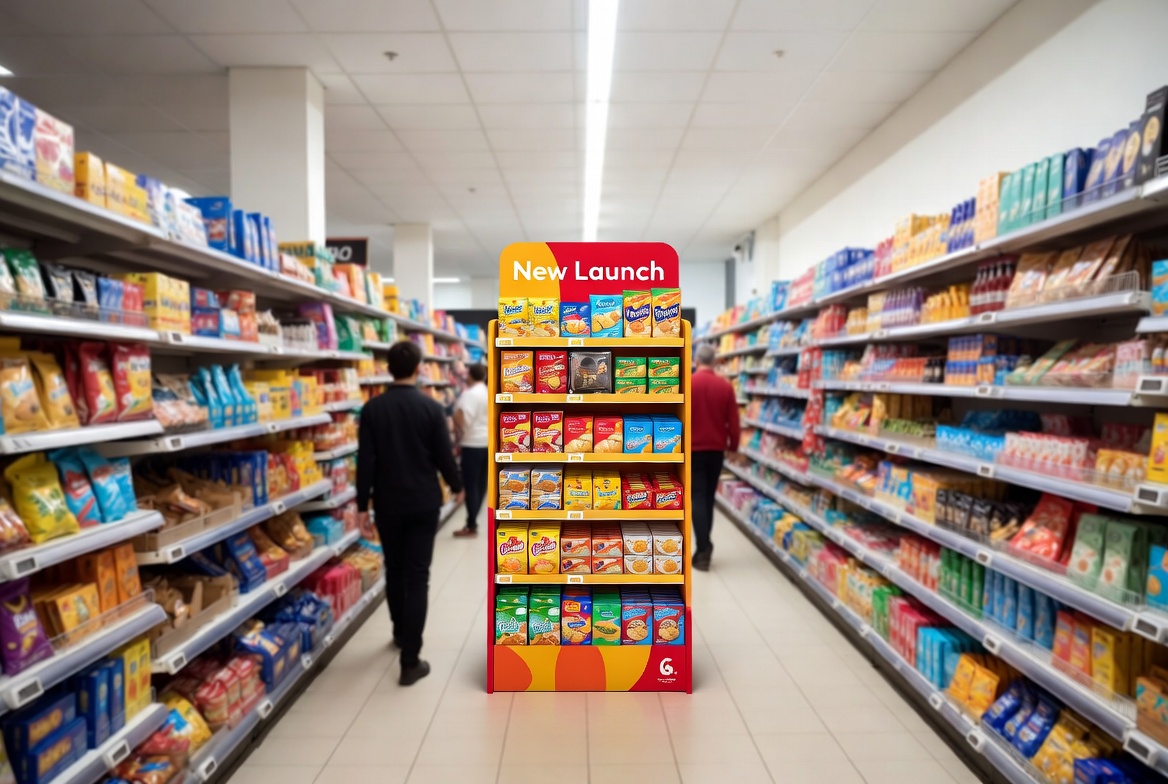
What Is a POP Display and What Is a Display Stand?
Point‑of‑purchase (POP) displays are branded units placed in‑store—often away from the standard shelf—to capture attention, communicate value, and trigger immediate purchase decisions. In practice, POP displays include everything from small countertop trays at checkout to large pallet displays loaded with cases of beverages or snacks in a hypermarket. [manifest]
A display stand is the structural carrier of your POP message: the physical unit that holds, organizes, and presents the product. In our projects we group display stands by four dimensions that matter for both marketers and buyers: [linkedin]
- Purpose: retail promotion, exhibitions, information, or point‑of‑purchase impulse selling
- Structure: fixed, portable, or modular, depending on how often the display must move or change
- Material: cardboard, metal, wood, plastic, or acrylic, based on budget, durability, and brand feel
- Placement: floor, countertop, or wall‑mounted, chosen around shopper flow and sightlines
When you treat the stand as a strategic sales tool instead of a simple "holder," you start asking stronger questions: How will it guide the eye? How will it support cross‑selling? How will it be replenished without slowing staff down? [packagingtech]
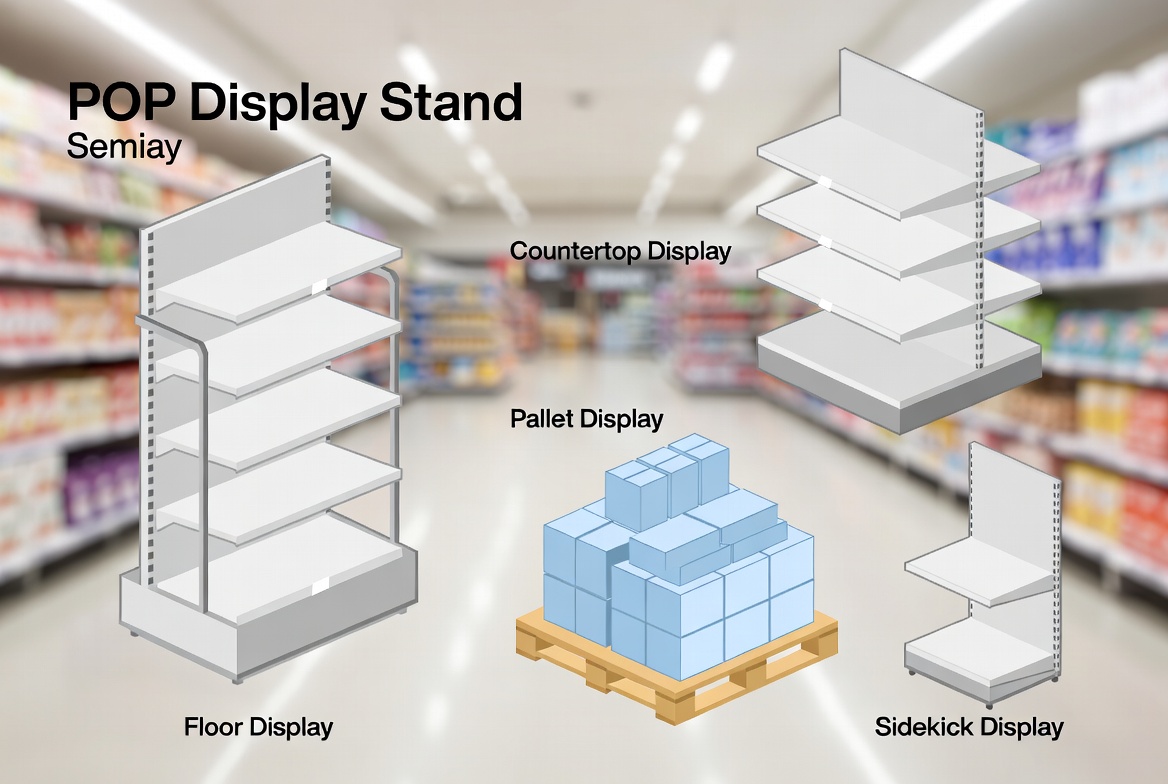
The 8 Core Types of POP Displays You Need to Know
1. Floor Displays: Your Flexible Brand Stage
Floor displays cover all freestanding units placed directly on the ground, such as display bins, endcaps, and pallet displays. They are usually designed to sit around eye level so shoppers naturally notice them while moving through the store, which strongly supports new product launches and seasonal stories. [manifest]
From a practitioner's point of view, floor stands work best when:
- You need high visibility and enough space for storytelling graphics
- The retailer allows you some freedom in open areas or aisle ends
- You want to test new packaging or messaging with clear sales tracking
At XingKun we produce a wide range of floor stands, from corrugated beverage displays to modular retail fixtures for cosmetics and fashion, ensuring they remain stable and easy to assemble even under heavy loads. [linkedin]
2. Counter Displays: Small Footprint, Big Impact
Counter displays are compact units placed on flat surfaces, typically at the checkout counter or service desk. They are designed for impulse items—snacks, small cosmetics, travel accessories, gift cards—that shoppers grab while waiting to pay. [linkedin]
Counter displays tend to perform well when they are:
- Highly focused on 1–3 SKUs instead of a crowded mix
- Designed with bold, simple graphics that can be read in seconds
- Optimized for easy replenishment by staff during busy periods
For many brands, we recommend cardboard countertop units as an entry point into POP, because they are lightweight, cost‑effective, and easy to test across many stores before scaling up. [packagingtech]
3. Pallet Displays: Power for Big‑Box Retail
Pallet displays are large units sitting directly on wooden pallets, often placed in wide aisles or promotional zones of big‑box stores. Customers can access products from multiple sides, making pallet displays ideal for bulk items, promotions, and high‑volume campaigns.
Operationally, retailers appreciate that these displays usually arrive pre‑packed with product, allowing staff to place them with a forklift and minimal manual work. When we design pallet displays, we focus on: [manifest]
- Meeting strict retailer specifications (footprint, height, safety)
- Ensuring structural strength for heavy loads and long promotions
- Using printable surfaces to communicate price, value, and brand clearly
For brands entering hypers or warehouse clubs for the first time, a well‑engineered pallet display can mean the difference between a smooth rollout and costly damage or non‑compliance.
4. Endcap Displays: Prime Real Estate at the Aisle End
Endcap displays sit at the end of a gondola aisle and can take the form of freestanding structures, inline shelves, or branded signage. Because every shopper walking past the aisle sees the endcap, it is considered some of the most valuable in‑store real estate. [manifest]
Endcaps are especially strong when:
- Introducing new products that benefit from maximum exposure
- Running time‑limited promotions (seasonal, event‑based, price drops)
- Building thematic stories, such as "back‑to‑school" or "game‑day snacks"
A high‑performing endcap combines clean structure, clear price communication, and smart cross‑merchandising with nearby categories so customers feel "guided" rather than pushed. [manifest]
5. Sidekick Displays (Power Wings): The Cross‑Selling Secret
Sidekick displays—also known as power wings—are small, lightweight units typically hung on the side of endcaps or main shelves. Their role is to promote complementary, add‑on products next to a primary item.
Classic examples include:
- Coffee on the endcap, with mugs or filters on the sidekick
- Electronics on the shelf, with batteries or accessories in the power wing
From a conversion standpoint, sidekicks work because they remove friction: shoppers see what else they need without hunting around the store, which increases basket size and satisfaction at once. [manifest]
6. Display Bins (Dump Bins): Fast‑Moving Volume
Display bins are large, typically square or hexagonal containers used for loose, oddly shaped, or promotional items that need to move quickly. Their bigger surfaces allow for large, eye‑catching fonts and graphics, which is ideal for discount or clearance messaging. [packagingtech]
We often recommend display bins when:
- Products have simple packaging or no primary packaging
- Retailers expect frequent customer interaction and rummaging
- The marketing goal is volume and clearance, not premium positioning
Cardboard dump bins pair well with temporary campaigns, as they are lightweight, customizable, and fully recyclable when the promotion ends. [linkedin]
7. Inline Displays: Winning the Shelf War
Inline displays are small, space‑saving units that sit directly on the shelf next to standard merchandise. They are effective where shelf space is extremely competitive and you want to segment your product or highlight a new variety without asking for extra floor space.
Inline units excel when:
- You need to differentiate your brand in an existing category
- You are targeting trial of a new flavor, size, or line extension
- Retailers only approve minimal additional fixtures
A simple cardboard or plastic inline tray, properly branded and shaped, can create a mini "island" inside a crowded shelf and subtly lead shoppers' eyes to your product first. [linkedin]
8. Gravity Feed Displays: Always‑Full Presentation
Gravity feed displays use sloped shelves so that as one product is removed, the next slides into place. They keep the front of the display looking consistently stocked and organized, which is important for packaged foods, pharma, and other items where a full look signals freshness and availability.
From an operations viewpoint, gravity feed units:
- Reduce front‑facing time for store staff
- Help maintain a tidy presentation without constant manual adjustment
- Work well for small, consistently shaped packages such as snacks or sachets
In our own manufacturing practice, we often integrate gravity feed functions into both countertop and floor units when clients want premium appearance but still need quick self‑replenishment. [linkedin]
Temporary vs Permanent POP Displays: How to Decide
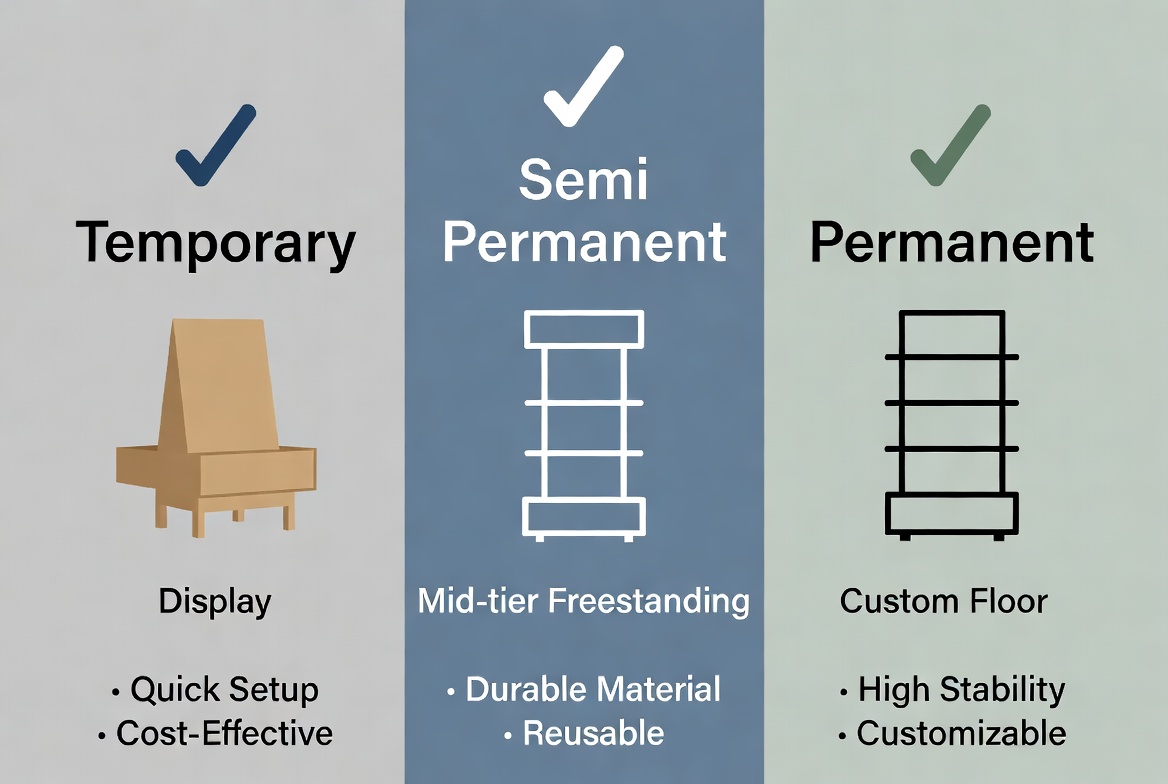
One of the first strategic choices is whether to invest in temporary, semi‑permanent, or permanent displays. Each option balances cost, lifespan, and flexibility differently. [linkedin]
| Display type |
Typical materials |
Lifespan & use case |
Key advantages |
| Temporary |
Corrugated cardboard |
Weeks to a few months; seasonal or promo‑driven campaigns (linkedin) |
Lower cost, fast turnaround, highly customizable graphics, easy recycling (linkedin) |
| Semi‑permanent |
Mix of cardboard, plastic, metal, or wood |
Around one year; evolving assortments or mid‑term branding (linkedin) |
More durable than pure cardboard, flexible for multiple product waves |
| Permanent |
Wood, metal, durable plastics |
Several years; core brand zones or flagship fixtures (linkedin) |
High perceived quality, strong brand presence, long‑term investment |
When advising brand and trade marketing teams, we usually run through these practical questions: [linkedin]
1. Where will the display live?
Big‑box chains often require temporary or modular units that match strict guidelines, while your own retail space can justify heavier permanent fixtures. [linkedin]
2. Is the product seasonal or evergreen?
Seasonal products and limited editions are a natural fit for corrugated temporary displays, refreshed every cycle with new artwork. [linkedin]
3. How fast do you need it?
Temporary solutions can be designed, produced, and shipped much faster than most permanent fixtures, which often require engineering, prototyping, and on‑site installation. [linkedin]
4. What is your sustainability position?
Corrugated cardboard displays support recyclability, while durable metal or wood can reduce waste over multi‑year use. [imagecoltd]
Expert Design Criteria: How Professionals Evaluate POP Displays
Beyond choosing a type, high‑performing brands evaluate POP displays using a clear, expert‑level checklist that blends marketing and operations. [packagingtech]
From our experience, the most effective POP projects score strongly in five areas:
1. Brand consistency and storytelling
Logos, colors, typography, and messaging must align with your core brand while adapting to the specific retail context. A beverage floor stand in a convenience store, for example, should look like it belongs to your brand family but still reflect local shopper expectations. [manifest]
2. Shopper‑centric visibility
The display should be placed in high‑traffic, high‑dwell zones and designed around eye level and natural movement paths. Clean layouts, clear hierarchy, and bold key messages help shoppers understand the offer in seconds. [displaygroupinc]
3. Ease of interaction and accessibility
Products must be easy to reach, pick up, and put back, including for people with limited mobility. Well‑planned compartment sizes and heights reduce mess and make the display feel inviting rather than intimidating. [imagecoltd]
4. Operational efficiency
Retail staff are more likely to keep your display full and tidy if it is quick to assemble and simple to replenish. Tool‑free assembly, clear instructions, and robust structures dramatically increase real‑world uptime. [manifest]
5. Measurability and testability
Leading retailers and brands are using simple A/B tests to compare different POP concepts and refine designs based on sales data and observed shopper behavior. Temporary cardboard displays are perfect for this kind of iterative learning. [packagingtech]
2026 Trends Shaping Display Stand Strategy
The standards for POP displays and display stands are evolving rapidly, driven by new shopper expectations and sustainability regulations. Three macro‑trends stand out in 2026: [displaygroupinc]
1. Interactive and sensory experiences
Retailers are blending physical displays with digital touchpoints and sensory elements—lighting, textures, and even sound—to make store visits feel more engaging. For printed display stands, this means leaving space for QR codes, screens, or modular holders that can host small devices without compromising structure. [displaygroupinc]
2. Eco‑forward, modular designs
Brands and retailers increasingly expect displays to be either easily recyclable or reusable across campaigns, often using modular components that can be re‑skinned. Corrugated cardboard, combined with thoughtful engineering, supports this shift by offering both low environmental impact and flexible design. [imagecoltd]
3. Warm minimalism and accessibility
Instead of crowded, noisy displays, many stores are moving toward cleaner, calmer visual merchandising where each display has a clear purpose and enough breathing room. Accessibility is also becoming non‑negotiable, with more attention to reach, angles, and clear communication for all shoppers. [displaygroupinc]
For manufacturers like XingKun, these trends translate into increased demand for sustainable materials, modular engineering, and premium‑feeling yet lightweight structures that work across different retail formats. [imagecoltd]
Inside the Manufacturing Process: How Professional Display Stands Are Built
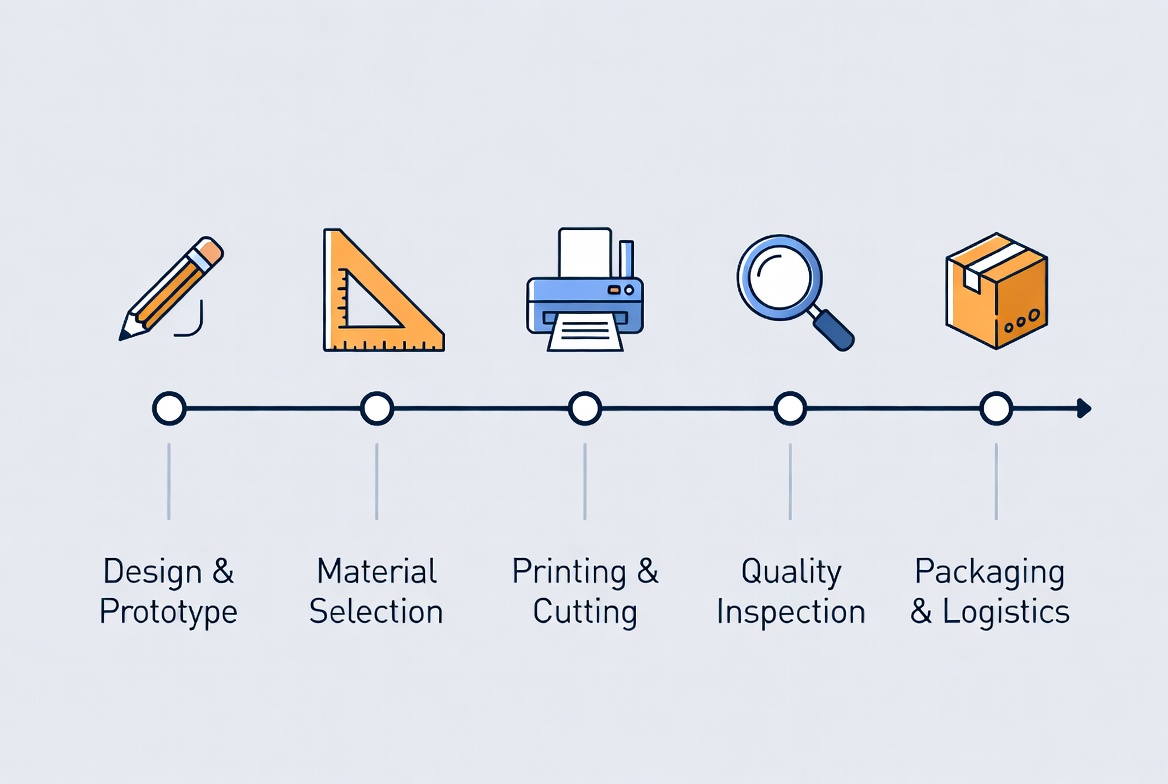
Understanding how a professional display stand is produced helps marketers make better briefs and better decisions. A typical project with our team follows five stages: [linkedin]
1. Design and prototyping
The process starts with concept development aligned to product, target shopper, and retail environment. Designers create 3D models using tools like AutoCAD or SolidWorks, then build physical prototypes—often from cardboard or foam—for hands‑on evaluation and testing. [linkedin]
2. Material selection
Together with the client, we evaluate cardboard, acrylic, wood, metal, and plastics, balancing durability, weight, cost, and sustainability expectations. For POP, corrugated cardboard remains a favorite due to its excellent printability and recyclability. [linkedin]
3. Manufacturing and printing
Materials are cut and shaped using techniques such as die‑cutting, CNC machining, or laser cutting, depending on complexity. Branding is applied using flexographic, digital, offset, gravure, or screen printing, each chosen for its fit with run size, color demands, and budget. [linkedin]
4. Quality control and testing
Every stand undergoes strict visual and structural checks to ensure print accuracy, color consistency, and load‑bearing safety. Heavy‑duty displays may be additionally tested for weight capacity and stability to withstand daily retail use. [linkedin]
5. Packaging, logistics, and instructions
Finally, displays are securely packed, often with custom inserts, and shipped with clear assembly instructions. For global clients, we pay special attention to flat‑packing efficiency to reduce freight costs and carbon footprint. [linkedin]
This disciplined process is what allows display stand manufacturers to deliver consistent quality at scale, whether the destination is a small boutique or a multinational retail chain. [linkedin]
Practical Checklist: How to Choose the Right POP Display Stand
From a buyer's or brand manager's standpoint, selecting the ideal display stand means aligning marketing objectives, retail constraints, and budget. Below is a practical, expert‑level checklist that many of our international clients use internally: [manifest]
1. Clarify your primary goal
- Drive trial of a new SKU?
- Increase basket size via cross‑selling?
- Clear overstock or seasonal inventory?
2. Map the retail environment
- Store format: convenience, supermarket, hypermarket, specialty store, exhibition booth
- Foot‑traffic flow and sightlines near intended location
- Retailer guidelines and size limits
3. Define display type and placement
- Floor, pallet, endcap, sidekick, counter, inline, or wall‑mounted stand
- Temporary vs permanent based on campaign length and budget
4. Set material and sustainability preferences
- Cardboard for short campaigns and recyclability
- Mixed or rigid materials for longer‑term installations
- Any required certifications or sustainability communications
5. Plan for logistics and assembly
- Maximum acceptable assembly time per unit in store
- Need for pre‑packed solutions vs empty display shipments
- Storage, transport, and backroom space constraints
6. Decide how you will measure success
- Baseline vs uplift in sales per store
- Shopper engagement observations or surveys
- A/B tests of different messaging, layouts, or materials
Using a structured checklist like this helps marketing and procurement teams speak the same language and extract more value from every display project. [blog.hubspot]
Why Work With a Specialist Manufacturer Like Shenzhen XingKun?
As a dedicated printing and packaging manufacturer with more than two decades of expertise, Shenzhen XingKun Packing Products Co., Ltd focuses on delivering custom, high‑quality display stands and printed packaging to brands and distributors across over 30 countries and regions. Our portfolio covers cardboard display racks, floor stands, retail display stands, cosmetic and acrylic stands, countertop displays, and specialized racks for beverages, snacks, apparel, helmets, and more. [xingkun.crpjc]
Partners choose us for three main reasons: [xingkun.crpjc]
- End‑to‑end customization
From structure and material to artwork and finishing, we tailor each project to your brand standards, product dimensions, and retailer requirements.
- Industrial‑grade production and quality control
With advanced printing technologies—flexo, digital, offset, gravure, screen—and rigorous inspection processes, we ensure every stand matches the approved prototype and can withstand daily retail use.
- Responsive service for global campaigns
We support small pilot runs and large rollouts with competitive lead times, bulk pricing, and clear communication on delivery, making it easier for marketing teams to hit campaign dates.
If you cannot find the exact display stand you need in standard catalogs, our custom design and manufacturing service will develop a solution specifically for your product and market. [linkedin]
Call to Action: Turn Your Next POP Project Into a Proven Sales Driver
If you are planning a new product launch, seasonal promotion, or rebrand, this is the ideal moment to upgrade from generic fixtures to strategic, custom display stands that match current retail trends and sustainability expectations. [imagecoltd]
Share your product details, target markets, and retailer requirements with Shenzhen XingKun Packing Products Co., Ltd, and our expert team will help you choose the right POP display type, material, and structure—from prototype to mass production. With the right partner and a clear strategy, your next display can become a repeatable, measurable driver of in‑store growth rather than a one‑time experiment. [xingkun.crpjc]
FAQs About POP Display Stands
Q1. What is the main difference between a POP display and a regular shelf?
A POP display is a dedicated, branded unit designed to stand out from regular shelving and highlight specific products or campaigns, while a standard shelf simply stores all items in a category with minimal differentiation. [linkedin]
Q2. How long can a cardboard POP display stand typically last in store?
A well‑engineered corrugated cardboard display is usually intended to last from several weeks up to a few months, depending on load, handling, and store conditions, making it ideal for temporary and seasonal promotions. [linkedin]
Q3. Are cardboard display stands really sustainable?
Corrugated cardboard is one of the most recycled materials in the packaging sector, with high recovery rates, and modern inks and coatings can be selected to support recyclability, making cardboard stands a strong choice for eco‑forward campaigns. [imagecoltd]
Q4. How early should brands involve a display stand manufacturer in campaign planning?
For smooth execution, it is best to involve your manufacturer during the concept phase, before finalizing artwork and retailer commitments, so structural design, materials, and logistics can be aligned with goals and timelines. [manifest]
Q5. Can one display design work across different retailers and countries?
In practice, brands often use a core modular design that can be adjusted in size, graphics, or components to meet different retailer guidelines and local preferences while maintaining consistent brand identity. [displaygroupinc]
References
1. Creative Displays Now – “Part 2: Types of POP Displays”. https://www.creativedisplaysnow.com/guides/the-ultimate-beginners-guide-to-pop-displays/types-of-pop-displays/
2. Shenzhen XingKun Packing Products Co., Ltd – Display Stand category and manufacturing overview. https://www.xkdisplay.com/zh-CN/display-stand.html
3. Shenzhen XingKun Packing Products Co., Ltd – Company profile. http://xingkun.crpjc.com
4. Manifestly – “Boost Retail Sales: Top Point-of-Purchase Display Checklist”. https://www.manifest.ly/use-cases/retail/point-of-purchase-display-checklist
5. Imageco – “Retail Display Trends 2026: What’s Working in Stores Right Now”. https://imagecoltd.com/news/retail-display-trends-2026-whats-working-in-stores-right-now/
6. Display Group – “Top Retail Display Trends Retailers Should Watch in 2026”. https://displaygroupinc.com/top-retail-display-trends-retailers-should-watch-in-2026/
7. PackagingTech – “10 Tips for Creating a Better Point of Purchase Display”. https://packagingtech.net/blog/10-tips-for-creating-a-better-point-of-purchase-display
8. HubSpot – “How to Create an SEO Strategy”. https://blog.hubspot.com/marketing/seo-strategy
9. Bynder – “12 tips for writing SEO-optimized content in 2026”. https://www.bynder.com/en/blog/12-tips-for-writing-seo-optimized-content/


