Content Menu
● Why China Leads This Category
● How We Evaluate Supplier Quality
● Selection Criteria for This List
● The Top 10 Pizza Box Manufacturers
>> 1. Shenzhen XingKun Packing Products Co., Ltd.
>> 2. Xianda Gift Box
>> 3. MTH Packaging Box
>> 4. Bonito Pack
>> 5. Yulong Packaging Product Co., Ltd.
>> 6. Singreen Package
>> 7. RBD Packaging (ShenZhen RuiBaiDa Packaging Products Co., Ltd.)
>> 8. PS Boxes – Business Packaging Solutions
>> 9-10. Additional Regional Producers
● Comparing Capacity, MOQ, and Certifications
● Common Sourcing Pitfalls
● Buyer's Guide: Verifying a Factory Before Committing
● Moving Forward With a Shortlist
● Frequently Asked Questions
● References
China remains the world's primary production base for pizza boxes, supplying corrugated, kraft, and custom-printed packaging to food brands and distributors across more than 100 countries, and the global pizza box market is projected to grow from 3.19 billion US dollars in 2025 to 3.44 billion US dollars in 2026. For procurement managers, the challenge isn't finding a factory — it's finding one that combines verified certifications, stable capacity, and dependable communication.
Why China Leads This Category
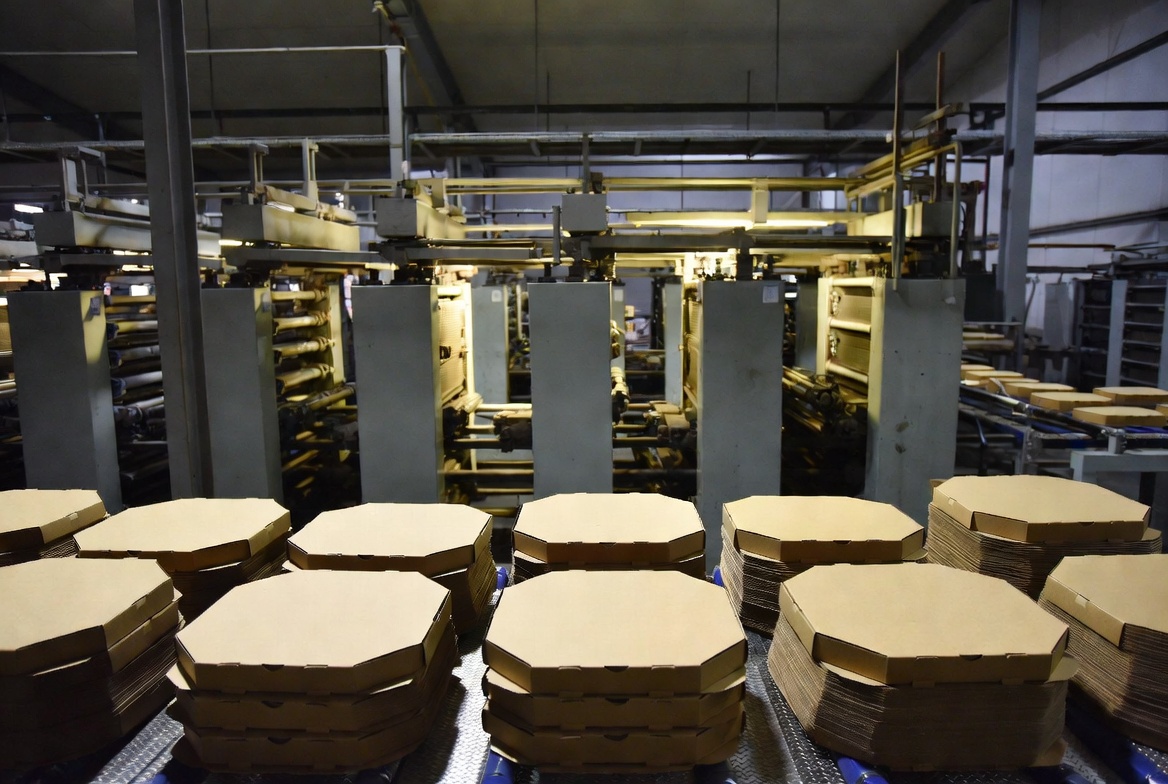
Guangdong province, particularly the Pearl River Delta cities of Shenzhen and Dongguan, has developed one of the world's densest clusters of corrugated printing and packaging equipment suppliers, paper mills, and export logistics infrastructure. This concentration mirrors other well-known Chinese manufacturing clusters — the way Foshan dominates furniture or Shenzhen dominates electronics — and it gives pizza box producers shorter supply chains, competitive raw material pricing, and access to skilled offset and flexographic printing technicians. This clustering effect, combined with decades of export experience to North American and European food service brands, is why buyers routinely shortlist Chinese factories over suppliers based elsewhere.
How We Evaluate Supplier Quality
Before ranking any factory, buyers should assess four operational dimensions that separate reliable long-term partners from opportunistic traders:
- Factory certifications: valid ISO 9001 (quality management), ISO 14001 (environmental), and food-contact safety documentation such as FDA compliance or BRC/SEDEX where applicable.
- In-house R&D and design capability: ability to prototype structural designs, adjust flute grades, and handle custom die-cutting rather than only reprinting existing templates.
- Documented QC process: incoming material inspection, in-line print color matching, and pre-shipment inspection reports available on request.
- Lead time consistency: published production timelines (typically 15-25 days for custom orders) and a track record of holding those timelines during peak seasons.
Selection Criteria for This List
The manufacturers below were shortlisted using a transparent set of filters rather than paid placement or marketing claims. Each factory needed at least five years of continuous export operation, a minimum stated corrugated or kraft paper printing capacity, publicly verifiable or supplier-disclosed certification records, and demonstrated OEM/ODM order handling for food packaging specifically (not general commercial printing). Factories lacking traceable business registration or verifiable export history were excluded regardless of online visibility.
The Top 10 Pizza Box Manufacturers
1. Shenzhen XingKun Packing Products Co., Ltd.
Founded in 2004, XingKun operates a 3,000-square-meter production facility in Shenzhen's Bao'an District and exports to more than 30 countries, with an annual output exceeding 10 million units. The factory is equipped with Heidelberg CD102 four-color and Heidelberg XL75 six-color offset printing machines, which support high-resolution branding on kraft and corrugated pizza box substrates. As a medium-sized supplier, XingKun positions itself around flexibility rather than scale — standard orders ship in 7-15 days, and urgent sample or expedited orders can be turned around in 3-7 days, which is notably faster than many large-volume competitors. This responsiveness makes it a practical fit for small and mid-sized pizza chains or private-label brands that need close design collaboration without committing to the massive minimum order quantities that larger converters often require. The company also emphasizes transparent communication about material specifications and product limitations before production begins, reducing the risk of specification disputes after goods have shipped.
2. Xianda Gift Box
Xianda specializes in premium printed paper packaging with a strong design-and-prototyping department, serving mid-market food and retail brands that need structural customization beyond standard flat-pack templates. Its OEM service is oriented toward brands requiring frequent SKU changes and seasonal packaging refreshes.
3. MTH Packaging Box
MTH focuses on corrugated and kraft-based food packaging with an emphasis on grease-resistant coating options, addressing one of the more technical requirements specific to pizza boxes. The factory supports both ODM (using existing structural templates) and full OEM development for clients entering new markets.
4. Bonito Pack
Bonito Pack works primarily with export-oriented distributors and offers tiered MOQ structures, making it accessible for buyers testing a new product line before committing to larger volume contracts. Its printing division supports both offset and digital short-run printing for smaller test batches.
5. Yulong Packaging Product Co., Ltd.
Yulong appears frequently in industry directories as a larger-scale corrugated packaging producer with broad export experience across food service categories.
6. Singreen Package
Singreen markets itself around biodegradable and wholesale custom-printed pizza boxes, targeting brands prioritizing sustainability certifications in their packaging supply chain.
7. RBD Packaging (ShenZhen RuiBaiDa Packaging Products Co., Ltd.)
RBD is listed among leading custom packaging box manufacturers with documented lead times and export experience data used for buyer comparison.
8. PS Boxes – Business Packaging Solutions
PS Boxes is referenced in current manufacturer directories as an active producer in the pizza box category with a broad general packaging catalog.
9-10. Additional Regional Producers
Beyond the named factories above, dozens of smaller Guangdong and Jiangsu-based converters compete on price for standard flute-board pizza boxes without custom printing; buyers should evaluate these case by case using the verification steps outlined below, since directory listings alone do not confirm certification validity.
Comparing Capacity, MOQ, and Certifications
| Manufacturer | Est. MOQ | Typical Lead Time | Key Certifications Claimed | Best Suited For |
| Shenzhen XingKun Packing | Low-medium | 7-15 days (3-7 urgent) | Business license, export compliance docs | SMEs, private-label brands needing fast turnaround |
| Xianda Gift Box | Medium | Varies by design complexity | Standard export packaging certs | Brands needing structural customization |
| MTH Packaging Box | Medium | Standard | Food-contact material compliance | Grease-resistant coating requirements |
| Bonito Pack | Low (tiered) | Standard-flex | Standard export certs | Distributors testing new SKUs |
| Yulong Packaging | Higher-volume | Standard | Industry-listed export history | Larger recurring volume orders |
Buyers should request current certificate copies directly rather than relying on website badges, since MOQ and lead time figures above are directional and vary by design complexity and season.
Common Sourcing Pitfalls
One issue rarely discussed openly in supplier directories: some factories quote a "food-grade" kraft paper price but substitute a lower-basis-weight or recycled-fiber board mid-production once a deposit is paid, since the visual difference is difficult to detect without a lab test or caliper measurement on the actual shipped carton. Buyers who only inspect a pre-production sample — rather than a random sample pulled from the actual production batch — are the most frequent victims of this substitution.
Other frequent problems include:
- Certifications displayed on a website with no expiry date or scope listed, which is often a sign the certificate covers a different product category or has already lapsed.
- Color drift between the approved proof and mass production run due to unmonitored ink-mixing between shifts.
- Underestimated international shipping lead time when factories quote "ex-factory" days only, excluding customs clearance and ocean freight transit.
Buyer's Guide: Verifying a Factory Before Committing
1. Request the ISO certificate number and cross-check the issuing certification body's accreditation status independently rather than accepting a PDF at face value.
2. Ask for a factory audit report or arrange a live video walkthrough of the production floor rather than relying solely on photos.
3. Order a pre-production sample from the actual materials batch intended for your order, not a showroom sample.
4. Clarify Incoterms (FOB, EXW, or DDP) early, since freight, customs duties, and insurance responsibilities shift significantly between terms.
5. Confirm the factory's registered business scope covers packaging manufacturing specifically, using China's national enterprise credit information platform.
Moving Forward With a Shortlist
Pizza box sourcing decisions carry real operational risk if certification claims or material specifications aren't independently verified before production begins. Buyers ready to move forward should request current certificates, a production-batch sample, and a clear Incoterms quote from at least two of the factories above before signing a purchase order.

Frequently Asked Questions
1. How do I verify an ISO certificate isn't expired or fabricated?
Check that the certificate lists a standard number with revision year, an expiry date typically three years from issue, and an accreditation body logo; contact the accreditation body directly to confirm the certificate's validity if the factory cannot provide a verifiable registration number.
2. What's a realistic MOQ for custom-printed pizza boxes from a mid-sized factory?
MOQs vary by printing method and box complexity, and factories offering tiered MOQ structures for offset versus digital short-run printing typically accommodate smaller test orders more affordably than large-scale converters.
3. How can I confirm the factory isn't subcontracting my order to an unverified third party?
Request the factory's business registration address and compare it against the actual production address during a video audit or third-party inspection visit.
4. What food-safety documentation should pizza box packaging carry for the US or EU market?
Buyers should request material compliance documentation confirming the coating and adhesives are food-contact safe, and verify this aligns with destination-market regulations before shipment, since requirements differ between the US FDA framework and EU food-contact material regulations.
5. How do I avoid material substitution after placing a deposit?
Specify the exact paper basis weight (GSM) and board type in the purchase contract, and request a random-sample inspection report from the actual production batch, not the initial approved sample, before final payment.
References
- China Supplier Verification Guide [svigloballtd]
- ISO China Certificate Verification [chinacheckup]
- Global Pizza Box Market Report 2026 [researchandmarkets]
- Pizza Packaging Box Suppliers Overview [alibaba]
- Top 100 Pizza Box Manufacturers Directory [ensun]


