Content Menu
● What Is Aqueous Coating in Printing and Packaging?
>> What Does Aqueous Coating Protect Against?
● How Is Aqueous Coating Applied to Packaging Boxes?
● Types of Aqueous Coating for Custom Packaging Boxes
>> Gloss, Matte, or Satin?
● Aqueous Coating vs UV Coating vs Lamination
● The Most Overlooked Issue: Glue, Foil, and Coding Compatibility
● Is Aqueous Coating Suitable for Food Packaging?
● Is Aqueous-Coated Packaging Recyclable?
● A Six-Step Approval Checklist for Aqueous-Coated Boxes
>> 1. Define the Real Failure Risk
>> 2. Sample the Actual Board and Artwork
>> 3. Evaluate Appearance Under Consistent Lighting
>> 4. Agree on Relevant Performance Checks
>> 5. Test the Assembled Package
>> 6. Record and Control the Specification
● Industry Insight: Decorative Protection Is Not Barrier Performance
● What Affects Aqueous Coating Cost?
● Plan Your Next Packaging Project With XingKun
● Frequently Asked Questions
>> 1. Is aqueous coating waterproof?
>> 2. Can you write on aqueous coating?
>> 3. Can aqueous-coated boxes be glued or foil stamped?
>> 4. Is aqueous coating better than lamination?
>> 5. Does aqueous coating change printed colors?
>> 6. Is aqueous coating automatically food-safe and recyclable?
● References
Aqueous coating is a water-based finish applied to printed paper or paperboard to improve appearance and help protect the printed surface. For brands ordering custom packaging boxes, it offers a practical balance between presentation, handling resistance, and production efficiency.
However, choosing an aqueous coating involves more than deciding between gloss and matte. The coating must also work with your board, inks, glue, decorative finishes, and distribution conditions.
At Shenzhen XingKun Packing Products Co., Ltd., our packaging perspective reflects more than 20 years of manufacturing experience and service to brands and distributors across over 30 countries and regions. Our recommendation is straightforward: evaluate the finished box, not just an attractive coating sample.
This guide explains how aqueous coating works, where it adds value, and what buyers should verify before approving production.
What Is Aqueous Coating in Printing and Packaging?
Often called AQ coating, aqueous coating generally contains water, polymer dispersions, and additives that control properties such as gloss, slip, wetting, and resistance.
After application, water is removed through drying, leaving a protective film over the printed surface.
The word "aqueous" describes the coating's water-based formulation. It does not automatically mean that the finished packaging is plastic-free, compostable, suitable for direct food contact, or recyclable everywhere.
What Does Aqueous Coating Protect Against?
A correctly selected formulation can help reduce:
- Scuffing during packing and transportation.
- Ink abrasion from repeated handling.
- Surface marking during converting.
- Visible fingerprints, depending on the finish.
- Minor damage from contact with adjacent cartons.
It does not make paperboard waterproof or prevent structural crushing. Standard decorative AQ coatings should also not be confused with specialist grease, moisture, or oxygen barriers.
How Is Aqueous Coating Applied to Packaging Boxes?
In sheet-fed offset production, aqueous coating is commonly applied through a coating unit after the printing units. Compatible systems can coat freshly printed sheets inline; the ink does not always need to be fully dry first.
A typical production sequence includes:
1. Print the approved artwork on the specified board.
2. Apply a controlled, even coating layer.
3. Remove moisture using the appropriate drying system.
4. Check drying, appearance, and resistance.
5. Die-cut, crease, fold, and glue after suitable conditioning.
Hot air and air extraction are important in many AQ drying systems. Settings must match the coating, ink, substrate, and press speed.
Surface dryness alone does not prove that sheets are ready for every subsequent operation. Excess moisture, unsuitable pile conditions, or incomplete drying can contribute to blocking, where stacked sheets stick together.
The practical lesson is simple: faster handling must be demonstrated under actual production conditions.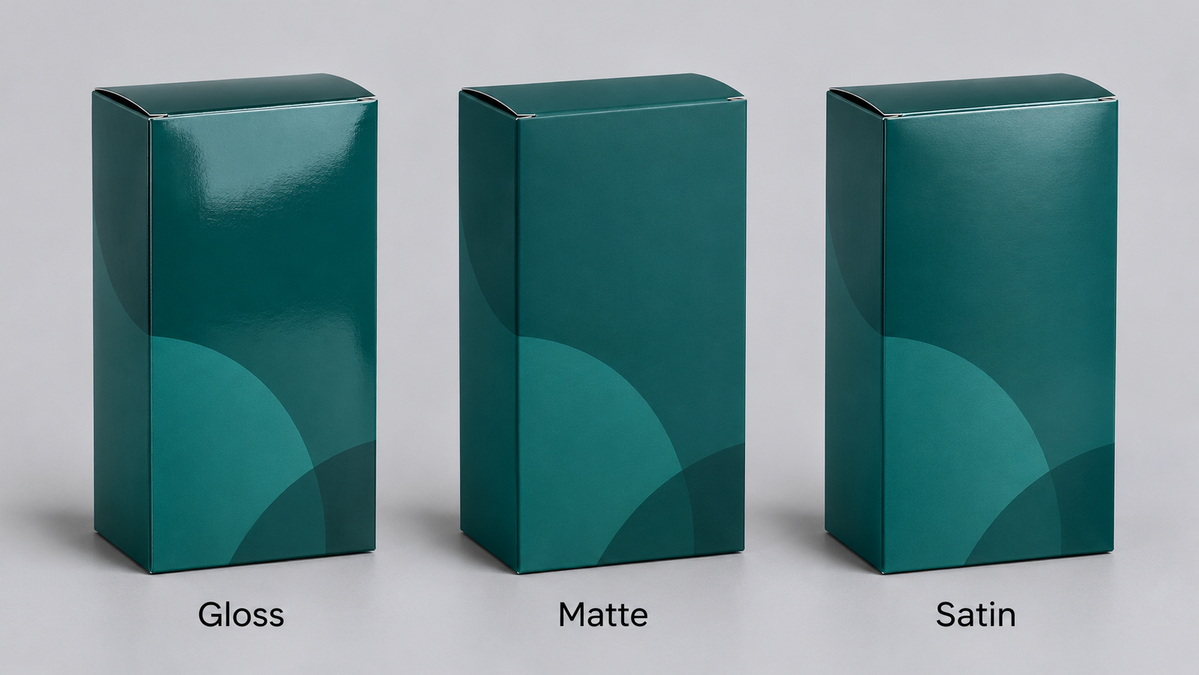
Types of Aqueous Coating for Custom Packaging Boxes
Finish names describe appearance, but they do not fully define performance. Two coatings sold as "matte" may have different rub resistance, friction, and converting compatibility.
| Finish | Typical appearance | Suitable design direction | Main approval check |
| Gloss aqueous coating | Reflective, polished surface | Colorful retail cartons | Reflections, rub resistance, color appearance |
| Matte aqueous coating | Low-sheen surface | Understated branding and typography | Scuff visibility and fingerprinting |
| Satin aqueous coating | Intermediate sheen | Balanced everyday presentation | Consistency across panels |
| Soft-touch aqueous coating | Tactile, velvety effect | Sensory or premium packaging | Marking, handling durability, cost |
| Functional aqueous coating | Application-dependent | Defined barrier or friction requirements | Measured performance and compliance |
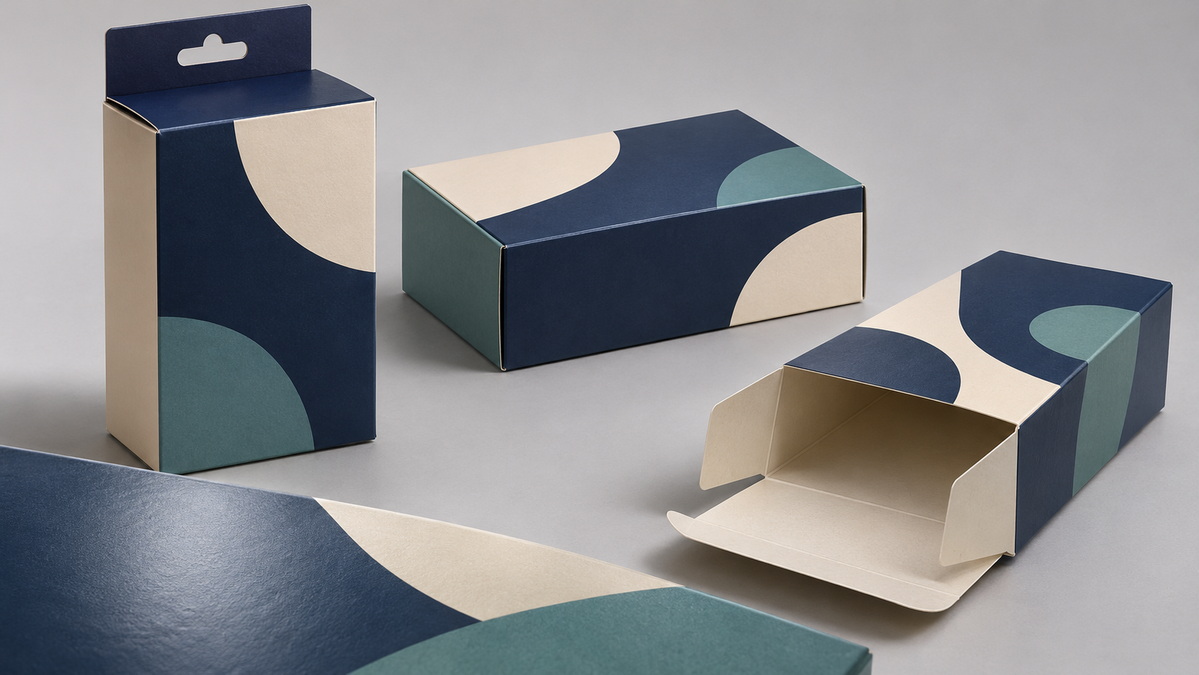
Gloss, Matte, or Satin?
Gloss can strengthen the impression of visual contrast, but reflections may make certain details harder to inspect.
Matte reduces glare and supports restrained designs. However, dark matte panels can reveal handling marks, so a physical sample matters more than a digital rendering.
Satin offers a middle ground when the design needs some reflectivity without a highly glossy appearance.
Soft-touch formulations require their own evaluation. Do not assume that every tactile finish has the same resistance or production requirements.
Aqueous Coating vs UV Coating vs Lamination
These finishes solve overlapping but different problems. Comparing them only by price or shine can lead to the wrong specification.
| Consideration | Aqueous coating | UV coating | Film lamination |
| Main process | Water-based coating dried after application | Coating cured using ultraviolet energy | Separate film bonded to the surface |
| Common purpose | Overall appearance and handling protection | Gloss, decoration, or surface performance | Film-based protection and visual effects |
| Design options | Gloss, matte, satin, tactile formulations | Flood or spot effects; formulation-dependent | Gloss, matte, tactile, specialty films |
| Key compatibility issue | Glue, foil, ink, drying | Cure, adhesion, later converting | Film adhesion, folds, glue areas |
| Environmental assessment | Evaluate the complete pack | Evaluate the complete pack | Evaluate film and complete construction |
Spot UV describes selective placement, not a separate category of chemistry. UV coatings can also cover larger areas.
Similarly, "varnish" is a broad trade term. When comparing quotations, ask suppliers to identify the actual coating technology rather than relying on the finish name alone.
Aqueous coating is worth considering when you want surface protection without adding a separate laminating film. More demanding requirements may justify another finish.
The Most Overlooked Issue: Glue, Foil, and Coding Compatibility
A finish can look excellent and still cause production problems.
Some AQ formulations accept adhesive bonding or hot foil stamping. Others are explicitly unsuitable. This difference is documented in coating manufacturers' technical data sheets.
For example, ACTEGA describes STARKOTE AQ-443 as a high-rub gloss folding-carton coating that is non-stampable and non-glueable. Its AQ-150NC documentation identifies glueability and other converting characteristics for a different formulation.
These are product-specific examples, not claims that one coating suits every carton.
Before approving your artwork and coating layout, identify:
- Glue flaps and bonding surfaces.
- Foil-stamped logos or borders.
- Embossed and debossed details.
- Date codes, batch numbers, and variable printing.
- Labels, seals, and writable panels.
Where compatibility is uncertain, an uncoated reserve area may be appropriate. Confirm its position and dimensions with the converter.
Our buying recommendation is to approve the complete construction: board, ink, coating, adhesive, and decorative process together.
Is Aqueous Coating Suitable for Food Packaging?
Certain aqueous coatings are formulated for food-packaging applications. That does not make every water-based coating suitable for direct contact with food.
An outer carton containing a sealed food pouch presents a different exposure scenario from a coated surface touching an oily bakery product.
Assessment should consider:
- Direct or indirect food contact.
- Food type, including fat and moisture content.
- Contact temperature and duration.
- Storage and transportation conditions.
- Destination-market requirements.
- The complete packaging structure.
Migration can occur through packaging layers or through set-off when surfaces contact one another in stacks. Therefore, exterior application does not automatically remove every compliance concern.
Request documentation relevant to the actual coating and intended use. Depending on the application, additional migration or sensory assessment may be necessary.
Avoid treating "water-based," "low odor," or a generic safety statement as a substitute for application-specific evidence.
Is Aqueous-Coated Packaging Recyclable?
Aqueous coatings can support recyclable paper-based packaging, but recyclability must be assessed at the package level.
Relevant factors include:
- Coating chemistry and application weight.
- Fiber recovery during repulping.
- Adhesives, windows, foils, and other components.
- The destination's collection and sorting system.
- Available recycling infrastructure.
Repulpability describes whether fibers can be recovered under defined processing conditions. It is not identical to collection availability or recycling at scale.
Siegwerk's technical guidance explains that evaluation can include disintegration, screening, reject measurement, and assessment of recovered sheets. This is more meaningful than assuming that a thin coating has no effect.
Likewise, a water-based coating can contain synthetic polymers. Claims such as "plastic-free" or "compostable" need their own supporting basis.
For purchasing teams, the safest approach is to request evidence for the finished packaging construction and phrase environmental claims accordingly.
A Six-Step Approval Checklist for Aqueous-Coated Boxes
A structured approval process turns subjective preferences into a repeatable specification.
1. Define the Real Failure Risk
Decide what the coating must prevent.
Is your concern scuffing on dark panels, fingerprints on display packaging, or abrasion during automated packing? A clear requirement helps avoid paying for an attractive finish that solves the wrong problem.
2. Sample the Actual Board and Artwork
Use the intended substrate and representative printed areas.
Include dark solids, fine text, heavy ink coverage, and any panel where appearance is particularly important. A sample on different board may not predict the final result.
3. Evaluate Appearance Under Consistent Lighting
Compare sheen, color appearance, surface uniformity, and visible defects.
Keep an approved physical reference. Screen images cannot reliably communicate gloss or tactile properties.
4. Agree on Relevant Performance Checks
Select tests that reflect expected handling.
These may include rub testing, adhesion checks, blocking assessment, crease inspection, and glue-bond evaluation. Agree on methods and acceptance criteria before production rather than inventing a universal pass level.
5. Test the Assembled Package
A flat printed sheet cannot reveal every converting issue.
Inspect folds, glued seams, foil areas, labels, and coding after assembly. If moisture exposure or demanding transit is expected, include appropriate testing.
6. Record and Control the Specification
Document the board grade, coating identification, finish, reserved areas, approved sample, and test requirements.
Require review when key materials change. An unchanged finish name does not guarantee an unchanged formulation.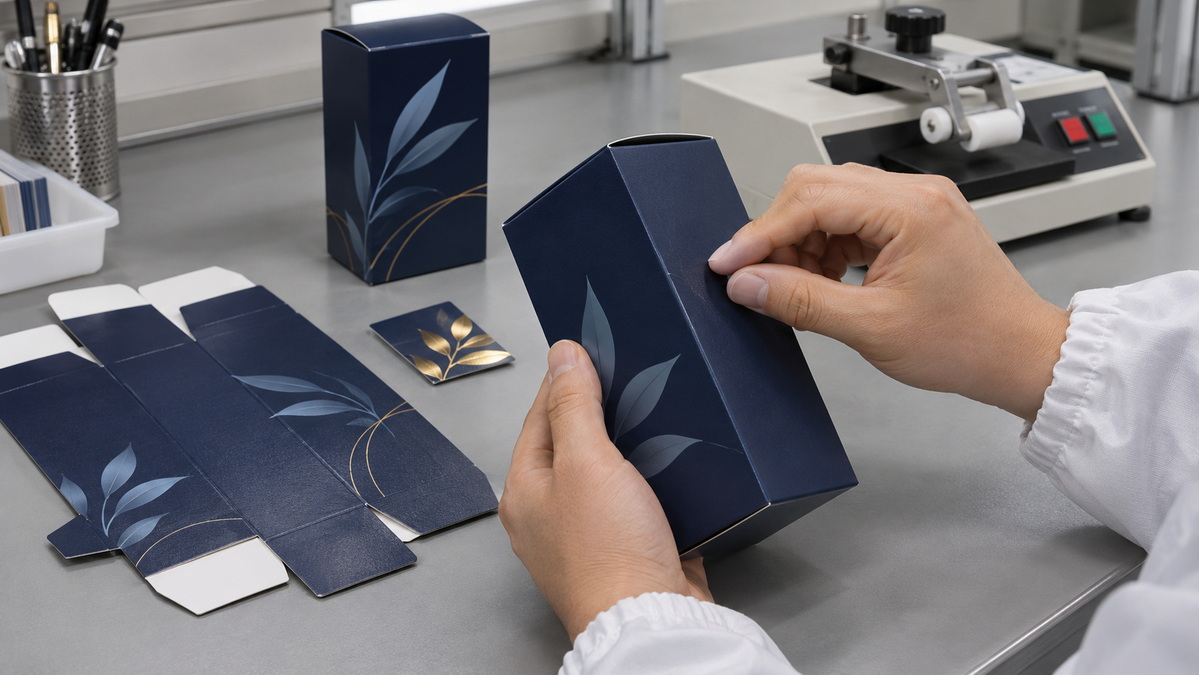
Industry Insight: Decorative Protection Is Not Barrier Performance
One useful development in water-based packaging is the expansion of specialist functional coatings.
For example, Siegwerk's published UniNATURE paper-plate case describes a water-based barrier coating evaluated for resistance to water, oil, and grease. The company also reports independent laboratory assessment covering migration and other safety-related parameters.
The important point is not that all AQ coatings offer these properties. They do not.
The example shows how a coating should be matched to a defined application and supported by relevant testing.
For a cosmetics carton, surface appearance and rub resistance may dominate. For a food-service item, liquid exposure, grease resistance, and food-contact conditions may be central.
Never substitute a standard decorative coating for a functional barrier solely because both are water-based.
What Affects Aqueous Coating Cost?
There is no reliable universal price per box.
Cost depends on the formulation, coated area, production quantity, substrate, application method, drying requirements, testing, and additional finishing.
Compare quotations using the same construction and acceptance criteria. Otherwise, a lower price may reflect a different coating or a reduced scope.
A useful total-cost comparison also considers rejected cartons, packing disruption, additional protection, and avoidable rework.
Plan Your Next Packaging Project With XingKun
The right aqueous coating should support your artwork, survive expected handling, and remain compatible with the rest of the box.
Send Shenzhen XingKun Packing Products Co., Ltd. your box dimensions, board preference, artwork, order quantity, destination market, and intended use.
Include any requirements for food contact, foil stamping, coding, or environmental claims. Request a coating recommendation, representative sample, and clearly defined approval criteria before confirming mass production.
Frequently Asked Questions
1. Is aqueous coating waterproof?
Standard decorative AQ coating should not be treated as waterproofing. Specialist barrier formulations may provide defined resistance to water or moisture, but performance depends on the coating, substrate, application, and exposure conditions.
2. Can you write on aqueous coating?
Sometimes. Writability depends on the coating and writing instrument. Test the intended pen or marker, or reserve an uncoated area where reliable writing is essential.
3. Can aqueous-coated boxes be glued or foil stamped?
Some can; others cannot. Check the specific technical data sheet and validate the actual adhesive or foil system. Reserved uncoated areas may be necessary.
4. Is aqueous coating better than lamination?
Neither is universally better. AQ coating can provide useful appearance and handling protection without a separate film. Lamination may suit other performance needs. Compare samples, converting requirements, and the complete packaging structure.
5. Does aqueous coating change printed colors?
It can change perceived color by altering surface reflection and sheen. Approve important brand colors on the intended board with the proposed coating rather than relying only on an uncoated proof.
6. Is aqueous coating automatically food-safe and recyclable?
No. Food-contact suitability requires evidence for the intended use. Recyclability depends on the complete package and relevant recovery system. Water-based chemistry alone proves neither claim.
References
1. Custom Box Makers. "What Is Aqueous Coating for Printing & Packaging?" Original article reviewed for its definitions, finish categories, process description, and areas requiring qualification. [customboxmakers]
2. ACTEGA. "STARKOTE AQ-443: Aqueous Gloss High Rub Folding Carton Coating." Technical data sheet identifying application, drying, rub resistance, and non-stampable/non-glueable properties. [actega]
3. ACTEGA. "STARKOTE AQ-150NC: Aqueous Gloss Non-Skid Coating." Technical data sheet covering glueability, friction, drying, and converting characteristics. [actega]
4. ACTEGA. "Coatings for Paper & Board." Manufacturer overview distinguishing decorative, protective, barrier, and application-specific coating functions. [actega]
5. Siegwerk. "Migration Testing." Technical guidance explaining migration pathways, set-off, exposure conditions, and application-specific compliance assessment. [ink-safety-portal.siegwerk]
6. Siegwerk. "Repulping & Recycling of Fiber-Based Packaging." Technical white paper describing repulpability assessment, testing approaches, and the relationship between material design and recycling systems. [siegwerk]
7. Siegwerk. "Siegwerk's New UniNATURE Barrier Coating Revolutionizes the Use of Paper Plates." Published February 24, 2023. Manufacturer-reported example of application-specific barrier and safety testing; not evidence for all aqueous coatings. [siegwerk]


