Content Menu
● Perfect Bound vs Saddle Stitch vs Case Binding: Quick Comparison
● What Is Saddle Stitch Binding?
>> When saddle stitching is the best choice
>> Saddle stitch page counts: why multiples of four matter
>> The limitation buyers often overlook: creep
● What Is Perfect Binding?
>> When perfect binding is the best choice
>> Perfect binding page count: thickness matters more than a universal minimum
>> PUR vs EVA adhesive: what buyers should know
● What Is Case Binding?
>> When case binding is the best choice
>> Case bound does not automatically mean sewn
>> Does a hardcover book open flat?
● Which Binding Method Is Best for Your Project?
>> For short product catalogs and promotional booklets
>> For substantial catalogs and paperback publications
>> For gift books and premium brand publications
>> For hands-free reference use
● Three Common Gaps in Book Binding Comparisons
>> Gap 1: treating page-count ranges as fixed rules
>> Gap 2: confusing cover style with internal strength
>> Gap 3: promising readability without checking the artwork
● A Practical OEM/ODM Workflow: From Brief to Approved Sample
>> Step 1: describe how the publication will be used
>> Step 2: lock the page count and paper specification
>> Step 3: request comparable construction options
>> Step 4: obtain the production template before final artwork
>> Step 5: define what each sample approves
>> Step 6: retain a written production reference
● Prepress Mistakes That Can Undermine the Right Binding Choice
>> Designing the spine before choosing the stock
>> Ignoring imposition requirements
>> Placing critical information too close to the center
>> Confusing paper weight with paper thickness
● Illustrative Binding Scenarios for Brand Buyers
● Request a Binding Recommendation from XingKun
● Conclusion
● Frequently Asked Questions
>> 1. What is the main difference between perfect binding and saddle stitching?
>> 2. Is case binding the same as hardcover binding?
>> 3. How many pages can a saddle-stitched booklet have?
>> 4. Does perfect binding always require a page count divisible by four?
>> 5. Is PUR binding better than EVA binding?
>> 6. Will a case-bound book automatically lie flat?
>> 7. Can the same cover artwork be used for perfect binding and case binding?
>> 8. Which binding is best for a custom catalog?
When comparing perfect bound vs saddle stitch vs case binding, the best choice depends on how your book will be used—not simply how premium you want it to look. Saddle stitching suits slim booklets and short catalogs. Perfect binding creates the familiar square-spined paperback. Case binding adds a rigid hardcover for protection and a more substantial presentation. Each method creates a different balance of cost, page capacity, opening behavior, and design flexibility. [printninja]
For overseas brands, wholesalers, and manufacturers sourcing custom printed books, binding is also a procurement decision. A specification that looks economical on a quotation may become less attractive if it compromises readability, requires unexpected blank pages, or changes the finished product's dimensions.
My recommendation is to choose the reading experience first, confirm the construction second, and finalize the artwork third.
This guide explains the technical differences, highlights frequently overlooked purchasing risks, and provides a practical framework for discussing an OEM or ODM book project with Shenzhen XingKun Packing Products Co., Ltd. (XingKun).
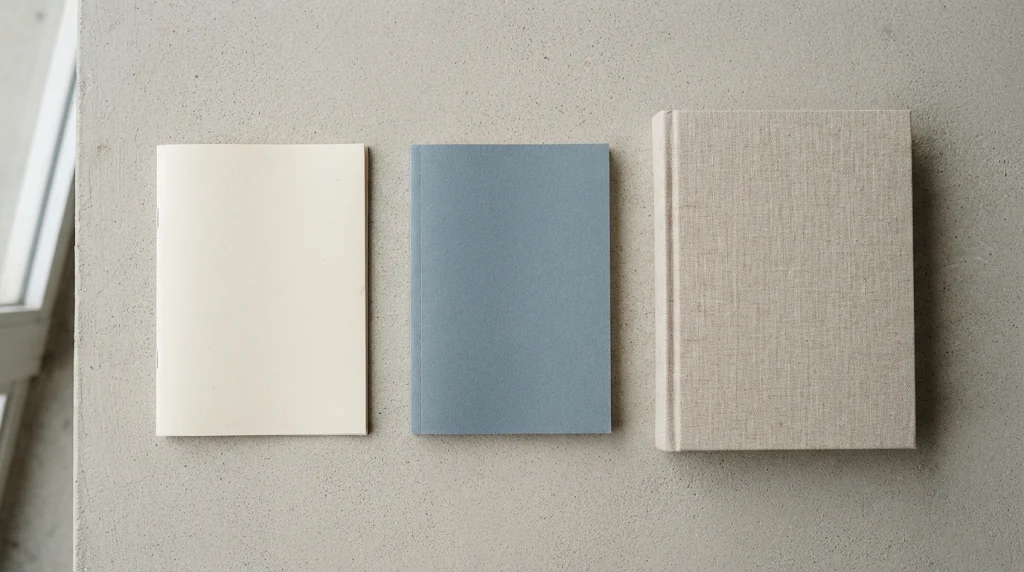
Perfect Bound vs Saddle Stitch vs Case Binding: Quick Comparison
The following table provides a starting point. Page-count limits, prices, and production schedules must be confirmed against the actual paper, equipment, quantity, and construction.
| Decision factor | Saddle stitch | Perfect binding | Case binding |
| Basic construction | Folded sheets stapled through the fold | Book block bonded into a flexible wraparound cover | Book block fitted into a separately made rigid case |
| Best starting applications | Thin catalogs, instruction booklets, event programs, comics | Product catalogs, paperbacks, reports, substantial manuals | Gift books, illustrated editions, brand books, collectible publications |
| Spine appearance | Folded edge; no conventional flat printable spine | Square spine; text depends on available width | Hardcover spine; artwork depends on case construction |
| Page-count considerations | Normally multiples of four; thickness limits capacity | Minimum usable spine thickness matters | Depends on book-block construction and manufacturing route |
| Opening behavior | Usually opens readily, although stock and thickness matter | Some content disappears into the gutter; not inherently lay-flat | Varies with sewing, adhesive, hinges, and spine construction |
| Main purchasing risk | Excessive thickness and unmanaged creep | Unsuitable adhesive, incorrect spine width, restricted opening | Assuming that every hardcover is sewn or opens flat |
These distinctions follow established commercial binding and imposition practices. They are selection guidelines, not universal production guarantees. [printninja]
What Is Saddle Stitch Binding?
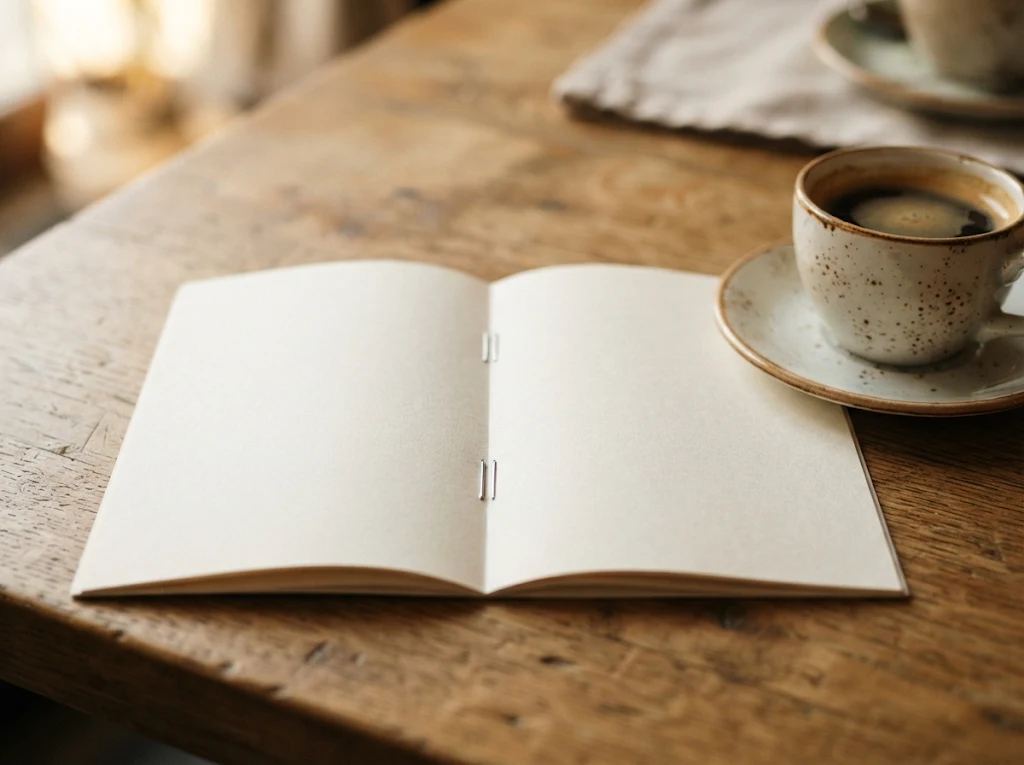
Saddle stitching brings folded sheets together as nested sections and fastens them with wire staples through the center fold. Despite the name, it normally uses no sewing thread. It is widely used for short publications such as booklets, magazines, and single-issue comics. [printninja]
When saddle stitching is the best choice
Saddle stitching is a sensible starting point when:
- Your publication is relatively thin.
- You want an accessible, lightweight format.
- Readers need to open the booklet comfortably.
- You do not need a title printed on a square spine.
- The content changes frequently, making a substantial hardcover unnecessary.
For example, a short instruction booklet accompanying a playing-card deck or jigsaw puzzle can be evaluated for saddle stitching before considering more elaborate constructions. This is an application recommendation, not a claim that every game instruction booklet should use the same binding.
Saddle stitch page counts: why multiples of four matter
One sheet folded in half creates four pages. Consequently, a conventional saddle-stitched booklet needs a total page count divisible by four. Adobe's booklet guidance confirms that software may add blank pages when the document does not meet that requirement. [helpx.adobe]
A 30-page document, for example, normally needs two additional pages to become a 32-page booklet.
Clarify whether a quotation describes:
- A self-cover booklet, using the same stock throughout.
- Interior pages plus a separate cover.
- A total page count that already includes all four cover surfaces.
This prevents two suppliers from quoting different products under the same "32-page booklet" description.
The limitation buyers often overlook: creep
As folded sheets nest inside one another, the inner sheets project farther toward the fore-edge. This displacement is called creep. Imposition settings compensate for paper thickness and folding so that the trimmed booklet maintains more consistent page positioning. [helpx.adobe]
Without appropriate compensation, page numbers, borders, and narrow outer margins can become uneven after trimming.
The purchasing lesson is straightforward: do not approve saddle stitching on page count alone. Ask the printer to evaluate the actual stock thickness and finished booklet.
What Is Perfect Binding?
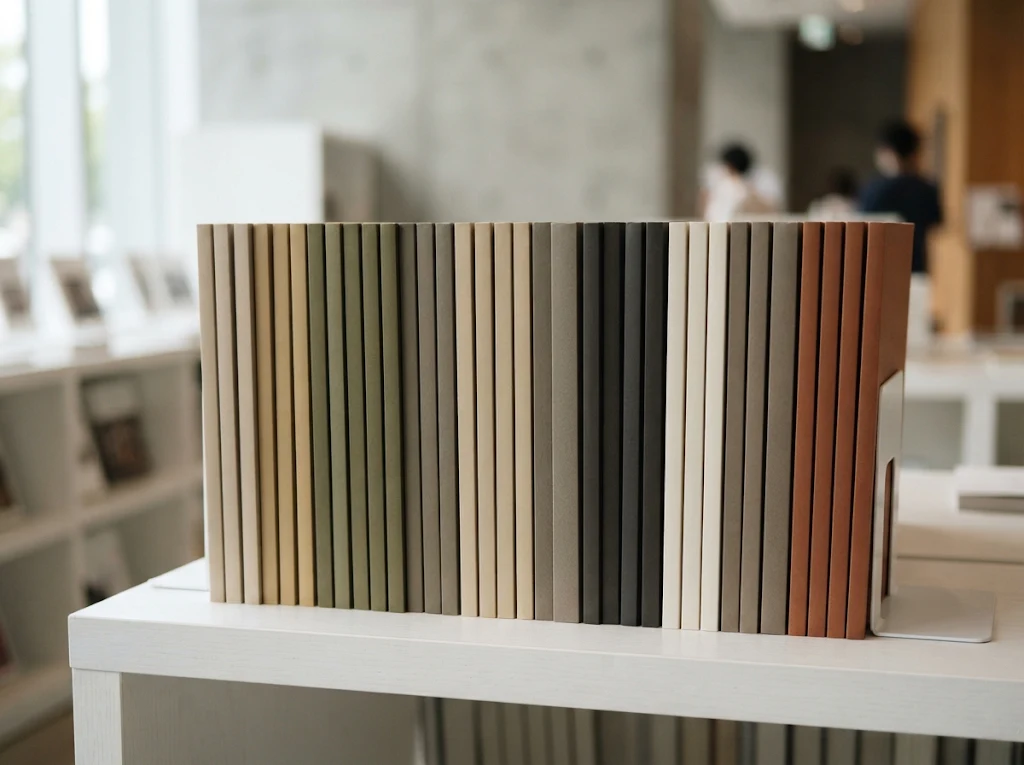
Perfect binding is an adhesive-binding method associated with paperbacks and square-spined softcover books. In a typical production route, the book block is prepared at the spine, adhesive is applied, and a flexible cover wraps around the block. Some manufacturers also offer sewn-and-glued softcover constructions, so the internal structure should be specified rather than inferred from the word "paperback." [printninja]
When perfect binding is the best choice
Perfect binding is a strong candidate for:
- Product catalogs with substantial page counts.
- Paperback books and company publications.
- Annual reports and training materials.
- Publications that need a recognizable spine on a shelf.
- Projects positioned between a thin booklet and a hardcover edition.
Its square spine creates room for identification, but spine text is practical only when the finished spine is wide enough for the printer's tolerances. Spine dimensions depend on page count and the selected paper, so the production supplier should provide the final measurement. [printninja]
Perfect binding page count: thickness matters more than a universal minimum
There is no single minimum page count that applies to every perfect-bound book.
A thinner stock creates a thinner book block than a bulkier stock at the same page count. Published printer specifications therefore vary, and minimums should be treated as supplier-specific rather than universal rules. PrintNinja explicitly notes that minimum perfect-bound page counts vary with paper weight because sufficient thickness is needed to form the spine. [printninja]
Instead of asking only, "Can you perfect bind 40 pages?" ask:
> "Can you reliably perfect bind this page count on this exact stock, and what finished spine thickness will it produce?"
That question connects the design to the manufacturing requirement.
PUR vs EVA adhesive: what buyers should know
Two common adhesive categories are EVA, or ethylene vinyl acetate, and PUR, or polyurethane reactive adhesive. They differ in bonding behavior, processing requirements, and suitability for particular substrates. [hotmelt]
PUR can be particularly useful for coated or difficult-to-bond papers. It also requires a curing period, whereas conventional EVA hot melts develop handling strength as they cool. However, adhesive selection should be based on the actual paper and printing conditions—not on an assumption that one label automatically guarantees a better book. [hotmelt]
Ask your supplier:
1. Which adhesive is included in the quotation?
2. Has it been evaluated with the proposed paper and printing process?
3. What curing or conditioning time is needed before testing and packing?
4. How will binding performance be assessed?
A crucial distinction: PUR can improve flexibility and bonding, but "PUR perfect bound" should not be accepted as an automatic promise of true lay-flat performance.
What Is Case Binding?
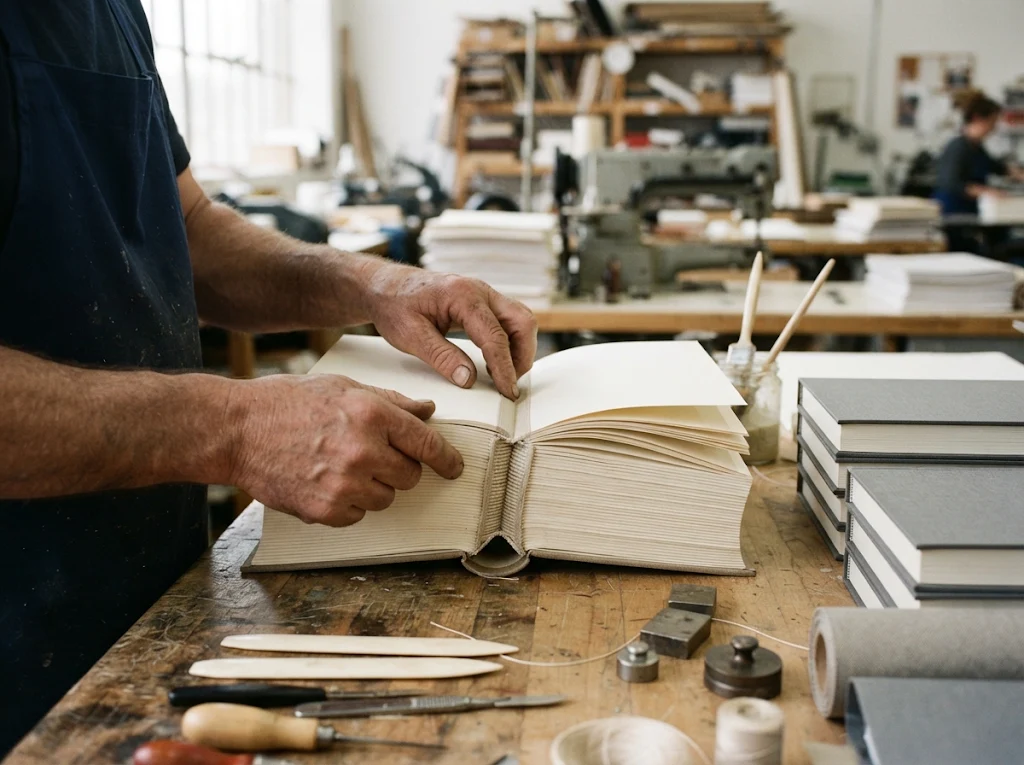
Case binding is the manufacturing term commonly used for hardcover binding. The book block is joined to a separately produced case, typically made from rigid boards covered with printed paper, cloth, or another covering material. Endpapers help connect the book block to the case. [printninja]
When case binding is the best choice
Case binding deserves consideration when the product brief prioritizes:
- A substantial hardcover presentation.
- Protection for a long-lived publication.
- A giftable or collectible format.
- Coordination with a presentation box or slipcase.
- A higher-value brand or editorial experience.
For an OEM or ODM project, the hardcover can also be considered alongside the rest of the product system: the printed book, outer packaging, inserts, cards, and accompanying materials.
That does not mean hardcover is always the best commercial choice. It means the construction should support the product's intended use and positioning.
Case bound does not automatically mean sewn
One of the most important distinctions in book procurement is that a rigid cover does not fully describe the structure inside it.
Hardcover book blocks can use different methods, including sewn and adhesive-bound constructions. A specialist bookbinding source identifies both sewing and adhesive binding within hardcover production. [advantagebookbinding]
Therefore, "hardcover book" is an incomplete specification.
Request details about:
- Book-block construction.
- Sewing, if included.
- Endpapers and their attachment.
- Spine shape and reinforcement.
- Board thickness.
- Covering material.
- Expected opening behavior.
A visually impressive cover cannot compensate for an unsuitable internal construction.
Does a hardcover book open flat?
Not necessarily.
Sewn construction can support better opening, but the finished result still depends on the full structure. Buyers should not infer an opening guarantee merely from "case bound" or "Smyth sewn." Specialist descriptions connect sewing with improved opening, but the actual production sample remains the relevant approval reference. [advantagebookbinding]
If the book contains panoramic photography, diagrams, recipes, or instructions crossing the center, make opening performance a written requirement and assess a representative sample.
Which Binding Method Is Best for Your Project?
Rather than ranking the three methods from cheapest to most luxurious, match them to the job readers need the publication to perform.
For short product catalogs and promotional booklets
Start by evaluating saddle stitching.
It is an established format for thin catalogs and magazines, but the usable page count depends on stock thickness. One printer's guidance illustrates the variation: its stated saddle-stitch capacity changes from 44 pages on a heavier text stock to 68 pages on a thinner stock. Those figures describe that printer's specifications, not an industry-wide limit. [printninja]
If your catalog feels crowded or becomes difficult to close, compare a different paper with a perfect-bound alternative.
For substantial catalogs and paperback publications
Start by evaluating perfect binding.
A square spine can help identify the publication on a shelf, while a softcover format avoids specifying a rigid case. Confirm the page count, actual paper, spine width, and adhesive before committing to cover artwork. [printninja]
The key question is whether readers can comfortably access the content near the gutter.
For gift books and premium brand publications
Start by evaluating case binding.
Then decide whether the project needs a sewn book block, a particular covering material, or coordinated packaging. Treat these as separate specification choices rather than assuming that "premium hardcover" defines them.
The value comes from a coherent product: appropriate construction, usable pages, accurate artwork, and packaging that fits the finished book.
For hands-free reference use
Do not force the decision into these three options.
If the main requirement is leaving a manual open while working, compare an explicitly engineered lay-flat construction or another format such as wire-o or spiral binding. Commercial printers list these as alternatives for applications including manuals and cookbooks. [printninja]
The best binding is sometimes outside the original shortlist.

Three Common Gaps in Book Binding Comparisons
Many introductory comparisons explain the visible differences but provide less help with the decisions that determine the finished result. The most useful improvements are to separate construction, production limits, and approval criteria.
Gap 1: treating page-count ranges as fixed rules
A range such as "up to 64 pages" is convenient, but it is not a universal engineering limit. Paper thickness changes saddle-stitch capacity, and minimum spine requirements affect perfect binding. [printninja]
A better specification names the page count and stock together, then asks the manufacturer to confirm feasibility.
Gap 2: confusing cover style with internal strength
"Paperback" and "hardcover" describe visible formats, but they do not fully specify the page attachment. Commercial suppliers describe sewn softcovers as well as different hardcover book-block constructions. [printninja]
A better quotation identifies the binding structure explicitly.
Gap 3: promising readability without checking the artwork
Binding affects access to the inner page area. A layout that looks excellent on screen may be less successful once physically bound.
A better workflow reviews a representative spread in the proposed construction before final approval. This is especially important when images, tables, or instructions cross the center.
A Practical OEM/ODM Workflow: From Brief to Approved Sample
The following workflow is a recommended purchasing framework, not a claim about a particular factory's existing inspection procedures.
Step 1: describe how the publication will be used
Write a short use-case statement.
For example:
> "This is a frequently consulted product reference book. Readers must be able to read diagrams near the center, and the book must fit inside a presentation box."
That brief communicates more than "premium printing."
Step 2: lock the page count and paper specification
State:
- Finished trim size and orientation.
- Interior page count.
- Whether the cover is counted separately.
- Interior paper type, finish, and weight.
- Cover or case material.
- Intended quantity and destination.
Where thickness affects feasibility or packaging, ask for the selected paper's caliper or a physical material reference.
Step 3: request comparable construction options
Ask suppliers to quote against the same written brief.
For a suitable project, request:
- A functional, cost-conscious option.
- A construction upgrade addressing a specific need.
- An explanation of the trade-off.
Avoid comparing quotations where one supplier includes sewn signatures, different paper, or a separate cover and another does not.
Step 4: obtain the production template before final artwork
Perfect-bound covers require project-specific spine dimensions. Hardcover artwork must also account for structural areas such as hinges and wraparound allowances. A softcover template should not be reused for a hardcover case. [printninja]
Request the template only after the relevant materials and construction are confirmed.
Step 5: define what each sample approves
A useful approval plan separates:
- Digital proof: text, pagination, and artwork review.
- Material dummy: size, thickness, paper feel, and structure.
- Printed bound sample: appearance and physical reading experience.
- Packaging sample: fit, presentation, and unpacking.
Not every project needs every stage, but every approval should have a defined purpose.
Step 6: retain a written production reference
Record the approved materials, construction, artwork version, and sample status.
This creates a clearer basis for discussing deviations than a general instruction such as "make it high quality."

Prepress Mistakes That Can Undermine the Right Binding Choice
Designing the spine before choosing the stock
Spine dimensions change with paper and page count. Obtain the production measurement rather than estimating from another book. [printninja]
Ignoring imposition requirements
Saddle stitching requires four-page increments. Other production routes may use signatures that also affect page-count planning. Adobe distinguishes saddle-stitch imposition from perfect-bound signature settings and notes that blank pages may be added where required. [helpx.adobe]
Ask the printer how files should be delivered before arranging printer spreads yourself.
Placing critical information too close to the center
For perfect-bound and hardcover books, ask the printer to review gutter requirements for the actual construction. For saddle stitching, ask how creep will be handled.
There is no useful universal margin recommendation that replaces the supplier's project-specific template and a physical review.
Confusing paper weight with paper thickness
Paper weight alone does not provide a finished spine measurement. Book design should use the selected stock and supplier-confirmed dimensions rather than a generic assumption. [printninja]
Illustrative Binding Scenarios for Brand Buyers
The following examples are hypothetical decision exercises, not XingKun customer case studies.
| Project brief | First option to evaluate | Critical question |
| 24-page instruction booklet for a puzzle set | Saddle stitch | Does the paper produce a compact booklet that fits the box? |
| 160-page wholesale product catalog | Perfect binding | Are the adhesive, spine width, and gutter suitable? |
| 96-page illustrated brand gift book | Case binding | What book-block structure delivers the intended opening experience? |
| Frequently consulted workshop guide | Lay-flat or alternative binding | Can it remain open in its actual working environment? |
The point is not that these page counts dictate the answer. They help identify which construction to evaluate first.
Request a Binding Recommendation from XingKun
For your next custom printed book project, send XingKun a brief containing the trim size, page count, paper preference, quantity, destination, packaging requirements, and intended use.
Ask for a recommendation that explains:
1. Why the proposed binding suits the publication.
2. Which construction and adhesive are included.
3. What alternatives would improve opening or presentation.
4. Which sample should be approved before production.
5. What must be finalized before the cover template is issued.
For a coordinated OEM or ODM project, include the related packaging boxes, playing cards, jigsaw puzzle components, or stickers in the same brief. This gives the discussion a complete product context rather than treating the book as an isolated item.
Conclusion
Perfect binding, saddle stitching, and case binding solve different problems. Saddle stitching is a practical starting point for slim publications. Perfect binding provides a square-spined softcover for more substantial content. Case binding adds a rigid case and broader presentation possibilities, but its internal construction still needs to be specified. [printninja]
The strongest purchasing decision connects the reader's needs with paper, page count, structure, artwork, and sample approval. Define those requirements before comparing prices, and you are more likely to receive a book that works as intended—not merely one that matches a binding label.
Frequently Asked Questions
1. What is the main difference between perfect binding and saddle stitching?
Saddle stitching staples folded sheets through the center fold. Perfect binding uses an adhesive-bound book block and a wraparound softcover to create a square spine. Saddle stitching generally serves thinner publications, while perfect binding accommodates more substantial books. [printninja]
2. Is case binding the same as hardcover binding?
Case binding is the technical term commonly used for hardcover production. However, the term does not fully identify how the pages inside are held together, so the book-block construction should be specified separately. [printninja]
3. How many pages can a saddle-stitched booklet have?
There is no universal maximum. Paper thickness and manufacturing capability affect the limit. One printer publishes different capacities for different text stocks, demonstrating why the stock must be confirmed alongside the page count. [printninja]
4. Does perfect binding always require a page count divisible by four?
Not in every production route. Some cut-sheet workflows can work in two-page increments, while folded-signature production introduces additional constraints. Confirm the required increment with the printer before finalizing pagination. [helpx.adobe]
5. Is PUR binding better than EVA binding?
PUR can be advantageous for coated or difficult-to-bond stocks, but the right choice depends on paper compatibility, production conditions, and performance requirements. Ask for an adhesive recommendation supported by a representative sample rather than selecting by adhesive name alone. [hotmelt]
6. Will a case-bound book automatically lie flat?
No. Hardcover construction alone does not guarantee flat opening. The book-block method and complete structure matter; inspect a representative sample if opening behavior is essential. [advantagebookbinding]
7. Can the same cover artwork be used for perfect binding and case binding?
Not without adjustment. Perfect-bound artwork needs the correct spine measurement, while hardcover artwork also needs construction-specific allowances for areas such as hinges and foldovers. Request a separate production template. [printninja]
8. Which binding is best for a custom catalog?
Begin with saddle stitching for a thin catalog and perfect binding for a more substantial catalog that benefits from a square spine. Consider case binding when a rigid-cover presentation supports the publication's purpose. Confirm the final choice using the actual paper, page count, and reading requirements. [printninja]


