Content Menu
● What "Waterproof" Really Means
● Best Materials for Bottles, Cars, and Outdoor Use
● Why Lamination Matters More Than You Think
● How to Choose the Right Adhesive
>> Permanent adhesive
>> Removable adhesive
>> High-tack adhesive
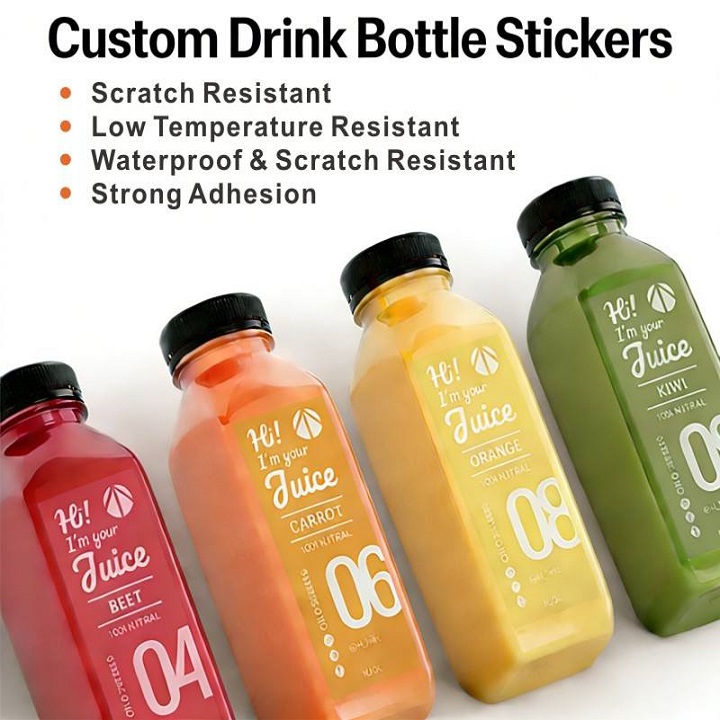
● Waterproof Stickers for Bottles
>> Practical bottle-label specification
● Waterproof Stickers for Cars
>> Car sticker material guide
● Waterproof Stickers for Outdoor Use
● A Practical Testing Process Before Bulk Production
>> Recommended 7-step validation test
● Common Failure Modes and How to Prevent Them
● Custom Waterproof Stickers: What to Send Your Printer
● Cost, MOQ, and Production Considerations
● Sustainability and Material Selection
● Why Work With an Experienced Manufacturer
● Conclusion
● FAQ
>> 1. Are waterproof stickers safe for dishwasher use?
>> 2. How long do waterproof car stickers last?
>> 3. Can waterproof stickers be used on plastic bottles?
>> 4. What is the difference between waterproof and water-resistant stickers?
>> 5. Do waterproof stickers fade in the sun?
>> 6. Can I remove a waterproof car sticker without damaging paint?
● References
Waterproof stickers for bottles, cars, and outdoor use must do more than resist a splash of water. They need the right combination of vinyl or BOPP film, UV-resistant ink, protective lamination, and an adhesive matched to the surface. For brands, retailers, and product manufacturers, a poorly specified sticker can fade, peel, smear, or leave adhesive residue—damaging both the product experience and brand perception.
As a custom printing and packaging manufacturer, XingKun produces waterproof labels and stickers for beverage bottles, cosmetics, outdoor equipment, vehicles, promotional campaigns, and industrial products. This guide explains how to choose a sticker that survives rain, sunlight, handling, refrigeration, and repeated cleaning—without overpaying for durability you do not need.
What "Waterproof" Really Means
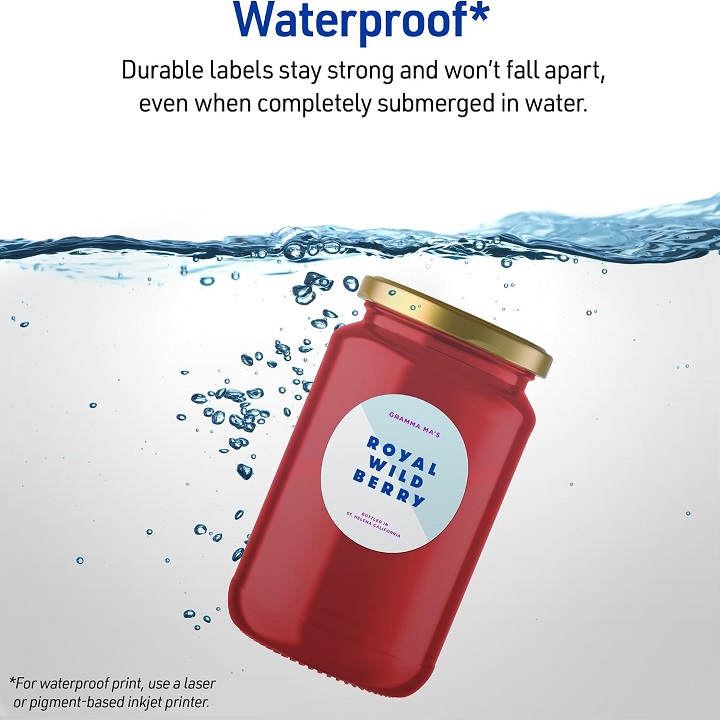
"Waterproof" is often used loosely in the sticker industry. In practice, it should describe a complete label system, not just the face material.
A truly durable waterproof sticker includes:
- A synthetic facestock, such as vinyl/PVC, BOPP, or PET/polyester
- Water-resistant ink, typically UV-cured, solvent-based, or protected by lamination
- A compatible adhesive, usually permanent acrylic for long-term outdoor use
- A protective finish, such as gloss, matte, or luster lamination
- Correct application conditions, including a clean, dry surface and adequate adhesive curing time
Vinyl itself does not absorb water, but the printed surface can still be vulnerable. An unlaminated digital print may resist rain initially, yet abrasion, sunlight, dishwashing, and repeated handling can wear the ink layer. In other words, a waterproof film with vulnerable ink is not a fully waterproof sticker. [djblabel]
Best Materials for Bottles, Cars, and Outdoor Use
The best material depends on where the sticker will be used, how long it must last, and whether it will face abrasion or sunlight.
| Application | Recommended material | Adhesive | Protective finish | Typical use case |
| Beverage bottles and jars | BOPP or vinyl | Permanent acrylic | Gloss or matte lamination | Water bottles, cosmetics, sauces, chilled drinks |
| Cars, windows, and bumpers | Cast or polymeric vinyl | Permanent acrylic | UV laminate | Vehicle decals, fleet branding, outdoor signage |
| Outdoor equipment | Vinyl or polyester | Permanent acrylic | UV laminate | Camping gear, sports equipment, tools |
| Short-term promotions | Calendered vinyl or BOPP | Removable acrylic | Optional laminate | Seasonal campaigns, window decals, event branding |
| Industrial or harsh environments | Polyester/PET | High-tack permanent adhesive | Lamination | Machinery, chemical containers, outdoor assets |
BOPP is often the practical choice for bottles because it resists moisture, maintains a clean appearance, and works well for high-volume roll labels. Vinyl is generally better for vehicle graphics and outdoor decals because it conforms better to curved surfaces and offers stronger weather resistance. Polyester is preferred where oils, chemicals, heat, or abrasion are involved. [stickernation.co]
XingKun offers vinyl, polyester, clear, die-cut, roll, and specialty label options, with custom printing and finishing tailored to the intended application. [xkdisplay]
Why Lamination Matters More Than You Think
Many buyers focus on the word "waterproof" and overlook the most important durability layer: lamination.
A clear laminate protects the printed ink from:
- UV radiation and fading
- Scratches and abrasion
- Moisture penetration
- Chemical exposure
- Repeated cleaning and handling
For car stickers and outdoor signage, lamination is especially important because sunlight—not rain—is usually the main cause of premature failure. UV-cured ink forms a durable printed layer, but it still benefits from a protective overlaminate when the sticker faces direct sun, wind-blown debris, or frequent contact. [4over4]
Industry guidance commonly rates laminated permanent vinyl at 3–5 years of outdoor exposure, while premium cast vinyl systems can reach substantially longer service lives when correctly specified. Avery Dennison, for example, lists its MPI 1900 AP cast vinyl at up to 7 years unprinted in vertical outdoor exposure, while its MPI 1005 Supercast material is rated up to 10 years unprinted. These ratings refer to the unprinted film; actual printed sticker life depends on ink, lamination, application surface, and exposure conditions. [label.averydennison]
How to Choose the Right Adhesive
The adhesive is as important as the film. A beautiful sticker will fail if it cannot bond properly to the bottle, vehicle panel, or product surface.
Permanent adhesive
Use permanent acrylic adhesive for:
- Long-term product labels
- Vehicle decals
- Outdoor equipment
- Safety and compliance labels
- Bottles exposed to moisture or refrigeration
Permanent adhesive is difficult to remove once fully cured, making it suitable for branding and identification where the label must remain in place. [xkdisplay]
Removable adhesive
Use removable adhesive for:
- Seasonal promotions
- Window displays
- Temporary product labels
- Event giveaways
- Short-term vehicle graphics
Removable vinyl is useful when clean removal matters, but it is not the best choice for a bottle label that must survive dishwashing, condensation, or long-term outdoor exposure. [xkdisplay]
High-tack adhesive
Choose high-tack adhesive for difficult surfaces such as:
- Low-energy plastics
- Textured surfaces
- Powder-coated metal
- Rough or slightly curved surfaces
- Cold-storage packaging
For low-surface-energy plastics such as LDPE, HDPE, PP, PE, and PU, a premium cast vinyl with a suitable permanent acrylic adhesive is often more reliable than a standard paper label. [label.averydennison]
Waterproof Stickers for Bottles
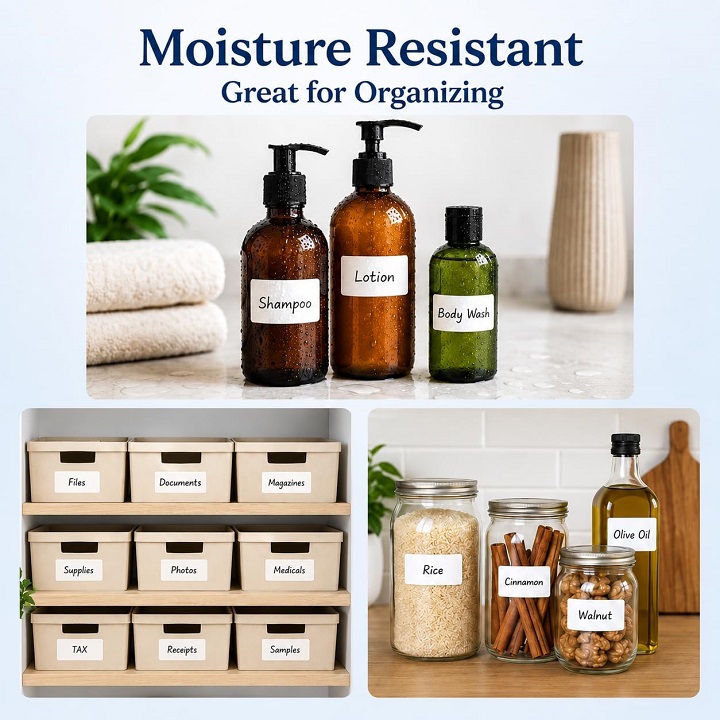
Bottle stickers face a demanding combination of moisture, temperature changes, handling, and sometimes refrigeration. A label that looks perfect on a dry shelf may fail after condensation, ice water, oil, or repeated wiping.
For bottles, prioritize:
- BOPP or vinyl facestock rather than paper
- Permanent acrylic adhesive
- Gloss lamination for a premium, wipe-clean appearance
- Matte lamination for a softer, modern look
- Waterproof ink or protective coating
- Testing on the actual bottle material
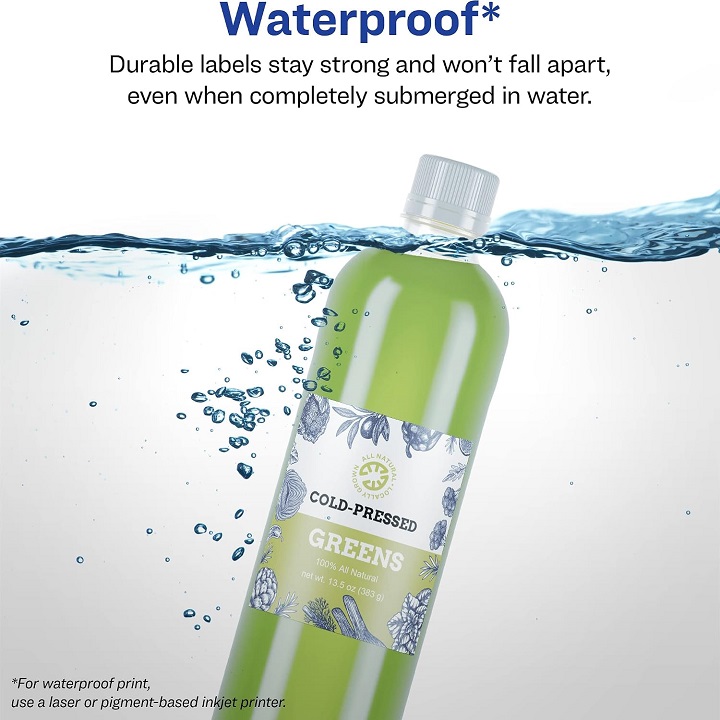
XingKun notes that vinyl or BOPP labels are suitable for chilled or humid environments and can withstand extended water exposure without peeling or smudging, while standard paper labels are not waterproof and can lose adhesion after prolonged moisture exposure. [xkdisplay]
Practical bottle-label specification
For a reusable water bottle, beverage brand, or cosmetic container, a strong starting specification is:
1. Material: White, clear, or metallic BOPP/vinyl
2. Adhesive: Permanent acrylic
3. Printing: CMYK with UV-cured ink
4. Finish: Gloss or matte lamination
5. Shape: Die-cut to follow the bottle curve
6. Application: Clean, dry surface; avoid applying over condensation
For products that will be submerged, placed in ice buckets, or washed frequently, specify water-resistant adhesive and laminated print explicitly during quoting. [djblabel]
Waterproof Stickers for Cars
Car stickers require a different engineering approach. They face UV exposure, rain, temperature swings, car washes, road debris, and curved body panels.
For cars, choose:
- Cast vinyl for complex curves and long-term vehicle graphics
- Polymeric calendered vinyl for flat or gently curved surfaces
- Permanent acrylic adhesive
- UV-protective laminate
- Professional application to avoid bubbles, lifting edges, and trapped moisture
Avery Dennison describes premium cast vinyl films as suitable for long-term outdoor signage and fleet applications because of their conformability, opacity, and outdoor performance. [label.averydennison]
Car sticker material guide
| Need | Best choice | Why |
| Complex curves, bumpers, mirrors | Cast vinyl | Better conformability and long-term outdoor performance |
| Flat vehicle panels | Polymeric calendered vinyl | Durable and cost-effective for many fleet applications |
| Short-term campaign | Removable calendered vinyl | Easier removal after the promotion ends |
| Long-term branding | Permanent cast vinyl with laminate | Better resistance to sun, weather, and abrasion |
| Window graphics | Clear or white vinyl | Allows transparency or opaque branding as needed |
For a vehicle decal, do not assume that every "vinyl sticker" is suitable. A low-cost calendered vinyl may work for a short campaign, while a fleet graphic intended to remain attractive for years should use a higher-grade cast or polymeric film with UV lamination. [stickergenius]
Waterproof Stickers for Outdoor Use
Outdoor stickers must survive more than water. The real test is the combination of sunlight, temperature change, abrasion, and time.
Outdoor-grade stickers should be specified with:
- UV-resistant ink
- UV-stable film
- Protective lamination
- Permanent adhesive
- Edge sealing or die-cut precision to reduce lifting
- Testing under the actual environmental conditions
A laminated vinyl sticker can maintain its appearance for years outdoors, but the exact lifespan varies by climate, surface, orientation, and handling. Industry sources commonly estimate 3–5 years for laminated permanent vinyl outdoors, while higher-grade cast systems can be rated for 7–10 years unprinted by material manufacturers. [djblabel]
A Practical Testing Process Before Bulk Production
Sampling is one of the most valuable steps in a custom sticker project. It reduces the risk of choosing the wrong adhesive, finish, or material for your real application.
XingKun recommends sample testing on the actual product surface—such as glass, plastic, or metal—and exposing samples to water or sunlight before placing a bulk order. The company notes that sampling can reduce the need for reprints and help avoid issues related to color, adhesive strength, or sizing. [xkdisplay]
Recommended 7-step validation test
1. Print a sample using the intended material, ink, adhesive, and laminate.
2. Apply it to the actual bottle, vehicle panel, or product surface.
3. Wait 24–72 hours before exposing it to water, allowing the adhesive to build bond strength. [4over4]
4. Run a water test by wiping, splashing, or briefly submerging the sample according to the real use case.
5. Test abrasion with a soft cloth, sponge, or glove to simulate handling.
6. Expose it to sunlight for several days or use accelerated UV testing for critical applications.
7. Review edge lift, color shift, ink wear, and adhesive residue before approving mass production.
This process is especially important for bottles, cosmetics, outdoor gear, and vehicle graphics, where a small material change can create a major difference in performance.
Common Failure Modes and How to Prevent Them
| Problem | Likely cause | Prevention |
| Ink fades in sunlight | No UV lamination or low UV resistance | Use UV-resistant ink and UV laminate |
| Sticker peels at the edges | Poor adhesive match or contaminated surface | Use permanent/high-tack adhesive and clean the surface |
| Print smears when wet | Unprotected ink layer | Add lamination or use UV-cured ink |
| Sticker wrinkles on curves | Inappropriate film for the shape | Use cast vinyl for complex curves |
| Adhesive residue after removal | Permanent adhesive used for temporary graphics | Specify removable adhesive |
| Label lifts in the refrigerator | Adhesive not suited to cold or condensation | Use cold-resistant BOPP/vinyl and permanent adhesive |
| Sticker scratches easily | No protective finish | Apply gloss, matte, or luster lamination |
The most common mistake is treating "waterproof" as a single feature. In reality, durability comes from the interaction between film, ink, adhesive, lamination, surface preparation, and application method. [djblabel]
Custom Waterproof Stickers: What to Send Your Printer
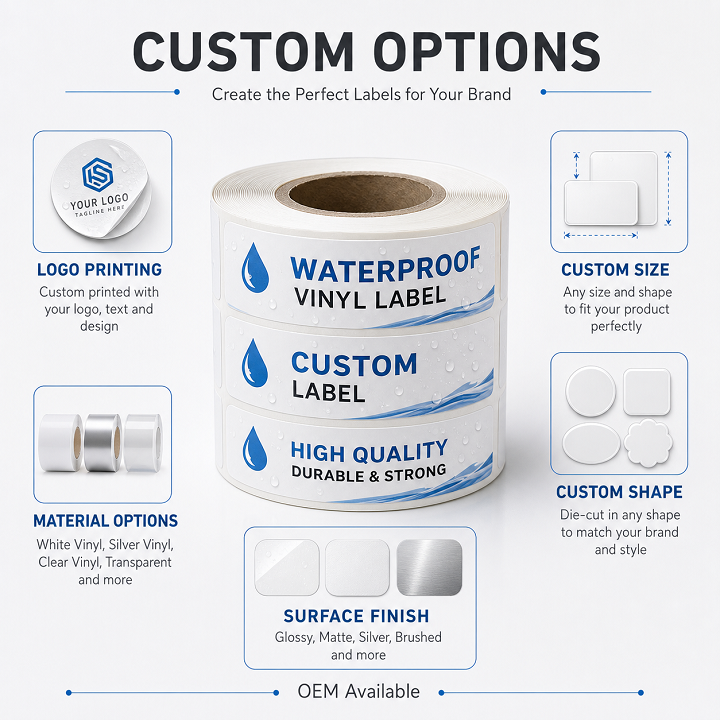
To receive an accurate quote and avoid production delays, provide your supplier with a clear technical brief.
Include:
- Final use environment: indoor, outdoor, refrigerated, vehicle, marine, or industrial
- Surface type: glass, PET, HDPE, metal, painted car panel, textured plastic, etc.
- Expected lifespan: 6 months, 1 year, 3 years, or longer
- Exposure conditions: rain, direct sun, abrasion, oil, chemicals, freezing, or dishwashing
- Size and shape: dimensions, die-cut outline, bleed, and safe margins
- Color requirements: Pantone references, CMYK artwork, and brand color standards
- Finish: gloss, matte, luster, clear, holographic, foil, or spot UV
- Application method: hand application, labeling machine, or professional vehicle installation
- Quantity and roll format: sheet, roll, individual pieces, or transfer-tape application
XingKun supports custom sticker production through artwork preparation, material selection, printing, optional lamination, die-cutting, quality control, and packaging. [xkdisplay]
Cost, MOQ, and Production Considerations
Custom waterproof stickers do not need to be expensive, but durability features do affect cost. Lamination, specialty adhesives, premium cast vinyl, and complex die-cutting increase unit cost, while larger roll quantities usually reduce it.
XingKun's published guidance indicates that moving from 500 to 1,000 stickers can reduce per-piece cost by 15–25%, while increasing from 1,000 to 5,000 can reduce cost by another 20–30%. Roll labels in quantities of 10,000–50,000 can reduce per-label cost by 30–50% compared with small sheet runs, particularly for BOPP or vinyl. [xkdisplay]
For brands testing a new product, digital printing is useful for short runs and fast turnaround. For established products with stable artwork, offset or flexographic roll-label production is often more cost-efficient at scale. [xkdisplay]
Sustainability and Material Selection
Sustainability is increasingly important in packaging and labeling. Brands should balance durability with environmental impact rather than choosing a material solely because it is labeled "eco-friendly."
Practical options include:
- Thin-gauge BOPP or vinyl to reduce material use
- Recyclable-compatible substrates where local recycling infrastructure supports them
- Water-based or low-VOC ink systems where compatible with the application
- Right-sized labels to minimize waste
- Durable labels that reduce replacement frequency and product waste
A longer-lasting label can also be a sustainability choice. If a sticker fails early and the product must be relabeled, repackaged, or replaced, the environmental cost may be higher than selecting a more durable material initially.
Why Work With an Experienced Manufacturer
A reliable manufacturer should not simply ask, "What size sticker do you need?" It should ask about the real-world environment in which the sticker must perform.
XingKun positions itself as a custom printing and packaging manufacturer with 20 years of production experience, offering customized stickers, labels, packaging boxes, playing cards, printed books, jigsaw puzzles, and related printed products. Its sticker and label capabilities include vinyl, polyester, foil, clear, die-cut, roll, security, barcode, and specialty label formats. [xkdisplay]
For international brands, wholesalers, and product manufacturers, the value of an experienced OEM/ODM partner lies in translating a marketing idea into a production-ready specification: correct material, adhesive, ink system, finish, die-cut tolerance, color control, and packaging format.
Conclusion
Waterproof stickers for bottles, cars, and outdoor use perform best when the material, adhesive, ink, and protective finish are selected as one system. For bottles, BOPP or vinyl with permanent acrylic adhesive and lamination is usually the strongest choice. For cars and outdoor graphics, cast or polymeric vinyl with UV-resistant printing and a protective laminate delivers better long-term performance.
Before placing a bulk order, test samples on the actual surface and under realistic conditions. Specify whether the sticker must resist rain only, repeated washing, direct sunlight, refrigeration, abrasion, or full immersion. The right specification protects your brand, reduces reprints, and ensures your custom stickers continue to look professional long after application.
Ready to create durable custom waterproof stickers for your bottles, vehicles, or outdoor products? Contact XingKun for a tailored OEM/ODM quotation, material recommendation, and pre-production sample.
FAQ
1. Are waterproof stickers safe for dishwasher use?
Some laminated vinyl or BOPP stickers can withstand occasional dishwasher exposure, but dishwasher safety is not guaranteed for every waterproof sticker. High heat, strong detergent, and repeated water jets can degrade adhesive and print layers. For dishwashers, specify laminated print, water-resistant adhesive, and dishwasher testing before production. [djblabel]
2. How long do waterproof car stickers last?
A laminated permanent vinyl car sticker commonly lasts 3–5 years outdoors, while premium cast vinyl systems may be rated for longer unprinted outdoor exposure—up to 7–10 years in manufacturer data. Actual life depends on sun exposure, climate, surface preparation, lamination, and washing frequency. [djblabel]
3. Can waterproof stickers be used on plastic bottles?
Yes. Vinyl and BOPP stickers are commonly used on plastic bottles, but the adhesive must match the plastic type. For low-surface-energy plastics such as HDPE, LDPE, PP, and PE, use a permanent acrylic adhesive and test a sample before mass production. [xkdisplay]
4. What is the difference between waterproof and water-resistant stickers?
A water-resistant sticker can handle splashes, humidity, or brief moisture exposure. A waterproof sticker is designed to withstand more sustained water contact, though its performance still depends on adhesive, lamination, and whether it will be submerged. For ice buckets, marine environments, or dishwashers, request a water-resistant adhesive and laminated print. [djblabel]
5. Do waterproof stickers fade in the sun?
They can fade if the ink and surface finish are not UV-resistant. A UV laminate helps protect the printed image from sunlight, scratches, and moisture. For vehicles, windows, and outdoor signage, UV protection should be treated as essential rather than optional. [printingview]
6. Can I remove a waterproof car sticker without damaging paint?
It depends on the adhesive and how long the sticker has been applied. Removable vinyl is designed for easier removal, while permanent adhesive is intended for long-term bonding. For valuable vehicle paint, use a removable automotive-grade vinyl and follow professional removal procedures.
References
1. DJB Label, "Custom Vinyl Stickers: Materials, Finishes & Ordering Guide" — [https://www.djblabel.com/resources/custom-vinyl-stickers-buyers-guide-materials-finishes-durability-how-to-order/]
2. PrintingView, "Waterproof and Vinyl Sticker Printing Guide for Outdoor Use" — [https://www.printingview.com/blog/1002_waterproof-and-vinyl-sticker-printing-guide-for-outdoor-use.html]
3. Sticker Nation, "Waterproof Stickers & Labels: Materials, Durability & Outdoor Use" — [https://stickernation.co.uk/knowledge-base/waterproof-stickers-labels-materials-durability-outdoor-use/]
4. Stickers.com, "Can Stickers Get Wet? Waterproof vs. Water-Resistant Stickers" — [https://www.stickers.com/c/can-stickers-get-wet-understanding-waterproof-vs-water-resistant-stickers]
5. 4OVER4, "How to Choose Outdoor Sticker Materials That Survive Sun and Rain" — [https://www.4over4.com/guide/how-to-choose-outdoor-sticker-materials-that-survive-sun-and-rain]
6. Sticker Genius, "Waterproof Stickers" — [https://www.stickergenius.com/products/waterproof-stickers/]
7. 4OVER4, "Custom Waterproof Stickers, How to Order" — [https://www.4over4.com/guide/how-to-order-waterproof-stickers]
8. Avery Dennison, "MPI 1900 AP (A-Polar) Product Data Sheet" — [https://label.averydennison.com/content/dam/averydennison/graphics/ap/en/Product-Data-Sheets/Digital/Digital-Imaging-Media/MPI-1906-A-Polar.pdf]
9. Avery Dennison, "MPI 1005 SC Easy Apply Product Data Sheet" — [https://label.averydennison.com/content/dam/averydennison/graphics/ap/en/Product-Data-Sheets/Digital/Digital-Imaging-Media/Avery_MPI_1005_SC_Easy_Apply_PDS_Rev_0.pdf]
10. Avery Dennison, "DOL 1000 Series Overlaminate Product Data Sheet" — [https://label.averydennison.com/content/dam/averydennison/graphics/ap/en/Product-Data-Sheets/Digital/Avery_DOL_1000_Series_PDS_Rev_0.pdf]
11. XingKun, "Stickers & Labels" — [https://www.xkdisplay.com/stickers-labels.html]
12. XingKun, "Custom Labels Manufacturer & Supplier" — [https://www.xkdisplay.com/custom-labels.html]
13. XingKun, "Waterproof Labels" — [https://www.xkdisplay.com/waterproof-labels.html]


