Content Menu
● What Are Custom Embossed Labels?
>> Embossing and Debossing Differences
● Why Use Custom Embossed Labels?
>> 1. Create Tactile Brand Recognition
>> 2. Improve Premium Positioning
>> 3. Make Packaging More Visible
>> 4. Strengthen Authenticity and Product Differentiation
● Choosing the Right Label Material
>> Material Comparison
>> Paper Labels for Sharp Relief
>> Synthetic Labels for Moisture Resistance
● Popular Embossed Label Finishes
>> Blind Embossed Labels
>> Foil Embossed Labels
>> Pattern Embossing
>> Multi-Level Embossing
● Artwork Guidelines for Custom Embossed Labels
>> Use Vector Artwork
>> Keep Raised Elements Bold Enough
>> Separate the Emboss Layer
>> Keep Important Details Away from the Cut Edge
● A Practical Pre-Production Workflow
>> Step 1: Define the Product Environment
>> Step 2: Select the Main Embossed Element
>> Step 3: Decide on Additional Finishes
>> Step 4: Request a Digital Proof and Physical Sample
>> Step 5: Approve a Production Specification
● Cost Factors and Order Planning
>> Main Cost Drivers
>> Short-Run Alternative: High-Build Effects
● Common Production Problems
>> The Relief Looks Too Soft
>> The Label Cracks or Tears
>> Foil and Embossing Are Misaligned
>> The Label Does Not Adhere Properly
● Sustainability and Compliance Considerations
● How XingKun Supports OEM and ODM Projects
● Request a Custom Embossed Label Quote
● Conclusion
● Frequently Asked Questions
>> 1.What are custom embossed labels?
>> 2.Are embossed labels waterproof?
>> 3.What is the difference between embossed and debossed labels?
>> 4.Can logos and text be embossed?
>> 5.Can embossing be combined with foil stamping?
>> 6.Are embossed labels suitable for automatic application?
>> 7.How much do custom embossed labels cost?
>> 8.Is embossing suitable for short-run products?
>> 9.Can embossed labels be made with sustainable materials?
● References
Custom embossed labels add raised logos, lettering, borders, and patterns to product packaging. Unlike flat printed labels, they create a physical surface that customers can see and feel. For brands selling cosmetics, wine, candles, specialty foods, gifts, and luxury goods, this tactile finish can strengthen shelf appeal and make packaging feel more distinctive.
For international brands, wholesalers, and manufacturers, the best result comes from treating embossing as a complete packaging decision—not simply as an attractive finishing option. Material selection, artwork structure, die design, adhesive performance, application method, order quantity, and product environment all affect the final result.
As a China-based OEM and ODM manufacturer, Shenzhen XingKun Packing Products Co., Ltd. helps brands develop customized printed packaging products, including labels, packaging boxes, stickers, playing cards, jigsaw puzzles, and printed books. This guide explains how to plan and manufacture custom embossed labels with better visual quality, production reliability, and commercial value.
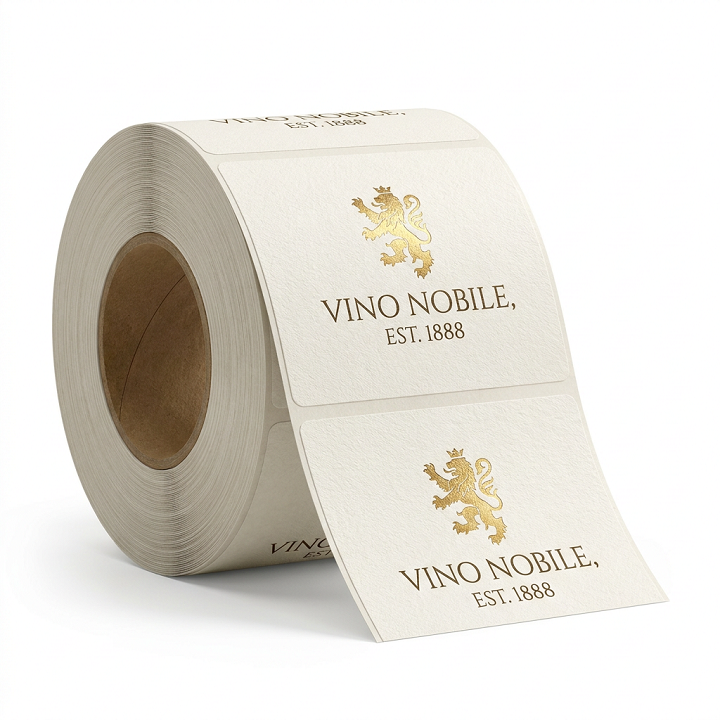
What Are Custom Embossed Labels?
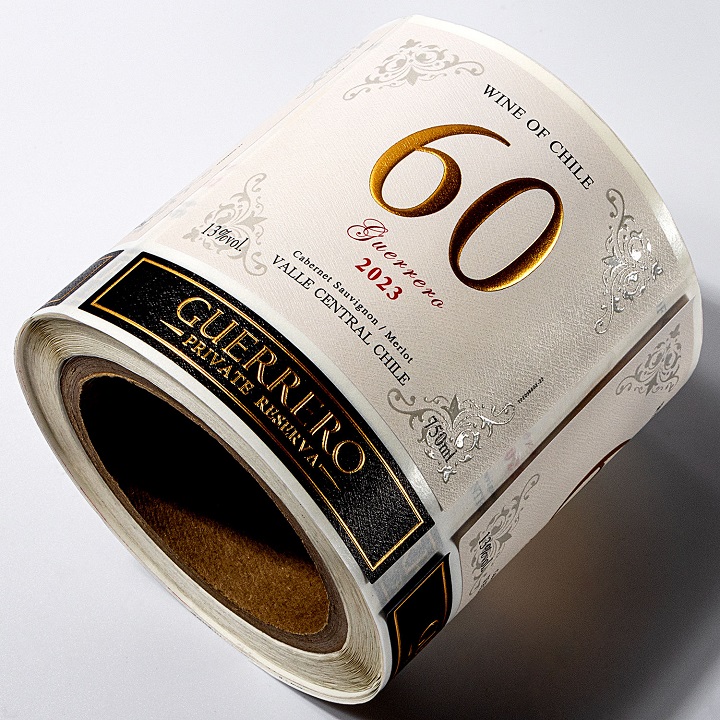
Custom embossed labels are printed or decorative labels with a raised three-dimensional design. The effect is produced by pressing the label material between matched male and female dies. The pressure reshapes the substrate and creates a raised logo, text, image, frame, or pattern.
Embossing may be applied to:
- Brand names and logos.
- Product icons and symbols.
- Decorative borders.
- Geometric patterns.
- Security marks and authenticity details.
- Small areas combined with foil stamping.
- An entire label surface for a textured background.
Embossing is different from printing. Printing changes the color or image of the label, while embossing changes its physical surface. It is also different from hot foil stamping. Foil stamping transfers a metallic or colored foil using heat and pressure; embossing creates relief. The two processes can be combined to produce foil embossed labels with both shine and depth. [cubitpackaging]
Embossing and Debossing Differences
| Finish | Surface effect | Typical visual impression | Common applications |
| Embossing | Design rises above the surface | Premium, tactile, eye-catching | Logos, product names, luxury packaging |
| Debossing | Design is pressed into the surface | Subtle, refined, artisanal | Thick paper, leather-style packaging, premium cards |
| Blind embossing | Raised design without ink or foil | Minimalist, elegant, understated | Luxury cosmetics, stationery, seals |
| Foil embossing | Metallic foil combined with raised relief | Bright, luxurious, high contrast | Wine, spirits, gift products, premium boxes |
The correct choice depends on your brand identity. Embossing attracts attention through touch and light, while debossing often communicates restraint and craftsmanship.
Why Use Custom Embossed Labels?
A well-designed embossed label can support both branding and conversion. It does not replace strong product information, but it can make the package more memorable at the point of selection.
1. Create Tactile Brand Recognition
Customers can recognize a raised logo or distinctive pattern even when the product is viewed from an angle or touched in low light. This creates another sensory connection between the customer and the brand.
A flat label communicates through sight. An embossed label communicates through sight, touch, shadow, and surface contrast.
2. Improve Premium Positioning
Embossing is widely used for products that depend on perceived quality, such as:
- Luxury skincare.
- Perfume and fragrance.
- Wine and spirits.
- Handmade candles.
- Gourmet food.
- Chocolate and confectionery.
- Premium tea and coffee.
- Jewelry and gift packaging.
- Boutique fashion products.
- Corporate presentation materials.
A raised logo can make an ordinary label feel more carefully engineered. However, the effect works best when it supports the product's actual positioning. Excessive decoration may make the packaging appear crowded rather than premium.
3. Make Packaging More Visible
Raised surfaces catch light differently as the package moves. This can create contrast on retail shelves, especially when embossing is combined with:
- Matte lamination.
- Soft-touch coating.
- Metallic gold or silver foil.
- Spot UV.
- Textured paper.
- Dark ink on a light substrate.
- Light ink on a dark substrate.
The most effective approach is usually selective. Emboss one important focal element instead of raising every design feature.
4. Strengthen Authenticity and Product Differentiation
Embossed labels can be used as part of a visual identity system. For example, a wine producer may emboss a crest, while a skincare brand may emboss a simplified monogram. These details can make imitation more difficult when combined with foil, serialized printing, QR codes, or other authentication features.
Embossing alone should not be presented as a complete anti-counterfeiting system. It is better described as a brand differentiation and physical authentication detail unless additional security technology is included.
Choosing the Right Label Material
The substrate determines how sharply the raised effect appears and how well the label performs in real conditions. Paper usually produces more defined embossing, while synthetic films offer stronger moisture and oil resistance but may create softer relief.
Material Comparison
| Material | Embossing definition | Moisture resistance | Suitable products |
| Uncoated textured paper | Excellent | Moderate | Wine, spirits, premium food |
| Estate-style paper | Excellent | Moderate to good with treatment | Gourmet products and luxury beverages |
| Matte coated paper | Good | Moderate | Boxes, jars, candles, retail packaging |
| Metallic foil paper | Excellent and reflective | Moderate | Chocolate, honey, gift products |
| White BOPP film | Moderate and rounded | High | Cosmetics, shampoo, oils |
| Clear BOPP film | Moderate | High | Transparent or “no-label” packaging |
| Synthetic paper | Moderate to good | High | Products requiring durability and cleanability |
Paper Labels for Sharp Relief
Uncoated and textured papers often hold a deep, crisp impression because their fibers can be compressed and shaped. Textured stocks also create a useful contrast between the natural surface and the raised design.
They are appropriate for:
- Premium bottle labels.
- Dry food jars.
- Luxury gift products.
- Candle packaging.
- Product seals.
- Folding carton decoration.
If the product will be stored in an ice bucket, refrigerator, bathroom, or humid warehouse, ask the manufacturer about wet-strength treatment, protective coating, and adhesive compatibility.
Synthetic Labels for Moisture Resistance
BOPP and other synthetic films are suitable for products exposed to:
- Water.
- Oil.
- Bathroom humidity.
- Frequent handling.
- Refrigeration.
- Condensation.
- Cosmetic ingredients.
However, plastic has a degree of material memory. After pressure is removed, the film may partially return toward its original shape. The embossing may therefore look softer and more rounded than on paper. [cubitpackaging]
The practical decision is simple:
- Choose paper when embossing clarity and tactile depth are the priority.
- Choose film when moisture, oil, and durability are more important.
- Request a physical sample when both requirements are critical.
Popular Embossed Label Finishes
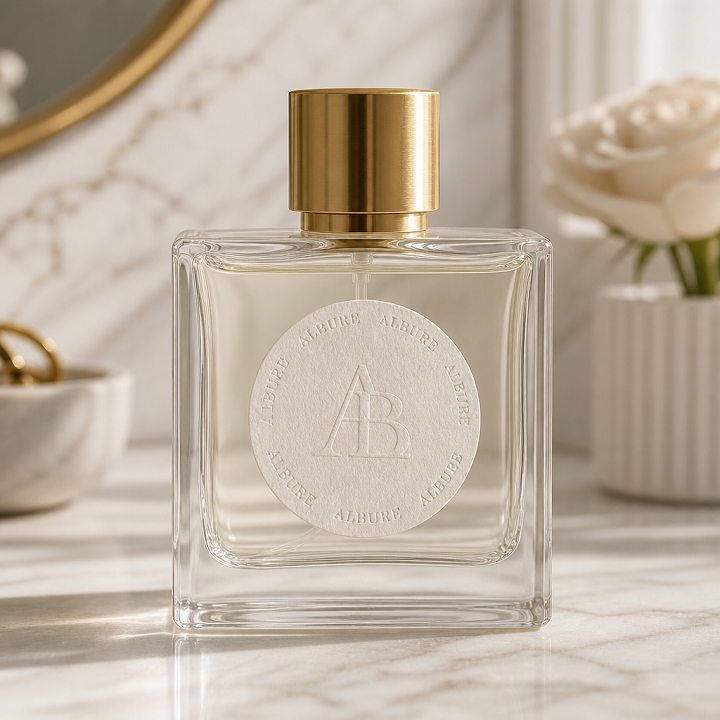
Blind Embossed Labels
Blind embossing creates a raised design without ink or foil on the embossed area. The effect depends on shadows and changes in light.
This finish works well for:
- Minimalist logos.
- Tonal patterns.
- Luxury stationery.
- Premium box seals.
- White-on-white packaging.
- High-end cosmetic labels.
Blind embossing is subtle, so the paper color and texture are important. A slightly colored or textured stock may show the relief more clearly than bright white smooth paper.
Foil Embossed Labels
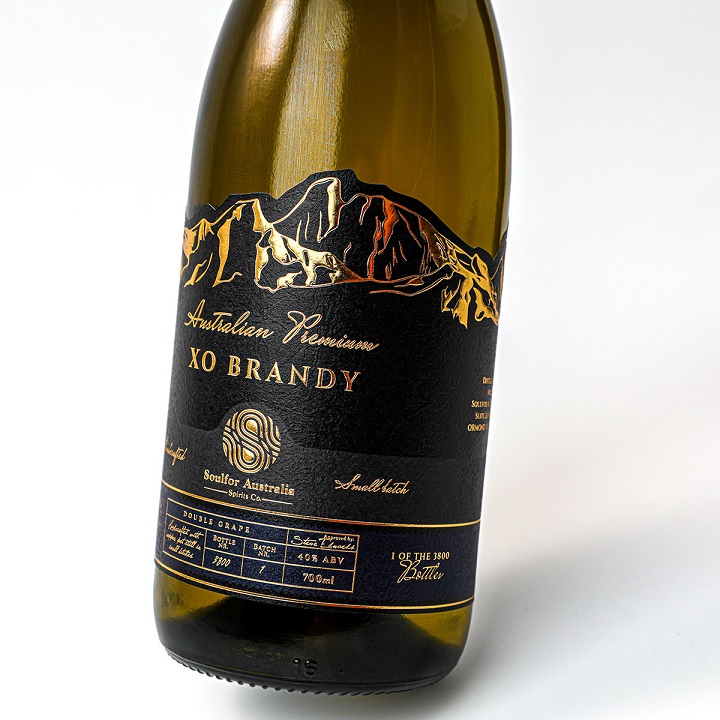
Foil embossing combines a metallic or colored foil with raised relief. Gold and silver are common, but holographic, copper, black, and custom-color foils are also possible depending on the production process.
This option is useful when a brand wants:
- Strong shelf contrast.
- A metallic logo.
- A luxury gift appearance.
- Better visibility under retail lighting.
- A premium effect on dark paper.
Registration between printing, foil, embossing, and die-cutting must be controlled carefully. Complex artwork may require additional sampling and production time.
Pattern Embossing
Pattern embossing applies repeated texture across a section or the entire label. Examples include:
- Linen texture.
- Dots.
- Waves.
- Botanical patterns.
- Geometric lines.
- Brand-specific repeating motifs.
Pattern embossing can support a visual identity without making the logo excessively large. It is particularly effective on labels for candles, artisan food, fashion accessories, and premium paper packaging.
Multi-Level Embossing
Multi-level embossing uses different heights or depths within the same design. It can create a sculpted appearance, but it requires more advanced die preparation and accurate material control.
It is suitable for:
- Detailed emblems.
- Architectural logos.
- Illustrations.
- Premium certificates.
- High-value limited editions.
For mass-market products, single-level embossing is often easier to manufacture consistently and more economical.
Artwork Guidelines for Custom Embossed Labels
Embossing is a physical process, so artwork must be prepared differently from ordinary CMYK printing.
Use Vector Artwork
Submit logos, text, and embossed shapes as vector artwork whenever possible. Recommended formats include:
- Adobe Illustrator AI.
- Editable PDF.
- EPS.
- Other approved vector formats.
Vector files allow the manufacturer to create a sharper die and maintain clean edges at the final production size.
Keep Raised Elements Bold Enough
Very thin lines and tiny text may disappear, merge, or tear during embossing. As a practical starting point, use:
- Minimum line weight: approximately 0.016 inches, or 0.4 mm, for embossing elements.
- Adequate spacing: approximately 0.016 inches, or 0.4 mm, between narrow raised or recessed elements.
- Bold or medium-weight fonts: instead of ultra-light scripts.
- Simple shapes: when the finished label is small.
Exact tolerances depend on the substrate, label dimensions, die type, relief height, and equipment. Published packaging and label guidelines show that minimum line widths and spacing can vary substantially, so the printer's production specification should take priority. [assets-002.noviams]
Separate the Emboss Layer
Place the embossed elements on a dedicated spot-color layer named something clear, such as:
- `Emboss`
- `Embossing`
- `Blind Emboss`
Use a solid spot color and clearly indicate whether the design is intended for:
- Embossing.
- Debossing.
- Foil stamping.
- Combined foil and embossing.
- Die-cutting.
Do not rely on appearance alone. A production note or technical layer prevents confusion during prepress.
Keep Important Details Away from the Cut Edge
Allow a safe margin between raised artwork and the label edge. Embossing too close to the die-cut line can cause:
- Edge distortion.
- Cracking.
- Curling.
- Adhesive lifting.
- Difficulty during automatic application.
A suitable bleed and safe zone should be confirmed with the factory before final artwork approval. One current label artwork guide recommends PDF/X output, 0.125-inch bleed, and dedicated spot colors for special finishes. [labelmakers]
A Practical Pre-Production Workflow
A reliable workflow reduces rework and protects your launch schedule.
Step 1: Define the Product Environment
Before selecting paper or film, answer these questions:
1. Will the product contact water, oil, alcohol, or condensation?
2. Will the label be applied to glass, plastic, metal, paperboard, or a flexible pouch?
3. Will it be refrigerated or exposed to heat?
4. Will customers handle it frequently?
5. Will the product use manual or automatic labeling?
6. How long must the label remain attractive?
This information is more important than choosing a material based only on appearance.
Step 2: Select the Main Embossed Element
Choose one or two high-value elements:
- Logo.
- Product name.
- Symbol.
- Border.
- Seal.
- Decorative pattern.
A focused design usually produces better readability and more consistent relief than a label in which every element is embossed.
Step 3: Decide on Additional Finishes
Evaluate whether you need:
- Gold or silver foil.
- Matte or gloss lamination.
- Soft-touch coating.
- Spot UV.
- Rounded corners.
- Special die-cut shape.
- Variable data.
- QR code or barcode.
Remember that each additional process can affect cost, registration, lead time, and recyclability.
Step 4: Request a Digital Proof and Physical Sample
A digital proof confirms layout and color relationships, but it cannot accurately show tactile depth. For important launches, request a physical sample on the intended substrate.
Test the sample on the real container. Check:
- Label adhesion.
- Edge lifting.
- Surface distortion.
- Emboss visibility.
- Foil registration.
- Wrinkling around curves.
- Machine application performance.
- Appearance under retail lighting.
Step 5: Approve a Production Specification
Your purchase order should identify:
- Final label size.
- Material and thickness.
- Adhesive type.
- Printing method and colors.
- Embossed elements.
- Relief style.
- Foil specification.
- Finish and coating.
- Roll or sheet format.
- Core size and winding direction.
- Packaging requirements.
- Inspection standard.
- Target quantity and tolerance.
This specification is especially important for OEM and ODM production because it ensures that future reorders match the approved sample.
Cost Factors and Order Planning
The cost of custom embossed labels depends on several variables rather than one universal unit price.
Main Cost Drivers
- Label dimensions.
- Substrate type and thickness.
- Number of colors.
- Embossing die size and complexity.
- Single-level or multi-level tooling.
- Foil stamping.
- Coating or lamination.
- Die-cut shape.
- Roll or sheet packaging.
- Order quantity.
- Inspection and sampling requirements.
- Shipping and export packaging.
Embossing normally requires custom tooling. The die cost is a fixed setup expense, so the per-label impact becomes lower as quantity increases. For this reason, custom embossing is often more commercially attractive for repeat production and medium-to-large orders than for very small test batches.
Do not treat third-party published prices as a guaranteed quotation. Tooling prices vary by die material, artwork size, engraving depth, number of levels, and supplier process. The correct approach is to submit your artwork, dimensions, material requirements, quantity, and destination for an itemized quote.
Short-Run Alternative: High-Build Effects
For very small quantities or market testing, a high-build digital varnish may create a raised visual effect without traditional embossing dies. It can be useful for prototypes and limited test runs.
However, high-build varnish is not identical to true embossing:
| Requirement | Traditional embossing | High-build digital varnish |
| Tactile structure | Strong physical relief | Raised coating |
| Fine-variable artwork | Limited | More flexible |
| Tooling | Usually required | Usually not required |
| Premium paper feel | Excellent | Depends on coating |
| Long-run consistency | Excellent after setup | Depends on process |
| Best use | Repeat production | Prototypes and short runs |
A manufacturer can help determine whether the alternative meets the visual and durability requirements of your product.
Common Production Problems
The Relief Looks Too Soft
Possible causes include:
- Material is too elastic.
- Substrate is too thin.
- Embossing depth is unsuitable.
- Design lines are too fine.
- Press pressure is insufficient.
- The film has returned partially toward its original shape.
A different paper stock or a simplified die may improve definition.
The Label Cracks or Tears
Cracking may result from:
- Excessive relief height.
- Coated material with limited stretch.
- Sharp internal corners.
- Embossing too close to the cut edge.
- Incompatible foil or laminate.
- Excessive pressure.
The solution may involve reducing depth, increasing corner radii, changing material, or reducing the embossed area.
Foil and Embossing Are Misaligned
This is a registration issue. It can be caused by:
- Complex artwork.
- Multiple production passes.
- Material movement.
- Inadequate tolerance allowance.
- Incorrect die or spot-color setup.
A combination die or simplified layout may improve alignment.
The Label Does Not Adhere Properly
Embossing does not automatically guarantee adhesion. Adhesive performance depends on:
- Container material.
- Surface curvature.
- Oil or dust contamination.
- Application temperature.
- Storage conditions.
- Label stock and adhesive combination.
- Raised areas that reduce contact pressure.
Always test labels on the actual product container, especially for curved bottles and flexible packaging.
Sustainability and Compliance Considerations
Sustainability claims must describe the complete label construction, not only the paper face stock.
Ask your supplier about:
- FSC-certified paper availability.
- Recycled content.
- Adhesive construction.
- Liner material.
- Film and laminate compatibility.
- Ink and coating options.
- Waste reduction during production.
- Recyclability of the final package.
FSC explains that certified packaging claims depend on appropriate certified materials and chain-of-custody controls. A brand should not place an FSC claim on packaging unless the relevant requirements and certification status have been verified. [fsc]
For practical packaging design, avoid adding unnecessary layers. A simpler label with one carefully selected finish may be more sustainable and more visually effective than a heavily decorated construction.
How XingKun Supports OEM and ODM Projects
XingKun works with overseas brands, wholesalers, and manufacturers that require customized printed packaging products. For a custom embossed label project, the development process can include:
- Artwork and file review.
- Material recommendations.
- Embossing and debossing options.
- Foil and coating combinations.
- Custom shape and size development.
- Sample or proof coordination.
- Bulk production.
- Export packaging.
- OEM and ODM customization.
The same design language can also be extended across a broader packaging system, including custom packaging boxes, stickers, product cards, printed books, playing cards, jigsaw puzzles, and promotional materials.
This is valuable for brands seeking consistent visual identity across primary packaging, shipping boxes, inserts, retail displays, and marketing collateral.
Request a Custom Embossed Label Quote
To receive a useful quotation, prepare the following information:
- Product type and application.
- Label size and shape.
- Estimated order quantity.
- Target destination.
- Preferred material.
- Artwork or logo.
- Embossed area.
- Printing colors.
- Foil or coating requirements.
- Roll or sheet format.
- Product container details.
- Required delivery date.
Send your artwork and project specifications to XingKun for a tailored recommendation and OEM/ODM quotation. If you are unsure which material or finish to choose, request a sample-based evaluation before placing a bulk order.
Conclusion
Custom embossed labels give packaging a raised, tactile surface that can strengthen premium positioning, brand recognition, and shelf differentiation. The best results come from balancing appearance with practical performance.
Use textured paper when you need sharp, deep relief. Choose synthetic film when moisture and oil resistance are essential. Keep artwork bold and uncomplicated, separate special-finish layers clearly, and test the label on the real container before mass production.
For international brands, wholesalers, and manufacturers, a capable packaging partner can coordinate materials, tooling, printing, finishing, inspection, and delivery in one workflow. With the right specification, embossed labels can become a consistent and memorable part of your complete packaging system.
Frequently Asked Questions
1.What are custom embossed labels?
Custom embossed labels are labels with raised logos, text, patterns, or decorative elements. They are made by pressing the label material between matched dies to create a three-dimensional surface.
2.Are embossed labels waterproof?
Embossed labels are not automatically waterproof. Paper labels may require a protective treatment, while BOPP or other synthetic films usually offer better resistance to water and oil. The adhesive and container surface must also be tested.
3.What is the difference between embossed and debossed labels?
Embossed labels have raised areas. Debossed labels have recessed areas pressed into the material. Embossing is often chosen for visible logos, while debossing creates a more understated effect.
4.Can logos and text be embossed?
Yes. Logos and text can be embossed when the artwork has sufficient line thickness, spacing, and contrast. Very thin fonts and tiny details may not reproduce clearly.
5.Can embossing be combined with foil stamping?
Yes. Foil stamping and embossing can be combined to create a shiny, raised logo or pattern. The artwork must be prepared carefully so that foil, embossing, printing, and cutting align correctly.
6.Are embossed labels suitable for automatic application?
They can be supplied on rolls for automatic labeling, but the label dimensions, winding direction, core size, backing liner, container shape, and raised relief should be tested with the application machine.
7.How much do custom embossed labels cost?
There is no universal price. Cost depends on the material, size, quantity, colors, die complexity, relief type, foil, coating, packaging, and shipping. A manufacturer needs the project specifications to provide an accurate quotation.
8.Is embossing suitable for short-run products?
It can be suitable, but tooling may have a larger effect on the unit price at low quantities. For prototypes, a high-build digital varnish may be an alternative. For repeated production, traditional embossing often provides stronger consistency and tactile quality.
9.Can embossed labels be made with sustainable materials?
Yes. Paper options with recycled content or appropriate FSC certification may be available. Sustainability claims must be based on the complete construction and verified supplier certification, not on assumptions about the face material alone.
References
1. [XingKun Embossed Labels Product Reference] — Product reference supplied for XingKun's customized embossed label service. The page was not fully retrievable during research, so project-specific specifications should be confirmed directly with XingKun.
2. [Cubit Packaging: Custom Embossed Labels Guide] — Reference for embossing mechanics, material behavior, artwork considerations, and finishing options. Some commercial performance and pricing claims are supplier-specific and should not be generalized without independent testing. [cubitpackaging]
3. [Quadrel: Guide to Embossed and Debossed Labels] — Reference for the distinction between embossing and debossing and practical considerations involving materials, printing, and label application. [quadrel]
4. [GPI Industry Standards and Practices Manual] — Technical reference for embossing tolerances, minimum dimensions, relief relationships, and registration principles. Exact production tolerances depend on the substrate and manufacturer. [assets-002.noviams]
5. [Labelmakers Artwork Guidelines] — Reference for special-finish artwork layers, spot colors, bleed, safe zones, and embossing file preparation. [labelmakers]
6. [Forest Stewardship Council: Paper and Packaging] — Reference for FSC-certified materials and chain-of-custody requirements related to paper packaging. [fsc]
7. [FSC UK: FSC and Packaging] — Reference for certification and trademark considerations when using FSC claims on packaging. [uk.fsc]


