Content Menu
● Origins of Business Cards
● Evolution of Business Cards
>> Trade Cards
>> Business Cards in the Industrial Era
>> Modern Business Cards
>> Digital Business Cards
● Cultural Significance of Business Cards
● Impact of Technology on Business Cards
● Future of Business Cards
● Conclusion
● Frequently Asked Questions
>> 1. When Were Business Cards First Invented?
>> 2. What Were Trade Cards Used For?
>> 3. How Have Business Cards Changed Over Time?
>> 4. What Is the Cultural Significance of Business Cards?
>> 5. What Are Digital Business Cards?
>> 6. How Do Business Cards Contribute to Professional Networking?
>> 7. What Role Do Design and Materials Play in Business Cards?
>> 8. How Will Business Cards Evolve in the Future?
>> 9. What Are the Advantages of Digital Business Cards Over Traditional Ones?
>> 10. How Do Business Cards Reflect Cultural Differences?
● Citations:
Business cards have been an integral part of professional networking for centuries, serving as a compact yet effective tool for self-promotion and establishing business relationships. The history of business cards is rich and diverse, spanning continents and evolving over time to adapt to technological advancements and societal changes. In this article, we will delve into the origins of business cards, their evolution, and their current status in the digital age.
Origins of Business Cards
The earliest known precursors to modern business cards were visiting cards, which originated in 15th-century China. These cards, known as Meishi, were used by the aristocracy to announce their intention to visit another household or individual. The Meishi was a tool for self-promotion and for establishing social or business-related relationships. It allowed the recipient to decide whether to accept the visit or decline it, thus maintaining social etiquette and avoiding unwanted encounters.
As these visiting cards spread to 17th-century Europe, particularly in France and England, they became known as Carte de Visite or calling cards. These cards were used not only for social visits but also began to serve as a means of introducing oneself in business settings. They were often engraved or embossed with gold elements, reflecting the status and elegance of the aristocratic families who used them.
Evolution of Business Cards
Trade Cards
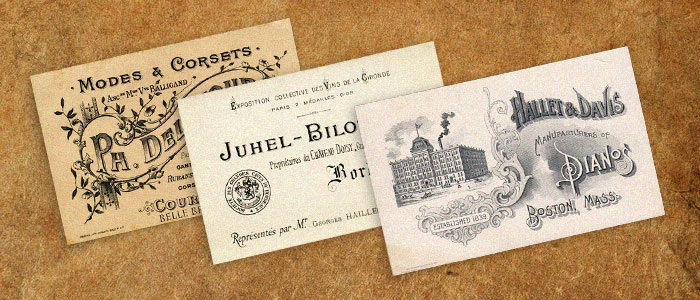
In the late 17th and early 18th centuries, another type of card emerged: the trade card. These cards were used by businesses to advertise their services and locations. Trade cards were printed on both sides, with one side featuring promotional information about the business and the other side often including a map to help customers find the business. This innovation was crucial in major cities where addresses were not standardized, making it difficult for people to locate businesses.
Business Cards in the Industrial Era
As the Industrial Revolution took hold in the 18th and 19th centuries, the distinction between social and business interactions began to blur. This led to the development of what we recognize today as business cards. These cards combined elements of visiting cards and trade cards, allowing individuals to introduce themselves and their businesses simultaneously. The advent of mass production techniques like wood-cut and letterpress enabled widespread use of business cards, making them accessible to a broader audience.
Modern Business Cards
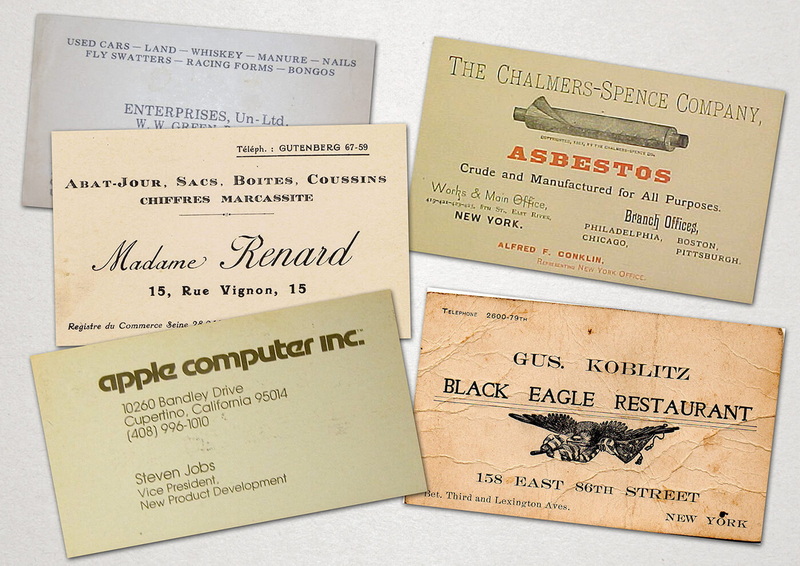
By the 20th century, business cards had become ubiquitous, with nearly every professional and business using them. Advances in printing technology allowed for a wide range of designs, colors, and materials. The end of the 20th century saw business cards become more sophisticated, with the inclusion of bright colors and specialty materials. This period also saw the rise of networking events, where business cards were exchanged in large quantities, further solidifying their role in professional networking.
Digital Business Cards
In recent years, business cards have entered the digital age with the introduction of virtual business cards. These digital cards can be shared via QR codes or NFC technology, allowing contact information to be easily transferred to smartphones. This shift has opened up new possibilities for networking and has made it easier to update contact information without the need for physical reprints. Digital business cards also offer the ability to include multimedia content, such as videos or links to social media profiles, enhancing the depth of information exchanged.
Cultural Significance of Business Cards
Business cards are not just tools for exchanging contact information; they also carry cultural and social significance. In many Asian cultures, the exchange of business cards is a ritual that requires respect and attention to etiquette. For example, in Japan, it is customary to present and receive business cards with both hands, and to examine the card carefully before putting it away. This cultural aspect highlights the importance of business cards beyond their functional use.
In Western cultures, business cards are often seen as a symbol of professionalism and credibility. A well-designed business card can make a strong first impression, reflecting positively on the individual or company it represents. This emphasis on design and presentation underscores the role of business cards in establishing a professional image.
Impact of Technology on Business Cards
The rise of digital communication has led some to question the relevance of physical business cards. However, despite the convenience of digital alternatives, physical business cards remain popular for several reasons. Firstly, they provide a tangible representation of a person or business, which can be more memorable than a digital contact. Secondly, they allow for face-to-face interaction, which is still valued in many professional settings. Lastly, physical business cards can be designed to stand out visually, making them more likely to be retained and remembered.
Future of Business Cards
As technology continues to evolve, it is likely that business cards will continue to adapt. Innovations in materials and design could lead to more sustainable and interactive cards. For instance, cards made from recycled materials or those that incorporate augmented reality (AR) elements could become more prevalent. These advancements will likely enhance the role of business cards in networking, making them even more effective tools for establishing professional connections.
Conclusion
Business cards have evolved significantly since their origins in 15th-century China. From their early use as visiting cards to their current digital forms, they have remained a vital component of professional networking. As technology continues to advance, it will be interesting to see how business cards adapt to new trends and innovations.
Frequently Asked Questions
1. When Were Business Cards First Invented?
Business cards, in their earliest form as visiting cards, were first used in 15th-century China. These cards, known as Meishi, were used by the aristocracy to announce visits and establish social relationships.
2. What Were Trade Cards Used For?
Trade cards were used by businesses in the 17th and 18th centuries to advertise their services and locations. They often included maps to help customers find the businesses, which was crucial in cities without standardized addresses.
3. How Have Business Cards Changed Over Time?
Business cards have evolved from simple visiting cards to include trade information, and eventually became the self-promotional tools we know today. They have adapted to technological advancements, incorporating digital formats and various materials.
4. What Is the Cultural Significance of Business Cards?
Business cards carry significant cultural and social importance, particularly in Asian cultures where their exchange is a ritual requiring respect and adherence to etiquette. This highlights their role beyond mere contact information exchange.
5. What Are Digital Business Cards?
Digital business cards are electronic versions of traditional business cards. They can be shared via QR codes or NFC technology, allowing easy transfer of contact information to smartphones. This innovation has made networking more efficient and flexible.
6. How Do Business Cards Contribute to Professional Networking?
Business cards contribute to professional networking by providing a tangible and memorable way to exchange contact information. They facilitate face-to-face interactions and can be designed to make a strong first impression, enhancing the effectiveness of networking efforts.
7. What Role Do Design and Materials Play in Business Cards?
Design and materials play a crucial role in business cards as they can significantly impact the first impression they make. A well-designed card with appropriate materials can reflect positively on the individual or business it represents, enhancing credibility and professionalism.
8. How Will Business Cards Evolve in the Future?
In the future, business cards are likely to incorporate more sustainable materials and advanced technologies like augmented reality. These innovations will enhance their role in networking, making them more interactive and memorable.
9. What Are the Advantages of Digital Business Cards Over Traditional Ones?
Digital business cards offer several advantages over traditional ones, including ease of updating contact information, reduced environmental impact, and the ability to include multimedia content. However, they lack the tactile experience and personal interaction associated with physical cards.
10. How Do Business Cards Reflect Cultural Differences?
Business cards reflect cultural differences in their design, exchange etiquette, and perceived importance. For example, in Japan, the exchange of business cards is a formal ritual, while in Western cultures, it is often more casual. These differences highlight the adaptability of business cards to various cultural contexts.
Citations:
1. https://www.caseyprinting.com/blog/what-is-the-history-of-business-cards
2. https://www.linkedin.com/pulse/history-business-card-how-cards-have-adapted-changed-over-years-
3. https://bbs.gter.net/forum.php?mod=viewthread&action=printable&tid=402330
4. https://www.swallowtailprint.co.uk/news/articles/post/78-a-brief-history-of-business-cards
5. https://github.com/district10/notes/blob/master/2016/history1.md
6. https://aura-print.com/usa/blog/post/the-history-of-business-cards
7. https://bbs.gter.net/thread-402330-1-1.html
8. https://buy.linqapp.com/blogs/news/business-card-history-etiquette-how-it-all-started
9. https://www.plasticprinters.com/history-of-business-cards


