Content Menu
● What Is a Custom Display Stand and Why It Matters Now
● How Custom Display Stands Increase Sales
● The Psychology Behind High‑Performing Display Stands
>> 1. Attention and visual dominance
>> 2. Reducing decision friction
● Key Types of Custom Display Stands (With Use Cases)
>> Main display stand formats
● Expert Framework: How to Design a Display Stand That Actually Sells
>> Step 1: Define objectives and KPIs
>> Step 2: Analyze product dimensions and packaging
>> Step 3: Align with brand and shopper journey
>> Step 4: Prototype, test, and refine
● Current Trends in Custom Display Stands You Should Not Ignore
>> 1. Modular and reusable display systems
>> 2. Seamless integration with digital content
>> 3. Data‑driven display placement
● Practical Checklist Before You Order Custom Display Stands
● Why Working With an Experienced Display Stand Manufacturer Matters
● UX Best Practices for High‑Converting Display Stands
>> Make the display instantly scannable
>> Optimize ergonomics and accessibility
>> Support staff with intuitive assembly and restocking
● Measuring the ROI of Your Custom Display Stands
● Conclusion and CTA
● Frequently Asked Questions (FAQ)
● References
Custom display stands are one of the most reliable, ROI‑driven tools to lift in‑store sales, shape buying decisions, and strengthen brand visibility when they are planned with data, designed by experts, and backed by a capable manufacturer. [dimensionaldesign]
As a printing and packaging producer with over 20 years of experience in custom display stands, I see daily how a well‑executed display can turn casual traffic into measurable sell‑through across more than 30 global markets. [xkdisplay]

What Is a Custom Display Stand and Why It Matters Now
A custom display stand is a branded, purpose‑built structure that presents your products at the point of sale or in promotional areas of a store. It can be made from corrugated cardboard, metal, acrylic, or mixed materials, and is tailored to your product size, weight, and brand story. [fjegf]
In today's retail environment, shoppers scan shelves quickly, rarely reading every price tag or package detail. Research shows that over 60% of shoppers say retail displays influence their choice when comparing similar products or brands, and more than three‑quarters discover new products through in‑store displays. When your display stand is strategically positioned and professionally printed, it becomes a silent sales representative that attracts attention, clarifies value, and nudges customers to act. [gorspa]
How Custom Display Stands Increase Sales
Retailers and brand owners do not invest in custom displays for aesthetics alone. The real goal is measurable sales lift and better merchandising efficiency. [popdisplay]
From both industry data and our experience manufacturing display stands for global brands, there are four primary ways displays drive revenue:
- They increase product visibility, pulling products out of crowded shelves into shopper sightlines. [exactec]
- They simplify decisions, grouping SKUs and highlighting key benefits so shoppers can choose faster. [dimensionaldesign]
- They trigger impulse purchases, especially for seasonal, promotional, or complementary items. [eurekalert]
- They support premium positioning, letting brands protect margins without constant discounting. [popdisplay]
One national survey found that nearly three‑quarters of shoppers do not have fully predetermined purchase decisions before entering a store, and 92% sometimes buy items they did not intend to purchase. This "open to influence" segment is exactly where a strong display stand consistently delivers incremental sales. [gorspa]
The Psychology Behind High‑Performing Display Stands
Effective display stands are not random structures; they are practical applications of shopper psychology.
1. Attention and visual dominance
Shoppers naturally notice visual contrast—color, shape, lighting, and motion. Well‑designed displays use bold graphics, strong brand colors, and clear hierarchy (headline, visual, call‑to‑action) to stand out from linear shelving. [fjegf]
- Unique structural shapes and tiered shelves create three‑dimensional presence.
- Consistent brand elements (logos, typography, icon style) reinforce recognition and trust. [exactec]
- Strategic placement in high‑traffic zones ensures repeated visual exposure during the same shopping trip. [dimensionaldesign]
2. Reducing decision friction
In many categories, shoppers face dozens of similar products and limited time. Custom display stands can curate the range:
- Grouping products by use case (e.g., "Everyday essentials," "Gift ideas," "Bundle and save"). [xkdisplay]
- Highlighting one or two star SKUs with clear benefit statements rather than overwhelming with options. [popdisplay]
- Structuring vertical layouts so the most profitable or most relevant products sit at eye level. [dimensionaldesign]
This reduction in decision friction directly improves conversion rates and encourages shoppers to increase average units per basket. [mytotalretail]
Key Types of Custom Display Stands (With Use Cases)
Different retail strategies require different display formats. Choosing the right type is essential for both UX and ROI.
Main display stand formats
| Display type | Best placement | Primary goal | Typical benefits |
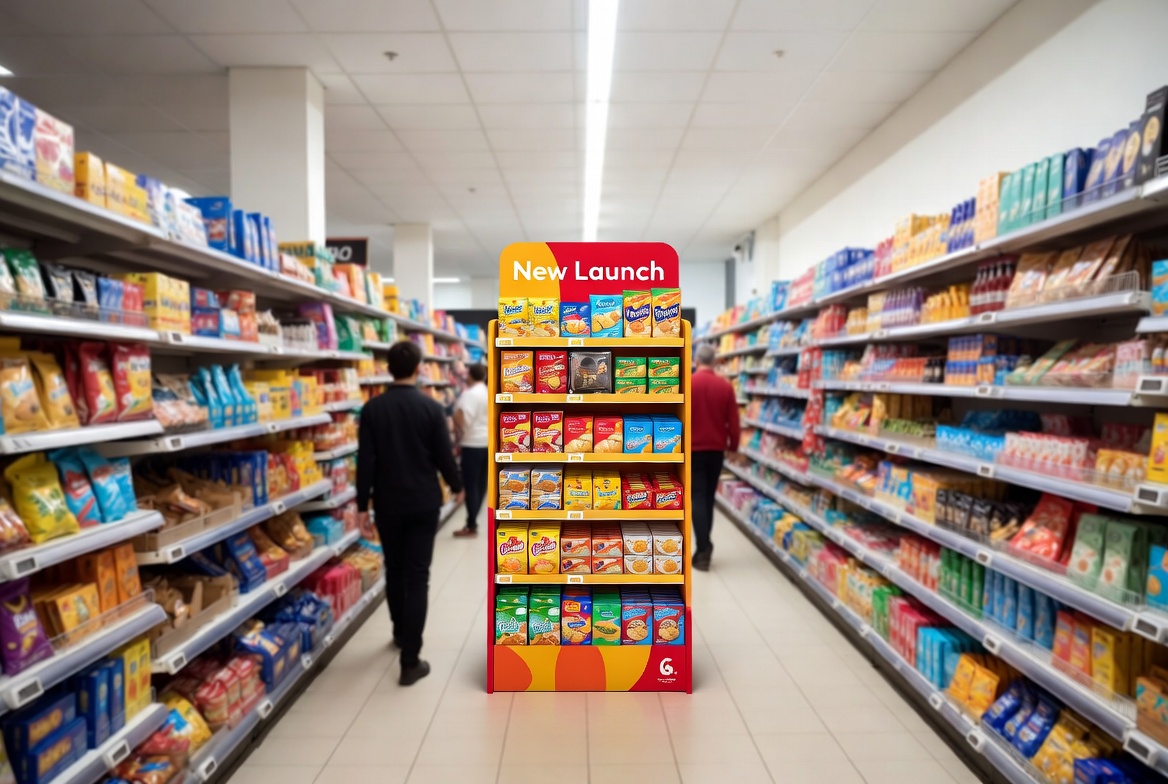
| Floor‑standing display (FSDU) | Aisle ends, promotional zones | Launch products, seasonal campaigns | High visibility, large branding area |
| Counter display | Checkout, service counters | Impulse add‑ons, small items | Fast decisions, high turnover, minimal space |
| Side‑kick / Power wing | Aisle sides, near category leaders | Cross‑sell or upsell | Leverages existing traffic, low footprint |
| Pallet display | Hypermarkets, warehouse clubs | Bulk promotion, price‑driven offers | Large volume, strong price communication |
| Digital / hybrid stand | Flagship stores, tech‑driven retailers | Storytelling, interactive info | Higher engagement, strong brand experience |
In our manufacturing practice, we often start by mapping retailer floor plans and traffic patterns before recommending a structure and material. This ensures the chosen display format aligns with real shopper behavior, not just design preferences. [xingkun.yingfanzhileng]
Expert Framework: How to Design a Display Stand That Actually Sells
Based on working with brands in more than 30 countries, we use a structured, step‑by‑step framework to turn a display idea into a sales‑ready solution. [xingkun.yingfanzhileng]
Step 1: Define objectives and KPIs
Before touching structure or artwork, we clarify:
- Sales target (e.g., "+20% vs. standard shelf over 8 weeks").
- Role of the display (trial, upsell, stock clearance, new product education).
- Retailer constraints (space, height limits, safety requirements). [xkdisplay]
Clear objectives allow us to recommend the right size, tiering, and print specifications instead of overbuilding or under‑designing the unit.
Step 2: Analyze product dimensions and packaging
Display failure often starts with poor fit. From a manufacturing standpoint, we carefully:
- Group SKUs by size, weight, and packaging style.
- Check how many units per shelf or hook maintain both visibility and stability.
- Simulate loading patterns to make sure the structure remains safe and upright in real stores. [fjegf]
This engineering‑first approach reduces damage rates and makes restocking easier for in‑store teams.
Step 3: Align with brand and shopper journey
We then align structural design and artwork with brand guidelines and the expected shopper path:
- Selecting materials (corrugated, cardboard, rigid board, or mixed materials) that match brand positioning and sustainability promises.
- Ensuring color accuracy and print consistency so displays match packaging and other POS elements.
- Designing messaging for the few seconds shoppers will realistically spend scanning the display. [xkdisplay]
Step 4: Prototype, test, and refine
For large programs, we strongly recommend:
1. Building a structural prototype and test‑loading real products.
2. Placing sample displays in a test store or showroom to evaluate angle, legibility, and reach.
3. Collecting feedback from merchandisers, retail staff, and in some cases, shopper observations. [fjegf]
Iterating at this stage is far cheaper than experiencing failure across hundreds of stores.
Current Trends in Custom Display Stands You Should Not Ignore
Retail is changing fast, and display stand strategies must evolve with it. Recent industry observations highlight three high‑impact trends for brands planning displays over the next 12–24 months. [mytotalretail]
1. Modular and reusable display systems
With increasing pressure on budgets and sustainability metrics, more brands are adopting modular stands that can be:
- Reconfigured for different promotions across the year.
- Flat‑packed and reused across campaigns or locations.
- Adapted with changeable headers or graphic sleeves rather than fully replacing structures. [fjegf]
This approach reduces total cost of ownership and supports corporate ESG commitments while maintaining visibility on the shop floor.
2. Seamless integration with digital content
Digital signage and QR‑enhanced displays are moving from "nice to have" to mainstream, especially in electronics, cosmetics, and premium food categories. [eurekalert]
- Screens can showcase usage videos, reviews, or seasonal stories that static print cannot convey.
- QR codes and NFC tags bridge the gap between in‑store browsing and online product pages, reviews, or loyalty apps.
- Real‑time content updates allow brands to test messaging without reprinting physical components. [eurekalert]
When physical stands and digital content work together, brands get both emotional impact and measurable engagement data.
3. Data‑driven display placement
Retailers now track shopper flows, dwell time, and basket composition more rigorously. A national survey indicates that 58% of shoppers actively notice in‑store displays, and nearly half report that these displays influence purchase decisions. [mytotalretail]
Leading brands increasingly use this data to:
- Prioritize high‑traffic zones for hero displays.
- Test multiple display formats and compare performance.
- Adjust product mix and messaging by region or store format. [gorspa]
For manufacturers like us, this data feedback loop helps refine structural designs and loading patterns for the next production run.
Practical Checklist Before You Order Custom Display Stands
To help marketing and trade teams avoid costly mistakes, here is a concise pre‑order checklist you can apply before confirming your display stand project with any supplier.
Commercial and strategic checks
- Is the target retailer format clearly defined (convenience, supermarket, hypermarket, pharmacy, specialty, or warehouse club)? [eurekalert]
- Do you have a clear campaign window and expected sales uplift?
- Are there defined KPIs such as sell‑through, average units per transaction, or new customer acquisition? [popdisplay]
Technical and design checks
- Are all product dimensions and weights documented and shared with your supplier?
- Have you confirmed the maximum footprint, height, and any safety standards required by the retailer?
- Has your artwork been reviewed for legibility from typical viewing distances in the store? [xkdisplay]
Operational and logistics checks
- Does the display ship flat or pre‑assembled, and who is responsible for final setup?
- How many units fit on a pallet, and is the packaging optimized for your logistics network?
- Have you provided clear assembly instructions, ideally with visuals or QR‑linked videos for store staff? [xkdisplay]
Using this checklist with your manufacturing partner avoids delays, returns, and in‑store execution problems that can undermine even the best creative concept.
Why Working With an Experienced Display Stand Manufacturer Matters
The quality of your display stands depends not only on the design but also on the capabilities of the company that produces them. As a printing and packaging producer founded in 2004, Shenzhen XingKun Packing Products Co., Ltd has built a specialized workflow for retail displays and related printed products. [xkdisplay]
From an industry‑insider perspective, here is what an experienced manufacturer brings to your retail strategy:
- End‑to‑end support: From structural design, material selection, and color management to final printing, die‑cutting, and packing. [xkdisplay]
- Consistency at scale: The ability to keep color, cutting accuracy, and structural integrity stable across repeated orders and multi‑store deployments.
- Global experience: Understanding the distinct requirements of different markets and retail formats in more than 30 countries and regions. [xingkun.yingfanzhileng]
- Speed and flexibility: Capacity to deliver fast prototypes, handle urgent campaigns, and adjust designs based on retailer feedback.
When brands collaborate closely with their display stand manufacturer—from brief to store execution—they reduce friction, shorten lead times, and ultimately achieve more reliable in‑store results.
UX Best Practices for High‑Converting Display Stands
Improving the user experience of your display means making it easier for shoppers to understand, reach, and choose your products in seconds.
Make the display instantly scannable
- Use a single dominant headline that clearly states the benefit or theme.
- Keep secondary copy short and avoid cluttered layouts.
- Use visual cues such as arrows, numbering, or color blocking to guide the eye from top branding to product to call‑to‑action. [dimensionaldesign]
Optimize ergonomics and accessibility
- Position key SKUs between knee and eye level for your primary audience.
- Avoid deep shelves that make products hard to reach or see when stock is low.
- Ensure the display is stable, with no sharp edges, and suitable for high‑traffic areas. [fjegf]
Support staff with intuitive assembly and restocking
Store teams are busy, and displays that are difficult to set up tend to be left in back rooms. To maximize uptime:
- Design with clear, minimal assembly steps.
- Include printed or video instructions accessible via QR code.
- Make restocking straightforward, with front‑facing units and simple access. [xkdisplay]
A display that is easy for both shoppers and staff to use will stay on the floor longer, look better, and perform more consistently.
Measuring the ROI of Your Custom Display Stands
To align with modern performance‑driven marketing, display investments should be evaluated with clear metrics rather than intuition.
Key indicators we recommend tracking include:
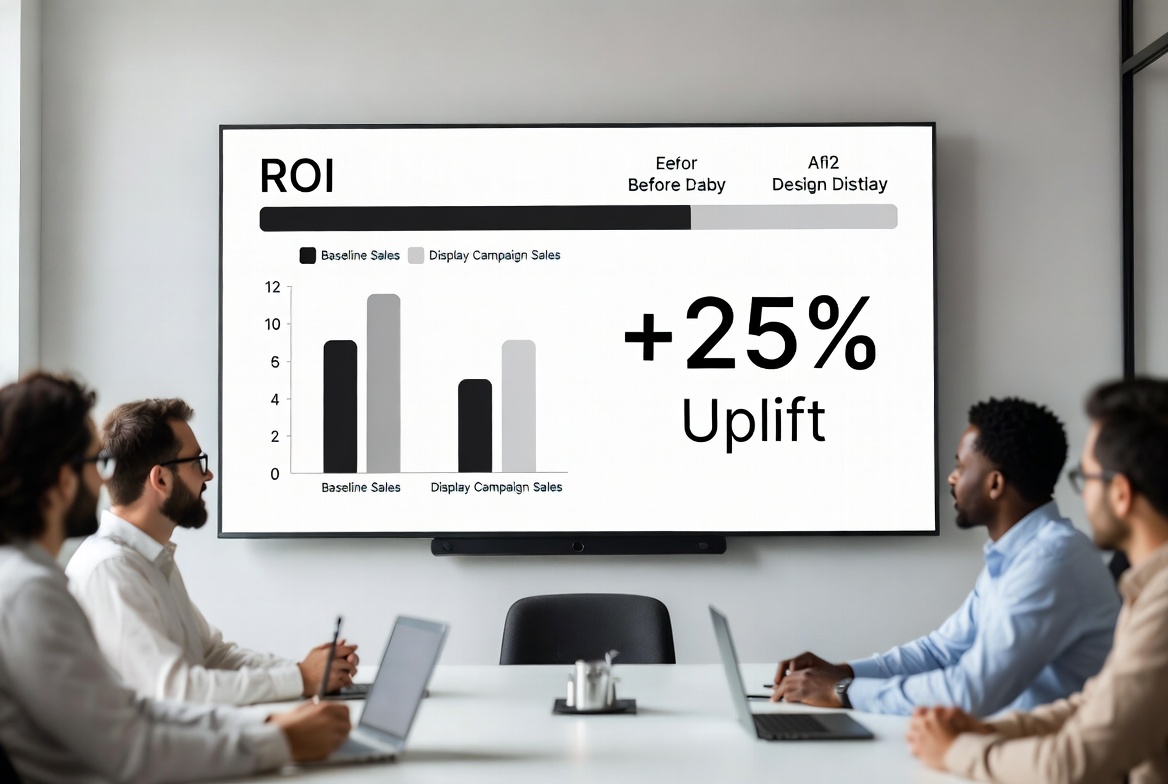
- Baseline vs. campaign sales: Compare product sales on standard shelving vs. the display period in the same store group.
- Display vs. non‑display stores: Run A/B style comparisons between locations using the display and control stores without it.
- Incremental units per transaction: Assess whether baskets including the displayed product contain more items or higher value. [gorspa]
Digital and hybrid stands enable even richer insights, such as QR scans, time spent interacting with the display, and engagement by time of day. Feeding this data back into your next brief allows each subsequent display project to be sharper, more targeted, and more profitable. [mytotalretail]
Conclusion and CTA
Custom display stands are no longer optional "nice" POS assets; they are strategic levers that combine shopper psychology, brand storytelling, and retail execution to deliver measurable sales impact. Industry data shows that shoppers are highly influenced by what they see in‑store, and brands that invest in well‑designed, well‑manufactured displays consistently gain visibility, trial, and incremental purchases over competitors who rely solely on standard shelving. [gorspa]
If you are planning your next retail promotion or preparing to launch a new product line, now is the time to turn your display concept into a concrete, tested, and scalable solution. Partner with a seasoned display stand manufacturer who can translate your objectives into structural design, precise printing, and reliable global delivery—so your products stand out, your campaigns run smoothly, and your in‑store strategy converts attention into sales. [xkdisplay]
Frequently Asked Questions (FAQ)
1. How long does it take to develop a custom display stand from concept to store?
Lead times vary by complexity and quantity, but most projects follow a cycle of concept and structural design, prototyping, testing, then mass production and logistics. For well‑prepared briefs, this can be completed in several weeks, while highly customized multi‑material displays may require longer to allow for testing and retailer approval. [fjegf]
2. What information should I provide to my display stand manufacturer at the beginning?
You should share your campaign objectives, retail channel, product dimensions and weights, target budget, brand guidelines, and any retailer‑specific requirements such as size limits or safety standards. Clear initial information helps your manufacturer recommend suitable materials, structures, and printing methods that balance impact and cost. [xingkun.yingfanzhileng]
3. How can I ensure my display stand is durable enough for real retail conditions?
Durability depends on material choice, structural engineering, and production quality. Work with a manufacturer that can build prototypes, test load them with your actual products, and adjust board grades, reinforcement points, and locking mechanisms before mass production to minimize damage or collapse in stores. [xkdisplay]
4. Are sustainable display stands compatible with high visual impact?
Yes, many brands successfully use recyclable cardboard and responsible printing processes while still achieving strong visual impact through smart structure, color use, and branding. The key is to plan sustainability requirements early in the design process so material and finishing choices support both environmental goals and in‑store visibility. [exactec]
5. How do I measure whether a custom display stand is worth the investment?
Compare product performance during the display period with baseline sales in the same stores, and, where possible, against similar stores without the display. Track uplift in units sold, incremental revenue, and any impact on related SKUs, and complement this with engagement metrics from digital integrations or shopper surveys to build a full picture of ROI. [popdisplay]
References
1. [4 Ways Custom Displays Can Benefit Your Retail Strategy – Dimensional Design]
2. [New Consumer Survey Shows That In‑Store Displays Influence Brand and Product Awareness – RSPA]
3. [How to Choose the Perfect Display Stand for Your Product Line – Shenzhen XingKun Packing Products Co., Ltd]
4. [Shenzhen XingKun Packing Products Co., Ltd – Company Profile]
5. [How Can Custom Displays Benefit Your Retail Strategy? – PopDisplay]
6. [When In‑Store Digital Displays Drive Sales – EurekAlert]
7. [How to Select Custom Display Stands – Industry News]
8. [Top Display Stand Manufacturers in China: Why Choose Them? – Shenzhen XingKun]
9. [Why Custom Displays Are Essential for Brand Visibility – Exactec]
10. [Digital Displays Influence Purchase Decisions: Data Proves ROI – Total Retail]


