Content Menu
● Why Beverage Displays Matter More Than Ever
● Understanding How Shoppers Buy Beverages
● Core Design Elements for Beverage Display Stands
>> 1. Structure and Stand Type
>> 2. Materials and Build Quality
>> 3. Color, Branding, and Visual Hierarchy
>> 4. Messaging and Copywriting
>> 5. Layout, Accessibility, and Shopper Flow
● Types of Beverage Display Stands (With Use Cases)
● Practical Design Process: From Idea to Finished Stand
● Advanced Strategies to Differentiate Your Beverage Displays
>> 1. Design for Modularity and Reuse
>> 2. Integrate Storytelling and Digital Touchpoints
>> 3. Use Lighting, Movement, and Sensory Cues (Where Possible)
● How Shenzhen XingKun Supports Your Beverage Display Projects
● Step-by-Step Checklist for Your Next Beverage Display
● Call to Action: Turn Your Beverage Display Vision into Reality
● Frequently Asked Questions (FAQ)
● References
Beverage display stands can quietly make or break sales in retail, convenience, and foodservice channels, especially when they are designed with a clear understanding of shopper psychology and brand strategy. In this guide, I'll combine hands-on experience from Shenzhen XingKun Packing Products Co., Ltd. with proven retail merchandising best practices to show you how to design beverage displays that consistently stop traffic and convert shoppers into buyers. [americaneagle]
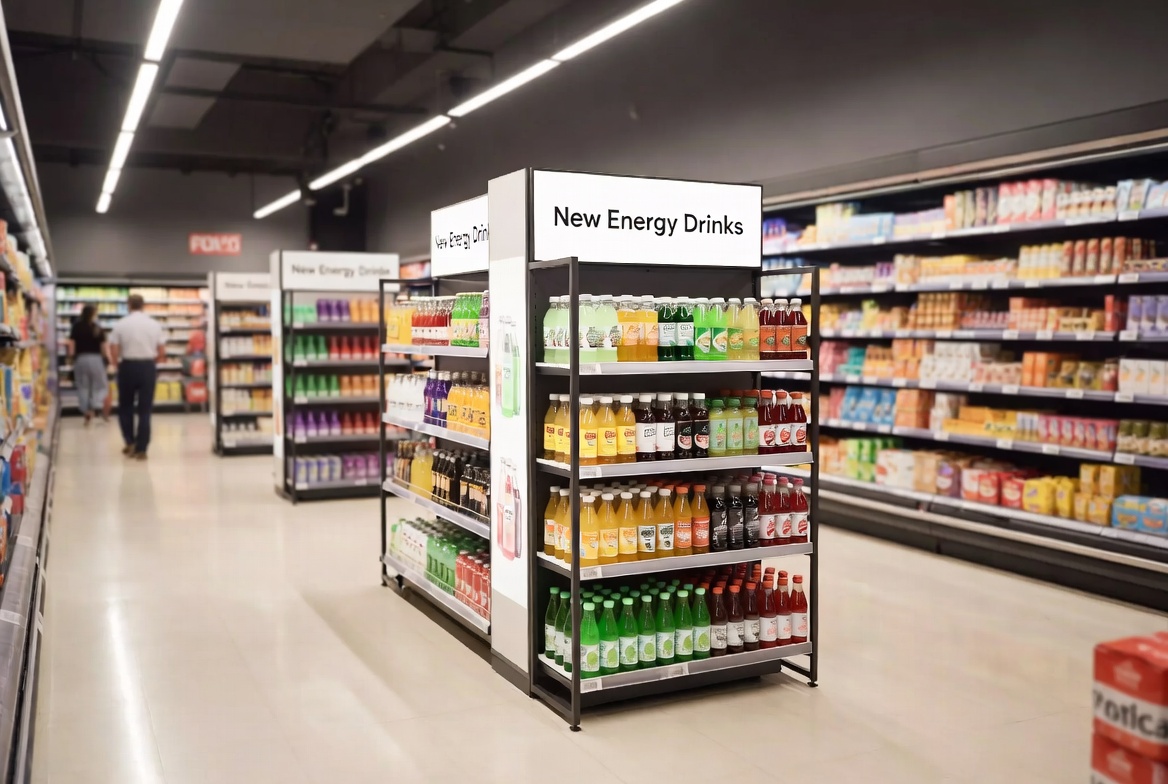
Why Beverage Displays Matter More Than Ever
Retail beverage displays remain one of the most powerful tools for driving impulse purchases and reinforcing brand visibility in crowded stores. A 2018 survey found that 74% of consumers purchase single-serve cold beverages on impulse, which means your display stand is often the last nudge before a buying decision. [americaneagle]
Effective beverage display stands help you:
- Showcase new products and limited-time promotions in high-traffic areas.
- Strengthen your price image and perceived value through clear, premium presentation. [americaneagle]
- Create memorable in-store experiences that keep your brand top of mind even after shoppers leave. [americaneagle]
From an operations perspective, well-designed display stands also improve stock organization, simplify replenishment, and make it easier for field teams or store staff to execute campaigns consistently.
Understanding How Shoppers Buy Beverages
Before you choose colors or materials, you need to understand how and why shoppers pick up beverages in-store. Most purchase decisions happen in seconds, influenced by a combination of visibility, convenience, habit, and emotion. [americaneagle]
Key factors that influence beverage buying decisions include:
- Location and visibility: Displays placed near entrances, checkout zones, or high-traffic aisles deliver higher impulse lifts.
- Clarity and simplicity: Shoppers must be able to understand "what it is" and "why it's for them" at a glance. [contentstatus]
- Price and promotion: Clean price communication and "value signals" (like bundles or multi-buy offers) reduce friction and encourage trial. [americaneagle]
- Emotional triggers: Colors, imagery, and messaging that connect to occasions (e.g., sports nights, family gatherings) or benefits (e.g., energy, wellness) help your display stand out. [linkedin]
When you design a beverage display stand, your job is to remove friction and amplify desire—through structure, graphics, and messaging working together.
Core Design Elements for Beverage Display Stands
1. Structure and Stand Type
Choosing the right display stand format is your first strategic decision, because it determines how shoppers will encounter and handle your product.
Common stand types for beverages include:
- Floor display stands: Freestanding units placed in aisles, near entrances, or at promotional zones for maximum visibility.
- Point-of-purchase (POP) / FSDUs: Units placed near checkout or high-traffic intersections to drive impulse sales.
- Countertop display stands: Compact stands for mini bottles, cans, or sample packs at counters and kiosks.
- Modular and portable stands: Displays that can be reconfigured or moved quickly for seasonal campaigns or multi-store rollouts.
From a manufacturing perspective, we often begin with concept development and 3D modeling to ensure the stand's dimensions, load capacity, and branding areas are optimized for the specific beverage format (PET bottles, cans, multipacks, etc.).
2. Materials and Build Quality
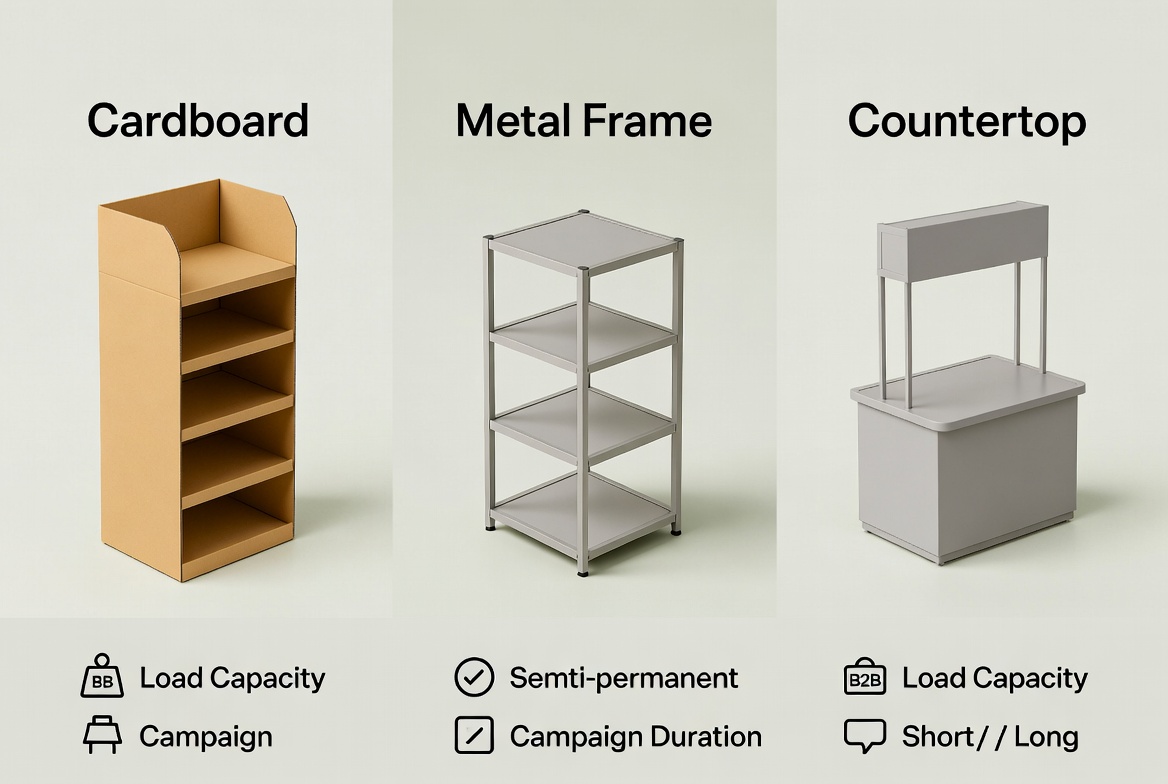
Your choice of material affects cost, durability, sustainability, and perceived brand value.
Typical material options for beverage display stands:
- Cardboard / corrugated board
- Ideal for short-term promotions and campaigns.
- Lightweight, cost-effective, and fully printable for full-surface branding.
- Acrylic and plastic
- Clean, modern look, often used for premium or permanent displays.
- Allows clear visibility of the product itself.
- Metal and wood
- High durability and load-bearing capacity for heavy cases or glass bottles.
- Often positioned as semi-permanent fixtures for long-term brand blocks.
- Hybrid structures
- Combine cardboard with metal frames or plastic accessories to balance cost, strength, and aesthetics.
For beverage displays, we typically balance weight capacity, transport efficiency, and print quality while also considering sustainability requirements from retailers and brand owners.
3. Color, Branding, and Visual Hierarchy
Once the structure is defined, your graphic design must guide the shopper's eye and communicate your brand in seconds. [americaneagle]
Best practices for color and branding:
- Use a simple color palette with two core brand colors and one accent to maintain clarity and avoid visual noise. [quadrant2design]
- Create a clear visual hierarchy: brand logo at the header, hero product visuals at eye level, and promotional messages in bold type. [linkedin]
- Ensure contrast between background colors and product packs so the product remains the star. [americaneagle]
A practical approach:
1. Top panel / header: Brand logo, category (e.g., "Sparkling Water"), and a short benefit phrase (e.g., "Zero Sugar Refreshment"). [contentstatus]
2. Mid panels: Hero imagery, lifestyle scenes, or flavor differentiation (e.g., color-coded shelves for different flavors). [contentstatus]
3. Base / side panels: Supportive messages such as sustainability claims, serving suggestions, or QR codes for more information.
4. Messaging and Copywriting
Your display copy should be short, bold, and benefit-driven. Shoppers will not read long paragraphs while walking past your display. [bigcucocreative.co]
Keep these guidelines in mind:
- Lead with a primary benefit: "Hydration with Electrolytes," "Natural Fruit Juice," "Sugar-Free Energy." [americaneagle]
- Use one main headline and one supporting line—anything more risks clutter. [bigcucocreative.co]
- Align tone and language with your audience: fun and energetic for youth-oriented drinks vs. calm and informative for wellness beverages. [americaneagle]
From a UX perspective, combining crisp text with iconography (e.g., "Low Calorie," "Vegan," "Recyclable Packaging") helps shoppers make snap decisions without reading full sentences. [contentstatus]
5. Layout, Accessibility, and Shopper Flow
A beverage display must not only look good but also function efficiently in real retail conditions.
Key layout considerations:
- Open access: Avoid "castle wall" layouts that block shoppers; make it easy to step up, pick a product, and move on. [bigcucocreative.co]
- Clear sightlines: Keep the upper area visually clean so key messages are visible from a distance. [linkedin]
- Ergonomic product placement: High-velocity SKUs at hand level, heavier packs lower down for safety.
- Replenishment friendly: Design shelves and openings so staff can restock quickly without damaging graphics.
Thoughtful layout improves both user experience (easy to shop) and store operations (easy to maintain), which in turn increases retailer compliance and long-term campaign success.
Types of Beverage Display Stands (With Use Cases)
Below is a quick overview of how different stand types align with typical beverage objectives: [americaneagle]
| Stand Type | Typical Use Case | Key Advantages |
| Floor Display Stand | New launches, seasonal campaigns | High visibility, flexible placement |
| POP / FSDU | Checkout or aisle-end impulse promotions | Drives last-minute add-on purchases |
| Countertop Display | Small bottles, shots, sample packs | Close to point of payment, eye-level |
| Modular Display Stand | Multi-store rollouts, evolving campaigns | Configurable, reusable structures |
| Portable Display Stand | Events, roadshows, tasting activities | Easy transport and quick assembly |
By matching your campaign objectives with the right stand type, you ensure both ROI and operational feasibility.
Practical Design Process: From Idea to Finished Stand
Drawing on our own workflow as a display stand manufacturer, a robust design process typically follows these stages:
1. Concept development
- Align with brand and trade marketing teams on objectives, target channels, and budget.
- Define constraints like footprint size, product capacity, and retailer requirements.
2. 3D modeling and structural design
- Use tools like CAD to model the stand and validate stability and load-bearing capacity.
- Simulate product placement and shopper interaction to refine details.
3. Prototyping and testing
- Build physical prototypes using cardboard or other intended materials.
- Conduct weight and stability tests, especially for glass bottles or large formats.
4. Graphic design and printing
- Integrate brand guidelines, seasonal visuals, and retailer-specific messaging.
- Use high-quality printing methods (e.g., digital or UV printing) for sharp, vibrant graphics.
5. Production, packaging, and shipping
- Optimize for flat-pack shipping and easy assembly at store level.
- Provide clear assembly instructions and, where needed, pre-assembled sections.
This end-to-end process ensures that your beverage display is not just visually appealing but also safe, durable, and repeatable across markets.
Advanced Strategies to Differentiate Your Beverage Displays
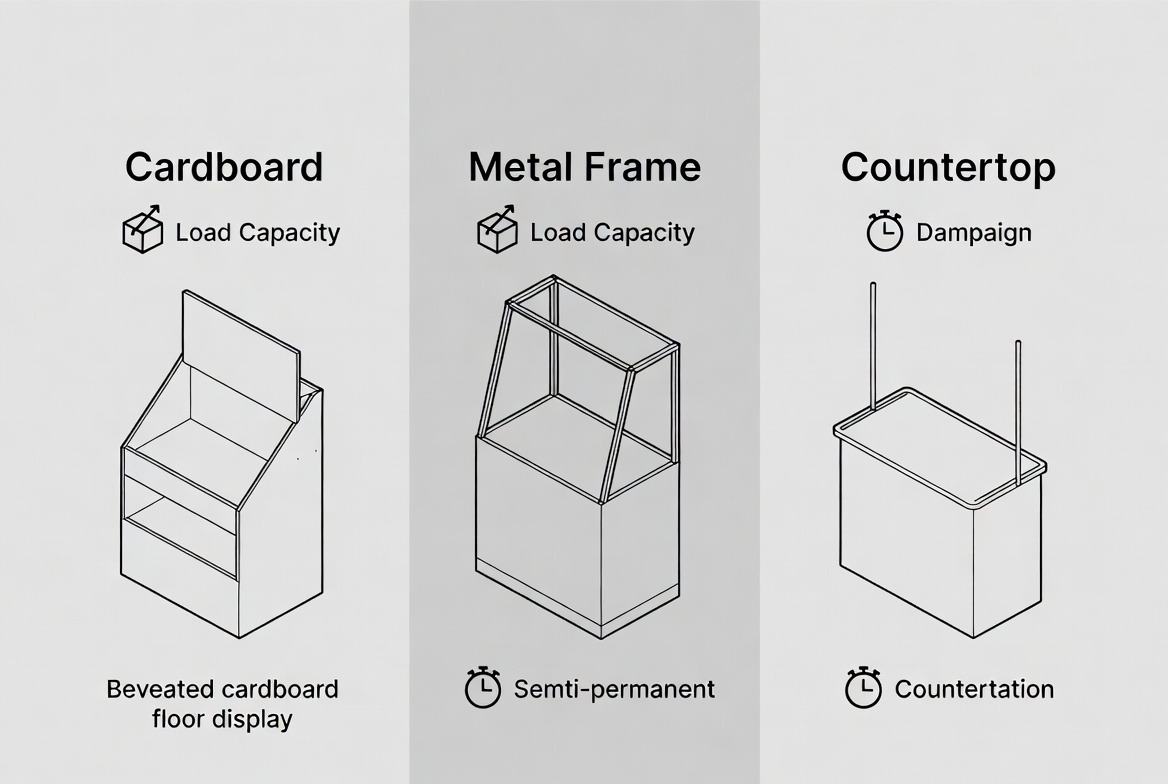
To go beyond basic compliance and create displays that truly outperform competitors, consider these advanced tactics grounded in both industry best practices and manufacturing experience. [quadrant2design]
1. Design for Modularity and Reuse
Retailers and brands are increasingly looking for modular systems that can be refreshed without full replacement.
- Use core structures that stay in-store year-round, with interchangeable headers, side panels, or shelf strips for promotions.
- Design flexible shelves and hooks that can accommodate multiple bottle or can sizes.
- Plan for regional variations (language, pricing) by swapping only printed components rather than the full stand.
This approach reduces waste, lowers long-term costs, and supports sustainability goals.
2. Integrate Storytelling and Digital Touchpoints
Modern beverage shoppers expect more than just a stack of bottles—they want a story. [americaneagle]
- Use side panels to tell a brand origin story or highlight sourcing, craftsmanship, or health benefits. [americaneagle]
- Add QR codes that link to recipes, pairing suggestions, or short videos, giving your offline display an online extension. [echovme]
- Encourage user-generated content (UGC) by promoting hashtags or social media handles on the stand graphic. [contentstatus]
This combination of physical presence and digital engagement strengthens your brand's E-E-A-T by showcasing real-world usage, testimonials, and educational content. [mavrk]
3. Use Lighting, Movement, and Sensory Cues (Where Possible)
In larger retail environments or exhibitions, lighting and movement can dramatically increase visibility. [quadrant2design]
- Add backlit panels or accent lighting to highlight hero products or key messages in high-traffic zones. [bigcucocreative.co]
- Introduce subtle movement elements (like rotating headers or dynamic digital screens) where budgets allow. [quadrant2design]
- Combine visuals with tactile cues—for example, textured finishes on panels to signal premium or natural positioning.
While not every retailer accepts powered elements, planning optional features gives your stand an edge in environments that do. [quadrant2design]
How Shenzhen XingKun Supports Your Beverage Display Projects
As a manufacturer specializing in display stands and printed packaging for over 20 years, Shenzhen XingKun Packing Products Co., Ltd. has supported brands and distributors in more than 30 countries and regions. [xingkun.yingfanzhileng]
What we bring to beverage clients includes:
- Custom structural and graphic design tailored to your brand, product format, and retail channel.
- Flexible materials ranging from eco-friendly cardboard to durable metal and acrylic solutions.
- Scalable production capabilities suited to pilot launches or large-scale rollouts.
- Strict quality control including structural inspections, printing checks, and packaging designed to protect stands in transit.
Whether you are launching a new beverage brand or refreshing in-store visibility for an established product line, we can help you translate category insights and brand strategy into high-performing display solutions. [xkdisplay]
Step-by-Step Checklist for Your Next Beverage Display
For marketers and trade teams, here is a concise checklist you can use when briefing or evaluating your next display project: [contentstatus]
1. Define the objective
- Launch, seasonal promotion, visibility boost, or permanent brand block?
2. Clarify the shopper and channel
- Convenience store, supermarket, pharmacy, or foodservice outlet?
3. Select the stand type and footprint
- Floor, POP/FSDU, countertop, modular, or portable?
4. Choose materials based on duration and budget
- Short-term promo vs. long-term fixture, sustainability requirements, and load capacity.
5. Plan structure and capacity
- How many facings, how many units per shelf, and how often it will need replenishment?
6. Design graphics and messaging
- Clear headline, benefit statement, price areas, and optional digital touchpoints.
7. Test and refine
- Pilot in a limited number of stores, gather feedback from shoppers and store staff, and refine before a wider rollout.
Call to Action: Turn Your Beverage Display Vision into Reality
If you are planning a new beverage display stand or rethinking your in-store presence, consider partnering with a specialized display manufacturer that understands both structural engineering and shopper psychology. [linkedin]
At Shenzhen XingKun Packing Products Co., Ltd., we can help you:
- Translate your brand and campaign ideas into production-ready display designs.
- Optimize materials and structure for cost, durability, and sustainability.
- Deliver consistent, high-quality stands across multiple markets worldwide. [xingkun.yingfanzhileng]
To discuss your next beverage display project, prepare a brief with your objectives, target channels, and timelines, and reach out to our team for a tailored proposal.
Frequently Asked Questions (FAQ)
1. What is the best material for beverage display stands?
The best material depends on your campaign duration, budget, and product weight. For short-term promotions, corrugated cardboard is usually sufficient, while metal or acrylic is better for long-term or heavy-load displays.
2. How long does it take to develop a custom beverage display?
Lead time can range from a few weeks for simple cardboard FSDUs to several months for complex modular or permanent stands, including concept, prototyping, and production.
3. How can I ensure my beverage display is safe and stable?
Work with a manufacturer that conducts weight and stability testing, ensures proper load distribution, and uses fixtures appropriate to the store environment.
4. What makes a beverage display stand "high-performing"?
High-performing displays combine strong visibility, clear messaging, and easy access, resulting in increased sales, better retailer compliance, and positive shopper feedback. [contentstatus]
5. Can the same display stand be used in different countries or regions?
Yes, especially if you design modular graphics and neutral structural elements; you can localize languages, promotions, and price messaging by swapping printed parts while keeping the core structure consistent.
References
1. Creative Displays Now – “Design Elements to Consider for Beverage Displays”. https://www.creativedisplaysnow.com/guides/design-elements-to-consider-for-beverage-displays/
2. Shenzhen XingKun Packing Products Co., Ltd – Company and display stand overview. http://xingkun.yingfanzhileng.com
3. XINGKUN – Display Stands Product Page. https://www.xkdisplay.com/display-stand.html
4. Quadrant2Design – “The Ultimate Guide to Exhibition Stand Design”. https://www.quadrant2design.com/the-ultimate-guide-to-exhibition-stand-design/
5. Big Cucu Creative – “Exhibition Stand Design Tips & Tricks (And Mistakes To Avoid)”. https://bigcucocreative.co.uk/exhibition-stand-design-tips-tricks-and-mistakes-to-avoid/
6. Mavrk Studio – “Top 8 SEO Tips for Food and Beverage Brands”. https://mavrk.studio/seo-for-food-and-beverage/
7. Content Status – “Creating A Product Page That Converts: A Comprehensive Guide”. https://contentstatus.com/creating-a-product-page-that-converts-a-comprehensive-guide/
8. echovme – “Top 10 SEO Strategies for Food & Beverage”. https://echovme.in/blog/seo-strategies-for-food-beverage/


