Content Menu
● What Are Carton Labels?
● Why Custom Carton Labels Matter for B2B Brands
>> Improve Packaging Flexibility
>> Support Warehouse Accuracy
>> Build a More Consistent Brand Experience
● Types of Carton Labels for Different Applications
>> Paper Labels for Retail Cartons
>> Durable Labels for Shipping Cartons
>> Variable Data Labels
● How to Choose the Right Carton Label Material and Adhesive
>> Start with the Carton Surface
>> Select Adhesive Based on Reality
>> Consider Sustainable Label Design Early
● Custom Carton Label Design: A Five-Step Process
>> 1. Define the Label's Primary Job
>> 2. Build a Clear Information Hierarchy
>> 3. Protect Barcode and QR-Code Performance
>> 4. Prepare Print-Ready Artwork
>> 5. Approve a Practical Sample
● Carton Labels vs Direct Carton Printing
● Common Carton Label Mistakes to Avoid
>> Choosing Material Before Understanding the Environment
>> Using Tiny Text and Low Contrast
>> Placing Labels Over Carton Seams
>> Treating Sustainability as a Marketing Slogan
>> Ignoring Application Method
● Why Work with XingKun for Custom Carton Labels?
● Conclusion
● FAQ
>> 1. What is the best material for carton labels?
>> 2. Can carton labels be printed with barcodes and QR codes?
>> 3. Can I order custom carton labels in different designs?
>> 4. How do I make carton labels stick to corrugated boxes?
>> 5. Are eco-friendly carton labels available?
>> 6. What artwork file should I send for carton label printing?
>> 7. Should I use labels or print directly on my cartons?
● References
Carton labels are more than small pieces of printed material attached to a box. For brands, wholesalers, and manufacturers, they are a critical interface between the product, warehouse team, retailer, carrier, regulator, and end customer.
At XingKun, we work with businesses that require custom printed packaging solutions for retail products, e-commerce fulfilment, promotional campaigns, and industrial distribution. The best custom carton labels combine reliable adhesion, readable information, consistent brand colour, suitable materials, and a production process that works at scale. This guide explains how to choose, design, print, and apply carton box labels that perform throughout the supply chain.
What Are Carton Labels?
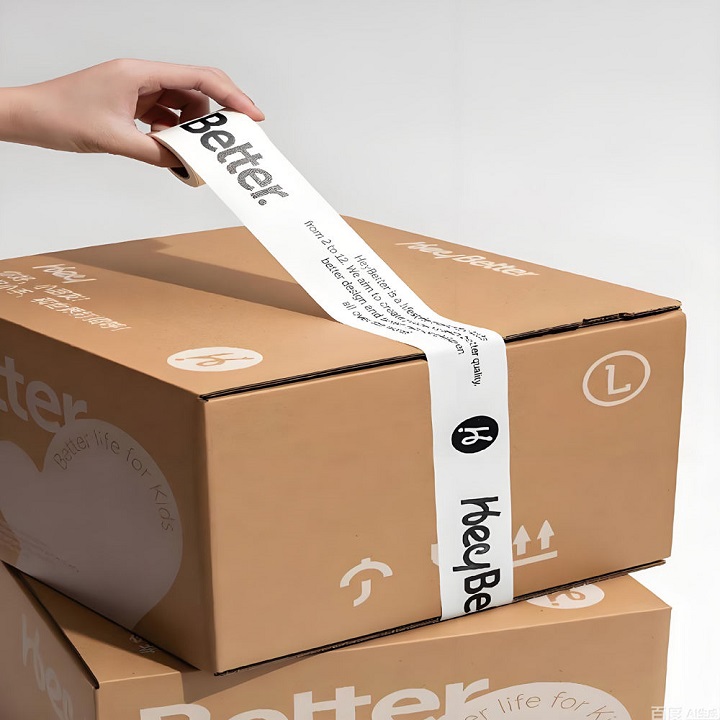
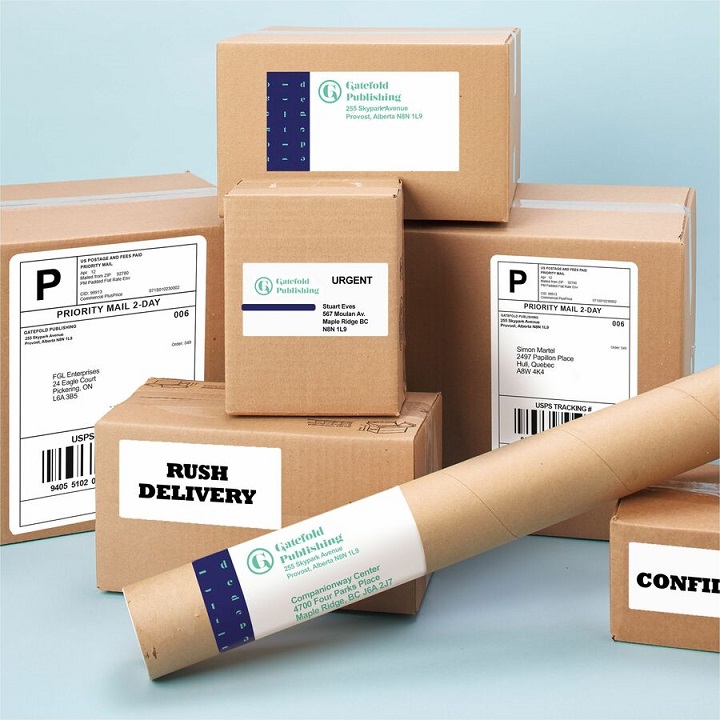
Carton labels are printed labels applied to corrugated boxes, folding cartons, shipping cases, retail packaging, or product inner boxes. They can identify the product, support warehouse operations, communicate handling instructions, improve shelf presentation, or provide traceability through barcodes and QR codes.
Unlike direct printing on a carton, labels offer flexibility. A brand may use the same plain carton box for multiple SKUs, markets, languages, product variants, or seasonal campaigns, then differentiate each unit with a variable or custom carton label.
Common information on carton packaging labels includes:
- Brand name, logo, and product name
- SKU, model number, batch number, or lot code
- Barcode, QR code, serial number, or RFID information
- Quantity, carton dimensions, gross weight, and net weight
- Shipping address, country of origin, and handling marks
- Ingredients, warnings, certifications, or recycling instructions
- Product features, campaign messages, and promotional graphics
A well-designed label helps prevent picking errors, supports faster fulfilment, and gives the packaging a professional appearance. In contrast, an unreadable barcode, weak adhesive, or incorrect variable data can create delays, returns, customer complaints, and avoidable rework.
Why Custom Carton Labels Matter for B2B Brands
For high-volume packaging, a label is often a small unit-cost item with a large operational impact. It allows brands to adapt packaging without replacing every carton artwork file or ordering multiple pre-printed box versions.
The global labels market is expected to grow as e-commerce, customised production, sustainable materials, and track-and-trace requirements expand. Pressure-sensitive labels remain a major format because they can be applied quickly and efficiently across many packaging applications. [futuremarketinsights]
Improve Packaging Flexibility
Custom carton labels make it easier to manage product launches and frequent SKU changes. For example, one corrugated shipping carton can be used for several products, while labels distinguish colour, size, language, destination, or retailer program.
This approach is particularly useful for:
- Startups testing several product variants
- E-commerce brands using changing promotional bundles
- Wholesalers managing a large SKU catalogue
- Exporters selling to different countries
- Manufacturers producing private-label goods for multiple clients
Support Warehouse Accuracy
A carton label should help warehouse teams identify and move products without hesitation. Clear text, high-contrast codes, consistent label placement, and correct data hierarchy reduce ambiguity at receiving, picking, packing, and dispatch.
GS1 notes that barcodes provide a globally recognised way to identify products and can support efficient supply-chain processes. Barcode quality, data structure, and scannability should therefore be planned before production—not treated as an afterthought. [futuremarketinsights]
Build a More Consistent Brand Experience
Retail-ready carton labels can do far more than display a SKU. They can reinforce your brand colour system, communicate product benefits, include care or usage instructions, and connect physical packaging with digital content through a QR code.
For a premium candle, cosmetic kit, jigsaw puzzle, playing-card set, book, or subscription box, the label can be part of the unboxing experience. A label with poor colour control or cheap-looking finishing can weaken a product's perceived value even when the product itself is excellent.
Types of Carton Labels for Different Applications
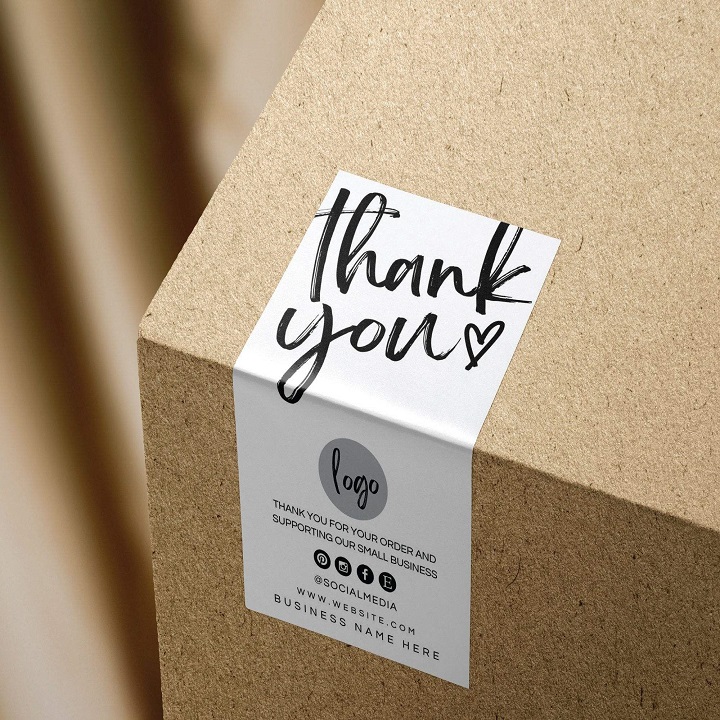
The right carton label depends on where the box will travel, how long the label must last, which surface it will be applied to, and what the label must communicate.
| Label type | Best use | Main advantage | Important consideration |
| Paper labels | Retail cartons, dry indoor storage, promotional packaging | Cost-effective and easy to print | Less resistant to moisture and abrasion |
| Coated paper labels | Premium retail boxes, branded product packaging | Better print appearance and surface protection | Confirm compatibility with finishes and adhesives |
| Synthetic film labels | Damp, cold, oily, or demanding logistics environments | Strong tear and moisture resistance | Material selection affects recycling design |
| Thermal transfer labels | Warehouse, inventory, shipping, variable data | Durable variable information and barcode printing | Requires ribbon and printer compatibility |
| Direct thermal labels | Short-term shipping and parcel labels | Fast and simple for temporary use | Can fade with heat, light, or friction |
| Tamper-evident labels | Electronics, cosmetics, high-value goods | Shows whether packaging has been opened | Test removal behaviour on the carton surface |
| QR-code labels | Product storytelling, instructions, authentication | Connects packaging with digital content | Destination page must be mobile-friendly and maintained |
| Security or serialised labels | Traceability, anti-counterfeit, warranty control | Enables unit-level identification | Requires strong data management |
Paper Labels for Retail Cartons
Paper labels work well when visual presentation is important and the carton will remain in a dry, controlled environment. They are widely used for boxed toys, books, candles, stationery, gift sets, printed games, and consumer goods.
A coated paper face stock can improve colour density and provide a smoother surface for detailed logos, illustrations, and small text. Matte finishes often feel refined and natural, while gloss finishes can make colour graphics more vivid.
Durable Labels for Shipping Cartons
Shipping cartons experience friction, stacking pressure, handling, humidity changes, and possible exposure to dirt or moisture. For these conditions, carton labels need a material and adhesive selected for actual transit conditions, not only for a clean factory sample.
Industry guidance for corrugated-box labelling recommends placing labels on a large, visible panel; avoiding seams, corners, and closures; using readable information and durable materials; and ensuring barcodes scan reliably. [brownpackaging]
Variable Data Labels
Variable data labels contain information that changes from one label to another, such as:
- Order number
- Serial number
- Batch or lot number
- Product expiration date
- Warehouse location
- Carton quantity
- Customer destination
- Barcode or QR-code content
For B2B buyers, this capability is especially valuable. Instead of printing generic labels and handwriting data later, variable-data printing creates a cleaner process and lowers the risk of human error.
How to Choose the Right Carton Label Material and Adhesive
The most attractive label design will fail if it peels off during transportation. Material and adhesive selection should begin with the carton surface and environmental conditions.
Start with the Carton Surface
Corrugated carton surfaces vary considerably. A smooth, coated folding carton behaves differently from a rough kraft corrugated carton. Recycled board, dusty board, textured paper, varnished surfaces, and laminated boxes can all affect adhesion.
Before selecting a label, review these questions:
1. Is the box surface smooth, rough, coated, laminated, or recycled?
2. Will labels be applied manually or automatically?
3. Is the carton stored in a cold, humid, hot, dusty, or oily setting?
4. Must the label stay attached for days, months, or the complete product life?
5. Will cartons be stacked, shrink-wrapped, palletised, or exposed to abrasion?
6. Does the label need to be removable, permanent, repositionable, or tamper-evident?
Select Adhesive Based on Reality
A standard permanent adhesive may work well for room-temperature applications on clean corrugated board. However, freezer storage, humidity, dusty surfaces, rapid application, or recycled board may require a different formulation.
Do not approve a label only by touching it on a desk sample. A meaningful test should replicate actual packing, storage, and shipment conditions. Apply labels to production cartons, allow adhesive dwell time, stack the cartons, and inspect them after realistic exposure.
Consider Sustainable Label Design Early
Sustainability is not simply a material choice. It is a system decision involving the label face stock, adhesive, release liner, ink, carton, end-of-life pathway, and the environmental claim displayed on the packaging.
Current label-market trends include demand for recyclable materials, cleaner chemistry, waste reduction, smart identification, shorter production runs, and digital printing. [labelsandlabeling]
For carton labels, practical sustainability options may include:
- Paper labels containing recycled content
- Reduced-material constructions where performance allows
- Labels designed to separate cleanly from a recyclable pack
- Water-based or solvent-reduced production options where appropriate
- Right-sized labels that avoid unnecessary material use
- Consolidated artwork to reduce obsolete inventory and waste
Environmental claims must be precise. The U.S. Federal Trade Commission advises businesses not to use broad, unqualified claims such as "eco-friendly" or "green"; specific claims should be supported and clearly qualified. It also advises qualifying recyclable claims when suitable recycling facilities are not broadly available. [ftc]
Custom Carton Label Design: A Five-Step Process
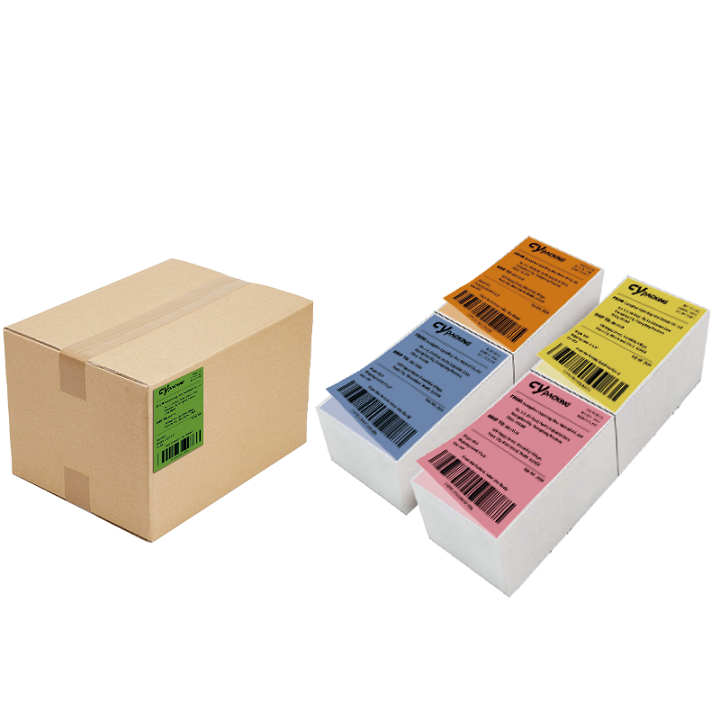
Successful label design balances branding, compliance, scanning reliability, and production efficiency. The following process is designed for brand owners and procurement teams ordering custom carton labels from a packaging factory.
1. Define the Label's Primary Job
Every label should have a primary purpose. Is it intended to sell, identify, track, warn, authenticate, or direct users to online content?
A shipping label should prioritise legibility and scan performance. A retail carton label should prioritise branding and product communication. A regulatory label should prioritise accuracy and mandatory information. Trying to make every element equally prominent usually creates visual clutter.
2. Build a Clear Information Hierarchy
Place information in order of importance. Most carton labels benefit from a simple hierarchy:
- First: Brand and product identity
- Second: Variant, size, quantity, or key benefit
- Third: Barcode, QR code, serialisation, or handling information
- Fourth: Regulatory, manufacturing, or supplementary details
Use enough white space around important information. Small labels become difficult to use when every millimetre is filled with text, icons, borders, and decorative elements.
3. Protect Barcode and QR-Code Performance
A barcode that looks acceptable on screen may not scan on a warehouse floor. Consider print contrast, quiet zones, code size, ink spread, substrate texture, and placement.
Best practices include:
- Use dark bars on a light, non-reflective background
- Keep barcode areas free from artwork and unnecessary textures
- Preserve required quiet zones around the code
- Avoid placing codes across folds, seams, corners, or damaged surfaces
- Test printed samples using the scanning environment you expect to use
- Confirm the encoded data before full production
A QR code can link to assembly instructions, product registration, campaign pages, authentication pages, or multilingual product content. However, the linked page must load quickly on mobile devices and should remain active for the life of the product.
4. Prepare Print-Ready Artwork
Supply artwork in a production-ready format whenever possible. A professional printer can review files, but preflight is more efficient when the client provides correct specifications from the beginning.
Your artwork package should include:
- Final label dimensions and corner-radius requirements
- Bleed area and safe margin
- Vector logos and editable text where required
- CMYK or approved Pantone colour references
- Barcode source data and required symbology
- Finishing instructions, such as matte, gloss, lamination, or varnish
- Variable-data spreadsheet, if serialisation is needed
- Application direction for labels on rolls
For brand-critical colours, request a physical proof or production sample. Screen colours are not a reliable final reference because monitors, profiles, substrates, inks, and lighting conditions vary.
5. Approve a Practical Sample
The final approval sample should answer operational questions, not only aesthetic ones. Check adhesion, barcode readability, colour, die-cut accuracy, roll direction, label release, resistance to rubbing, and compatibility with manual or automatic application.
A supplier that asks detailed questions at this stage is helping protect your production outcome. In packaging, a cheap label that causes line stoppages or shipment errors is rarely a cost-saving solution.
Carton Labels vs Direct Carton Printing
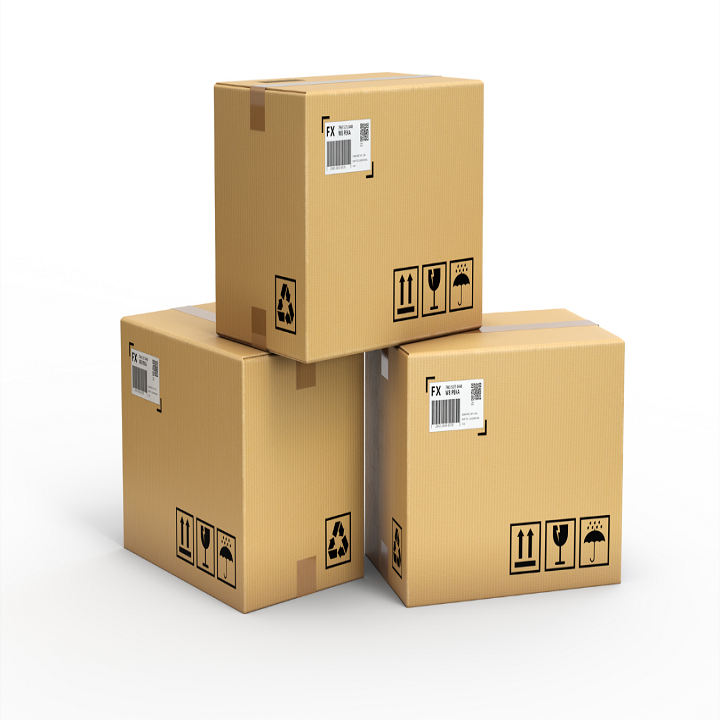
Brands often ask whether they should print directly on the carton or apply a custom label. The correct answer depends on order volume, SKU complexity, required flexibility, and branding needs.
| Decision factor | Carton labels | Direct carton printing |
| Multiple SKUs or markets | Highly flexible | Requires separate carton artwork or inventory |
| Variable data | Easy to update | Less practical for frequently changing data |
| Short runs | Often cost-efficient | Setup can be less efficient for small variations |
| Premium carton graphics | Useful for accents and product differentiation | Strong option for full-box branding |
| Warehouse identification | Excellent | May need an additional label anyway |
| Lead-time flexibility | Supports late-stage customisation | Changes may require new box production |
A hybrid solution is often effective: print stable brand graphics directly on the carton, then use labels for SKU-specific information, languages, promotions, barcodes, or destination details.
Common Carton Label Mistakes to Avoid
Choosing Material Before Understanding the Environment
A label selected for appearance alone may fail in cold storage, humid transit, dusty warehouses, or long-term stacking. Start with the application environment, then select materials and adhesive.
Using Tiny Text and Low Contrast
A design can look elegant but still be difficult to read. Product names, lot codes, warnings, and handling instructions should remain legible at the real viewing distance.
Placing Labels Over Carton Seams
Seams, folds, closures, and corners create risk. They can compromise adhesion, wrinkle the label, distort codes, and make data difficult to scan. Apply labels on a clean, flat, visible panel whenever possible. [brownpackaging]
Treating Sustainability as a Marketing Slogan
Avoid unsupported phrases such as "100% eco-friendly." Instead, state a specific, substantiated feature, such as the percentage of recycled content or the relevant recycling condition. Clear claims build more trust than vague environmental language. [ftc]
Ignoring Application Method
A label that works by hand may not run efficiently through automatic equipment. Confirm roll diameter, core size, winding direction, label gap, dispense speed, and machine compatibility before mass production.
Why Work with XingKun for Custom Carton Labels?
For international buyers, the best packaging supplier is not simply a printer. It should be a production partner that understands packaging structure, print quality, product branding, export expectations, and OEM/ODM requirements.
Shenzhen XingKun Packing Products Co., Ltd. supports custom packaging projects for overseas brands, wholesalers, and manufacturers. Our broader production experience across packaging boxes, playing cards, jigsaw puzzles, printed books, stickers, and promotional printed products helps us evaluate labels as part of the complete packaging system—not as an isolated item.
When requesting custom carton labels from XingKun, providing the following information will help accelerate quotation and sampling:
- Label size, shape, and quantity
- Carton material and surface description
- Application environment and required durability
- Artwork file or design requirements
- Adhesive preference, if known
- Printing colours and finishing requirements
- Roll, sheet, or individual-label format
- Barcode, QR code, serialisation, or variable-data requirements
- Target market and relevant compliance information
- Expected delivery schedule and destination country
Ready to improve your packaging identification and brand presentation? Contact XingKun with your label artwork, carton specifications, and estimated quantity. Our team can help you assess material, adhesive, printing method, finishing, and packaging format before mass production begins.
Conclusion
Carton labels are a practical tool for product identification, inventory control, compliance, logistics, and brand differentiation. The most effective solution is not necessarily the most decorative or the least expensive—it is the label engineered for your carton surface, supply-chain conditions, brand standards, application method, and end-of-life goals.
For brands that need flexible, export-ready packaging, a carefully specified custom carton label can reduce operational risk while making every shipped box clearer, more professional, and easier to manage. Work with a supplier that tests the details early, validates artwork carefully, and treats your label as an essential part of the total packaging experience.
FAQ
1. What is the best material for carton labels?
The best material depends on the application. Paper labels are often suitable for dry retail cartons, while synthetic film labels can be better for moisture, abrasion, or demanding shipping conditions. Always evaluate the carton surface, storage environment, and required label life before selecting a material.
2. Can carton labels be printed with barcodes and QR codes?
Yes. Carton labels can include UPC, EAN, Code 128, GS1-compatible barcodes, QR codes, serial numbers, and batch information. Test printed labels with the intended scanner before approving full production to ensure the code is readable in real working conditions.
3. Can I order custom carton labels in different designs?
Yes. Brands can create multiple versions for different SKUs, flavours, sizes, languages, retailers, seasonal promotions, or shipping destinations. Digital and variable-data printing can be useful when designs or information change frequently. [researchandmarkets]
4. How do I make carton labels stick to corrugated boxes?
Use an adhesive designed for corrugated board, make sure the application surface is clean and dry, and avoid applying labels over seams or corners. For cold, dusty, recycled, or rough cartons, request a material-and-adhesive test before placing a large order.
5. Are eco-friendly carton labels available?
Yes, options may include recycled-content paper, compatible label constructions, reduced-material formats, and recycling-conscious adhesive choices. However, the environmental claim should be specific and supported by evidence; broad "green" claims can be misleading. [ftc]
6. What artwork file should I send for carton label printing?
Vector PDF, AI, or EPS files are generally preferred for sharp text, logos, and barcodes. Include final dimensions, bleed, colour references, barcode data, finishing requirements, and any variable-data file needed for serialised labels.
7. Should I use labels or print directly on my cartons?
Use labels when you need flexible SKU changes, late-stage customisation, variable data, short-run variation, or multiple markets. Use direct carton printing when the design is stable and full-box visual branding is the priority. Many brands use both methods together.
References
1. XingKun. "[Carton Labels]." Product reference page for custom carton label enquiries and project specifications.
2. Future Market Insights. "[Labels Market]." Market outlook covering label demand, pressure-sensitive labels, e-commerce, recyclable materials, and digital/flexographic printing trends. [futuremarketinsights]
3. Mordor Intelligence. "[Label Market Size, Growth Trends 2026]." Market analysis discussing e-commerce logistics, sustainability regulations, connected packaging, and global market growth. [mordorintelligence]
4. Brown Packaging. "[How to Properly Label Corrugated Boxes]." Practical guidance on label placement, durability, barcode readability, handling, and corrugated-box labelling. [brownpackaging]
5. Labels & Labeling. "[2026 Global Predictions]." Industry outlook covering LED curing, digital label printing, wash-off adhesives, paper-based materials, and RFID adoption. [labelsandlabeling]
6. Beontag. "[Labeling Trends 2026: What's Next for PSA Label Materials]." Overview of circular packaging, cleaner chemistry, waste reduction, smart identification, variable data, and automation trends. [beontag]
7. Research and Markets. "[Label Printing Market Report 2026]." Report summary addressing digital label printing, customised short runs, eco-friendly materials, barcode/RFID applications, and premium branding. [researchandmarkets]
8. U.S. Federal Trade Commission. "[Environmental Claims: Summary of the Green Guides]." Guidance on substantiating and qualifying recyclable, recycled-content, compostable, renewable-material, and other environmental claims. [ftc]


