Content Menu
● Why Custom Packaging Matters for Small Businesses
● What Are Custom Packaging Boxes?
● Common Box Types for Small Businesses
● How to Choose the Right Custom Box
>> 1. Start With Product Protection
>> 2. Match Packaging to Sales Channel
>> 3. Calculate the Real Cost Per Order
● Custom Packaging Design: What Actually Works
>> Keep the Design Simple and Recognizable
>> Design for the Unboxing Moment
>> Make Sustainability Practical
● A Step-by-Step Process to Order Custom Boxes
>> Step 1: Define Your Product and Order Quantity
>> Step 2: Choose Material and Box Structure
>> Step 3: Prepare Print-Ready Artwork
>> Step 4: Request a Sample
>> Step 5: Plan Logistics and Reordering
● Expert Insight: Avoid These Common Small-Business Mistakes
● Case Example: A Small Card and Puzzle Brand
● How XingKun Supports Small Business Packaging
● Conclusion
● FAQ
>> 1. What is the best custom packaging box for a small business?
>> 2. What is the minimum order quantity for custom boxes?
>> 3. How much should a small business spend on custom packaging?
>> 4. Are custom boxes worth it for small businesses?
>> 5. What information do I need to get a custom packaging quote?
>> 6. Can custom packaging be sustainable?
● References
Custom packaging boxes for small business are no longer a "nice-to-have." For a small brand selling online, the box is often the first physical touchpoint a customer has with your business—and it can influence whether they buy again, recommend you, or share the unboxing online. This guide explains how to choose, design, order, and scale custom boxes without overspending.
As a packaging manufacturer working with overseas brands, wholesalers, and product producers, we see a common pattern: small businesses often start with generic mailers, then lose repeat purchases because their packaging does not communicate brand quality. The solution is not necessarily the most expensive box. It is a fit-for-purpose packaging system that protects the product, reflects the brand, controls cost, and supports a better customer experience.

Why Custom Packaging Matters for Small Businesses
Packaging affects more than product protection. It shapes perceived value, purchase confidence, and repeat-buying behavior.
Recent consumer research found that 73% of consumers say premium packaging improves their perception of a brand, while 57% of consumers who had a memorable packaging experience made another purchase from that brand. Another survey found that 89% of consumers say packaging quality influences how they perceive the product inside. [adobe]
For a small business, this matters because you usually do not have the advertising budget of a large brand. Packaging becomes a low-cost, high-frequency brand asset:
- It reinforces your logo, colors, and positioning.
- It makes a standard product feel more premium.
- It reduces damage, returns, and customer-service issues.
- It creates shareable unboxing moments.
- It helps customers remember and recognize your brand.
Packaging also has a commercial downside when it is poorly executed. Adobe's research found that some small businesses considered branded tissue paper and custom-printed boxes "not worth the cost," which suggests that packaging should be selected based on product value, order volume, and customer expectations rather than copied blindly from larger brands. [adobe]
What Are Custom Packaging Boxes?
Custom packaging boxes are boxes designed around a specific product, brand identity, and shipping requirement. Unlike stock boxes, they are manufactured in a chosen size, material, print style, and structure.
A good custom box typically considers:
- Product dimensions and weight
- Fragility and protection needs
- Shipping method and transit conditions
- Brand identity and visual design
- Retail shelf display or e-commerce delivery
- Sustainability and recyclability
- Unit cost at your actual order quantity
- Storage space and assembly time
For small businesses, the goal is not simply to print a logo on a box. The goal is to create packaging that is protective, recognizable, practical, and commercially viable.
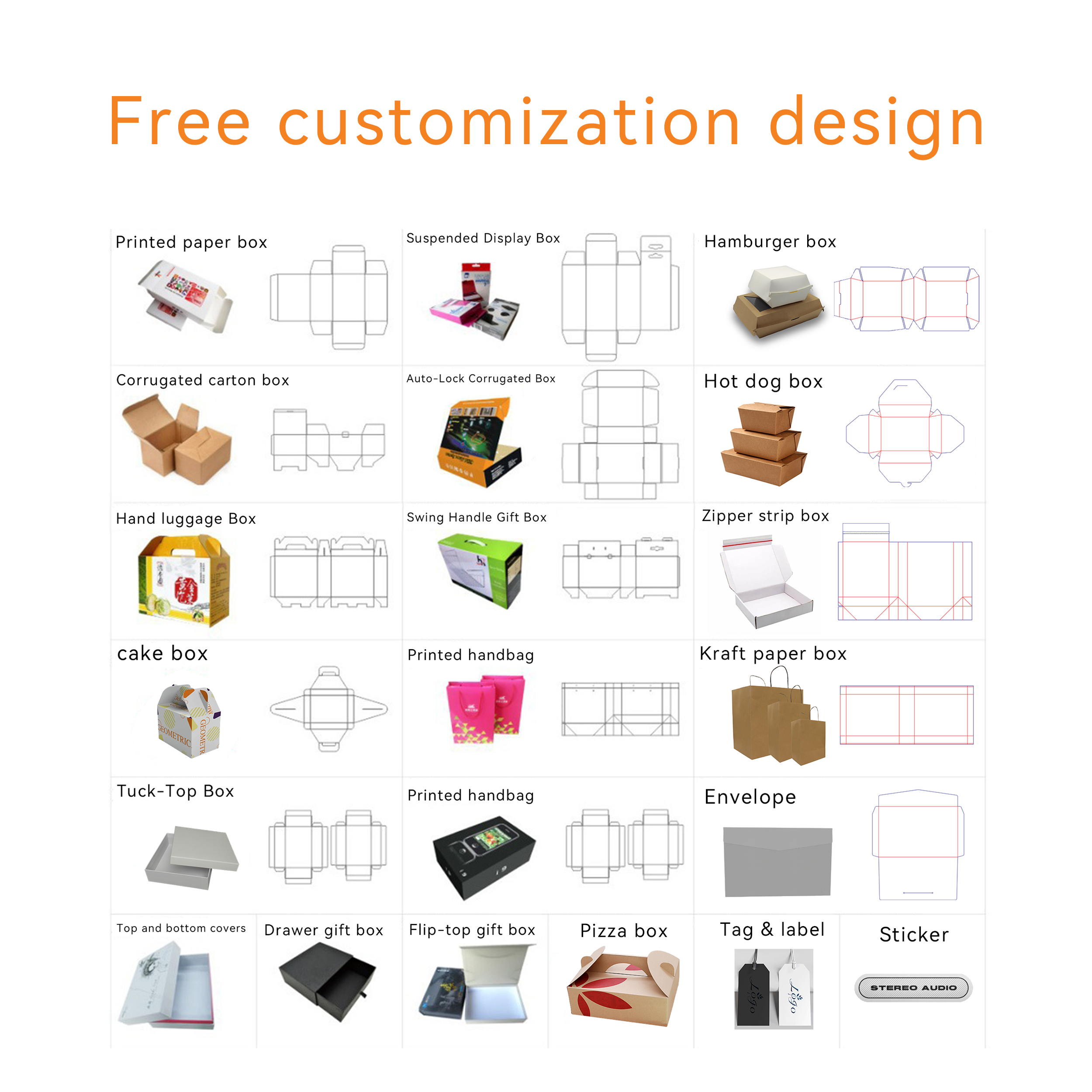
Common Box Types for Small Businesses
Choosing the right structure is one of the most important decisions. The wrong box can increase shipping costs, damage products, or make packing inefficient.
| Box type | Best for | Key advantage | Consideration |
| Mailer box | E-commerce apparel, cosmetics, subscription products | Easy to assemble, strong unboxing presentation | Needs internal protection for fragile goods |
| Rigid box | Luxury gifts, electronics, jewelry, premium sets | High perceived value and durability | Higher cost and larger storage footprint |
| Folding carton | Retail products, food, supplements, cosmetics | Cost-effective for higher volumes | Less protective for heavy or fragile items |
| Corrugated shipping box | Fragile, heavy, or multi-item orders | Strong transit protection | Usually needs branding through printing or labels |
| Two-piece box | Gift sets, puzzles, playing cards, premium products | Clean presentation and premium feel | Requires precise sizing |
| Display box | Retail counters, trade shows, point-of-sale displays | Supports product visibility and selling | Needs retailer or display-space planning |
At XingKun, we commonly produce custom packaging for products such as playing cards, jigsaw puzzles, printed books, stickers, labels, badges, folders, and packaging bags. The ideal box depends on whether the product is sold online, in retail, or through wholesale distribution. [developers.google]
How to Choose the Right Custom Box
1. Start With Product Protection
A beautiful box that arrives damaged damages the brand. Before discussing colors or finishes, define the protection requirement.
Ask:
- Is the product fragile, heavy, sharp, liquid-based, or temperature-sensitive?
- Will it ship individually, in bundles, or inside an outer carton?
- Will it pass through courier networks, freight, or retail distribution?
- Does it require inserts, dividers, foam, molded pulp, or bubble wrap?
For fragile products, a corrugated outer box plus a custom insert is often more reliable than a single decorative box. For lightweight non-fragile items, a printed mailer box may be enough.
2. Match Packaging to Sales Channel
The same product may need different packaging for different channels.
- E-commerce: Prioritize transit strength, compact sizing, easy assembly, and unboxing experience.
- Retail: Prioritize shelf impact, barcodes, compliance information, and display compatibility.
- Wholesale: Prioritize master cartons, stackability, pallet efficiency, and clear product identification.
- Subscription boxes: Prioritize repeat-use design, lightweight materials, and consistent brand presentation.
A small business selling through multiple channels should avoid designing one box for every purpose. It is usually better to create a primary product box and a separate shipping solution.
3. Calculate the Real Cost Per Order
Do not judge packaging only by the unit price of the box. Calculate the total cost per shipped order:
True packaging cost=Box+Inserts+Printing+Assembly+Extra shipping weight+Damage/returns cost
For example, a cheaper box may require more filler material, increase dimensional weight, or lead to more damaged deliveries. A slightly higher-specification box can become more economical once you include these hidden costs.
Custom Packaging Design: What Actually Works
Keep the Design Simple and Recognizable
Small brands often overdesign their first packaging. A cleaner approach usually performs better:
- Use one primary brand color.
- Place the logo clearly on the main panel.
- Use readable typography.
- Avoid covering every surface with graphics.
- Reserve interior printing for a thank-you message, usage guide, or social-media prompt.
Consumer research shows that visual design, size or shape, and brand identity all influence packaging perception, with outer-box design being especially noticeable. [vistaprint]
Design for the Unboxing Moment
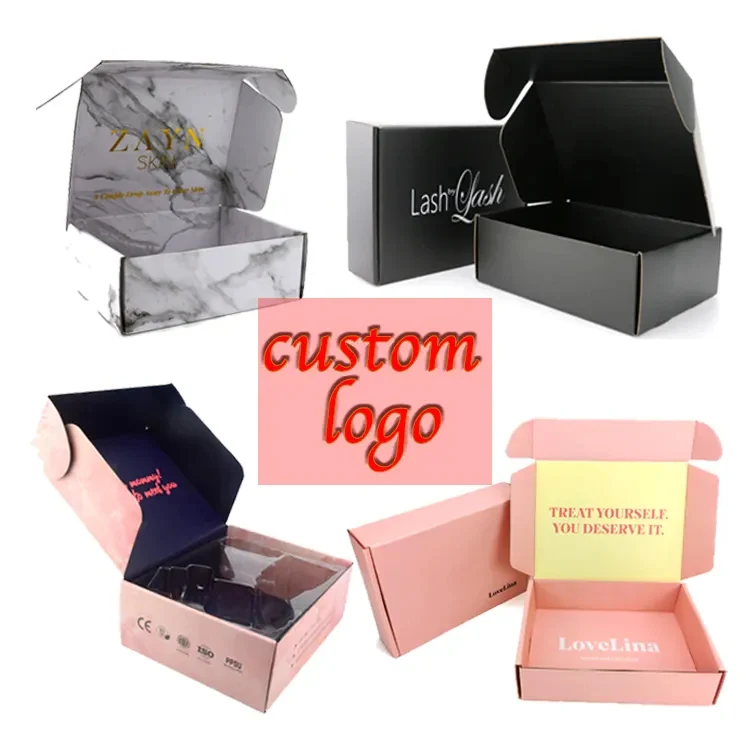
An unboxing moment does not require luxury materials. It requires intentional sequencing: the customer opens the box, sees the product clearly, and encounters one or two thoughtful brand details.
Effective low-cost elements include:
- A printed thank-you message inside the lid
- Branded tissue paper or a sticker seal
- A product-care card or QR code
- A simple insert that holds the product in place
- A discount code for the next purchase
VistaPrint found that 56% of consumers said they would buy again from a small business after a true unboxing moment, while 48% would recommend the business to friends or family. These outcomes can be achieved with a well-designed mailer box, not necessarily a rigid luxury box. [vistaprint]
Make Sustainability Practical
Sustainability is now a baseline expectation rather than a niche preference. In a 2025 unboxing survey, 70% of consumers expected sustainable packaging by default, and more than one-fifth said they would not place a repeat order if packaging was viewed as non-sustainable. [macfarlanepackaging]
For small businesses, practical sustainability options include:
- Recyclable corrugated cardboard
- Soy-based or water-based inks
- Minimal plastic windows and laminates
- Right-sized boxes to reduce void fill
- Recycled paper inserts instead of plastic foam
- Clear recycling instructions printed on the box
Avoid claiming a box is "eco-friendly" without evidence. Instead, use specific, verifiable language such as "recyclable corrugated cardboard," "FSC-certified paper," or "plastic-free insert."
A Step-by-Step Process to Order Custom Boxes
Step 1: Define Your Product and Order Quantity
Prepare the following before requesting a quotation:
- Product length, width, height, and weight
- Product photos or a physical sample
- Expected monthly or annual order quantity
- Sales channel: online, retail, wholesale, or subscription
- Required delivery date
- Destination markets and shipping method
Order quantity strongly affects unit price. A small trial order may cost more per box, but it reduces inventory risk while you test the design.
Step 2: Choose Material and Box Structure
For most small businesses, the practical starting points are:
- Corrugated mailer boxes for e-commerce
- Folding cartons for lightweight retail goods
- Rigid boxes for premium gift products
- Custom inserts for fragile or multi-component products
Ask your supplier to recommend a structure based on the product—not only on the design file.
Step 3: Prepare Print-Ready Artwork
Your artwork should include:
- Logo in vector format, preferably AI, EPS, or PDF
- Pantone or CMYK color references
- Dieline template with bleed and safe margins
- Font files or outlined text
- High-resolution images, ideally 300 DPI
- Barcode, legal text, and compliance details if required
A professional manufacturer should provide a dieline, preproduction proof, or physical sample before mass production.
Step 4: Request a Sample
Never skip sampling for a new box. A sample confirms:
- Fit and product protection
- Print color accuracy
- Material thickness
- Assembly ease
- Structural strength
- Overall customer experience
For international orders, samples also help avoid costly misunderstandings caused by color differences, paper thickness, or finishing expectations.
Step 5: Plan Logistics and Reordering
Packaging should be ordered with your inventory cycle in mind. Consider:
- Production lead time
- Shipping time and customs clearance
- Warehouse storage space
- Minimum order quantity
- Reorder trigger point
- Seasonal demand peaks
A useful rule is to reorder before your current packaging stock falls below the quantity needed for one full production and shipping cycle.
Expert Insight: Avoid These Common Small-Business Mistakes
From a manufacturer's perspective, these are the mistakes we see most often:
1. Designing the box before measuring the product. This leads to oversized boxes, higher shipping costs, and more filler.
2. Choosing premium finishes too early. Foil stamping, embossing, spot UV, and specialty paper can elevate a brand, but they add cost and production time.
3. Ignoring assembly labor. A complex box may look impressive but slow down fulfillment.
4. Using one box for every product. A single universal box often wastes space and weakens protection.
5. Overlooking compliance text. Retail products may require barcodes, ingredient lists, warnings, country-of-origin information, or recycling symbols.
6. Ordering too much inventory too soon. Start with a test quantity, validate customer response, then scale.
Case Example: A Small Card and Puzzle Brand
Imagine a small business selling custom playing cards and jigsaw puzzles online.
A practical packaging system could include:
- A custom two-piece rigid box for the retail product
- A corrugated outer carton for bulk wholesale shipments
- A printed insert to hold cards or puzzle pieces securely
- A QR code linking to rules, puzzle reference image, or brand community
- A recyclable mailer for direct-to-consumer orders
This approach separates the retail presentation box from the transit packaging. It protects the product, improves shelf appeal, and avoids forcing one box to perform every job.
How XingKun Supports Small Business Packaging
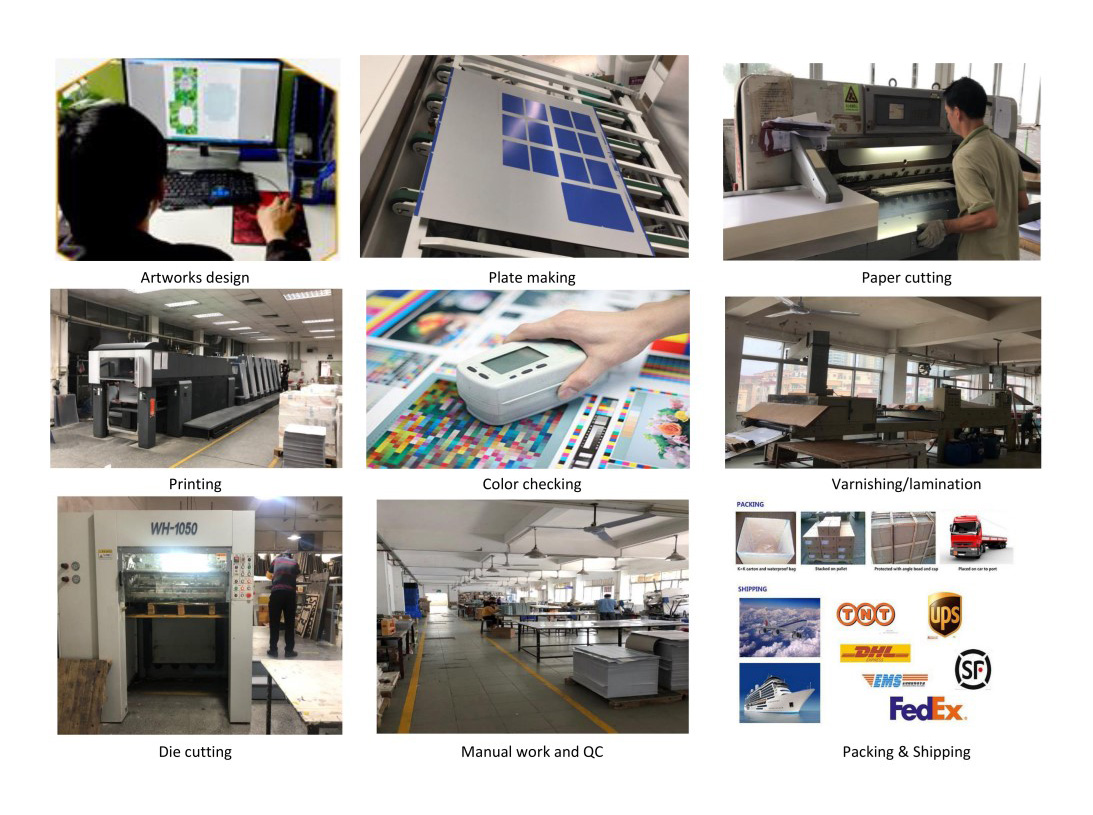
Shenzhen XingKun Packing Products Co., Ltd. provides OEM and ODM packaging solutions for overseas brands, wholesalers, and manufacturers. Our product range includes custom packaging boxes, playing cards, jigsaw puzzles, printed books, stickers, labels, badges, folders, and packaging bags. [developers.google]
For small businesses, we focus on practical manufacturing decisions:
- Custom box structures and sizes
- Material recommendations based on product weight and fragility
- CMYK and Pantone color printing
- Matte, gloss, soft-touch, and specialty finishes
- Inserts, trays, dividers, and protective packaging
- Low-to-medium quantity trial production
- Sample confirmation before mass production
- Export-ready packaging and logistics support
You can review our packaging-box manufacturing capabilities here: [XingKun Packaging Boxes Manufacturer]. [developers.google]
Conclusion
Custom packaging boxes for small business should be treated as a strategic investment, not just a shipping container. The best packaging protects the product, expresses the brand clearly, fits the sales channel, and remains affordable at your real order volume.
Start with product protection, choose a structure that matches how you sell, design a clean and recognizable brand experience, and validate the result with a sample before scaling. When done well, custom packaging can improve perceived quality, encourage repeat purchases, and turn everyday deliveries into a marketing opportunity.

FAQ
1. What is the best custom packaging box for a small business?
For most e-commerce small businesses, a custom corrugated mailer box is the best starting point. It is durable, easy to assemble, suitable for printing, and works well for apparel, cosmetics, accessories, and lightweight products. Fragile or premium products may need a rigid box, folding carton, or custom insert.
2. What is the minimum order quantity for custom boxes?
MOQ depends on box type, material, printing method, and supplier capability. Digital printing and sample production can support smaller quantities, while offset printing and custom structural tooling usually become more cost-effective at higher volumes. Always request a quotation based on your exact size, material, quantity, and finishing requirements.
3. How much should a small business spend on custom packaging?
A practical benchmark is to keep total packaging cost proportionate to product price and margin. Low-cost products may only justify a simple printed mailer, while premium products can support rigid boxes, inserts, and specialty finishes. Calculate the full cost per order, including inserts, shipping weight, assembly, and potential damage costs.
4. Are custom boxes worth it for small businesses?
Yes—when they are aligned with product value and customer expectations. Research shows that premium packaging can improve brand perception and that memorable packaging experiences can encourage repeat purchases. However, custom packaging is not worth it if it increases shipping costs, slows packing, or does not improve the customer experience. [adobe]
5. What information do I need to get a custom packaging quote?
Provide product dimensions, weight, product photos, order quantity, box style, material preference, printing requirements, destination country, and target delivery date. If possible, send a dieline or reference sample. This allows the manufacturer to recommend the most suitable structure and provide a more accurate price.
6. Can custom packaging be sustainable?
Yes. Small businesses can choose recyclable corrugated cardboard, recycled paper inserts, water-based inks, plastic-free closures, and right-sized boxes. Avoid vague environmental claims and use specific terms such as "recyclable," "recycled content," or "plastic-free" only when they can be verified.
References
1. Shenzhen XingKun Packing Products Co., Ltd. — [Packaging Boxes Manufacturer]
2. Google Search Central — [Our latest update to the quality rater guidelines: E-A-T gets an extra E for Experience]
3. Adobe Express — [Unboxed: Why packaging is one of the most overlooked growth levers in e-commerce]
4. VistaPrint — [How Packaging Shapes the Unboxing Experience]
5. FedEx Small Business — [The Unboxing Experience: Creative Ecommerce Packaging Ideas]
6. Macfarlane Packaging — [Unboxing Survey 2025 Highlights]
7. Domino — [Why does packaging matter?]


