Content Menu
● What Is a Mailer Box?
● Common Mailer Box Sizes and Their Uses
● How to Measure Mailer Box Dimensions Correctly
>> Understand Length, Width, and Height
>> Use Internal Dimensions for Product Fit
>> Use External Dimensions for Shipping Planning
● How to Choose the Right Mailer Box Size
>> Step 1: Define the Complete Packing Arrangement
>> Step 2: Design Protection Before Adding Clearance
>> Step 3: Check the Closed Box
>> Step 4: Approve a Physical Sample
● Mailer Box Size and Dimensional Weight
>> An Illustrative Size Comparison
● Choosing Corrugated Board and Inserts
>> Match Board Construction to the Application
>> Distinguish Void Fill from Product Restraint
● A Practical Sample-Approval and Transit-Test Plan
>> 1. Inspect Dimensions and Assembly
>> 2. Pack Representative Products
>> 3. Evaluate Distribution Risks
>> 4. Record Acceptance Criteria
● Using Customer Feedback to Improve Box Dimensions
● What to Include in a Custom Mailer Box Quotation
● Develop Your Custom Mailer Packaging with XingKun
● Frequently Asked Questions
>> What is the best mailer box size for a small business?
>> Are mailer box dimensions internal or external?
>> How much extra space should I leave inside a mailer box?
>> Can a mailer box ship without an outer carton?
>> Does a smaller mailer always cost less to ship?
>> Should different products use different mailer box sizes?
● References
Choosing the right mailer box sizes starts with your product, but it should never end there. Protective inserts, board thickness, shipping charges, and the customer's opening experience all influence the dimensions you need.
At Shenzhen XingKun Packing Products Co., Ltd., we bring more than 20 years of printing and packaging manufacturing experience to projects for brands and distributors across over 30 countries and regions. Our approach is straightforward: define the complete packed product before finalizing its box.
This guide explains common mailer box dimensions, how to measure accurately, and how to develop custom packaging that balances protection, presentation, and cost.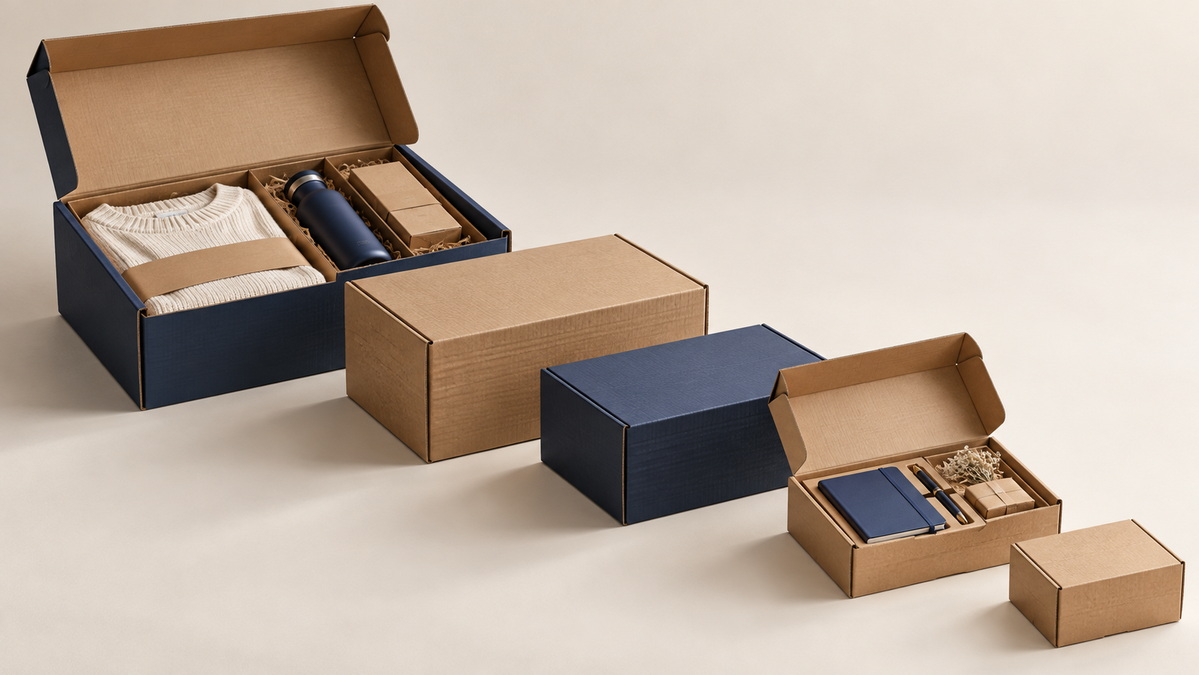
What Is a Mailer Box?
A mailer box is typically a folded corrugated packaging structure with an integrated lid and locking flaps. Brands use it for subscription deliveries, apparel, accessories, gift sets, and other direct-to-customer shipments.
Its structure supports organized presentation and provides printable surfaces inside and outside.
However, a locking lid does not automatically make a package suitable for tape-free shipping. Closure requirements depend on the structure, contents, carrier, and distribution conditions. Some applications need sealing tape, tamper-evident labels, or an outer shipping carton.
Likewise, mailer boxes are not limited to one board grade. Specify materials around the packed weight and required performance rather than assuming every mailer has identical strength.
Common Mailer Box Sizes and Their Uses
There is no single universal size chart covering every manufacturer. The dimensions below are useful purchasing references, not mandatory industry standards.
Unless your supplier states otherwise, confirm whether quoted dimensions refer to internal or external measurements.
| Size category | Example dimensions, inches | Possible applications | Main sizing consideration |
| Small | 6 × 4 × 2 | Accessories, compact gift items | Insert space and easy removal |
| Small | 8 × 6 × 2 | Small stationery sets, lightweight accessories | Product movement |
| Medium | 9 × 6 × 3 | Compact subscription assortments | Mixed product heights |
| Medium | 10 × 8 × 4 | Folded apparel, gift bundles | Folding method and cushioning |
| Medium | 12 × 9 × 3 | Documents, apparel, flat merchandise | Surface protection |
| Large | 14 × 10 × 4 | Larger apparel sets, multi-item orders | Packed weight and rigidity |
| Large | 16 × 12 × 4 | Larger gift assortments | Shipping volume and support |
These applications are starting points. A fragile item may require more protective space than a larger, durable product.
Very large or heavy orders may be better suited to another shipping-carton structure. Do not choose a mailer format simply because its appearance matches your branding.
How to Measure Mailer Box Dimensions Correctly
Understand Length, Width, and Height
Packaging dimensions are commonly written as:
Length × width × height
For a typical rectangular mailer, length and width describe the base, while height describes the closed box depth. However, suppliers may use different conventions.
Confirm the orientation on a drawing. A dimension list without an agreed drawing can produce an expensive misunderstanding.
For international projects, specify the unit system explicitly. One inch equals 25.4 millimeters.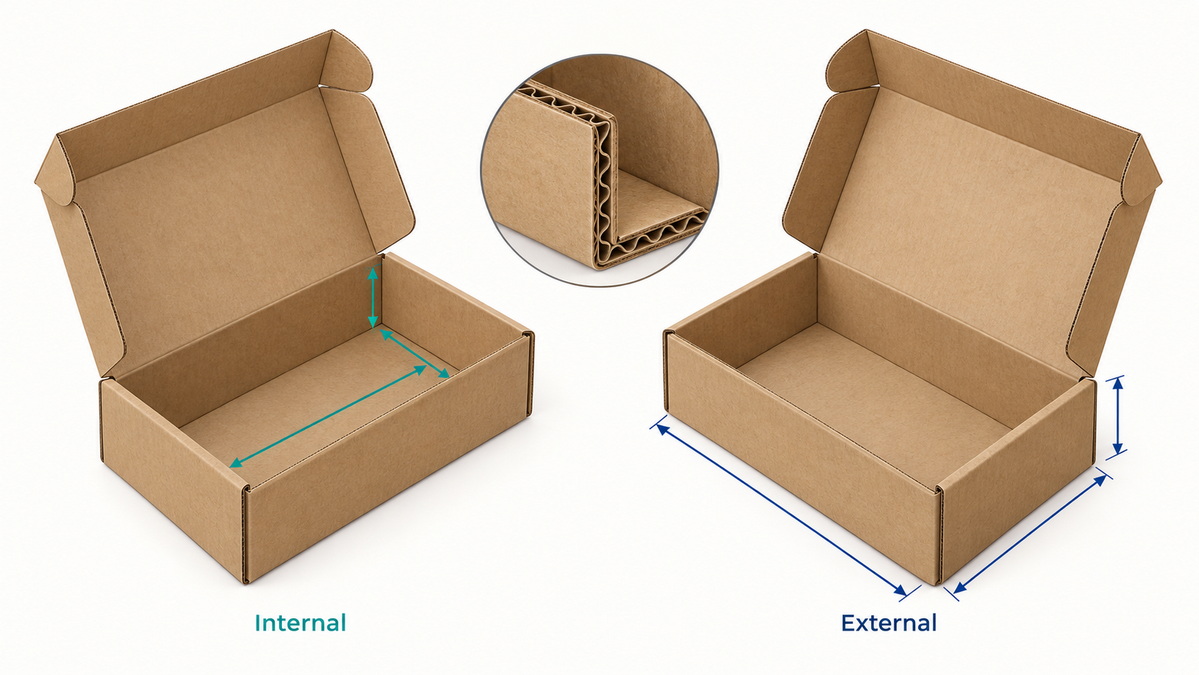
Use Internal Dimensions for Product Fit
Internal dimensions describe usable space inside the assembled box.
Measure the product in its shipping condition, including:
- Retail packaging or protective sleeves.
- Folded fabric and compressed soft goods.
- Inserts, dividers, or fitted trays.
- Accessories, instruction cards, and samples.
- Required cushioning.
Do not measure only the bare product if customers receive it with additional components.
Use External Dimensions for Shipping Planning
External dimensions describe the outside of the packed, closed box.
They matter for shipping quotations, storage, master-carton planning, and pallet arrangements. Board thickness, folded panels, and closure construction can make external dimensions larger than the usable interior.
Ask for both sets of measurements. Do not apply a universal conversion allowance between them.
How to Choose the Right Mailer Box Size
Step 1: Define the Complete Packing Arrangement
Lay out everything included in one order.
Decide whether products sit side by side, stack vertically, or occupy separate compartments. For apparel, agree on a repeatable folding method before measuring.
Photograph the arrangement and record its maximum dimensions. This gives your packaging supplier a clearer starting point than a product description alone.
Step 2: Design Protection Before Adding Clearance
Separate two requirements:
- Handling clearance allows packing and product removal.
- Protective space accommodates cushioning or structural supports.
They serve different purposes.
A durable textile product and a glass bottle should not receive the same allowance. UPS guidance, for example, specifies minimum cushioning thicknesses for particular materials and applications. That illustrates why a fixed fraction of an inch is not a reliable universal sizing rule.
Choose protection according to the product and shipping environment, then confirm the resulting dimensions through sampling.
Step 3: Check the Closed Box
A product may fit inside an open box but interfere with the lid once closed.
Check whether:
- The lid closes without pressure.
- Locking tabs engage correctly.
- The top panel remains flat.
- Inserts stay seated.
- Products can be removed comfortably.
A visibly bulging lid is a reason to reassess the design, not force the closure.
Step 4: Approve a Physical Sample
Before mass production, test an assembled sample with representative products.
Fit means more than getting everything inside. The package should close reliably, retain its contents, and support the intended presentation without unnecessary packing effort.
Mailer Box Size and Dimensional Weight
A lightweight package can still attract a higher shipping charge because of its volume.
FedEx explains that charges may be based on dimensional weight or actual weight, whichever is greater, subject to the applicable service terms.
A general dimensional-weight calculation is:
Dimensional weight = external length × external width × external height ÷ applicable divisor
The divisor, measurement rules, and rounding requirements depend on the carrier, service, route, and agreement. Verify them before approving production dimensions.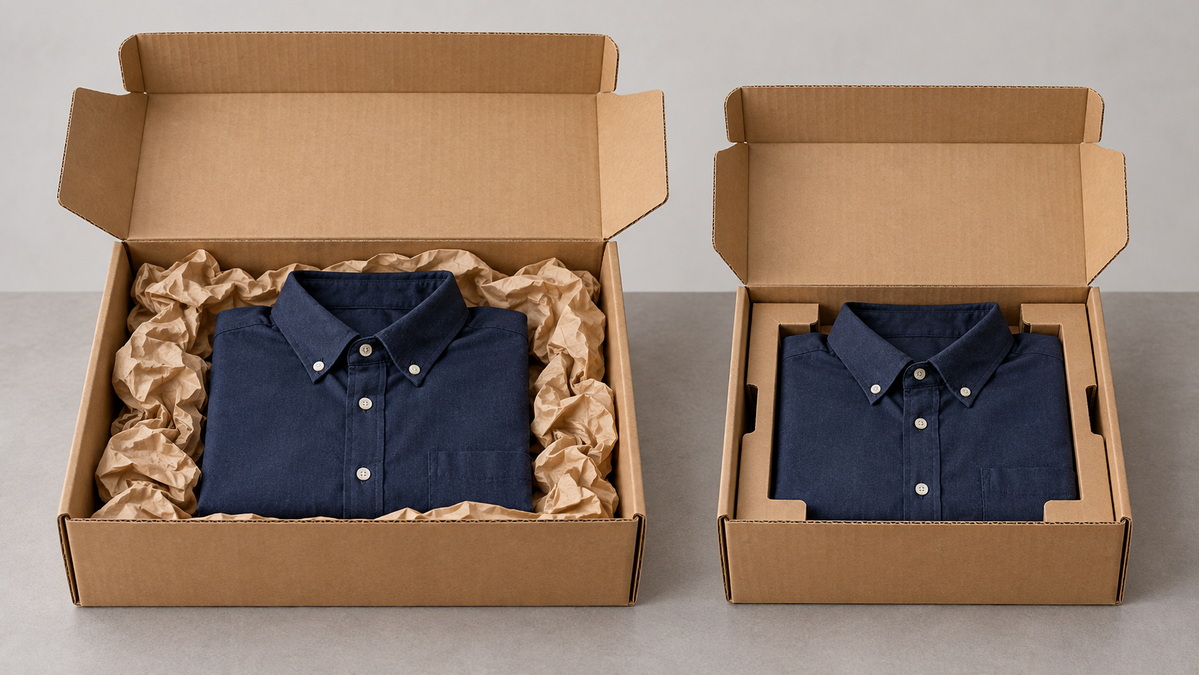
An Illustrative Size Comparison
Consider two hypothetical closed packages:
| Packaging option | External dimensions | External volume |
| Original box | 12 × 10 × 4 inches | 480 cubic inches |
| Revised box | 10 × 8 × 4 inches | 320 cubic inches |
The revised box has approximately 33% less external volume.
That does not mean shipping charges automatically fall by 33%. Actual weight, minimum charges, rate bands, surcharges, and contract terms can change the outcome.
Use the comparison to identify quotation opportunities. Then obtain actual shipping estimates for both options before deciding.
Choosing Corrugated Board and Inserts
Match Board Construction to the Application
E-flute and B-flute are common options worth discussing with a manufacturer. However, flute designation alone does not establish whether a package will protect its contents.
Request a complete specification covering:
- Board construction and grade.
- Relevant strength requirements.
- Packed product weight.
- Insert design.
- Closure method.
- Expected storage and shipping conditions.
For printed mailers, also review how the selected board and surface treatment affect appearance, folding, and resistance to scuffing.
Distinguish Void Fill from Product Restraint
Void fill occupies empty space. A fitted insert locates and restrains a product. Neither automatically provides adequate shock protection.
A paper insert may present a product neatly while leaving vulnerable corners exposed. Loose fill may occupy space without keeping a heavy item consistently positioned.
Evaluate the complete packaging system, not individual components in isolation.
For fragile goods, ask how the design separates products from each other and from the outer walls. Confirm the answer with appropriate testing.
A Practical Sample-Approval and Transit-Test Plan
A sample that looks attractive on a desk is not yet evidence of shipping performance.
Use a staged approval process.
1. Inspect Dimensions and Assembly
Check internal dimensions, folding accuracy, locking tabs, and insert placement.
Have the people responsible for packing assemble the sample. Their feedback can reveal awkward loading sequences or inconsistent closures.
2. Pack Representative Products
Include relevant variations, such as the tallest component or heaviest assortment.
If products vary between production batches, communicate those tolerances before confirming the box size.
3. Evaluate Distribution Risks
Consider the likely handling, vibration, stacking, and environmental conditions.
For suitable parcel shipments, ISTA Procedure 3A provides a general simulation framework for individual packaged products weighing 150 pounds or less. A testing laboratory can advise whether that procedure or another protocol matches your distribution route.
Do not describe informal handling checks as certified testing.
4. Record Acceptance Criteria
Define what counts as a pass before testing.
Criteria may include no product breakage, no unacceptable cosmetic damage, secure closure, and acceptable presentation after opening.
Document failures, revise the package, and retest when necessary.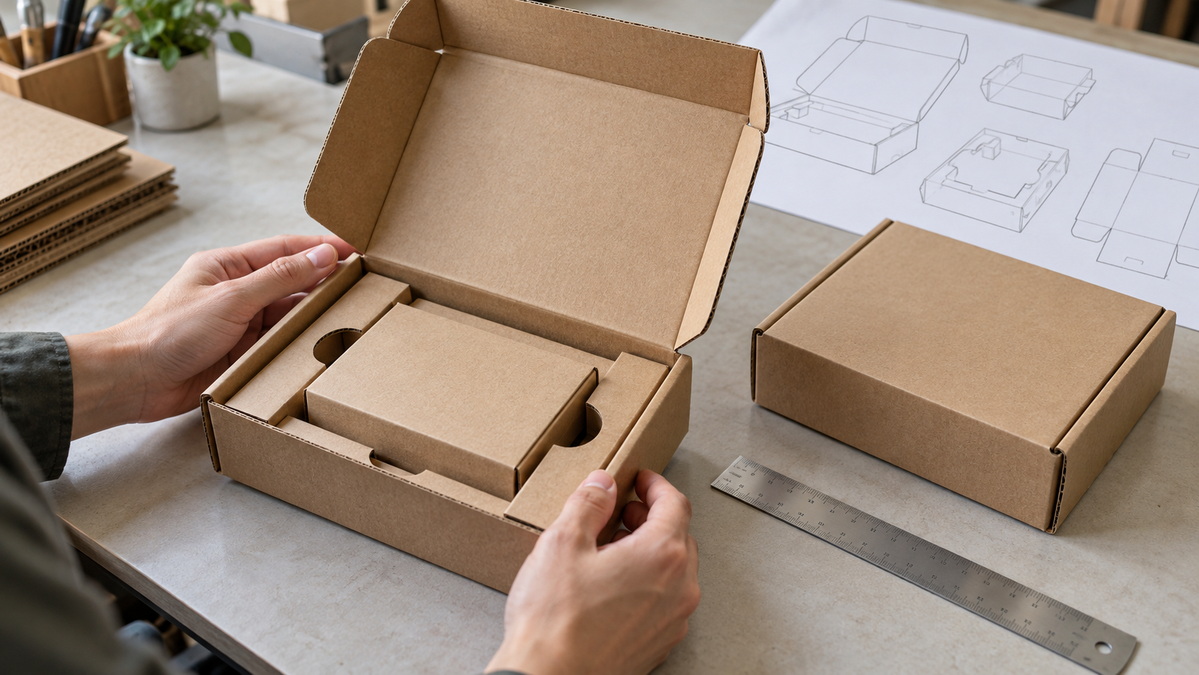
Using Customer Feedback to Improve Box Dimensions
Customer feedback becomes more useful when it describes a specific packaging problem.
Instead of recording only "the box was too big," classify the issue:
| Feedback theme | What to investigate |
| Product moved inside | Insert fit, restraint, cushioning |
| Box looked oversized | Product arrangement and unnecessary clearance |
| Item was difficult to remove | Finger access and insert opening |
| Lid arrived open | Locking geometry and sealing method |
| Product arrived damaged | Protection, board specification, transit conditions |
Review feedback alongside photographs, order contents, and the packaging version used.
For example, difficult removal may call for a redesigned insert rather than a larger box. Movement may require better restraint rather than additional loose fill.
Use verified customer comments when available. Avoid turning assumptions into testimonials or claiming improvements without supporting records.
What to Include in a Custom Mailer Box Quotation
A complete quotation brief reduces ambiguity and helps you compare equivalent offers.
Provide:
1. Product dimensions, weight, and photographs.
2. Required internal box dimensions.
3. Product arrangement and insert requirements.
4. Expected order quantity and delivery schedule.
5. Shipping destinations and distribution method.
6. Printing coverage, colors, and finishes.
7. Closure and tamper-evidence requirements.
8. Sample approval and testing expectations.
Ask the supplier to identify dimensional tolerances, estimated external dimensions, tooling charges, and any assumptions affecting the quotation.
Keep the approved drawing, material specification, and sample reference together. These become the shared basis for production approval and repeat orders.
Develop Your Custom Mailer Packaging with XingKun
The right mailer size balances product protection, manageable shipping volume, practical assembly, and a satisfying opening experience.
At Shenzhen XingKun Packing Products Co., Ltd., we welcome packaging enquiries from brands and distributors seeking custom printed boxes and related printed products.
Send your product dimensions, packed weight, order quantity, destination market, and preferred presentation. Request a quotation covering the proposed structure, internal and external dimensions, board specification, printing options, and sample process.
A clear brief makes the next discussion more productive—and helps prevent avoidable sizing changes later.
Frequently Asked Questions
What is the best mailer box size for a small business?
There is no universally best size. Start with your most frequent order configuration, including protection and inserts. Compare suitable stock dimensions with a custom option using actual packing and shipping requirements.
Are mailer box dimensions internal or external?
Either convention may appear in a supplier's listing. Confirm it explicitly. Internal dimensions determine usable product space; external dimensions support shipping and storage calculations.
How much extra space should I leave inside a mailer box?
There is no universal allowance. Required space depends on product fragility, cushioning, inserts, manufacturing tolerances, and packing access. Approve the allowance through a physical sample.
Can a mailer box ship without an outer carton?
Some can, provided the complete package meets its protection and closure requirements. Fragile, heavy, or presentation-sensitive products may need additional protection. Evaluate the actual shipment rather than assuming suitability.
Does a smaller mailer always cost less to ship?
No. A smaller box may reduce dimensional weight, but the final charge also depends on actual weight, service rules, minimum charges, and surcharges. Compare carrier quotations.
Should different products use different mailer box sizes?
Sometimes. A limited size range can simplify inventory, but excessive empty space may increase protection needs and shipping volume. Group products by packed dimensions and fragility before choosing the range.
References
- Custom Box Makers. "Mailer Box Size Guide," by Dian Priastuti. Original article reviewed for its size categories, measuring advice, and content gaps; its unsupported loss figures and fixed sizing allowance were not adopted. [customboxmakers]
- UPS. "How to Pack a Box or Pallet for Shipping." Guidance on suitable boxes, cushioning materials, and protective packing methods. [ups]
- FedEx. "Dimensional Weight Calculator." Explains the relationship between dimensional weight, actual weight, and shipment charges. [page.message.fedex]
- International Safe Transit Association. "Test Procedures." Describes Procedure 3A and its parcel-distribution application. [ista]
- International Safe Transit Association. "Procedure 3A Overview." Defines the procedure's scope for individual packaged products weighing 70 kilograms or 150 pounds or less. [ista]
- Company background supplied by Shenzhen XingKun Packing Products Co., Ltd.: more than 20 years of experience and service to brands and distributors across over 30 countries and regions. These statements were supplied for this article and were not independently audited.


