Content Menu
● What Are Custom Trivia Cards?
● Who Uses Custom Trivia Card Games?
● Plan the Game Before Designing the Cards
>> 1. Define the players and setting
>> 2. Choose a simple core mechanic
>> 3. Organize content into categories
>> 4. Set difficulty deliberately
● Write Questions Players Can Understand
>> Use these editing checks
>> Make the answer easy to verify
● Choose Card Size, Paper, and Finish
>> Card size and readability
>> Paper and durability
>> Surface finish and decorative effects
● Design for Print, Not Just for Screen
>> A high-value proofing method
● Select Packaging That Fits the Product
● Plan the OEM/ODM Production Process
>> Include these details in your RFQ
>> Sample, approve, then scale
● Compliance and Age Guidance
● How to Compare Custom Trivia Card Manufacturers
● What Common Product Pages Often Leave Out
● Conclusion
● FAQs About Custom Trivia Cards
>> 1. What information should I prepare before requesting a quote?
>> 2. How many cards should a trivia deck contain?
>> 3. What card size works best for custom trivia cards?
>> 4. Should the question and answer go on the same card?
>> 5. Can I customize both the cards and the box?
>> 6. Should I order a sample before mass production?
>> 7. What files should I send to the printer?
>> 8. Do trivia cards for children need safety review?
● References
Custom trivia cards turn questions, answers, and ideas into a physical game people can play, learn from, and share. For brands, publishers, educators, and event planners, a successful custom trivia card game depends on more than attractive artwork: the questions, card layout, materials, packaging, and production plan all need to work together.
This guide explains how to plan a trivia deck, prepare print-ready files, choose specifications, and evaluate an OEM/ODM manufacturing partner. It also highlights practical decisions that are often missing from basic product descriptions—especially how to make questions readable, gameplay balanced, and a deck economical to produce.
What Are Custom Trivia Cards?
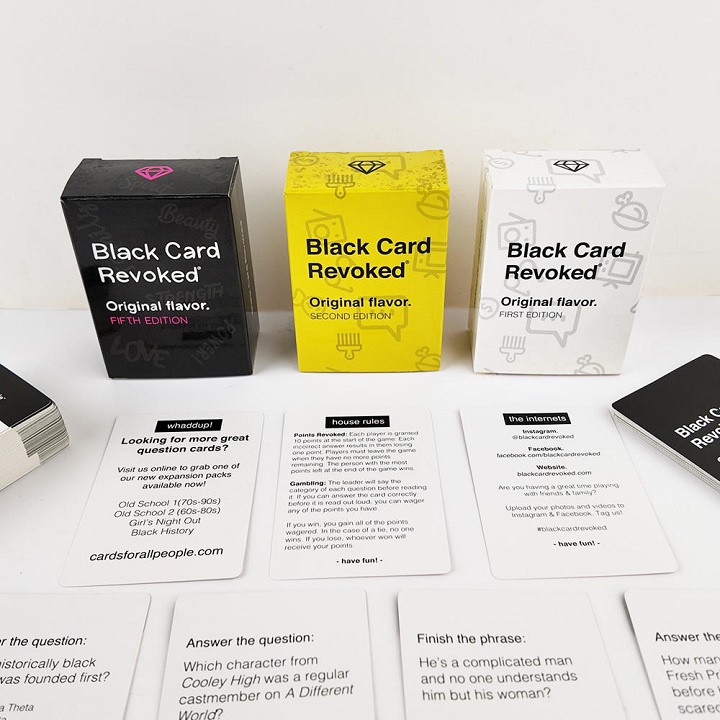
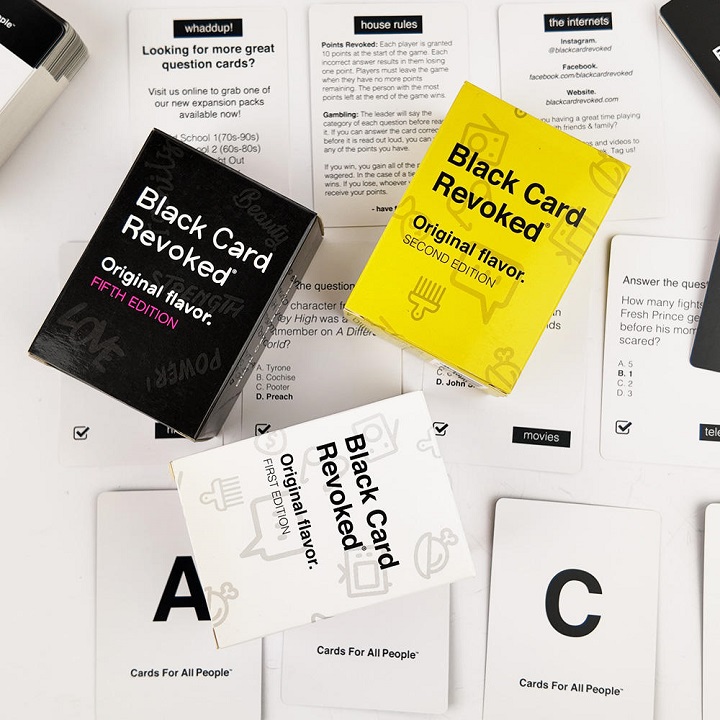
Custom trivia cards are printed cards featuring questions, answers, clues, or other game prompts created for a particular audience or purpose. A deck may cover general knowledge, company history, a school subject, a destination, a product range, or a shared event.
A typical trivia card includes:
- A question on the front and answer on the back.
- A category, difficulty level, or point value.
- A visual system that helps players identify question types.
- Instructions or a companion rule card.
- A box or other packaging to keep the deck organized.
The exact format should follow the game mechanic. A fast-paced party deck may need short prompts and quick answers. A classroom deck may need extra context, curriculum-specific language, and durable cards that can be handled repeatedly.
For buyers researching custom trivia card printing, the most useful starting point is not "Which finish looks premium?" It is: Who will play, what should players do, and how should the game feel?
Who Uses Custom Trivia Card Games?
A well-designed trivia deck can serve different markets. Defining the buyer and player early helps determine content, format, packaging, and age guidance.
| Use case |
Potential audience |
Design priority |
| Educational trivia |
Schools, tutors, museums, families |
Clear wording, learning objectives, age-appropriate difficulty |
| Corporate trivia |
Companies, event agencies, HR teams |
Brand consistency, company knowledge, group participation |
| Party and family games |
Gift shops, publishers, event planners |
Easy-to-learn rules, lively prompts, portable packaging |
| Tourism and destination decks |
Visitor centers, attractions, hotels |
Local knowledge, memorable imagery, language options |
| Branded promotional games |
Consumer brands, distributors, trade shows |
Useful brand integration rather than repetitive advertising |
| Hobby or fan communities |
Publishers, creators, licensed-product teams |
Theme authenticity and carefully checked facts |
A corporate deck, for example, can introduce new employees to company milestones and products. An educational deck can help learners review a topic through short rounds. A destination deck can turn local history into a souvenir or visitor activity. These are project concepts, not claims that every application has the same proven commercial results.
Plan the Game Before Designing the Cards
The most effective way to avoid costly revisions is to define the game system before artwork begins. A deck may look impressive but still disappoint if the rules are unclear, the questions are repetitive, or the answers are hard to verify.
1. Define the players and setting
Write a one-sentence description of the intended player. Include age range, familiarity with the topic, number of players, and where the game will be used.
For example: "This is a 15-minute team game for new employees learning our product range." That brief points toward short rounds, clear categories, and questions that test useful product knowledge—not an overly complex scoring system.
2. Choose a simple core mechanic
Decide how a turn works before commissioning hundreds of questions. Common options include:
- Ask and answer: One player reads a question; another responds.
- Team challenge: Teams take turns answering within a time limit.
- Category selection: Players choose a category before a question is read.
- Difficulty tiers: Questions carry different point values or challenge levels.
- Self-check study: The answer appears on the reverse for independent review.
The mechanic affects card structure. If answers are on the back, the layout should make it easy to check an answer without revealing it too soon. If cards are read aloud, the question should be concise and unambiguous.
3. Organize content into categories
Categories make a large deck easier to navigate and help the owner spot gaps in coverage. A corporate deck might use "History," "Products," "People," and "Values." A science deck might use "Biology," "Physics," "Earth Science," and "Experiments."
Set a target number of cards per category, then review the deck for imbalance. A category with many more questions than others may dominate gameplay unless that is intentional.
4. Set difficulty deliberately
Use a small, consistent difficulty scale—such as easy, medium, and challenging—and define what each level means for your audience. Avoid relying only on the writer's intuition. A question that feels easy to an industry insider might be obscure to a first-time player.
A useful test is to ask someone outside the writing team to play a sample round. Record which questions cause confusion, which answers feel debatable, and whether the difficulty changes as intended.
Write Questions Players Can Understand
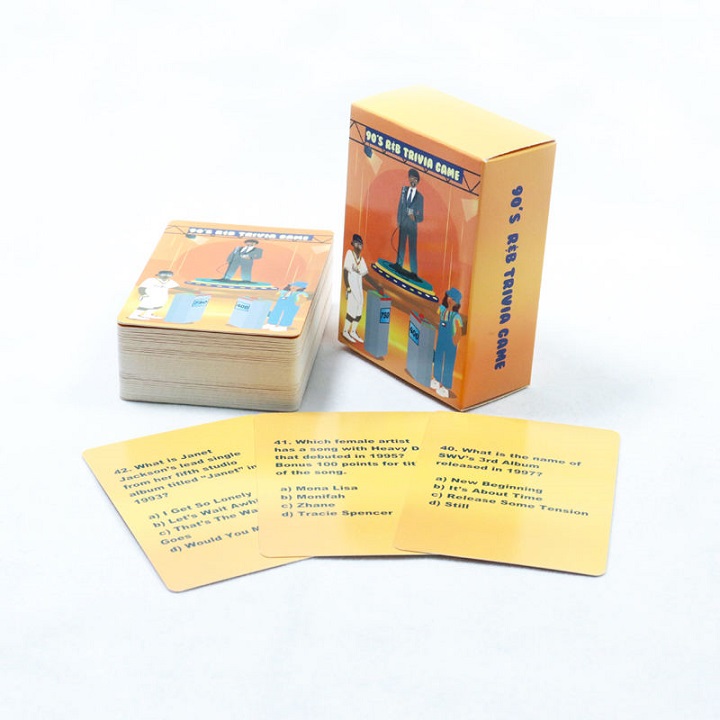
Question quality drives the experience. Good trivia prompts are specific enough to have a defensible answer, but not so wordy that players need to reread them repeatedly.
Use these editing checks
- Ask one main thing per card.
- Include enough context to prevent multiple reasonable interpretations.
- Keep the answer concise and clearly distinguish it from an explanation.
- Confirm names, dates, figures, and other factual details against reliable sources.
- Avoid culturally narrow assumptions unless they are part of the intended theme.
- Check that multiple-choice distractors are plausible but not accidentally correct.
- Review spelling, punctuation, capitalization, and terminology consistently.
For a question about a changing topic—such as a current product lineup or a recently updated policy—include a content review date or versioning method. That makes it easier to identify cards that may need updating in a future edition.
Make the answer easy to verify
If the game is educational or fact-heavy, keep an editorial source record even if citations do not appear on every card. A simple spreadsheet can include:
| Field |
Example |
| Card ID |
BIO-014 |
| Category |
Biology |
| Question |
What is the basic unit of heredity? |
| Answer |
A gene |
| Difficulty |
Easy |
| Fact-check source |
Textbook, official institution, or primary reference |
| Review date |
Month and year |
| Notes |
Update if terminology changes |
This source log is a practical quality-control tool, not a substitute for professional review where the subject demands it.
Choose Card Size, Paper, and Finish
There is no universally best specification for every custom trivia card deck. The right choices depend on the amount of text, the players' handling habits, the product's price point, and the packaging format.
Card size and readability
A compact card can be convenient to carry and store, but smaller dimensions leave less room for long questions or large type. A larger card may improve readability and allow diagrams or illustrations, though it can require a bigger box.
Before selecting a size, create a realistic sample layout using the longest question and answer in the deck. Check the text at actual print size, not just on a computer screen. If the content is dense, consider editing it down before shrinking the type.
XingKun's product reference page presents a custom trivia card offering; confirm available dimensions and current options with the factory when requesting a quote. A supplier may also offer standard cutting formats that are more economical than a custom die, depending on the project. [Product reference: XingKun Custom Trivia Cards]
Paper and durability
Card stock choice affects stiffness, handling, print appearance, and cost. The appropriate material depends on whether the deck will be used occasionally as a promotional gift or repeatedly in classrooms, retail, or game nights.
Ask the manufacturer to confirm:
- Paper type and weight.
- Finished card thickness and feel.
- Whether cards are printed on one or both sides.
- Coating or lamination compatibility.
- Whether the stock and finish suit frequent shuffling.
- How the manufacturer will check consistency across the deck.
Do not assume that a higher grammage alone guarantees a better playing experience. The finished deck's feel also depends on the paper structure, coating, card dimensions, and production method. Request a physical sample when tactile performance matters.
Surface finish and decorative effects
Matte and gloss finishes create different visual and handling impressions. A matte surface can reduce glare, while gloss can make colors appear more reflective. Special effects—such as foil accents, embossing, or spot UV—may add visual emphasis to a logo or title, but they should not interfere with reading or increase the product cost without a clear purpose.
A useful rule: prioritize legibility and handling before decoration. Keep effects away from essential question text and check how the cards look under the lighting conditions where they will be used.
Design for Print, Not Just for Screen
Card artwork needs to account for cutting tolerances, text placement, color, and file consistency. Ask your printer for its current templates and file-preparation requirements before finalizing the deck.
A practical prepress checklist:
1. Confirm the finished card size and orientation.
2. Use the supplier's dieline or template.
3. Keep essential text and logos inside the safe area.
4. Extend backgrounds or images to the required bleed.
5. Export at the resolution and color settings requested by the printer.
6. Embed or outline fonts as instructed.
7. Check every card's front-and-back pairing and sequence.
8. Provide a separate, clearly named file for packaging and instructions.
9. Request a digital proof and review the entire deck—not just the cover card.
10. Approve a physical sample when color, texture, or handling needs evaluation.
The printer's own specifications take priority over generic prepress advice. Cutting tolerances and file requirements can vary by equipment and product construction.
A high-value proofing method
Create a card-list spreadsheet and assign each card a unique ID. Use that ID in both the content file and artwork filenames. Then have one reviewer compare the approved question-and-answer list against the production proof, while another checks visual consistency and card order.
This two-part review helps catch mistakes that a visual-only check can miss, such as a correct question paired with the wrong answer on the reverse.
Select Packaging That Fits the Product
Packaging protects the deck, communicates the brand, and affects storage and shipping. Common formats include a tuck box, a rigid box, or a deck wrapped for insertion into a larger set. The right option depends on the deck's card count, expected retail positioning, and any extra components.
Consider adding:
- A short rules card or instruction leaflet.
- A divider or category markers for larger decks.
- A printed card list or content index.
- A custom insert if the deck includes tokens or other components.
- Clear product information and age guidance where appropriate.
Before artwork approval, confirm the packaged deck's dimensions and fit. A box should hold the cards securely without making them difficult to remove. For a retail product, also check that the front panel explains the game quickly and that the back panel leaves room for instructions, product details, and any required information.
Plan the OEM/ODM Production Process
For an overseas brand, wholesaler, or publisher, a clear manufacturing brief makes quoting and production review more efficient. Share the project details in a single specification document rather than spreading them across multiple messages.
Include these details in your RFQ
- Intended use and target market.
- Card size, quantity per deck, and estimated order quantity.
- Printing requirements for fronts, backs, and packaging.
- Paper, finish, and corner preferences.
- Box style, inserts, instructions, or additional components.
- Artwork status and file format.
- Whether you need a prototype or pre-production sample.
- Destination country and requested shipping term.
- Any labeling, testing, or market compliance requirements you have identified.
Ask suppliers to quote the same specification so that you can compare like with like. A low unit price may not include sampling, special tooling, packaging, inspection, freight, or other project costs. Confirm what the quotation includes before comparing offers.
Sample, approve, then scale
A sound production workflow separates concept approval from mass production:
1. Brief and quotation: Confirm scope, specifications, and price assumptions.
2. Artwork review: Check layout, bleed, safe areas, and card sequence.
3. Prototype or sample: Evaluate print, paper feel, color, and packaging fit.
4. Written approval: Record the approved version and any tolerances.
5. Production and inspection: Agree on inspection points and defect criteria.
6. Packing and shipment: Confirm quantities, carton details, and shipping arrangements.
If the project has several languages or versions, identify each version with a unique code and approve them separately. Version control reduces the risk of mixing artwork or content during production.
Compliance and Age Guidance
If a trivia deck is marketed as a children's game, the buyer and manufacturer should consider the regulations that apply in each destination market. Requirements depend on the product's intended users, design, components, claims, and local rules; do not assume that a paper card product is automatically exempt from every requirement.
For the United States, the Consumer Product Safety Commission explains that certain toys and games with small parts are subject to choking-hazard warnings, and that products intended for children under three can be subject to the small-parts ban. It also outlines related children's product requirements. [CPSC: Small Parts and Choking Hazard Labeling FAQs]
For EU-bound products, check the applicable toy-safety legislation and current market requirements with a qualified compliance professional or testing partner. Age statements and warnings should reflect the product's intended use and actual risk assessment—not be added as a generic substitute for compliance review.
How to Compare Custom Trivia Card Manufacturers
A reliable partner should be able to discuss both production details and the practical needs of the finished product. Compare suppliers against a consistent checklist:
| Evaluation point |
Questions to ask |
| Product experience |
Have they produced card decks with similar card counts or packaging? |
| Specification clarity |
Can they explain material, finish, size, and construction options? |
| Artwork support |
Do they provide templates and prepress checks? |
| Sampling |
Can they supply a prototype or pre-production sample? |
| Quality control |
How are card sequence, print defects, and packing checked? |
| Quote transparency |
Are setup, tooling, packaging, and shipping clearly separated? |
| Communication |
Can they confirm revisions and approvals in writing? |
| Compliance support |
Can they provide relevant material or test documentation when required? |
A manufacturer's claims should be evaluated against the details of your project. Ask for written confirmation of the exact material and finish, and make sure the approved sample corresponds to the production specification.
What Common Product Pages Often Leave Out
Basic product pages can introduce the available product, but they may not answer every question a buyer needs to make a production decision. Common gaps include:
- No explanation of how to match card size to question length.
- Limited guidance on organizing categories and balancing difficulty.
- No sample content workflow for checking factual accuracy.
- Few details on proofing card order and front-to-back matching.
- Little discussion of packaging fit or version control.
- Unclear distinction between general product options and confirmed project specifications.
This guide addresses those gaps with a planning sequence: define the player and mechanic, structure and verify content, test a realistic layout, confirm production specifications, then approve the sample before scaling. Google recommends people-first content that is useful, original, comprehensive, and clear about its sources and expertise; this guide follows that approach by separating general guidance from project-specific details that must be confirmed with the manufacturer. [Google Search Central: Creating Helpful, Reliable, People-First Content]
Conclusion
A strong custom trivia card product begins with a clear audience and a playable concept—not with decoration alone. Build the question system first, test readability using real content, choose materials and packaging for the intended use, and review both the digital proof and physical sample before bulk production.
For brands, publishers, wholesalers, and manufacturers looking for OEM/ODM support, a complete brief makes it easier to confirm feasibility, compare quotes, and reduce avoidable revisions. Prepare your card count, size, content status, finish preferences, packaging needs, and destination market, then contact XingKun to discuss your custom trivia card project. [XingKun Custom Trivia Cards]
FAQs About Custom Trivia Cards
1. What information should I prepare before requesting a quote?
Prepare the intended use, card size, number of cards per deck, order quantity, paper and finish preferences, packaging type, artwork status, and shipping destination. If you need help deciding specifications, describe the players and how the deck will be used.
2. How many cards should a trivia deck contain?
There is no single ideal card count. It depends on the game length, number of categories, and how often players will reuse the deck. Start by estimating the number of questions needed for one session, then test whether the deck feels varied without making the game cumbersome.
3. What card size works best for custom trivia cards?
Choose a size that fits the longest question, answer, and any visual elements while remaining comfortable to hold. Make a sample layout at the actual finished size and review it in print before approving the full deck.
4. Should the question and answer go on the same card?
That depends on the gameplay. Putting the answer on the reverse can support self-checking and quiz play, while placing both on one side may work for study or facilitator-led activities. Make sure the answer cannot be seen accidentally during a round.
5. Can I customize both the cards and the box?
Custom projects can specify artwork for the card faces and packaging. Confirm the available box styles, dimensions, materials, and printing options with the manufacturer for your particular deck and order.
6. Should I order a sample before mass production?
A sample is strongly recommended when print color, card feel, readability, or packaging fit matters. Use it to check the finished product against the approved specification before authorizing bulk production.
7. What files should I send to the printer?
Follow the supplier's current file guide. In general, organize the card artwork, packaging artwork, and question-answer list clearly; use the supplied templates; and verify that fonts, bleed, safe areas, color settings, resolution, and card sequence meet the printer's requirements.
8. Do trivia cards for children need safety review?
They may. Requirements depend on the product, intended age group, components, claims, and market. For the United States, consult the CPSC's guidance on small parts and children's products; for other markets, check current local requirements with a qualified compliance professional.
References
- [XingKun Packing Products: Custom Trivia Cards] — Product reference supplied for this article.
- [Google Search Central: Creating Helpful, Reliable, People-First Content] — Guidance on useful, original, trustworthy content and E-E-A-T concepts.
- [U.S. Consumer Product Safety Commission: Small Parts and Choking Hazard Labeling FAQs] — U.S. guidance on small-parts risks, warnings, and related children's product requirements.
- [QinPrinting: Custom Trivia Card Game Printing] — Public example of card stock, finish, sizing, packaging, and sample considerations in trivia-deck production.


