Content Menu
● What Does Discreet Packaging Mean?
>> Discreet Packaging vs. Unmarked Packaging
● Why Do Businesses Use Discreet Packaging?
>> Protecting Customer Comfort
>> Reducing Visible Value Signals
>> Preserving Gifts and Brand Presentation
● What Does Discreet Packaging Look Like?
● How to Choose Discreet Packaging Boxes and Mailers
>> Corrugated Shipping Boxes
>> Corrugated Mailer Boxes
>> Opaque Flexible Mailers
>> Rigid Boxes Inside Protective Shippers
● Is Discreet Packaging Legal?
>> International Customs Information Must Remain Accurate
>> Required Labels Take Priority
● A Seven-Step Discreet Packaging Validation Process
>> 1. Map Possible Information Leaks
>> 2. Check Opacity Under Realistic Conditions
>> 3. Confirm Fit and Product Restraint
>> 4. Evaluate Closures
>> 5. Review Labels and Documents
>> 6. Trial the Intended Shipping Route
>> 7. Approve a Written Packing Standard
● How to Measure Whether Discreet Packaging Works
● How to Create a Branded Unboxing Experience
● Sustainable Discreet Packaging Without Vague Claims
● What B2B Buyers Should Specify Before Requesting a Quote
● Frequently Asked Questions
>> 1. Does Discreet Packaging Mean There Is No Shipping Label?
>> 2. Can Discreet Packaging Hide the Sender's Identity?
>> 3. Is a Plain Brown Box Always Discreet?
>> 4. Does Discreet Packaging Prevent Package Theft?
>> 5. Can Custom Discreet Packaging Include a Logo?
>> 6. Is Discreet Packaging Suitable for International Shipping?
>> 7. What Should I Ask a Discreet Packaging Manufacturer?
● References
Discreet packaging uses a plain, opaque exterior to keep a shipment's contents from being obvious to people handling or seeing it. For brands choosing custom discreet packaging boxes, the challenge is balancing customer privacy, product protection, shipping requirements, and a satisfying unboxing experience.
A brown box alone does not solve every privacy problem. Printed tape, return addresses, transparent materials, and external documents can still reveal sensitive information.
At Shenzhen XingKun Packing Products Co., Ltd., our packaging perspective starts with one principle: privacy should be designed into the complete shipment, not added as an afterthought. With more than 20 years of printing and packaging experience serving brands and distributors across over 30 countries and regions, we help buyers approach packaging as a coordinated system.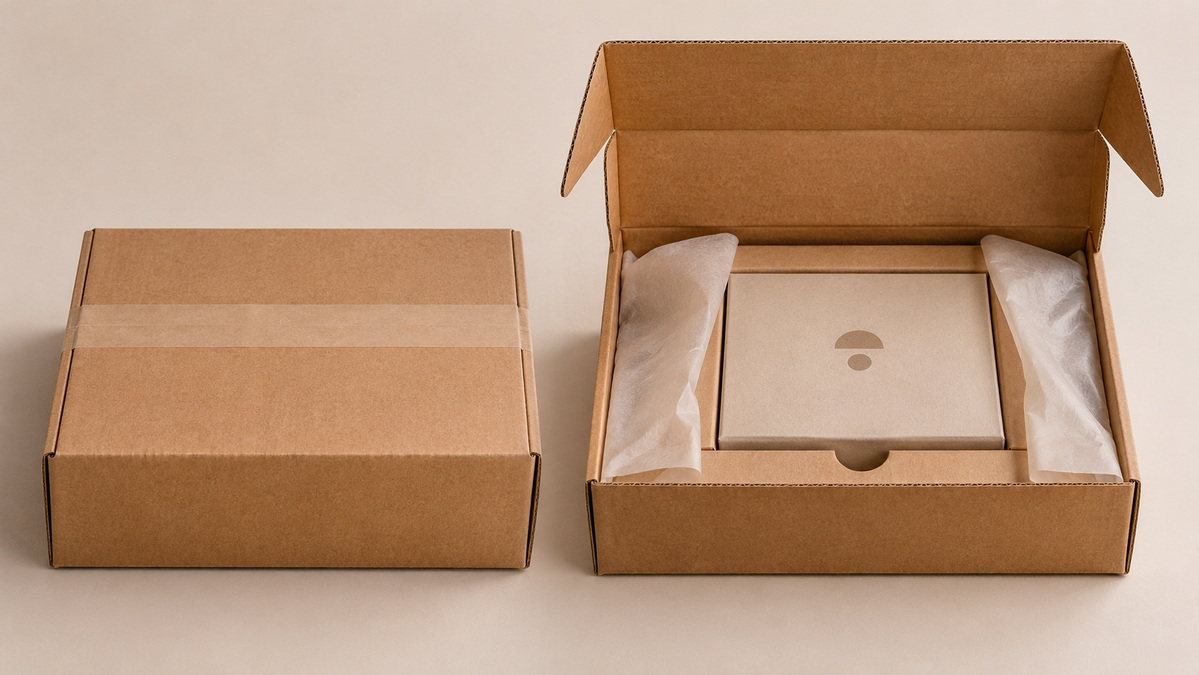
What Does Discreet Packaging Mean?
Discreet packaging conceals unnecessary product and brand information from the outside of a parcel. It normally uses an unbranded shipping box, opaque mailer, or plain envelope.
Its purpose is discretion, not invisibility. Carriers still need readable shipping information, and international shipments may require detailed customs declarations.
Discreet Packaging vs. Unmarked Packaging
An unmarked box has no promotional printing. A discreet shipment goes further by considering everything visible during delivery:
- Exterior graphics, tape, and stickers.
- Product visibility through seams or thin materials.
- Sender details and return information.
- Externally attached paperwork.
- The shape of the packed product.
A package can therefore look plain while still revealing its contents. Effective design addresses these disclosure points together.
Why Do Businesses Use Discreet Packaging?
Customers may prefer private delivery for healthcare purchases, intimate products, valuable goods, or surprise gifts. Businesses should respect those preferences without assuming every customer has the same concerns.
Protecting Customer Comfort
A parcel may pass through an apartment reception desk, workplace mailroom, or shared household. Neutral packaging reduces unnecessary disclosure in these everyday settings.
Clear delivery information also helps customers understand what to expect. Describe the actual packaging rather than promising "complete anonymity."
Reducing Visible Value Signals
Plain packaging avoids advertising an expensive brand or recognizable product. UPS recommends inconspicuous packaging when transporting high-value goods.
However, an ordinary box cannot prevent every theft. Delivery location, tracking, signature options, and other carrier services remain important.
Preserving Gifts and Brand Presentation
A neutral shipping carton can conceal a gift while protecting an attractive retail box inside. This separates two different jobs: the outer packaging handles transit, while the inner packaging delivers the presentation.
What Does Discreet Packaging Look Like?
Typical discreet shipping packaging has an opaque surface, ordinary proportions, and no unnecessary product-related graphics.
| Packaging element |
Practical approach |
What to check |
| Outer box |
Plain corrugated carton or mailer |
Protection and opacity |
| Exterior printing |
No promotional graphics |
Accidental identifying marks |
| Sealing tape |
Neutral tape or suitable security seal |
Adhesion and visible disturbance |
| Shipping label |
Required delivery information |
Readability and accurate details |
| Inner packaging |
Branded carton, tissue, or insert |
Product fit and presentation |
Brown kraft, white, and other neutral colors can work. Color alone does not determine discretion; the complete exterior matters.
Avoid assuming a dark mailer is opaque. Check the actual material with the intended product inside.
How to Choose Discreet Packaging Boxes and Mailers
Choose the format around the product's weight, fragility, dimensions, and shipping route. A lightweight solution is not economical if it causes damage or exposes the contents.
Corrugated Shipping Boxes
Corrugated boxes are useful for fragile products, heavier orders, and shipments containing several items. They provide space for cushioning and help conceal the shape of the contents.
Specify board construction and strength according to the packed load and distribution conditions. "Thicker" is not a complete performance specification.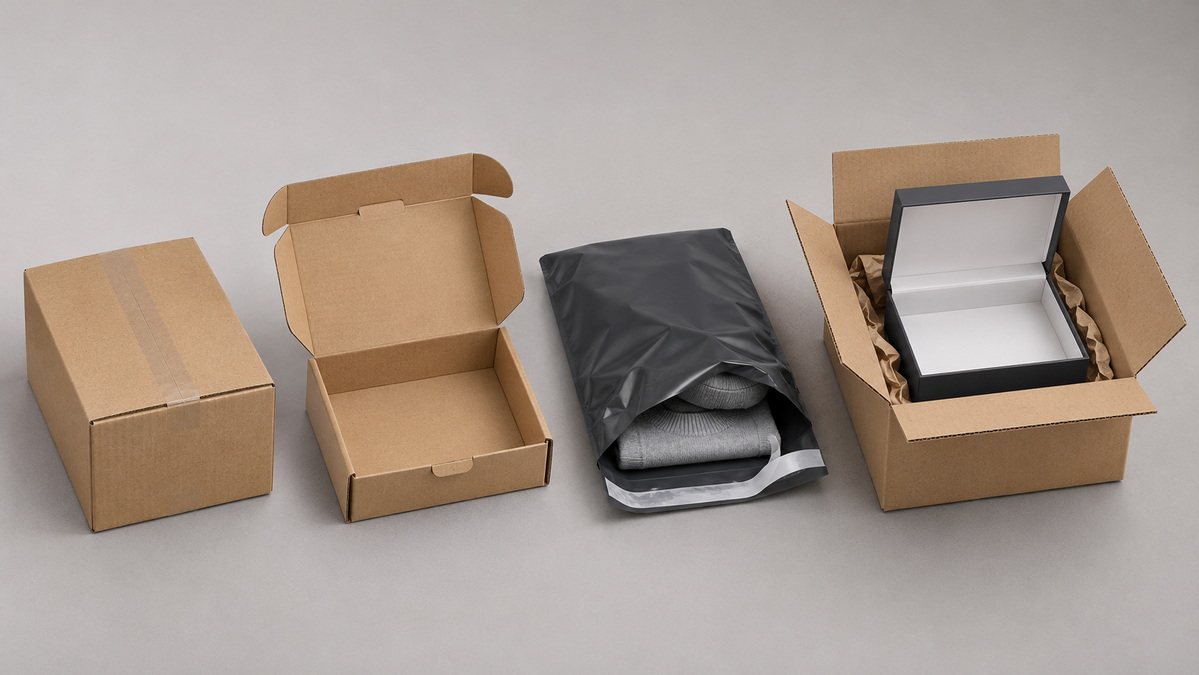
Corrugated Mailer Boxes
Mailer boxes can combine a plain exterior with a printed interior. They suit brands that want controlled presentation without displaying branding during delivery.
Check closure security and exposed edges. An attractive self-locking structure may still need additional sealing for its intended route.
Opaque Flexible Mailers
Flexible mailers can suit soft, nonfragile products. They use less storage space than assembled boxes but provide limited protection against crushing.
Test puncture resistance, seam strength, and opacity. A mailer that stretches tightly around a recognizable product may undermine the intended discretion.
Rigid Boxes Inside Protective Shippers
Rigid presentation boxes can provide a premium opening experience. Where transit protection or privacy requires it, place them inside a separate shipping carton.
This two-layer approach adds material and cost, so evaluate whether the presentation benefit justifies the additional packaging.
Is Discreet Packaging Legal?
A plain exterior does not remove the rules governing the product or its shipment. Whether goods can be shipped depends on the item, origin, destination, carrier, and applicable requirements.
Discretion must never mean concealing information that authorities or carriers require.
International Customs Information Must Remain Accurate
For outbound international packages, USPS requires specific item descriptions on customs forms. Broad terms such as "goods" or "accessories" may not adequately describe the contents.
This creates an important limitation: a parcel can have no promotional graphics yet still display legally required product information.
Do not replace an accurate declaration with a vague description simply to make a shipment appear more private.
Required Labels Take Priority
Some shipments require handling instructions, hazard markings, or other mandatory information. Never omit or cover a required label for appearance.
Similarly, sender and return details must remain accurate and meet applicable requirements. A neutral business identifier should be used only when permitted and operationally valid.
Check regulated products with the relevant carrier and qualified compliance advisers before finalizing packaging.
A Seven-Step Discreet Packaging Validation Process
The following workflow is a recommended planning method, not a claim that every shipment needs the same tests.
1. Map Possible Information Leaks
Review the parcel from every side. Look for revealing graphics, supplier names, branded tape, product silhouettes, and paperwork.
Include order confirmation and delivery communications in the wider review. Physical packaging cannot correct a revealing message sent elsewhere.
2. Check Opacity Under Realistic Conditions
Pack the actual product and inspect it under strong indoor light and daylight.
Pay particular attention to corners, seams, stretched areas, and closure gaps. Assess the finished package rather than an empty material sample.
3. Confirm Fit and Product Restraint
Check whether the product moves excessively or presses against the outer walls. Choose inserts and cushioning appropriate to its fragility.
Reducing empty space can improve efficiency, but a smaller package should not compromise protection.
4. Evaluate Closures
Inspect tape adhesion, folding accuracy, and sealing consistency. Confirm that fulfillment staff can close the package reliably at the expected working speed.
Tamper-evident features may reveal interference. They do not make a package tamper-proof.
5. Review Labels and Documents
Check barcode readability, label positioning, return details, and customs paperwork where applicable.
Separate optional marketing content from information needed for transport. Protect privacy without obstructing delivery or inspection.
6. Trial the Intended Shipping Route
Send representative samples through the planned distribution process. For higher-risk products, consider an appropriate laboratory transit-testing program.
Record damage, closure failure, label problems, and presentation issues rather than judging success only by whether the parcel arrived.
7. Approve a Written Packing Standard
Document the approved materials, dimensions, sealing method, label position, and packing sequence.
Keep a reference sample and photographs. These help purchasing, production, and fulfillment teams work to the same specification.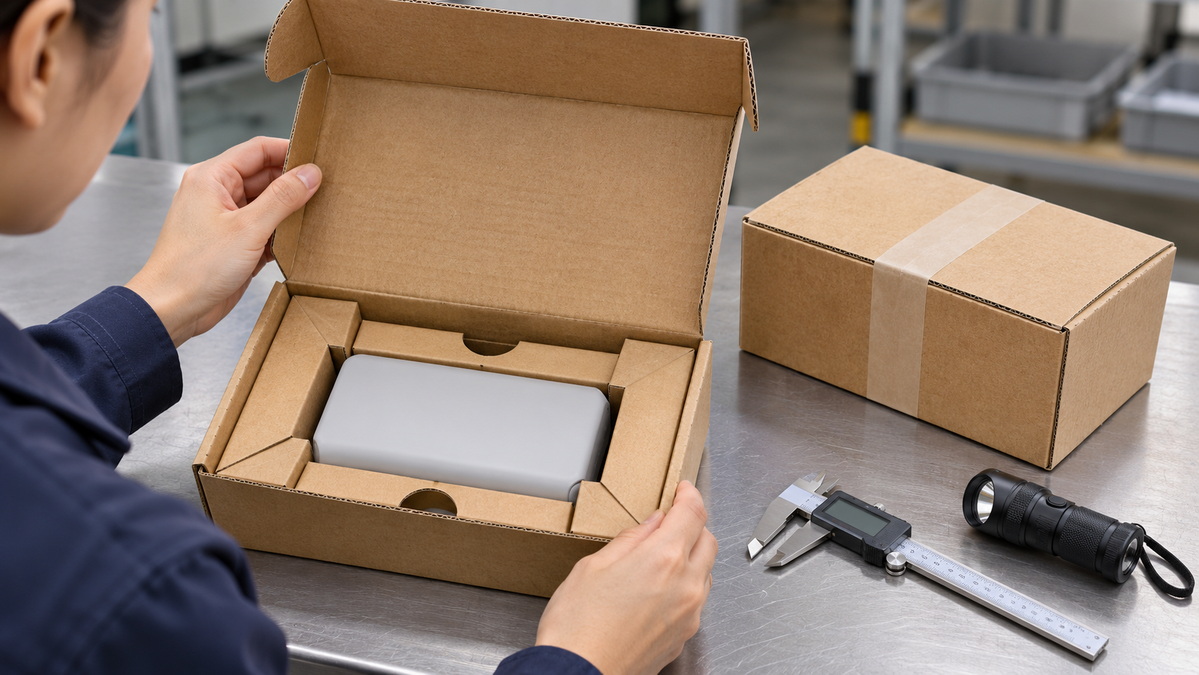
How to Measure Whether Discreet Packaging Works
Avoid assuming that a plain box automatically improves loyalty or reduces returns. Measure the outcomes relevant to your business.
A small pilot can track:
- Privacy-related complaints.
- Damage and replacement rates.
- Packing time per order.
- Packaging cost per shipment.
- Customer comments about delivery and opening.
Compare similar products, shipping routes, and fulfillment conditions. Otherwise, differences may reflect factors other than packaging.
Customer feedback is particularly useful when it identifies a specific failure. "The sender name revealed the product category" is more actionable than a general satisfaction score.
Use verified feedback to improve the design. Do not turn isolated comments into broad performance claims.
How to Create a Branded Unboxing Experience
Discreet packaging does not require a forgettable customer experience. Place branding where the recipient sees it after opening.
Useful options include:
- Interior printing.
- Branded tissue or paper bands.
- A well-fitted presentation insert.
- Clear product instructions.
- A concise thank-you card.
Keep decorative elements proportionate to the product. Excessive layers can slow opening, complicate disposal, and increase packing work.
The goal is a deliberate transition: a neutral exterior during delivery, followed by a coherent brand experience inside.
Sustainable Discreet Packaging Without Vague Claims
A plain appearance does not automatically make packaging environmentally preferable. Materials, coatings, adhesives, weight, and local recovery systems all affect the assessment.
Start with practical improvements: remove unnecessary layers, right-size the package, and request evidence for recycled-content claims.
Use precise language. "Outer carton contains 70% recycled fiber" communicates more than an unsupported "eco-friendly" label—provided the percentage is documented.
For products marketed in the United States, FTC guidance explains that recyclable claims may need qualification based on access to appropriate recycling facilities. Its guidance uses 60% availability as the threshold for a "substantial majority."
Do not treat that percentage as a worldwide rule. Assess claims against the market where the packaging will be sold and the construction of the complete package.
What B2B Buyers Should Specify Before Requesting a Quote
A useful quotation brief should include:
| Specification |
Information to provide |
| Product details |
Dimensions, weight, fragility, and quantity per pack |
| Shipping conditions |
Destinations, transport method, and fulfillment process |
| Privacy requirements |
Information that should not appear externally |
| Packaging format |
Mailer, shipping carton, or presentation box with shipper |
| Printing |
Exterior restrictions and interior artwork |
| Validation |
Sample requirements and intended performance checks |
| Commercial scope |
Order quantity, repeat demand, and delivery schedule |
Ask suppliers to distinguish confirmed capabilities from options requiring development.
Compare total packaging cost rather than unit price alone. Include inserts, assembly labor, storage, freight, and the cost of avoidable damage.
At Shenzhen XingKun Packing Products Co., Ltd., your project brief provides the starting point for discussing packaging boxes and coordinated printed components. Share your product dimensions, target markets, estimated order quantity, and privacy requirements to begin a practical discussion about structure, materials, artwork, and samples.
Frequently Asked Questions
1. Does Discreet Packaging Mean There Is No Shipping Label?
No. Carriers need delivery information and readable tracking labels. Discreet packaging removes unnecessary promotional disclosure, not information required for transport.
2. Can Discreet Packaging Hide the Sender's Identity?
It can avoid prominent branding, but it cannot guarantee anonymity. Required sender details, return information, or customs documents may identify the business. Use accurate information that meets applicable requirements.
3. Is a Plain Brown Box Always Discreet?
No. Branded tape, visible paperwork, gaps, and recognizable product shapes can still reveal information. Assess the packed shipment as a whole.
4. Does Discreet Packaging Prevent Package Theft?
No packaging can guarantee theft prevention. A plain exterior avoids advertising value, but delivery arrangements and appropriate carrier services are also important.
5. Can Custom Discreet Packaging Include a Logo?
Yes. Interior printing, enclosed cards, and inner retail boxes can carry branding while the shipping exterior remains neutral. Required external markings must remain visible.
6. Is Discreet Packaging Suitable for International Shipping?
Yes, when the product and shipment meet applicable requirements. However, customs declarations may disclose the contents. Never sacrifice declaration accuracy for discretion.
7. What Should I Ask a Discreet Packaging Manufacturer?
Ask about material specifications, opacity, closure design, samples, printing options, and production tolerances. Confirm how the proposed package will be evaluated with your actual product before approving volume production.
References
1. [Custom Box Makers — "What Is Discreet Packaging?"]
Original article reviewed for topic coverage, definitions, common applications, and interior-branding concepts. The rewritten article qualifies its broader claims about anonymity, theft prevention, and business outcomes. [customboxmakers]
2. [UPS — "Best Practices for High-Value Goods Transport"]
Carrier guidance supporting inconspicuous outer packaging, suitable cushioning, interior protection, and the distinction between tamper evidence and broader shipment security. [ups]
3. [United States Postal Service — "U.S. Customs Forms"]
Official guidance on detailed, clear, and specific descriptions for outbound international shipments. Supports the discussion of customs disclosure and the limits of packaging privacy. [usps]
4. [United States Postal Service — "Customs Forms: The Basics"]
Additional guidance on declarations, sender and recipient information, contents, value, and the mailer's responsibility for accurate customs information. [faq.usps]
5. [Federal Trade Commission — "Environmental Claims: Summary of the Green Guides"]
Guidance on substantiating environmental claims, identifying recycled content, and qualifying recyclable claims, including the U.S. 60% availability threshold discussed above. [ftc]
6. [UPS — "File a Claim"]
Supports attention to box sizing, cushioning, label placement, and photographic documentation when evaluating shipment damage and loss. [ups]


