Content Menu
● What Makes a Puzzle Suitable for Older Adults?
● Best Puzzles for Seniors: Which Format Fits Which Need?
● Large-Piece Puzzles for Seniors: Look Beyond the Piece Count
>> Ask for Actual Piece Dimensions
>> Evaluate the Complete Handling Experience
● Clear Images Matter as Much as Large Pieces
>> Choose Distinct Subjects and Recognizable Sections
>> Check Contrast, Not Just Brightness
● Easy-Handling Puzzles: Finish, Fit, and Working Surface
>> Compare Matte and Glossy Samples
>> Inspect Piece Fit Without Assuming Tighter Is Better
>> Make the Work Area Part of the Decision
● How Many Puzzle Pieces Should Seniors Choose?
>> Start With an Achievable Experience
>> Adjust One Difficulty Factor at a Time
● Puzzles for Seniors With Dementia: Support Participation Without Making Promises
>> Follow Interest Rather Than Completion
>> Use Adult, Respectful Presentation
● A Practical Five-Step Puzzle Trial Before You Buy in Volume
>> Step 1: Test the Packaging First
>> Step 2: Check Image Visibility
>> Step 3: Observe Handling
>> Step 4: Try a Small Section
>> Step 5: Ask About Preference
● Custom Puzzles for Seniors: Turning User Needs Into an OEM/ODM Brief
>> Build a Product Family Around User Choice
>> Treat Packaging as a Functional Component
>> Confirm Commercial Requirements Separately
● Personalized Photo Puzzles: Familiar Images Need Good Composition
● A Better B2B Question: What Makes the Puzzle Worth Reordering?
● Conclusion
● Frequently Asked Questions
>> 1. What are the best puzzles for seniors?
>> 2. Are large-piece puzzles always easier than standard puzzles?
>> 3. How many pieces should a puzzle for someone with dementia have?
>> 4. What should I consider when choosing puzzles for seniors with low vision?
>> 5. Do jigsaw puzzles prevent dementia?
>> 6. Are personalized photo puzzles suitable for older adults?
>> 7. What should brands request before ordering custom senior-friendly puzzles?
● Source Notes and Editorial Basis
The best puzzles for seniors combine large, easy-to-grip pieces, clear images, comfortable handling, and a difficulty level that matches the individual. Whether you are choosing a gift for a parent, planning activities for a retirement community, or developing a private-label puzzle collection, accessibility matters more than an age label.
A puzzle can have a beautiful picture and still be frustrating to use. Pieces may be difficult to lift, glossy surfaces may create distracting reflections, and a complicated background may make matching unnecessarily demanding. Large-piece formats can support easier handling, while lighting and glare control also influence the experience. [shop.alzheimers.org]
This guide explains how to choose senior-friendly jigsaw puzzles, evaluate their practical features, and develop custom products that respect older adults' interests and independence.
What Makes a Puzzle Suitable for Older Adults?
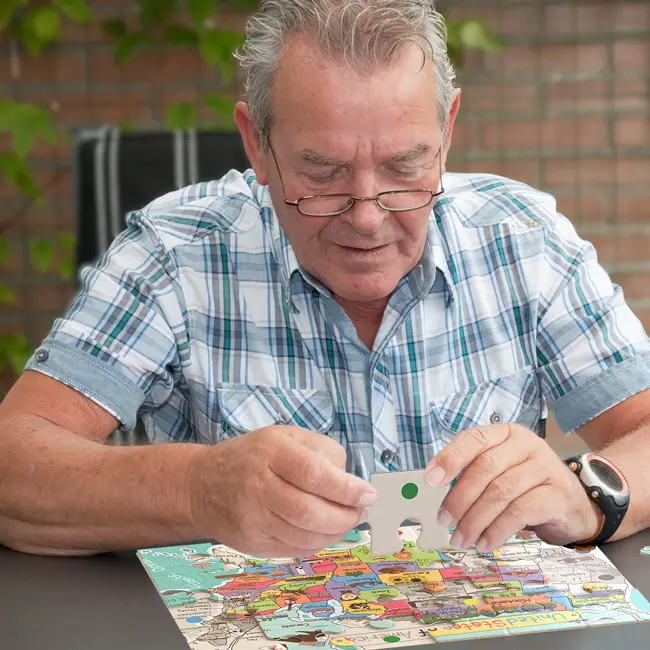
There is no single puzzle that works best for every senior. An experienced puzzler may enjoy a detailed challenge, while someone returning to the activity may prefer fewer pieces and a familiar image.
The better starting point is the person, not their age.
Consider four questions:
- Can they comfortably see and distinguish the picture details?
- Can they pick up, rotate, and connect the pieces?
- Does the subject genuinely interest them?
- Does the challenge feel enjoyable rather than discouraging?
The Alzheimer's Society offers dementia-oriented jigsaw puzzles ranging from 9 to 100 pieces, with design features such as larger pieces and supportive backing boards. That range illustrates why a single piece count cannot represent every user's needs. It should not be treated as a universal prescription for all older adults. [shop.alzheimers.org]
From a product-selection perspective, I would prioritize a puzzle that someone wants to return to over one that simply carries a "senior" label.
Best Puzzles for Seniors: Which Format Fits Which Need?
The following table is a practical selection framework, not a clinical assessment or a ranking of tested products.
| User priority | Format worth considering | What to inspect before buying |
| Easier handling | Large-piece jigsaw puzzle | Actual piece dimensions, thickness, and ease of lifting |
| Clearer visual information | Puzzle with distinct subjects and separated color areas | Detail visibility at normal working distance |
| A shorter activity | Lower-piece-count puzzle | Whether the picture remains interesting and age-appropriate |
| A more substantial challenge | Higher-piece-count puzzle with accessible artwork | Finished dimensions, table space, and user preference |
| Supported participation | Tray or framed puzzle | Whether the backing provides useful guidance |
| Personal relevance | Custom photo puzzle | Image clarity, composition, and permission to reproduce the image |
| Shared activity | Puzzle with several recognizable sections | Whether different people can work comfortably together |
When supporting someone living with dementia, choose according to their present abilities and interests rather than assuming a diagnosis automatically determines the correct puzzle. Purpose-designed ranges can provide useful options, but individual responses still matter. [shop.alzheimers.org]
Large-Piece Puzzles for Seniors: Look Beyond the Piece Count
"Large pieces" is a useful description, but it is not a complete specification.
Two puzzles with the same number of pieces can feel very different if their finished dimensions differ. A larger finished puzzle generally provides more area per piece, but that does not tell you everything about grip, shape, or ease of handling.
Ask for Actual Piece Dimensions
For consumers, check whether the listing shows pieces beside a ruler or another clearly identified scale reference.
For wholesale buyers, request:
- Finished puzzle width and height.
- Approximate dimensions of representative pieces.
- A sample of the smallest or narrowest pieces.
- A physical sample of the proposed cutting pattern.
- Photographs showing pieces in an adult hand.
A simple comparison can help explain the issue. A 100-piece puzzle measuring 40 × 30 cm has an average area of 12 square centimeters per piece. A 100-piece puzzle measuring 20 × 15 cm has an average area of 3 square centimeters per piece.
Those figures describe average area, not exact piece dimensions. Tabs, recesses, and irregular outlines still affect how a piece can be held.
Evaluate the Complete Handling Experience
Size alone does not guarantee comfort.
A useful sample review should ask whether the user can:
1. Lift a piece from a flat surface.
2. Turn it over without repeated attempts.
3. Rotate it to inspect the image.
4. Connect it without forcing the joint.
5. Separate an incorrect connection comfortably.
The Alzheimer's Society specifically identifies large pieces as helpful for people with dexterity difficulties. For product development, that is a reason to test handling directly rather than relying only on packaging language. [shop.alzheimers.org]
Clear Images Matter as Much as Large Pieces
Large-piece jigsaw puzzles for seniors should also make visual information easy to interpret.
A picture can be attractive as wall art but difficult as a puzzle. Extensive sky, repeated leaves, dark shadows, or similar-looking textures may remove the clues that help someone decide where a piece belongs.
That does not make these images unsuitable for everyone. It makes them a more demanding choice.
Choose Distinct Subjects and Recognizable Sections
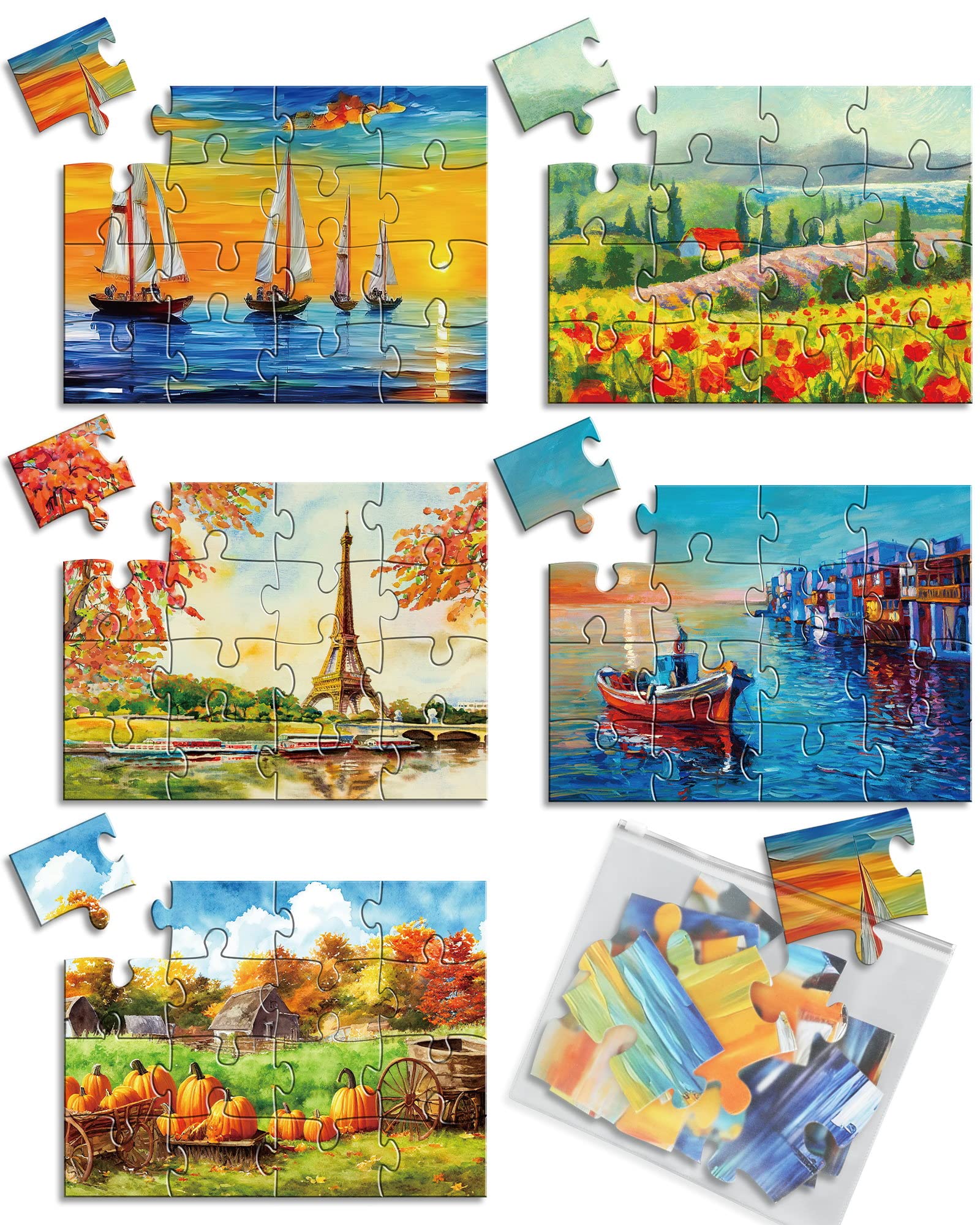
For an accessible starting point, consider artwork with:
- A clear main subject.
- Separate foreground and background areas.
- Recognizable objects.
- Different colors across major sections.
- Details that remain visible at the intended print size.
For example, a garden scene with a red bench, a pale path, and several distinct flower beds may offer more sorting clues than a close-up photograph of overlapping green leaves.
This is a design recommendation, not a claim that one subject produces a medical benefit.
Check Contrast, Not Just Brightness
A brightly colored image is not necessarily easy to interpret. Adjacent areas may still look similar, particularly when their lightness is close.
RNIB explains that glare can reduce contrast and make objects harder to distinguish from their background. It also emphasizes that appropriate lighting helps people make the most of their available sight. [rnib.org]
For puzzle artwork, this suggests a practical review process:
- Examine important object boundaries.
- Check whether darker areas retain visible detail.
- Avoid relying entirely on subtle color differences.
- Review a physical print under realistic lighting.
- Ask intended users which areas they find difficult to distinguish.
A screen preview cannot replace that final printed assessment.
Easy-Handling Puzzles: Finish, Fit, and Working Surface
Comfort depends on how the puzzle behaves during use, not just how it looks in a product photograph.
Compare Matte and Glossy Samples
A matte or lower-glare finish is worth evaluating when reflections interfere with the image. However, "matte" is not an automatic guarantee of suitability.
RNIB's guidance shows why the relationship matters: glare may cause discomfort or reduce visible detail, and lighting needs differ between individuals. [rnib.org]
Compare samples near a window and beneath the type of lamp the user is likely to use. Move both the light and the viewing position.
The important question is not which finish sounds more premium. It is which sample allows the picture to remain comfortably visible.
Inspect Piece Fit Without Assuming Tighter Is Better
For a senior-friendly product brief, specify the desired handling experience rather than simply asking for a "tight fit."
During sample approval, check for:
- Connections that require excessive pressure.
- Pieces that appear to fit in incorrect locations.
- Surface lifting during ordinary assembly.
- Rough edges or visible cutting debris.
- Sections that separate too easily when gently repositioned.
These are proposed quality-control checks. They should be agreed with the manufacturer and evaluated on the actual sample.
Make the Work Area Part of the Decision
A puzzle may be difficult because of the setup rather than the product.
RNIB notes that improved lighting can often be achieved through practical changes such as adding a table or desk light or changing the direction of illumination. [rnib.org]
Try a stable table, a comfortable chair, and a work surface that makes loose pieces easy to see. If a puzzle is used on a tray or lap board, check that the entire setup remains secure and comfortable.
How Many Puzzle Pieces Should Seniors Choose?
There is no universal answer.
A piece count should describe the product, not define the person's ability. Consider recent puzzle experience, available space, visual preferences, hand comfort, and the amount of assistance the person wants.
Start With an Achievable Experience
For someone who feels uncertain, begin with a puzzle that offers a realistic opportunity to participate successfully.
Watch what happens:
- Do they begin sorting independently?
- Can they identify a few obvious matches?
- Do they remain interested?
- Does help feel welcome?
- Would they choose to continue later?
If the puzzle feels too demanding, reduce complexity. If it feels uninteresting, increase the challenge or change the subject.
This is an informal selection method, not a diagnostic test.
Adjust One Difficulty Factor at a Time
Piece count is only one source of difficulty.
Other factors include:
- Repeated textures.
- Small visual details.
- Similar colors.
- Irregular piece shapes.
- Limited reference-image size.
- A crowded working area.
When possible, change one factor at a time. For example, keep the piece count similar but choose a clearer picture. That makes it easier to identify what actually improves the experience.
Puzzles for Seniors With Dementia: Support Participation Without Making Promises
Puzzles can offer an enjoyable shared activity, but they should not be presented as a treatment or guaranteed way to prevent cognitive decline.
The Alzheimer's Society describes its jigsaws as opportunities for engagement that may spark memories, encourage conversation, and support social connection. These are different claims from saying a puzzle treats dementia. [shop.alzheimers.org]
Michigan Medicine also distinguishes ordinary commercial brain games from more structured cognitive training, explaining that evidence for dementia prevention should not be overstated. Its discussion is background guidance, not proof of a benefit from any particular puzzle. [michiganmedicine]
Follow Interest Rather Than Completion
For a supportive activity, consider whether the person enjoys:
- Looking at the picture.
- Naming familiar objects.
- Sorting colors.
- Placing a few pieces.
- Talking with someone nearby.
Completing the entire puzzle does not need to be the only successful outcome.
Avoid turning the activity into a memory test. Instead of repeatedly asking, "Do you remember where this goes?" offer a simple observation such as, "This looks like part of the garden."
Use Adult, Respectful Presentation
A lower-piece-count puzzle can still feature sophisticated photography, appealing artwork, and thoughtful packaging.
For brand owners, this is an important design principle: easier handling does not require childish imagery.
Select themes based on the intended audience's actual interests. If a person repeatedly becomes distressed or cannot use the pieces safely, stop and seek appropriate guidance from their care team.
A Practical Five-Step Puzzle Trial Before You Buy in Volume
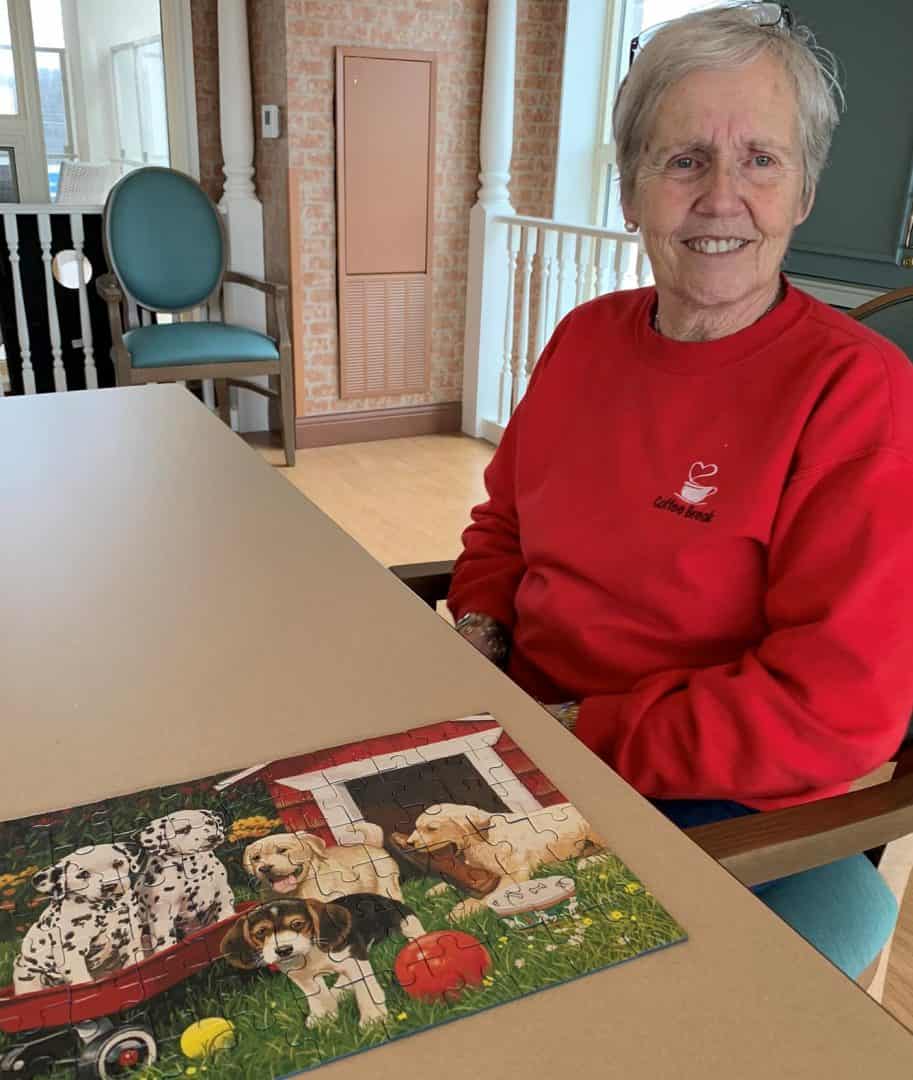
Online descriptions rarely explain how a product performs in someone's hands. A short, consent-based trial can reveal issues before a large purchase or production order.
The following is a proposed usability process, not a standardized clinical assessment.
Step 1: Test the Packaging First
Ask the participant to open the box and locate the reference image.
Observe:
- Whether the lid is manageable.
- Whether any seals or bags create difficulty.
- Whether instructions are easy to locate.
- Whether the puzzle can be packed away again.
Packaging is part of the experience, especially when the goal is independent use.
Step 2: Check Image Visibility
Show the finished-image reference at a comfortable distance.
Ask what attracts their attention and whether any areas are difficult to see. Avoid leading questions such as, "This picture is clear, isn't it?"
Step 3: Observe Handling
Invite the person to pick up, turn, and connect a few pieces.
Record what the product makes easy or difficult. The purpose is to evaluate the design, not grade the participant.
Step 4: Try a Small Section
Allow the person to choose where to begin.
Notice whether the image provides useful clues and whether the working area becomes crowded. Ask before offering help.
Step 5: Ask About Preference
Useful questions include:
- "Would you choose this picture?"
- "Which part felt awkward?"
- "Would you prefer bigger pieces?"
- "Would you enjoy doing this again?"
For B2B buyers, summarize findings by product issue: packaging, image, handling, fit, or setup. That turns observations into actionable changes.
Custom Puzzles for Seniors: Turning User Needs Into an OEM/ODM Brief
For brands, wholesalers, and care-product distributors, "make it senior-friendly" is too vague to function as a manufacturing specification.
A stronger brief connects each user need with something that can be reviewed or tested.
| User need | Information to include in the brief | Approval method |
| Easier handling | Intended piece dimensions and proposed construction | Physical handling sample |
| Clear imagery | Approved artwork, print size, and reference image | Printed proof and user review |
| Comfortable visibility | Finish options and expected lighting conditions | Side-by-side sample comparison |
| Manageable challenge | Piece count, cutting pattern, and image complexity | Trial assembly |
| Easier storage | Box structure and intended reopening method | Opening and repacking test |
| Consistent quality | Agreed checks for fit, edges, print, and completeness | Pre-production approval and inspection plan |
XingKun's supplied custom-puzzle page provides a starting point for discussing personalized puzzles and packaging. Any senior-focused specification should still be confirmed through a project-specific quotation, sample, and written approval process. [xkdisplay]
Build a Product Family Around User Choice
Instead of offering one product labeled "for seniors," consider a coordinated collection.
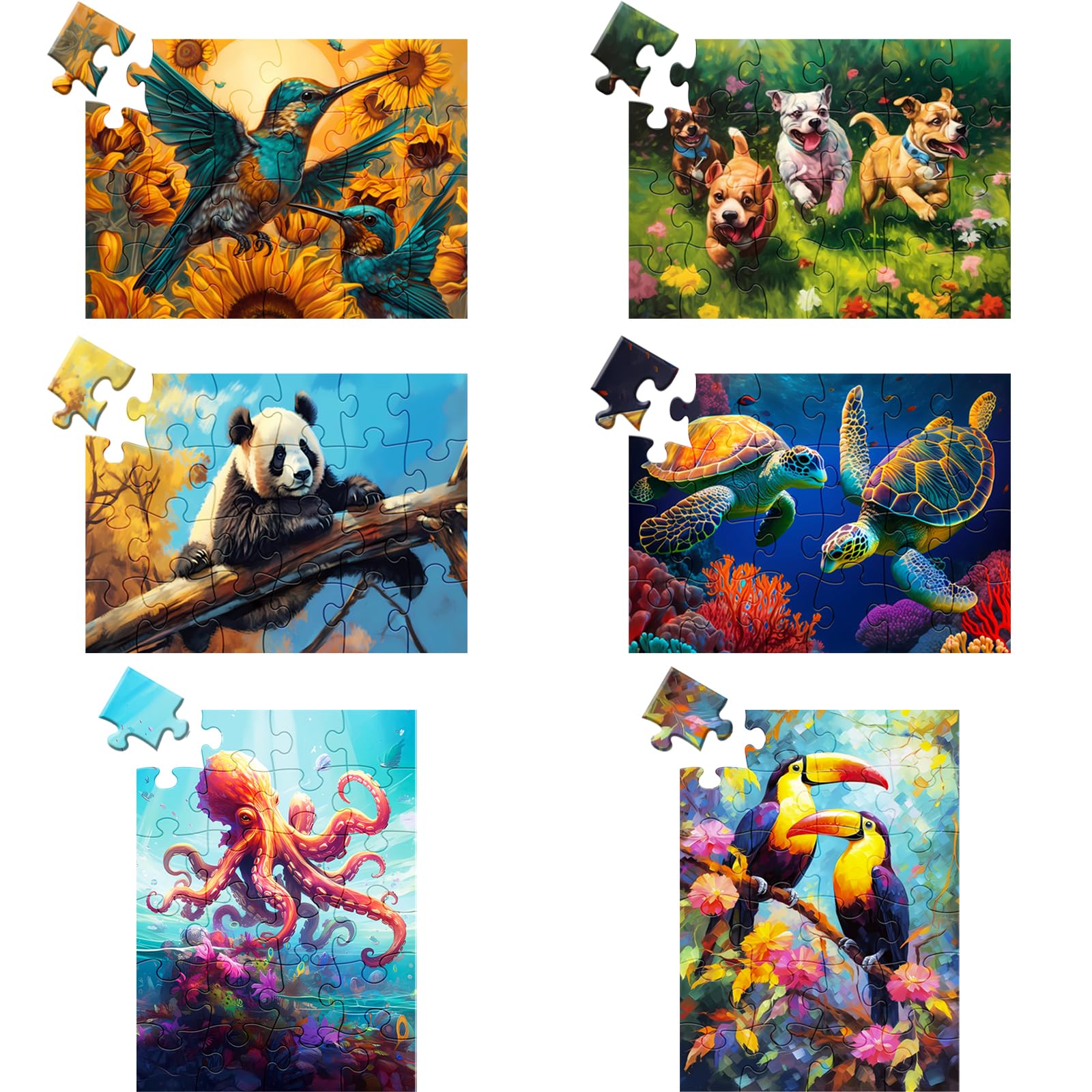
An illustrative range might include:
- A shorter activity with fewer, larger pieces.
- A moderate challenge with clear visual sections.
- A more detailed puzzle for experienced users.
- A personalized option using approved customer artwork.
These are product-development ideas, not claims about an existing XingKun collection.
Keeping a consistent visual style can help the range feel coherent while giving customers meaningful choices.
Treat Packaging as a Functional Component
A puzzle box is more than a sales surface.
For a senior-oriented design brief, consider requesting:
- A reference image that is easy to consult.
- Clearly presented piece count and finished dimensions.
- A lid that can be opened and replaced comfortably.
- Sufficient room for repacking.
- Simple instructions in readable type.
- Clear identification of the artwork and product version.
Review these features with users before final approval. A package that photographs well may still be inconvenient in everyday use.
Confirm Commercial Requirements Separately
Before placing an OEM or ODM order, request written confirmation of:
- Minimum order quantity.
- Available materials and finishes.
- Sampling costs and approval stages.
- Artwork requirements.
- Tooling arrangements.
- Production and delivery schedules.
- Inspection criteria.
- Relevant testing documentation for the target market.
- Remedies for missing pieces or manufacturing defects.
Do not assume that a general product page establishes every capability, certification, or delivery commitment.
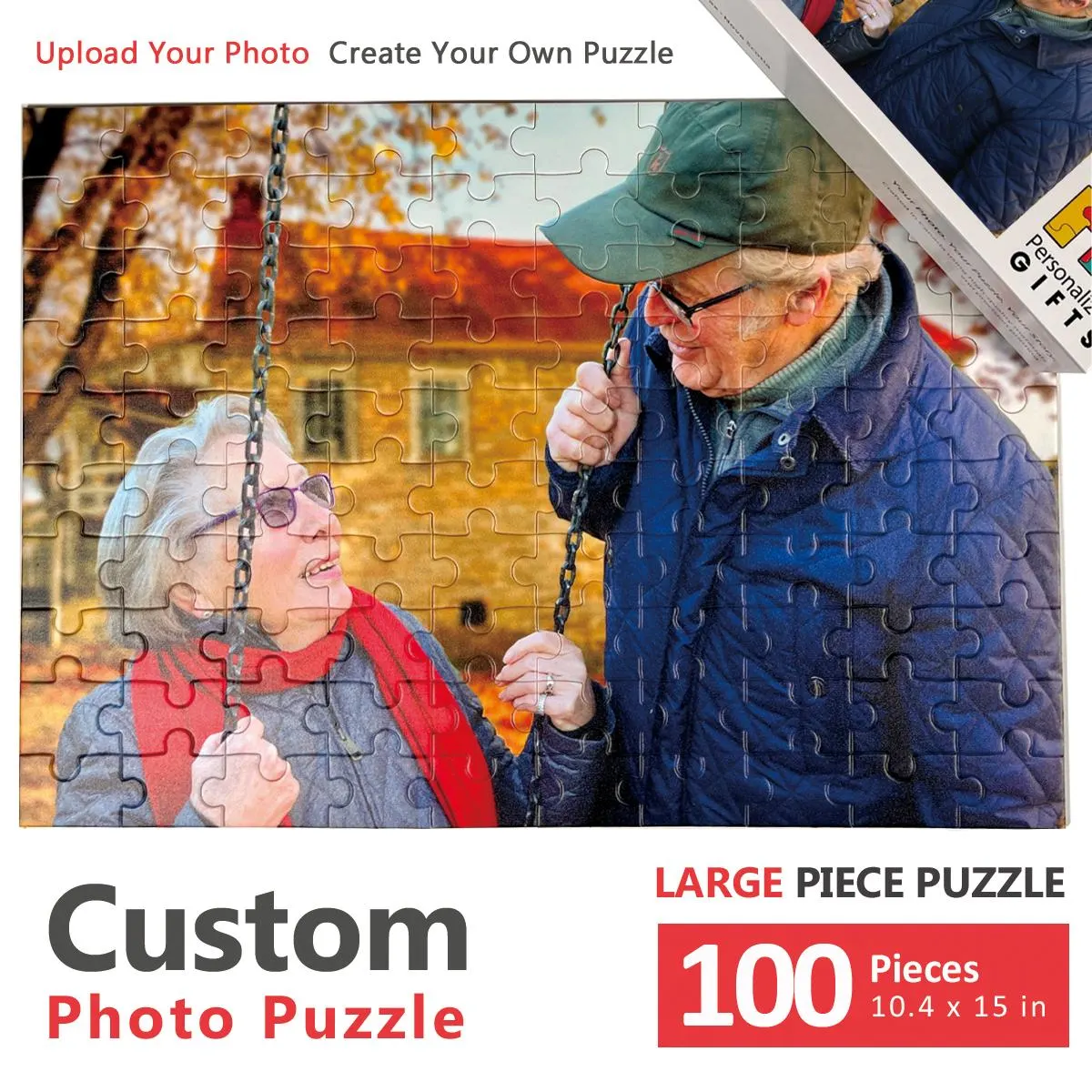
Personalized Photo Puzzles: Familiar Images Need Good Composition
A family photograph, local landmark, or meaningful place can make a puzzle more personally relevant. However, emotional value and puzzle usability are separate questions.
Before choosing an image, check:
1. Whether the main subject is clear.
2. Whether important faces will remain visible at the final size.
3. Whether large dark or repetitive areas dominate the picture.
4. Whether the file is suitable for the intended print dimensions.
5. Whether the customer has permission to reproduce it.
A group photograph with many small faces may be less practical than a simpler image with a few prominent subjects.
For commercial orders, clarify image licensing and obtain appropriate permission for identifiable people. Avoid suggesting that familiar pictures are guaranteed to restore memories. The Alzheimer's Society uses the more cautious description that suitable puzzles may spark memories and conversation. [shop.alzheimers.org]
A Better B2B Question: What Makes the Puzzle Worth Reordering?
A persuasive product description can secure attention. A usable product is what gives buyers a reason to consider reordering.
For a senior-focused puzzle program, review more than appearance and unit price.
A practical scorecard can cover:
- Ease of opening.
- Image visibility.
- Piece handling.
- Assembly experience.
- Completeness.
- Storage convenience.
- User willingness to choose the product again.
Treat these as proposed evaluation categories, not established industry benchmarks.
The same approach improves marketing accuracy. Replace vague claims such as "perfect for every senior" with concrete descriptions: actual dimensions, finish, subject, piece count, and packaging format.
Specific information helps customers judge suitability without relying on exaggerated promises.
Conclusion
The best puzzles for seniors are the ones that make participation comfortable, interesting, and personally worthwhile. Large pieces, clear images, appropriate lighting, manageable difficulty, and practical packaging should work together rather than appear as isolated selling points. For consumers, the right choice begins with the individual. For brands and wholesalers, it begins with translating user needs into a clear brief and validating the result through physical samples.
For an OEM or ODM project, contact Shenzhen XingKun Packing Products Co., Ltd. with your target audience, intended market, artwork concept, preferred dimensions, quantity, and packaging requirements. Use the custom-puzzle product page as the starting point, then request a project-specific quotation and sample before committing to production. [xkdisplay]
Frequently Asked Questions
1. What are the best puzzles for seniors?
The best choice matches the person's interests, preferred challenge, vision, and handling needs. Large pieces and recognizable images are useful features to consider, but they do not make one puzzle universally suitable. For people who need more support, purpose-designed puzzles may include backing boards or tray formats. [shop.alzheimers.org]
2. Are large-piece puzzles always easier than standard puzzles?
Not necessarily. Larger pieces can make handling easier, particularly for someone with dexterity difficulties, but a complicated image may still create a demanding activity. Compare the artwork, actual piece dimensions, and overall assembly experience rather than relying on the label alone. [shop.alzheimers.org]
3. How many pieces should a puzzle for someone with dementia have?
There is no universally correct number. The Alzheimer's Society offers puzzles ranging from 9 to 100 pieces, demonstrating the variety available. Select according to current ability, interest, and the support the person wants, rather than treating a diagnosis as a fixed piece-count recommendation. [shop.alzheimers.org]
4. What should I consider when choosing puzzles for seniors with low vision?
Consider image clarity, contrast, glare, reference-image size, and the lighting where the puzzle will be used. RNIB emphasizes the value of appropriate lighting and explains that glare can reduce visible contrast. Test the physical product under realistic conditions whenever possible. [rnib.org]
5. Do jigsaw puzzles prevent dementia?
They should not be marketed as proven dementia-prevention products. Puzzles may provide enjoyment and opportunities for shared engagement, but those benefits are not equivalent to a demonstrated ability to prevent or treat dementia. Evidence about structured cognitive training should not be automatically transferred to an ordinary jigsaw puzzle. [shop.alzheimers.org]
6. Are personalized photo puzzles suitable for older adults?
They can be a good option when the person likes the subject and the image remains clear at the intended size. Review composition, print quality, handling, and difficulty. Familiar imagery may encourage conversation, but it should not be presented as a guaranteed memory intervention. [shop.alzheimers.org]
7. What should brands request before ordering custom senior-friendly puzzles?
Request a quotation based on a detailed brief, physical samples, written specifications, packaging details, and an agreed inspection plan. For a XingKun project, use its custom-puzzle page to begin the discussion, then confirm the exact requirements and commercial terms for your order. [xkdisplay]
Source Notes and Editorial Basis
1. Alzheimer's Society — "Jigsaw Puzzles for People with Dementia." Supports the discussion of larger pieces, supportive backing boards, the 9–100-piece product range, enjoyable engagement, and opportunities for conversation. This is specialist product guidance, not a clinical trial. [shop.alzheimers.org]
2. Royal National Institute of Blind People (RNIB) — "Lighting for Blind and Partially Sighted People." Supports the discussion of appropriate lighting and practical adjustments to the activity environment. [rnib.org]
3. Royal National Institute of Blind People (RNIB) — "Light Sensitivity (Photophobia)." Explains discomfort glare, disability glare, and the relationship between glare, contrast, and visible detail. [rnib.org]
4. Michigan Medicine — "Can Brain Games and Exercise Prevent Dementia? We Don't Know Yet," June 23, 2017. Provides background on evidence limitations and the distinction between ordinary brain games and structured cognitive training. It is not used here as a current systematic review or evidence for a specific puzzle. [michiganmedicine]
5. XingKun — "Custom Puzzle Manufacturers." Company-provided reference for the custom-puzzle and packaging inquiry pathway. Product-specific capabilities, compliance documentation, pricing, and delivery terms require separate confirmation. [xkdisplay]
6. Editorial contribution — The selection table, five-step usability trial, procurement matrix, and reorder scorecard are proposed practical frameworks developed for this article. They are not presented as clinical tools, published standards, completed user studies, or documented XingKun case studies.


