Content Menu
● How Offset Printing and Digital Printing Work
>> What Is Offset Printing for Packaging Boxes?
>> What Is Digital Printing for Packaging Boxes?
● Offset Printing vs Digital Printing: Comparison Table
● Cost Comparison: Look Beyond Price per Box
>> Why Offset Printing Often Wins at Higher Volumes
>> Why Digital Printing Can Reduce Commercial Risk
>> A Practical Break-Even Calculation
● Print Quality: Color, Images, and Brand Consistency
>> Can Digital Printing Match Offset Quality?
>> Spot Colors and Brand Matching
● Materials and Finishing: The Complete Box Matters
>> Paperboard, Corrugated Packaging, and Rigid Boxes
>> Foil, Embossing, Lamination, and Spot Coatings
● Lead Time, Customization, and Multiple Designs
>> Digital Printing for Short-Run Packaging Boxes
>> Offset Printing for Repeat Production
● Three Practical Insights for Better Packaging Decisions
>> 1. Evaluate Quantity per Design, Not Just Total Quantity
>> 2. Plan the Transition from Launch to Scale
>> 3. Compare Finished Samples, Not Marketing Claims
● Sustainability: Avoid Automatic Claims
● How to Request a Meaningful Packaging Quotation
● Choose the Printing Route Around Your Business
● Frequently Asked Questions
>> Is Offset or Digital Printing Better for Packaging Boxes?
>> Is Digital Printing Always Cheaper for Small Orders?
>> What Is the Minimum Order Quantity for Printed Boxes?
>> Can Digital Printing Reproduce Brand Colors Accurately?
>> Can Both Methods Produce Luxury Packaging?
>> Can I Use Digital Printing First and Offset Later?
● References
Choosing between offset printing vs digital printing for packaging boxes affects more than your printing bill. It influences brand color, launch speed, inventory risk, customization, and the appearance of your finished packaging. The right choice depends on what you need to produce, how frequently designs change, and how the boxes will be finished.
The practical answer: digital printing generally suits shorter runs, multiple versions, and personalized packaging. Offset printing often becomes more economical for larger, stable orders and offers established options for spot colors and production-scale consistency. Neither method automatically produces better packaging.
At Shenzhen XingKun Packing Products Co., Ltd., our perspective starts with the complete box—not simply the printed sheet. With more than 20 years of experience manufacturing packaging boxes and other printed products, and serving brands and distributors across more than 30 countries and regions, we approach printing selection as a balance of appearance, functionality, and commercial value.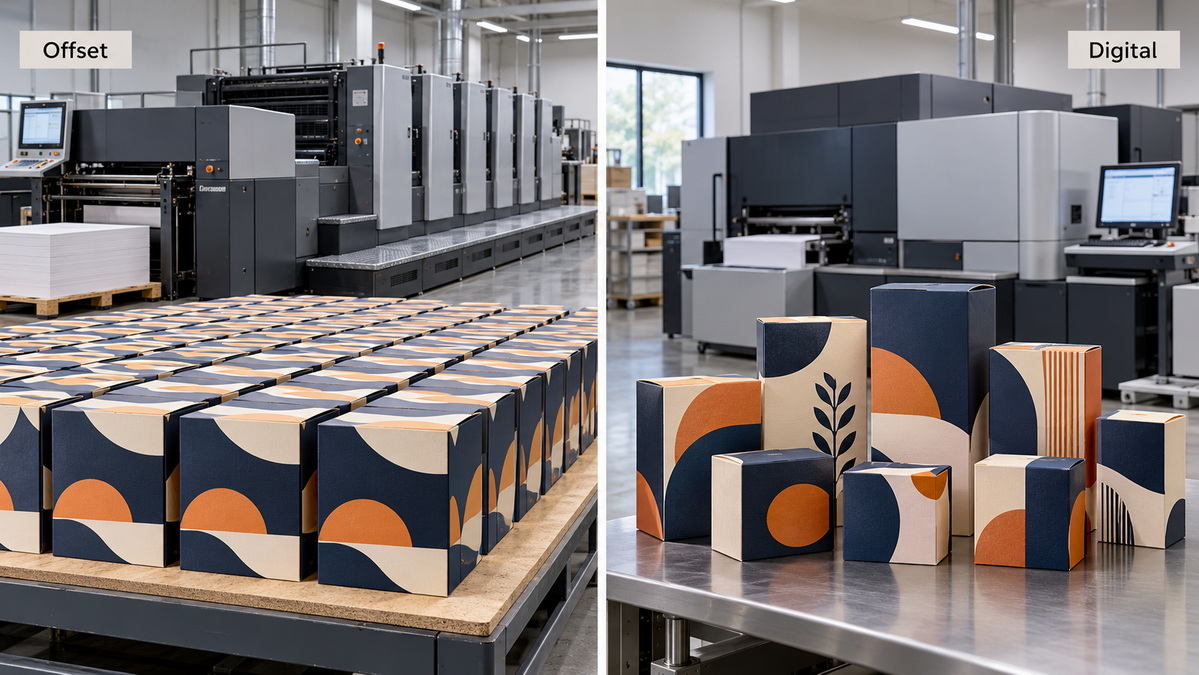
How Offset Printing and Digital Printing Work
What Is Offset Printing for Packaging Boxes?
Offset lithography transfers an image from a printing plate to a rubber blanket, then onto the substrate. Full-color artwork typically uses cyan, magenta, yellow, and black, while additional printing units can accommodate spot colors or coatings.
Platemaking and press preparation create upfront costs. Once production is running efficiently, those costs are spread across more boxes.
For folding cartons, offset printing commonly prints directly onto suitable paperboard. For rigid boxes and some corrugated packaging, the printed paper becomes a separate wrap or liner attached to the structural material.
That distinction matters: the press does not necessarily print directly onto the finished box.
What Is Digital Printing for Packaging Boxes?
Digital printing transfers artwork from a digital file without conventional offset plates. Packaging systems include electrophotographic and inkjet technologies, with different inks, substrate requirements, and production capabilities.
Removing conventional plates makes artwork changes and short production runs easier to manage. Suitable systems can also print variable information, such as unique codes or personalized messages.
However, "digital printing" is not one uniform process. A commercial office printer and a production press designed for folding cartons have very different capabilities.
Offset Printing vs Digital Printing: Comparison Table
| Decision factor | Offset printing | Digital printing |
| Initial preparation | Plates and press setup required | No conventional offset plates |
| Typical economic advantage | Longer runs with stable artwork | Shorter runs and frequent changes |
| Unit-cost pattern | Often falls substantially with volume | Usually less dependent on run length |
| Artwork versioning | Changes may require new plates and setup | File changes are easier to implement |
| Personalization | Usually needs an additional process | Supported by suitable systems and workflows |
| Brand colors | Established spot-ink options | Gamut and specialty-ink options vary by press |
| Material compatibility | Broad packaging applications | Depends on press, ink, and substrate treatment |
| Finishing | Extensive established workflows | Compatibility requires system-specific validation |
| Turnaround | Efficient once prepared and scheduled | Often faster for short, print-ready jobs |
These are tendencies, not purchasing guarantees. Box dimensions, sheet layout, board availability, finishing, and factory scheduling can change the result.
Cost Comparison: Look Beyond Price per Box
Why Offset Printing Often Wins at Higher Volumes
Offset production has fixed preparation costs, followed by an efficient production stage. Larger orders distribute setup costs across more saleable units.
A repeat order of an unchanged retail carton can therefore be a strong offset candidate. However, there is no universal quantity at which offset becomes cheaper.
A small box with several units arranged on each sheet has different economics from a large box requiring an entire sheet. Multiple designs also change the calculation.
Why Digital Printing Can Reduce Commercial Risk
Digital printing can make smaller batches practical, helping buyers avoid ordering packaging that becomes obsolete after a design, ingredient, or language change.
The most useful comparison is:
Total packaging cost = setup + printing + materials + finishing + freight + storage + obsolete inventory.
A lower unit price does not guarantee a lower total cost. Producing unnecessary boxes can erase the apparent saving.
A Practical Break-Even Calculation
For illustration only, suppose offset setup costs $450 with a variable cost of $0.32 per box. Digital setup costs $50 with a variable cost of $0.52. The estimated break-even quantity is 2,000 boxes.
These are hypothetical figures, not XingKun prices or market benchmarks. Both quotations must cover equivalent materials, finishing, quality requirements, and delivery terms.
Print Quality: Color, Images, and Brand Consistency
Can Digital Printing Match Offset Quality?
Modern packaging digital presses can produce premium graphics, fine text, and strong photographic reproduction. Offset also remains highly capable.
The useful question is not "Which technology is always sharper?" It is "Which proposed production route reproduces this artwork consistently on this material?"
Evaluate:
- Small text and reversed lettering.
- Fine lines and gradients.
- Large solid-color areas.
- Dark backgrounds near folds.
- Image detail and neutral grays.
- Surface appearance after finishing.
A beautiful flat print sample does not prove that the finished carton will perform equally well.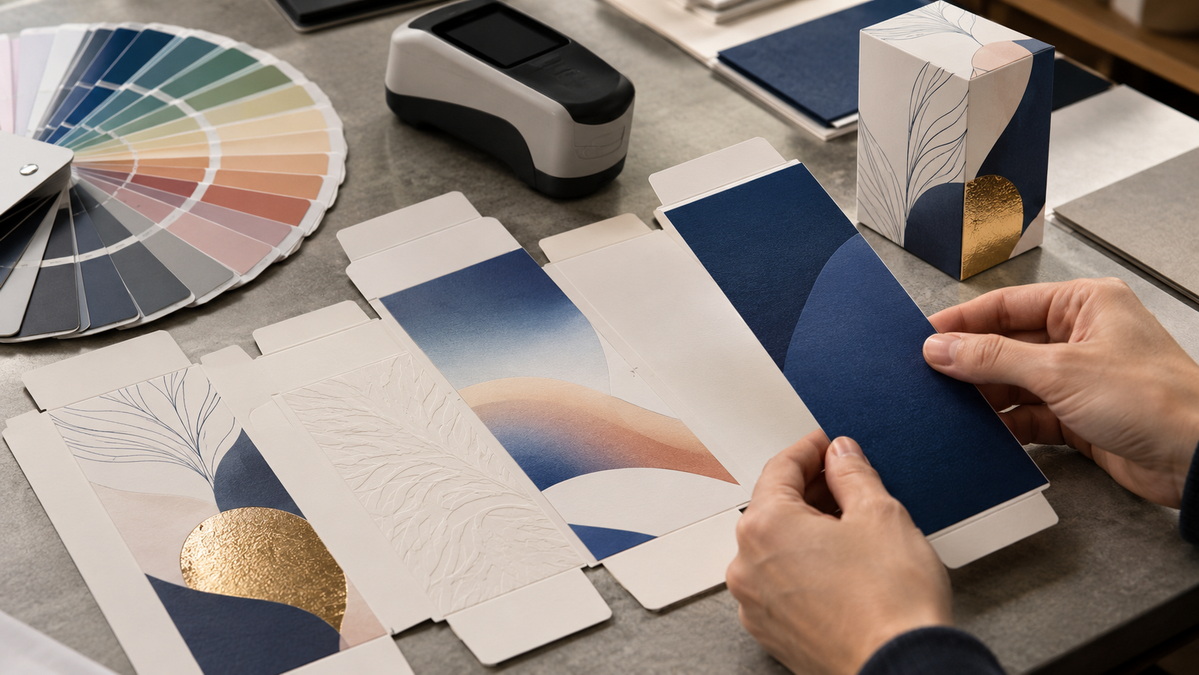
Spot Colors and Brand Matching
Offset offers established workflows for specially mixed spot inks. These can be valuable when a brand requires a particular color that standard process printing cannot reproduce satisfactorily.
Digital systems differ. Some use expanded color gamuts, specialty inks, or dedicated spot-color capabilities. Others simulate brand colors within a more limited gamut.
For important brand colors, approve a physical reference on the intended substrate. Where appropriate, agree on a measurement method and color-difference tolerance. A color viewed on an ordinary screen should not be the final acceptance standard.
Materials and Finishing: The Complete Box Matters
Paperboard, Corrugated Packaging, and Rigid Boxes
Material selection changes ink appearance, surface texture, stiffness, and converting performance.
Before choosing a printing method, confirm:
1. Board grade, thickness, and surface treatment.
2. Whether printing is direct or applied through a separate liner or wrap.
3. Maximum printable sheet size.
4. Grain direction and crease requirements.
5. Compatibility with the intended inks and coatings.
An uncoated kraft surface will not reproduce color like a smooth white coated board. Changing the printing process cannot eliminate that material difference.
Foil, Embossing, Lamination, and Spot Coatings
Both printing routes can support premium packaging, but finishing compatibility must be checked.
Lamination adhesion, foil transfer, coating performance, and crease durability depend on the complete material-and-ink combination. Some embellishments require dies or tooling even when the artwork is digitally printed.
This means a short digital run with extensive finishing may still involve meaningful setup costs.
Request a finished sample when the design includes heavy ink coverage across folds, soft-touch lamination, foil, embossing, or demanding glued areas.
Lead Time, Customization, and Multiple Designs
Digital Printing for Short-Run Packaging Boxes
Digital printing can shorten the preparation stage because it avoids conventional offset platemaking. It is particularly useful for:
- Product launches and market testing.
- Seasonal designs.
- Regional language versions.
- Limited editions.
- Frequent artwork revisions.
- Personalized packaging.
However, printing speed is only one part of delivery time. Board sourcing, sampling, die-cutting, gluing, finishing, and shipping still require scheduling.
Offset Printing for Repeat Production
Offset is often a strong fit when artwork is approved, demand is predictable, and quantities justify the setup.
Modern automated offset equipment also reduces changeover time. It should not be dismissed as inherently unsuitable for shorter work; the actual press configuration and production plan matter.
For either method, ask for separate dates for artwork approval, material readiness, printing, converting, inspection, and dispatch.
Three Practical Insights for Better Packaging Decisions
1. Evaluate Quantity per Design, Not Just Total Quantity
Consider an illustrative order of 12,000 boxes split across 24 artworks.
That is only 500 boxes per design. Depending on shared elements, sheet layouts, and finishing requirements, digital printing may be commercially attractive even though the total order sounds substantial.
Now compare 12,000 identical boxes with stable artwork. Offset may offer a stronger economic case.
The lesson is simple: always disclose the number of versions and the quantity required for each.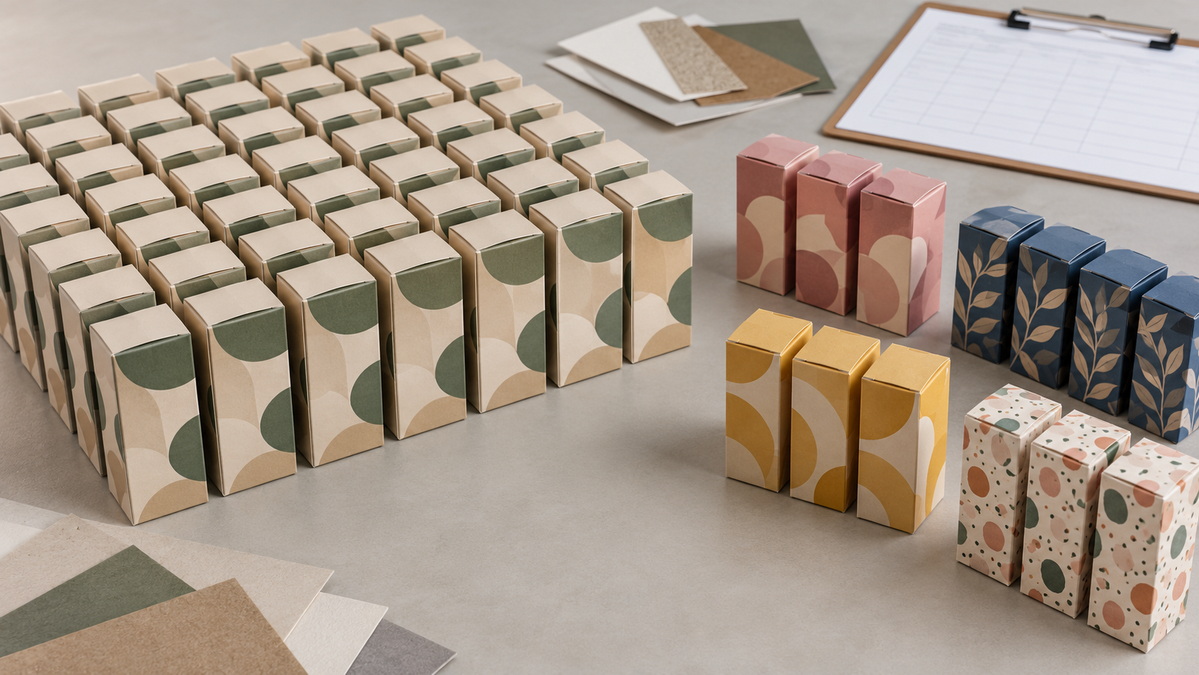
2. Plan the Transition from Launch to Scale
A sensible strategy can use digital production for initial demand testing, followed by offset once the design and sales volume stabilize.
Before switching, compare approved samples across both processes. Confirm brand colors, surface appearance, barcode readability, and finishing.
Otherwise, customers may notice that the launch packaging and replenishment packaging look different.
3. Compare Finished Samples, Not Marketing Claims
Create a small approval checklist:
1. Confirm the correct structural dimensions.
2. Inspect print under agreed viewing conditions.
3. Compare critical colors against the approved reference.
4. Fold and assemble the box.
5. Check scuffing, cracking, adhesion, and glue performance.
6. Scan any production codes.
7. Record the accepted sample and specifications.
This creates a clearer purchasing standard than requesting "premium quality" without defining it.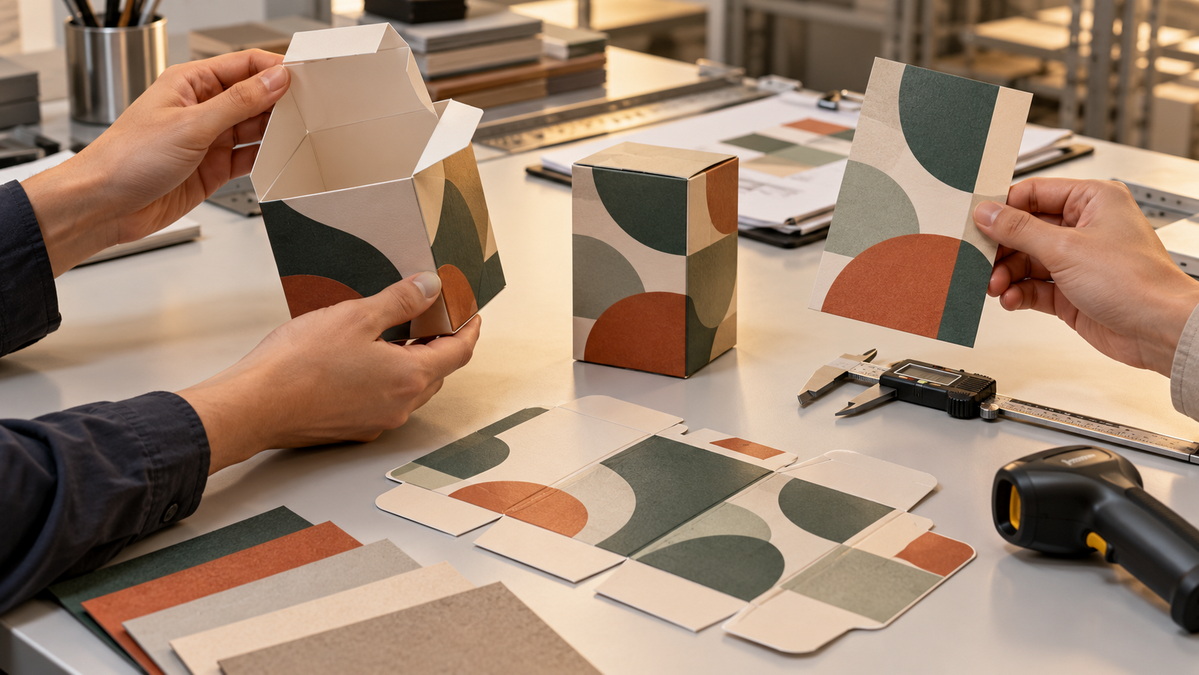
Sustainability: Avoid Automatic Claims
Digital printing can reduce excess production by supporting smaller batches and eliminating conventional offset plates. Efficient offset production can spread setup waste across larger quantities and achieve strong material utilization.
Neither process is automatically the more sustainable choice.
A useful assessment considers:
- Setup waste and rejected sheets.
- Actual order demand.
- Board sourcing and material weight.
- Energy use in the specific production route.
- Inks, coatings, adhesives, and laminates.
- Transport and storage.
- Local recycling compatibility.
Ordering fewer unnecessary boxes can be valuable, but that does not justify an unsupported claim that every digitally printed box has a lower environmental footprint.
How to Request a Meaningful Packaging Quotation
Provide the same specifications when comparing offset and digital printing for custom packaging boxes.
Include:
- Box style and dimensions.
- Quantity per artwork and expected reorder volume.
- Board specification or required performance.
- Print-ready artwork and dieline.
- Brand-color requirements.
- Finishing details.
- Product and destination-market requirements.
- Delivery location and deadline.
- Sampling and inspection expectations.
For food, cosmetics, or other sensitive applications, identify the intended product contact and barrier arrangement. Printing technology alone does not establish suitability.
At XingKun, we recommend discussing these requirements before locking in a printing method. A complete specification makes technical recommendations and quotations more useful.
Choose the Printing Route Around Your Business
The best packaging decision aligns production with demand. Digital offers flexibility; offset offers compelling scale economics. Both require suitable materials, controlled color, and reliable converting.
Send Shenzhen XingKun Packing Products Co., Ltd. your box dimensions, quantity per design, artwork, finishing requirements, and destination market. Ask our team to evaluate the practical production options and recommend an appropriate sampling and quotation plan before you commit.
Frequently Asked Questions
Is Offset or Digital Printing Better for Packaging Boxes?
Digital often suits shorter, changing, or personalized orders. Offset often suits larger orders with stable artwork. Compare the complete finished-box specification rather than choosing by technology alone.
Is Digital Printing Always Cheaper for Small Orders?
Not always. Digital can reduce print setup costs, but unusual materials, specialist finishing, or structural tooling may dominate the total price.
What Is the Minimum Order Quantity for Printed Boxes?
There is no industry-wide minimum. The practical quantity depends on the supplier, board purchasing, printing route, box construction, and finishing requirements. Ask for options at several quantities.
Can Digital Printing Reproduce Brand Colors Accurately?
It can reproduce many brand colors accurately, but results depend on the press gamut, ink configuration, calibration, and substrate. Approve a physical sample for critical colors.
Can Both Methods Produce Luxury Packaging?
Yes. Luxury appearance depends on design, material, print control, finishing, and structural execution. Either method can support a premium result when properly specified.
Can I Use Digital Printing First and Offset Later?
Yes. This can support launch testing followed by larger replenishment orders. Approve cross-process samples before switching so color and finishing remain acceptably consistent.
References
1. HEIDELBERG. "Offset Printing." Manufacturer overview of sheetfed offset equipment, packaging applications, automation, and production configurations. [heidelberg]
2. HP. "HP Indigo Folding Cartons Printing Solutions." Manufacturer information on digital folding-carton production, substrates, specialty inks, color matching, and short-run applications. [hp]
3. BOBST. "The Essentials of Carton Converting." January 20, 2026. Industry discussion of offset carton production, digital workflows, finishing, die-cutting, and the relationship between printing and converting. [bobst]
4. HEIDELBERG. "Solution Finder." Overview of selecting and combining offset and digital production according to run length and job mix. [hybrid.heidelberg]
5. BOBST. "Driving Sustainability in the Label Market: Insights from BOBST and Sun Chemical." August 19, 2025. Supporting context on inks, coatings, material use, recycling compatibility, and production efficiency; label-specific examples should not be treated as universal carton results. [bobst]
6. BOBST. "e-Commerce Packaging." Overview of corrugated packaging, digital customization, litho-lamination, and structural-material considerations. [bobst]


