Content Menu
● What Are Rigid Packaging Boxes?
● Why Luxury Brands Choose Rigid Packaging Boxes
>> They Communicate Quality Before the Product Is Used
>> They Create a Deliberate Unboxing Sequence
>> They Support Product Positioning and Protection
● Rigid Boxes vs. Folding Cartons: A Practical Comparison
>> When Folding Cartons Are the Better Choice
● How to Design Custom Rigid Boxes That Feel Premium
>> Match the Structure to the Product
>> Use Finishes Selectively
>> Engineer the Insert as Carefully as the Exterior
● A Better Buying Method: Compare Total Delivered Cost
● Sustainability: Assess the Whole Packaging System
>> Practical Ways to Improve Material Decisions
>> Industry Example: Fiber-Based Packaging at Apple
● A Five-Step Development Process for Luxury Rigid Packaging
>> 1. Define the Commercial Brief
>> 2. Approve a Structural Sample
>> 3. Validate Materials and Decoration
>> 4. Test the Packed Product
>> 5. Approve a Production Reference
● Working With Shenzhen XingKun Packing Products Co., Ltd.
● Frequently Asked Questions
>> 1. Why do luxury brands use rigid packaging boxes?
>> 2. Are rigid boxes always better than folding cartons?
>> 3. Can rigid packaging boxes be recycled?
>> 4. Do magnetic closures make packaging more luxurious?
>> 5. What information is needed for a custom rigid box quotation?
>> 6. Can a rigid gift box be used directly for parcel shipping?
● References
Luxury brands use rigid packaging boxes because they combine product protection, distinctive presentation, and a controlled unboxing experience. A well-designed box makes a premium purchase feel considered before the customer touches the product. Compared with lightweight folding cartons, custom rigid packaging boxes offer a more substantial structure and greater opportunities for carefully engineered presentation.
At Shenzhen XingKun Packing Products Co., Ltd., our perspective starts with a practical question: what should the packaging accomplish for the product and its buyer? With more than 20 years of printing and packaging experience, serving brands and distributors across over 30 countries and regions, we believe precision matters more than decoration alone.
This guide compares rigid boxes with folding cartons, explains their value for luxury brands, and provides a practical framework for choosing the right construction.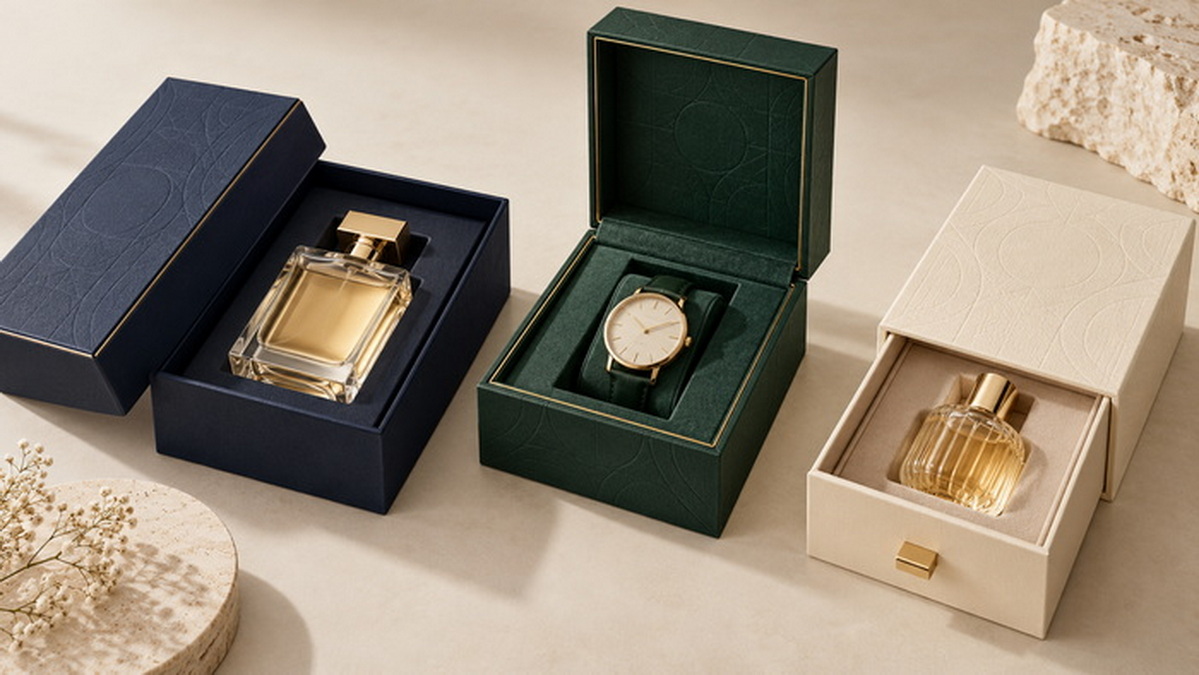
What Are Rigid Packaging Boxes?
Rigid packaging boxes, also called setup boxes, typically consist of a thick paperboard core covered with printed or decorative wrapping material. Unlike conventional folding cartons, standard rigid boxes retain their assembled shape.
Common formats include:
- Two-piece lid-and-base boxes.
- Shoulder-and-neck boxes with an internal collar.
- Drawer boxes with sliding trays.
- Hinged presentation boxes.
- Magnetic-closure boxes.
- Collapsible rigid boxes designed to reduce empty shipping volume.
The structural board provides shape and support. The outer wrap supplies color, texture, print, and decorative effects.
However, "rigid" does not mean waterproof, crush-proof, or automatically suitable for shipping. Performance depends on the complete design, including dimensions, joints, inserts, and transport packaging.
Why Luxury Brands Choose Rigid Packaging Boxes
They Communicate Quality Before the Product Is Used
Luxury purchasing involves expectations about craftsmanship, attention, and consistency. Packaging becomes one of the first physical opportunities to demonstrate those qualities.
A square corner, clean paper wrap, and properly aligned logo can support a premium impression. Uneven edges, exposed adhesive, or a poorly fitting lid can undermine it.
Research published in the Journal of Sensory Studies in 2025 examined packaging designs with 1,193 participants. In that study, larger white spaces enhanced perceived luxury, while luxurious typefaces enhanced perceived product quality.
The useful lesson is not that every luxury box needs minimal graphics. It is that design elements influence perception in combination. Adding more finishes does not necessarily create a stronger result.
They Create a Deliberate Unboxing Sequence
A folding carton usually prioritizes efficient access. A rigid presentation box can organize the opening experience into several stages:
1. The customer encounters the outer surface and brand identity.
2. The lid, drawer, or hinged panel introduces a controlled movement.
3. An insert positions the product.
4. A card, booklet, or accessory completes the presentation.
This sequence is especially relevant for gifts, jewelry, fragrance collections, and premium accessories.
The opening must still feel effortless. Excessively tight lids, difficult ribbons, and unnecessary layers create friction rather than refinement.
They Support Product Positioning and Protection
Rigid walls help maintain the presentation shape. Properly fitted inserts can limit movement and keep multiple components organized.
For example, a fragrance gift set may need separate positions for a bottle, travel spray, and information card. A watch box may require secure support around a cushion.
Nevertheless, appearance is not proof of protective performance. A beautiful box with an unsuitable insert can still allow breakage, abrasion, or product movement.
Rigid Boxes vs. Folding Cartons: A Practical Comparison
Luxury brands do not need rigid packaging for every product. Folding cartons can also deliver excellent print quality and sophisticated finishes.
The meaningful comparison concerns construction, distribution, presentation, and cost.
| Decision factor | Rigid packaging boxes | Folding cartons |
| Basic construction | Thick board, usually covered with a separate wrap | Thinner paperboard, cut and creased |
| Delivery format | Usually assembled; collapsible options exist | Commonly supplied flat |
| Customer impression | Substantial, presentation-focused | Lightweight; premium results remain possible |
| Product organization | Suitable for engineered trays and compartments | Can incorporate inserts, with design limitations |
| Empty storage | Generally requires more space | Usually space-efficient |
| Unit cost | Generally higher for comparable projects | Generally lower for comparable projects |
| Packing workflow | Setup boxes arrive formed | Cartons typically require erection |
| Best-fit priorities | Gifting, display, presentation, keepsake use | Volume efficiency, lower weight, retail practicality |
These are general tendencies, not fixed rules. An elaborate folding carton can cost more than a simple rigid box. Likewise, an oversized rigid box can perform worse than a compact carton with a well-engineered insert.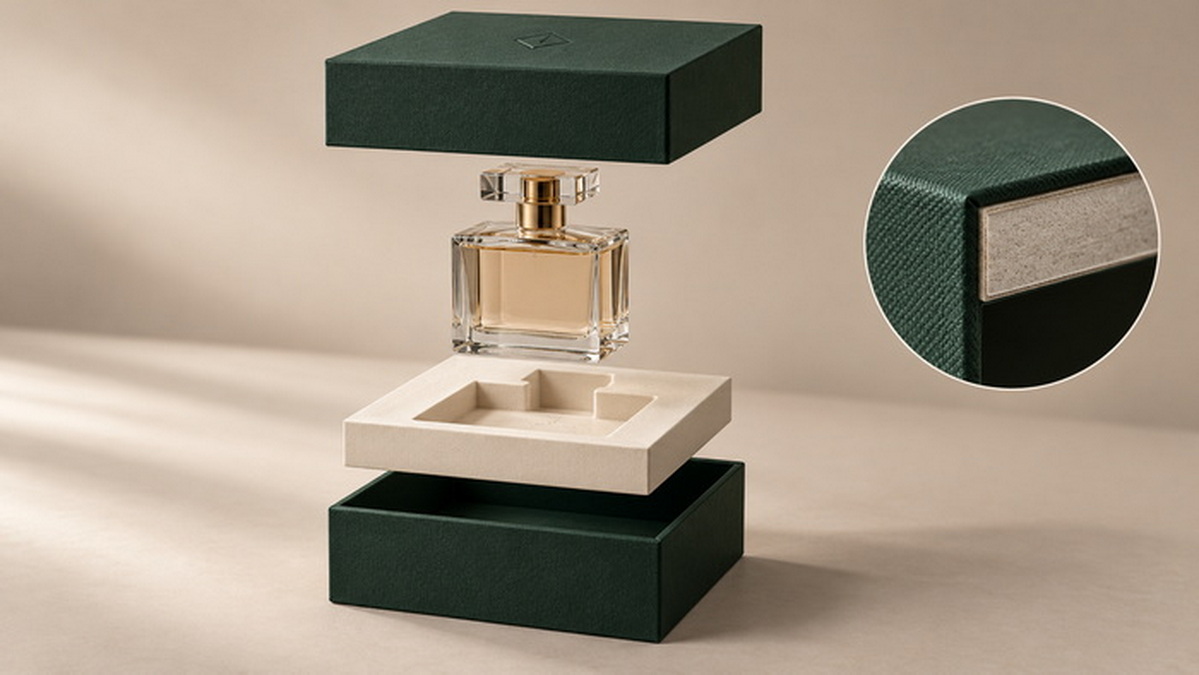
When Folding Cartons Are the Better Choice
Folding cartons deserve consideration when:
- Products sell at high volumes with tight packaging budgets.
- Warehouse capacity is limited.
- Freight efficiency outweighs elaborate presentation.
- The product already has a protective primary container.
- Customers value convenient disposal over long-term storage.
A mixed strategy often makes sense: folding cartons for everyday products and rigid gift boxes for special collections.
How to Design Custom Rigid Boxes That Feel Premium
Match the Structure to the Product
Start with product dimensions, weight, fragility, and removal requirements.
A heavier product may need reinforced support. A delicate surface may require a nonabrasive contact material. A product with several accessories needs an organized layout that prevents components from touching.
Avoid choosing board thickness in isolation. Box span, geometry, construction quality, and internal support also affect performance.
Use Finishes Selectively
Foil stamping, embossing, debossing, textured papers, and printed interiors can all support luxury branding.
Each finish should have a clear purpose:
- Foil can draw attention to a logo.
- Embossing can introduce a tactile detail.
- Textured paper can establish a distinctive surface.
- Interior printing can extend the visual story.
Our recommendation is to select a few coordinated details rather than combine every available process. A restrained box with accurate execution can be more convincing than a heavily decorated box with inconsistent workmanship.
Engineer the Insert as Carefully as the Exterior
The insert determines how the product sits, travels, and leaves the box.
Evaluate:
- Whether the product shifts during handling.
- Whether removal requires excessive force.
- Whether contact surfaces scratch the product.
- Whether accessories remain accessible.
- Whether the insert can be separated for disposal.
Paperboard, molded fiber, and foam each offer different properties. Choose through product-specific assessment rather than assuming one material suits every application.
A Better Buying Method: Compare Total Delivered Cost
The quoted box price is only one part of packaging expenditure.
For assembled rigid boxes, empty volume can materially influence freight and warehousing. Collapsible rigid designs may reduce that volume, but they introduce assembly requirements and additional construction details.
Ask suppliers to quote alternatives against the same brief:
1. A conventional assembled rigid box.
2. A collapsible rigid box, where appropriate.
3. A premium folding carton with a suitable insert.
Compare all three at the same order quantity and delivery basis. This reveals whether the premium presentation justifies its operational cost.
Sustainability: Assess the Whole Packaging System
Paper-based packaging is not automatically recyclable in every market.
Coatings, laminates, adhesives, windows, inserts, and other components can affect compatibility with recycling processes. European paper-industry guidance emphasizes that combining paper with other materials should not compromise recycling and that destination-market requirements matter.
Practical Ways to Improve Material Decisions
For custom luxury packaging, consider:
- Right-sizing the box to avoid unnecessary material.
- Assessing paper-based inserts where performance permits.
- Reducing unnecessary mixed-material components.
- Making removable components easy to separate.
- Requesting documentation for recycled-content claims.
- Checking local collection and recycling guidance before printing disposal instructions.
Reusable packaging can be attractive, but reuse should not be assumed. A box only delivers that benefit when customers actually keep and use it.
Industry Example: Fiber-Based Packaging at Apple
Apple provides a useful premium-packaging example, although its approach should not be treated as proof that every rigid box has the same environmental profile.
In April 2026, Apple reported completing its transition to 100 percent fiber-based packaging in the previous year. Its stated calculation excludes inks, coatings, and adhesives, and it acknowledges that older plastic-containing inventory may still be sold.
The lesson is the specificity of the claim: material boundaries and exclusions matter. Packaging buyers should request similarly clear definitions rather than accept broad environmental language.
A Five-Step Development Process for Luxury Rigid Packaging
1. Define the Commercial Brief
Specify product measurements, target markets, order quantity, sales channels, and intended customer experience.
Include the complete product set, not just the main item. Accessories and printed materials affect internal dimensions.
2. Approve a Structural Sample
Review an unprinted sample before committing to decorative tooling.
Check product fit, lid movement, insert access, balance, and packing efficiency. Structural problems become more expensive to correct after artwork approval.
3. Validate Materials and Decoration
Assess physical samples of papers, colors, and finishes. Screens cannot reliably communicate texture, reflectivity, or the feel of an embossed detail.
Confirm important production tolerances with the manufacturer.
4. Test the Packed Product
Evaluate the product, presentation box, cushioning, and shipping carton together.
ISTA describes its 3A procedure as a general simulation test for individual packaged products shipped through parcel systems, within its specified scope. The appropriate test must match the actual distribution environment.
A display box alone should not be assumed to replace a protective shipping carton.
5. Approve a Production Reference
Keep an approved sample and written specifications covering:
- Dimensions and fit.
- Materials and construction.
- Color and finish.
- Insert configuration.
- Cosmetic acceptance criteria.
- Packing and shipping arrangements.
This gives both parties a clearer basis for inspection and repeat orders.
Working With Shenzhen XingKun Packing Products Co., Ltd.
Choosing a rigid packaging manufacturer requires more than comparing photographs and unit prices. Buyers need a clear brief, tangible samples, and agreed quality expectations.
Shenzhen XingKun Packing Products Co., Ltd. brings more than 20 years of printing and packaging experience and a service background spanning over 30 countries and regions.
For your next project, send XingKun your product dimensions, quantity, target market, preferred box style, and delivery requirements. Request a tailored packaging proposal and structural sample so you can assess presentation, fit, and cost before approving production.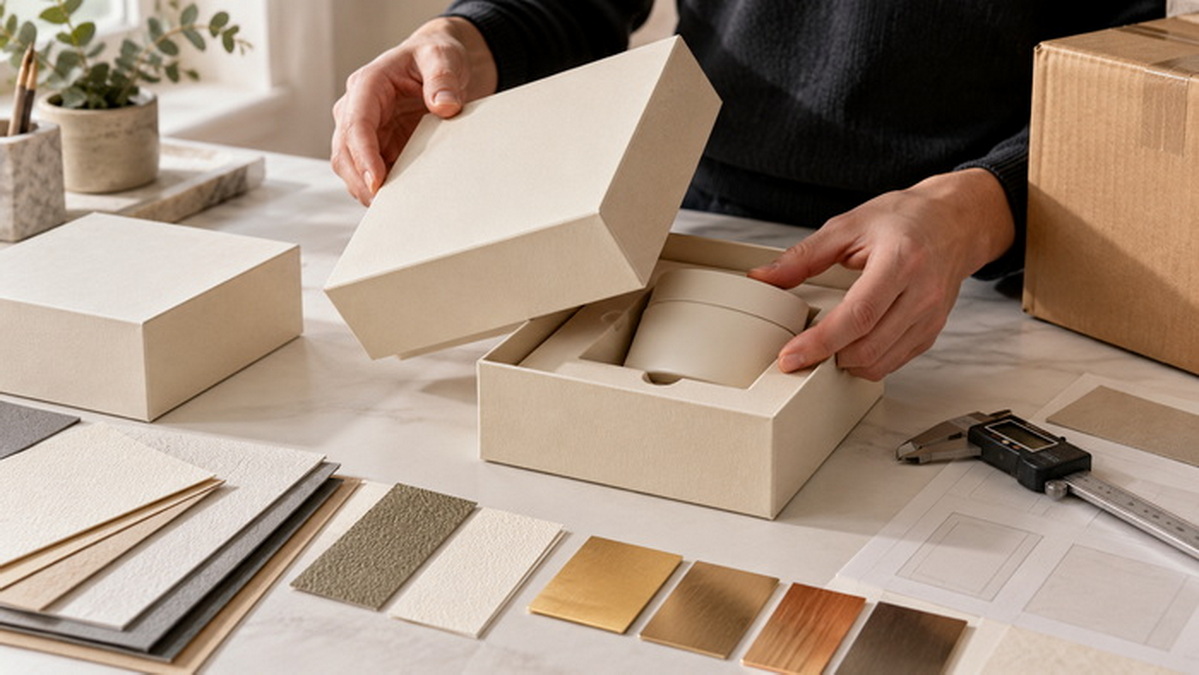
Frequently Asked Questions
1. Why do luxury brands use rigid packaging boxes?
Rigid boxes provide substantial presentation, structural support, and opportunities for controlled unboxing. Their value depends on execution and suitability for the product.
2. Are rigid boxes always better than folding cartons?
No. Folding cartons can be preferable when lower weight, compact storage, fast packing, or lower cost matters more than elaborate presentation.
3. Can rigid packaging boxes be recycled?
Some constructions are compatible with paper recycling, but the complete material combination and local recycling infrastructure determine the appropriate disposal route.
4. Do magnetic closures make packaging more luxurious?
Not automatically. A magnetic closure can support a neat opening experience, but alignment, attachment, usability, and material separation also need consideration.
5. What information is needed for a custom rigid box quotation?
Provide product dimensions and weight, quantity, box style, insert requirements, artwork, finishes, destination, and delivery expectations. Include samples or drawings when available.
6. Can a rigid gift box be used directly for parcel shipping?
Sometimes, but only after suitable assessment. Many presentation boxes require an outer shipping carton and cushioning to protect both the product and decorative surfaces.
References
1. Journal of Sensory Studies. "Perception of Luxury and Product Quality in Package Design." Published April 2025. Research basis for the discussion of white space, typography, and visual texture; study included 1,193 participants. [onlinelibrary.wiley]
2. Fastkit Luxury Packaging. "Rigid Boxes vs Folding Cartons Guide." Industry explanation supporting the basic distinction between thick, preformed setup boxes and flat-supplied folding cartons. [fastkitpack]
3. Cepi. "Paper-Based Packaging Recyclability Guidelines." Published February 18, 2020. Guidance on material combinations, recycling compatibility, and destination-market considerations. [cepi]
4. American Forest & Paper Association. "Design Guidance for Recyclability." March 2021. Research-based guidance on the effects of nonfiber elements in paper packaging. [afandpa]
5. Apple. "Apple Accelerates Environmental Progress With Highest-Ever Recycled Material in Its Products." Published April 16, 2026. Source for the fiber-based packaging example and its stated exclusions. [apple]
6. International Safe Transit Association. "Test Procedures" and "3A Overview." Sources for the scope of parcel-distribution testing and assessment of the packaged product as a complete system. [ista]


