Content Menu
● How to Ship Candles: The Essential Method
● Choose Candle Shipping Packaging Around the Product
>> Glass Jar Candles
>> Tin Candles
>> Pillar, Taper, and Sculptural Candles
>> Match the Materials to the Risk
● How to Package Candles for Shipping: Step by Step
>> 1. Inspect and Record the Product
>> 2. Protect the Finish and Secure Loose Components
>> 3. Cushion Each Candle Individually
>> 4. Pack the Outer Shipping Box
>> 5. Check Movement and Seal the Carton
>> 6. Label Clearly
● How to Ship Candles in Summer Without Relying on Guesswork
>> Establish Your Product's Heat Tolerance
>> Reduce Avoidable Exposure
>> Test Insulation and Cooling Packs Together
● Validate Candle Packaging Before Scaling
>> Start With Practical Screening
>> Run Representative Trial Shipments
>> Turn Customer Feedback Into Specific Improvements
● How Much Does It Cost to Ship Candles?
>> Understand Dimensional Weight
>> Compare Total Delivered Cost
>> Review Coverage Before Buying It
● Develop Custom Candle Packaging With XingKun
● Frequently Asked Questions
>> Can You Mail Candles in Glass Jars?
>> Is a Printed Candle Box Enough for Shipping?
>> How Can I Keep Candles From Melting During Shipping?
>> Can I Use Paper Instead of Bubble Wrap?
>> What Is the Cheapest Way to Ship Candles?
>> Should I Double-Box Every Candle Order?
● References
Knowing how to ship candles safely means protecting more than a glass jar. Your packaging must preserve the candle's appearance, secure its container, and manage heat exposure without making delivery unnecessarily expensive. Whether you sell individual candles or supply retail collections, the right system combines protective materials, a suitable shipping box, and repeatable packing procedures.
At Shenzhen XingKun Packing Products Co., Ltd., our packaging perspective starts with a practical question: what must the package protect against? With more than 20 years of printing and packaging experience serving brands and distributors across over 30 countries and regions, we approach candle packaging as both a protective structure and a branded experience.
This guide explains how to package candles for shipping, reduce summer damage, evaluate costs, and validate your packaging before scaling.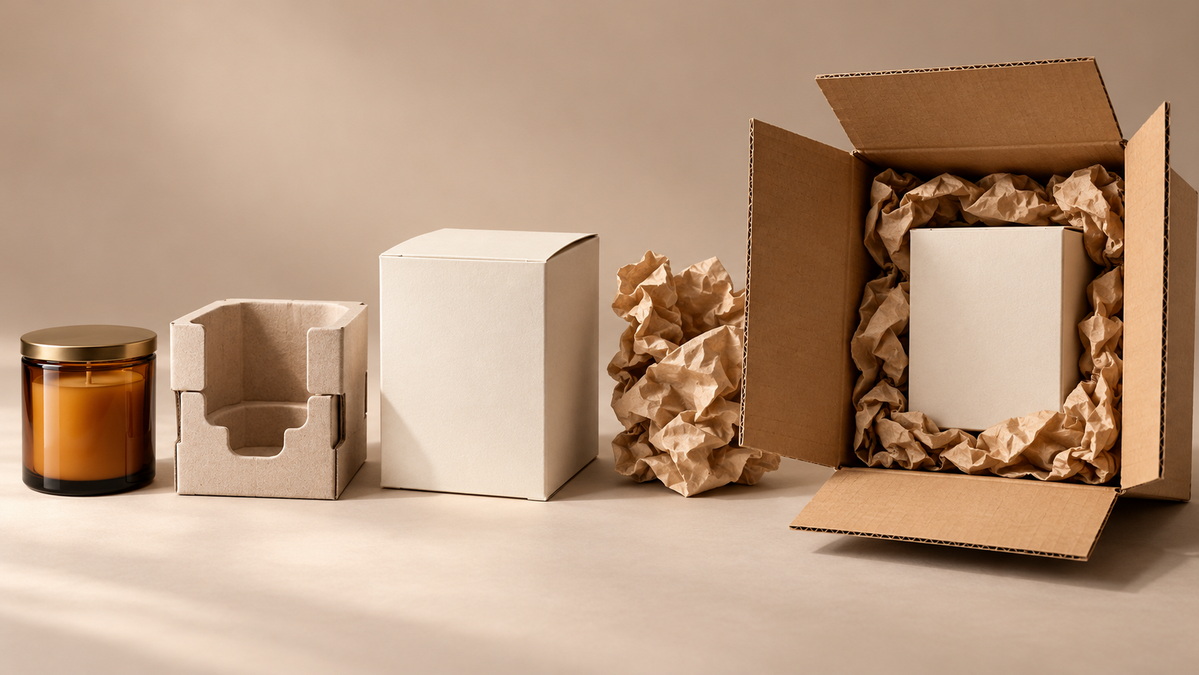
How to Ship Candles: The Essential Method
For most candle shipments, follow this sequence:
1. Inspect the candle and secure its lid.
2. Wrap each candle individually with suitable cushioning.
3. Separate glass containers so they cannot collide.
4. Place the protected products inside a sturdy corrugated shipping box.
5. Cushion all sides and eliminate uncontrolled movement.
6. Add a tested thermal solution when conditions require it.
7. Seal, label, and check the completed parcel.
The central principle is protection: presentation packaging, cushioning, and the outer shipping carton must work together. A beautiful box alone does not establish that a candle can survive parcel delivery.
Choose Candle Shipping Packaging Around the Product
Glass Jar Candles
Glass containers need protection against impact, compression, and contact with neighboring products.
Pay particular attention to the base, rim, and lid. Keep jars centered within the protective structure, away from the outer carton's walls. For fragile shipments, a box-in-box arrangement can provide additional separation from external impacts.
Tin Candles
Metal tins remove the broken-glass risk, but they still require cushioning. Dented containers, scratched finishes, and displaced lids can make an otherwise usable candle unsuitable for retail sale.
Use a protective wrap and a fitted arrangement that prevents tins from striking one another.
Pillar, Taper, and Sculptural Candles
Uncontained candles need protection against bending, abrasion, and pressure on decorative details.
Choose a compatible surface wrap and support the candle without forcing fragile edges against rigid surfaces. For irregular shapes, a fitted insert may offer better control than loose filler alone.
Match the Materials to the Risk
| Packaging component | Primary function | Selection consideration |
| Folding carton | Presentation and surface protection | Do not assume it replaces a shipping carton |
| Corrugated outer box | Structural shipping protection | Match construction to packed weight and shipment demands |
| Fitted insert | Positioning and separation | Check fit with the actual candle and lid |
| Bubble wrap or suitable paper cushioning | Impact protection | Validate thickness and load support |
| Void fill | Restricting movement | Do not use it as a substitute for adequate cushioning |
| Insulated liner | Slowing heat transfer | Test it against the expected journey |
Paper-based materials can be useful, but "paper" is not a performance specification. Structure, thickness, placement, and the weight being supported all matter.
How to Package Candles for Shipping: Step by Step
1. Inspect and Record the Product
Check for cracked glass, loose lids, damaged labels, and visible wax defects before packing.
Record the candle's dimensions and weight, including its lid and retail packaging. Accurate measurements help your packaging supplier develop an insert and carton combination around the real product.
2. Protect the Finish and Secure Loose Components
Use a suitable non-abrasive layer where necessary to protect printed labels or decorative surfaces.
Make sure the lid remains secure during handling. Keep accessories separated from the jar so they cannot scratch the finish or create concentrated pressure.
Avoid attaching packing tape directly to surfaces that customers will see.
3. Cushion Each Candle Individually
Wrap every glass candle separately rather than treating a group of jars as one bundle.
FedEx's general breakables guidance recommends substantial cushioning and describes double-boxing fragile products with approximately three inches of cushioning in and around the inner box. Treat carrier guidance as a starting point, then validate the complete candle package.
A custom insert should not automatically be assumed equivalent to that cushioning arrangement.
4. Pack the Outer Shipping Box
Place cushioning beneath the product, position the candle centrally, and protect its sides and top.
For multiple candles, use dividers or individual compartments to prevent contact. Fill remaining gaps without overpacking the carton: the flaps should close naturally, and the walls should remain flat.
An oversized box can increase material use and shipping charges, but an undersized box sacrifices room for protection.
5. Check Movement and Seal the Carton
Gently move the closed package and listen for shifting.
A quiet parcel is a useful screening result, not proof that the packaging can withstand transit. Follow it with more representative testing before approving the design.
Seal the top and bottom using the H-taping method, covering the central seam and edge seams with suitable shipping tape.
6. Label Clearly
Place the shipping label on a large, flat surface, away from corners and seams.
Include an additional address or order-identification slip inside. "Fragile" markings can communicate handling needs, but the packaging must provide the physical protection.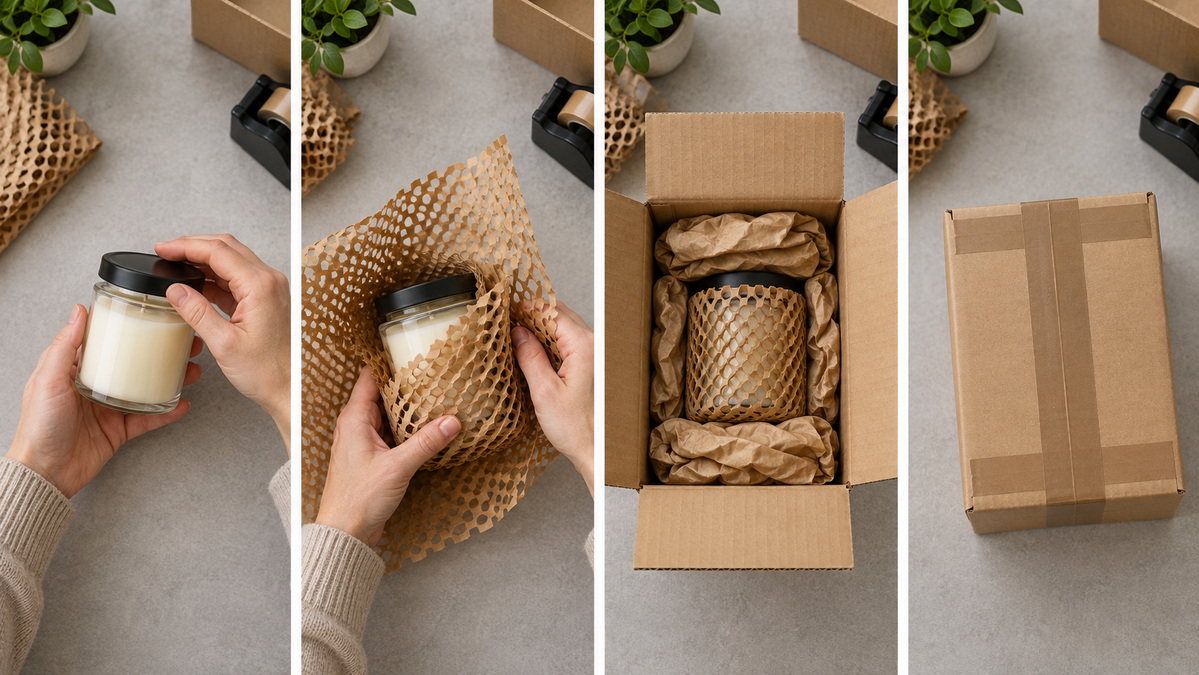
How to Ship Candles in Summer Without Relying on Guesswork
Summer shipping requires a separate plan because impact protection and thermal protection solve different problems.
Establish Your Product's Heat Tolerance
Do not select a shipping method using a generic wax melting point alone.
Ask your wax supplier for formulation-specific guidance, then evaluate the finished candle. Appearance changes, surface softening, and label damage may become commercially unacceptable before the entire candle melts.
Define acceptable arrival conditions for your actual product, not just its raw wax.
Reduce Avoidable Exposure
CandleScience recommends shipping early in the week to reduce the likelihood of parcels sitting over a weekend and choosing delivery speeds appropriate to the climate.
Build that principle into your dispatch policy:
- Review origin, destination, and likely transit conditions.
- Avoid unnecessary delays before carrier collection.
- Compare delivery estimates rather than service names alone.
- Explain seasonal dispatch schedules before checkout.
- Encourage customers to retrieve delivered parcels promptly.
Faster delivery reduces time in transit, but it does not automatically provide temperature-controlled handling.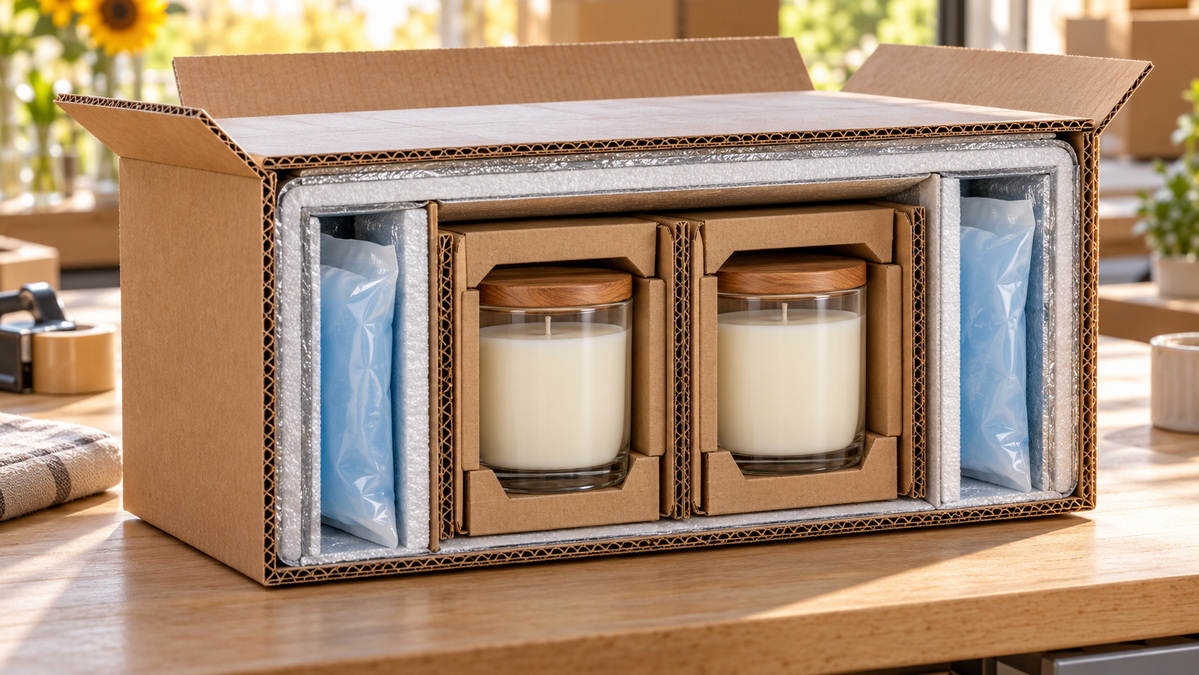
Test Insulation and Cooling Packs Together
Insulation slows heat transfer; it does not create a permanently cool environment.
If cooling packs are necessary, test the complete arrangement, including the liner, pack placement, cushioning, and moisture protection. Condensation must not damage labels, printed cartons, or other presentation materials.
Avoid choosing a universal number of cooling packs for every order. Product quantity, package size, initial temperature, and journey duration can change the result.
Validate Candle Packaging Before Scaling
A repeatable test process offers more value than adding extra filler after every complaint.
Start With Practical Screening
Build samples using production-equivalent materials and actual candles.
Evaluate:
1. Movement inside the sealed package.
2. Cushion displacement after handling.
3. Jar, lid, and label condition.
4. Carton deformation.
5. Product appearance after representative heat exposure.
Informal handling trials can reveal weaknesses, but they should not be described as certified laboratory testing.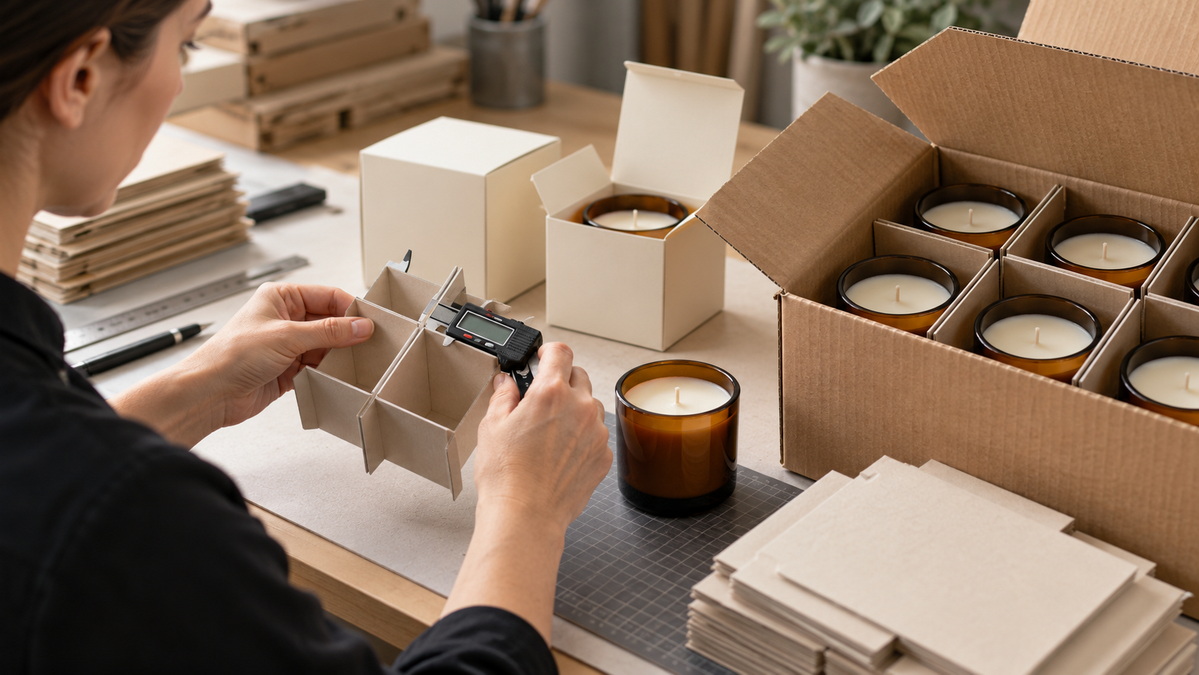
Run Representative Trial Shipments
Send trial packages through routes that reflect your customers' real delivery conditions.
Include different order quantities and, where relevant, warmer destinations. Photograph products before dispatch and ask recipients to document the outer carton, internal arrangement, and candle condition.
For higher-risk launches or retail programs, discuss formal distribution testing with a qualified packaging laboratory.
Turn Customer Feedback Into Specific Improvements
When genuine reviews and damage reports become available, classify them rather than treating every complaint as the same packaging failure.
| Customer feedback | Possible issue to investigate | Potential improvement to test |
| "The jar arrived broken" | Impact protection or jar-to-jar contact | Cushioning changes or separated compartments |
| "The lid was scratched" | Contact with accessories or packaging | Surface protection and component isolation |
| "The wax arrived distorted" | Excessive thermal exposure | Revised dispatch or thermal packaging |
| "The box looked crushed" | Carton strength or compression exposure | Outer-carton construction |
| "There was too much packaging" | Poor sizing or redundant materials | Better fit and simplified components |
These are diagnostic examples, not customer testimonials or confirmed causes. Inspect the evidence before changing the design.
How Much Does It Cost to Ship Candles?
There is no universal cheapest carrier or fixed candle-shipping price.
Your quotation depends on the packed parcel's weight and dimensions, route, service level, account terms, and applicable surcharges. Obtain comparisons using the finished package rather than the candle alone.
Understand Dimensional Weight
Carriers may charge according to the space a parcel occupies when its dimensional weight exceeds its actual weight.
This makes packaging size commercially important. However, reducing carton dimensions only saves money if the revised package still protects the candle adequately.
Use the dimensional-weight rules for your specific carrier, service, and shipping market. Divisors and rounding practices are not universal.
Compare Total Delivered Cost
A practical comparison should include:
- Outer cartons, inserts, and cushioning.
- Packing labor.
- Freight and surcharges.
- Seasonal insulation or cooling materials.
- Replacement products and replacement shipping.
- Customer-service time associated with damage.
A cheaper box can become an expensive choice if it increases breakage or packing time.
Review Coverage Before Buying It
Do not assume shipping insurance or declared-value arrangements cover every form of damage.
Check the applicable terms, packaging requirements, exclusions, and claim documentation. In particular, verify how heat-related damage is treated rather than promising customers that melting is automatically covered.
Develop Custom Candle Packaging With XingKun
A coordinated packaging project should consider the retail box, insert, outer carton, and packing sequence together.
For a useful quotation, provide Shenzhen XingKun Packing Products Co., Ltd. with:
- Candle dimensions, filled weight, and container material.
- Lid specifications and product photographs.
- Single-unit and multi-unit order configurations.
- Destination markets and expected shipping conditions.
- Branding, print finishes, and quantity requirements.
- Existing damage reports or packaging concerns.
Ask XingKun to discuss a sample-led packaging proposal before committing to production. Reviewing fit, appearance, and packing efficiency early can help your team identify problems before they affect a larger shipment.
Frequently Asked Questions
Can You Mail Candles in Glass Jars?
Yes, provided the selected carrier and destination accept the shipment and the jars are adequately protected. Wrap them individually, prevent contact, and use suitable cushioning inside a sturdy shipping carton.
Is a Printed Candle Box Enough for Shipping?
Not necessarily. A presentation carton may protect the finish and support branding without providing sufficient transit protection. Evaluate it together with the insert, cushioning, and outer carton.
How Can I Keep Candles From Melting During Shipping?
Reduce unnecessary transit delays and test a thermal packaging arrangement for your product and route. Insulation, cooling packs, and faster delivery can help, but none should be treated as an unconditional guarantee.
Can I Use Paper Instead of Bubble Wrap?
Yes, where the paper-based system provides adequate cushioning and restraint. Test the complete package, especially with heavy glass jars. Decorative tissue alone should not be treated as impact protection.
What Is the Cheapest Way to Ship Candles?
Compare quotations using the same packed dimensions, weight, route, and delivery requirement. Include packaging and replacement costs before deciding which option is genuinely cheaper.
Should I Double-Box Every Candle Order?
Not automatically. Double-boxing is a useful approach for fragile products, but the appropriate design depends on the candle, shipment conditions, and demonstrated performance. Validate alternatives rather than assuming every insert provides equivalent protection.
References
1. Custom Box Makers. "How to Ship Candles: A Complete Guide." Original article used to assess existing topic coverage and identify areas for expansion. [customboxmakers]
2. FedEx. "How to Pack Breakables." Guidance on individual wrapping, double-boxing, cushioning, movement restriction, sealing, and label placement. [fedex]
3. FedEx. "How to Pack a Parcel." Guidance on carton selection, cushioning, avoiding overpacking, and movement checks. [fedex]
4. CandleScience. "How to Ship Candles: Packaging, Shipping, and Calculating the Cost." Candle-specific guidance on shipping materials, early-week dispatch, summer shipping, cooling packs, and trial shipments. [candlescience]
5. UPS Singapore. "Parcel Dimensions, Size Limits and Weight Guide." Guidance on actual weight, dimensional weight, and billable-weight calculations. Market-specific rules should not be generalized to all services. [ups]
6. FedEx Singapore. "Difficult Items to Pack and How to Ship Them Safely." Guidance supporting practical handling trials and temperature-related packaging evaluation. [fedex]


