Content Menu
● What Is Frustration-Free Packaging?
● How Amazon FFP and Ships in Product Packaging Work
>> SIPP: Shipping Without an Additional Outer Package
>> FFP: Additional Opening and Recycling Requirements
>> Seller and Vendor Documentation Are Different
● Frustration-Free Packaging vs. Standard Packaging
● Why Frustration-Free Packaging Matters Now
● How to Design Custom Frustration-Free Packaging Boxes
>> Start With the Product's Failure Risks
>> Choose Materials as a Complete System
>> Engineer the Opening Sequence
>> Preserve Branding Without Adding Obstacles
● A Six-Step Packaging Development and Testing Workflow
>> 1. Define the Shipping Configuration
>> 2. Confirm the Applicable Requirements
>> 3. Build Production-Representative Samples
>> 4. Select the Correct Test Route
>> 5. Inspect Product and Package Performance
>> 6. Submit Documentation and Control Changes
● Turning Customer Reviews Into Better Packaging
● Evaluate Total Cost, Not Just Box Price
● What to Include in a Packaging Supplier Brief
● Build Packaging Around the Complete Customer Journey
● Frequently Asked Questions
>> 1. Is frustration-free packaging the same as SIPP?
>> 2. Does frustration-free packaging mean the product is used?
>> 3. Must frustration-free packaging be completely plastic-free?
>> 4. Can fragile products use frustration-free packaging?
>> 5. Can a branded mailer box qualify?
>> 6. Does FFP compliance guarantee lower fulfillment fees?
● References
Frustration-free packaging helps customers access their purchases without battling unnecessary layers, stubborn plastic, or confusing closures. For brands, however, effective frustration-free packaging must accomplish more than easy opening. It must protect the product, suit the delivery network, and make disposal straightforward.
At Shenzhen XingKun Packing Products Co., Ltd., we believe the most useful starting point is this: simplicity should come from better engineering, not reduced protection.
With more than 20 years of printing and packaging manufacturing experience, serving brands and distributors across over 30 countries and regions, our perspective connects packaging design with practical purchasing decisions.
This guide explains what frustration-free packaging means, how Amazon's requirements work, and how to develop custom packaging boxes that balance protection, presentation, and customer convenience.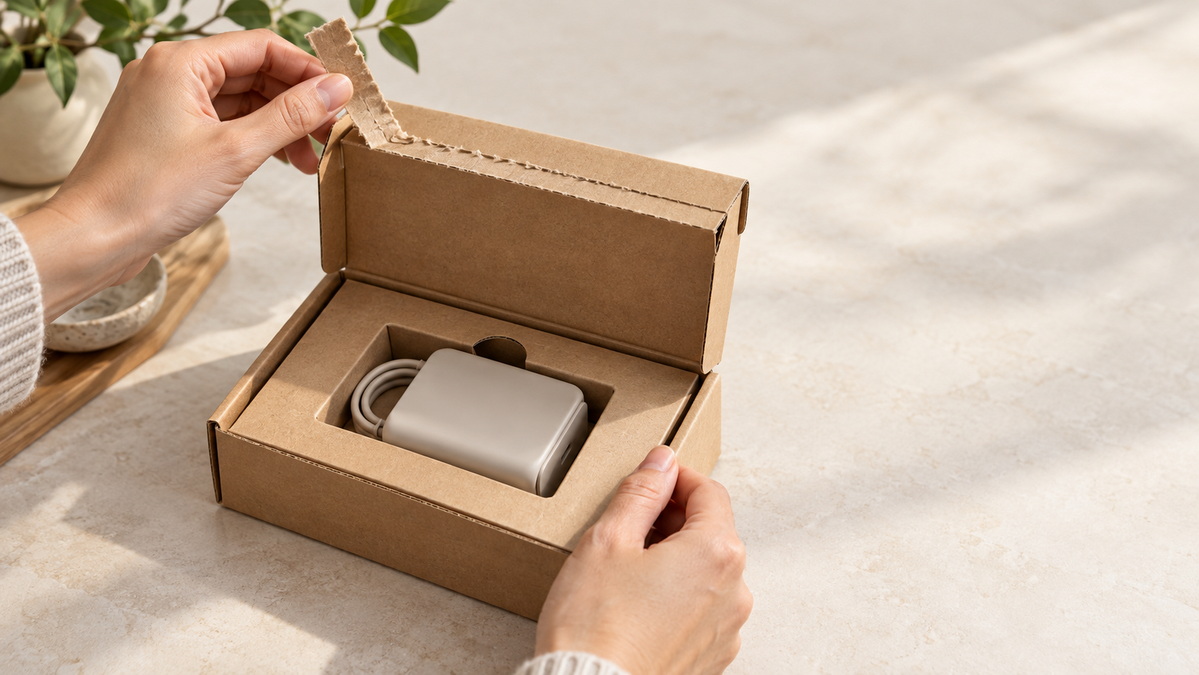
What Is Frustration-Free Packaging?
Frustration-free packaging describes packaging designed to reduce unnecessary difficulty during opening, product removal, and disposal.
Typical features include:
- Clear opening instructions.
- Accessible closures or tear strips.
- Right-sized packaging.
- Fewer unnecessary components.
- Protective inserts that release the product easily.
- Materials compatible with appropriate recycling systems.
The term also has a specific meaning within Amazon's packaging requirements. Amazon Frustration-Free Packaging, or FFP, adds recyclability and customer-experience requirements to its Ships in Product Packaging framework.
These meanings should not be confused. An easy-open custom box is not automatically compliant with Amazon's requirements. Compliance depends on the complete packaged product and the applicable participation route.
How Amazon FFP and Ships in Product Packaging Work
SIPP: Shipping Without an Additional Outer Package
Ships in Product Packaging, or SIPP, allows qualifying products to reach customers in their manufacturer's packaging without an additional Amazon box, envelope, or bag.
The manufacturer's package therefore becomes both the branded product package and the delivery container.
This changes the design brief. A box developed primarily for retail display may need stronger closures, different inserts, or a revised structure before it can withstand direct shipment.
FFP: Additional Opening and Recycling Requirements
Amazon's current United States Seller Central guidance states that FFP packaging must meet SIPP guidelines plus additional requirements:
- Materials must be 100% curbside recyclable under applicable laws in the region of sale.
- Customers must be able to remove all contents within 120 seconds, with minimal use of scissors or a box cutter.
- Packaging must not contain blister packs, plastic inserts, packaging peanuts, shredded paper, or welded clamshells.
"Easy to open" does not mean every compliant package must be completely tool-free. Nevertheless, intuitive opening without cutting tools remains a useful design objective.
Seller and Vendor Documentation Are Different
Amazon's United States seller guidance states that there is no separate FFP certification application; sellers enroll through SIPP. It also states that FFP compliance provides no additional discounts beyond SIPP certification.
Amazon's vendor guidelines retain tier terminology:
| Vendor tier | Designation | Main distinction |
| Tier 1 | Frustration-Free Packaging | Direct shipment plus additional recyclability and opening requirements |
| Tier 2 | Ships in Own Container | Product ships in its manufacturer's package without additional overboxing |
| Tier 3 | Prep-Free Packaging | Avoids additional preparation, but may still require an outer shipping package |
Check the current documentation for your account type and destination marketplace before approving production.
Frustration-Free Packaging vs. Standard Packaging
Standard packaging is not inherently wasteful or difficult to open. Many conventional packages already perform well. The meaningful comparison concerns design priorities and demonstrated performance.
| Decision area | Frustration-free design objective | Conventional design consideration |
| Opening | Clear, accessible product removal | May prioritize tamper resistance or retail security |
| Protection | Validated protection with necessary materials | May depend on a separate shipping carton |
| Structure | Sized around the product and delivery route | May be shaped around shelf presentation |
| Materials | Components compatible with required recycling pathways | May combine materials for appearance or barrier performance |
| Branding | Preserved through print, structure, and organized presentation | May emphasize windows, display features, or decorative layers |
| Cost | Evaluated across packing, shipping, damage, and disposal | Often initially compared by packaging unit price |
The best solution depends on the product. A collectible presentation box, for example, may justify a protective outer carton because customers consider the box part of the purchase.
Why Frustration-Free Packaging Matters Now
Amazon reports that 28 million unique products were SIPP-certified and shipped to customers in North America and Europe in 2025. It also reports that 11% of its global orders shipped without additional Amazon packaging that year.
These figures show the commercial scale of direct-in-product-packaging delivery. They do not mean every product qualifies or that removing an outer box always improves results.
For manufacturers and buyers, the practical implication is that packaging should be developed around the intended fulfillment method from the beginning.
Reworking a finished retail box after launch can require changes to dimensions, artwork, inserts, closures, and testing documentation.
How to Design Custom Frustration-Free Packaging Boxes
Start With the Product's Failure Risks
Before selecting a box style, identify what could go wrong:
- Glass or ceramic components may break.
- Printed surfaces may scuff.
- Accessories may escape their compartments.
- Heavy components may damage lighter parts.
- Closures may release during handling.
- Moisture exposure may affect packaging performance.
Create protection requirements before removing material. A thinner box that increases damage is not a successful improvement.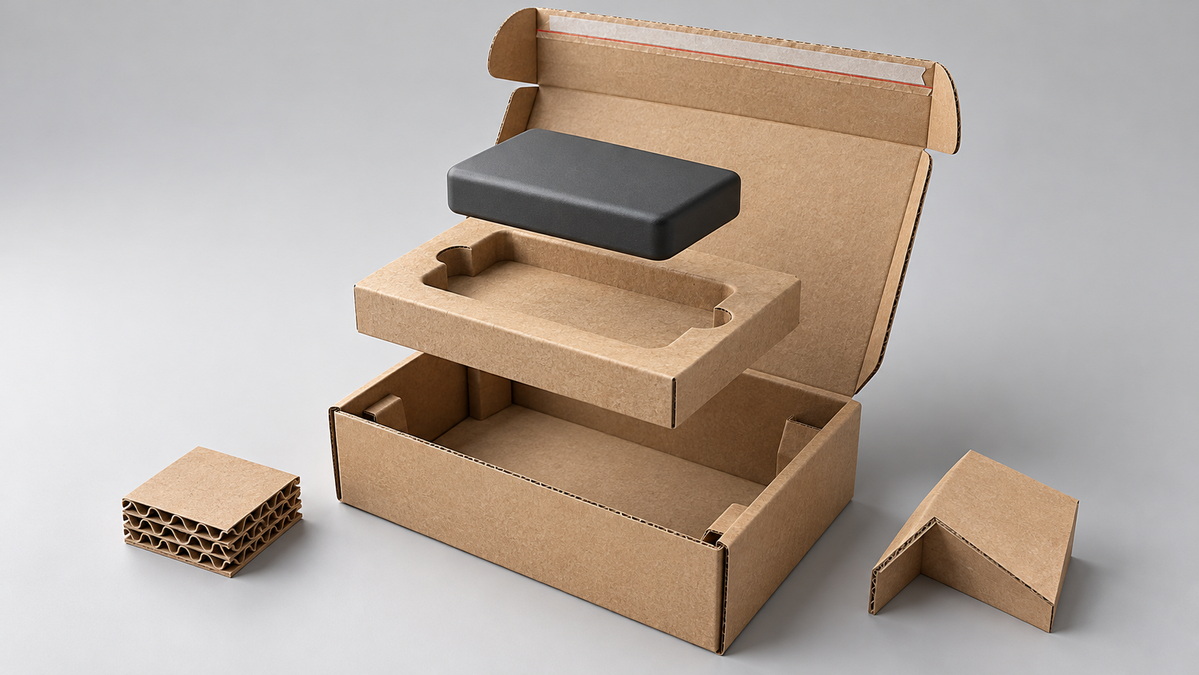
Choose Materials as a Complete System
Corrugated board, paperboard inserts, and suitable paper-based cushioning can support frustration-free designs. However, material names alone do not establish compliance.
Evaluate the complete construction:
- Board grade and structural strength.
- Insert geometry and product restraint.
- Adhesives and tapes.
- Coatings and laminations.
- Labels and decorative components.
- Recycling acceptance in the destination market.
Paper-based packaging is not automatically recyclable everywhere. Treatments and mixed components can affect how the finished package is collected and processed.
Engineer the Opening Sequence
A customer should understand where to start without inspecting every panel.
Useful design options include:
- A clearly marked opening point.
- A grip area large enough to hold comfortably.
- A controlled tear strip.
- Simple product-removal instructions.
- Inserts with accessible finger openings.
Test the opening feature alongside transit performance. A tear strip that opens beautifully but ruptures during distribution creates a different problem.
Preserve Branding Without Adding Obstacles
Premium presentation does not require multiple disposable layers.
Consider well-organized inserts, clear typography, interior printing, and a deliberate reveal sequence. Keep required labels away from opening instructions and important artwork.
Also consider privacy. Shipping directly in product packaging exposes the exterior to delivery labels, handling marks, and public view. Sensitive products may require discreet, opaque presentation.
A Six-Step Packaging Development and Testing Workflow
1. Define the Shipping Configuration
Document the exact sellable unit, including every accessory and protective component.
Distinguish the individual customer package from the master carton used to deliver multiple units into a warehouse.
2. Confirm the Applicable Requirements
Check product eligibility, package dimensions, weight, fragility, packaging type, and marketplace requirements.
Do not assume one design qualifies across every region or product variation.
3. Build Production-Representative Samples
Use the intended board, insert, printing treatment, adhesive, and closure method.
A hand-built prototype with stronger materials than the production specification provides limited evidence about the final package.
4. Select the Correct Test Route
Not every product follows an identical testing process.
Amazon's vendor guidelines describe different routes depending on product and packaging characteristics. These include qualifying self-drop procedures and relevant ISTA 6-Amazon.com testing.
Fragile, heavy, bulky, and other special configurations can require different procedures or sample quantities.
5. Inspect Product and Package Performance
Evaluate more than carton appearance.
Check product function, breakage, leakage, abrasion, component movement, seal integrity, and opening performance. An intact outer box does not prove the contents survived.
Record failures with photographs and revise the relevant design element.
6. Submit Documentation and Control Changes
Follow the enrollment instructions for the applicable account and marketplace.
After approval, maintain the tested specification. Changes to materials, inserts, dimensions, or closures may affect performance and trigger further evaluation.
Approval should never be treated as permission to substitute cheaper components without review.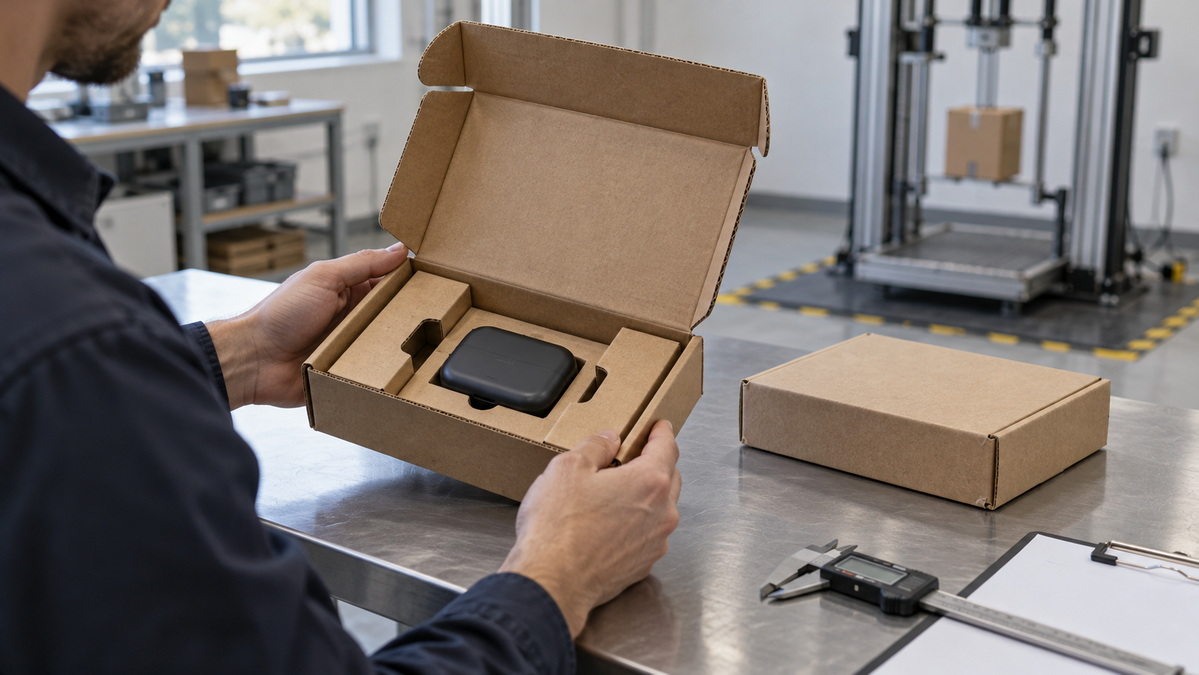
Turning Customer Reviews Into Better Packaging
Customer feedback becomes useful when it identifies a specific design problem rather than a general preference.
No verified customer reviews were supplied for this article. The following examples are hypothetical analysis categories, not testimonials:
| Example feedback theme | Possible issue | Practical investigation |
| "I could not find where to open it" | Unclear opening sequence | Observe first-time users without instructions |
| "The accessory was missing" | Poor visibility or retention | Check accessory placement and compartment security |
| "The box was fine, but the product was scratched" | Internal movement | Inspect contact points and insert fit |
| "There was too much packaging" | Unnecessary components | Review the purpose of each layer |
| "I did not know what to recycle" | Unclear disposal guidance | Review materials and destination-specific instructions |
For a pilot shipment, collect consistent feedback on opening difficulty, product condition, missing parts, and disposal confusion.
Then connect each recurring complaint to a measurable packaging change. This is more useful than claiming that a redesigned box automatically increases satisfaction.
Evaluate Total Cost, Not Just Box Price
A lower packaging quotation does not necessarily produce a lower delivered cost.
Compare:
1. Box and insert costs.
2. Assembly and packing labor.
3. Tape and additional materials.
4. Storage and transportation.
5. Applicable fulfillment charges.
6. Damage, replacement, and return costs.
7. Tooling, sampling, and testing expenses.
For illustration, a slightly more expensive fitted insert may be commercially worthwhile if it removes a packing step or reduces product movement. That outcome must be measured rather than assumed.
Likewise, smaller dimensions may improve shipping economics, but savings depend on actual carrier rules, rate agreements, and fulfillment arrangements.
Use pilot results to support purchasing decisions. Avoid applying historical chargebacks or advertised discounts as universal current figures.
What to Include in a Packaging Supplier Brief
A detailed brief helps a packaging manufacturer propose a workable structure instead of guessing from a product photograph.
Provide:
- Product dimensions, weight, and photographs.
- Fragile areas and surface-finish requirements.
- Accessory quantities and arrangement.
- Intended sales channels and destinations.
- Required opening experience.
- Material and recycling requirements.
- Artwork, barcode, and label locations.
- Expected order quantities.
- Testing and documentation expectations.
- Whether return shipment functionality is needed.
At Shenzhen XingKun Packing Products Co., Ltd., our printing and packaging manufacturing background informs a practical approach: develop the structure and presentation together, then validate the final configuration.
Manufacturing experience alone does not establish platform approval. Ask suppliers to distinguish clearly between packaging production, testing support, and the marketplace's enrollment decision.
Build Packaging Around the Complete Customer Journey
Effective frustration-free packaging connects protection, opening, branding, and disposal. Removing material is only valuable when the remaining system performs its job.
For your next packaging project, send Shenzhen XingKun Packing Products Co., Ltd. your product specifications, target markets, current packaging photographs, and expected order quantity. Include any verified customer complaints and applicable platform requirements.
Request a proposal covering the box structure, insert arrangement, opening method, material specification, and validation plan—not simply a price for a printed box.
Frequently Asked Questions
1. Is frustration-free packaging the same as SIPP?
No. SIPP focuses on shipping in the manufacturer's packaging without additional Amazon packaging. FFP adds recyclability and opening requirements. The application terminology differs between seller and vendor documentation.
2. Does frustration-free packaging mean the product is used?
No. The term describes packaging characteristics, not product condition. Customers should check the listing and seller's condition description to determine whether an item is new, refurbished, or used.
3. Must frustration-free packaging be completely plastic-free?
Not necessarily. Amazon's vendor guidance permits certain plastic components under specified conditions. However, prohibited formats and regional recyclability requirements still apply. Review the complete packaging system rather than relying on a plastic identification code alone.
4. Can fragile products use frustration-free packaging?
Potentially, yes. Fragile products need suitable protection and the applicable testing route. Removing protective material without validating the replacement structure is not an appropriate shortcut.
5. Can a branded mailer box qualify?
Potentially. Its appearance or box style does not establish eligibility. Dimensions, closure security, product protection, materials, and testing requirements determine whether the complete package is suitable.
6. Does FFP compliance guarantee lower fulfillment fees?
No. Amazon's United States seller guidance states that FFP compliance does not provide additional discounts beyond SIPP certification. Any financial benefit depends on current program rules and the specific product.
References
1. Amazon Seller Central. "Amazon Frustration-Free Packaging." United States seller guidance covering FFP requirements, the 120-second opening criterion, prohibited components, SIPP enrollment, and discount limitations. [sellercentral.amazon]
2. Amazon. "Ships in Product Packaging Certification Guidelines for Vendors." Version 11.2, updated September 16, 2024. Covers vendor tiers, material requirements, closures, special product classifications, testing routes, documentation, and packaging changes. [cdn.amazon-packaging]
3. Amazon Staff. "How Amazon Is Improving Packaging and Boosting Sustainability." Updated August 26, 2026, using information from Amazon's 2025 Sustainability Report. Source for the 28 million unique products and 11% global-order figures. [aboutamazon]
4. Custom Box Makers. "What Is Frustration-Free Packaging? FFP vs Standard Packaging." Original article reviewed for topic coverage and restructuring. Amazon-specific requirements in the rewritten article follow the primary documentation above. [customboxmakers]
5. Shenzhen XingKun Packing Products Co., Ltd. Company background supplied in the project brief: more than 20 years of printing and packaging manufacturing experience and service to brands and distributors across over 30 countries and regions. These company statements were not independently verified; no public source link or verified customer reviews were supplied.


