Content Menu
● Why Playing Card Paper Is Different
● The Main Types of Paper for Playing Cards
● What Is Black Core Paper?
>> Blue Core vs. Black Core
● What Does GSM Mean for Playing Cards?
● Surface Finishes: Linen, Smooth, and Air-Cushion
>> Linen Finish
>> Smooth Finish
>> Air-Cushion or Embossed Finish
● Coatings and Varnishes
● How to Choose Paper for Your Custom Deck
>> 1. Define the Use Case
>> 2. Select the Core Type
>> 3. Match Finish to Gameplay
>> 4. Request a Physical Sample
● Expert Insight: The "Snap" Test
● Sustainability: FSC-Certified Playing Card Paper
● Common Paper Mistakes to Avoid
● How XingKun Helps Brands Specify Card Paper
● Conclusion
● FAQ
>> 1. What paper are standard playing cards made of?
>> 2. Is black-core paper better than blue-core paper?
>> 3. What GSM is best for custom playing cards?
>> 4. Are playing cards made from plastic or paper?
>> 5. What finish is best for playing cards?
>> 6. Can custom playing cards use FSC-certified paper?
● References
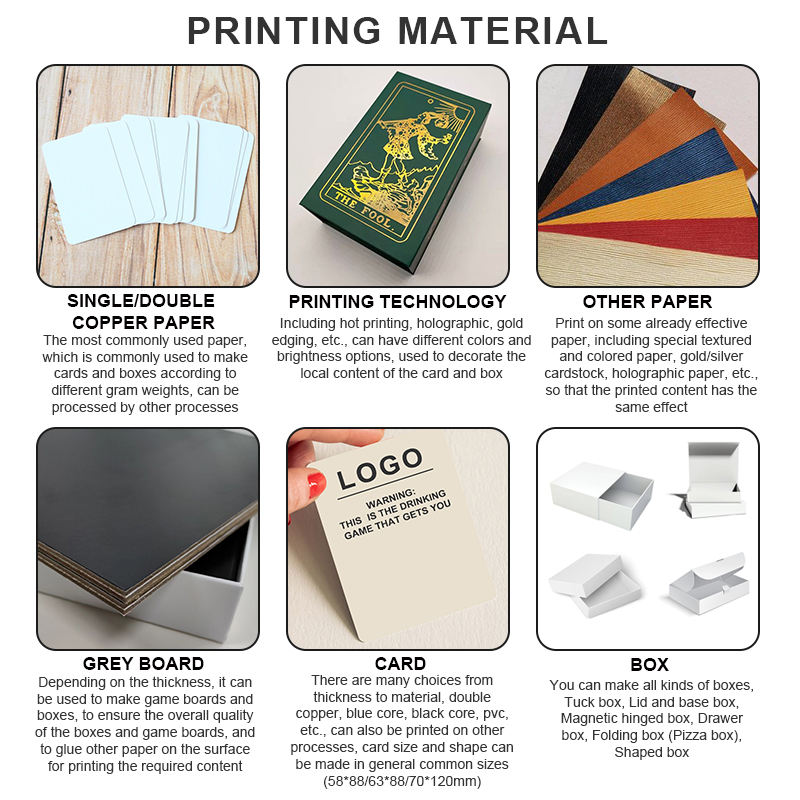
Most playing cards are made from multi-layer coated cardstock—typically 280–330 gsm—with a black or blue core layer that prevents see-through. Premium custom decks often use black-core paper with a linen, air-cushion, or smooth finish, while budget decks may use standard coated paperboard. The right choice depends on opacity, flexibility, print quality, durability, and target market.
As a manufacturer producing custom playing cards, game cards, tarot decks, and promotional cards for OEM/ODM buyers, we see the same issue repeatedly: brands choose paper based only on price or thickness. In practice, paper structure and surface finish affect the customer experience more than grammage alone.
Why Playing Card Paper Is Different
A playing card must do several things at once:
- Resist bending while still returning to shape with a crisp "snap."
- Block light so opponents cannot identify a card from the back.
- Hold fine printed detail, including small suit symbols, game text, and artwork.
- Slide smoothly during shuffling, dealing, fanning, and cardistry.
- Survive repeated handling without delaminating, cracking, or absorbing moisture.
That is why playing-card paper is rarely a single sheet of ordinary cardstock. High-quality decks use a three-layer laminated structure: a printed surface layer, an opaque core, and another printed surface layer.
Cartamundi describes its Eagle playing-card stock as two layers of cardstock with a black adhesive core, designed to make the cards opaque and resistant to bending and marking. This structure is the key reason professional-looking decks feel different from inexpensive promotional cards. [cartamundi]
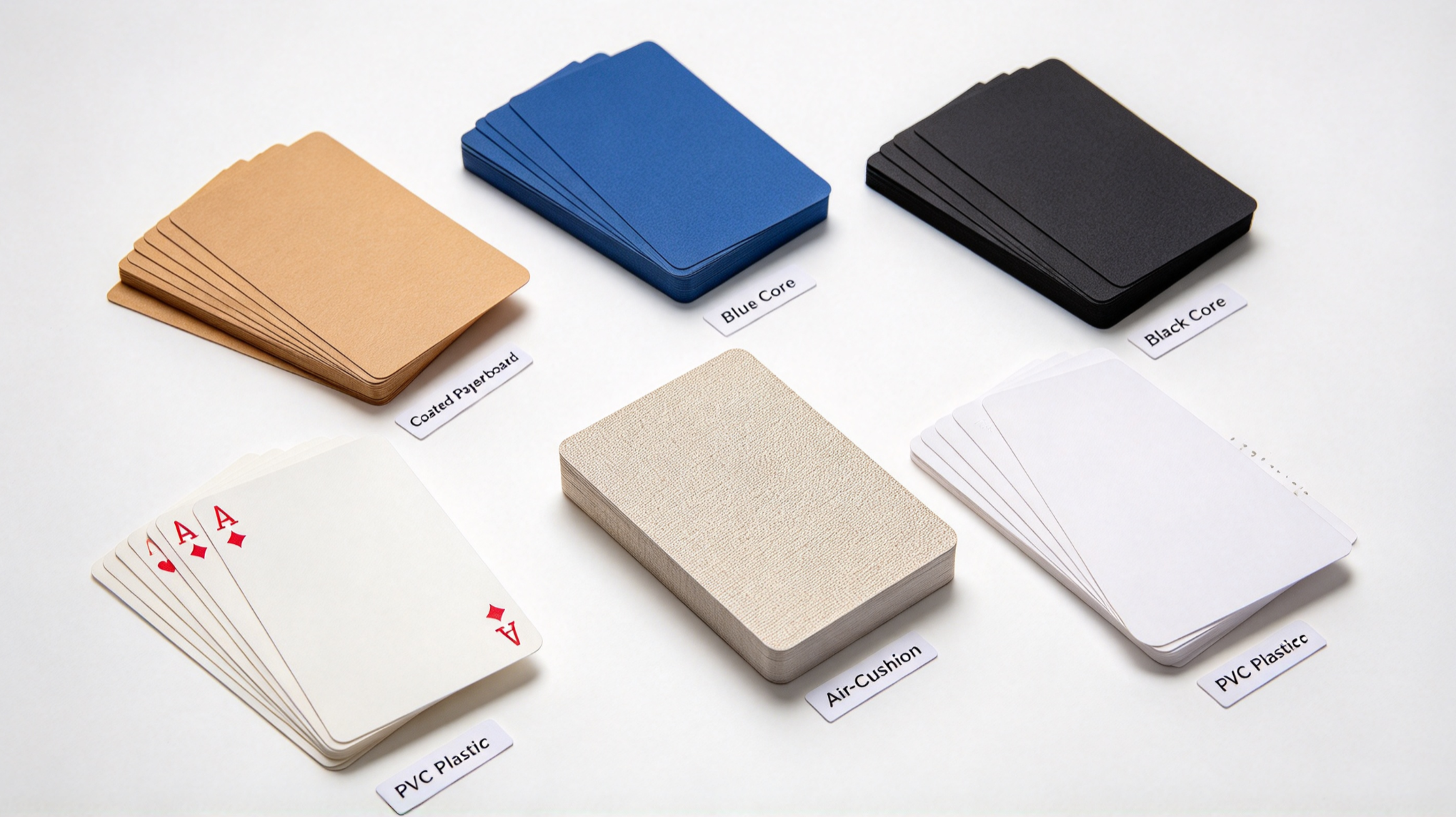
The Main Types of Paper for Playing Cards
| Paper type | Typical weight | Core / structure | Best use | Key advantage |
| Standard coated paperboard | 250–300 gsm | Single-layer or basic laminate | Promotional decks, giveaways, flashcards | Lower cost |
| Blue-core playing-card paper | 280–320 gsm | Blue opaque interlayer | Custom poker, party games, board-game cards | Good opacity at moderate cost |
| Black-core playing-card paper | 300–330 gsm | Black light-blocking interlayer | Premium poker, casino-style decks, cardistry | Excellent opacity and snap |
| Linen-finish cardstock | 300–320 gsm | Black or blue core with embossed texture | Traditional playing cards, luxury decks | Reduced sticking and improved handling |
| Air-cushion / embossed cardstock | 300–330 gsm | Black core with textured surface | Cardistry, magic, frequent shuffling | Smooth glide and less clumping |
| PVC / 100% plastic | Not paper-based | Solid plastic | Casino, outdoor, waterproof applications | Very durable and washable |
| Recycled or FSC-certified board | 300–330 gsm | Varies by grade | Sustainable retail and brand decks | Supports responsible sourcing claims |
Black-core stock is widely used for premium poker and trading-card projects; supplier specifications commonly list 300–350 gsm options, with 300 gsm as a mainstream choice. Cartamundi-related product listings also describe 310 gsm black-core paper and 320 gsm black-core board for poker decks. [wjpaper]
What Is Black Core Paper?
Black core paper is a laminated cardstock with a dark inner layer between two white, printable outer layers. The core is usually made with carbon-black pigment or another opaque material.
Its purpose is simple: prevent light from passing through the card.
Without an opaque core, a player may be able to see the card back—or even faint artwork—when holding the card up to light. This is unacceptable for poker, casino-style games, magic tricks, and competitive card games.
A typical black-core construction includes:
1. White coated front layer for printing.
2. Black opaque core for light blocking.
3. White coated back layer for printing.
4. Surface coating or varnish for protection and handling.
The result is a card that is opaque, flexible, and durable. Supplier specifications describe this as a three-layer composite: white coated surfaces with a carbon-black light-blocking core. [wjpaper]
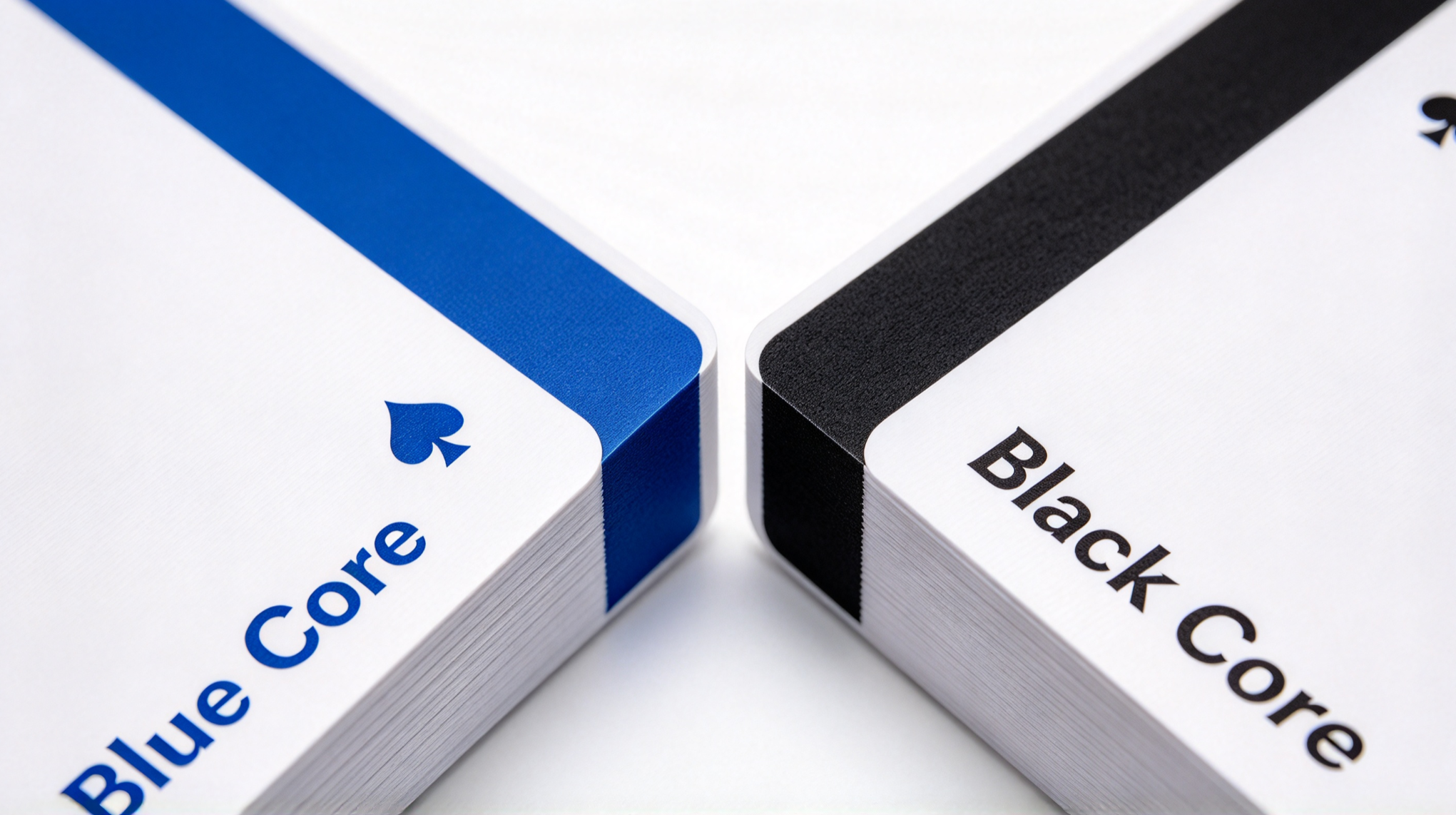
Blue Core vs. Black Core
Both blue-core and black-core papers improve opacity. The difference is mainly visual and positional:
- Blue core is common for mid-range custom decks and offers strong opacity at a more accessible cost.
- Black core is preferred for premium poker decks, casino-style products, magic decks, and high-end collector cards.
- Black core also creates a distinctive edge appearance when cards are cut, which many buyers associate with professional quality.
For most branded retail decks, 300–310 gsm blue-core or black-core paper provides an excellent balance of cost, durability, and handling. For premium positioning, 310–330 gsm black-core paper is usually the safer specification.
What Does GSM Mean for Playing Cards?
GSM means *grams per square meter*. It measures paper weight, not directly thickness—but higher GSM generally means a thicker, stiffer card.
Common playing-card paper weights include:
| GSM | Typical feel | Recommended application |
| 250–280 gsm | Lighter and more flexible | Promotional cards, flashcards, children’s games |
| 300 gsm | Balanced flexibility and firmness | Standard custom poker, board-game, and tarot cards |
| 310–320 gsm | Premium, crisp snap | Retail playing cards, cardistry, premium game decks |
| 330–350 gsm | Stiffer and more substantial | Collector decks, luxury tarot, thick game cards |
A 300 gsm black-core card is often considered the mainstream choice for poker, trading cards, and tarot cards. However, do not treat GSM as the only quality indicator. A poorly made 330 gsm sheet can feel worse than a well-made 300 gsm sheet with better fiber structure, coating, and finishing. [wjpaper]
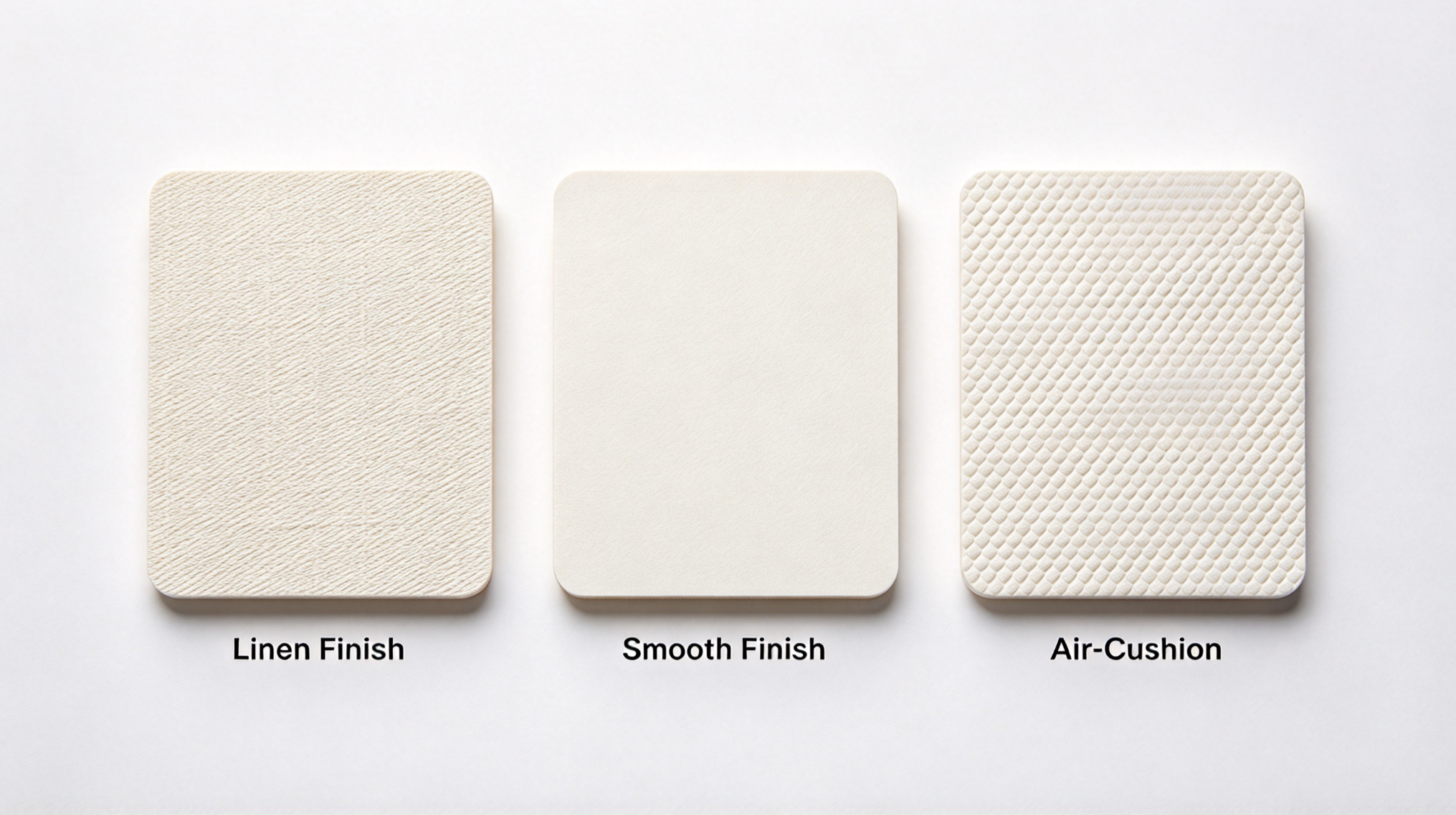
Surface Finishes: Linen, Smooth, and Air-Cushion
Paper finish changes how cards feel, shuffle, and wear over time.
Linen Finish
Linen finish is a subtle embossed texture applied to the card surface. It reduces cards sticking together and gives decks a traditional, premium feel.
Casino-card manufacturer Abbiati describes Cartamundi casino cards as using prelinen paper that reduces friction, increases gliding, and improves durability. [abbiati]
Best for:
- Classic poker decks
- Tarot and oracle cards
- Premium retail decks
- Cards handled frequently
Smooth Finish
Smooth finish provides a clean, flat surface. It is excellent for detailed artwork, photographic images, and modern minimalist designs.
Best for:
- Art decks
- Promotional cards
- Educational flashcards
- Designs with fine text or high-detail illustration
Air-Cushion or Embossed Finish
Air-cushion finish uses a fine textured pattern that creates tiny air pockets between cards. This helps cards separate easily during shuffling and reduces sticking.
Best for:
- Cardistry decks
- Magic decks
- High-frequency gameplay
- Decks that need a distinctive tactile feel
Coatings and Varnishes
Paper is only part of the equation. The surface coating protects the printed artwork and controls glide.
Common options include:
- Varnish: A protective coating that reduces scuffing and improves durability.
- Matte lamination: Soft, non-glare finish; good for premium or artistic decks.
- Gloss lamination: Strong color impact and wipeable surface; can feel slippery.
- Soft-touch lamination: Premium tactile effect, though less common for high-friction card games.
- UV coating: High-gloss protective finish, often used on promotional or visually bold cards.
XingKun's playing-card production process includes material selection, high-resolution printing, precision cutting, protective coatings, and quality inspection. The company also lists cardstock, varnishes, lamination, and non-toxic inks among its material options. [xkdisplay]
Important: A coating should support the paper, not compensate for weak paper. If a deck delaminates, cracks at the edges, or loses its snap quickly, the base cardstock is usually the problem.
How to Choose Paper for Your Custom Deck
Use this practical process when specifying a custom playing-card project.
1. Define the Use Case
Ask:
- Will the deck be used for poker, tarot, marketing, education, or a board game?
- Will players shuffle it frequently?
- Will it be sold at retail, given away, or used as a premium gift?
- Does it need to feel luxurious, durable, playful, or eco-friendly?
2. Select the Core Type
| Project type | Recommended paper |
| Promotional giveaway | 250–300 gsm coated paperboard |
| Custom board-game cards | 300 gsm blue-core or black-core |
| Custom poker deck | 300–310 gsm black-core |
| Premium retail deck | 310–320 gsm black-core |
| Tarot deck | 300–330 gsm black-core, often with matte finish |
| Cardistry or magic deck | 310–330 gsm black-core with air-cushion or linen finish |
| Outdoor or casino use | PVC or 100% plastic |
3. Match Finish to Gameplay
For frequent shuffling, choose linen or air-cushion finish. For artwork-led products, choose smooth matte finish. For a traditional casino feel, choose linen black-core stock.
4. Request a Physical Sample
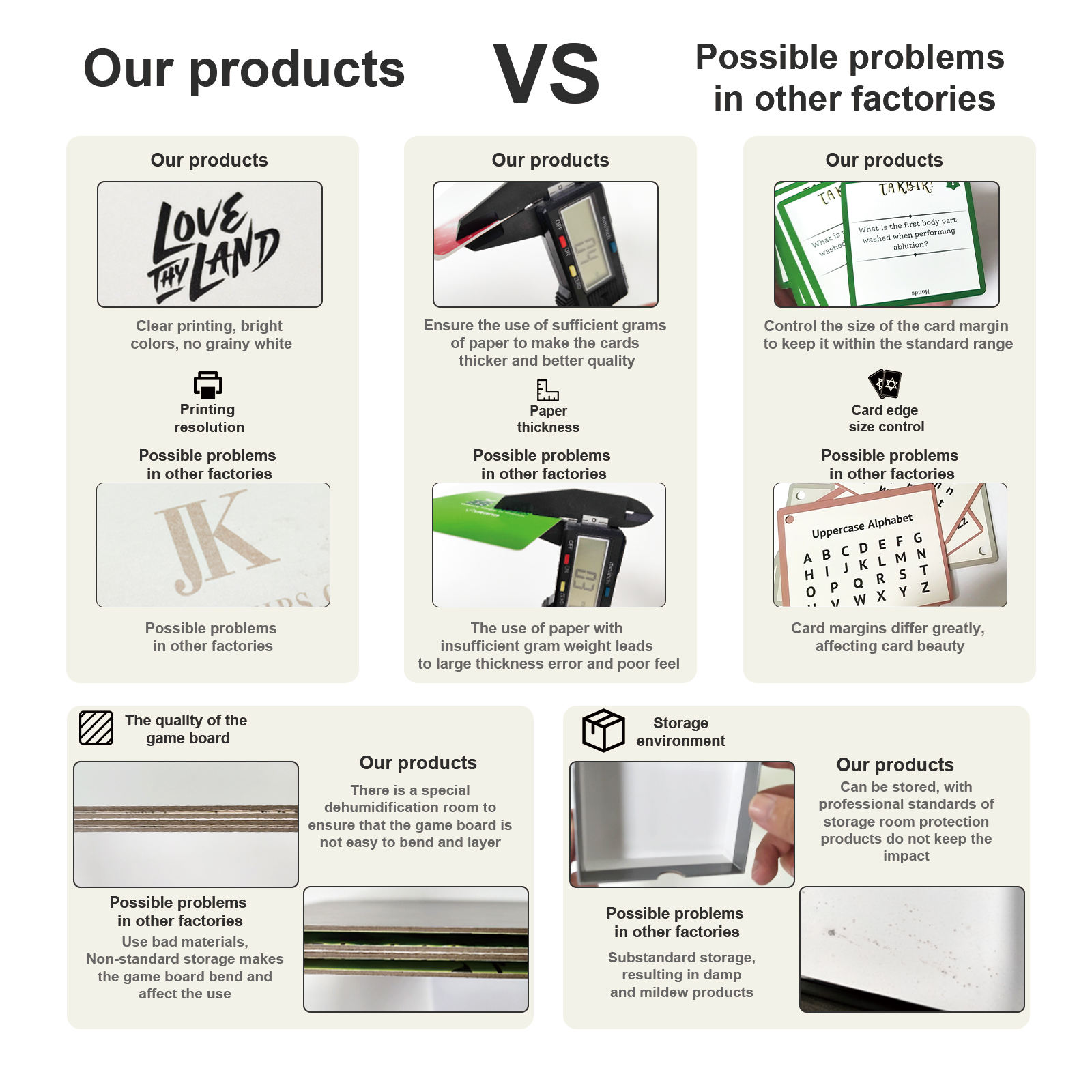
Never approve a custom deck based only on a PDF or paper specification sheet. Request a printed dummy deck using the exact paper, core, coating, and finish.
Check:
- Snap and recovery after bending
- Opacity under strong light
- Edge quality after cutting
- Color accuracy
- Surface glide
- Card-to-card separation
- Durability after repeated shuffling
Expert Insight: The "Snap" Test
In our experience working with custom card projects, the fastest way to assess paper quality is the snap test.
Bend a card gently and release it.
- A good playing-card paper returns quickly with a crisp snap.
- A weak paper feels limp, stays bent, or develops a visible crease.
- A poor laminate may separate at the edges after repeated bending.
Cartamundi notes that long-fiber cardstock gives cards their characteristic snap when bent and released. This is why fiber quality, lamination, and coating matter as much as the printed GSM number. [cartamundi]
Sustainability: FSC-Certified Playing Card Paper
Sustainability is now a purchasing criterion, not just a marketing message. Brands can specify FSC-certified paper and request chain-of-custody documentation from their supplier.
FSC certification verifies that forest-based materials come from responsibly managed forests, recycled sources, or controlled sources. The FSC system includes labels such as FSC 100%, FSC Recycled, and FSC Mix, depending on the material inputs. [gca]
For brands selling in Europe, North America, Japan, or Australia, an FSC claim can support both compliance storytelling and premium positioning. However, the manufacturer must hold the relevant chain-of-custody certification to apply an FSC label or make an FSC claim on the final product. [gca]
When requesting a quote, ask your supplier for:
- FSC certificate number
- Chain-of-custody scope
- Paper grade and origin
- Recycled-content percentage, if applicable
- Proof that the certification applies to the actual production run
Common Paper Mistakes to Avoid
- Choosing thickness over structure. A 330 gsm sheet without a proper opaque core may still be see-through.
- Ignoring finish. A beautiful deck can fail commercially if cards stick together during shuffling.
- Using ordinary art paper. It may print well but lack snap, opacity, and durability.
- Skipping a physical sample. Digital proofs cannot show snap, glide, edge quality, or lamination performance.
- Over-specifying plastic. PVC is durable, but it is not always the best choice for eco-conscious brands or paper-based retail products.
- Assuming all black-core paper is equal. Opacity, fiber length, coating, and cutting quality vary significantly between suppliers.
How XingKun Helps Brands Specify Card Paper
Shenzhen XingKun Packing Products Co., Ltd. provides OEM and ODM custom playing-card manufacturing for brands, wholesalers, game publishers, and promotional buyers. Its services include custom artwork, logos, card sizes, material selection, printing, cutting, coatings, and quality inspection. [xkdisplay]
For a custom deck, we recommend starting with a clear specification such as:
- Material: 310 gsm black-core playing-card paper
- Finish: Linen or air-cushion
- Coating: Protective varnish
- Printing: CMYK offset printing
- Card size: Poker size 63.5 × 88.9 mm or custom size
- Packaging: Tuck box, rigid box, or custom printed box
- Sustainability: FSC-certified paper option, where available
This level of detail reduces misunderstandings, improves sample accuracy, and helps ensure the final deck matches your brand's intended price point and user experience.
Conclusion
The best paper for playing cards is usually a 300–330 gsm coated, multi-layer cardstock with a black or blue opaque core. Black-core paper is the preferred choice for premium poker, tarot, cardistry, and casino-style decks because it provides strong opacity, durability, and a satisfying snap. Blue-core and standard coated paperboard can be suitable for promotional decks, board games, and budget-conscious projects.
The most successful custom decks do not simply use "thick paper." They combine the right grammage, core structure, surface finish, coating, printing method, and cutting quality. Before placing a production order, request a physical sample and test opacity, snap, shuffle feel, edge quality, and print reproduction.
If you are planning a custom poker deck, tarot deck, board-game cards, or branded promotional cards, XingKun can help you select the right paper specification and produce a sample before mass production. [xkdisplay]

FAQ
1. What paper are standard playing cards made of?
Most standard playing cards are made from coated cardstock, commonly around 300 gsm, with a blue or black opaque core. Premium decks often use black-core paper with a linen or air-cushion finish. [cartamundi]
2. Is black-core paper better than blue-core paper?
Black-core paper is generally considered more premium because it provides excellent light blocking and a professional edge appearance. Blue-core paper is also opaque and can be a cost-effective choice for many custom decks.
3. What GSM is best for custom playing cards?
For most custom poker, tarot, and board-game cards, 300–310 gsm is a strong starting point. For premium decks, 310–330 gsm black-core paper is commonly recommended. [wjpaper]
4. Are playing cards made from plastic or paper?
Both. Traditional and most custom playing cards use paper-based cardstock. Casino, outdoor, and heavy-duty decks may use PVC or 100% plastic, which is more waterproof and durable but less environmentally aligned with paper-based products.
5. What finish is best for playing cards?
For frequent shuffling, choose linen or air-cushion finish. For detailed artwork and a modern look, choose smooth matte finish. Linen finishes are specifically associated with reduced friction and improved gliding in professional casino cards. [abbiati]
6. Can custom playing cards use FSC-certified paper?
Yes. Brands can request FSC-certified paper and chain-of-custody documentation. The manufacturer must be FSC chain-of-custody certified to apply an FSC label or make an FSC claim on the finished product. [gca]
References
1. Cartamundi — Eagle 601 playing cards: black core, two-layer cardstock, opacity, and snap: [https://cartamundi.com/en/playing-card-brands/eagle/] [cartamundi]
2. Abbiati — Casino playing cards: prelinen paper, reduced friction, gliding, and durability: [https://www.abbiati.com/wp-content/uploads/2020/04/abbiati-cartamundi-casino-playing-cards.pdf] [abbiati]
3. FSC — Paper & Packaging and chain-of-custody certification: [https://fsc.org/en/businesses/paper-packaging] [fsc]
4. FSC Australia/New Zealand — Paper & Print certification information: [https://anz.fsc.org/paper-print] [anz.fsc]
5. WJ Paper — High-opacity black-core cardstock specifications, 300–350 gsm: [https://wjpaper.com/en/product-detail/base-paper/playing-card-paper/high-opacity-black-core-card-stock] [wjpaper]
6. Playing Card Decks — Cartamundi B9/C9 black-core paper and finish comparison: [https://playingcarddecks.com/blogs/all-in/the-cartamundi-decks-a-comparison-between-their-popular-finishes] [playingcarddecks]
7. XingKun — Custom Playing Cards Manufacturer: materials, coatings, production process, and customization services: [https://www.xkdisplay.com/playing-cards-manufacturer.html] [xkdisplay]


