Content Menu
● Why animal cards printable still matter
● What buyers usually need
● Core design principles
● Best formats and materials
>> Common material choices
● Print methods that improve quality
● Finishes that raise value
● A practical production workflow
● Educational use cases
● Commercial use cases
● New insight for 2026 buyers
● Quality checklist before printing
● Why sourcing from a factory matters
● Call to action
● Conclusion
● FAQ
>> 1. What are animal cards printable used for?
>> 2. What paper is best for printable animal cards?
>> 3. What size should animal cards be?
>> 4. Can animal cards be customized for brands?
>> 5. What file quality is recommended for printing?
>> 6. Why choose a factory-made version instead of only a downloadable PDF?
● References
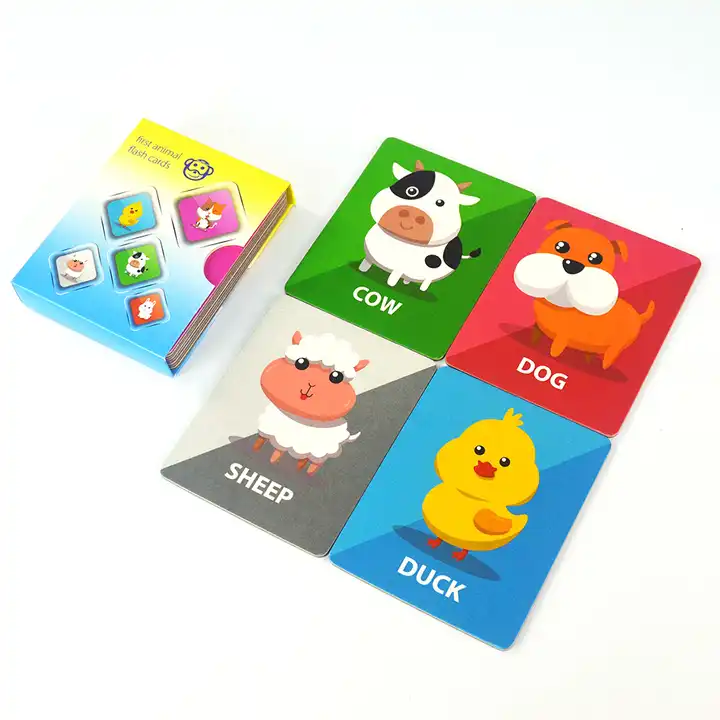
Animal cards printable products are more than cute learning tools. Done well, they can support early education, retail branding, classroom engagement, and premium packaging programs, especially when produced with the right paper, print method, and finishing choices. [teacherspayteachers]
For brands, publishers, educators, and wholesalers, the real opportunity is not just to "print cards," but to create usable, durable, and commercially attractive animal card sets that perform well in homes, classrooms, and retail channels. XingKun's product capabilities for custom cards, packaging, printing methods, materials, and finishes make this category especially relevant for OEM and ODM buyers. [teacherspayteachers]

Why animal cards printable still matter
Animal cards remain one of the most flexible print products in education and gift markets. They are used for vocabulary building, animal recognition, phonics, memory games, sorting activities, and Montessori-style learning, which makes them valuable across age groups and learning settings. [flashcardsforkindergarten]
They also work as a commercial product because they are easy to localize, easy to bundle, and easy to sell in sets. A single card concept can be adapted into flashcards, match games, mini decks, animal-themed learning kits, or retail-ready boxed products. [canva]
What buyers usually need
Most buyers searching for printable animal cards are looking for one of four outcomes: home-printable educational files, classroom learning tools, branded promotional decks, or factory-produced retail cards. Each use case has different expectations for size, paper, finishing, and durability. [qpmarketnetwork]
The most common mistake is treating all animal cards the same. A classroom deck needs durability and readability, while a retail deck needs stronger branding, better finishing, and packaging that feels gift-worthy or shelf-ready. [aplaceforanimals]
Core design principles
A successful animal card set should be visually clear, consistent, and fast to understand. Children and parents respond better to cards with strong contrast, simple layouts, readable type, and illustrations or photos that instantly communicate the animal. [montessorigame]
Use these design principles:
Keep one animal per card.
Use large, readable names.
Maintain consistent margins and spacing.
Match the illustration style across the whole set.
Avoid cluttered backgrounds that weaken focus.
Put the most important information on the front, not in tiny footer text.
These basics help both user experience and print performance, especially when the cards are cut, laminated, or packed in sets. [universalprintandcopy]
Best formats and materials
Material choice has a direct effect on perceived quality and product life. For printable educational cards, heavyweight cardstock and lamination are often recommended because they improve durability, resist bending, and support repeated handling. [etsy]
For factory-produced decks, XingKun lists a wide material range for custom card products, including black kraft, CCNB, CCK, CNK, fully recycled CCNB, holographic paper, metallic paper, natural brown kraft, SBS C1S, SBS C2S, textured paper, uncoated kraft, white kraft, and yellow kraft. [teacherspayteachers]
Common material choices
| Use case |
Recommended material |
Why it works |
| Home printable flashcards |
Heavy cardstock |
Easy to print, cut, and use |
| Classroom sets |
Laminated cardstock |
More durable and wipe-clean |
| Retail learning decks |
Premium coated board |
Better feel and stronger presentation |
| Eco-friendly editions |
Recycled or kraft stock |
Better fit for sustainability messaging |
| Premium gift sets |
Textured, metallic, or specialty paper |
Higher perceived value |
The right choice depends on whether the product is meant for at-home printing or commercial distribution. [etsy]

Print methods that improve quality
Print method should match order size and quality requirements. XingKun identifies offset print, digital print, and UV print as available methods for header card-type packaging, which are also relevant references for similar card products. [teacherspayteachers]
For animal cards printable sets, the practical logic is simple:
Digital print is ideal for short runs, prototypes, and fast turnaround.
Offset print is better for larger quantities and more consistent production economics.
UV print helps when you need stronger surface effects or visual impact.
Industry guidance for custom playing cards also emphasizes CMYK color, 300 DPI resolution, bleed allowance, and press-ready file setup to avoid trimming and alignment problems. [acelioncardgames]
Finishes that raise value
Finishing choices often separate a basic printable deck from a product that feels premium. XingKun lists aqueous coating, UV coating, spot gloss UV, soft touch coating, varnish, lamination, anti-scratch lamination, soft touch silk lamination, hot foil stamping, embossing, debossing, and cold foil printing as available enhancement options for card-style packaging. [teacherspayteachers]
For animal cards, the most useful finishes are:
Lamination, for durability.
Matte or soft touch coating, for a smoother premium feel.
Spot gloss, for highlighting animal eyes, logos, or icons.
Rounded corners, for safer handling and better wear resistance.
Foil accents, when the set is positioned as a gift or collectible.
These options help the product compete in both educational and retail channels. [universalprintandcopy]
A practical production workflow
A clear workflow reduces mistakes and speeds up approval. For a professional printable animal card project, the production process should look like this:
1. Define the target audience.
2. Select the animal categories.
3. Confirm card size and orientation.
4. Prepare artwork in 300 DPI or higher.
5. Set bleed and safe margins.
6. Choose material and finish.
7. Print a proof or sample.
8. Check color, cut line, and readability.
9. Approve the final run.
10. Package the cards for their intended channel.
This workflow reflects common custom card production practice and helps avoid common errors such as incorrect trim, weak typography, or inconsistent art placement. [qpmarketnetwork]

Educational use cases
Animal cards printable sets are especially effective in preschool, kindergarten, ESL, and homeschool environments. They can teach animal names, sounds, habitats, categories, and even simple science concepts like food chains or classification. [123gomama]
Here are strong educational applications:
Vocabulary training.
Matching and memory games.
Phonics and early reading.
Sorting by habitat, size, or type.
Science lesson support.
Speech and language activities.
The same deck can be repurposed across multiple learning formats, which increases its total value. [flashcardsforkindergarten]
Commercial use cases
From a business perspective, animal card products are valuable because they can be sold in many forms and price points. They are suitable for children's brands, museum gift shops, bookstores, educational publishers, pet brands, toy companies, and promotional campaigns. [mycreativeshop]
They can also be bundled with packaging boxes, stickers, books, or puzzles to create a fuller product line. For OEM and ODM buyers, that bundling ability matters because it increases average order value and improves retail storytelling. [teacherspayteachers]
New insight for 2026 buyers
One major trend is the shift from single-use printables to multi-format learning assets. Buyers increasingly want a design that can be delivered as a PDF download, a classroom printable, and a manufactured deck with premium packaging. [canva]
This is important because it lets a brand serve both digital and physical buyers without redesigning the product from scratch. In practice, that means one master artwork system can support Amazon-style listings, teacher downloads, wholesale decks, and custom packaging at the same time. [canva]
Quality checklist before printing
Before approving any animal cards printable project, check the following:
Are the animal names spelled correctly?
Is the illustration style consistent?
Is the text large enough for the youngest user?
Are the bleed and safe zones correct?
Is the card size appropriate for the hand size and use case?
Does the finish match the product's intended price point?
Is the packaging aligned with the audience?
This checklist is useful because small mistakes become expensive after mass production. A single proof review can prevent alignment, readability, and packaging issues. [qpmarketnetwork]
Why sourcing from a factory matters
For international buyers, sourcing from a factory with both printing and packaging capabilities is a practical advantage. XingKun positions itself as a China-based manufacturer for custom printed packaging, cards, books, stickers, and puzzles, which means buyers can coordinate the card product and its box, insert, or display packaging in one workflow. [teacherspayteachers]
That matters because animal cards are rarely sold in isolation when they become commercial products. Better sourcing integration usually means fewer handoffs, tighter color control, more consistent packaging, and more control over final presentation. [teacherspayteachers]
Call to action
If you are planning to launch or upgrade an animal card product line, the smartest next step is to create one design system that can support both printable downloads and factory-produced cards. That gives you flexibility in pricing, audience targeting, and fulfillment. [canva]
For custom manufacturing, start by requesting a sample, confirming card size, paper stock, finish, and packaging format, then move to production only after proof approval. XingKun's custom card and packaging capabilities make it a suitable production partner for that workflow. [teacherspayteachers]
Conclusion
Animal cards printable products work best when they combine clear learning value, strong visual design, and production choices that match the target market. The strongest projects today are not just printable; they are scalable across classroom use, retail use, and custom factory production. [universalprintandcopy]
If you want the product to sell well and perform well, focus on durability, legibility, and packaging quality from the start. That is where educational usefulness becomes commercial advantage. [etsy]
FAQ
1. What are animal cards printable used for?
They are used for learning animal names, memory games, phonics, sorting activities, and classroom or home education. [mywellnesshub]
2. What paper is best for printable animal cards?
Heavy cardstock is usually the best starting point, and lamination adds durability for repeated use. [montessorigame]
3. What size should animal cards be?
Common sizes depend on the audience, but the key is readability and easy handling; many printable sets use compact flashcard formats, while commercial decks often follow standardized card dimensions. [qpmarketnetwork]
4. Can animal cards be customized for brands?
Yes. They can be customized with logos, brand colors, category themes, packaging boxes, and premium finishes for educational or retail use. [123print]
5. What file quality is recommended for printing?
Use press-ready files at 300 DPI or higher, with proper bleed, safe margins, and CMYK color settings. [universalprintandcopy]
6. Why choose a factory-made version instead of only a downloadable PDF?
A factory-made version offers better durability, retail presentation, packaging control, and consistency for wholesale or branded distribution. [teacherspayteachers]
References
1. XingKun, "Header Cards" and related custom card/packaging product information
2. XingKun, "Custom Card Decks,"
3. Teachers Pay Teachers, "Printable animal flashcards,"
4. Canva, "Free animal flashcards to customize and print,"
5. Mr Printables, "Basic Animal Flash Cards,"
6. Flashcards for Kindergarten, "100 Animal flashcards + FREE Animals Phonics Poster!"
7. QPMN, "How to Make Playing Cards: A Step-by-Step Guide,"
8. Universal Print & Copy, "How to Design Custom Playing Cards,"
9. MyCreativeShop, "Pets & Animals Business Card Templates,"


