Content Menu
● Quick Comparison: Brass vs Stainless Steel Name Plates
● What Makes Brass Name Plates Different?
>> Key Advantages of Brass Name Plates
>> Limitations of Brass Name Plates
● What Makes Stainless Steel Name Plates Different?
>> Key Advantages of Stainless Steel Name Plates
>> Stainless Steel Grades Matter
● Brass Name Plates vs Stainless Steel Name Plates by Application
● Appearance: Warm Heritage vs Modern Precision
>> Brand Positioning Example
● Durability, Corrosion, and Maintenance
>> Brass Maintenance Considerations
>> Stainless Steel Maintenance Considerations
● Manufacturing Methods and Marking Options
>> Common Brass Nameplate Processes
>> Common Stainless Steel Nameplate Processes
>> Expert Insight: Match the Process to the Failure Risk
● Cost: Initial Price vs Lifecycle Value
● How to Choose the Right Metal Nameplate
● Why Work With XingKun for Custom Name Plates?
● Frequently Asked Questions
>> Are brass name plates better than stainless steel name plates?
>> Do brass name plates rust?
>> Is stainless steel suitable for outdoor nameplates?
>> Which nameplate material is best for marine equipment?
>> Can logos and QR codes be added to metal nameplates?
>> Which material is more premium: brass or stainless steel?
>> How should I send a request for custom metal nameplates?
● References
Choosing between brass name plates and stainless steel name plates is not simply a design decision. It affects durability, readability, brand perception, maintenance requirements, manufacturing method, and long-term ownership cost. For equipment manufacturers, distributors, facility managers, and premium product brands, the correct material helps ensure that identification remains clear and professional throughout the product's working life.
With more than 20 years of experience producing nameplates, printed materials, packaging, and custom identification products for customers in over 30 countries and regions, Shenzhen XingKun Packing Products Co., Ltd. has seen one consistent rule: the best nameplate material depends on the actual operating environment, not appearance alone.
Brass delivers a warm, premium, heritage-oriented appearance. Stainless steel offers a clean, industrial, and highly durable solution for demanding conditions. This guide compares brass name plates vs stainless steel name plates across the factors that matter most when specifying custom metal nameplates.
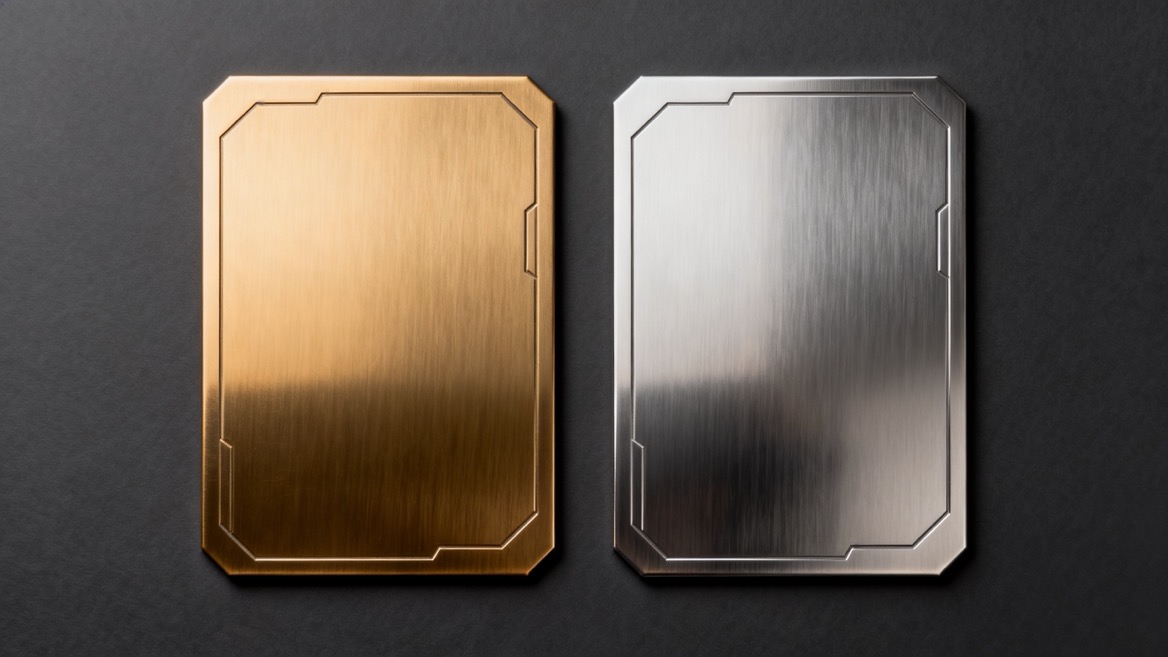
Quick Comparison: Brass vs Stainless Steel Name Plates
4444
The comparison should begin with a simple question: Will the nameplate primarily communicate prestige, or must it survive severe operating conditions?
For premium indoor products, architectural applications, and traditional brand environments, brass can create a distinctive emotional impression. For industrial equipment, outdoor installations, chemical exposure, frequent handling, or safety-critical identification, stainless steel is usually the more conservative and durable selection.
What Makes Brass Name Plates Different?
Brass is a copper-zinc alloy valued for its rich yellow-gold color, excellent workability, and traditional visual appeal. It has been used for plaques, trophies, door signs, instrument plates, decorative labels, and branded hardware for generations.
A brass nameplate immediately signals craftsmanship. It works particularly well when a buyer needs a product label that feels permanent, substantial, and refined rather than purely technical.
Key Advantages of Brass Name Plates
A premium and recognizable appearance
Brass has a naturally warm tone that stainless steel cannot fully replicate. It is especially suitable for brands that want to communicate heritage, luxury, craftsmanship, or hospitality.
Common uses include:
- Hotel and office door plates
- Executive desk name plates
- Furniture and cabinet labels
- Memorial plaques
- Trophy and award plates
- Boutique packaging accessories
- Luxury product branding
- Musical instrument labels
- Architectural and decorative signage
Excellent engraving character
Deep engraving, chemical etching, and filled engraving can produce highly visible lettering on brass. Dark-filled text against a polished or brushed brass surface creates strong contrast and an established, premium look.
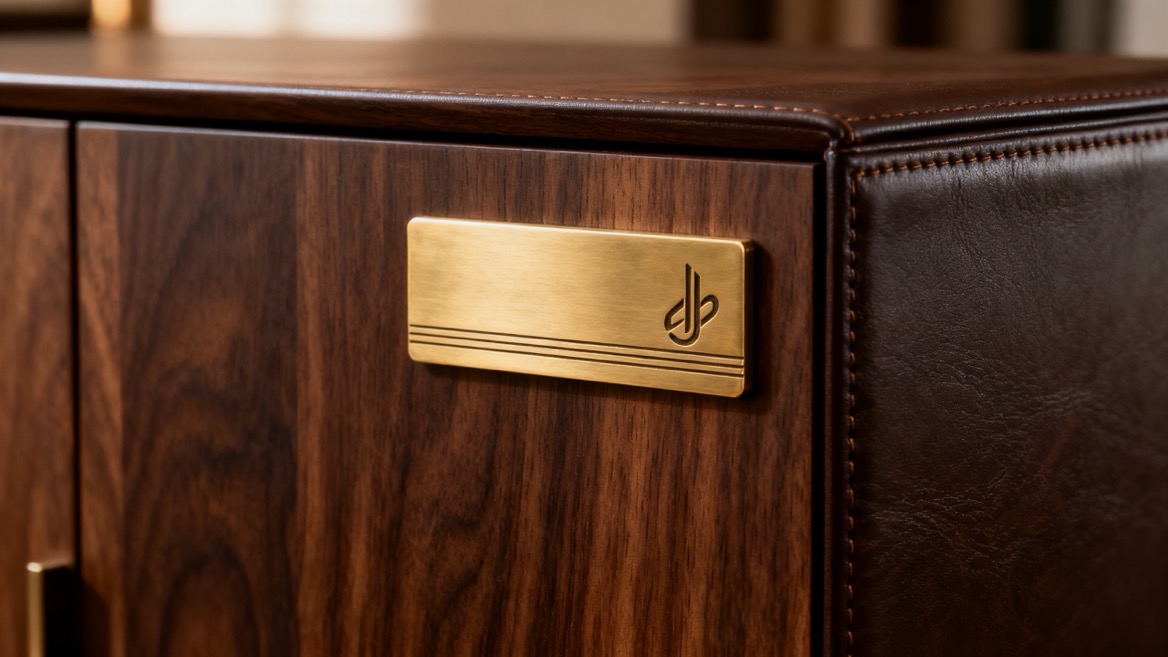
For example, a heritage furniture brand may choose a brushed brass name plate with recessed black-filled lettering. The metal label reinforces product value before the customer even touches the furniture.
Strong machinability and forming flexibility
Brass is comparatively easy to machine, punch, drill, emboss, and form. This can make it a practical option for custom shapes, decorative borders, mounting holes, raised lettering, and detailed logo work.
Natural corrosion resistance in many environments
Brass does not rust in the same way as carbon steel. In normal indoor environments and many low-humidity applications, it can provide a long service life. Some brass alloys also perform well in freshwater-related applications.
However, corrosion resistance should never be interpreted as "maintenance-free." Brass can oxidize, darken, or develop a greenish patina outdoors. That change may be visually desirable for architectural projects, but it may be unacceptable for a luxury product label or a brand-consistent identification plate. Brass used outdoors can form a superficial patina, while the underlying material remains protected.
Limitations of Brass Name Plates
Tarnishing changes the original color
A polished brass nameplate may gradually darken due to air exposure, moisture, fingerprints, handling, and environmental contaminants. Clear lacquer, protective coatings, or routine cleaning can slow that process, but every protection method should be evaluated according to the final application.
Not the default material for salt and chemical exposure
Brass can be vulnerable to certain environmental conditions, including aggressive saltwater exposure, acidic environments, ammonia, and situations that can contribute to dezincification. In these conditions, a stainless steel name plate—particularly a suitable grade such as 316—may provide a more reliable solution.
Softer surface performance
Brass is generally softer than stainless steel. A brass plate can be scratched, dented, or visibly marked more easily in heavy-use settings. For machine identification, warehouse equipment, outdoor enclosures, or high-contact products, this matters.
What Makes Stainless Steel Name Plates Different?
Stainless steel name plates are widely used when durability, corrosion resistance, cleanliness, and permanent identification are more important than decorative warmth. Stainless steel contains chromium, which forms a passive protective oxide layer on the surface and helps the material resist corrosion.
This material is especially common in industrial manufacturing because it balances mechanical strength with a professional, modern appearance.
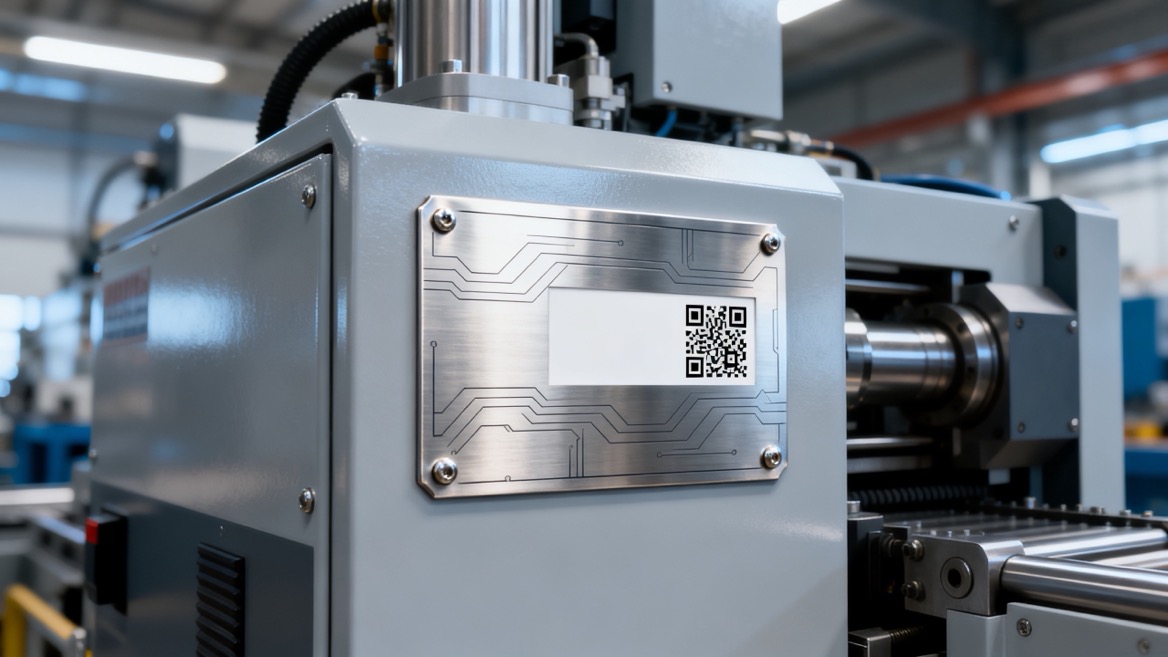
Key Advantages of Stainless Steel Name Plates
Superior performance in demanding environments
Stainless steel is the preferred option for many applications involving moisture, abrasion, industrial handling, high temperatures, cleaning agents, oils, and outdoor exposure.
It is commonly used for:
- Machinery identification plates
- Electrical panel nameplates
- Motor and pump labels
- Asset tracking tags
- Serial number plates
- Safety instruction plates
- Marine equipment labels
- Food-processing equipment tags
- Medical and laboratory equipment labels
- Outdoor utility and telecommunications equipment
Stainless steel nameplates are widely valued for resistance to water, heat, corrosion, abrasion, chemicals, and solvents.
Greater strength and impact resistance
Compared with brass, stainless steel typically offers higher strength and better resistance to bending, denting, and scratching. That makes it well suited to equipment that is transported, installed outdoors, cleaned frequently, or exposed to regular contact.
Professional, technical appearance
A brushed, matte, polished, or bead-blasted stainless steel plate creates a clean and precise aesthetic. It suits modern machinery, electronics, laboratory instruments, medical equipment, and premium appliances.
The appearance is less ornamental than brass, but it often communicates reliability, engineering quality, and durability.
Strong compatibility with permanent marking
Stainless steel can be laser marked, chemically etched, engraved, embossed, screen printed, or digitally printed depending on the performance requirement. Laser-marked text, serial numbers, QR codes, and barcodes can support traceability programs across equipment lifecycles.
This is particularly useful for export manufacturers that need durable identification across different installation environments, languages, inspection processes, and after-sales service networks.
Stainless Steel Grades Matter
Not every stainless steel nameplate performs the same way. Material grade selection is one of the most important technical decisions in a nameplate project.
| Grade | Typical Nameplate Use | Best Environment |
| 304 stainless steel | General industrial equipment, indoor and standard outdoor applications | Normal moisture, general manufacturing, urban outdoor environments |
| 316 stainless steel | Marine, coastal, chemical, and chloride-exposed equipment | Salt spray, coastal air, seawater-adjacent installations, more aggressive environments |
| 316L stainless steel | Applications requiring enhanced weldability or corrosion resistance | Marine hardware, chemical service, demanding external installations |
Grade 304 performs well in many applications, but chloride exposure from coastal air, seawater, or road salt can degrade its corrosion performance over time. Grade 316 includes molybdenum and is generally more resistant to chloride and salt-spray corrosion.
For buyers, this creates an important procurement lesson: asking for "stainless steel" is not enough. The grade, thickness, finish, marking process, adhesive, and mounting method should all be specified.
Brass Name Plates vs Stainless Steel Name Plates by Application
The most useful comparison is not "which material is better?" It is "which material is better for this job?"
| Application | Recommended Material | Why |
| Luxury furniture label | Brass | Adds warmth, heritage, and premium decorative value |
| Executive office door sign | Brass | Supports a classic and high-end visual identity |
| Hotel room number plate | Brass or stainless steel | Brass suits traditional interiors; stainless suits contemporary, high-traffic designs |
| Outdoor machinery plate | Stainless steel | Better resistance to weather, impact, and regular cleaning |
| Marine equipment identification | 316 stainless steel | Stronger choice for salt-rich environments |
| Electrical control panel | Stainless steel | Durable, technical, and suitable for permanent safety information |
| Premium appliance badge | Brass or stainless steel | Choose brass for luxury warmth; stainless for modern precision |
| Asset tag with barcode | Stainless steel | Supports long-term durability and readable traceability marks |
| Memorial plaque | Brass | Traditional appearance and engraving quality are major advantages |
| Chemical processing equipment | Stainless steel | Better suited to harsh industrial exposure when the grade is correctly selected |
Appearance: Warm Heritage vs Modern Precision
The visual difference between brass and stainless steel is immediately noticeable.
Brass is often chosen when the nameplate itself is part of the product's decorative story. It can look antique, formal, luxurious, handcrafted, or prestigious. Finishes such as polished brass, antique brass, brushed brass, satin brass, and black-filled engraving allow brands to shape a distinctive personality.
Stainless steel is normally selected when the product needs a precise, engineered, or contemporary identity. Brushed stainless steel can reduce fingerprint visibility, while polished stainless creates a brighter presentation. Matte finishes can be practical for technical panels because they reduce glare.
Brand Positioning Example
Imagine two coffee-machine manufacturers.
The first produces hand-built espresso machines for boutique cafés and luxury home kitchens. A brass nameplate with an engraved logo may support the brand's story of craftsmanship and tradition.
The second produces commercial coffee machines for airports, hotel chains, and self-service stations. A stainless steel nameplate with laser-marked model numbers, voltage data, a serial number, and a QR code may better support maintenance, compliance, and traceability.
Both are valid choices. The right answer depends on what the product needs to communicate and endure.
Durability, Corrosion, and Maintenance
Material durability should be considered over the full lifecycle of the product.
Brass Maintenance Considerations
Brass nameplates are often best for controlled environments. If appearance must remain bright and gold-toned, consider:
- Clear protective lacquer or coating
- Brushed rather than mirror-polished finishes
- Indoor installation where possible
- Cleaning instructions that avoid abrasive chemicals
- Mechanical fixing methods that prevent adhesive failure
- A finish sample approved before mass production
Brass can develop a patina outdoors, which may be desired for certain architectural applications. However, if consistent brand color is important, a protective finish and realistic maintenance plan are essential.
Stainless Steel Maintenance Considerations
Stainless steel is generally easier to maintain. It still benefits from routine cleaning, particularly in coastal or chemical environments.
For maximum performance:
1. Choose 304 stainless steel for general industrial and non-coastal applications.
2. Choose 316 stainless steel when salt spray, coastal air, or chloride exposure is expected.
3. Use a surface finish appropriate for the level of handling and visibility.
4. Select permanent marking for compliance, serial number, or safety information.
5. Match the mounting method to the surface, vibration level, and service temperature.
A stainless steel nameplate is not automatically immune to all corrosion. Proper grade selection, cleaning, installation design, and avoidance of trapped moisture remain important.
Manufacturing Methods and Marking Options
The material is only one part of the nameplate specification. The marking method determines readability, permanence, cost, and design flexibility.
Common Brass Nameplate Processes
- Chemical etching
- Deep engraving
- Black-filled or color-filled engraving
- Embossing and debossing
- Polishing and brushing
- Clear coating or lacquer finishing
- Screen printing for detailed color graphics
Brass is especially effective when the design uses engraved text, borders, traditional typefaces, and elevated decorative detail.
Common Stainless Steel Nameplate Processes
- Laser marking
- Laser engraving
- Chemical etching
- Photo etching
- Screen printing
- Digital printing with protective coatings
- Embossing or stamping
- QR code and barcode marking
For industrial products, etched or laser-marked stainless steel can support long-term readability of model numbers, electrical ratings, warnings, and traceability data.
Expert Insight: Match the Process to the Failure Risk
A nameplate can fail even when the metal is correct. Common failure points include fading ink, unreadable barcodes, adhesive breakdown, corrosion around mounting holes, shallow marking, and poor contrast under low light.
Before production, define the most likely failure risk:
| Main Risk | Recommended Direction |
| Frequent abrasion | Stainless steel with deep etching, engraving, or durable laser marking |
| Luxury appearance | Brass with brushed or polished finishing and engraved details |
| Salt spray or marine use | 316 stainless steel with permanent marking and corrosion-resistant mounting |
| Barcode scanning | Stainless steel with tested code contrast, size, and marking depth |
| Outdoor sun exposure | Metal substrate with durable etched, engraved, or protected printed graphics |
| High-end indoor signage | Brass with protective finish, or stainless steel for a modern aesthetic |
This specification-first approach reduces avoidable quality disputes and helps buyers compare quotations accurately.
Cost: Initial Price vs Lifecycle Value
Brass and stainless steel pricing can vary based on material thickness, alloy grade, global metal markets, quantity, processing complexity, finish, mounting hardware, and packaging requirements.
Brass may require additional finishing or protective coating when visual consistency is critical. Stainless steel can cost more at the beginning, especially for thicker gauges, 316 material, laser marking, deep etching, or specialized mounting options.
However, the lowest unit price is not always the lowest project cost.
A low-cost nameplate that tarnishes, scratches, fades, or becomes unreadable can create replacement costs, warranty concerns, compliance issues, and damage to brand credibility. For industrial machinery and exported equipment, a durable stainless steel nameplate may provide stronger lifecycle value because it can remain readable through transport, installation, cleaning, and years of service.
How to Choose the Right Metal Nameplate
Use this practical decision checklist before requesting a quotation.
1. Define the operating environment.
Is the product used indoors, outdoors, near the coast, around chemicals, or in a high-humidity area?
2. Identify the primary purpose.
Is the nameplate decorative, informational, regulatory, traceability-focused, or a combination of several functions?
3. Decide how long it must remain readable.
A temporary indoor product label requires a different solution from a 10-year machinery identification plate.
4. Choose the required visual direction.
Select brass for warmth and heritage. Select stainless steel for modern precision and industrial confidence.
5. Specify the data to be marked.
Include logo, model number, serial number, voltage, warning text, QR code, barcode, country of origin, and multilingual information where needed.
6. Confirm the mounting method.
Options include pressure-sensitive adhesive, rivet holes, screws, welded studs, slots, or custom mechanical fixtures.
7. Request a physical sample.
Evaluate color, texture, text contrast, edge quality, mounting, and marking readability under real lighting conditions.
Why Work With XingKun for Custom Name Plates?
A successful custom nameplate project requires more than selecting brass or stainless steel. It requires consistent material sourcing, careful artwork review, reliable production control, suitable surface treatment, protective packaging, and communication that supports international buyers.
Shenzhen XingKun Packing Products Co., Ltd. has more than two decades of experience in printing, packaging, and custom identification products. The company supports brands and distributors across more than 30 countries and regions with customized production solutions.
Whether you need decorative brass name plates for premium products or durable stainless steel name plates for industrial equipment, the best result begins with a clear application brief.
Share your artwork, dimensions, material preference, quantity, marking requirements, mounting method, and operating environment. Our team can help assess the practical trade-offs and develop a custom nameplate solution that supports your product, brand, and long-term use conditions.
Frequently Asked Questions
Are brass name plates better than stainless steel name plates?
Neither material is universally better. Brass is usually better for premium decorative applications, traditional branding, and indoor signage. Stainless steel is generally better for machinery, outdoor use, abrasive conditions, chemical exposure, and long-term industrial identification.
Do brass name plates rust?
Brass does not rust like carbon steel because it does not contain iron in the same way. However, it can tarnish, darken, or develop a patina when exposed to air and moisture. Outdoor brass can form a green surface patina over time.
Is stainless steel suitable for outdoor nameplates?
Yes. Stainless steel is widely used for outdoor nameplates because of its durability and corrosion resistance. For standard outdoor environments, 304 stainless steel is often suitable. For coastal, marine, or chloride-rich conditions, 316 stainless steel is usually the stronger option.
Which nameplate material is best for marine equipment?
316 stainless steel is commonly the preferred material for marine and coastal environments because it provides improved resistance to chloride and salt-spray exposure compared with 304 stainless steel.
Can logos and QR codes be added to metal nameplates?
Yes. Both brass and stainless steel can be customized with logos, serial numbers, QR codes, barcodes, safety symbols, and variable data. For equipment traceability, stainless steel with laser marking or etching is often selected for its durability and long-term readability.
Which material is more premium: brass or stainless steel?
Brass is usually perceived as more traditional, luxurious, and decorative because of its gold-colored appearance. Stainless steel is perceived as premium in a different way: it looks modern, clean, technical, and durable. The best choice should match the product's brand positioning.
How should I send a request for custom metal nameplates?
Provide the plate dimensions, thickness, quantity, artwork format, material preference, finish, text content, color requirements, mounting method, and intended environment. If the nameplate will be used outdoors, around chemicals, or near the sea, include that information so the appropriate metal grade and marking process can be recommended.
References
1. [Metals4U — What Is Brass? An In-Depth Guide]
2. [Metal Marker Manufacturing — Stainless Steel Nameplates]
3. [STRYKER — Corrosion-Resistant Stainless Steel Nameplates]
4. [American Nameplate — Everything About Metal Nameplates]
5. [Polished Metals — Brass vs. Stainless Steel: Which Is Best for My Project?]
6. [Jude Steel — Brass vs Stainless Steel: Strength, Corrosion & Long-Term Value]


