Content Menu
● What Is the Core Difference?
● Indoor Nameplates: Best Uses and Material Options
>> Common indoor nameplate applications
>> Popular materials for indoor nameplates
>>> Vinyl nameplates
>>> Polyester nameplates
>>> Polycarbonate nameplates
>>> Aluminum and acrylic nameplates
● Weatherproof Outdoor Nameplates: Built for Exposure
>> Environmental threats outdoor nameplates must resist
>>> UV exposure and fading
>>> Rain, humidity, and condensation
>>> Temperature extremes
>>> Chemical, oil, and salt exposure
>> Recommended outdoor nameplate materials
>>> Anodized aluminum nameplates
>>> Stainless steel nameplates
>>> Coated aluminum nameplates
>>> Durable polyester labels
● Indoor Nameplates vs Weatherproof Outdoor Nameplates: Material Comparison
● Printing Methods That Affect Durability
>> Screen printing
>> Digital printing
>> Laser engraving and laser marking
>> Chemical etching
● A Practical Selection Process for Buyers
>> Step 1: Define the installation environment
>> Step 2: Identify the base surface
>> Step 3: Determine information permanence
>> Step 4: Select the right attachment method
>> Step 5: Approve a pre-production sample
● Common Specification Mistakes
>> Choosing by appearance alone
>> Requesting "waterproof" without defining exposure
>> Ignoring application temperature
>> Using outdoor equipment data plates indoors first
>> Forgetting variable information
● Industry Example: Why Application Conditions Matter
● When Should You Upgrade to a Weatherproof Outdoor Nameplate?
● Custom Nameplates from XingKun Packing
● FAQs
>> 1. What is the best material for weatherproof outdoor nameplates?
>> 2. Can vinyl nameplates be used outdoors?
>> 3. How long do outdoor nameplates last?
>> 4. Are stainless steel nameplates better than aluminum nameplates?
>> 5. What information should be included on an equipment nameplate?
>> 6. Do adhesive-backed outdoor nameplates require surface preparation?
>> 7. Can outdoor nameplates include full-color logos and QR codes?
● References
Choosing between indoor nameplates and weatherproof outdoor nameplates is not simply a matter of appearance. The right choice affects product identification, safety information, brand presentation, compliance documentation, maintenance costs, and the usable life of equipment.
For more than 20 years, Shenzhen XingKun Packing Products Co., Ltd. has produced Name Plates and a broad range of custom printed and packaging products for brands and distributors in over 30 countries and regions. From our manufacturing experience, the most expensive nameplate is often not the one with the highest unit price—it is the one that fails before the product reaches the end of its service life.
This guide compares indoor nameplates vs weatherproof outdoor nameplates across materials, printing methods, resistance requirements, installation conditions, costs, and real application scenarios. It is designed to help OEMs, equipment manufacturers, distributors, and purchasing teams specify a nameplate that remains readable, securely attached, and visually professional in its actual working environment.
What Is the Core Difference?
The primary difference is the environmental exposure each product must withstand.
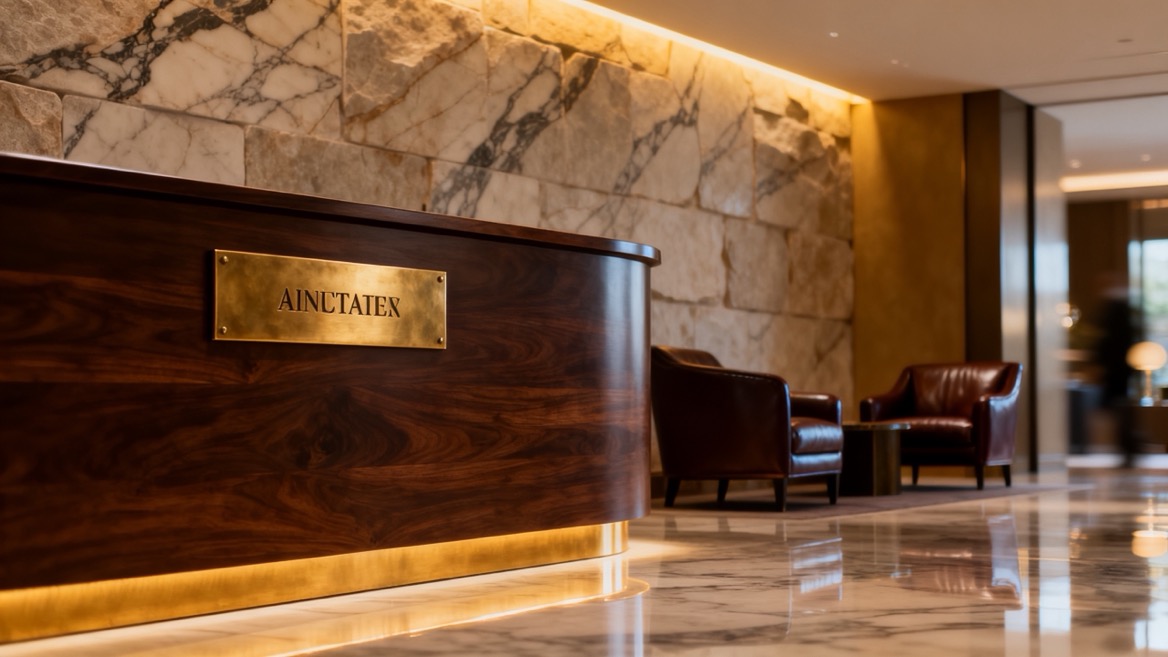
Indoor nameplates are generally designed for controlled or semi-controlled environments. These can include offices, retail stores, control rooms, indoor machinery, appliances, cabinets, electronics, furniture, and light-duty industrial equipment.
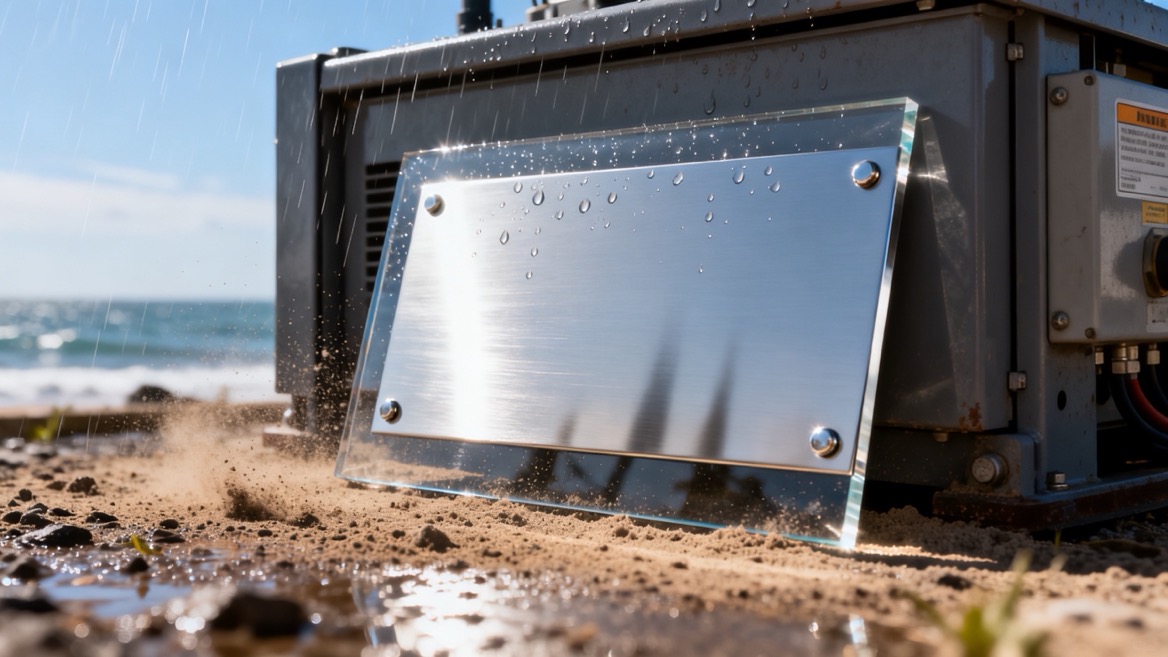
Weatherproof outdoor nameplates are engineered for direct and long-term exposure to changing weather, ultraviolet light, rain, moisture, temperature changes, airborne pollutants, dust, salt spray, abrasion, oils, cleaning chemicals, and mechanical wear.
An indoor plate may look excellent on the day it is applied. However, if it is used on outdoor equipment without suitable materials, inks, coatings, and adhesives, it may fade, crack, curl, corrode, or detach prematurely.
| Feature |
Indoor Nameplates |
Weatherproof Outdoor Nameplates |
| Typical environment |
Offices, retail, indoor machinery, appliances |
Construction sites, marine areas, outdoor cabinets, vehicles, agricultural equipment |
| UV resistance |
Often limited or optional |
Essential for sun-exposed applications |
| Moisture resistance |
Suitable for dry or low-humidity areas |
Required for rain, humidity, condensation, and washdown exposure |
| Material options |
Vinyl, polyester, polycarbonate, aluminum, acrylic |
Anodized aluminum, stainless steel, coated aluminum, durable polyester |
| Adhesive requirement |
Standard permanent adhesive may be sufficient |
High-performance adhesive selected for surface and temperature conditions |
| Printing durability |
Moderate to high, depending on use |
High resistance to fading, abrasion, chemicals, and weathering |
| Cost level |
Usually lower |
Usually higher due to material and durability requirements |
| Expected service demand |
Visual identification and branding |
Long-term readability, safety, traceability, and asset identification |
The correct choice starts with one practical question:
> Where will the nameplate spend most of its service life, and what will it be exposed to?
Indoor Nameplates: Best Uses and Material Options
Indoor nameplates are highly versatile. They can be produced in many colors, finishes, thicknesses, and shapes because they do not always need to withstand extreme environmental stress.
For many B2B applications, indoor nameplates provide an efficient balance between cost, visual appeal, and functional durability.
Common indoor nameplate applications
Indoor nameplates are widely used for:
- Electrical control panels
- Consumer appliances
- Office doors and desk signs
- Retail display fixtures
- Indoor medical equipment
- Electronics housings
- Computer and network equipment
- Furniture and cabinetry
- Indoor industrial machines
- Product branding plates
- Instruction plates and operating panels
- Asset identification labels
For these applications, the main priorities may include clear text, good color reproduction, scratch resistance, brand consistency, and reliable adhesion.
Popular materials for indoor nameplates
Vinyl nameplates
Vinyl is a flexible and economical choice for many indoor product labels and identification plates. It can be printed in full color and applied to slightly curved surfaces.
It is often suitable for short- to medium-term indoor applications where direct sun exposure, heavy abrasion, and harsh chemicals are not major concerns.
Best for:
- Promotional product labels
- Indoor equipment branding
- Retail displays
- Basic product identification
- Short-run customized projects
Vinyl can be upgraded with a protective laminate, but a laminated vinyl label should not automatically be treated as a long-term outdoor solution. The adhesive, ink system, edge sealing, substrate condition, and local climate still matter.
Polyester nameplates
Polyester is a more durable film option than many standard vinyl materials. It offers good dimensional stability and can perform well in industrial indoor environments.
Polyester nameplates are often selected for:
- Equipment labels
- Serial number labels
- Control panels
- Warning labels
- Industrial machine identification
- Electronic product labeling
A suitable polyester construction can provide strong resistance to tearing, chemicals, and abrasion. It is especially useful where a customer needs a thin, professional-looking label with improved durability.
Polycarbonate nameplates
Polycarbonate is commonly used for overlays, membrane-switch panels, appliance graphics, and industrial control interfaces. It provides a premium appearance and good impact resistance.
One advantage of reverse printing on clear polycarbonate is that the printed design sits behind the material. The outer surface helps protect the graphics from everyday handling and cleaning.
Best for:
- Control panel overlays
- Medical-device panels
- Appliance interfaces
- Vending machines
- Industrial keyboards
- Electronic controls
Aluminum and acrylic nameplates
Indoor metal nameplates can still be valuable when a customer wants a premium, durable, or architectural appearance. Brushed aluminum, anodized aluminum, stainless steel, and acrylic materials are common for corporate signage, equipment labels, and premium consumer products.
For indoor use, manufacturers can prioritize visual effects such as:
- Brushed metal finishes
- Matte or glossy surfaces
- Embossing
- Debossing
- Raised resin doming
- Laser engraving
- Spot color printing
- Metallic effects
Weatherproof Outdoor Nameplates: Built for Exposure
Weatherproof outdoor nameplates must remain functional when appearance alone is not enough. In outdoor conditions, a plate may need to stay readable after years of sunlight, rainfall, humidity, windblown dust, vibration, surface expansion and contraction, and regular cleaning.
This is particularly important where the nameplate carries:
- Safety warnings
- Model numbers
- Serial numbers
- Electrical ratings
- Operating instructions
- Compliance markings
- QR codes
- Maintenance records
- Asset information
- Brand identification
For equipment used outdoors, unreadable identification can create operational, service, traceability, and safety problems.
Environmental threats outdoor nameplates must resist
A true weatherproof outdoor nameplate should be specified around real exposure risks—not simply labeled "outdoor use."
UV exposure and fading
Ultraviolet radiation is one of the most common causes of outdoor graphic failure. Sunlight can fade inks, weaken coatings, reduce adhesive performance, and make some plastic materials brittle over time.
A nameplate installed in direct sunlight in Australia, the Middle East, Southeast Asia, Southern Europe, or high-altitude locations may face much greater UV stress than a plate used under a covered loading area.
Key requirement: Ask whether the material, printing process, and protective finish are selected for sustained UV exposure.
Rain, humidity, and condensation
Moisture can enter through unprotected edges, weaken unsuitable adhesives, cause corrosion on unprotected metal, and affect the bond between layers in multi-layer constructions.
Outdoor equipment may also experience internal condensation. For example, a control cabinet can appear dry during the day but develop moisture when temperatures change overnight.
Key requirement: Evaluate not only direct rain but also humidity, condensation, washdown, and standing water.
Temperature extremes
Outdoor nameplates may face freezing temperatures at night and high surface temperatures under direct sun during the day. These temperature changes can cause materials and substrates to expand and contract at different rates.
If the adhesive or film is poorly matched to the surface, edges may lift or the plate may detach.
Key requirement: Identify the expected minimum and maximum operating temperature before selecting the adhesive system.
Chemical, oil, and salt exposure
Not all outdoor environments are the same. A nameplate on a garden tool experiences different risks from a nameplate on a marine generator, agricultural machine, chemical-processing unit, fuel dispenser, or roadside cabinet.
Salt-laden air can accelerate corrosion. Oils, fuel splashes, detergents, and industrial chemicals can damage inks and adhesives.
Key requirement: Specify known chemical exposure early in the design process.
Recommended outdoor nameplate materials
Anodized aluminum nameplates
Anodized aluminum is one of the most widely used choices for long-term outdoor identification. It is lightweight, corrosion-resistant, and suitable for demanding industrial applications.
In photo-anodized aluminum constructions, the image can be sealed beneath a hard anodic layer rather than sitting only on the surface. This approach can provide strong resistance to abrasion, chemicals, ultraviolet exposure, and weathering.
Anodized aluminum is a practical choice for:
- Industrial equipment
- Solar systems
- Electrical enclosures
- Agricultural machinery
- Construction equipment
- Marine equipment
- Transportation products
- Outdoor control panels
For durable outdoor identification, anodized aluminum is often a strong first option when long service life and legibility are essential. Industry suppliers commonly describe photo-anodized aluminum constructions as capable of more than 20 years of outdoor exposure when correctly specified for the application.
Stainless steel nameplates
Stainless steel is selected when strength, corrosion resistance, and premium appearance are required. It performs well in demanding environments, including applications exposed to moisture, chemicals, impact, and frequent cleaning.
It is commonly used in:
- Marine equipment
- Food-processing machinery
- Chemical equipment
- Heavy industrial machinery
- Medical and laboratory environments
- Outdoor infrastructure
- High-end machinery
Stainless steel nameplates can be etched, laser marked, engraved, or printed. For highly corrosive or salt-exposed locations, the specific stainless-steel grade, finish, mounting method, and surrounding metals should be considered.
Coated aluminum nameplates
Coated aluminum provides a useful balance between durability, weight, and design flexibility. It can be printed with logos, icons, variable data, and vivid colors, then protected with a suitable coating or laminate.
It is often used when brands require durable outdoor graphics without the cost or visual limitations of heavy stainless steel.
Durable polyester labels
For some outdoor applications, a high-performance polyester label with the correct adhesive and protective overlaminate can be effective. This may be suitable for curved equipment surfaces, compact electronics, outdoor electrical components, or variable-data labeling.
However, "polyester" alone does not guarantee outdoor durability. The full label construction matters:
- Face stock
- Adhesive
- Ink system
- Protective laminate
- Surface preparation
- Application temperature
- Equipment geometry
- Exposure level
Indoor Nameplates vs Weatherproof Outdoor Nameplates: Material Comparison
| Material |
Indoor Suitability |
Outdoor Suitability |
Key Strengths |
Main Considerations |
| Vinyl |
Excellent |
Limited unless upgraded |
Flexible, economical, vivid printing |
Can fade or lose performance in harsh weather |
| Polyester |
Excellent |
Good with suitable construction |
Thin, durable, chemical-resistant |
Must match adhesive and laminate to exposure |
| Polycarbonate |
Excellent |
Moderate to good depending on construction |
Impact-resistant, ideal for overlays |
UV performance varies by grade and printing method |
| Standard aluminum |
Excellent |
Good with protective finish |
Lightweight, premium look, corrosion resistance |
Surface coating and print protection matter |
| Anodized aluminum |
Excellent |
Excellent |
Long-term durability, abrasion and weather resistance |
Higher initial cost than basic films |
| Stainless steel |
Excellent |
Excellent |
Strong, corrosion-resistant, premium |
Higher cost and weight |
| Acrylic |
Excellent |
Limited to moderate |
Decorative, rigid, high-end appearance |
Not ideal for severe outdoor mechanical exposure |
Printing Methods That Affect Durability
Material selection is only half of the decision. The printing and marking process directly affects the plate's long-term readability.
Screen printing
Screen printing is widely used for durable graphics, strong color coverage, and industrial nameplate production. It can deliver vivid colors and robust ink layers on metal, plastic, and film substrates.
It is suitable for:
- Brand logos
- Safety icons
- Control panels
- Equipment plates
- Multi-color industrial graphics
With the correct ink and curing process, screen printing can offer good resistance to abrasion, chemicals, and solvents.
Digital printing
Digital printing supports fast customization, short production runs, variable data, and full-color graphics. It is useful for prototypes, multiple SKUs, personalized equipment plates, and projects that need rapid design updates.
For outdoor use, always confirm the use of outdoor-rated ink, protective lamination, and a compatible substrate. A visually attractive digital print is not necessarily a durable outdoor nameplate without the right protective construction.
Laser engraving and laser marking
Laser marking removes or modifies material to create permanent text, barcodes, serial numbers, and identification data. It is commonly used for metal plates and engineering plastics.
It is particularly useful for:
- Serial numbers
- Asset tags
- QR codes
- Barcodes
- Data plates
- Permanent machine identification
Laser marking can improve permanence because the information is integrated into or removed from the material rather than relying entirely on surface ink.
Chemical etching
Chemical etching creates recessed details on metal surfaces. The recessed areas can then be filled with color if required.
Etched metal nameplates are valued for durability, tactile quality, and professional appearance. They are often selected for heavy equipment, high-end machinery, architectural plates, and technical data plates.
A Practical Selection Process for Buyers
Before requesting a quotation, purchasing teams should prepare a short application brief. This reduces redesigns, quality disputes, and incorrect material selection.
Step 1: Define the installation environment
State whether the plate will be used:
- Indoors in a clean office or retail setting
- Indoors in a factory
- Under a covered outdoor area
- Fully exposed outdoors
- Near seawater or coastal air
- In a high-humidity environment
- On mobile equipment
- In a chemical or oil-exposure area
Avoid using general descriptions such as "normal outdoor conditions." A useful specification describes the actual exposure.
Step 2: Identify the base surface
The same nameplate can perform differently on powder-coated steel, stainless steel, textured plastic, painted aluminum, polyethylene, or a curved housing.
Provide details about:
- Surface material
- Surface texture
- Flat or curved geometry
- Paint or powder coating
- Surface energy
- Expected contamination from oil, dust, or release agents
A pressure-sensitive nameplate should be tested on the actual product surface whenever possible.
Step 3: Determine information permanence
Ask how long the information must remain readable.
For example:
- Promotional plate: 6–12 months may be adequate
- Appliance identification: several years may be expected
- Outdoor industrial equipment: long-term readability may be required
- Safety or electrical rating plate: information may need to remain legible for the working life of the equipment
For labels carrying safety-related identification, systems may be evaluated under standards such as ANSI/UL 969, which addresses permanence and legibility for marking and labeling systems used on end products.
Step 4: Select the right attachment method
Common attachment options include:
- Permanent pressure-sensitive adhesive
- High-tack adhesive
- Foam adhesive
- Screw holes
- Rivet holes
- Mechanical mounting
- Magnetic mounting
- Cable ties for temporary identification
Outdoor equipment that experiences vibration, heat, moisture, or textured surfaces may need mechanical fixation instead of adhesive alone.
Step 5: Approve a pre-production sample
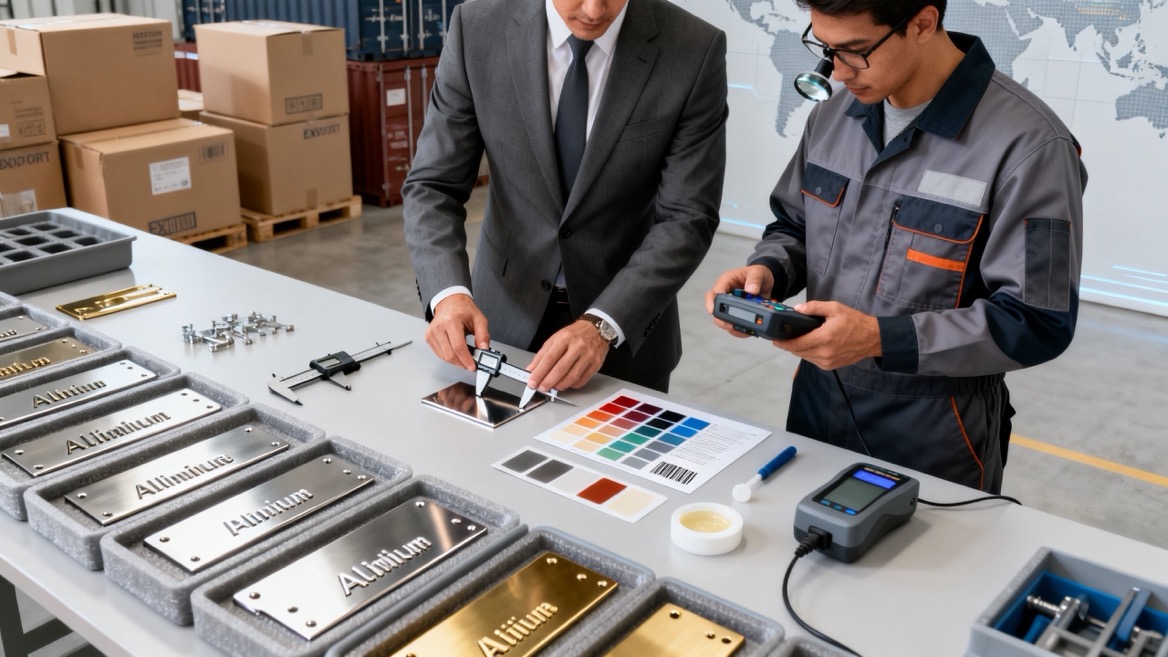
A sample is not only for checking the logo color. It should validate:
- Readability
- Size and thickness
- Adhesive bond
- Hole position
- Corner radius
- Barcode scanning
- QR-code scanning
- Surface finish
- Material rigidity
- Installation process
For long-term or regulated applications, a sample should be tested under conditions that closely resemble real use.
Common Specification Mistakes
From a manufacturer's perspective, many nameplate failures can be prevented during the quotation stage.
Choosing by appearance alone
A brushed silver finish may look premium, but the plate still needs sufficient corrosion resistance, ink protection, and attachment strength for its environment.
Requesting "waterproof" without defining exposure
Waterproof can mean light splashes to one buyer and daily washdown, coastal rain, or standing water to another. The supplier needs practical exposure details.
Ignoring application temperature
Applying an adhesive-backed nameplate in a cold warehouse, on an oily surface, or immediately after powder coating can reduce bond strength significantly.
Using outdoor equipment data plates indoors first
Some buyers start with an indoor-grade plate for pilot production and later use it on outdoor products. This often creates inconsistent quality after market expansion.
Forgetting variable information
Serial numbers, model numbers, QR codes, ratings, and production dates should be planned before production. Adding them later can create visual inconsistency or reduce durability.
Industry Example: Why Application Conditions Matter
Consider two equipment manufacturers using the same 100 mm × 50 mm equipment nameplate design.
The first produces indoor air-handling units installed in commercial buildings. The units are kept in technical rooms with limited sunlight and low physical contact. A durable polyester label or printed aluminum plate may provide a cost-effective solution.
The second produces outdoor heat-pump units installed on rooftops and building exteriors. These units are exposed to ultraviolet light, rain, temperature cycles, dust, cleaning chemicals, and vibration. A basic vinyl label may initially look identical, but it is much more likely to fade, lift, or become difficult to read over time.
For the outdoor unit, an anodized aluminum or stainless-steel data plate with a suitable attachment method is generally the more reliable engineering choice.
The lesson is simple: the same artwork does not require the same nameplate construction.
When Should You Upgrade to a Weatherproof Outdoor Nameplate?
Choose a weatherproof outdoor nameplate when one or more of the following conditions applies:
- The product will be exposed to direct sunlight.
- The equipment will be installed outdoors permanently.
- Rain, condensation, washdown, or humidity is expected.
- The plate contains safety, traceability, or regulatory information.
- The product operates in hot, cold, coastal, or industrial environments.
- The surface may be exposed to oil, fuel, detergents, or chemicals.
- The equipment will experience vibration, abrasion, or regular handling.
- The brand needs a long-lasting premium appearance.
- Replacing failed labels in the field would be expensive.
The added cost of a high-performance plate is often small compared with field replacement, warranty claims, equipment downtime, or a damaged brand impression.
Custom Nameplates from XingKun Packing
Shenzhen XingKun Packing Products Co., Ltd. supports custom Name Plate projects for brands, OEMs, distributors, and industrial buyers worldwide. With more than 20 years of printing and packaging manufacturing experience, our team can help evaluate the practical relationship between your product environment, branding requirements, material options, printing process, and budget.
A well-designed custom nameplate should do more than display a logo. It should remain clear, secure, and professional throughout the required working life of the product.
For your next project, provide your artwork, dimensions, material preference, application surface, expected environment, and annual quantity. Our team can recommend a suitable indoor or weatherproof outdoor nameplate construction and prepare a sample for evaluation.
FAQs
1. What is the best material for weatherproof outdoor nameplates?
For many demanding applications, anodized aluminum and stainless steel are among the strongest choices. Anodized aluminum offers a favorable balance of weight, durability, corrosion resistance, and long-term graphic protection. Stainless steel is often preferred where exceptional strength, chemical resistance, or premium appearance is required.
2. Can vinyl nameplates be used outdoors?
Yes, but only when the vinyl, ink, laminate, and adhesive are designed for the expected outdoor conditions. Standard vinyl is usually better suited to indoor or short-term use. For long-term direct-sunlight exposure, industrial equipment, or severe weather, metal nameplates or high-performance constructions are usually safer choices.
3. How long do outdoor nameplates last?
The service life depends on the material, printing process, coating, adhesive, installation surface, and exposure conditions. Properly specified photo-anodized aluminum nameplates are widely used for applications requiring outdoor durability of 20 years or more, while less durable materials can fail much sooner in direct sun, humidity, abrasion, or chemical exposure.
4. Are stainless steel nameplates better than aluminum nameplates?
Neither material is universally better. Stainless steel generally provides higher strength and strong corrosion resistance, while aluminum is lighter, easier to form, and often more cost-effective. Anodized aluminum can be an excellent solution for durable printed information, while stainless steel is highly suitable for demanding mechanical, chemical, and premium applications.
5. What information should be included on an equipment nameplate?
Typical equipment nameplate information includes:
- Brand name and logo
- Product model
- Serial number
- Manufacturing date
- Electrical ratings
- Operating limits
- Safety warnings
- Certification marks
- QR code or barcode
- Country of origin
- Contact or service information
The final content should be based on the equipment type, market requirements, traceability process, and applicable product regulations.
6. Do adhesive-backed outdoor nameplates require surface preparation?
Yes. The application surface should normally be clean, dry, and free from dust, oil, moisture, release agents, and loose paint. Adhesive performance can also be affected by application temperature, surface texture, and cure time. For difficult surfaces or high-vibration equipment, mechanical fastening may be preferable.
7. Can outdoor nameplates include full-color logos and QR codes?
Yes. Full-color printing, serial data, barcodes, and QR codes can all be incorporated into weatherproof nameplates. The key is to maintain sufficient contrast, appropriate code size, protected print construction, and validation through scanning tests before mass production.
References
1. UL Solutions. *Compliance Guidelines for Marking and Labeling Systems*. Available at: [UL Solutions].
2. UL Solutions. *Marking and Labeling Systems Program*. Available at: [UL Solutions].
3. UL Standards & Engagement. *UL 969: Marking and Labeling Systems*. Available at: [UL Standards].
4. Metalphoto. *UL 969: Marking and Labeling Systems*. Available at: [Metalphoto].
5. Metalphoto. *UL 969 and Durable Nameplate Materials*. Available at: [Metalphoto].
6. MPC. *Metal Equipment Nameplates: Custom and Durable*. Available at: [MPC].
7. Trident Products. *How to Choose a Metal Nameplate: Materials and Printing Processes*. Available at: [Trident Products].
8. U.S. Nameplate. *4 Types of Damage That Affect Nameplate Longevity and Readability*. Available at: [U.S. Nameplate].
9. Specialty Printing. *How to Choose the Right Metal Nameplate for Your Application*. Available at: [Specialty Printing].


