Content Menu
● What Is a Matte Finish on Metal Name Plates?
>> Key characteristics of matte metal name plates
● What Is a Mirror Finish on Metal Name Plates?
>> Key characteristics of mirror metal name plates
● Matte Finish vs Mirror Finish: Quick Comparison
● Readability: The Most Important Functional Difference
>> When matte improves readability
>> When mirror finish supports branding
● Appearance and Brand Positioning
>> Matte finish brand impression
>> Mirror finish brand impression
● Durability, Corrosion Resistance, and Wear
>> Stainless steel name plates
>> Aluminum name plates
>> Brass and other decorative metals
>> Expert selection principle
● Fingerprints, Scratches, and Daily Maintenance
>> Matte finish maintenance advantages
>> Mirror finish maintenance considerations
● How to Choose Between Matte and Mirror Finish
>> 1. Define the name plate's primary job
>> 2. Evaluate the lighting environment
>> 3. Consider how often the product is touched
>> 4. Match the finish to the marking method
>> 5. Request samples under real conditions
● Industry Applications: Which Finish Performs Best?
>> Industrial machinery and equipment
>> Electrical panels and control systems
>> Premium consumer electronics
>> Cosmetic, fragrance, and gift packaging
>> Outdoor equipment and vehicle components
>> Medical and laboratory devices
● Common Specification Mistakes to Avoid
>> Mistake 1: Approving only a photo
>> Mistake 2: Using "silver finish" as the full requirement
>> Mistake 3: Choosing mirror finish for critical small text
>> Mistake 4: Ignoring protective packaging
>> Mistake 5: Ignoring the final product surface
● Practical Recommendation From a Name Plate Manufacturer
● Request Custom Metal Name Plate Samples
● FAQ
>> 1. Is a matte finish more durable than a mirror finish on metal name plates?
>> 2. Are mirror-finish metal name plates suitable for outdoor use?
>> 3. Which finish is best for serial numbers and barcode labels?
>> 4. Can aluminum metal name plates have both matte and mirror finishes?
>> 5. Does a mirror finish show fingerprints?
>> 6. What is the best finish for luxury packaging name plates?
>> 7. Is a brushed finish the same as a matte finish?
>> 8. Should I choose stainless steel or aluminum for a metal name plate?
● References
Choosing between a matte finish and a mirror finish on metal name plates is not simply a design decision. The selected surface affects readability, fingerprint visibility, perceived product value, production consistency, maintenance expectations, and suitability for the final operating environment.
At Shenzhen XingKun Packing Products Co., Ltd., we have spent more than 20 years supporting brands, distributors, and product teams across more than 30 countries and regions. From decorative logo plates for premium consumer products to durable equipment identification plates, one practical lesson remains consistent: the most attractive finish is not always the most effective finish for the application.
A mirror-finish metal name plate can create immediate visual impact. A matte metal name plate can make essential information easier to read in demanding light conditions. The right choice depends on the material, marking method, product category, installation location, maintenance conditions, and the message the name plate must communicate.
This guide compares matte finish vs mirror finish on metal name plates in detail, helping product designers, purchasing teams, OEM brands, and distributors specify a finish that balances appearance with long-term usability.
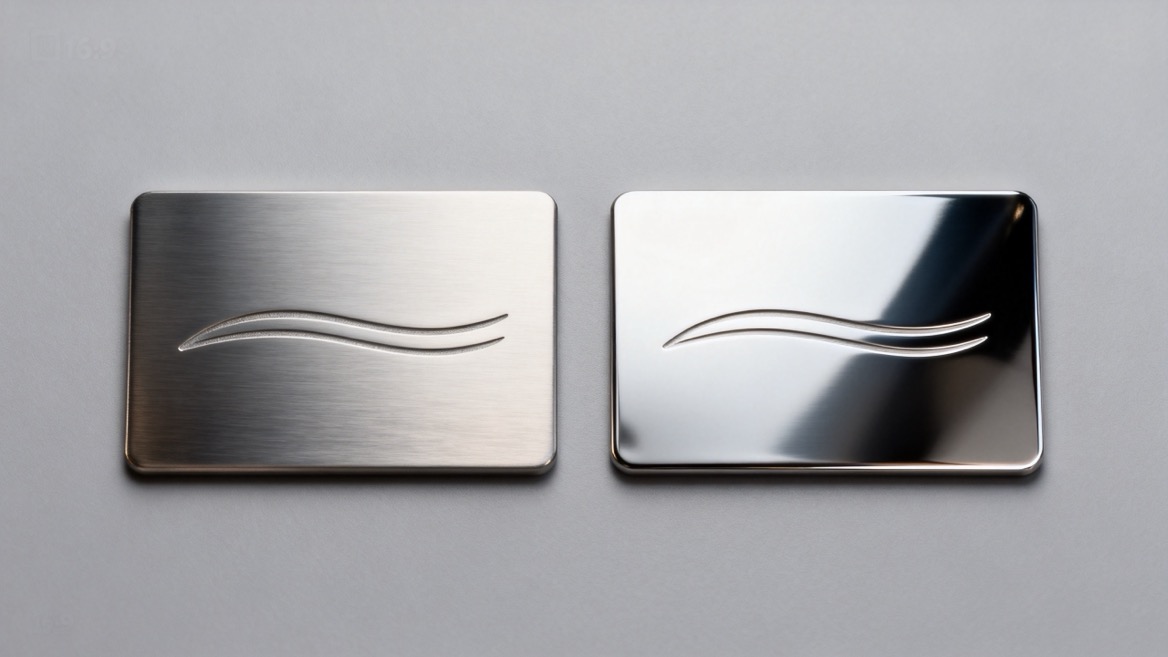
What Is a Matte Finish on Metal Name Plates?
A matte finish metal name plate has a low-gloss, non-reflective, or softly diffused surface. Instead of producing a sharp reflection, it scatters light across the surface. The result is a controlled, understated appearance that reduces glare and makes printed, engraved, etched, or laser-marked content easier to see from different viewing angles.
Matte finishes can be created through several methods, depending on the selected metal and required appearance:
- Brushing or mechanical abrasion
- Sanding or directional graining
- Bead blasting
- Chemical etching
- Satin polishing
- Matte anodizing for aluminum
- Matte coating or powder coating
- Textured clear protective coatings
For stainless-steel name plates, a matte or duller industrial appearance is commonly associated with a No. 2B-style finish, while brushed finishes may add visible directional lines. For aluminum name plates, matte anodizing and brushed textures are common choices when a brand needs durability without a high-reflection appearance. Mechanical and chemical pretreatments can substantially influence whether anodized aluminum looks matte, brushed, bright, or mirror-like.
Key characteristics of matte metal name plates
- Low glare under overhead lights, direct sunlight, and factory lighting
- Better tolerance of fingerprints and small handling marks
- Professional industrial appearance for equipment, instruments, and control panels
- High readability for serial numbers, instructions, and safety information
- More forgiving surface when used on high-touch products
- Broad compatibility with engraving, laser marking, screen printing, and etching
A matte finish is often the safer specification when the name plate's primary task is communication rather than decoration.
What Is a Mirror Finish on Metal Name Plates?
A mirror finish metal name plate is polished to a highly reflective surface. It creates clear, sharp reflections and gives the product a premium, polished, and visually dramatic character. In stainless steel, this appearance is often described as a No. 8 polished finish. In aluminum, the effect may come from mechanical polishing, bright anodizing, metallized decoration, or a polished base material protected with a clear layer.
Mirror-finish name plates are frequently used where the name plate itself is part of the product's visual identity. They can make a logo look more dimensional, increase perceived luxury, and help a brand stand out on shelves or in customer-facing environments.
However, mirror finishes demand careful consideration. Their high reflectivity can make small surface defects, dust, fingerprints, and scratches more visible. During production and assembly, they typically require more stringent handling procedures and protective film management.
Key characteristics of mirror metal name plates
- High reflectivity and strong visual impact
- Luxury or premium appearance
- Excellent fit for decorative branding
- Clear visual contrast when combined with etched, black-filled, embossed, or printed graphics
- Higher sensitivity to fingerprints, micro-scratches, and handling marks
- Potential glare issues in sunlight or bright indoor environments
Mirror finishes work best when the name plate will be seen at close range, handled carefully, and used in a relatively controlled environment.
Matte Finish vs Mirror Finish: Quick Comparison
The table below summarizes the essential differences between a matte finish and a mirror finish for custom metal name plates.
| Comparison Factor |
Matte Finish Metal Name Plate |
Mirror Finish Metal Name Plate |
| Surface appearance |
Soft, low-gloss, understated |
Bright, highly polished, reflective |
| Light reflection |
Diffused light with minimal glare |
Sharp reflection and noticeable shine |
| Readability |
Usually strong from multiple angles |
May be reduced by glare or reflections |
| Fingerprint visibility |
Low to moderate |
High |
| Scratch visibility |
More forgiving |
Fine scratches can be highly visible |
| Premium visual effect |
Professional, technical, modern |
Luxury, decorative, attention-grabbing |
| Suitability for data plates |
Excellent |
Suitable only when glare is controlled |
| Suitability for logos |
Strong, especially with contrasting graphics |
Excellent for premium logos and decorative badges |
| Outdoor viewing |
Often preferable because of low glare |
Can be difficult to read in direct sunlight |
| Cleaning expectations |
Lower visual maintenance |
Higher visual maintenance |
| Production handling |
Generally more forgiving |
Requires careful protection and inspection |
| Common applications |
Machinery, panels, tools, appliances, industrial products |
Cosmetics, gift packaging, electronics, furniture, premium consumer goods |
In simple terms: choose matte when function, legibility, and easy maintenance lead the decision. Choose mirror when visual impact, luxury positioning, and brand presentation matter most.
Readability: The Most Important Functional Difference
For many industrial metal name plates, readability is the deciding factor.
A name plate may contain:
- Product model numbers
- Serial numbers
- Electrical ratings
- Warning messages
- Compliance marks
- QR codes
- Barcodes
- Operating instructions
- Brand logos
- Asset identification information
If these details must remain readable under varying light conditions, matte finishes generally perform better. The low-reflective surface helps the viewer focus on the content rather than reflections from lights, windows, or the sky.
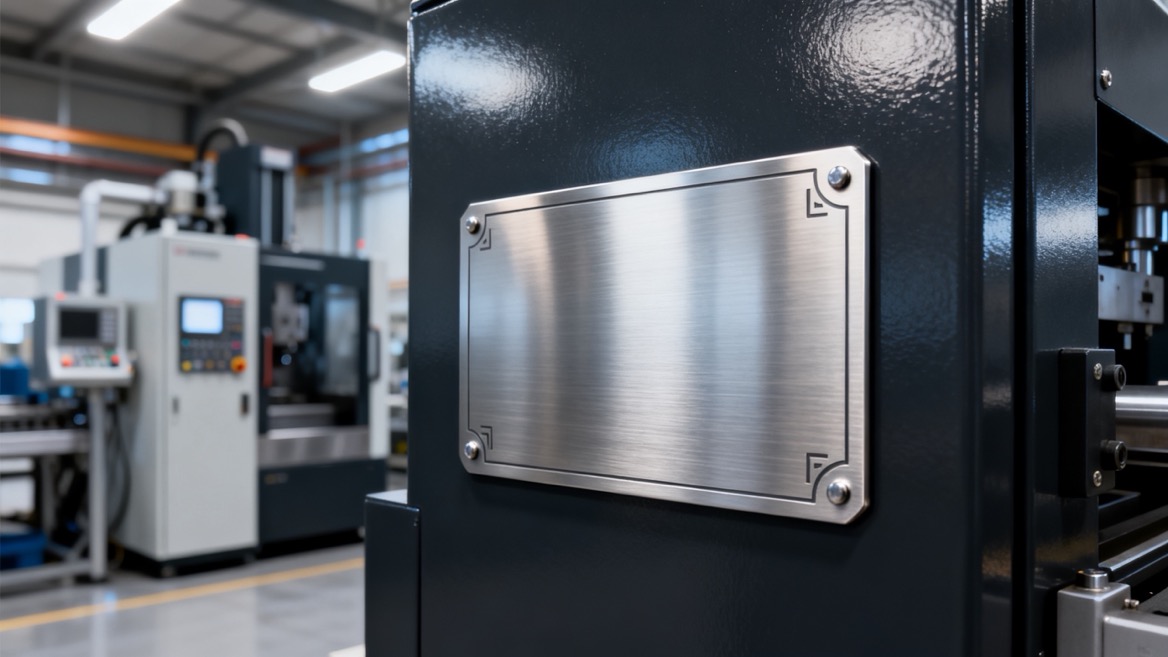
A polished aluminum name plate may look impressive indoors, but bright surfaces can become harder to read in direct light. Brushed and milled aluminum surfaces are often selected when text needs to remain easier to read across varied lighting conditions.
When matte improves readability
Matte finish name plates are particularly effective for:
- Factory machinery and production equipment
- Electrical control panels
- Outdoor equipment labels
- Medical equipment identification
- Automotive controls and components
- Technical devices with serial-number tracking
- Tool identification tags
- Safety and instruction plates
- Products installed near windows or under strong LEDs
For example, imagine a stainless-steel control-panel name plate on processing equipment. Operators may view it under bright warehouse lighting, from an angle, and while wearing gloves. A mirror surface could reflect overhead lights directly into the operator's eyes. A matte or brushed finish reduces that reflection and keeps important data visible.
When mirror finish supports branding
A mirror-finish plate can still be highly readable when the design uses strong contrast and the viewing environment is controlled. This is especially true for decorative logo plates, where the viewer sees only a short brand name rather than a dense set of technical information.
Mirror finishes perform especially well when combined with:
- Deep black screen printing
- Laser-etched logos
- Recessed and color-filled lettering
- Raised metal logos
- Dark enamel infill
- High-contrast UV printing
- Embossed or debossed branding elements
The design principle is straightforward: the more reflective the surface, the more important contrast becomes.
Appearance and Brand Positioning
The surface finish of a metal name plate silently communicates what customers should expect from the product.
A matte finish usually signals reliability, precision, restraint, and technical competence. It suits brands that want to look modern and durable rather than flashy. A matte black anodized aluminum name plate with white laser-marked text, for example, can make industrial equipment look clean, engineered, and trustworthy.
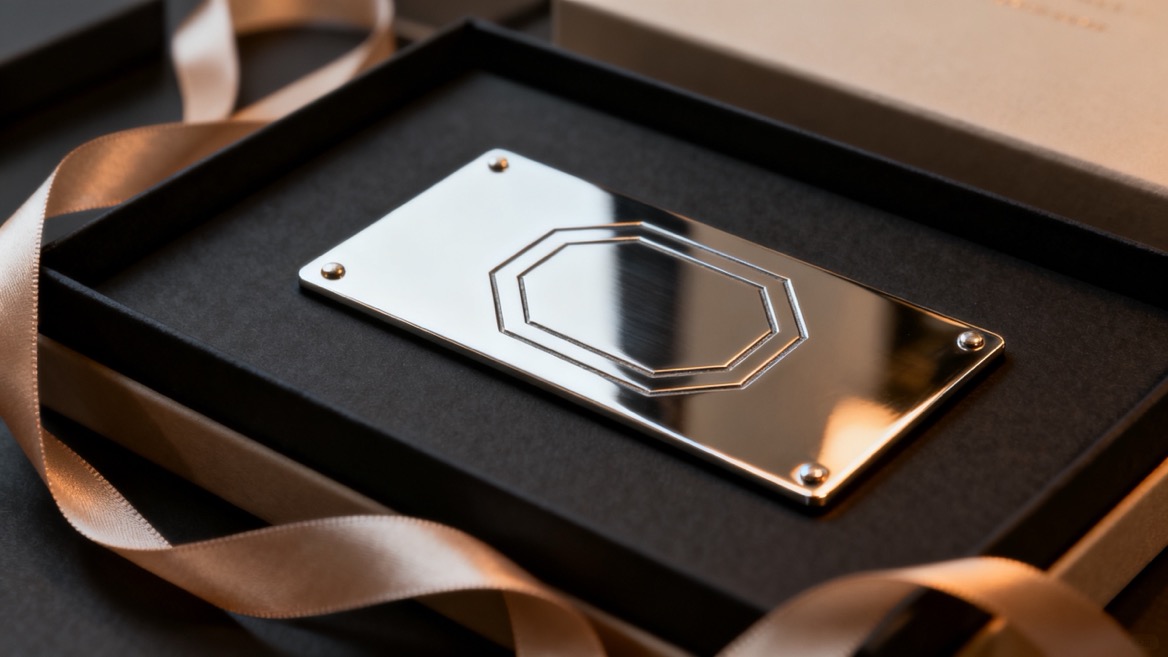
A mirror finish signals polish, prestige, and visual confidence. It is often selected when the product must feel aspirational, giftable, elegant, or high-end. A bright stainless-steel logo plate on a fragrance box, leather case, speaker, wine packaging set, or display product can immediately raise perceived value.
Matte finish brand impression
A matte metal name plate is a strong choice for brands positioning themselves as:
- Industrial
- Technical
- Minimalist
- Durable
- Professional
- Modern
- Eco-conscious
- Performance-focused
Mirror finish brand impression
A mirror metal name plate is often more suitable for brands positioned as:
- Premium
- Fashion-forward
- Decorative
- Luxury-oriented
- Gift-focused
- Lifestyle-led
- High-visibility retail products
- Design-centered consumer goods
Neither finish is inherently better. The issue is alignment. A luxury cosmetic gift box may benefit from reflective shine, while a control panel on a commercial generator usually benefits from a low-glare matte surface.
Durability, Corrosion Resistance, and Wear
A common mistake is assuming that a mirror finish automatically means better durability because it looks smoother. In reality, the base material, coating system, marking method, and operating environment have greater influence on service life than surface appearance alone.
For outdoor or demanding industrial use, material selection should come before finish selection.
Stainless steel name plates
Stainless steel is widely chosen for long-life applications because of its strength and resistance to corrosion and abrasion. Etched stainless-steel name plates can remain readable for the lifetime of the material when the correct grade, marking process, and environmental protection are specified.
Matte stainless steel is often practical for machinery, outdoor fixtures, commercial equipment, and technical identification. A mirror-polished stainless-steel plate may also resist corrosion well, but it can show surface damage more clearly during daily use.
Aluminum name plates
Aluminum is lightweight, economical, and versatile. For applications requiring improved protection, anodized aluminum is a highly practical choice. Anodizing creates a protective oxide layer that supports corrosion and wear resistance, while also enabling a range of matte, brushed, colored, and bright appearances.
For durable product identification, anodized aluminum can be paired with laser marking, photo-anodizing, or other permanent marking methods. Industry guidance identifies anodized aluminum as a frequent choice for identification tags where abrasion resistance, chemical exposure, and long-term legibility are important.
Brass and other decorative metals
Brass, bronze, copper, and zinc alloy can deliver strong decorative value. Mirror polishing can make these materials visually compelling, but they may require clear coating, lacquer, or other protection to preserve the intended appearance and reduce oxidation or tarnishing.
Expert selection principle
Do not specify only "matte" or "mirror."
A stronger purchasing specification includes:
1. Metal type: aluminum, stainless steel, brass, zinc alloy, or another substrate
2. Material thickness: based on rigidity, forming needs, and mounting method
3. Finish type: matte, brushed, satin, polished, or mirror
4. Protective treatment: anodizing, passivation, clear coating, lacquer, or powder coating
5. Marking method: screen printing, laser engraving, chemical etching, embossing, or digital printing
6. Environmental exposure: indoor, outdoor, chemical, heat, UV, moisture, abrasion, or salt exposure
7. Mounting solution: adhesive, holes, studs, rivets, screws, or magnetic attachment
This complete approach prevents a visually appealing sample from becoming a costly field-performance problem.
Fingerprints, Scratches, and Daily Maintenance
The difference between matte and mirror finishes becomes most obvious after the product enters real-world use.
Mirror surfaces are visually unforgiving. They readily reveal fingerprints, dust, adhesive residue, minor abrasion, and swirls from improper cleaning. This does not mean mirror finish name plates are unsuitable; it means the product team should expect higher handling and cleaning standards.
Matte finish maintenance advantages
Matte metal name plates are often preferred for products that are:
- Frequently touched
- Installed in public areas
- Used by operators wearing gloves
- Exposed to dust or fingerprints
- Cleaned regularly
- Installed on dark or textured product surfaces
- Used in industrial or commercial settings
A matte finish can hide minor daily wear better because it does not reflect light as sharply. This makes it a practical choice for appliance panels, durable tools, machine housings, and commercial equipment.
Mirror finish maintenance considerations
Mirror name plates can remain beautiful for a long time, but they require thoughtful planning:
- Use protective film during manufacturing and installation
- Avoid abrasive cleaning pads
- Specify a clear protective coating when appropriate
- Design packaging that prevents plate-to-plate rubbing
- Train assembly teams to handle plates with gloves
- Consider recessed placement to reduce accidental contact
- Test adhesive application to avoid visible residue around edges
For high-end consumer products, the extra handling effort may be worthwhile because the unboxing and display experience can justify the added production control.
How to Choose Between Matte and Mirror Finish
The following decision process can help buyers and designers choose the right metal name plate finish before sampling.
1. Define the name plate's primary job
Ask one question first: is the plate mainly intended to inform or to impress?
Choose matte if it must clearly communicate operational, regulatory, safety, or identification information.
Choose mirror if it mainly supports premium branding, decorative differentiation, or shelf appeal.
2. Evaluate the lighting environment
Lighting is frequently overlooked during design approval.
Choose matte when the plate will be exposed to:
- Direct sunlight
- Outdoor installation
- Bright factory lighting
- LED spotlights
- Vehicle headlights
- Variable-angle viewing
Choose mirror when the product will be displayed in:
- Controlled retail lighting
- Gift packaging
- Indoor home environments
- Luxury counters
- Decorative furniture or lifestyle products
3. Consider how often the product is touched
High-touch products usually benefit from matte finishes. Low-touch or display-focused products can benefit more from mirror finishes.
A premium mirror logo badge on a presentation box may be handled only during unboxing. A mirror plate on a frequently used appliance control panel may quickly show fingerprints.
4. Match the finish to the marking method
The best finish can fail if paired with the wrong marking method.
| Finish and Requirement |
Recommended Marking Direction |
| Matte industrial name plate with permanent data |
Laser engraving, chemical etching, photo-anodizing |
| Matte decorative plate with color graphics |
Screen printing, UV printing, embossed graphics |
| Mirror logo plate with premium appearance |
Etching with color fill, raised lettering, screen printing |
| Mirror plate with detailed regulatory data |
High-contrast printing or engraving, after glare testing |
| Outdoor aluminum equipment plate |
Anodized aluminum with durable permanent marking |
| Stainless-steel serial-number plate |
Chemical etching, laser marking, deep engraving |
Chemically etched metal name plates are often chosen where graphics must remain legible even after exposure to paint or demanding conditions.
5. Request samples under real conditions
Never approve a finish only from a digital image or a small swatch.
Request physical samples and inspect them:
- Under direct sunlight
- Under office lighting
- Under factory lighting
- At normal viewing distance
- At a 45-degree angle
- After fingerprint handling
- After cleaning
- Next to the actual product housing
- With the final mounting adhesive or hardware
This sampling step often reveals issues that cannot be seen in a design mockup.
Industry Applications: Which Finish Performs Best?
Industrial machinery and equipment
Recommended finish: Matte, brushed, or satin stainless steel; matte anodized aluminum.
These applications often require durable information, reduced glare, and resistance to frequent handling. A mirror finish may look attractive, but it is usually not the best option for dense technical data.
Electrical panels and control systems
Recommended finish: Matte aluminum, brushed stainless steel, or anodized aluminum.
Operators need fast visibility of labels, warnings, instructions, and settings. Low reflectivity helps improve day-to-day usability.
Premium consumer electronics
Recommended finish: Mirror or satin-mirror finish, depending on touch frequency.
A mirror stainless-steel logo plate can complement premium speakers, audio equipment, beauty devices, and accessories. However, use a satin or finely brushed alternative when the plate will be frequently touched.
Cosmetic, fragrance, and gift packaging
Recommended finish: Mirror stainless steel, polished aluminum, brass, or electroplated zinc alloy.
This category benefits greatly from visual sparkle, reflective branding, and a tactile premium effect. Use protective packaging and careful assembly controls.
Outdoor equipment and vehicle components
Recommended finish: Matte or brushed stainless steel; anodized aluminum with permanent marking.
Outdoor environments introduce sunlight, rain, dust, and abrasion. Matte finishes make important content easier to read, while material protection should be matched to the actual exposure conditions.
Medical and laboratory devices
Recommended finish: Matte or satin stainless steel and anodized aluminum.
The focus is normally on hygiene, identification clarity, controlled aesthetics, and compatibility with cleaning routines. A subtle low-glare surface usually supports these priorities better than a highly reflective plate.
Common Specification Mistakes to Avoid
Even experienced buyers can encounter problems when surface finish requirements are too general.
Mistake 1: Approving only a photo
A photo cannot accurately show reflectivity, texture, grain direction, color shift, or fingerprint visibility. Always approve a physical production sample.
Mistake 2: Using "silver finish" as the full requirement
"Silver" may describe polished stainless steel, brushed aluminum, chrome plating, metallic ink, anodized aluminum, or zinc alloy. These options can look similar in photographs but behave very differently in use.
Mistake 3: Choosing mirror finish for critical small text
Small technical characters, QR codes, and barcodes can become difficult to scan or read when glare is strong. Test the finished plate with the intended scanner and lighting conditions.
Mistake 4: Ignoring protective packaging
Mirror plates need more than attractive surface treatment. They need protective film, separated packaging, and careful handling through shipping and final assembly.
Mistake 5: Ignoring the final product surface
A mirror plate may look elegant on a glossy black package but visually disappear on a bright chrome product. A matte black or brushed silver name plate may create clearer contrast.
Practical Recommendation From a Name Plate Manufacturer
From a production and usability perspective, matte finishes are generally the most versatile option for custom metal name plates. They offer dependable readability, lower maintenance, and a professional appearance across industrial, commercial, and technical product categories.
Mirror finishes are best treated as a deliberate premium design feature. Use them when the product benefits from reflection, luxury appeal, and close-up visual impact—and when the brand can support careful production handling and packaging.
For many projects, the strongest solution is not an extreme choice. A satin, brushed, or semi-matte metal name plate can provide a refined appearance while avoiding the glare and maintenance demands of a full mirror finish.
At Shenzhen XingKun Packing Products Co., Ltd., we recommend evaluating the complete application before finalizing a finish: product category, metal substrate, artwork, marking process, mounting method, viewing angle, lighting, and expected product lifespan. This approach helps ensure that your custom metal name plates look right on day one and remain functional throughout the product's use.
Request Custom Metal Name Plate Samples
Need help choosing between a matte finish and a mirror finish for your metal name plates?
Share your artwork, product photos, target material, dimensions, quantity, application environment, and preferred mounting method with the XingKun team. We can help you compare suitable metal materials, finish options, marking methods, and sample configurations before production—so your name plates support both your brand image and real-world performance.
FAQ
1. Is a matte finish more durable than a mirror finish on metal name plates?
Not necessarily. Durability depends primarily on the metal, protective treatment, marking process, and operating environment. However, matte finishes usually hide fine scratches and fingerprints better, so they may maintain a cleaner visual appearance in high-touch applications.
2. Are mirror-finish metal name plates suitable for outdoor use?
They can be used outdoors if the correct material and protective treatment are selected. However, direct sunlight can create glare that reduces readability. For outdoor equipment with technical information, matte or brushed stainless steel and anodized aluminum are often more practical choices.
3. Which finish is best for serial numbers and barcode labels?
A matte, brushed, or satin finish is generally better for serial numbers, barcodes, QR codes, and technical data because it reduces glare and supports more consistent scanning and reading.
4. Can aluminum metal name plates have both matte and mirror finishes?
Yes. Aluminum can be supplied with matte, brushed, satin, bright, or mirror-like appearances. Anodizing, mechanical polishing, brushing, and protective coatings can all affect the final visual result.
5. Does a mirror finish show fingerprints?
Yes. Mirror-polished stainless steel, aluminum, and plated metal surfaces usually show fingerprints more easily than matte surfaces. Protective coatings and proper cleaning can reduce the issue, but they do not eliminate it completely.
6. What is the best finish for luxury packaging name plates?
Mirror-polished stainless steel, polished aluminum, brass, or electroplated zinc alloy are strong options for luxury packaging because they create high visual impact. Use strong contrast in the logo design and protective packaging to preserve the finish.
7. Is a brushed finish the same as a matte finish?
Not exactly. A brushed finish usually has visible directional grain lines created by mechanical abrasion. A matte finish is broader and may be non-directional, lightly textured, chemically etched, bead-blasted, or satin-treated. Both can reduce glare compared with a mirror finish.
8. Should I choose stainless steel or aluminum for a metal name plate?
Choose stainless steel when high strength, corrosion resistance, abrasion resistance, and a long service life are the top priorities. Choose aluminum when low weight, design flexibility, cost efficiency, and anodized color options are more important. The final choice should also reflect the installation environment and marking requirements.
References
1. [Aluminum Anodizers Council — Specifying Anodized Aluminum]
2. [American Nameplate — Metal Nameplate Materials and Uses]
3. [Etched Nameplate Company — Industrial Nameplates Buyer's Guide]
4. [Trident Products — How to Choose a Metal Nameplate: Materials and Printing Processes]
5. [Jet City Laser — Anodized Aluminum Labels, Nameplates, and Tags]
6. [JTT Logos — Choosing the Right Surface Finish for Custom Metal Name Plates]
7. [Shenzhen XingKun Packing Products Co., Ltd. — Official Website]


