Content Menu
● Understanding Business Card Thickness
>> Common Business Card Thicknesses
>> Thickness in Inches
● Why Business Card Thickness Matters
>> First Impressions
>> Durability
>> Design Options
>> Tactile Experience
● Choosing the Right Thickness
>> Budget
>> Brand Image
>> Design Considerations
>> Intended Use
● Special Finishes and Coatings
>> Matte Finish
>> Glossy Finish
>> Spot UV Coating
>> Soft Touch Coating
>> Silk Coating
● Alternative Materials
>> Plastic
>> Metal
>> Wood
>> Sustainable Options
● Designing for Thickness
>> Thinner Cards (14pt-16pt)
>> Thicker Cards (32pt-48pt)
● Conclusion
● FAQ Section
>> 1. What is the standard thickness for a business card?
>> 2. How does business card thickness affect the impression it makes?
>> 3. Can I use a thinner card stock to save money?
>> 4. What is the thickest business card stock available?
>> 5. Are there alternative materials for business cards besides paper?
● Citations:
Business cards are more than just pieces of paper; they are tangible representations of your brand, your professionalism, and your attention to detail. In a digital age, the tactile experience of a well-crafted business card can leave a lasting impression, setting you apart from the competition. Among the various factors that contribute to the impact of a business card, thickness plays a crucial role. But how thick is a business card, and why does it matter? This comprehensive guide delves into the intricacies of business card thickness, exploring the different measurements, materials, and design considerations that can help you create a card that truly represents your brand.
Understanding Business Card Thickness
The thickness of business card stock is typically measured in "points" (pt), where one point equals 1/1000th of an inch (0.001 inch)[1][3]. This measurement system is crucial for understanding the different options available and selecting the right thickness for your needs. For comparison, a human hair generally ranges from 0.002 to 0.006 inches in thickness[1]. Therefore, even the thinnest business cards are still thicker than a strand of hair.
Common Business Card Thicknesses
Several standard thicknesses are commonly used for business cards, each offering a different feel and level of durability:
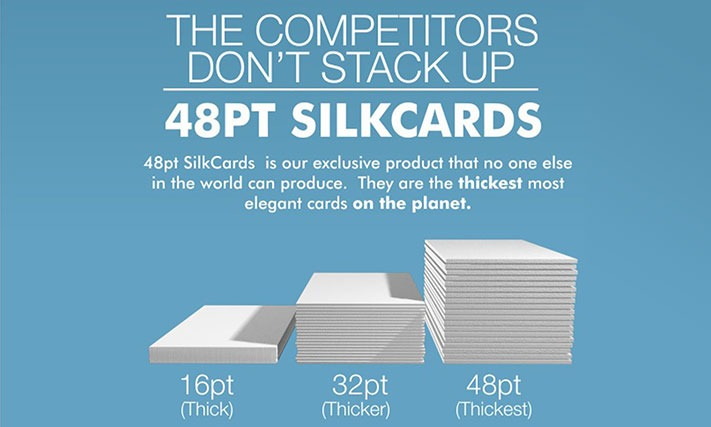
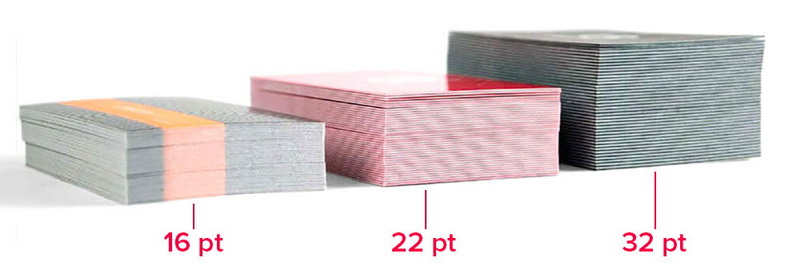
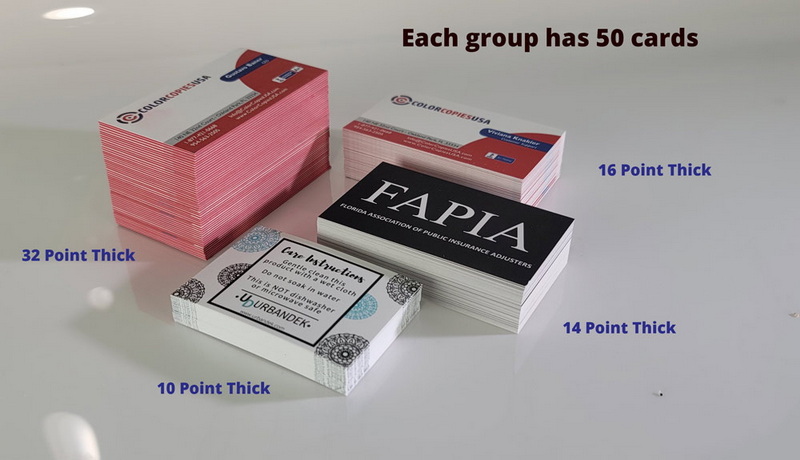
- 14pt: This is a relatively thin option, similar in thickness to a flyer, postcard, or brochure[1]. Cards of this thickness are often used for mass distribution due to their lower cost[1][4].
- 16pt: Slightly thicker than 14pt cards, 16pt stock is comparable to a greeting card or a folder[1]. This is a popular choice for general use and is often handed out during meetings and networking events[1][3][4].
- 32pt: Twice as thick as a 16pt card, 32pt stock offers a more substantial feel and allows for more intricate designs, such as die-cuts[1].
- 48pt: This very thick option is nearly as thick as a penny and provides a premium feel[1]. It is suitable for elaborate designs and can incorporate various textures[1][4].
Thickness in Inches
To provide a clearer understanding, here's a summary of common business card thicknesses in inches:
- 14pt = 0.014 inches
- 16pt = 0.016 inches
- 32pt = 0.032 inches
- 48pt = 0.048 inches
Why Business Card Thickness Matters
The thickness of your business card significantly influences the impression it makes on recipients. Here are several reasons why thickness is an important consideration:
First Impressions
A thicker card conveys a sense of quality and professionalism. It suggests that you are willing to invest in the details and that you take your business seriously. A flimsy, thin card, on the other hand, may create the impression that you are cutting corners or that your business is not well-established.
Durability
Thicker cards are more durable and less likely to bend, tear, or become damaged in wallets or cardholders. This ensures that your card remains presentable for a longer period, maintaining a positive image of your brand.
Design Options
Thicker card stock opens up a wider range of design possibilities. It can accommodate intricate die-cuts, deep embossing, and vibrant colors without compromising the card's structural integrity[1]. Thicker cards also work well with special finishes like edge painting or foil stamping, adding to their visual appeal[3].
Tactile Experience
The tactile experience of a business card is often overlooked, but it can be a powerful way to connect with recipients. A thicker card has a more substantial feel in the hand, creating a sense of luxury and quality. This tactile element can make your card more memorable and increase the likelihood that it will be kept and remembered.
Choosing the Right Thickness
Selecting the right thickness for your business card depends on several factors, including your budget, brand image, and design preferences. Here are some considerations to keep in mind:
Budget
Thicker card stock is generally more expensive than thinner options[1]. If you are on a tight budget, a 14pt or 16pt card may be the most practical choice[1][4]. However, if you are willing to invest in a premium product, a 32pt or 48pt card can offer a significant return in terms of perceived value and impact.
Brand Image
The thickness of your business card should align with your brand image. If you are a luxury brand or a high-end service provider, a thicker card can reinforce your brand's message of quality and exclusivity. If you are a more budget-conscious business, a thinner card may be more appropriate.
Design Considerations
Consider the design elements you want to incorporate into your business card. If you plan to use intricate die-cuts, embossing, or other special finishes, you will need a thicker card stock to support these features[1]. Thinner cards are better suited for simpler designs with minimal embellishments.
Intended Use
Think about how your business cards will be used. If you plan to distribute them widely at events or trade shows, a more affordable 14pt or 16pt card may be sufficient[1]. However, if you want to make a lasting impression on key clients or partners, a thicker card is a worthwhile investment.
Special Finishes and Coatings
In addition to thickness, special finishes and coatings can enhance the look and feel of your business cards. These options can add a layer of protection, improve the card's visual appeal, and create a unique tactile experience.
Matte Finish
A matte finish provides a smooth, non-glossy surface that is easy to write on. It offers a subtle, understated look that is ideal for businesses that want to convey a sense of sophistication and professionalism.
Glossy Finish
A glossy finish adds a shiny, reflective coating to the card, making colors appear more vibrant. This option is well-suited for businesses that want to make a bold statement and attract attention.
Spot UV Coating
Spot UV coating involves applying a glossy coating to specific areas of the card, such as the logo or company name. This technique creates a striking contrast between the glossy and matte areas, adding visual interest and highlighting key elements of the design.
Soft Touch Coating
Soft touch coating provides a velvety smooth texture that is pleasing to the touch. This option adds a luxurious feel to the card and can make it more memorable.
Silk Coating
Silk coating is another option that adds a smooth, silky texture to the card. It is similar to soft touch coating but offers a slightly different tactile experience[3].
Alternative Materials
While paper stock is the most common material for business cards, several alternative materials can be used to create a unique and memorable card.
Plastic
Plastic business cards are durable, waterproof, and offer a modern, high-tech look. They are available in various colors and finishes and can be customized with unique shapes and cutouts.
Metal
Metal business cards are the ultimate in luxury and durability. They are made from stainless steel, aluminum, or other metals and can be engraved or etched with intricate designs.
Wood
Wood business cards offer a natural, eco-friendly alternative to traditional paper cards. They are made from thin sheets of wood and can be laser-cut or engraved with custom designs.
Sustainable Options
For businesses that prioritize sustainability, several eco-friendly options are available. These include cards made from recycled paper, bamboo, or other sustainable materials.
Designing for Thickness
When designing your business card, it is important to consider the thickness of the card stock you will be using. Here are some tips for designing for different thicknesses:
Thinner Cards (14pt-16pt)
- Keep the design simple and uncluttered.
- Use a clear, legible font.
- Avoid intricate die-cuts or embossing.
- Focus on essential information.
Thicker Cards (32pt-48pt)
- Experiment with more complex designs.
- Incorporate die-cuts, embossing, or other special finishes[1].
- Use bolder colors and graphics.
- Consider adding a tactile element, such as a textured finish.
Conclusion
In conclusion, the thickness of a business card is a crucial element that contributes to its overall impact and effectiveness. By understanding the different thickness options available, considering your budget and brand image, and designing with thickness in mind, you can create a business card that truly represents your business and makes a lasting impression on recipients. Whether you opt for a standard 16pt card or a luxurious 48pt option, the key is to choose a thickness that aligns with your brand values and helps you achieve your business goals.
FAQ Section
1. What is the standard thickness for a business card?
Answer: The standard thickness for a business card is typically 16pt (0.016 inches)[1][3][4]. This thickness offers a good balance between affordability, durability, and design options.
2. How does business card thickness affect the impression it makes?
Answer: A thicker business card generally conveys a sense of quality and professionalism[3][4]. It suggests that you are willing to invest in the details and that you take your business seriously.
3. Can I use a thinner card stock to save money?
Answer: Yes, you can use a thinner card stock like 14pt (0.014 inches) to save money[1][4]. However, keep in mind that thinner cards may not be as durable and may not make as strong of an impression as thicker cards.
4. What is the thickest business card stock available?
Answer: The thickest business card stock commonly available is 48pt (0.048 inches)[1][4]. This thickness offers a premium feel and can accommodate elaborate designs and finishes.
5. Are there alternative materials for business cards besides paper?
Answer: Yes, there are several alternative materials for business cards, including plastic, metal, and wood. These materials can offer unique visual and tactile experiences.
Citations:
[1] https://silkcards.com/blog/inspire/how-thick-is-business-card-stock/
[2] https://docs.quickcreator.io/zh-Hans/docs/seo-writing/what-is-the-h1-hn-tag-and-what-is-its-use
[3] https://vermillionsilkcards.com/blogs/blog-posts/how-thick-should-my-business-card-be
[4] https://printpeppermint.com/blogs/graphic-design/how-thick-is-a-business-card-explained
[5] https://thikit.com/product/business-cards-premium/
[6] https://www.reddit.com/r/Printing/comments/zxipyj/thickness_and_types_of_paper_for_business_cards/
[7] https://www.vistaprint.com/business-cards/ultra-thick
[8] https://www.primoprint.com/modcard-business-card


