Content Menu
● What Is a Bubble Mailer?
● When Should You Use a Bubble Mailer?
>> Bubble Mailer vs. Shipping Box
● How to Choose the Right Bubble Mailer Size
>> Measure the Product Before Ordering
>> Consider the Usable Interior Space
● How to Pack a Bubble Mailer Correctly
>> Step 1: Inspect the Product and Inner Packaging
>> Step 2: Add Protection Only Where It Is Needed
>> Step 3: Perform the Shake Test
>> Step 4: Seal the Bubble Mailer Firmly
● How to Address a Bubble Mailer
>> What to Write on a Bubble Mailer
>> Use Printed Labels When Possible
● How to Mail a Bubble Mailer: Step-by-Step
● Common Bubble Mailer Shipping Mistakes
>> Using a Bubble Mailer for a Crushable Product
>> Leaving Too Much Empty Space
>> Overstuffing the Envelope
>> Ignoring Moisture and Temperature
● Packaging Insights From a Manufacturer's Perspective
● When a Custom Mailer Box Is the Better Choice
● Final Checklist Before Shipping
● Need Custom Bubble Mailers or Shipping Boxes?
● FAQ
>> Can I put stamps on a bubble mailer?
>> Is it cheaper to ship a bubble mailer than a box?
>> Can I ship fragile items in a bubble mailer?
>> How do I stop an item from moving in a bubble mailer?
>> Where should I put the address on a bubble mailer?
>> Should I tape a bubble mailer closed?
>> Can I ship a bubble mailer internationally?
>> What products should not be shipped in a bubble mailer?
● References
A bubble mailer is an efficient choice for shipping small, lightweight, and moderately durable products. When selected in the right size, packed with controlled cushioning, sealed securely, and labeled correctly, it can reduce unnecessary packaging material while helping your items arrive in good condition.
For more than 20 years, Shenzhen XingKun Packing Products Co., Ltd. has produced custom mailer boxes, shipping boxes, printed packaging, and protective solutions for brands and distributors in over 30 countries and regions. From our experience supporting e-commerce, retail, promotional, and export packaging projects, the most important rule is simple: a bubble mailer should fit both the product and the shipping risk—not just the product's dimensions.
This guide explains how to mail a bubble mailer properly, when to use one instead of a shipping box, how to address and label it, and how businesses can prevent common shipping damage before parcels leave the warehouse.
What Is a Bubble Mailer?
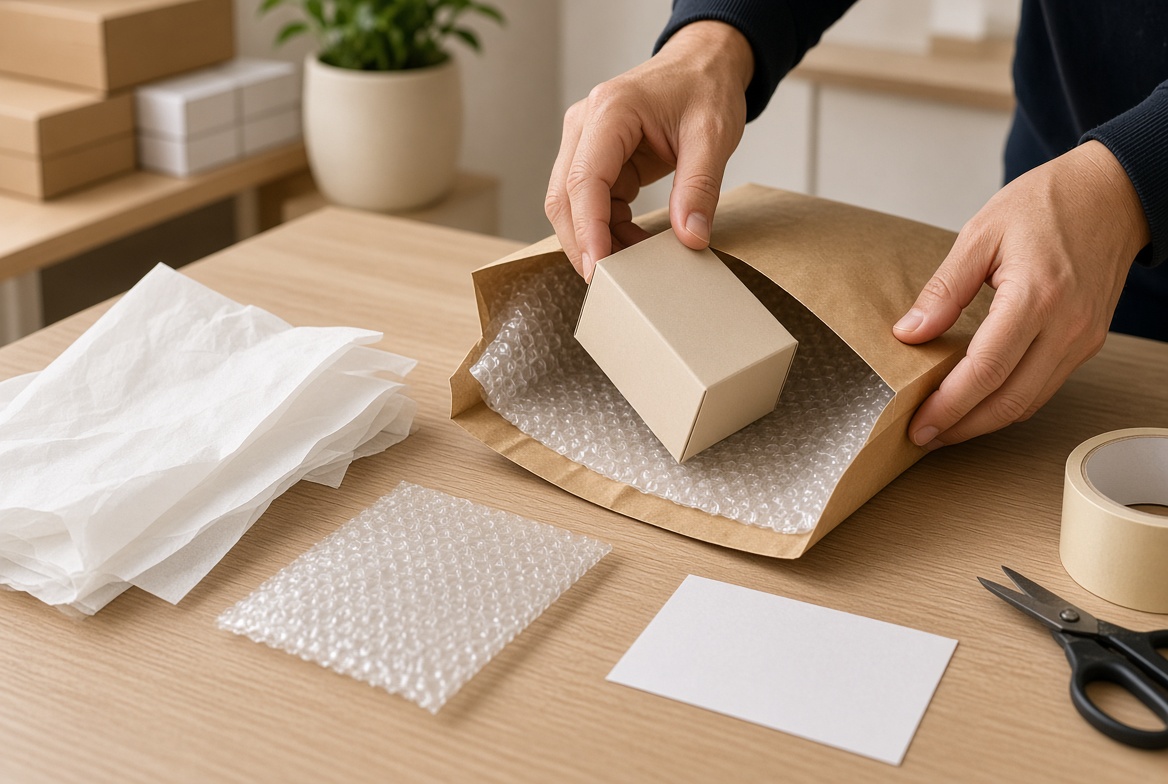
A bubble mailer, also called a padded envelope or bubble envelope, is a lightweight mailing envelope with an outer paper, plastic, or specialty-material layer and an interior cushioning layer made of air-filled bubbles.
It combines two packaging functions:
- Outer containment for the product
- Basic cushioning against minor impacts, vibration, and abrasion
Bubble mailers are widely used for compact products because they can be lighter and less bulky than corrugated shipping boxes. Common applications include:
- Jewelry and fashion accessories
- Phone cases and small electronics accessories
- Cosmetics and beauty tools
- Stationery and printed materials
- Books, cards, and small gifts
- Spare parts and lightweight hardware
- Promotional samples
- Small retail products with inner packaging
However, a bubble mailer is not automatically suitable for every lightweight item. A product may be light but still fragile, sharp, rigid, or high-value. In those cases, the correct answer may be a mailer box with internal protection, rather than a padded envelope.
When Should You Use a Bubble Mailer?
Use a bubble mailer when the item is compact, not easily crushed, and does not need a rigid outer structure. The product should also fit without stretching the envelope or placing excessive pressure on the seams and flap.
A well-chosen bubble mailer works best when the product has one or more of the following characteristics:
- It is lightweight and relatively flat
- It has rounded or non-sharp edges
- It already has protective retail packaging
- It can tolerate limited compression
- It has low to moderate breakage risk
- It does not shift heavily inside the envelope
- It does not require a premium unboxing experience
Bubble Mailer vs. Shipping Box
Choosing between a bubble mailer and a shipping box should be based on protection requirements, presentation goals, shipping conditions, and carrier handling risks.
| Factor | Bubble Mailer | Mailer Box / Shipping Box |
| Best for | Flat, small, lightweight items | Fragile, bulky, premium, or multi-item orders |
| Protection level | Basic cushioning | Higher crush and impact resistance |
| Shipping weight | Usually lower | Usually higher |
| Storage space | Compact | Requires more warehouse space |
| Branding area | Limited | Excellent for custom printing and unboxing |
| Product movement control | Limited unless inserts are added | Stronger with dividers, inserts, and void fill |
| Suitable for fragile items | Only with adequate inner protection | Usually the safer option |
| Reusability | Limited | Often better, especially for corrugated boxes |
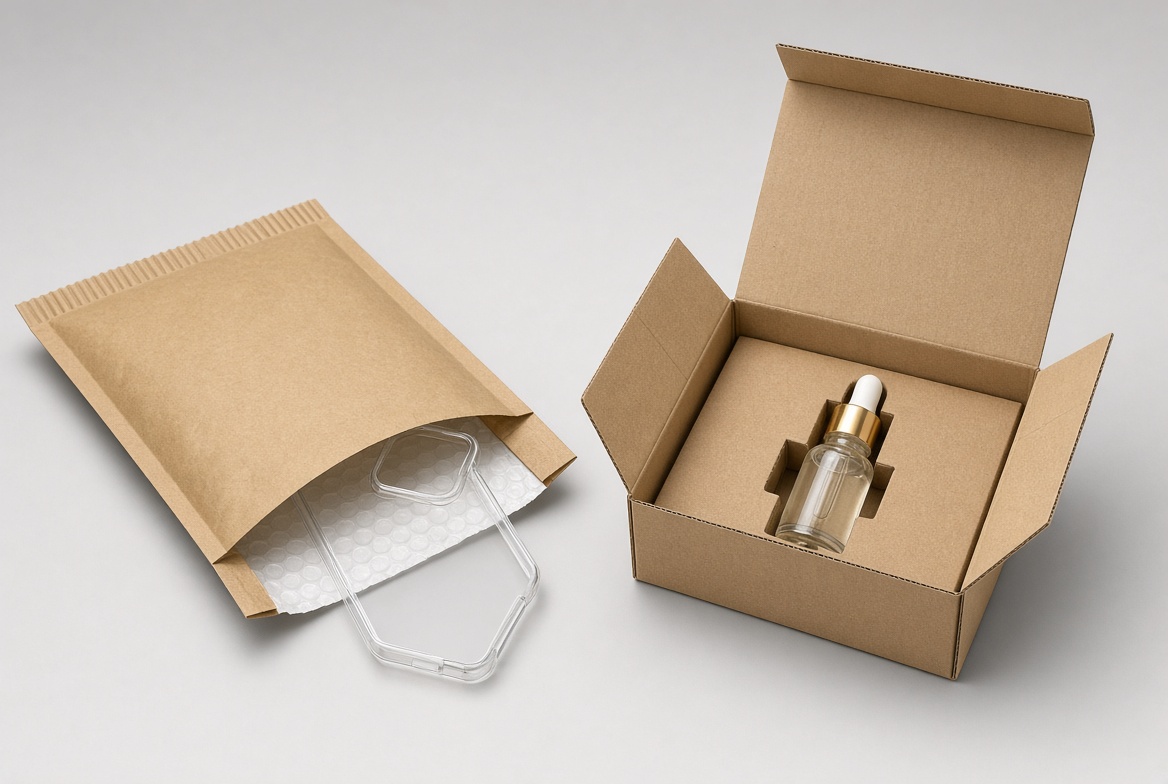
For example, a flat phone case in a protective retail sleeve may ship well in a padded mailer. A glass cosmetic bottle, metal component with sharp edges, framed print, or electronic device should generally be shipped in a rigid box with properly designed internal cushioning.
How to Choose the Right Bubble Mailer Size
One of the most common shipping mistakes is choosing a bubble mailer that is either too large or too small.
A mailer that is too small can split at the seams, stress the self-seal flap, compress the product, or leave no room for extra protection. A mailer that is too large allows the product to slide, strike the edges, and create unstable thickness.
The best choice is a size that gives the item a snug but not tight fit.
Measure the Product Before Ordering
Measure the packed product rather than the bare product. Include:
- Product length
- Product width
- Product depth
- Retail carton or inner pouch dimensions
- Any tissue, bubble wrap, insert, or protective sleeve
- Required clearance around vulnerable areas
For a standard product, allow enough internal room for easy insertion and sealing without creating excess empty space. If the product is rigid, allow extra space around corners and edges so the mailer is not under tension.
Consider the Usable Interior Space
Do not rely only on the advertised outer dimensions of a padded envelope. The usable internal space can be smaller because of:
- Side seam width
- Bubble lining thickness
- Sealing flap area
- Heat-sealed or folded construction
- Closure position
For custom packaging programs, ask the manufacturer for the usable inner dimensions, material construction, flap style, and tolerance range. This helps prevent packing-line issues after production.
How to Pack a Bubble Mailer Correctly
The goal is not to add as much material as possible. The goal is to keep the item stable while providing protection proportionate to the shipping journey.
A properly packed bubble mailer should not feel loose, uneven, overfilled, or difficult to seal.
Step 1: Inspect the Product and Inner Packaging
Before placing an item in the mailer, check for vulnerable points:
- Corners that can bend or crush
- Glass, ceramic, or brittle materials
- Sharp metal edges
- Loose components
- Liquid containers or leak risks
- Printed surfaces that can scratch
- Retail boxes that may collapse under pressure
If the product has a premium printed carton, protect the carton itself. A customer may receive an undamaged product but still be disappointed if the branded retail box is dented, scuffed, or crushed.
Step 2: Add Protection Only Where It Is Needed
A bubble mailer already provides basic cushioning, but it does not eliminate all risks. Add extra protection when the product is fragile, has sharp corners, or can move inside the mailer.
Useful protective materials include:
- Tissue paper for surface protection
- Small bubble wrap sheets for impact protection
- Corrugated pads for rigid support
- Paper void fill for movement control
- Foam sleeves for delicate surfaces
- Poly bags for moisture separation
- Cardboard backers for documents, prints, and flat products
Avoid excessive layers that make the mailer bulky or uneven. A thick, lumpy, or rigid padded envelope may be processed differently by carriers and may require package-rate postage rather than a flat or envelope classification. USPS notes that large envelopes can be treated as packages when they are too thick, rigid, or uneven.
Step 3: Perform the Shake Test
Once the item is inside, gently shake the mailer.
If you can hear or feel the product moving freely, add a small amount of padding or use a better-fitting mailer. Movement inside the package is one of the main causes of edge damage, scratches, broken retail cartons, and customer complaints.
A simple packing rule is:
> The product should be secure enough not to rattle, but not compressed so tightly that the mailer is under stress.
Step 4: Seal the Bubble Mailer Firmly
Remove the release liner from the self-seal adhesive flap and press the flap down firmly across the full width. Apply even pressure along both corners and the center.
For higher-value items, heavier products, or longer shipping routes, reinforce the flap with packing tape. This is especially useful when:
- The mailer is filled near capacity
- The product has hard edges
- The shipment may encounter heat or humidity
- The package will travel internationally
- The adhesive quality is uncertain
- The item is being returned or re-shipped
Do not cover the entire envelope in tape unless necessary. Excessive tape can create folds, scanning issues, and a less professional appearance.
How to Address a Bubble Mailer
Correct addressing is essential for smooth processing. Even a well-packed product can be delayed, returned, or lost if the delivery information is incomplete or unreadable.
For USPS shipments, the return address should appear in the top-left area, while the delivery address should be placed in the center, preferably below and to the right of the return address. Addresses should be oriented parallel to the package's longest side.
What to Write on a Bubble Mailer
Include the recipient's information clearly:
- Recipient's full name or business name
- Apartment, suite, unit, or building number when applicable
- Street address
- City
- State or province
- Postal or ZIP code
- Country name for international shipping
- Telephone number when required by the carrier or destination
Include the sender's information in the return address area:
- Sender's full name or company name
- Full return address
- Postal or ZIP code
- Country
- Contact information if appropriate
For B2B shipments, use the legal company name and include any necessary attention line, warehouse code, purchase order number, or receiving department information. If a business customer receives large volumes of parcels, these details can help prevent internal receiving delays.
Use Printed Labels When Possible
Printed shipping labels are usually more reliable than handwritten addresses because they improve readability and can include tracking barcodes, routing codes, and service details.
When applying a label:
- Place it on the flattest surface available
- Keep it away from seams, folds, and the closure flap
- Do not place it over wrinkles or bubbles
- Keep all barcodes fully visible
- Avoid covering the barcode with clear tape that creates glare
- Ensure the label is securely attached
USPS guidance states that an address label or envelope should be firmly affixed to the mailing container.
How to Mail a Bubble Mailer: Step-by-Step
After packing, sealing, and labeling the mailer, follow this shipping checklist.
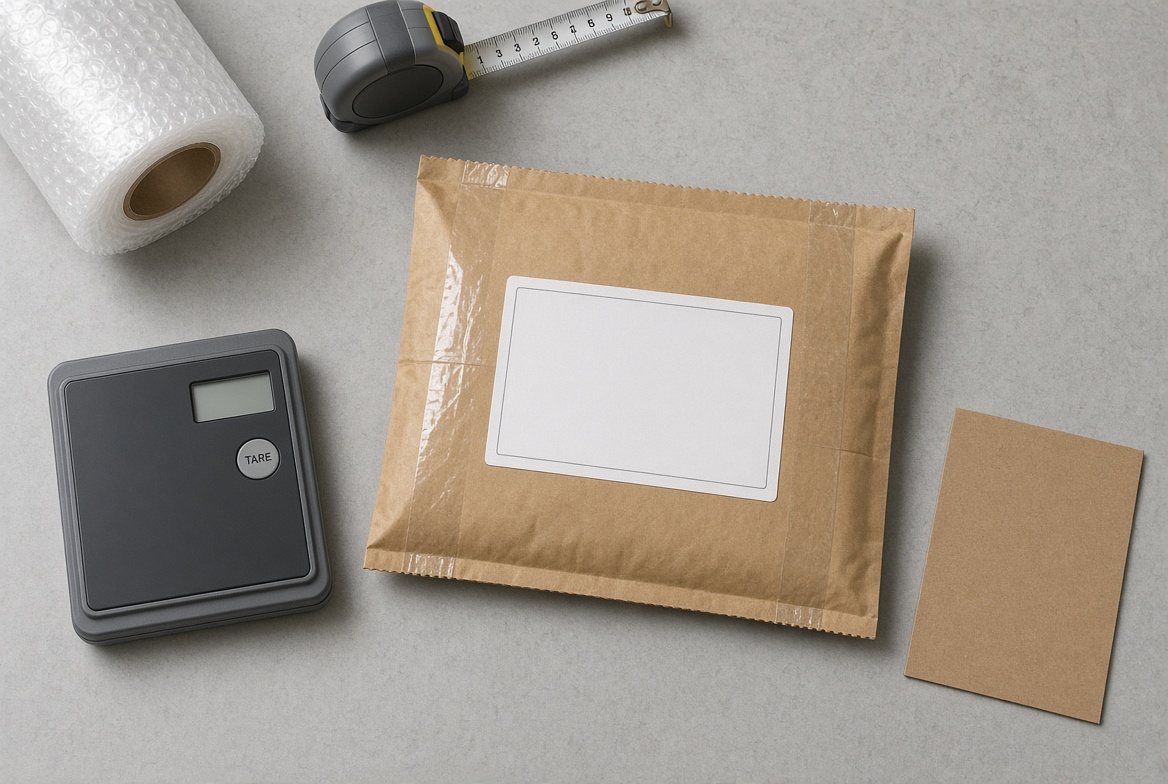
1. Measure the final package. Measure length, width, and thickness after sealing. Do not estimate based only on the empty envelope.
2. Weigh the finished mailer. Include all protective materials, labels, invoices, promotional cards, and tape.
3. Choose the correct shipping service. Select a service based on speed, tracking, destination, insurance needs, and package classification.
4. Purchase and print postage. Use your carrier platform, shipping software, post office, or logistics provider.
5. Apply the label flat. Ensure the barcode is unobstructed and scannable.
6. Add tracking and insurance where needed. For higher-value items, proof of shipment and delivery confirmation can be more important than small postage savings.
7. Drop off or schedule collection. Obtain an acceptance scan or receipt for business-critical shipments.
8. Keep shipment records. Store tracking numbers, shipping dates, product values, and customer information for customer service and claims management.
For domestic U.S. shipments, USPS Ground Advantage accepts packages up to 70 pounds. USPS also notes that packages up to 15.999 ounces are priced by ounce, while heavier packages are priced by the pound. Actual eligibility and pricing depend on the final dimensions, weight, shape, destination, and service rules, so confirm rates before dispatching.
Common Bubble Mailer Shipping Mistakes
Small packing mistakes can create avoidable costs through returns, damaged goods, refunds, re-shipping, and poor customer feedback.
Using a Bubble Mailer for a Crushable Product
Bubble lining protects against minor shocks, but it does not provide strong structural resistance against compression. A customer's order may be placed under heavier parcels during sorting, transport, or last-mile delivery.
Use a custom mailer box or corrugated shipping box for:
- Glass bottles and jars
- Ceramic products
- Fragile electronics
- Items with protruding parts
- Collectibles
- Large cosmetic containers
- Multi-product sets
- Heavy metal components
- Products with premium retail cartons
Leaving Too Much Empty Space
A product that shifts inside the mailer can hit edges repeatedly. This may cause damaged corners, scratched surfaces, or torn packaging.
Use the smallest appropriate mailer and add controlled void fill where needed.
Overstuffing the Envelope
An overfilled bubble mailer is more likely to split, open, snag, or create uneven thickness. It can also look unprofessional and may complicate carrier classification.
If you need to force the flap closed, move up one mailer size or switch to a rigid box.
Ignoring Moisture and Temperature
Paper bubble mailers, labels, adhesives, and printed surfaces can be affected by moisture. International or seasonal shipments may encounter humidity, rain exposure, hot warehouses, or temperature changes.
For moisture-sensitive products, consider:
- A sealed inner poly bag
- Moisture-resistant outer materials
- Water-resistant shipping labels
- Stronger adhesive systems
- Inner barrier packaging for cosmetics, electronics, or printed goods
Packaging Insights From a Manufacturer's Perspective
The most cost-effective shipping package is not always the least expensive envelope. A very low-cost mailer can create a much higher total cost if it contributes to product damage, negative reviews, customer-service workload, and replacement shipments.
When selecting custom bubble mailers or shipping boxes, evaluate the complete packaging system:
| Packaging Decision | What to Evaluate |
| Material | Paper, polyethylene, recycled content, bubble strength, puncture resistance |
| Size | Product fit, usable inner dimensions, sealing clearance, packing efficiency |
| Closure | Self-seal adhesive quality, peel-and-seal flap, tamper evidence |
| Branding | Logo printing, color consistency, artwork clarity, premium appearance |
| Protection | Product fragility, movement control, compression risk, moisture exposure |
| Shipping cost | Final weight, thickness, dimensional rules, regional carrier rates |
| Sustainability | Recyclability, material separation, recycled fibers, right-sizing |
| Operations | Ease of packing, storage footprint, packing speed, label placement area |
Testing is valuable before scaling a new e-commerce package. Packaging test programs can simulate transport-related hazards such as vibration, impact, drops, and temperature exposure. ISTA describes its 3-Series procedures as general simulation performance tests designed to recreate damage-producing conditions found in transportation environments.
For a growing brand, a practical approach is to test several sample shipments before placing a large packaging order. Send packages to different regions, use multiple carriers when relevant, inspect the results, and record any damage patterns.
When a Custom Mailer Box Is the Better Choice
A custom mailer box offers stronger product protection and more room for branding. It is often the better option when the shipment represents the customer's first physical experience with your brand.
Choose a custom mailer box when you need:
- Better crush resistance
- More protection for fragile products
- A premium unboxing experience
- Multiple products in one shipment
- Custom inserts, dividers, or tissue paper
- Larger logo and artwork areas
- A reusable packaging format
- Better protection for retail cartons
- Greater confidence for long-distance export shipping
For example, a skincare brand shipping one small facial tool may choose a bubble mailer with a printed insert card. The same brand shipping a glass serum bottle, branded carton, sample sachets, and a gift card should use a custom mailer box with a fitted insert. The box protects the product, organizes the contents, and presents the brand more professionally upon delivery.
Final Checklist Before Shipping
Before dispatching a bubble mailer, confirm the following:
- The item is suitable for a padded envelope
- The mailer size fits the final packed product
- The product does not move freely inside
- Extra protection has been added where needed
- The flap is fully sealed
- The address is complete and readable
- The shipping label is flat and scannable
- The final parcel has been weighed and measured
- The correct postage and service have been selected
- Tracking, insurance, and records are in place when required
A bubble mailer can be a simple, efficient shipping solution—but only when it is matched to the product, route, carrier requirements, and customer experience you want to deliver.
Need Custom Bubble Mailers or Shipping Boxes?
Shenzhen XingKun Packing Products Co., Ltd. provides custom mailer boxes, shipping boxes, printed packaging, and protective packaging solutions for global brands and distributors.
Whether you need lightweight padded mailers for compact products or durable custom corrugated boxes for fragile and premium orders, our team can help you select suitable materials, dimensions, printing options, and protective structures for your business.
Contact Shenzhen XingKun Packing Products Co., Ltd. today to discuss your custom packaging project, request a quotation, or develop samples for shipment testing.
FAQ
Can I put stamps on a bubble mailer?
Yes, but the correct amount of postage depends on the final weight, size, thickness, destination, and mail classification. A padded envelope may be treated as a package if it is rigid, uneven, or more than 3/4 inch thick. Confirm the final postage with your carrier before mailing.
Is it cheaper to ship a bubble mailer than a box?
Often, yes. Bubble mailers generally use less material, take up less space, and may weigh less than shipping boxes. However, they are not always the lower-cost option if the product needs extra protection, becomes damaged, or requires replacement shipping.
Can I ship fragile items in a bubble mailer?
Only some fragile items can be shipped in a bubble mailer, and they may need extra internal protection. Highly fragile, crushable, sharp, heavy, or valuable items should usually be packed in a rigid mailer box or corrugated shipping box.
How do I stop an item from moving in a bubble mailer?
Choose a closer-fitting size first. Then use a small amount of tissue paper, bubble wrap, paper padding, a cardboard backer, or another protective insert. Perform a gentle shake test before sealing the mailer.
Where should I put the address on a bubble mailer?
Place the return address in the top-left corner and the delivery address in the center area. Keep the address parallel to the longest side of the mailer and leave room for postage or the shipping label.
Should I tape a bubble mailer closed?
The built-in adhesive flap is often sufficient for lightweight shipments. Add tape when shipping heavier items, high-value goods, international orders, or parcels that may face heat, humidity, or rougher handling.
Can I ship a bubble mailer internationally?
Yes, provided the destination country, carrier, customs documentation, product restrictions, and label requirements are satisfied. For international shipments, use a complete address including the destination country and prepare any required customs forms.
What products should not be shipped in a bubble mailer?
Avoid using a bubble mailer alone for glass, ceramics, liquids without protective containment, sharp objects, heavy metal parts, high-value electronics, large multi-item sets, or products that can be crushed easily.
References
- [USPS — How to Prepare and Send a Package]
- [USPS — Ground Advantage Service Requirements]
- [USPS — Mail and Shipping Services]
- [USPS Postal Explorer — Basic Standards for Mailing Services]
- [ISTA — Test Procedures]
- [ISTA — Getting Started With Packaging Design and Testing]
- [UL Solutions — ISTA Packaging Test and Certification]
- [Custom Box Makers — How to Ship Bubble Mailers Correctly]


