Content Menu
● Why Source Clothing Boxes in Mexico?
>> An Established Regional Packaging Supply Base
>> What the Latest Market Reports Actually Measure
● Selection Criteria: How to Evaluate a Clothing Box Manufacturer
>> 1. Manufacturing Identity and Production Evidence
>> 2. Structural Development and Customization
>> 3. Documented Quality Control
>> 4. Realistic Capacity and Delivery Planning
>> 5. Applicable Certification and Compliance
● Six Clothing Box Manufacturers and Suppliers to Evaluate
>> 1. Shenzhen XingKun Packing Products Co., Ltd.
>>> Core Strengths and OEM/ODM Scope
>>> Procurement Considerations
>> 2. Xianda Printing Co., Ltd.
>>> Core Strengths and OEM/ODM Scope
>>> Procurement Considerations
>> 3. Maituohong Packaging
>>> Core Strengths and OEM/ODM Scope
>>> Procurement Considerations
>> 4. Bonito Packaging
>>> Core Strengths and OEM/ODM Scope
>>> Procurement Considerations
>> 5. Impresos Tecnográficos
>>> Core Strengths and OEM/ODM Scope
>>> Procurement Considerations
>> 6. Litoprocess SA de CV
>>> Core Strengths and OEM/ODM Scope
>>> Procurement Considerations
● Supplier Comparison: Capacity, MOQ, and Certification
● Clothing Box Specifications That Affect Quality
>> Match the Structure to the Application
>> Define Materials Beyond "Thick Cardboard"
>> Make Printing and Finishing Requirements Measurable
● Compliance: What Matters—and What Does Not
>> CE and RoHS Are Not General Clothing Box Certifications
>> Verify FSC Claims at Supplier and Order Level
>> Request Relevant Chemical Documentation
● Buyer's Guide: From Factory Verification to Delivery
>> Step 1: Issue the Same Technical Brief to Every Supplier
>> Step 2: Verify the Actual Manufacturing Site
>> Step 3: Separate Sampling Into Approval Stages
>> Step 4: Purchase Available Capacity, Not Theoretical Capacity
>> Step 5: Compare Delivered Cost
● Common Sourcing Pitfalls and How to Avoid Them
>> An Often-Overlooked Insider Check: Pack the Box at Full Speed
● Conclusion: Choose the Supplier That Can Reproduce the Approved Result
● Frequently Asked Questions
>> 1. How Can I Check Whether a Supplier's ISO 9001 Certificate Has Expired?
>> 2. How Do I Prevent a Supplier From Changing Materials After Sample Approval?
>> 3. Can a Rigid Clothing Box Be Used Without an Outer Shipping Carton?
>> 4. How Can I Determine Whether a Low MOQ Is Commercially Useful?
>> 5. Should I Use a Mexican Manufacturer, a Chinese Manufacturer, or Both?
● References
Choosing a clothing box supplier requires more than comparing printing prices. For procurement managers, the real challenge is finding a partner that can maintain material consistency, reproduce brand colors, support seasonal launches, and deliver repeat orders without unexpected specification changes.
Mexico offers a substantial paper-packaging supply base and an established trading relationship with the United States. Official figures show that Mexican exports of boxes, sacks, bags, and other paper packaging to the United States reached US$660 million in 2024. This is a broad packaging category—not a clothing-box-only statistic—but it demonstrates the scale of the country's cross-border packaging business.
This guide evaluates suppliers through five practical dimensions: manufacturing evidence, structural development capabilities, quality-control procedures, delivery planning, and compliance documentation. It also distinguishes manufacturers physically located in Mexico from overseas alternatives that procurement teams may wish to compare.
The central purchasing principle is traceability: a qualified supplier should connect its quotation, approved sample, material specification, production records, and shipment documentation to the same agreed requirements.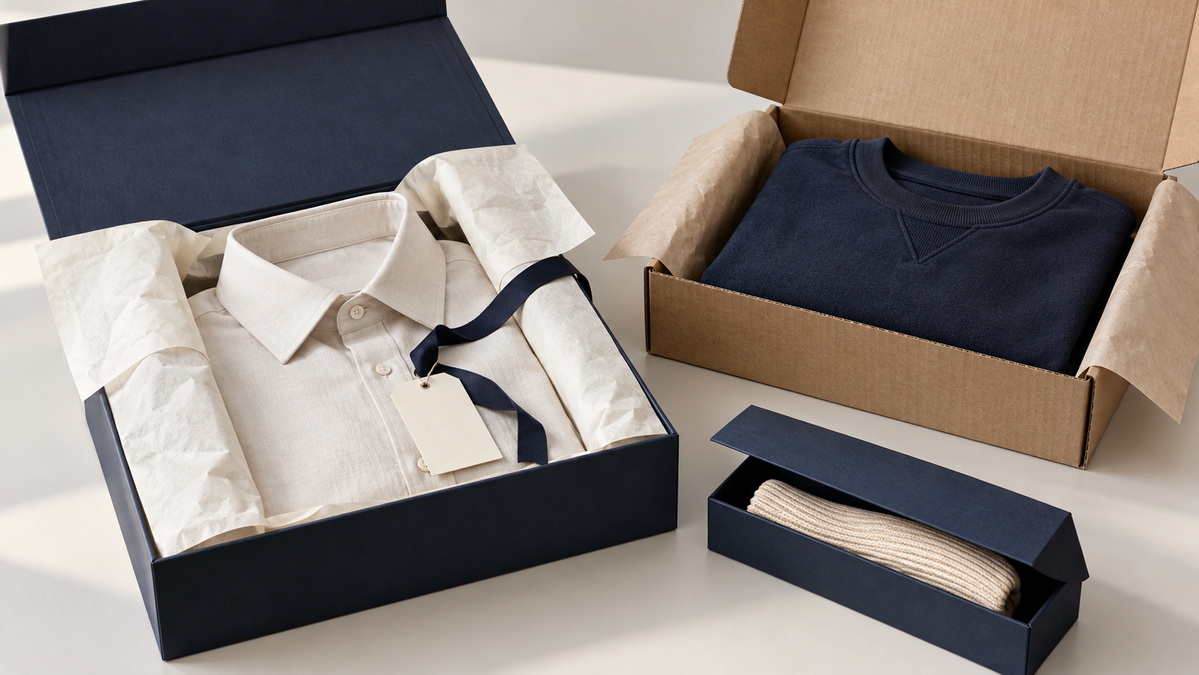
Why Source Clothing Boxes in Mexico?
An Established Regional Packaging Supply Base
Mexico's paper-packaging exports provide useful evidence of its manufacturing geography. In 2024, the leading exporting states for boxes, sacks, bags, and other paper packaging included:
| Mexican state | Exports in the broader paper-packaging category, 2024 |
| Baja California | US$130 million |
| Nuevo León | US$125 million |
| Tamaulipas | US$107 million |
| Jalisco | US$74.1 million |
| Durango | US$54.9 million |
These figures cover multiple packaging formats and end-use industries. They should not be interpreted as clothing box production values. Nevertheless, they help buyers identify established packaging-producing regions rather than relying solely on supplier directory listings.
For apparel businesses, sourcing locally may simplify factory visits, sample exchanges, replenishment coordination, and communication with domestic fulfillment partners. The benefit depends on the actual factory location and delivery lane—not simply whether the supplier has a Mexican sales address.
What the Latest Market Reports Actually Measure
Mordor Intelligence's 2026 market analysis estimates Mexico's overall packaging market at US$28.74 billion in 2025 and US$30.26 billion in 2026. Its separate corrugated-packaging report estimates that segment at US$5.51 billion in 2025 and US$5.79 billion in 2026. These are commercial research estimates, not government production totals.
Neither report isolates clothing boxes. Apparel packaging spans folding cartons, rigid presentation boxes, corrugated mailers, and secondary shipping cartons, so presenting one broad packaging figure as the size of the clothing box market would be misleading.
Selection Criteria: How to Evaluate a Clothing Box Manufacturer
The shortlist considers publicly documented capabilities. Final supplier approval should depend on a buyer's own verification and sampling results.
1. Manufacturing Identity and Production Evidence
Request the registered company name, factory address, business documentation, and a clear explanation of which processes occur in-house.
A supplier may operate its own printing presses while outsourcing rigid-box assembly, foil stamping, or specialty finishing. That arrangement is not automatically unsuitable, but the subcontracting chain should be disclosed.
2. Structural Development and Customization
A capable clothing box supplier should be able to discuss:
- Internal dimensions based on folded garments.
- Folding-carton, rigid-box, or corrugated construction.
- Board thickness and stiffness.
- Closure design and assembly method.
- Packing-line efficiency.
- Freight volume and storage requirements.
- Tissue paper, inserts, sleeves, labels, and accessory compartments.
For OEM work, the supplier manufactures to the buyer's approved specifications. For ODM-style support, it contributes structural concepts, material recommendations, or existing designs adapted to the brand.
3. Documented Quality Control
Ask for evidence of incoming-material inspection, in-process checks, final inspection, and corrective-action procedures.
The inspection plan should cover measurable requirements, not simply "premium quality." Examples include internal dimensions, board caliper, print registration, surface defects, closure function, and packing quantity.
4. Realistic Capacity and Delivery Planning
Factory area and machine count are useful context, but neither proves that capacity is available during a seasonal peak.
Ask for the production route, bottleneck operation, booked workload, and delivery schedule for your specific clothing box design.
5. Applicable Certification and Compliance
Treat certification claims as verification tasks. A website logo does not establish the current status, site coverage, or product scope of a certificate.
ISO 9001 concerns a quality-management system; FSC certification concerns forest-based sourcing and chain-of-custody requirements. They serve different purposes and should not be treated as interchangeable quality guarantees. Certificate details can be checked through IAF CertSearch and FSC's public search resources.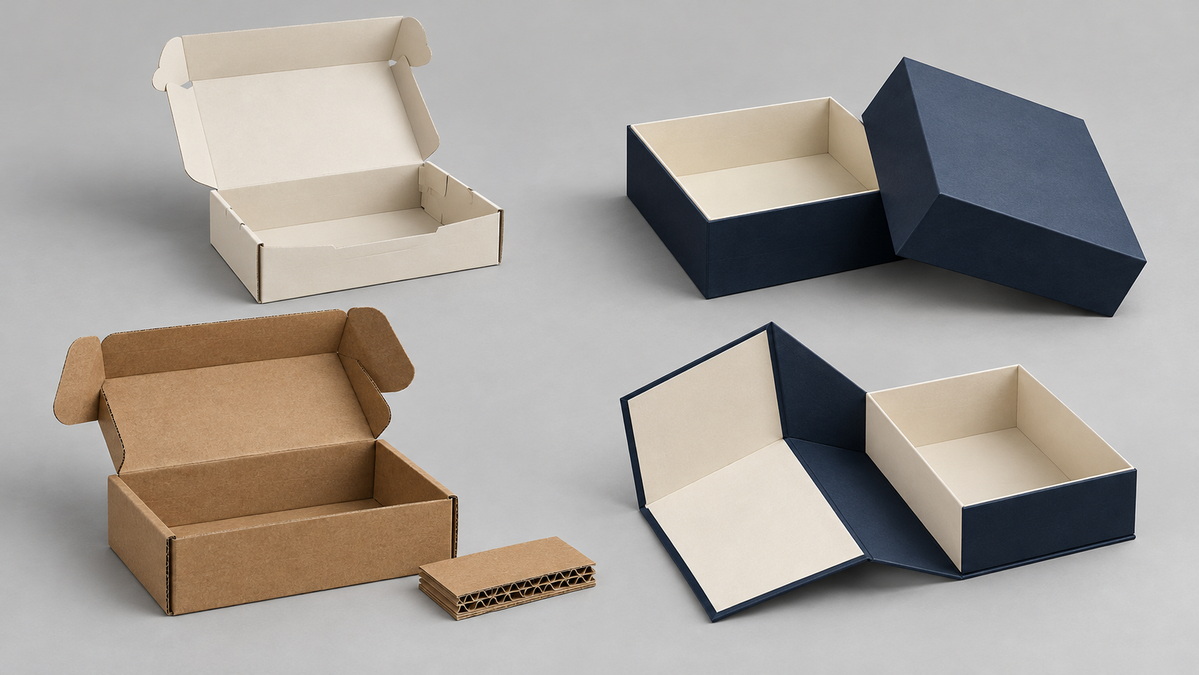
Six Clothing Box Manufacturers and Suppliers to Evaluate
1. Shenzhen XingKun Packing Products Co., Ltd.
Location: Shenzhen, Guangdong, China
Established: 2004
Market coverage: Domestic and international customers; the company reports exports to more than 30 countries
Website: www.xkdisplay.com
Shenzhen XingKun Packing Products Co., Ltd. is a printing and packaging manufacturer offering paper boxes, display stands, labels, stickers, brochures, and related printed products. Its public company profile identifies Heidelberg CD102 four-color and XL75 six-color printing equipment, alongside a stated factory area of approximately 3,000 square meters.
For clothing brands, its relevance lies in coordinating several packaging components within one supplier relationship. A project may combine a custom clothing box with branded labels, printed inserts, hang tags, or retail display materials.
Core Strengths and OEM/ODM Scope
XingKun states that it provides OEM and ODM services, design consultation, customized production, and support for low-volume orders. These capabilities make it a candidate for small and midsize brands seeking flexible development rather than a strictly standardized carton program.
Its potential value should be evaluated through practical development work:
- Does the team identify dimensional or structural problems before sampling?
- Can it provide material alternatives at different price levels?
- Are artwork revisions documented clearly?
- Can it coordinate matching printed accessories?
- Does the quotation distinguish tooling, sampling, production, and freight?
This approach assesses communication efficiency and development support without assuming that advertised service claims guarantee performance.
Procurement Considerations
The company reports annual output exceeding 10 million, but the published figure does not clearly isolate clothing boxes or define the product mix. Its stated 7–15-day production period should also be confirmed against the actual order, finishing requirements, and approval schedule. The website references ISO 9001 and FSC; buyers should request current certificates and verify their scope.
Best-fit purchasing scenario: A growing apparel brand comparing customized packaging, coordinated printed materials, and flexible order support.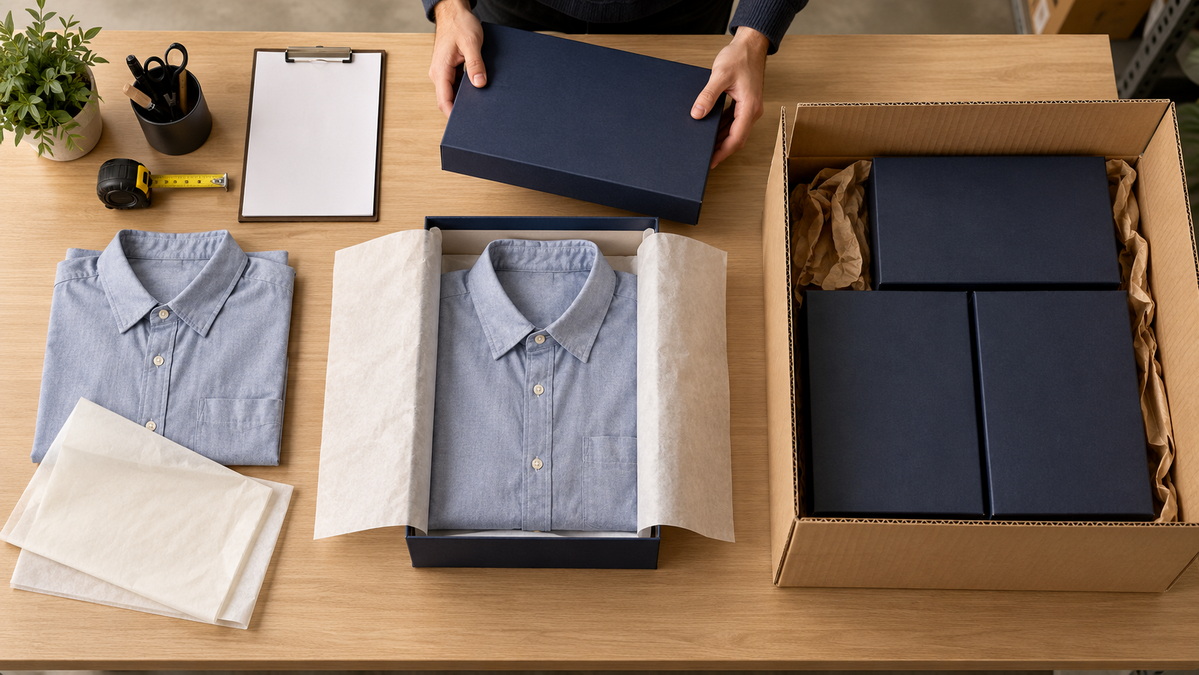
2. Xianda Printing Co., Ltd.
Location: China; the website identifies Dongguan facilities and also references Shenzhen
Established: Public website contains conflicting references to 2006 and 2014
Market coverage: Export-oriented packaging services; principal destination markets require confirmation
Website: www.xiandagiftbox.com
Xianda Printing Co., Ltd. offers customized gift boxes, paper bags, and packaging for categories including clothing, jewelry, cosmetics, and consumer products. Its website describes design and sampling departments and lists printing, folding, and assembly equipment.
Core Strengths and OEM/ODM Scope
Xianda is relevant to buyers developing presentation-oriented clothing boxes, particularly where decorative finishes and gift-style structures matter.
Its publicly described services include packaging design support, prototypes, dieline options, and customized production. Buyers can therefore evaluate it for brand-specific structures rather than only standard shipping cartons.
Procurement Considerations
The website's inconsistent founding dates and location descriptions should be resolved before onboarding. Request the exact contracting entity, business registration, manufacturing address, and explanation of the facilities involved.
The company advertises sample completion within 3–5 days, but buyers should confirm whether that means an unprinted structural sample or a fully finished production-representative sample.
Best-fit purchasing scenario: A brand seeking decorative gift-style clothing packaging and willing to perform detailed factory-identity verification.
3. Maituohong Packaging
Location: Shenzhen, Guangdong, China
Established: Exact founding year not confirmed; the company states more than 15 years of experience
Market coverage: North American, European, and other international customers
Website: www.mthpackagingbox.com
Maituohong Packaging offers folding cartons, rigid boxes, corrugated boxes, shopping bags, inserts, and labels. Its website specifically identifies apparel as a served industry and describes a 15,000-square-meter factory with more than 200 workers.
The reviewed public pages use the name Maituohong Packaging but do not establish a complete registered legal name. Buyers should obtain that name before contracting.
Core Strengths and OEM/ODM Scope
Its product range includes magnetic boxes, foldable rigid boxes, drawer boxes, lid-and-base boxes, and mailing gift boxes. This gives procurement teams several structures to compare for apparel presentation, retail use, and e-commerce fulfillment.
The company also describes incoming, in-process, final, and outgoing inspection stages. These are useful starting points for a factory audit, provided the supplier can demonstrate inspection records and acceptance criteria.
Procurement Considerations
Maituohong states ISO 9001 and FSC certification, but certificate numbers, site scope, and current status should be checked independently.
Its published MOQ is project-dependent. The website gives typical mass-production timing of 10–20 working days, subject to quantity and complexity; this should be treated as a quotation input rather than a guaranteed delivery commitment.
Best-fit purchasing scenario: A buyer comparing several clothing box structures and requiring a coordinated packaging-component program.
4. Bonito Packaging
Location: China
Established: Exact founding year not confirmed; the company reports more than a decade of experience
Market coverage: Global brands, retailers, and e-commerce businesses across more than 20 countries and regions
Website: www.bonitopack.com
Bonito Packaging markets folding cartons, rigid boxes, gift boxes, retail packaging, and custom apparel boxes. Its website describes services from structural design and material selection through printing, finishing, inspection, and production.
The complete registered legal entity should be confirmed during supplier qualification rather than inferred from the trading name.
Core Strengths and OEM/ODM Scope
Bonito's stated offering is relevant to apparel brands testing new products or seasonal packaging. The website advertises starting quantities from 100 units and customized dimensions, artwork, materials, and finishes.
For procurement teams, this makes the company a candidate for pilot orders, provided the quoted MOQ applies to the intended structure and finish combination.
Procurement Considerations
The advertised production range of 500 to 500,000-plus units is a scalability statement, not a verified monthly output figure.
The website also groups ISO 9001, FSC, BSCI, and REACH together. Buyers should separate management-system certificates, sourcing certification, social-audit documentation, and chemical-compliance evidence rather than accepting them as equivalent credentials. REACH is a regulatory framework, not a general factory-quality certificate.
Best-fit purchasing scenario: A small or growing clothing brand seeking a low-volume custom packaging trial.
5. Impresos Tecnográficos
Location: Monterrey, Nuevo León, Mexico
Established: 1950
Market coverage: Mexican industrial and commercial customers; export coverage requires confirmation
Website: tecnograficos.com.mx
Impresos Tecnográficos offers personalized rigid boxes and identifies itself as a Mexican company founded in Monterrey in 1950. Its rigid-box page reports five production plants in Monterrey and more than 350 employees.
Core Strengths and OEM/ODM Scope
Its documented rigid-box capability makes it relevant to premium clothing presentation, gift sets, and accessory packaging.
The company describes customization of box dimensions, forms, and finishes. Buyers can use this capability as a basis for discussing brand-specific structures, but should confirm experience with their particular apparel category.
A rigid box for a folded shirt, for example, presents different fit and handling requirements from a box containing a belt, scarf, or multi-item gift set.
Procurement Considerations
Publicly reviewed material does not establish clothing-box-specific monthly capacity, standard MOQ, or current certification details.
Request recent samples, production tolerances, available finishing processes, and evidence of performance on comparable projects.
Best-fit purchasing scenario: A buyer seeking Mexican-made rigid presentation boxes and convenient access to a Monterrey-based production partner.
6. Litoprocess SA de CV
Location: Naucalpan, State of Mexico, Mexico
Established: 1957
Market coverage: Mexican retail and commercial sectors; international delivery coverage requires confirmation
Website: www.litoprocess.com
Litoprocess SA de CV is a printing and packaging company whose public company profile identifies 1957 as its founding year. Its product portfolio includes folding cartons, corrugated boxes, premium boxes, display boxes, sleeves, and premium bags.
Core Strengths and OEM/ODM Scope
Litoprocess is relevant when clothing packaging must coordinate with retail displays, promotional print, and point-of-sale materials.
Its published product offering combines design, engineering, and production. That combination may suit brands requiring a coordinated campaign rather than a clothing box alone.
Procurement Considerations
The reviewed public sources do not establish a universal MOQ, clothing-box production capacity, or current certification scope.
Request physical apparel-packaging samples and confirm whether specialized rigid-box assembly and decorative finishing occur in-house or through subcontractors.
Best-fit purchasing scenario: A retailer or apparel brand sourcing boxes alongside broader printed retail materials in central Mexico.
Supplier Comparison: Capacity, MOQ, and Certification
The figures below are supplier-reported. Factory size, employee count, order scalability, and annual output are different measures and should not be compared as though they represent equivalent available capacity.
| Supplier | Manufacturing location | Public capacity information | Published MOQ position | Certification or compliance statements | Main evaluation focus |
| Shenzhen XingKun Packing Products Co., Ltd. | Shenzhen, China | Reports annual output above 10 million; product mix unspecified | Low-volume support; exact MOQ by quotation | Website references ISO 9001 and FSC; verify documents | Coordinated custom boxes and printed accessories |
| Xianda Printing Co., Ltd. | China; facility details require reconciliation | Factory and production-line claims; comparable output not established | Confirm by structure | Current certificate scope not established in reviewed material | Decorative gift-style packaging |
| Maituohong Packaging | Shenzhen, China | Reports 15,000 m² and 200+ workers; unit output not published | Project-dependent | Claims ISO 9001 and FSC; verify status and scope | Multiple structures and packaging components |
| Bonito Packaging | China | Advertises scalable order volumes; monthly output not established | Advertised from 100 units; confirm applicability | Lists ISO 9001, FSC, BSCI, and REACH-related claims; request separate evidence | Pilot orders and growing brands |
| Impresos Tecnográficos | Monterrey, Mexico | Reports five plants and 350+ employees; clothing-box output not published | Request quotation | Not established in reviewed material | Locally produced rigid boxes |
| Litoprocess SA de CV | Naucalpan, Mexico | Packaging portfolio documented; comparable box output not published | Request quotation | Not established in reviewed material | Boxes integrated with retail printing |
"Not established" means the reviewed sources did not provide sufficient evidence. It does not mean that the supplier lacks the capability or certification.
Clothing Box Specifications That Affect Quality
Match the Structure to the Application
A clothing box must be designed around its actual use. A premium retail box and a parcel-shipping box solve different problems.
| Structure | Typical purchasing purpose | What to validate |
| Folding carton | Lightweight garments, sleeves, retail presentation | Crease quality, stiffness, glue integrity, assembly |
| Rigid box | Gift presentation, premium apparel, accessories | Board caliper, corner construction, lid fit, surface durability |
| Corrugated mailer | Direct-to-consumer garment shipping | Compression, closure security, edge damage, delivery performance |
| Collapsible rigid box | Presentation packaging with storage constraints | Hinge durability, assembly consistency, structural recovery |
| Outer shipping carton | Transporting packed clothing boxes | Stack performance, carton layout, moisture exposure |
These are specification-planning categories, not universal prescriptions. Ask the shortlisted supplier to explain why its proposed construction fits the garment, packing method, and distribution route.
Define Materials Beyond "Thick Cardboard"
A purchase specification should identify:
- Board grade and supplier-approved alternatives.
- Grammage and caliper where relevant.
- Surface paper and internal liner.
- Printed and unprinted surfaces.
- Lamination or coating.
- Adhesive requirements.
- Inserts, magnets, ribbons, and tissue paper.
- Dimensional tolerances and inspection method.
Equal grammage does not necessarily mean equal stiffness or equivalent box performance. Buyers should approve the complete material construction, not just one headline number.
Make Printing and Finishing Requirements Measurable
For repeat orders, retain an approved physical reference and document viewing conditions, color targets, and acceptable variation.
Request production-representative samples for dark matte surfaces, metallic foil, embossing, and other appearance-sensitive finishes. Maituohong's own finishing guidance notes that scratch resistance, paper selection, fine foil lines, and coverage area can affect the final result.
Compliance: What Matters—and What Does Not
CE and RoHS Are Not General Clothing Box Certifications
Ordinary paper clothing boxes should not be marketed as requiring CE marking merely because they are exported to Europe. EU guidance states that CE marking applies only to products covered by legislation that specifically requires it; it must not be used where those requirements do not apply.
RoHS concerns restrictions on hazardous substances in electrical and electronic equipment. It is not a general paper-packaging quality standard. Packaging incorporating electrical features requires a separate applicability assessment.
Verify FSC Claims at Supplier and Order Level
Use FSC's public search to check the certificate holder, status, and scope. Then ask the supplier to explain which quoted materials and finished products will carry an FSC claim.
A supplier's ability to purchase certified paper is not, by itself, sufficient evidence for every claim proposed on a finished clothing box. FSC's search tools specifically support checking certification and licensing information.
Request Relevant Chemical Documentation
For EU-bound packaging, ask suppliers to identify applicable chemical restrictions and provide evidence relevant to the actual paper, inks, coatings, adhesives, and accessories.
ECHA explains that REACH can apply to substances in articles and places responsibility on companies to identify and manage relevant risks. A generic statement saying "REACH certified" does not explain what was tested or which obligations were assessed.
Buyer's Guide: From Factory Verification to Delivery
Step 1: Issue the Same Technical Brief to Every Supplier
Include the garment type, folded dimensions, internal box dimensions, annual demand, order quantity, structure, print coverage, finishes, delivery destination, and intended sustainability claims.
Ask suppliers to list assumptions explicitly. Otherwise, a lower quotation may simply reflect thinner board, reduced finishing, or different packing.
Step 2: Verify the Actual Manufacturing Site
Request a live factory walkthrough or an independent audit covering:
- Material storage.
- Printing and converting.
- Rigid-box assembly, where applicable.
- Finishing operations.
- Inspection equipment.
- Finished-goods storage.
- Subcontracted processes.
Ensure the factory being reviewed is the one proposed for your order.
Step 3: Separate Sampling Into Approval Stages
Use three approval gates:
1. Structural sample: Confirm dimensions, garment fit, closure, and assembly.
2. Printed development sample: Review artwork placement, color direction, and finish.
3. Production-representative approval: Confirm the intended materials and manufacturing route.
If a digital sample substitutes for offset printing, document the limitation. A visually attractive prototype is not automatically proof of repeatable mass production.
Step 4: Purchase Available Capacity, Not Theoretical Capacity
Ask suppliers to identify the operation that controls delivery.
For a complicated rigid clothing box, the limiting step may be assembly or decorative finishing rather than printing. Require a schedule showing material procurement, production, inspection, and shipment release.
Step 5: Compare Delivered Cost
Evaluate box price together with tooling, samples, freight, insurance, customs handling, storage, assembly labor, damage allowance, and working capital.
When importing into Mexico, have a qualified customs broker confirm classification, duties, documentation, and any applicable measures before placing the order. Do not assume that a quotation for paperboard materials and one for finished boxes receive identical customs treatment.
Common Sourcing Pitfalls and How to Avoid Them
| Procurement risk | Why a sample alone may miss it | Recommended control |
| Material substitution | A finished surface can conceal a different board construction | Attach the approved bill of materials to the purchase order |
| Unclear dimensions | Suppliers may quote external rather than internal dimensions | Specify measurement points and test with actual garments |
| Finish mismatch | Prototype and production processes may differ | Document the process used for each approved sample |
| Certification mismatch | A certificate may cover another entity or site | Match legal name, address, scope, and current status |
| Delivery ambiguity | "Lead time" may exclude material purchasing or transit | Define the start event and shipment-ready date |
| Unsupported sustainability claims | A material claim may not describe the complete package | Review the assembled box, accessories, and evidence |
An Often-Overlooked Insider Check: Pack the Box at Full Speed
A useful production-floor safeguard is to test the complete packing operation—not just inspect an empty box.
Run a small pilot using the real garment, tissue, inserts, labels, closure method, and outer shipping carton. Ask the people who will pack the product to perform the trial under realistic conditions.
This can reveal problems that a showroom sample hides:
- The garment fits, but only after excessive compression.
- Tissue paper interferes with the closure.
- Assembly takes longer than the labor estimate allows.
- A sleeve catches on the box edge.
- Several packed units do not fit the planned master carton.
Record packing time, rejected units, and any rework. The most economical clothing box is not necessarily the one with the lowest unit price; it is the one that performs reliably across purchasing, packing, storage, and delivery.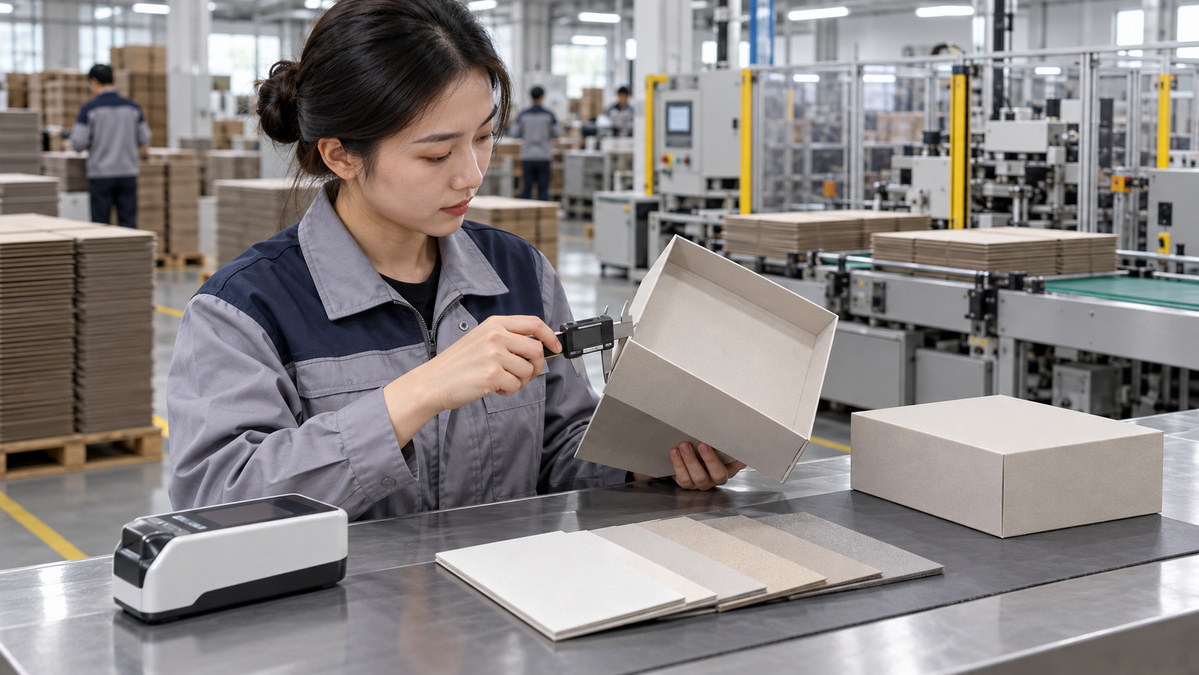
Conclusion: Choose the Supplier That Can Reproduce the Approved Result
The most useful shortlist separates local manufacturing access from international customization options.
Impresos Tecnográficos and Litoprocess provide documented Mexican packaging capabilities. Shenzhen XingKun Packing Products Co., Ltd., Xianda Printing Co., Ltd., Maituohong Packaging, and Bonito Packaging offer overseas alternatives with different combinations of custom structures, printed components, and order flexibility. Each requires project-specific verification before approval.
To begin a meaningful comparison, send the same technical brief to your shortlisted suppliers and request a structural sample, itemized quotation, current certification documents, and a production schedule.
For brands evaluating flexible OEM development alongside coordinated printed packaging, Shenzhen XingKun Packing Products Co., Ltd. can be included in that initial comparison. Ask its team to propose a clothing box construction around your garment dimensions, target order volume, and delivery requirements—not merely quote a generic box.
Frequently Asked Questions
1. How Can I Check Whether a Supplier's ISO 9001 Certificate Has Expired?
Obtain the certificate number, registered company name, issuing certification body, factory address, scope, and expiry date.
Search through IAF CertSearch and compare the result with the supplier's documents. Review whether the certificate is active, suspended, withdrawn, or expired, and whether the relevant manufacturing site and activities are covered. Contact the issuing body if details conflict or require clarification.
2. How Do I Prevent a Supplier From Changing Materials After Sample Approval?
Convert the sample into a controlled specification.
Attach the material construction, dimensions, finishing details, and approved reference identification to the purchase order. Require written approval before substitutions and retain matching reference samples with the buyer, supplier, and inspector.
For higher-risk orders, request incoming-material records and independent checks before production is completed.
3. Can a Rigid Clothing Box Be Used Without an Outer Shipping Carton?
Do not decide from appearance alone.
Ask the supplier to validate the complete shipment configuration against the intended delivery conditions. Include the garment, accessories, closure, and any protective outer packaging in the evaluation.
Where presentation is commercially important, define acceptable cosmetic damage separately from structural failure. A box can remain closed yet arrive unsuitable for gifting.
4. How Can I Determine Whether a Low MOQ Is Commercially Useful?
Ask for a complete pilot-order quotation.
Check whether the MOQ includes the requested board, print method, finishes, tooling, and packing. Then compare the delivered cost and specifications at several order quantities.
For example, Bonito advertises quantities from 100 units, while Maituohong states that MOQ depends on product type and customization. Neither statement replaces a project-specific quotation.
5. Should I Use a Mexican Manufacturer, a Chinese Manufacturer, or Both?
Base the decision on demand variability, replenishment requirements, development needs, and delivered cost.
A Mexican manufacturer may suit frequent local replenishment and hands-on coordination. An overseas manufacturer may be worth evaluating for a planned custom packaging program. A dual-source approach can be considered where the business can maintain equivalent specifications and manage separate approval processes.
For the suppliers in this guide, confirm actual delivery coverage first. Being listed as an international alternative does not establish local Mexican stock, import responsibility, or guaranteed delivery performance.
References
- Mexico Ministry of Economy, Data México: "Boxes, Sacks, Bags and Other Paper Packaging" — [https://www.economia.gob.mx/datamexico/es/profile/product/boxes-sacks-bags-and-other-paper-packaging] [economia.gob]
- Mexico Ministry of Economy, Data México: "Corrugated Paperboard Boxes" — [https://www.economia.gob.mx/datamexico/es/profile/product/boxes-corrugated-paperboard] [economia.gob]
- Mordor Intelligence: Mexico Packaging Market, 2026–2031 — [https://www.mordorintelligence.com/industry-reports/packaging-industry-in-mexico] [mordorintelligence]
- Mordor Intelligence: Mexico Corrugated Packaging Market, 2026–2031 — [https://www.mordorintelligence.com/industry-reports/mexico-corrugated-packaging-market] [mordorintelligence]
- FSC public certification search — [https://search.fsc.org/] [search.fsc]
- IAF CertSearch — [https://www.iafcertsearch.org/] [iafcertsearch]
- European Union guidance on CE marking — [https://europa.eu/youreurope/business/product-rules-compliance/general-product-compliance/ce-marking/index_en.htm] [europa]
- European Chemicals Agency guidance on REACH — [https://echa.europa.eu/regulations/reach/understanding-reach] [echa.europa]


