Content Menu
● Custom Printed Tote Bags and Plain Bags: The Core Difference
● Side-by-Side Comparison
● Why Custom Printed Tote Bags Build Brand Awareness
>> Repeated visibility in everyday life
>> A functional item creates a more positive association
>> Custom bags make brands easier to recognize
● When Plain Bags Are the Better Choice
>> Budget-sensitive, high-volume distribution
>> Private-label or multi-brand operations
>> Minimalist brand positioning
● Cost Is More Than Unit Price
● Materials and Printing Decisions That Affect Results
>> Cotton tote bags
>> Canvas tote bags
>> Non-woven tote bags
>> Recycled and sustainable material options
● The Brand Awareness Design Checklist
>> 1. Make the logo readable
>> 2. Choose one primary message
>> 3. Match print colors to the fabric
>> 4. Select the correct print method
>> 5. Add a measurable response path
● A Practical Buying Process for Custom Tote Bags
● Industry Use Cases
>> Retail and fashion brands
>> Trade shows and exhibitions
>> Food, beverage, and lifestyle brands
>> Corporate gifting and employee programs
● Which Option Should Your Brand Choose?
● Create a Tote Bag That Customers Want to Carry
● FAQ
>> 1. Are custom printed tote bags effective for brand awareness?
>> 2. What is the best material for a branded tote bag?
>> 3. How many colors should I use for custom tote bag printing?
>> 4. Should I print a QR code on a tote bag?
>> 5. Are plain bags more sustainable than custom printed tote bags?
>> 6. What should I include in a custom tote bag design?
>> 7. Can custom tote bags be used for trade shows?
>> 8. How can I measure results from a branded tote bag campaign?
● References
For brands that want to be remembered beyond the point of purchase, the choice between custom printed tote bags and plain bags matters more than it may seem. Both can carry products, support retail operations, and serve event visitors, but only a thoughtfully designed custom tote can turn an everyday packaging item into a repeated brand touchpoint.
At Shenzhen XingKun Packing Products Co., Ltd., we have spent more than 20 years producing tote bags and other printed packaging products for brands and distributors across more than 30 countries and regions. From our production experience, the most successful bag programs do not start with "What is the lowest unit price?" They start with a more useful question: What should people remember when they carry this bag away?
Plain bags are practical. Custom printed tote bags are practical and communicative. The right option depends on your commercial goal, target audience, distribution method, budget, and expected bag lifespan.
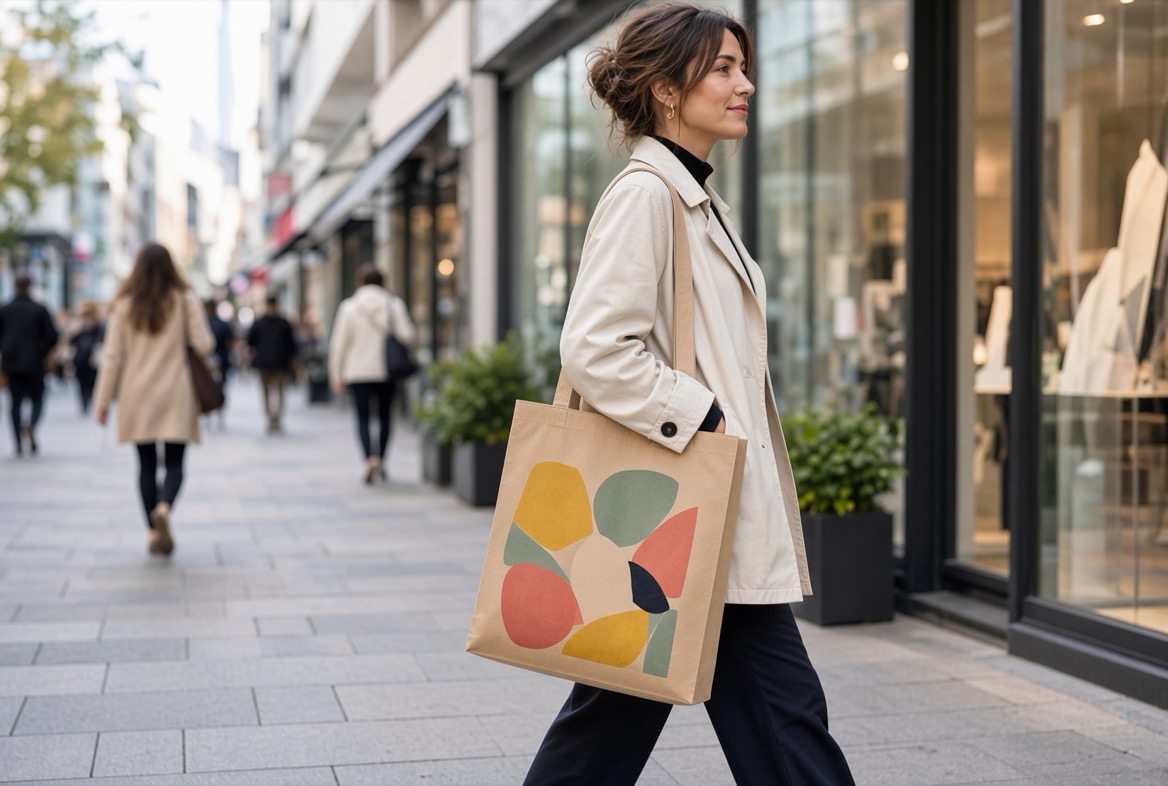
Custom Printed Tote Bags and Plain Bags: The Core Difference
A plain tote bag is a bag supplied without artwork, logos, brand colors, promotional messages, or custom decorative elements. It may be made from cotton, canvas, non-woven polypropylene, recycled materials, jute, polyester, or other fabrics. Its primary role is functional: carrying goods.
A custom printed tote bag includes visual elements chosen by the buyer. These can include:
- Company logo and brand name
- Slogan or campaign message
- Product illustration
- QR code
- Website address
- Social media handle
- Brand colors
- Seasonal artwork
- Event name and date
- Retail promotion or limited-edition graphics
The physical structure of the two bags can be identical. Both may have the same fabric weight, handle length, gusset, stitching method, and carrying capacity. The major difference is what happens after the customer receives the bag.
A plain bag completes a delivery task. A branded tote bag can continue presenting the business in public spaces: supermarkets, offices, campuses, exhibitions, public transport, cafés, gyms, and travel destinations.
That distinction is central to brand awareness. A marketing item becomes more valuable when it is useful enough to keep and distinctive enough to carry repeatedly.
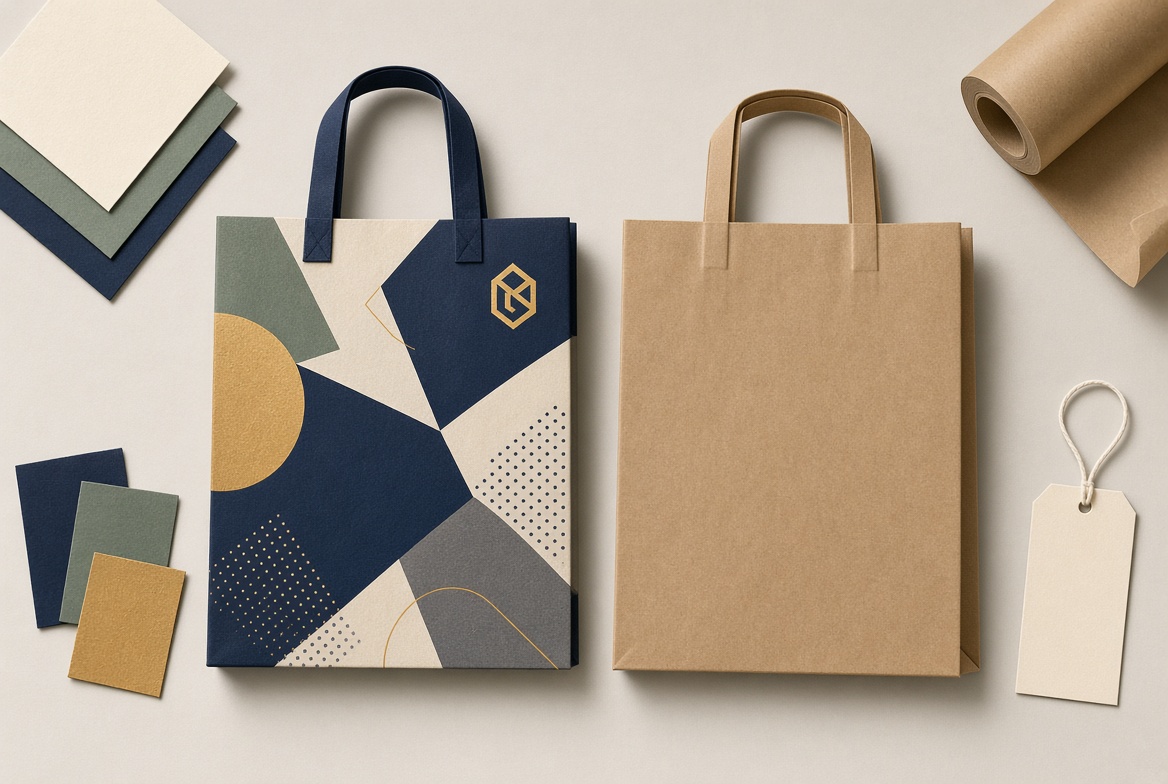
Side-by-Side Comparison
| Comparison Factor | Custom Printed Tote Bags | Plain Bags |
| Main function | Carrying products plus communicating brand identity | Carrying products only |
| Brand visibility | High when artwork is clear and bags are reused publicly | Minimal or none |
| Customer recall | Can reinforce recognition through repeated exposure | Depends on the product or shopping experience, not the bag |
| Upfront cost | Higher due to printing, setup, artwork preparation, and finishing | Usually lower, especially for standard stock items |
| Design flexibility | Wide range of colors, print areas, messages, labels, and finishes | Limited to fabric color, size, and construction |
| Suitable order quantity | Best for planned retail, events, campaigns, launches, and corporate programs | Useful for urgent, low-cost, or neutral-purpose packaging |
| Differentiation | Helps a brand look intentional and recognizable | Can appear generic if competitors use similar bags |
| Reuse potential | Strong when the design and material quality feel desirable | Can be reused, but may create no association with the original supplier |
| Campaign measurement | Can include QR codes, promotion codes, unique URLs, or event identifiers | Difficult to track beyond basic distribution volume |
| Lead time | Requires approval, sampling, printing, and production scheduling | Often faster for ready-stock items |
The table highlights an important point: custom tote bags do not automatically create better results simply because they include a logo. Their performance depends on the quality of the bag, the relevance of the design, and whether recipients genuinely want to use it.
Why Custom Printed Tote Bags Build Brand Awareness
Repeated visibility in everyday life
A branded tote bag works differently from a one-time advertisement. Instead of appearing for seconds on a screen, it may accompany a customer through many daily activities.
A well-made canvas tote used twice a week for six months can create dozens of real-world exposure moments. The recipient sees the design. People nearby see it. Friends, coworkers, cashiers, fellow commuters, and event participants may also see it.
This form of visibility is especially useful because it happens in ordinary, trusted environments rather than interrupting someone's activity.
Promotional-product research has reported that many recipients retain promotional items and can recall the brand associated with them. In PPAI's research, 54% of consumers said they still had the last promotional product they received, while 61% said they could clearly remember the brand that gave it to them.
For a tote bag program, the practical takeaway is simple: retention creates opportunity for recall. A bag that lasts longer and gets used more often has more chances to support brand memory.
A functional item creates a more positive association
Consumers may ignore a flyer, delete an email, or scroll past a digital campaign. A useful bag provides immediate value. It helps carry groceries, documents, books, samples, lunch containers, clothing, or event materials.
That utility can change how recipients perceive the brand. Instead of feeling like a purely promotional object, the tote becomes part of a person's routine.
A custom printed tote bag can support positive brand association when it offers:
- Comfortable handles
- Useful capacity
- Strong stitching
- Durable fabric
- Attractive artwork
- A practical shape, such as a bottom gusset
- A design that fits the user's lifestyle
The most effective promotional tote is not the one with the largest logo. It is the one people are happy to carry.
Custom bags make brands easier to recognize
Consistent visual identity helps customers identify a company across physical and digital touchpoints. When a tote bag uses the same logo, typography, colors, packaging style, and tone as the brand's website and product range, it becomes part of a recognizable system.
For example, a natural skincare brand may use unbleached organic cotton, botanical line art, a muted color palette, and a small logo printed in one corner. A youthful beverage brand may choose a bold all-over pattern, bright colors, a large campaign message, and a QR code connected to a limited promotion.
Both approaches can work. The appropriate design depends on the buyer, product category, and distribution environment.
When Plain Bags Are the Better Choice
Plain bags should not be viewed as a poor alternative. They are the right choice in several commercial situations.
Budget-sensitive, high-volume distribution
If a business must supply large numbers of bags at the lowest possible unit cost, plain bags can be more economical. This may apply to wholesalers, temporary operations, internal logistics, or low-margin retail environments.
In these cases, the buyer may prioritize:
- Available stock
- Fast delivery
- Standard dimensions
- Neutral appearance
- Cost control
- Basic product protection
A plain bag can also be a smart temporary solution when final brand artwork has not been approved.
Private-label or multi-brand operations
Some distributors, fulfillment companies, marketplaces, and retailers serve multiple brands. A neutral plain tote can prevent confusion and give the recipient flexibility to use the bag for different product lines.
For example, a gift shop with many independent suppliers may use plain kraft-color cotton bags to create a simple, cohesive shopping experience without promoting one particular vendor.
Minimalist brand positioning
Some companies deliberately avoid overt branding. Luxury retailers, museums, artisan businesses, and sustainable lifestyle brands may choose subtle treatments instead of large printed graphics.
However, minimalist does not have to mean completely plain. A small tonal logo, woven label, debossed patch, or discreet one-color print can preserve a clean aesthetic while still creating brand recognition.
Cost Is More Than Unit Price
When comparing custom printed tote bags vs plain bags for brand awareness, buyers often focus first on unit price. This is understandable, but it can lead to an incomplete decision.
The more meaningful comparison is cost per useful impression, not simply cost per bag.
A plain tote may cost less at purchase. Yet if it does not help people remember the brand, it contributes little beyond packaging. A custom tote may cost more initially, but its value can increase if customers reuse it frequently and associate it with a positive experience.
A simple evaluation framework is:
Estimated value per use=Total bag investment/Expected number of useful uses
This is not a precise financial formula because brand exposure is difficult to measure perfectly. Still, it helps procurement teams move beyond the narrow question of "Which bag is cheaper?"
Consider two scenarios:
- A low-cost plain non-woven bag is used once and discarded or stored.
- A durable custom canvas tote is used weekly for a year.
The second option may have a higher purchasing cost, but it has a far stronger chance of producing customer goodwill, visual exposure, and repeat brand recognition.
Materials and Printing Decisions That Affect Results
The material and print method influence whether a tote feels disposable, reusable, premium, or promotional.
Cotton tote bags
Cotton tote bags are widely used for retail, conferences, bookstores, schools, lifestyle brands, and gift programs. They offer a natural appearance and work well with screen printing, digital printing, heat transfer, and embroidery.
They are suitable when brands want a classic, approachable, reusable product.
Canvas tote bags
Canvas is typically heavier and more structured than lightweight cotton. It is suitable for buyers who want stronger carrying capacity and a more premium presentation.
Canvas bags work particularly well for:
- Corporate gifts
- Museum shops
- Premium retail packaging
- Book and stationery brands
- Beauty and wellness products
- Long-term loyalty programs
Non-woven tote bags
Non-woven bags are usually lightweight and cost-efficient. They can be useful for exhibitions, supermarkets, short-term promotions, product launches, and large-scale giveaways.
They offer a balance between affordability and visibility, particularly when printed with a clean one- or two-color design.
Recycled and sustainable material options
Brands increasingly evaluate materials through both performance and waste-reduction goals. Reusable bags can support a sustainability message, but their real-world benefit depends on how often they are used and how long they remain useful. Research on reusable shopping bag behavior emphasizes that repeated use is essential to reducing reliance on single-use alternatives.
Therefore, a sustainability-focused tote program should avoid treating "reusable" as a label alone. It should include practical choices that encourage continued use:
- Stronger handles
- Appropriate fabric weight
- Washable materials where suitable
- Timeless artwork
- Useful dimensions
- Clear care instructions
- Designs that users want to keep
The Brand Awareness Design Checklist
A tote bag is a moving brand surface. The design must work at a glance, from a reasonable viewing distance, and in different real-life settings.
Before approving artwork, use this checklist.
1. Make the logo readable
A logo that looks attractive on a computer screen may become unclear after printing on textured fabric. Avoid extremely small text, overly fine lines, and low-contrast color combinations.
Test the design at real bag size. Ask whether someone can identify the brand from a few meters away.
2. Choose one primary message
Too many messages weaken the design. The front of a tote should usually focus on one main idea:
- Brand name
- Product promise
- Campaign slogan
- Illustration
- Event title
Secondary information, such as a website or QR code, can be placed on the reverse side or near the bottom.
3. Match print colors to the fabric
White ink on dark fabric can be striking. Dark ink on natural cotton can feel organic and premium. Bright artwork on black canvas may suit youth-oriented fashion or entertainment brands.
The key is contrast. If the design cannot be seen quickly, it cannot support recognition effectively.
4. Select the correct print method
Screen printing is often a practical choice for bold artwork and larger production runs. Digital printing can support detailed color illustrations and lower-volume projects. Heat transfer may be appropriate for complex graphics, while embroidery can add a premium tactile finish.
The best method depends on artwork complexity, fabric type, color count, order quantity, target budget, and expected durability.
5. Add a measurable response path
A tote bag can do more than display a logo. It can invite action.
Useful options include:
- A QR code linked to a landing page
- A campaign-specific discount code
- A short memorable web address
- A social media hashtag
- A scan-to-register event page
- A limited-edition collection message
Keep the call to action simple. A customer should understand what to do in seconds.
A Practical Buying Process for Custom Tote Bags
For procurement teams and brand managers, the following process reduces avoidable mistakes.
1. Define the bag's purpose: retail packaging, event giveaway, product bundle, corporate gift, resale item, or influencer mailer.
2. Identify the user: students, retail shoppers, trade-show visitors, employees, premium customers, or distributors.
3. Choose the expected lifespan: one-day event use, occasional shopping use, or long-term weekly use.
4. Set the bag specifications: material, fabric weight, size, handle length, gusset, closure, pocket, label, and reinforced stitching.
5. Prepare print-ready artwork: provide vector logo files, correct color references, print placement, and desired dimensions.
6. Request a sample or pre-production confirmation: inspect color appearance, print clarity, fabric texture, handle strength, and workmanship before mass production.
7. Plan distribution: decide how the bag will be given, displayed, packed, and explained to recipients.
8. Track results: use a unique QR code, campaign code, landing page, or customer survey to understand whether the bag is generating engagement.
This approach helps buyers treat custom printed tote bags as a coordinated brand asset rather than a last-minute packaging purchase.
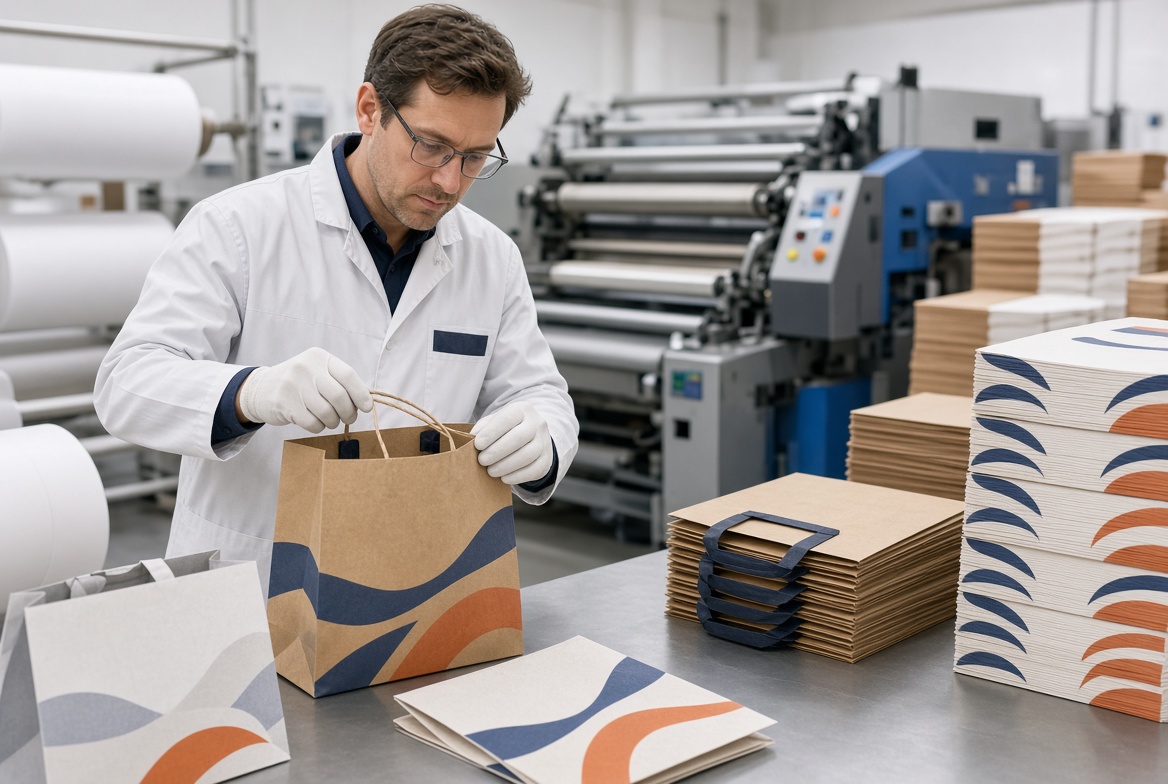
Industry Use Cases
Retail and fashion brands
Retailers can use branded tote bags as paid add-ons, gift-with-purchase items, loyalty rewards, or seasonal packaging. A well-designed tote can become an extension of the collection rather than an afterthought.
Trade shows and exhibitions
Exhibitors need attendees to carry brochures, samples, catalogs, and giveaways. A visible branded tote can continue circulating across the exhibition floor long after a visitor leaves the booth.
For this use case, choose a bag large enough for A4 materials, reinforce the handles, and use artwork that remains clear in crowded halls.
Food, beverage, and lifestyle brands
A reusable tote can connect naturally with grocery shopping, farmers' markets, café merchandise, wellness events, and subscription-box programs. Brand messaging may focus on daily routines, reusable habits, local sourcing, or community identity.
Corporate gifting and employee programs
Companies can include a custom tote in onboarding kits, conference packs, holiday gifts, and internal campaigns. The most effective versions are useful enough to be carried outside the office.
Which Option Should Your Brand Choose?
Choose plain bags when speed, neutrality, and the lowest initial cost are the main priorities. They are practical for generic packaging, internal logistics, bulk distribution, and situations where branded artwork is unnecessary.
Choose custom printed tote bags when you want every distributed bag to contribute to visibility, recall, and customer experience. They are especially valuable for retail brands, exhibitions, product launches, corporate gifts, subscription programs, and reusable packaging initiatives.
The strongest decision is not always the most expensive one. It is the one that matches the bag's role in the customer journey.
A high-quality branded tote can become a long-lasting reminder of the experience a customer had with your company. If the bag is durable, attractive, useful, and aligned with your brand identity, it can keep working long after the original transaction is complete.
Create a Tote Bag That Customers Want to Carry
Shenzhen XingKun Packing Products Co., Ltd. helps brands, distributors, retailers, and promotional-product buyers develop custom printed tote bags that balance appearance, practicality, quality, and production efficiency.
Whether you need cotton tote bags, canvas shopping bags, non-woven promotional bags, branded retail carriers, or customized packaging for an international campaign, our team can help you evaluate materials, printing options, dimensions, finishing details, and production requirements.
Contact Shenzhen XingKun Packing Products Co., Ltd. today to discuss your custom tote bag project, request a quotation, and turn everyday packaging into a lasting brand asset.
FAQ
1. Are custom printed tote bags effective for brand awareness?
Yes. They can create repeated visibility when recipients use them in public. Their effectiveness depends on the bag's usefulness, durability, visual design, and whether customers choose to reuse it regularly. Promotional-product research indicates that recipients often retain promotional items and remember the brands associated with them.
2. What is the best material for a branded tote bag?
There is no single best material for every project. Cotton works well for natural and everyday retail positioning. Canvas offers a more durable and premium feel. Non-woven material is commonly selected for affordable event and promotional distribution. The correct choice depends on intended use, target cost, expected load, and brand image.
3. How many colors should I use for custom tote bag printing?
One or two colors are often enough for a clean, cost-effective logo tote bag. More colors can be appropriate for illustrations, fashion graphics, seasonal campaigns, and detailed branded artwork. Choose colors based on print contrast and brand identity rather than using extra colors only for decoration.
4. Should I print a QR code on a tote bag?
A QR code can be useful if it leads to a clear destination, such as a promotion, product page, event registration page, or loyalty program. Keep it large enough to scan reliably and position it on a relatively flat, visible part of the bag.
5. Are plain bags more sustainable than custom printed tote bags?
Not necessarily. Environmental impact depends on the material, manufacturing process, transport, printing approach, and—most importantly—how many times the bag is reused. A branded tote may create better long-term value if its design and quality encourage regular use.
6. What should I include in a custom tote bag design?
Start with a readable logo and one main visual message. You may also include a short slogan, website, social media handle, QR code, product illustration, or campaign message. Avoid overcrowding the layout, especially when the bag will be viewed from a distance.
7. Can custom tote bags be used for trade shows?
Yes. They are highly suitable for trade shows because visitors often need a convenient bag for catalogs, samples, and promotional materials. Choose a size that fits printed brochures and use strong handles to support heavier items.
8. How can I measure results from a branded tote bag campaign?
Use campaign-specific QR codes, unique discount codes, custom landing pages, or short URLs. You can also survey customers, track repeat purchases from recipients, or monitor user-generated social media content connected to the tote design.
References
1. Promotional Products Association International. "PPAI Research: The 5-Second Impact." Available at: [PPAI Research: The 5-Second Impact]. [ppai]
2. Wang, B., et al. "Consumers' Intention to Bring a Reusable Bag for Shopping in China." *International Journal of Environmental Research and Public Health*. Available at: [PubMed Central article]. [pmc.ncbi.nlm.nih]
3. Closed Loop Partners. "Beyond the Bag: Legislation." Available at: [Beyond the Bag legislation research]. [closedlooppartners]
4. Advertising Specialty Institute. "Landmark Study Shows Promotional Products Drive High Marketing Impact with a Low Carbon Footprint." Available at: [ASI study announcement]. [asicentral]
5. PR Newswire. "Landmark Study Finds Promotional Products Deliver High Brand Recall with Lower Carbon Impact Than Most Advertising." Available at: [PR Newswire announcement]. [prnewswire]
6. Zahid, H., et al. "Understanding Consumer Preferences for Non-Plastic Shopping Bags." *Cogent Social Sciences*. Available at: [Taylor & Francis Online article]. [tandfonline]


