Content Menu
● Why Custom Wine Labels Matter for Wine Brands
● Custom Wine Label Options at XingKun
>> Common Customization Choices
>> Primary Wine Label Applications
● Choosing the Right Wine Label Material
>> Paper Wine Labels
>> Film Labels for Refrigeration and Moisture Resistance
>> Textured and Specialty Materials
● Wine Label Design: Build for Shelf Readability
>> The Four-Second Shelf Test
>> Recommended Front-Label Hierarchy
>> Design Tips for Better Conversion
● Premium Printing Finishes That Increase Perceived Value
>> Matte Lamination
>> Gloss Lamination
>> Hot Foil Stamping
>> Embossing and Debossing
>> Spot UV
>> Combining Finishes Strategically
● Wine Label Compliance for Export Markets
>> United States: TTB Considerations
>> European Union: Ingredients and Nutrition Information
>> United Kingdom: Allergen Statements
● A Six-Step Process for Ordering Custom Wine Labels
>> 1. Define the Bottle and Application Conditions
>> 2. Confirm Legal Copy Before Artwork Release
>> 3. Prepare Professional Artwork
>> 4. Request Material and Finish Samples
>> 5. Approve a Final Proof
>> 6. Plan for Reorders and Seasonal Variations
● How QR Codes Can Improve Wine Label Engagement
● Common Custom Wine Label Mistakes to Avoid
● Why Work With XingKun for Custom Wine Labels
● Conclusion
● FAQ
>> 1. What is the best material for custom wine labels?
>> 2. Can custom wine labels be waterproof?
>> 3. What information is required on a wine label?
>> 4. Can I use a QR code on a wine label?
>> 5. What finishes make a wine label look more premium?
>> 6. Should I print front and back wine labels separately?
>> 7. Can XingKun produce wine gift packaging together with wine labels?
● References
Custom wine labels do far more than identify a bottle. They communicate your winery's story, signal quality at the shelf, support regulatory compliance, and create a tactile brand experience that customers remember.
For wineries, beverage brands, private-label buyers, distributors, and promotional-gift suppliers, a successful custom wine label must balance four priorities: visual distinction, suitable material performance, accurate regulated information, and reliable print production. At XingKun, we help international brands turn wine-label concepts into print-ready packaging components through customized materials, shapes, finishes, and OEM/ODM production support.
A wine bottle may be opened once, but its label starts selling the product long before that moment.
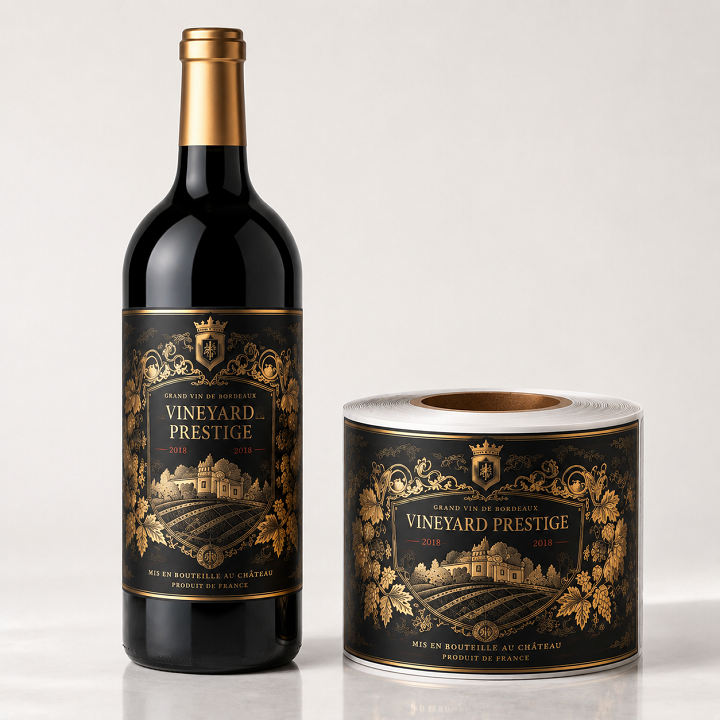
Why Custom Wine Labels Matter for Wine Brands
Wine purchasing is often highly visual, especially when shoppers do not already know the producer. The label becomes a fast decision-making tool: it helps buyers recognize the wine type, origin, price positioning, personality, and expected drinking experience.
Research has found that wine-label content can influence purchase intention, while earlier consumer research also identified packaging as an important factor in wine-buying decisions. [pmc.ncbi.nlm.nih]
For a growing winery or private-label wine program, custom printed wine labels can help you:
- Establish a recognizable visual identity across several wine varieties
- Differentiate a bottle on crowded retail shelves
- Support premium pricing through superior material and finishing choices
- Add practical product information without weakening the front-label design
- Build stronger gift, event, club, wedding, and seasonal wine programs
- Create consistent branding across bottles, cartons, gift boxes, neck tags, and promotional materials
- Adapt artwork, language, and mandatory information for different export markets
The label is not simply decoration. It is a functional packaging component that must survive printing, application, transport, retail handling, refrigeration, and—in some cases—ice-bucket condensation.
Custom Wine Label Options at XingKun
XingKun provides OEM and ODM custom printing services for overseas brands, wholesalers, manufacturers, and packaging buyers. A custom wine-label project can be developed around the bottle format, intended sales channel, design style, durability needs, and target-market requirements.
Common Customization Choices
| Customization area | Available direction | Why it matters |
| Label shape | Rectangle, square, circle, oval, die-cut, contour-cut | Supports a conventional, modern, artisanal, or luxury brand look |
| Label size | Fully customized to bottle dimensions | Prevents poor alignment and protects visual balance |
| Face stock | Paper, textured paper, synthetic film, specialty materials | Determines tactile feel, print appearance, and moisture resistance |
| Adhesive | Permanent, removable, cold-temperature or specialty adhesive | Helps the label remain secure through storage and service conditions |
| Print method | Digital, offset, screen, foil-based decorative processes | Matches order volume, artwork complexity, and finish expectations |
| Finish | Matte, gloss, soft-touch, embossing, debossing, foil stamping, spot UV | Adds shelf impact and communicates a premium position |
| Variable data | Batch codes, QR codes, serialized content, personalized names | Useful for events, wine clubs, direct-to-consumer campaigns, and traceability |
| Packaging support | Wine gift boxes, stickers, inserts, hang tags, booklets | Creates a consistent branded wine-presentation system |
Primary Wine Label Applications
Custom wine bottle labels are suitable for:
- Red wine, white wine, rosé, sparkling wine, fruit wine, and dessert wine
- Winery collections and estate wines
- Private-label wine programs
- Corporate gifts and hospitality programs
- Wedding wines and personalized celebration bottles
- Wine-club releases
- Holiday gift sets
- Restaurant and hotel house wines
- Promotional beverage campaigns
- Limited-edition and seasonal releases
Choosing the Right Wine Label Material
A beautiful label that wrinkles, lifts, stains, or loses adhesion in chilled conditions can damage an otherwise premium product experience. Material selection should begin with the real use environment—not only the artwork.
Paper Wine Labels
Paper is often chosen for classic, premium, and artisanal wine packaging. It can create a warm, natural, highly tactile appearance, particularly when paired with textured, laid, felt-marked, cotton-content, or uncoated stocks.
Best suited for:
- Indoor retail and cellar storage
- Premium glass-bottle presentations
- Traditional wineries
- Vintage or heritage-inspired brands
- Gift bottles that will not be heavily exposed to water or condensation
Key advantage: Paper can make a wine label feel more crafted and authentic.
Important consideration: Standard paper stocks are generally less suitable for bottles that will spend long periods in refrigerators, ice buckets, or high-humidity environments.
Film Labels for Refrigeration and Moisture Resistance
Synthetic label materials, such as BOPP-based films, are often selected when moisture resistance matters. Commercial print suppliers commonly recommend white BOPP for labels that need to tolerate refrigeration because it is water- and oil-resistant. [uprinting]
Best suited for:
- Chilled white wines and rosés
- Sparkling wine service
- Outdoor events
- Hospitality venues
- Bottles exposed to condensation
- High-humidity logistics environments
Film labels can be paired with clear, white, metallic, matte, or glossy effects, depending on the intended visual direction.
Textured and Specialty Materials
For premium wine collections, the material itself may become part of the brand story. Textured papers, metallic stocks, black papers, natural fibers, and specialty laminates can add tactile value before the customer even touches the glass.
A practical approach is to choose a material that reinforces the product positioning:
| Wine positioning | Recommended label direction |
| Value retail wine | Clean white paper or economical film label with clear information hierarchy |
| Modern lifestyle wine | Matte film or matte paper with bold color blocking and minimal typography |
| Boutique winery | Textured paper, embossing, restrained foil, and detailed illustration |
| Luxury gift wine | Thick specialty paper, hot foil stamping, embossing, debossing, premium secondary packaging |
| Chilled or hospitality wine | Moisture-resistant film with a tested adhesive system |
| Sustainable brand | Consider recyclable-compatible packaging design, reduced decoration, and efficient label sizing |
Expert production advice: Always request physical samples before mass production. A digital PDF cannot show how a material feels, how metallic foil reflects under retail lighting, or how a label reacts to condensation.
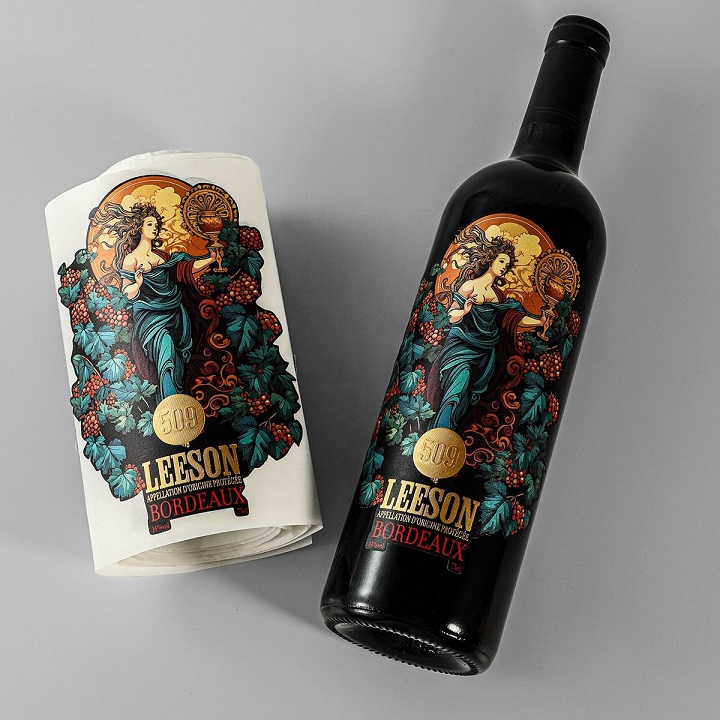
Wine Label Design: Build for Shelf Readability
A wine label should not try to say everything at once. Strong wine-label design uses hierarchy: the most important information is visible first, while secondary details remain easy to find.
The Four-Second Shelf Test
When a customer scans a shelf, the front label should quickly answer:
1. What is the brand?
2. What type of wine is it?
3. What makes it distinctive?
4. Does it look appropriate for the buyer's occasion and budget?
If the label cannot answer those questions quickly, the design may be visually attractive but commercially weak.
Recommended Front-Label Hierarchy
A typical front label may prioritize:
- Brand or winery name
- Wine name or collection name
- Varietal, such as Cabernet Sauvignon, Chardonnay, or Pinot Noir
- Region, vineyard, or appellation when relevant
- Vintage, if applicable
- A visual signature, such as illustration, crest, pattern, icon, or color system
- Net contents or alcohol statement where required or strategically placed
The back label can carry more detailed product information, such as:
- Tasting notes
- Food-pairing suggestions
- Winery story
- Production notes
- Sustainability information
- QR code
- Regulatory text
- Importer, bottler, or producer details
Design Tips for Better Conversion
- Use high contrast between key text and background.
- Keep the wine variety easy to identify from normal shelf distance.
- Avoid overly thin text for essential information.
- Test metallic foil and varnish under both warm and cool retail lighting.
- Leave enough quiet space around logos and high-value product claims.
- Use one consistent color system across varietals so repeat buyers can navigate the range easily.
- Do not place critical text across bottle curves, severe label edges, or foil areas that reduce readability.
- Design the front and back labels as one complete brand system.
Premium Printing Finishes That Increase Perceived Value
Finishing is where a custom wine label can move from "printed sticker" to "premium packaging experience." The best finish is not necessarily the most expensive one; it is the one that supports the brand's intended position.
Matte Lamination
Matte lamination creates a refined, low-glare surface. It works well for minimalist, natural, modern, and luxury wine brands.
Best for: Elegant typography, muted color palettes, premium retail, and soft visual systems.
Gloss Lamination
Gloss provides brightness and visual contrast. It can make bold colors, photography, and fruit-wine graphics appear more vibrant.
Best for: Bright, energetic, high-color, or value-oriented product ranges.
Hot Foil Stamping
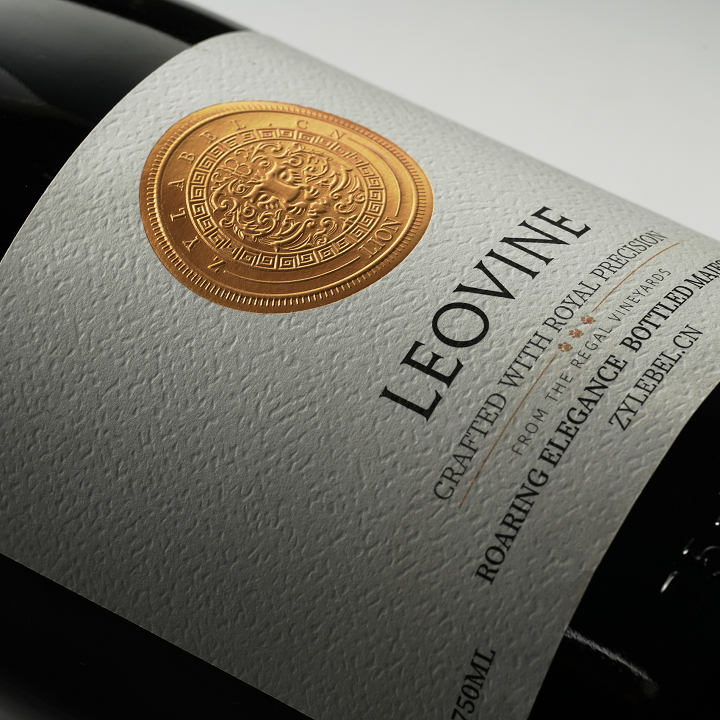
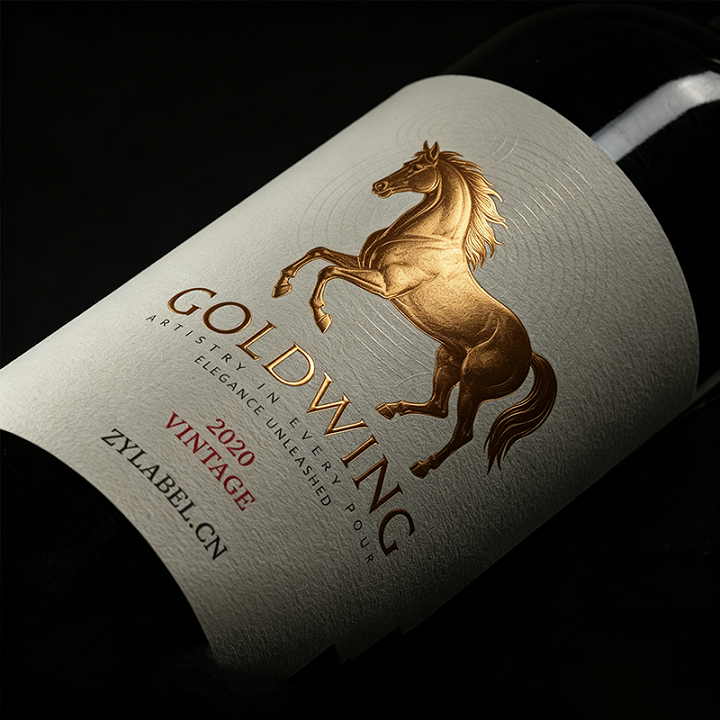
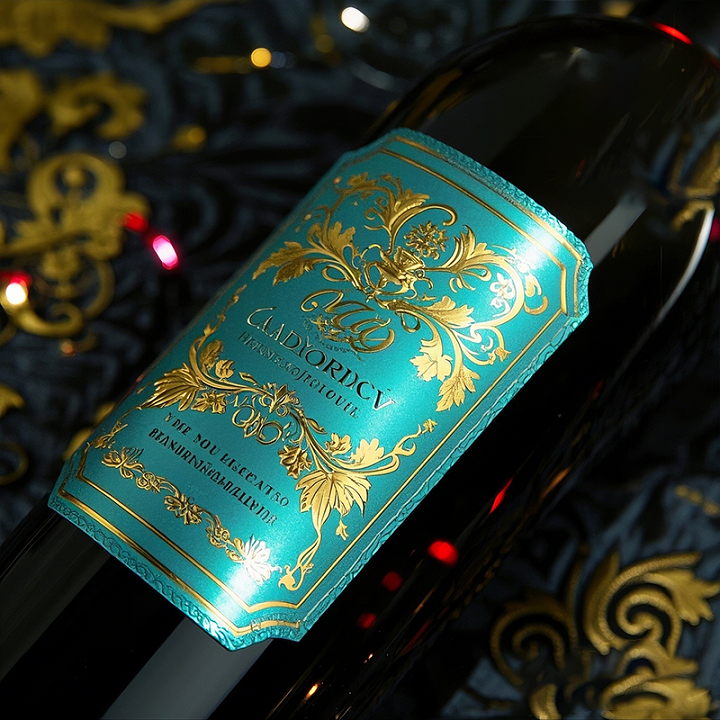
Hot foil can add metallic detail in gold, silver, copper, holographic, or customized colors. It is particularly effective for logos, crests, borders, vintage years, and key brand marks.
Best for: Premium red wines, champagne-style products, luxury gifts, and limited releases.
Embossing and Debossing
Embossing raises selected elements; debossing presses them into the label surface. Both add texture and make the label more memorable through touch.
Best for: Winery logos, monograms, vineyard illustrations, and restrained luxury graphics.
Spot UV
Spot UV applies gloss only to chosen elements, creating contrast against a matte background. It can highlight a logo, wine name, illustration, or pattern without covering the full label in gloss.
Best for: Contemporary brands that want visual detail with controlled cost.
Combining Finishes Strategically
Instead of using every available effect, choose one or two that support the design concept.
For example:
- A heritage Cabernet label may use textured cream paper + blind embossing + gold foil
- A modern rosé label may use matte white film + transparent spot UV pattern
- A premium sparkling wine label may use metallic stock + black foil + high-relief embossing
- A chilled summer wine may use water-resistant matte film + bright color printing
Wine Label Compliance for Export Markets
Custom wine-label printing should begin only after the brand has confirmed its legal labeling content. Printers can reproduce approved artwork accurately, but the winery, importer, or brand owner remains responsible for verifying that mandatory information is correct for each market.
United States: TTB Considerations
In the United States, alcohol producers generally need to apply for a Certificate of Label Approval or COLA, with applicable exemptions and product-specific rules. The Alcohol and Tobacco Tax and Trade Bureau provides wine-label guidance, a mandatory-information checklist, and an interactive "Anatomy of a Wine Label" resource. [ttb]
TTB guidance notes that a numerical alcohol-content statement is mandatory for wines over 14% alcohol by volume. [ttb]
Depending on the product and claim set, required U.S. wine-label information may include:
- Brand name
- Class, type, or other designation
- Alcohol content
- Net contents
- Name and address of bottler, packer, importer, or responsible business
- Country of origin for imported wines
- Required government warning statement
- Sulfite declaration when applicable
- Additional information related to vintage, variety, appellation, or ingredients when claims are made
Important: Regulatory requirements can change and vary by product. Confirm final content with the TTB, qualified compliance professionals, and the relevant importer before printing.
European Union: Ingredients and Nutrition Information
EU wine-label rules changed from 8 December 2023. Wine and aromatised wine products must provide ingredient and nutritional-value information, with operators allowed to place certain information on the physical label or provide it electronically through a dedicated means such as a QR code. [agriculture.ec.europa]
For wine brands exporting to the EU, this creates a practical label-design issue: the bottle may need room for a QR code, required consumer information, language considerations, and traceability elements without losing design clarity.
United Kingdom: Allergen Statements
UK guidance specifies allergen-labeling obligations for wines containing sulphur dioxide above 10 mg/litre and for certain wines treated with milk or egg products above the relevant detectable limits. The wording must include "contains." [gov]
Production recommendation: Create a market-specific artwork version for each export destination. Avoid assuming that a single global label will satisfy the United States, European Union, United Kingdom, Australia, Canada, and other markets.
A Six-Step Process for Ordering Custom Wine Labels
1. Define the Bottle and Application Conditions
Provide:
- Bottle diameter and body shape
- Label placement area
- Front-label and back-label dimensions
- Whether bottles will be refrigerated or placed in ice buckets
- Intended application method: manual or automatic
- Expected storage and transport conditions
This information helps determine the appropriate material and adhesive.
2. Confirm Legal Copy Before Artwork Release
Finalize all mandatory statements, language versions, barcode data, QR destinations, importer information, and market-specific requirements before approving the print file.
Do not treat a label proof as a legal compliance review.
3. Prepare Professional Artwork
For best results, submit:
- AI, PDF, EPS, or other editable vector artwork
- CMYK color files unless spot colors are specified
- Linked images at suitable print resolution
- Outlined fonts or supplied font files
- Bleed and safe-area allowances
- Clear layers for foil, embossing, spot UV, white ink, die lines, and variable data
4. Request Material and Finish Samples
Before a large order, compare samples on the actual bottle. Check:
- Adhesion
- Label curvature
- Color accuracy
- Scratch resistance
- Foil reflection
- Readability
- Condensation performance
- Bottle-to-bottle placement consistency
5. Approve a Final Proof
A final proof should confirm:
- Size
- Die line
- Copy
- Barcode readability
- Regulatory text
- Colors
- Finishes
- Quantity
- Roll direction or sheet format
- Packaging and shipping requirements
6. Plan for Reorders and Seasonal Variations
Save approved production specifications. This makes future reorder cycles more consistent and efficient, especially when your range includes multiple varietals, vintages, regions, and limited editions.
How QR Codes Can Improve Wine Label Engagement
A QR code can extend the wine label beyond the limited physical space of the bottle. EU rules explicitly permit certain ingredients and nutrition information to be offered through a dedicated electronic means, such as a QR code, under the applicable wine-label framework. [agriculture.ec.europa]
Beyond compliance, QR codes can support a stronger direct-to-consumer experience.
A well-designed QR destination may include:
- Ingredient and nutrition information where permitted
- Vineyard story and production details
- Tasting notes
- Food-pairing suggestions
- Winemaker videos
- Sustainability information
- Wine-club registration
- Reorder links
- Event or seasonal campaign content
- Product-authentication or traceability features
Research on connected wine packaging found that product information, including grape variety, wine style, and region of origin, can be important to consumer interaction—particularly among more highly involved wine consumers. [emerald]
Best practice: Do not send customers to a generic homepage. Create a mobile-first landing page for each wine, collection, or campaign.
Common Custom Wine Label Mistakes to Avoid
- Selecting paper stock for a product routinely served in ice buckets
- Designing the label before compliance copy is finalized
- Using tiny type for mandatory information
- Applying foil over text that must remain highly readable
- Forgetting to test the label on the actual bottle curvature
- Using one label version for every export market
- Printing a large volume before approving a physical sample
- Choosing too many effects, which can make a premium label appear visually busy
- Forgetting barcode quiet zones and scan testing
- Using a QR code without testing its destination on mobile devices
Why Work With XingKun for Custom Wine Labels
XingKun is a China-based custom packaging and printing manufacturer serving overseas brands, wholesalers, and manufacturers through OEM and ODM services. In addition to custom wine labels, we support a broader range of printed packaging products, including custom packaging boxes, playing cards, jigsaw puzzles, printed books, stickers, inserts, and promotional packaging components.
This broader production capability can be valuable when a wine project requires more than labels. For example, a complete launch may include:
- Custom wine bottle labels
- Wine gift boxes
- Neck tags
- Bottle stickers
- Tasting-note cards
- Brand story booklets
- Promotional playing cards
- Event packaging
- Retail display packaging
- Mailing inserts
By coordinating these components through one experienced custom-printing partner, brands can achieve stronger visual consistency and simplify communication across a multi-piece campaign.
Conclusion
Custom wine labels are a critical brand and packaging investment. The right label combines distinctive design, correct material selection, reliable adhesion, premium finishing, and market-specific compliance. Whether you are launching a private-label wine, upgrading a winery collection, creating a luxury gift set, or developing a promotional wine campaign, start with the bottle environment and required legal copy—then build the visual experience around them.
XingKun can help turn your approved design into custom printed wine labels and coordinated packaging components for international markets. Send your bottle size, artwork, target market, material preference, quantity, and finishing requirements to request a tailored quotation and sample solution.
FAQ
1. What is the best material for custom wine labels?
The best material depends on how the wine will be stored and served. Textured paper works well for traditional premium bottles kept in dry conditions, while moisture-resistant film materials are often better for refrigerated bottles, ice buckets, and high-humidity environments.
2. Can custom wine labels be waterproof?
Yes. Synthetic film materials, including BOPP-based options, can offer improved water and oil resistance compared with standard paper labels. The adhesive should also be selected based on refrigeration, condensation, and application conditions. [uprinting]
3. What information is required on a wine label?
Requirements depend on the country where the wine is sold. In the United States, relevant information may include brand name, class/type designation, alcohol content, net contents, responsible business details, warning statements, and sulfite declarations where applicable. Consult the official TTB checklist and a compliance professional before printing. [ttb]
4. Can I use a QR code on a wine label?
Yes. QR codes can connect buyers to tasting notes, winery stories, food-pairing content, authenticity tools, and product information. For EU wine products, ingredient and nutrition information may be provided through a dedicated electronic means such as a QR code under applicable rules. [agriculture.ec.europa]
5. What finishes make a wine label look more premium?
Popular premium options include hot foil stamping, embossing, debossing, spot UV, matte lamination, textured paper, metallic materials, and carefully controlled color printing. The best choice depends on your brand style and budget.
6. Should I print front and back wine labels separately?
Often, yes. A front label can focus on brand identity, wine type, and visual appeal, while a back label can carry tasting notes, legal information, QR codes, and producer details. The best structure depends on bottle shape, market rules, and available label space.
7. Can XingKun produce wine gift packaging together with wine labels?
Yes. XingKun's custom-printing scope includes labels, packaging boxes, printed inserts, booklets, stickers, promotional cards, and other coordinated packaging components. This can help brands maintain consistent visuals across a wine gift set or retail launch.
References
1. Escandón-Barbosa, D., et al. "The Impact of the Content of the Label on the Buying Intention of a Wine Consumer." *Frontiers in Psychology*. [Read the study].
2. Alcohol and Tobacco Tax and Trade Bureau (TTB). "Wine Labeling." [View TTB wine-labeling guidance].
3. Alcohol and Tobacco Tax and Trade Bureau (TTB). "Labeling Resources." [View official labeling resources].
4. Alcohol and Tobacco Tax and Trade Bureau (TTB). "Anatomy of a Wine Label." [Explore the official guide].
5. Alcohol and Tobacco Tax and Trade Bureau (TTB). "Checklist of Mandatory Label Information: Wine." [Download the checklist].
6. European Commission. "New Rules for Wine Labelling Enter into Application." [Read the EU announcement].
7. UK Government. "Wine Labelling." [Read UK guidance].
8. International Journal of Wine Business Research. "Connected Wine Packaging in Retail: Quantifying Customer Interaction." [Read the research].
9. UPrinting. "Wine Labels – Custom Bottle Labels." [Review material guidance].
10. XingKun. "Custom Wine Labels." [View XingKun's wine-label product page].


