Content Menu
● Why Electronic Product Packaging Design Matters
● The Core Requirements of Electronics Packaging
>> Product Protection Comes First
>> The Internal Insert Is the Real Protective Engine
>> Packaging Must Match the Distribution Channel
● Choosing the Right Electronic Packaging Box Structure
>> Rigid Boxes for Premium Electronics
>> Folding Cartons for Efficient Retail Packaging
>> Corrugated Packaging for Larger or Heavier Devices
● A Step-by-Step Electronic Packaging Design Process
>> Step 1: Define the Product and Its Risks
>> Step 2: Select the Protection Strategy
>> Step 3: Engineer the Unboxing Journey
>> Step 4: Create Print and Information Hierarchy
>> Step 5: Prototype, Test, Revise, and Approve
● Sustainability and Electronics Packaging Compliance
● Common Electronic Packaging Design Mistakes
>> Choosing the Insert Based Only on Price
>> Ignoring ESD Requirements
>> Designing a Beautiful but Oversized Box
>> Treating Retail and Shipping Packaging as One Problem
>> Adding Too Much Copy to the Package
● How XingKun Supports Custom Electronics Packaging
● Conclusion
● FAQ
>> 1. What is the best packaging material for electronic products?
>> 2. Do electronic products need ESD packaging?
>> 3. What type of box is best for premium electronics?
>> 4. How can I make electronic packaging more sustainable?
>> 5. Should I test electronic product packaging before mass production?
>> 6. What information should be printed on an electronics packaging box?
>> 7. Can XingKun produce custom inserts for electronics packaging?
● References
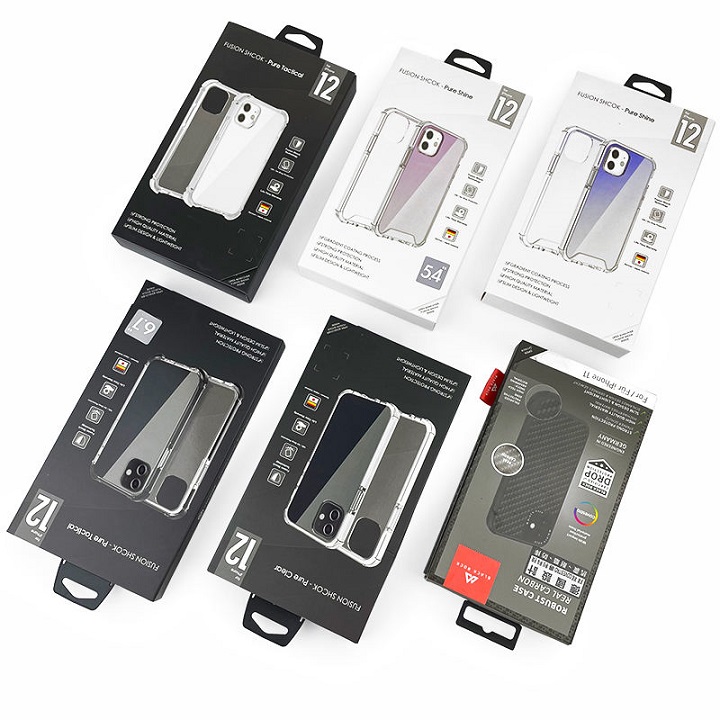
Electronic product packaging design is not just about making a box look premium. For consumer electronics, accessories, components, smart devices, and industrial equipment, the packaging system must protect sensitive products from impact, vibration, moisture, electrostatic discharge (ESD), shipping compression, and handling damage—while also presenting the brand professionally at the point of sale.
At XingKun, we work with brands, wholesalers, and manufacturers that need custom printed electronic packaging boxes for OEM and ODM projects. In practice, the strongest packaging designs begin with one question: what could damage this product between the production line and the end user? Once that risk is understood, the structural design, paperboard selection, internal insert, printing process, and logistics packaging can be engineered around it.
This guide explains how to create effective electronics packaging design for products such as smartphones, chargers, cables, headphones, PC accessories, circuit boards, smart-home devices, beauty electronics, gaming peripherals, and electronic components.
Why Electronic Product Packaging Design Matters
Electronic products are often compact, high-value, and vulnerable to several types of damage at once. A small crack in a housing, scratched screen, crushed retail carton, loose accessory, or ESD-related failure can lead to returns, warranty claims, negative reviews, and lost retailer confidence.
A high-quality electronic packaging design should do four jobs simultaneously:
- Protect the device during storage, handling, and transportation.
- Organize the product, accessories, manuals, cables, and spare parts.
- Communicate product value, specifications, compliance information, and brand identity.
- Support sustainability and efficient logistics without using unnecessary material.
The packaging page for XingKun's electronic packaging boxes highlights a common requirement in this sector: durable custom boxes combined with foam inserts, dividers, or cushioning can help protect sensitive products against physical impact, moisture exposure, and movement during transit. It also emphasizes that a tailored internal fit can improve both product safety and presentation. [xkdisplay]
For a startup launching a premium Bluetooth speaker, for example, the box has to do more than contain the speaker. It may need to secure the product body, charging cable, user guide, warranty card, protective pouch, and accessory compartment in a way that feels intuitive during unboxing. The package also needs to withstand warehouse stacking, parcel drops, and long-distance export shipping.
Good packaging reduces uncertainty. It assures the buyer that the product is well made before they even turn it on.
The Core Requirements of Electronics Packaging
Product Protection Comes First
A visually impressive package is not successful if the electronic product arrives damaged. The structural design must be based on the product's weight, shape, fragility, surface finish, accessory count, shipping route, and retail environment.
Key protection risks include:
| Risk | Typical Cause | Packaging Design Response |
| Impact damage | Drops, rough handling, collisions | EVA foam, EPE foam, molded pulp, corrugated cushioning, reinforced corners |
| Vibration damage | Truck, air, and sea transportation | Tight-fit inserts, dividers, anti-movement cavities |
| Compression | Pallet stacking, warehouse storage | Stronger board grade, corrugated shipper, load-bearing structure |
| Surface scratches | Product movement, abrasive inserts | Soft-touch cavities, tissue paper, protective films, flocked or smooth inserts |
| Moisture exposure | Humid shipping routes or storage | Protective bags, coated paperboard, sealed outer packaging, desiccant where appropriate |
| ESD risk | Static discharge during handling and transport | ESD-safe bags, shielding materials, conductive or dissipative packaging where required |
For ESD-sensitive electronic items, packaging must be treated as part of a broader ESD-control system rather than as a decorative afterthought. ANSI/ESD S541 defines packaging-material properties intended to protect electrostatic discharge-sensitive items during production, transport, and storage; IEC 61340-5-3 is technically equivalent to this standard. [esda]
This matters especially for:
- Printed circuit boards and PCB assemblies
- Semiconductor components
- Sensors and modules
- Memory devices
- Computer hardware
- Industrial control electronics
- Precision electronic parts
A standard paper box may be suitable as the outer retail package, but it is not automatically an ESD-protective solution. When ESD is a concern, the product may require an appropriate inner layer, such as shielding bags or ESD-safe material, before it is placed inside the printed carton.
The Internal Insert Is the Real Protective Engine
Many brands spend most of their design time on the outer box graphics. However, from a packaging-engineering perspective, the insert is often the most important component.
The insert keeps the product centered, prevents movement, separates accessories, manages unboxing order, and absorbs force. The ideal option depends on product positioning, fragility, sustainability goals, and budget.
| Insert Type | Best For | Strengths | Considerations |
| EVA foam | Premium electronics, cameras, tools, medical devices | Excellent fit, clean appearance, strong cushioning | Less ideal for brands pursuing paper-only recycling |
| EPE foam | Heavier devices and shipping protection | Economical, lightweight, shock absorption | Appearance is less premium than EVA |
| Molded pulp | Eco-focused consumer electronics | Renewable look, good product positioning, reduced plastic use | Requires careful geometry and tolerance planning |
| Paperboard insert | Chargers, cables, lightweight accessories | Recyclable, printable, cost-efficient | Limited cushioning for fragile products |
| Corrugated insert | Larger devices and export cartons | Strong, flexible, efficient for shipping | May need additional surface protection |
| PET, PVC, or PETG blister | Retail display and visible product presentation | Precise shape, product visibility | Recycling and market requirements must be assessed |
XingKun offers multiple add-on insert options, including corrugated dividers, folding-carton dividers, natural kraft corrugated inserts, standard white corrugated inserts, HIPS blister inserts, PETG blister inserts, and PVC blister inserts. The best choice should be made after reviewing the product's protection requirements—not simply by choosing the lowest-cost insert. [xkdisplay]
Packaging Must Match the Distribution Channel
A package for a retail shelf is different from a package shipped directly to a consumer. A package moving by sea freight from China to an overseas warehouse has different risks from one delivered locally to a boutique retailer.
Before approving the box structure, define the distribution model:
1. Retail packaging only
The product will be placed inside a separate master carton or shipping carton before transport.
2. E-commerce-ready packaging
The product may be shipped through parcel networks and needs stronger protection against repeated handling, vibration, and drops.
3. Export packaging for distributors
The product may travel by sea, air, truck, and warehouse storage before reaching regional markets.
4. Industrial or B2B component packaging
Protection, part identification, ESD safety, batch control, and traceability may matter more than shelf appearance.
Transit testing should be part of the decision process for products with meaningful value, fragile parts, or large shipment volumes. ISTA describes its 3-Series procedures as general simulation performance tests that reproduce damage-producing movements, forces, conditions, and transport sequences in a laboratory environment. UL also notes that ISTA packaging tests can provide documentation for the ISTA "Transit Tested" program and include procedures such as ISTA 1A for packaged products weighing up to 150 lb (68 kg). [ista]
Expert recommendation: Do not wait for recurring customer complaints before validating packaging. Test the package during development, especially if the product is expensive, fragile, exported internationally, or sold through parcel delivery channels.
Choosing the Right Electronic Packaging Box Structure
Rigid Boxes for Premium Electronics
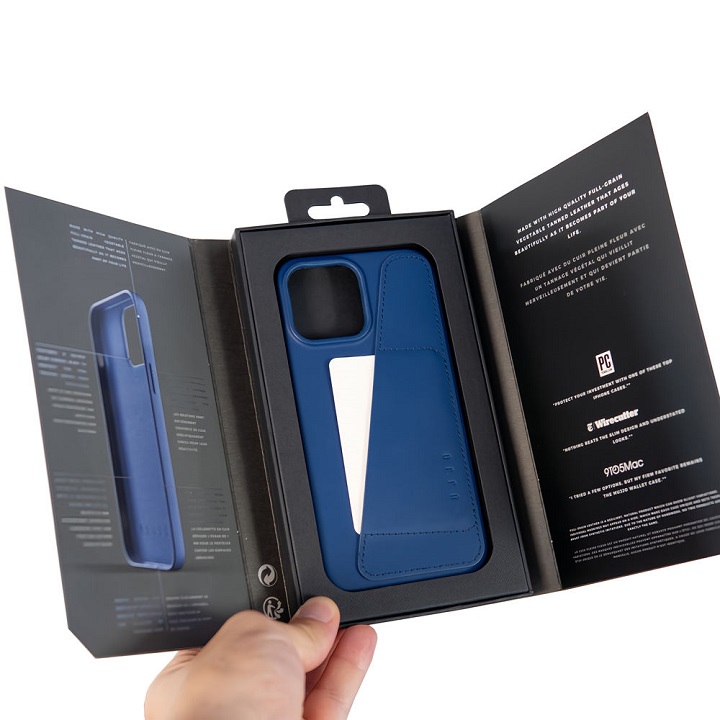
A rigid box, also called a setup box, is a strong choice for high-end electronics that rely on presentation and perceived value. Common applications include premium headphones, smartwatches, speakers, beauty devices, luxury tech accessories, and gift-oriented products.
Typical structures include:
- Lid-and-base rigid boxes
- Magnetic closure boxes
- Drawer-style boxes
- Shoulder-and-neck boxes
- Book-style magnetic boxes
- Two-piece premium presentation boxes
A rigid box creates a deliberate unboxing sequence. The customer opens the lid, sees a printed message or brand statement, discovers the device in a fitted insert, and accesses accessories in a separate compartment. This can make a relatively small electronic item feel more substantial and valuable.
For premium projects, consider:
- Soft-touch lamination for a smooth, tactile finish
- Anti-scratch lamination for dark or solid-color packaging
- Hot foil stamping for logos, premium accents, and product names
- Embossing or debossing to add physical depth to the brand mark
- Spot UV to highlight product imagery or selected graphics
- Pantone color matching for stronger brand consistency
XingKun's available finishing options include aqueous coating, UV coating, spot gloss UV, varnish, lamination, anti-scratch lamination, soft-touch or silk lamination, hot foil stamping, blind embossing, blind debossing, registered embossing, cold foil printing, and window patching. [xkdisplay]
Folding Cartons for Efficient Retail Packaging
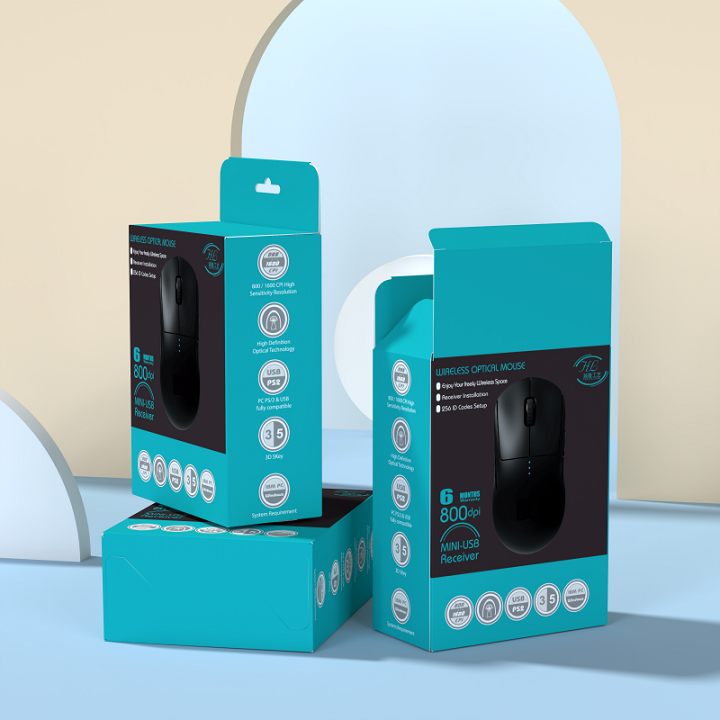
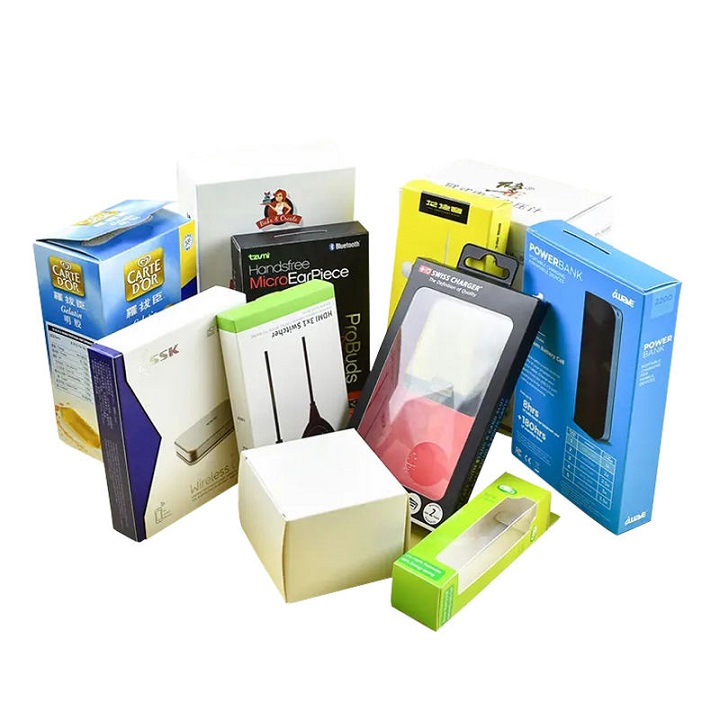
Folding cartons are widely used for lightweight electronics and accessories because they are cost-effective, printable, flat-packed before assembly, and efficient for high-volume production.
They work particularly well for:
- Phone chargers
- USB cables
- Earbuds
- Power banks
- LED products
- Small smart-home devices
- Computer accessories
- Replacement parts
- Electronic beauty tools
A folding carton can be paired with a paperboard insert, molded pulp tray, or blister insert. For an economy or mid-market product, this combination can create a professional retail presentation without the cost and weight of a rigid box.
The key is to avoid creating a carton that is oversized relative to the product. Excess empty space increases the risk of movement, raises material consumption, and makes shipping less efficient.
Corrugated Packaging for Larger or Heavier Devices
For monitors, appliances, tools, gaming equipment, industrial products, and larger electronics, corrugated packaging is often necessary. Corrugated board provides greater cushioning and compression resistance than standard paperboard cartons.
A strong corrugated electronic packaging design may include:
- Double-wall corrugated cartons for heavier items
- Die-cut corrugated inserts
- Corner protectors
- Honeycomb paper protection
- Internal dividers for multi-unit shipments
- Printed handling icons
- Product identification and barcode labels
- Master-carton stacking guidance
For international shipping, the outer carton should be designed alongside the inner retail box. The retail carton protects the brand experience; the shipping carton protects the entire product-and-retail-package system.
A Step-by-Step Electronic Packaging Design Process
The most reliable custom packaging projects follow a structured development process. Skipping early technical decisions often leads to late changes, higher tooling costs, weak protection, or inconsistent production results.
Step 1: Define the Product and Its Risks
Prepare a product brief before requesting a quotation or dieline. Include:
- Product dimensions, weight, and tolerances
- Product photos or 3D renderings
- Fragile areas such as screens, lenses, ports, buttons, or corners
- Surface finish requirements
- Accessories, manuals, cables, chargers, and spare parts
- Target retail channel and shipping method
- Expected annual order quantity
- Required certifications, warning labels, and market language
- Sustainability requirements
- Brand guidelines and print files
A professional packaging manufacturer can use this information to recommend an appropriate box style and insert system.
Step 2: Select the Protection Strategy
Decide how the product will be secured. The simplest rule is: the product should not move inside the package under normal handling conditions.
For example:
- A lightweight USB cable may only need a folding carton and paper insert.
- A glass-fronted smart display may need a rigid carton, protective wrap, EVA or molded-pulp supports, and a corrugated shipping carton.
- A PCB assembly may require ESD-safe inner packaging plus a labeled outer carton.
Step 3: Engineer the Unboxing Journey
Electronic product packaging design should guide the customer naturally.
A practical sequence often looks like this:
1. Open the outer box.
2. See the product or a branded welcome message.
3. Remove the main device safely.
4. Find cables and accessories in a clearly defined compartment.
5. Access the quick-start guide and compliance documents.
6. Reuse or recycle packaging without confusion.
Avoid placing small accessories loosely beneath the device. This increases loss risk and makes the package feel disorganized. Use dividers, envelopes, die-cut trays, or dedicated accessory boxes.
Step 4: Create Print and Information Hierarchy
The outer packaging should answer the buyer's most important questions quickly:
- What is the product?
- What problem does it solve?
- What are the main features?
- Which model, color, capacity, or specification is included?
- What is inside the box?
- Which compatibility or safety information matters?
- Where can the customer find setup instructions or support?
Use a hierarchy rather than covering every panel with dense text.
A useful layout approach is:
| Panel | Primary Job |
| Front | Product name, hero image, key brand message |
| Side panel | Features, specifications, compatibility, icons |
| Back | Detailed benefits, product diagram, comparison details |
| Bottom | Barcodes, SKU, legal marks, manufacturing information |
| Inside lid or insert | Setup guidance, brand story, QR code, thank-you message |
A QR code can link to a setup video, digital manual, warranty registration page, troubleshooting guide, or product authenticity page. This reduces printed documentation while creating a direct post-purchase support path.
Step 5: Prototype, Test, Revise, and Approve
Never rely solely on a digital mockup. Request a physical sample when the design includes custom inserts, tight tolerances, premium finishes, or export requirements.
Review the sample for:
- Product fit
- Insert stability
- Opening and closing experience
- Print color accuracy
- Logo placement
- Barcode scan quality
- Readability of small text
- Resistance to scratching
- Carton assembly speed
- Shipping-carton fit
Then test the packaged product under realistic conditions. This can include basic in-house drop evaluation, vibration checks, compression evaluation, and, where appropriate, formal ISTA testing.
Sustainability and Electronics Packaging Compliance
Sustainability is increasingly a commercial and regulatory issue rather than only a brand-positioning choice. Buyers expect less unnecessary material, clearer recycling information, and packaging that does not make responsible disposal difficult.
For electronic product packaging design, practical sustainability improvements include:
- Reducing oversized cartons and unused void space
- Replacing non-essential plastic components with paperboard or molded pulp
- Designing for easy separation of materials
- Selecting recyclable paper-based structures where product protection allows
- Limiting complex mixed-material combinations
- Using water-based or soy/vegetable-based inks when appropriate
- Consolidating instructions through QR codes and digital manuals
- Designing inserts that use less material while maintaining product stability
XingKun lists water-based inks and soy/vegetable-based inks among its available ink options, alongside offset, digital, UV, and Scodix digital-enhancement printing methods. [xkdisplay]
For brands selling into the European Union, packaging compliance should be reviewed early. The EU Packaging and Packaging Waste Regulation, Regulation (EU) 2025/40, entered into force on 11 February 2025 and generally applies from 12 August 2026. It covers all packaging and packaging waste, regardless of material or origin, and includes requirements relating to manufacturing, composition, and the reusable or recoverable nature of packaging placed on the EU market. [environment.ec.europa]
The European Commission also states that all packaging should be recyclable by 2030 under the new framework. For exporters, this means design teams should not view recyclability as a last-minute marketing claim. It should influence material selection, insert construction, adhesives, coatings, and the overall number of material types used in a package. [environment.ec.europa]
Important note: Regulatory obligations vary by market, product category, packaging format, and supply-chain role. Brands should obtain qualified legal or compliance advice for the countries in which they sell.
Common Electronic Packaging Design Mistakes
Even attractive packages can fail if the technical decisions are weak. The following issues appear frequently in electronics packaging projects.
Choosing the Insert Based Only on Price
The cheapest insert may not protect the product. A loose paper insert can allow a device to shift, while an overly dense foam may add cost without improving protection.
Better approach: Match the insert to the product's weight, fragility, surface, shipping route, and desired unboxing experience.
Ignoring ESD Requirements
Not all electronics require specialized ESD packaging, but sensitive components can be harmed by static discharge. Standard packaging materials alone should not be assumed to provide ESD protection.
Better approach: Identify ESD-sensitive items early and specify packaging materials based on the product's actual handling and protection requirements. ANSI/ESD S541 specifically addresses packaging materials for protecting ESD-sensitive items throughout production, transport, and storage. [esda]
Designing a Beautiful but Oversized Box
Large boxes can make a product look premium, but excessive empty space can increase freight cost, waste material, and create more opportunity for movement and damage.
Better approach: Use structural design, print finishes, and a well-engineered insert—not unnecessary volume—to create a premium impression.
Treating Retail and Shipping Packaging as One Problem
A luxury rigid box may be ideal for retail presentation but inadequate as a standalone parcel-shipping package.
Better approach: Develop a layered system: retail box, protective inner packaging, and shipping carton. Each layer should have a defined job.
Adding Too Much Copy to the Package
Crowded text reduces readability and can make premium products look inexpensive or confusing.
Better approach: Prioritize the essential product message on the box and move longer instructions, videos, comparisons, and troubleshooting resources to a QR-linked digital experience.
How XingKun Supports Custom Electronics Packaging
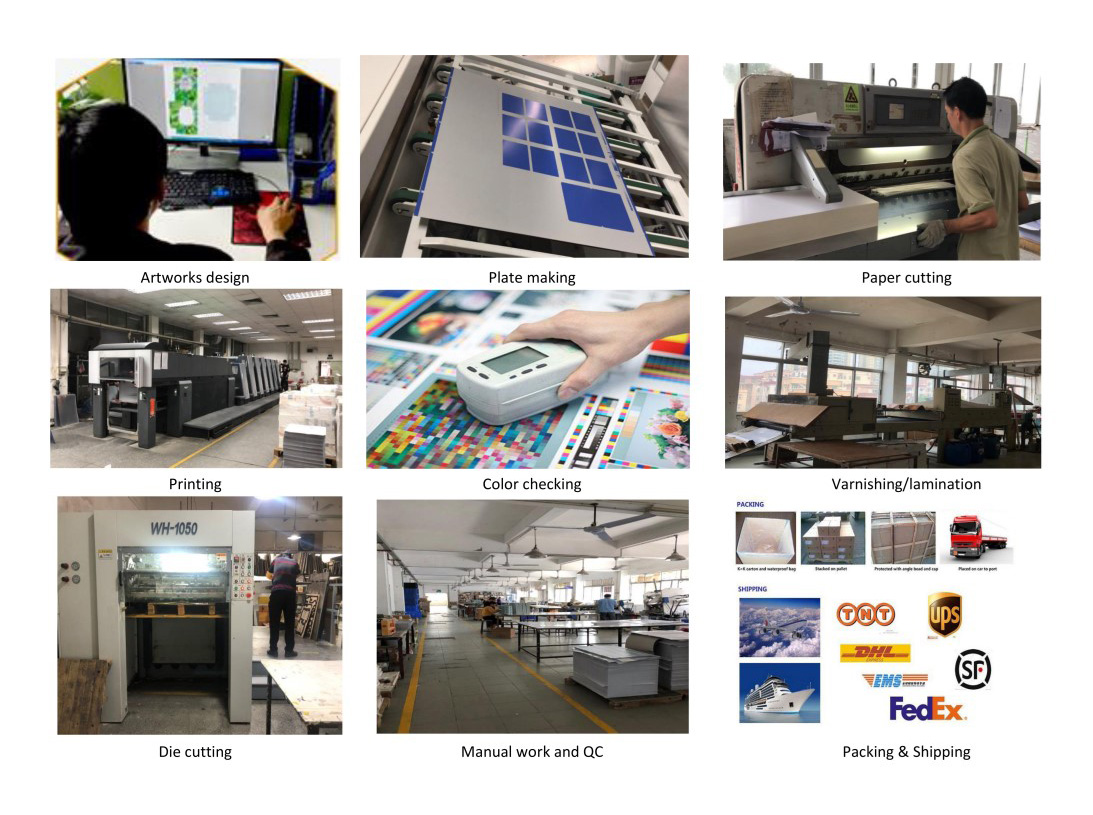
Shenzhen XingKun Packing Products Co., Ltd. provides OEM and ODM custom packaging solutions for overseas brands, wholesalers, and manufacturers. For electronic product packaging projects, our role is to help customers translate product requirements into a practical packaging system that balances appearance, protection, production efficiency, and cost.
Our electronic packaging box capabilities include:
- Custom box sizes and structural designs
- Folding cartons and premium presentation packaging
- Paperboard and corrugated packaging options
- Custom foam, paperboard, blister, and corrugated inserts
- Offset, digital, UV, and specialty print processes
- Pantone and metallic color options
- Premium finishing such as foil stamping, embossing, and soft-touch lamination
- Packaging development for retail, e-commerce, wholesale, and export distribution
The goal is not simply to print a box. It is to help build a packaging system that fits the product accurately, reinforces the brand, and supports reliable international delivery.
Conclusion
Effective electronic product packaging design combines engineering and brand storytelling. The outer carton creates the first impression, but the internal insert, material selection, ESD strategy, shipping protection, and compliance planning determine whether the product reaches the customer safely and professionally.
For electronics brands, the best approach is to start with product risk assessment, select the right box and insert combination, validate the design with physical samples and testing, and reduce unnecessary material wherever possible. A well-designed package can lower damage rates, improve unboxing satisfaction, support sustainability goals, and increase the perceived value of the product.
If you are developing custom packaging for electronic devices, accessories, components, or retail-ready tech products, contact XingKun with your product dimensions, product photos, quantity, target market, and packaging requirements. Our team can help you evaluate the right box structure, insert solution, printing method, and finishing options for your OEM or ODM project.
FAQ
1. What is the best packaging material for electronic products?
There is no single best material. Lightweight accessories may use folding cartons with paper inserts, while premium or fragile electronics may require rigid boxes with EVA foam, molded pulp, or corrugated protection. The right option depends on product weight, fragility, shipping route, sustainability goals, and target cost.
2. Do electronic products need ESD packaging?
Not every finished consumer electronic product needs ESD-specific packaging. However, ESD-sensitive components, PCBs, semiconductors, modules, and precision assemblies may require protective materials as part of an ESD-control program. ANSI/ESD S541 and IEC 61340-5-3 provide recognized packaging-property requirements for protecting ESD-sensitive items. [esda]
3. What type of box is best for premium electronics?
Rigid boxes are often the best choice for premium electronics because they provide a strong tactile experience, durable construction, and a controlled unboxing sequence. Magnetic boxes, drawer boxes, and lid-and-base boxes are common options for premium headphones, smart devices, beauty electronics, and gift-ready technology products.
4. How can I make electronic packaging more sustainable?
Use a right-sized box, minimize empty space, reduce unnecessary plastic, choose recyclable paper-based materials where suitable, simplify mixed-material constructions, and consider molded pulp or paperboard inserts. You can also use QR codes for digital instructions to reduce printed manuals. For EU-bound packaging, review PPWR requirements early in the design process. [environment.ec.europa]
5. Should I test electronic product packaging before mass production?
Yes. Physical sampling and transit testing are strongly recommended for fragile, high-value, export, and e-commerce products. ISTA simulation procedures are designed to evaluate packaging against transport-related motions, forces, conditions, and sequences that can cause damage. [ista]
6. What information should be printed on an electronics packaging box?
Common content includes the product name, model number, features, specifications, compatibility information, box contents, warning statements, barcode, SKU, compliance marks, country-of-origin information, customer-support details, and a QR code linking to setup or warranty resources. Requirements vary by market and product type.
7. Can XingKun produce custom inserts for electronics packaging?
Yes. XingKun can support custom internal packaging options such as corrugated dividers, folding-carton dividers, natural kraft corrugated inserts, standard white corrugated inserts, HIPS blister inserts, PETG blister inserts, and PVC blister inserts, along with other tailored protective configurations based on the product. [xkdisplay]
References
1. XingKun Printing Products. "Electronic Packaging Box." Product capabilities, materials, printing processes, finishes, and insert options. [https://www.xkdisplay.com/electronic-packaging-box.html] [xkdisplay]
2. European Commission. "Packaging Waste Regulation." Overview of EU packaging requirements, including the objective that all packaging be recyclable by 2030. [https://environment.ec.europa.eu/topics/waste-and-recycling/packaging-waste/packaging-packaging-waste-regulation_en] [environment.ec.europa]
3. European Commission. "Packaging Waste." Information on Regulation (EU) 2025/40, its entry into force on 11 February 2025, and general application from 12 August 2026. [https://environment.ec.europa.eu/topics/waste-and-recycling/packaging-waste_en] [environment.ec.europa]
4. EOS/ESD Association. "ANSI/ESD S541-2026: ESD Association Standard for the Protection of Electrostatic Discharge Susceptible Items—Packaging Materials." [https://www.esda.org/store/standards/product/463/ansiesd-s541-2026/] [esda]
5. International Safe Transit Association. "Test Procedures." Description of ISTA 3-Series general simulation performance tests. [https://ista.org/test_procedures.php] [ista]
6. UL Solutions. "ISTA Packaging Test and Certification." Overview of ISTA testing and Transit Tested documentation. [https://www.ul.com/services/ista-packaging-test-and-certification] [ul]


