Content Menu
● Quick Comparison: Foldable Tote Bags vs Rigid Shopping Bags
● What Are Foldable Tote Bags?
>> Why Foldable Tote Bags Are Popular
● What Are Rigid Shopping Bags?
>> Why Rigid Shopping Bags Create a Premium Impression
● Material Comparison and Performance
● Foldable Tote Bags: Key Advantages
>> Compact Storage and Better Logistics
>> Strong Repeat-Use Potential
>> Flexible Design Options
>> Better Fit for Promotional Campaigns
● Rigid Shopping Bags: Key Advantages
>> Premium Brand Presentation
>> Better Product Support
>> Superior Surface for Luxury Finishes
● Real-World Decision Framework
>> Choose Foldable Tote Bags When You Need:
>> Choose Rigid Shopping Bags When You Need:
>> Consider a Hybrid Strategy When You Need Both
● The Environmental Question: Reuse Matters More Than Labels
>> Practical Design Choices That Encourage Reuse
● Cost Comparison: Look Beyond Unit Price
● Expert Checklist Before Production
● Final Verdict: Which Shopping Bag Should You Choose?
● FAQ
>> 1. Are foldable tote bags more durable than rigid shopping bags?
>> 2. Which is better for luxury retail: a foldable tote bag or a rigid shopping bag?
>> 3. Can rigid shopping bags be customized with foil stamping and embossing?
>> 4. What material is best for foldable reusable tote bags?
>> 5. Do foldable tote bags reduce shipping costs?
>> 6. How do I choose the right size for a custom shopping bag?
>> 7. What information should I provide to request a tote bag quotation?
● References
Choosing between foldable tote bags and rigid shopping bags is not simply a matter of appearance. For retailers, brand owners, distributors, and promotional-product buyers, the choice affects shipping efficiency, in-store presentation, customer convenience, product protection, repeat exposure, and total procurement cost.
At Shenzhen XingKun Packing Products Co., Ltd., we have spent more than 20 years producing custom tote bags, printed packaging, and branded paper products for customers in over 30 countries and regions. In practical sourcing conversations, we see one key pattern repeatedly: foldable tote bags win when portability and repeat use matter most, while rigid shopping bags win when premium presentation and structural protection are the priority.
This guide compares foldable tote bags vs rigid shopping bags from the perspective of a printing and packaging manufacturer. It will help you choose the right bag construction, material, printing method, handle style, and order strategy for your product and market.
Quick Comparison: Foldable Tote Bags vs Rigid Shopping Bags
| Comparison Factor | Foldable Tote Bags | Rigid Shopping Bags |
| Main purpose | Reusable carrying, promotions, events, daily shopping | Premium retail packaging, gifting, luxury presentation |
| Structure | Flexible, lightweight, collapsible | Firm, upright, reinforced |
| Storage efficiency | Excellent; folds flat into a small size | Lower; occupies more warehouse space |
| Shipping volume | Usually lower | Usually higher, especially when assembled |
| Product protection | Moderate, depending on material and gusset | Stronger protection for boxed, delicate, or heavy items |
| Brand perception | Practical, modern, eco-conscious, casual | Premium, elegant, high-value, gift-ready |
| Typical materials | Cotton, canvas, non-woven PP, RPET, nylon, polyester | Coated paperboard, kraft board, art paper, specialty paper |
| Reusability | Often high | Moderate to high, depending on construction and customer behavior |
| Printing area | Large, but material texture may affect fine detail | Broad and smooth; ideal for detailed branding and finishes |
| Best for | Supermarkets, exhibitions, lifestyle brands, bookstores, promotions | Fashion, cosmetics, jewelry, wine, boutiques, gift brands |
| Cost profile | Often economical for large promotional volumes | Higher unit cost due to board, reinforcement, finishing, and assembly |
| Customer convenience | Excellent for travel and everyday use | Excellent for carrying purchases immediately, less convenient after use |
The best option is not always the lowest-cost bag. A successful packaging decision considers the full journey: factory production, freight, storage, in-store use, customer experience, reuse potential, and brand visibility after purchase.
What Are Foldable Tote Bags?
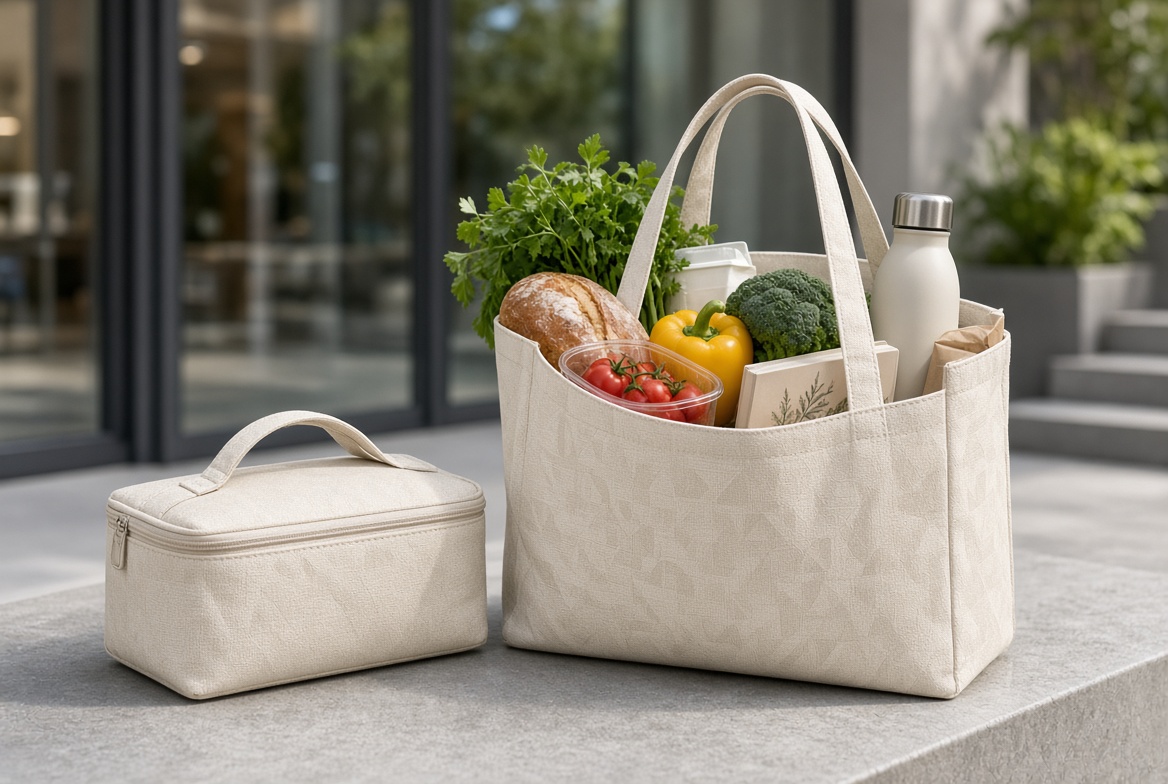
Foldable tote bags are soft, flexible bags designed to collapse flat or fold into a compact shape. They may include a sewn pouch, elastic loop, snap closure, drawstring, or integrated pocket that allows customers to store the bag easily in a handbag, backpack, vehicle, or desk drawer.
Common foldable tote bag materials include:
- Non-woven polypropylene (PP) for economical promotional programs
- RPET fabric for campaigns using recycled-material positioning
- Polyester for lightweight, durable, water-resistant designs
- Nylon for compact foldable shopping bags and travel bags
- Cotton for natural-looking reusable tote bags
- Canvas for heavier-duty and longer-lasting branded bags
A foldable tote bag is generally a functional marketing item rather than only a package. Once customers take it home, it can continue to carry groceries, books, clothing, office supplies, or travel essentials. This repeated use creates more opportunities for a printed logo, slogan, illustration, or campaign message to be seen.
Why Foldable Tote Bags Are Popular
The central advantage is portability. A customer is more likely to reuse a bag if it is easy to carry when empty. A large tote that stays at home may still be useful, but a foldable version can travel with the customer daily.
From a packaging-production viewpoint, foldable tote bags are also highly customizable. Brands can adjust:
- Bag dimensions and gusset depth
- Fabric weight and texture
- Handle length and handle material
- Folded pouch design
- Inside and outside printing
- Zipper, snap, hook-and-loop, or drawstring closures
- Woven labels, care labels, hangtags, and barcode labels
- Reinforced stitching for heavier loads
For high-volume campaigns, the bag can become part of the customer acquisition strategy. For example, a grocery retailer may offer a compact foldable RPET tote bag as a membership reward. A beauty brand may include a printed nylon tote in a seasonal gift set. An event organizer may distribute branded non-woven foldable bags for brochures, samples, and giveaways.
What Are Rigid Shopping Bags?
Rigid shopping bags are structured retail bags made with heavier paperboard or reinforced paper materials. They are designed to retain their shape, stand upright, support heavier goods, and present products in a more polished way.
They are often called:
- Luxury paper bags
- Premium retail bags
- Rigid paper shopping bags
- Boutique shopping bags
- Gift bags with handles
- Reinforced paper carrier bags
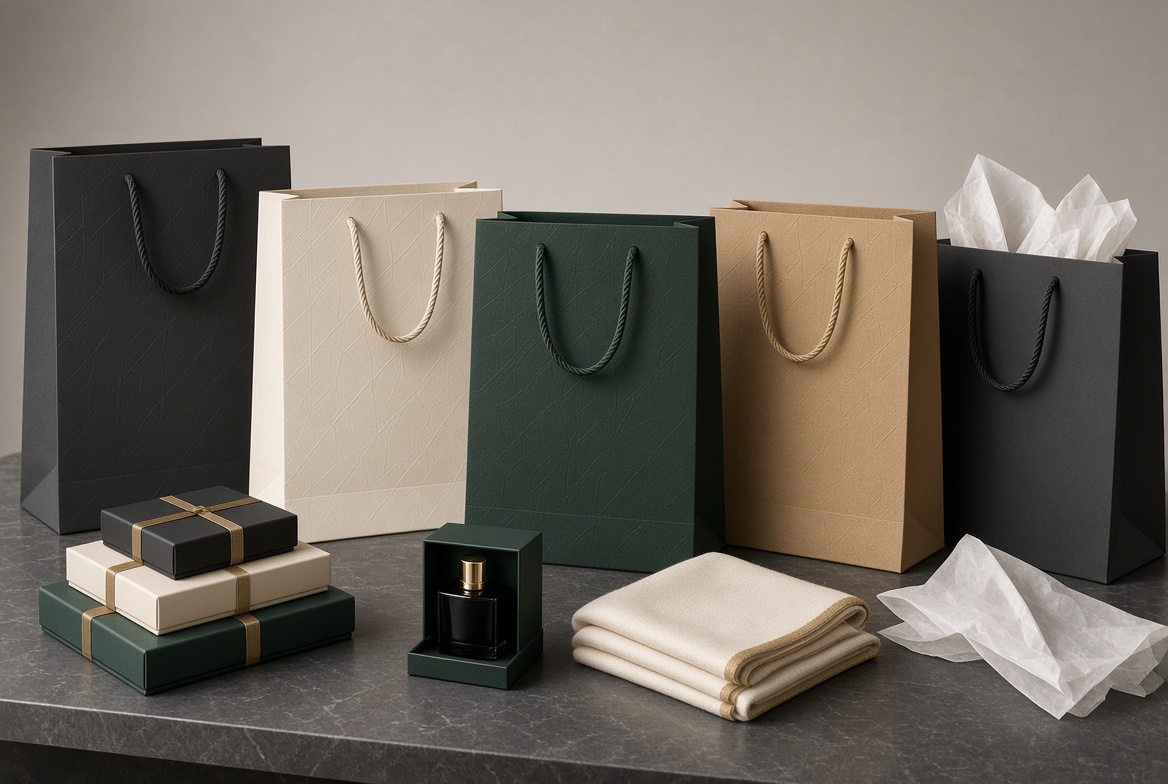
A typical rigid shopping bag may include a thick paperboard body, folded top edge, reinforced bottom board, cardboard handle patches, and rope handles. Depending on the desired look, it may be made from kraft paper, coated art paper, specialty paper, textured paper, or laminated paperboard.
Why Rigid Shopping Bags Create a Premium Impression
Rigid shopping bags communicate value through physical cues. The firm side panels, clean edges, solid handles, and upright profile can make even a simple product feel more considered and gift-worthy.
This is especially important when the bag becomes part of the retail display. In fashion boutiques, perfume stores, jewelry shops, department stores, premium food stores, and gift retailers, a structured bag may be seen by many people immediately after purchase. The packaging acts as a moving brand sign.
Rigid shopping bags also offer a broad, flat print surface. This makes them particularly suitable for:
- High-resolution logo printing
- Brand color matching
- Large photographic designs
- Metallic foil stamping
- Embossing and debossing
- Spot UV finishes
- Matte or gloss lamination
- Textured paper effects
- Ribbon, cotton, satin, or twisted rope handles
For brands that rely on visual storytelling, the bag can become an extension of the store interior, product box, website design, and advertising campaign.
Material Comparison and Performance
Material selection has a major effect on bag usability, print quality, perceived value, and expected service life.
| Material | Typical Bag Type | Strength | Print Appearance | Best Application |
| Non-woven PP | Foldable tote bag | Moderate | Good for bold graphics | Trade shows, promotions, supermarkets |
| RPET | Foldable tote bag | Moderate to high | Good, depending on fabric weave | Sustainability-focused campaigns |
| Polyester | Foldable tote bag | High | Bright color reproduction | Travel, sports, retail giveaways |
| Nylon | Foldable tote bag | High | Crisp and lightweight | Compact shopping and travel bags |
| Cotton | Foldable tote bag | Moderate | Natural, textured look | Lifestyle brands, bookstores, cafés |
| Canvas | Foldable tote bag | High | Premium and durable | Heavy-duty retail and long-term use |
| Kraft paper | Rigid shopping bag | Moderate to high | Natural, authentic appearance | Organic goods, food, apparel |
| Coated art paper | Rigid shopping bag | High with reinforcement | Excellent for detailed artwork | Cosmetics, fashion, gifting |
| Specialty paper | Rigid shopping bag | Varies | Distinctive tactile surface | Luxury retail and premium launches |
A practical rule is simple: fabric bags are better for repeated carrying; reinforced paper bags are better for immediate presentation and product protection.
However, this does not mean a rigid shopping bag cannot be reused. Many customers keep attractive premium paper bags for gifting, storage, office organization, or future purchases. The difference is that foldable tote bags are intentionally designed for regular transport, while rigid shopping bags are commonly designed around the original purchase moment.
Foldable Tote Bags: Key Advantages
Compact Storage and Better Logistics
A foldable tote bag can be flattened or packed into a small pouch. This makes it easier for customers to keep and reuse. It can also improve inventory handling for retailers that need to store thousands of units in limited backroom space.
For international buyers, freight planning matters. Flexible fabric bags often pack more efficiently than pre-assembled rigid bags. The final result depends on material thickness, folding method, handle type, packaging method, and carton dimensions, but compact designs can reduce unused shipping volume.
Strong Repeat-Use Potential
A bag only delivers long-term value when customers actually use it again. Foldable totes have a major behavioral advantage because they are convenient to bring along before a purchase takes place.
A customer may use a compact bag for:
- Grocery shopping
- Daily commuting
- Travel and airport shopping
- Library books
- Gym clothing
- School supplies
- Trade-show materials
- Small retail purchases
The more useful the bag is, the longer the brand message can remain visible.
Flexible Design Options
Fabric tote bags support a wide range of visual styles, from minimalist one-color logos to all-over patterns. Screen printing is often suitable for bold graphics and high-volume production. Heat transfer, digital printing, sublimation, embroidery, and woven labels may be appropriate depending on the fabric, artwork complexity, quantity, and target budget.
For a promotional tote, simplicity often performs best. A clear logo, recognizable color, strong typeface, and short message can remain visible at a distance. For a fashion or lifestyle tote, an illustrated pattern or seasonal artwork can turn the bag into a desirable accessory.
Better Fit for Promotional Campaigns
If your objective is broad distribution rather than premium packaging, foldable tote bags can offer a stronger cost-to-impression ratio. They are suitable for loyalty programs, retail giveaways, expos, product launches, subscription boxes, and branded merchandise.
For example, a bookstore chain could offer a foldable cotton tote with a limited-edition illustration during a reading festival. The bag carries books during the event, then continues appearing in cafés, public transport, campuses, and offices long after the original purchase.
Rigid Shopping Bags: Key Advantages
Premium Brand Presentation
Rigid shopping bags perform exceptionally well when the purchase is emotional, visual, or gift-oriented. They make the handover moment feel more deliberate.
A sturdy bag can reinforce the perception that the contents are high quality. This matters for products such as skincare, luxury accessories, fashion items, candles, premium tea, wine, chocolates, electronics, and corporate gifts.
The material and finishing choices are part of the message. A matte black bag with black cotton rope handles and subtle foil branding communicates something very different from a natural kraft bag with twisted paper handles.
Better Product Support
The firm structure of a rigid shopping bag helps protect items during in-store handling and transport. Reinforced bottoms can provide extra support for heavier products, while side gussets create useful interior volume.
Rigid bags are often a stronger choice for:
- Fragile glass bottles
- Boxed cosmetics
- Gift sets
- Folded apparel
- Shoes
- Jewelry boxes
- Premium food products
- Catalogs and printed materials
- Corporate presentation kits
When selecting bag dimensions, do not only measure the product. Consider tissue paper, inserts, protective wrapping, product boxes, and the space required for easy packing by store staff.
Superior Surface for Luxury Finishes
A smooth paperboard surface gives printers more control over color and fine visual detail. This is valuable when a brand needs accurate color reproduction, small typography, thin lines, photographic images, or decorative finishes.
Common premium combinations include:
- Matte lamination with hot foil stamping
- Soft-touch lamination with debossed logos
- Kraft paper with white ink printing
- Uncoated textured paper with blind embossing
- Gloss lamination with spot UV graphics
- Colored paper with matching rope handles
- Art paper bags with ribbon handles for gifting
These details can increase unit cost, but they can also make the packaging memorable enough to support a higher perceived product value.
Real-World Decision Framework
When clients ask us which bag is "better," our answer is always: better for what business objective?
Use the following framework before requesting a quotation.
Choose Foldable Tote Bags When You Need:
- A bag customers can carry every day
- A practical giveaway for events or promotions
- Lower storage volume before distribution
- A reusable branded item for supermarkets or lifestyle retail
- A lightweight option for shipping or travel
- A campaign focused on convenience and repeat visibility
- A design that can be stored in a pocket, car, purse, or backpack
Choose Rigid Shopping Bags When You Need:
- Premium in-store presentation
- Better support for boxed, fragile, or heavy products
- A high-end gifting experience
- Luxury printing and finishing options
- A bag that reflects boutique or premium retail positioning
- Strong shelf-to-hand visual impact
- Packaging that supports higher perceived product value
Consider a Hybrid Strategy When You Need Both
Many successful retailers do not choose only one format. They use each bag type for a specific customer moment.
For example:
- A cosmetics brand may use rigid shopping bags for full-price boutique purchases.
- The same brand may offer foldable RPET tote bags as loyalty gifts, event merchandise, or travel accessories.
- A grocery retailer may use inexpensive paper carry bags for everyday purchases while selling durable foldable totes near the checkout counter.
- A fashion brand may use structured paper bags for store purchases and branded canvas totes for special collections.
This approach allows the brand to balance premium presentation, promotional reach, operational cost, and customer convenience.
The Environmental Question: Reuse Matters More Than Labels
Buyers often ask whether foldable tote bags or rigid shopping bags are the more responsible choice. The honest answer depends on material, manufacturing method, transport distance, use frequency, disposal route, and whether the bag replaces other items.
Life-cycle research consistently shows that packaging comparisons are not as simple as calling one material "good" and another "bad." A bag's impact should be evaluated across raw-material production, manufacturing, transport, use, reuse, and end-of-life handling. Reusable bags often require more materials and energy upfront, which means their value improves when they are used repeatedly rather than discarded after one trip.
For buyers, the most practical conclusion is this: design the bag for enough real uses to justify its materials.
For foldable tote bags, this means choosing durable stitching, a useful size, comfortable handles, and a compact folding function. For rigid shopping bags, this means creating a bag attractive enough to be reused for gifting, storage, or repeat retail trips.
Practical Design Choices That Encourage Reuse
- Use a clear, timeless design instead of a short-term campaign message only.
- Select handles that feel comfortable under realistic load.
- Reinforce stress points where handles meet the bag body.
- Avoid oversized bags that customers struggle to store.
- Add an interior pocket or foldable pouch for convenience.
- Use a useful gusset depth for groceries, books, or boxed products.
- Print a short reuse message inside the bag rather than covering the exterior with excessive text.
- Match the bag format to the actual customer journey.
A beautifully made bag that customers keep and use is generally more valuable than a lower-cost bag that is forgotten or discarded immediately.
Cost Comparison: Look Beyond Unit Price
A low unit price does not always mean a low total cost. Buyers should evaluate the full procurement picture.
| Cost Factor | Foldable Tote Bags | Rigid Shopping Bags |
| Base material cost | Varies by fabric type and weight | Varies by paperboard thickness and finish |
| Printing cost | Depends on colors, print area, and method | Depends on print coverage, lamination, foil, embossing, and coating |
| Assembly complexity | Usually moderate | Often higher due to bottom boards, handle patches, and reinforcement |
| Freight efficiency | Often favorable when folded flat | Can be less favorable if shipped assembled |
| Warehouse space | Usually lower | Usually higher |
| Customer perceived value | Practical and reusable | Premium and gift-ready |
| Long-term brand exposure | Often higher through repeat carrying | Strong at purchase and gifting moments |
To compare quotations accurately, provide suppliers with the same technical information:
1. Finished bag dimensions: width × gusset × height
2. Material specification: fabric type, GSM, paper type, paper weight, or board thickness
3. Handle type, length, color, and attachment method
4. Artwork files and print-color requirements
5. Surface finish: lamination, foil, embossing, spot UV, or no finish
6. Quantity by design and color variation
7. Required packaging method and shipping destination
8. Intended product weight and expected load requirement
9. Target delivery date
10. Required compliance, testing, or material documentation
The more precise the request, the more useful the quotation will be. It also reduces the risk of comparing a lightweight promotional bag with a premium reinforced retail bag as though they were equivalent products.
Expert Checklist Before Production
Before approving a sample or placing a bulk order, ask these questions:
- Will the bag comfortably fit the actual product, including inserts and protective materials?
- Is the handle long enough for hand carry, shoulder carry, or both?
- Can the bag support the expected product weight without tearing or deforming?
- Does the printing method match the material and artwork detail?
- Is the logo visible when a customer carries the bag naturally?
- Is the bag convenient enough to be reused?
- Does the bag align with the product's price point and brand identity?
- Have carton size, packing quantity, and freight volume been reviewed?
- Has a pre-production sample been approved for color, structure, and finish?
- Does the bag create the desired customer reaction at the moment of purchase?
At Shenzhen XingKun Packing Products Co., Ltd., we recommend reviewing physical samples whenever possible. Digital mockups are valuable, but they cannot fully show fabric texture, paper stiffness, handle comfort, folding performance, color variation, or finishing effects.
Final Verdict: Which Shopping Bag Should You Choose?
Choose foldable tote bags if your priority is practical reuse, compact storage, promotional distribution, lightweight logistics, and continued brand exposure in everyday life.
Choose rigid shopping bags if your priority is premium retail presentation, product protection, elegant finishing, gifting value, and a stronger luxury or boutique impression.
For many brands, the strongest solution is a two-format packaging program: rigid shopping bags for immediate retail presentation and foldable tote bags for loyalty, events, seasonal campaigns, or resale merchandise.
Your bag should do more than carry a product. It should reflect the quality of your brand, fit naturally into your customer's routine, and deliver a useful experience worth remembering.
Ready to develop custom foldable tote bags or rigid shopping bags for your brand? Share your product dimensions, target quantity, artwork, preferred materials, and delivery market with Shenzhen XingKun Packing Products Co., Ltd. Our team can help you evaluate bag structure, printing options, finishing details, sampling, and production planning for a solution that fits your retail goals.

FAQ
1. Are foldable tote bags more durable than rigid shopping bags?
Not always. Durability depends on material weight, stitching, handle construction, load requirements, and how the bag is used. A heavy canvas or reinforced polyester foldable tote can handle repeated daily use, while a rigid shopping bag may be stronger for carrying boxed products during the original retail journey. For ongoing use, fabric totes usually have an advantage because they are designed to flex and fold repeatedly.
2. Which is better for luxury retail: a foldable tote bag or a rigid shopping bag?
Rigid shopping bags are generally the better choice for luxury retail. Their structured shape, reinforced construction, premium paper materials, rope handles, and decorative finishing options create a stronger high-end impression. Foldable totes can still work well as premium gifts, limited-edition merchandise, or membership rewards.
3. Can rigid shopping bags be customized with foil stamping and embossing?
Yes. Rigid paper shopping bags are highly suitable for foil stamping, embossing, debossing, spot UV, matte lamination, gloss lamination, textured paper, and custom handle options. These details are commonly used by fashion, cosmetics, jewelry, fragrance, gift, and premium food brands.
4. What material is best for foldable reusable tote bags?
The best material depends on the intended use. Nylon and polyester are lightweight and compact. RPET is often selected for recycled-material product programs. Cotton offers a natural appearance, while canvas is suitable for heavier and more durable tote bags. Non-woven PP is commonly used for economical large-volume promotional bags.
5. Do foldable tote bags reduce shipping costs?
They can. Foldable totes are usually shipped flat and can be packed efficiently, especially compared with fully assembled rigid shopping bags. Actual freight savings depend on the bag dimensions, fabric thickness, handle style, folding method, quantity per carton, shipping route, and the final carton size.
6. How do I choose the right size for a custom shopping bag?
Start with the finished product dimensions, then allow space for product boxes, tissue paper, inserts, protective materials, and easy packing by staff. The bag should not be excessively tight or oversized. For rigid shopping bags, also consider bottom-board thickness and gusset depth. For tote bags, consider whether customers will carry products by hand, over the shoulder, or in a folded form.
7. What information should I provide to request a tote bag quotation?
Provide the finished size, material, quantity, artwork, print colors, handle style, bag construction, finishing requirements, product weight, packing requirements, delivery location, and target delivery date. A clear specification allows the manufacturer to recommend suitable materials and provide a more accurate quotation.
References
1. Civancik-Uslu, D., Puig, R., Ferrer, L., Fullana-i-Palmer, P. "Life Cycle Assessment of Carrier Bags and Development of a Littering Indicator." *Science of the Total Environment*, 2019. [View the study]
2. Life Cycle Initiative. "Single-Use Plastic Bags and Their Alternatives: Recommendations from Life Cycle Assessments." [View the publication]
3. Ellen MacArthur Foundation. "Reusable Packaging Business Models." [View the framework]
4. Ellen MacArthur Foundation. "Unlocking a Reuse Revolution: Scaling Returnable Packaging." [View the report overview]
5. Kimmel, R. M. "Life Cycle Assessment of Grocery Bags in Common Use in the United States." Clemson University. [View the research record]
6. RECYC-QUÉBEC. "Life Cycle Assessment of Shopping Bags." [View the report]


