Content Menu
● Quick Custom Packaging Cost Overview
● What Determines Packaging Cost?
>> Material Selection and Board Grade
>> Box Size and Structural Design
>> Printing Coverage and Color Requirements
>> Finishing and Decorative Effects
● Fixed Costs vs. Variable Costs
>> Fixed Costs in Box Production
>> Variable Costs in Packaging
● Estimated Pricing by Box Style
>> Folding Carton Cost
>> Corrugated Mailer Box Cost
>> Rigid Box Cost
>> Flexible Pouch Cost
● How Much Should a Brand Spend on Packaging?
● A Better Way to Compare Supplier Quotes
● Reduce Packaging Cost Without Reducing Value
>> Right-Size the Packaging
>> Simplify Before Adding Finishes
>> Order at the Right Volume
>> Design for Flat Shipping
>> Use Inserts Strategically
● Packaging Choices That Support Long-Term Growth
● Request a Detailed Packaging Quote
● FAQs
>> How much does custom packaging cost for a small business?
>> Why are custom boxes more expensive than plain boxes?
>> Is ordering more packaging always cheaper?
>> What information is needed for a packaging quotation?
>> How can I lower my packaging cost without making it look cheap?
>> Should I choose a folding carton or a rigid box?
>> Does freight affect custom packaging cost?
● References
Custom packaging can cost anywhere from under $0.50 per unit to more than $20 per unit, depending on the box structure, materials, print specification, finishing, order quantity, assembly requirements, and delivered shipping cost. For most brands, the smartest decision is not to find the lowest factory price—it is to choose packaging that protects the product, supports the intended market position, and leaves enough margin for sustainable growth.
At Shenzhen XingKun Packing Products Co., Ltd., we have spent more than 20 years producing packaging boxes and printed products for brands, distributors, and importers across more than 30 countries and regions. In real purchasing projects, we see the same pattern repeatedly: buyers often focus on the initial box price, then discover that tooling, freight, storage, damage rates, or unnecessary premium finishes have changed the actual cost of the project.
This guide explains how much packaging costs, what drives custom box pricing, how to compare quotations correctly, and how to reduce packaging expenses without compromising product presentation or protection.
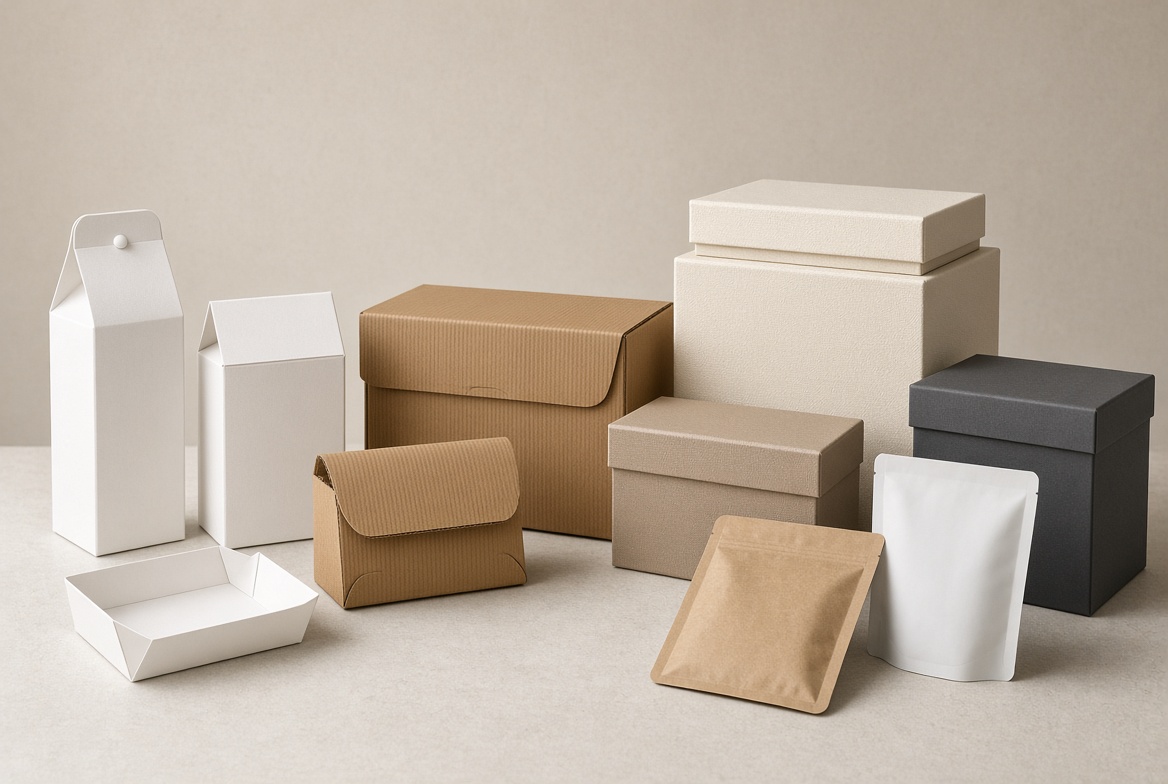
Quick Custom Packaging Cost Overview
The following ranges are practical starting points for commercial orders with standard custom printing. Actual pricing depends on the exact size, material, artwork, quantity, finishing, and shipping destination.
| Packaging Type |
Typical Cost Per Unit |
Best For |
Main Cost Drivers |
| Folding cartons |
$0.40–$2.50 |
Cosmetics, food, supplements, retail products |
Paperboard grade, print coverage, coatings, quantity |
| Corrugated mailer boxes |
$0.50–$5.00 |
E-commerce, subscription boxes, promotional kits |
Size, flute type, inside printing, shipping volume |
| Cardboard product boxes |
$0.70–$6.00 |
Electronics, accessories, household products |
Structure, insert needs, board thickness, printing |
| Custom rigid boxes |
$1.00–$20.00+ |
Jewelry, gifts, beauty, luxury goods |
Manual assembly, wrapped paper, magnets, inserts |
| Flexible pouches |
$0.08–$1.20 |
Snacks, coffee, supplements, small consumer goods |
Barrier layers, zipper type, material, print method |
Important: The same packaging style may have a dramatically different cost at 1,000 units versus 10,000 units. A box that costs $3.00 at a low quantity may fall to $1.50 or less at a higher volume because fixed setup costs are spread across more units.
What Determines Packaging Cost?
A professional quotation should break down the cost into several practical components. Understanding these variables will help you compare suppliers more accurately and avoid unexpected expenses later.
Material Selection and Board Grade
Material is usually one of the largest cost components. It affects not only the appearance of the packaging but also its strength, print quality, weight, and shipping performance.
Common materials include:
- SBS paperboard: Smooth, bright, premium white paperboard commonly used for cosmetics, pharmaceuticals, and retail cartons
- Kraft paperboard: Natural-looking material often selected for organic, handmade, or environmentally conscious brands
- Corrugated board: A stronger multi-layer material for mailer boxes, shipping boxes, and protective packaging
- Greyboard or chipboard: Thick board used as the base structure for rigid gift boxes
- Specialty paper: Textured, metallic, pearlescent, colored, or coated wrapping paper used for premium rigid packaging
A lightweight folding carton requires less material and normally runs efficiently on automated production lines. A rigid box requires thicker board, separate wrapping paper, manual positioning, gluing, and often hand assembly. That difference explains why a simple carton may cost less than $1 while a luxury magnetic box may cost $10 or more.
Box Size and Structural Design
Large packaging is not always expensive simply because it uses more paper. The structure also matters.
A box with a simple reverse tuck end design is faster to die-cut, fold, and glue than a complicated structure with multiple locking tabs, custom windows, layered sleeves, internal partitions, or unique opening mechanisms.
The biggest structural cost increases often come from:
- Custom die-cut shapes
- Large dimensions requiring more board area
- Deep boxes with high sidewalls
- Product-specific inserts
- Multiple separate packaging components
- Magnetic closures
- Drawer-style or shoulder-neck rigid box construction
- Window patching
- Hand-assembled presentation features
Before approving a design, ask whether the same user experience can be achieved with a simpler structure. In many cases, a small redesign can reduce material usage, assembly time, and freight volume at the same time.
Printing Coverage and Color Requirements
Printing cost depends on the printing method, the number of colors, artwork coverage, and the production quantity.
For small runs, digital printing may be appropriate because it reduces the need for printing plates. For larger production runs, offset printing is often more economical and can deliver highly consistent color reproduction. Corrugated packaging may also use flexographic printing for certain high-volume applications.
Factors that can increase print-related cost include:
- Full-color exterior printing
- Full-color interior printing
- Large areas of dark solid color
- Exact color matching
- Multiple artwork versions
- Metallic ink
- White ink on kraft or dark substrates
- Complex image-heavy artwork
- Special color requirements across multiple packaging components
A practical rule is to prioritize print where the customer sees it first. For example, full exterior printing and a one-color interior message may create a strong unboxing experience without the cost of detailed full-color printing on every internal surface.
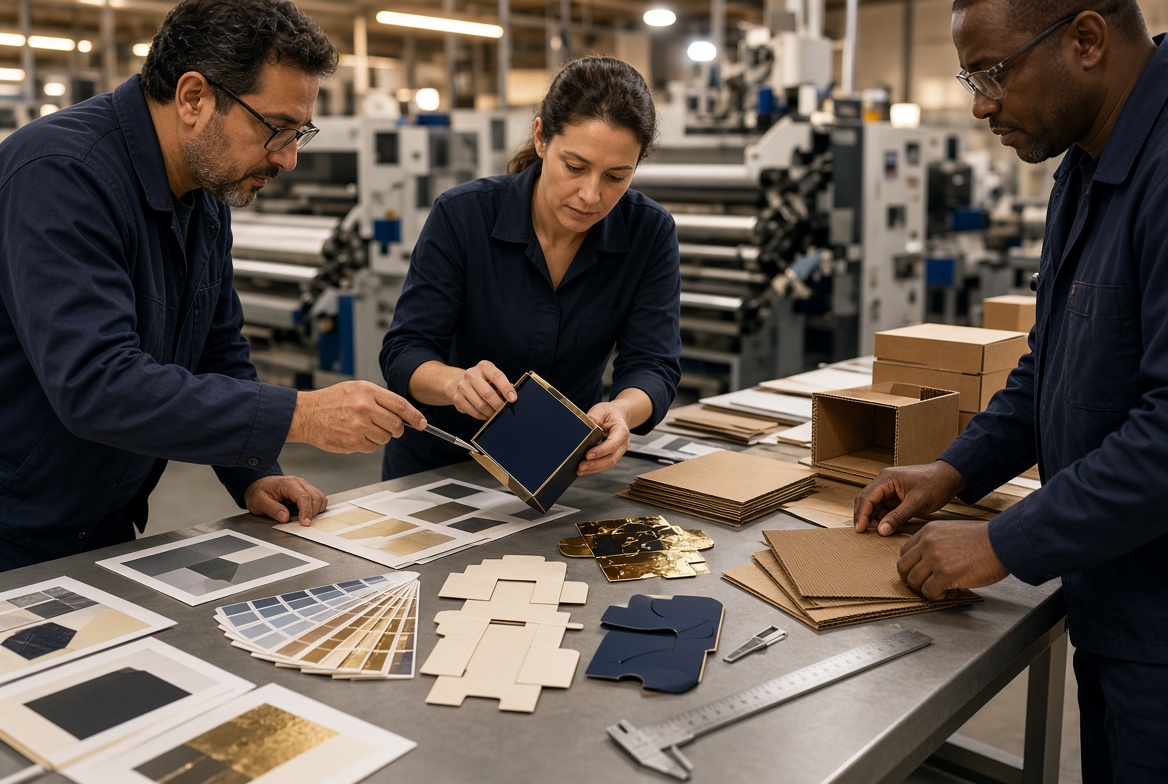
Finishing and Decorative Effects
Finishing can make packaging feel substantially more premium, but it should be used with intention. An expensive finish that does not support the brand story or retail price may reduce profitability without improving the customer experience.
Common finishing options include:
- Matte or gloss lamination
- Soft-touch lamination
- Spot UV coating
- Hot foil stamping
- Embossing or debossing
- Textured paper
- Metallic paper
- Holographic effects
- Raised varnish
- Die-cut windows
A single foil-stamped logo on a rigid box can create a more refined result than extensive foil coverage across the entire packaging surface. Likewise, a tactile paper can add perceived value without requiring multiple decorative processes.
Fixed Costs vs. Variable Costs
One of the most important concepts in custom packaging is the difference between fixed costs and variable costs.
Fixed Costs in Box Production
Fixed costs are expenses that must be paid before regular production can begin. They often remain similar whether the order is for 500 units or 50,000 units.
Typical fixed costs include:
- Custom cutting die creation
- Printing plates
- Machine setup
- Color calibration
- Sampling and prototype development
- Artwork preparation
- Special tooling for inserts or complex structures
For example, if tooling costs $800:
| Order Quantity |
Tooling Cost Per Unit |
| 1,000 units |
$0.80 |
| 5,000 units |
$0.16 |
| 10,000 units |
$0.08 |
| 50,000 units |
$0.016 |
This is why a low-volume order can look expensive even when the materials are relatively affordable.
Variable Costs in Packaging
Variable costs increase as more boxes are produced. They include the material, ink, labor, assembly, finishing, and packing required for every additional unit.
For example, if the board, printing, and assembly cost $1.10 per box, then producing 10,000 additional boxes adds approximately $11,000 in variable production cost before freight or other project-specific charges.
The best buying decision considers both cost categories. A larger order may reduce unit cost, but it is only worthwhile if the brand can use the inventory before designs, regulations, product dimensions, or marketing requirements change.
Estimated Pricing by Box Style
Folding Carton Cost
Folding cartons are one of the most cost-effective options for retail packaging because they are lightweight, printable, and shipped flat.
Typical price ranges include:
- Basic single-color folding carton: $0.40–$1.20 per unit
- Full-color custom retail carton: $0.80–$3.50 per unit
- Premium carton with coating or decorative finish: $2.00–$5.00 per unit
Folding cartons are widely used for skincare, candles, tea, supplements, electronics accessories, personal-care items, and small consumer products.
They are a strong choice when a brand needs shelf-ready presentation but does not require the heavy, gift-like feel of a rigid box.
Corrugated Mailer Box Cost
Corrugated mailer boxes are popular for online stores because they combine shipping protection with brand presentation. They can reduce the need for an outer shipping carton when the product and delivery route allow direct use.
Typical price ranges include:
- Plain kraft mailer box: $0.50–$1.00 per unit
- Custom printed exterior mailer: $1.00–$3.00 per unit
- Inside-and-outside printed mailer: $2.50–$5.00 per unit
The flute type, board strength, box dimensions, and print coverage all affect pricing. E-flute corrugated board is often selected when brands need a cleaner print surface and a more refined appearance. B-flute or stronger board options may be more suitable when greater transit protection is required.
Corrugated boxes remain the dominant format in e-commerce distribution, although many brands are increasingly using right-sized packaging to reduce empty space, material consumption, and shipping volume.
Rigid Box Cost
Rigid boxes are premium structures commonly used for high-value products, gifts, watches, jewelry, beauty collections, electronics, and luxury retail items.
Typical price ranges include:
- Small flip-top rigid box: $2.50–$6.00 per unit
- Medium drawer-style rigid box: $4.00–$12.00 per unit
- Luxury rigid box with magnetic closure and insert: $8.00–$25.00+ per unit
The final cost rises when the project includes magnets, ribbons, foam inserts, EVA trays, velvet lining, extensive foil stamping, full inside printing, or complex multi-piece construction.
Rigid boxes can be a powerful investment when the packaging is part of the product experience. However, they are not always the right choice. They occupy more shipping and warehouse space than flat-packed cartons, and their manual assembly requirements can increase production cost.
Flexible Pouch Cost
Flexible pouches are often used for food, coffee, pet products, supplements, cosmetics, and small consumable products.
Typical price ranges include:
- Small printed pouch: $0.08–$0.30 per unit
- Resealable medium pouch: $0.15–$0.60 per unit
- Large stand-up pouch with zipper and barrier layers: $0.40–$1.20 per unit
The price may increase for child-resistant closures, metallic films, clear windows, high-barrier layers, spouts, custom shapes, or special finishes.
How Much Should a Brand Spend on Packaging?
There is no universal packaging budget because products have different margins, customer expectations, sales channels, and positioning. However, a useful starting point is to evaluate packaging as a percentage of the product's retail price and contribution margin.
| Product Positioning |
Practical Packaging Budget Approach |
| Mass-market products |
Often target a lower packaging cost and prioritize efficiency, protection, and scalable production |
| Mid-market branded products |
Balance visual appeal, product protection, and cost control |
| Premium products |
Allocate more budget to tactile materials, stronger presentation, and thoughtful unboxing details |
| Luxury or gift products |
Treat packaging as part of the product experience and calculate whether it supports a higher perceived value and selling price |
For a $20 retail product, packaging in the $1–$3 range may be reasonable if it protects the product and communicates the brand effectively. For a $100 premium item, a $8–$20 box can be justified if the packaging contributes meaningfully to gifting, retail display, customer retention, and perceived value.
The key question is not, "What is the cheapest box?" It is, "What packaging investment helps this product sell, arrive safely, and remain profitable?"
A Better Way to Compare Supplier Quotes
Comparing quotations line by line is more reliable than comparing only the unit price. A quote that appears low may exclude freight, inserts, finishing, export cartons, sampling, or other necessary costs.
Use this seven-point checklist before placing an order:
1. Confirm the Incoterm. Ask whether the price is EXW, FOB, CIF, DDP, or another delivery term. The same box price can lead to a very different landed cost depending on who handles freight, customs, and local delivery.
2. Check material specifications. Compare paperboard grade, thickness, corrugated flute type, wrapping paper, insert material, and coating—not just the product photo.
3. Request a complete box size. Use internal dimensions in length × width × height format, then confirm the unit of measurement.
4. Clarify printing requirements. State whether printing is required on the outside, inside, bottom, insert, sleeve, or all components.
5. Separate one-time charges. Confirm costs for dies, plates, samples, setup, and artwork changes.
6. Calculate delivered cost. Add production, export cartons, freight, customs-related charges where applicable, and local warehousing expenses.
7. Ask for a production sample. A physical sample can reveal issues that a digital rendering cannot, including board stiffness, color variation, fit, opening experience, and product protection.
Reduce Packaging Cost Without Reducing Value
Reducing cost does not need to mean switching to inferior materials or removing all branded elements. The best savings usually come from smarter engineering.
Right-Size the Packaging
Oversized packaging consumes more material, creates more void space, and can increase freight charges. Right-sizing is especially important for e-commerce because shipping costs are closely tied to dimensional weight and carton volume.
Measure the product, necessary protective material, and required clearance before finalizing the dieline. Avoid adding empty space simply to make the box look larger.
Simplify Before Adding Finishes
Instead of combining foil, embossing, soft-touch lamination, spot UV, interior printing, and a complex insert, identify the one or two elements that best express the brand.
For example, a natural kraft folding carton with a clean black logo and one foil-stamped detail may feel more distinctive than a design that uses every available effect.
Order at the Right Volume
A higher quantity can lower the unit price, but excess inventory creates its own cost through storage, damaged stock, outdated artwork, and tied-up working capital.
A practical approach is to request pricing at three levels, such as 3,000, 5,000, and 10,000 units. Then compare the total cash requirement, unit cost reduction, forecast demand, and storage capacity.
Design for Flat Shipping
Whenever appropriate, select structures that ship flat. Folding cartons and some mailer boxes are normally more freight-efficient than pre-assembled rigid packaging.
This is particularly important for international buyers. A lower factory price can be offset by higher freight if the packaging occupies excessive cubic volume.
Use Inserts Strategically
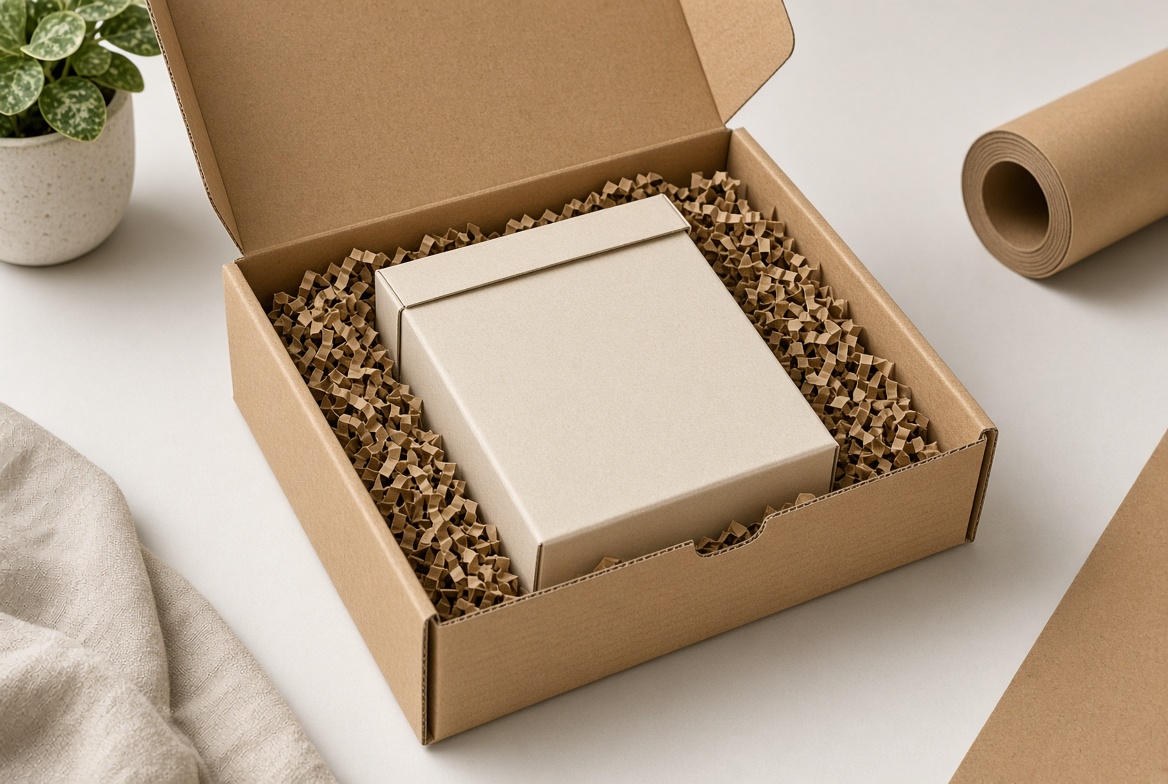
Custom foam and molded inserts offer strong presentation and protection, but they are not always necessary. Consider folded paperboard inserts, corrugated dividers, pulp trays, or carefully engineered internal structures when they can secure the product at a lower cost.
Packaging Choices That Support Long-Term Growth
Packaging is now influenced by more than appearance and unit cost. Brands are increasingly expected to consider material efficiency, recyclability claims, transportation volume, and the practical end-of-life route for packaging components.
The most credible packaging improvements often start with source reduction: using the appropriate amount of material, eliminating avoidable empty space, and avoiding unnecessary layers. Current retail and policy discussions increasingly evaluate packaging changes through factors such as virgin-material reduction, lightweighting, operational compatibility, scalability, and evidence for recyclability.
For buyers, this means that a better packaging brief should include more than dimensions and artwork. It should also identify:
- The product's fragility and transit risks
- Target sales channel: retail, e-commerce, wholesale, or gifting
- Desired unpacking experience
- Material preferences and disposal expectations
- Required certifications or compliance needs in the destination market
- Forecast order quantity and reorder frequency
- Maximum acceptable delivered cost per unit
A clear brief makes it easier for a packaging manufacturer to recommend the right structure from the beginning, rather than adding cost later to solve avoidable design problems.
Request a Detailed Packaging Quote
The most reliable custom packaging price comes from a complete specification. Share your box style, dimensions, material preference, print artwork, finishing requirements, quantity, insert needs, and delivery destination.
Shenzhen XingKun Packing Products Co., Ltd. can help evaluate folding cartons, corrugated mailer boxes, rigid gift boxes, product boxes, paper bags, labels, inserts, and other printed packaging components. With more than two decades of manufacturing experience and service experience across 30+ countries and regions, our team can help you balance visual impact, practical protection, production efficiency, and delivered cost.
Send us your packaging requirements today to receive a tailored quotation and professional structure recommendation for your product.
FAQs
How much does custom packaging cost for a small business?
For small orders, simple corrugated mailer boxes may cost approximately $0.40–$1.20 per unit, printed folding cartons may cost $1.00–$3.00 per unit, and custom rigid boxes may cost $4.00–$12.00 per unit. Small orders cost more per unit because tooling, setup, and material purchasing advantages are shared across fewer boxes.
Why are custom boxes more expensive than plain boxes?
Custom boxes may require new cutting dies, print setup, color control, specialized materials, extra finishing, inserts, and additional manual assembly. A plain stock box avoids many of these setup and customization costs.
Is ordering more packaging always cheaper?
Ordering more boxes usually lowers the unit price, but it is not always the best business decision. Excess stock requires storage space, ties up cash, and may become unusable if product sizes, branding, regulations, or designs change.
What information is needed for a packaging quotation?
Provide the box style, internal dimensions, quantity, material preference, print details, finishing requirements, insert needs, artwork files, and shipping destination. Photos of the product and reference packaging are also helpful for confirming fit and structure.
How can I lower my packaging cost without making it look cheap?
Use a right-sized box, simplify the structural design, select one high-impact finishing detail, reduce unnecessary print coverage, choose flat-shipping structures where possible, and compare multiple order quantities. These changes can lower cost while preserving a professional brand experience.
Should I choose a folding carton or a rigid box?
Choose a folding carton when you need a lightweight, printable, cost-efficient retail package. Choose a rigid box when your product has a premium price point, gifting value, or needs a more substantial presentation. The right choice depends on product value, sales channel, protection requirements, and margin.
Does freight affect custom packaging cost?
Yes. Freight can be a major part of the delivered cost, especially for bulky rigid boxes or oversized corrugated packaging. Always compare the final delivered cost rather than evaluating only the factory unit price.
References
- [Custom Box Makers: How Much Does Packaging Cost in 2026?]
- [Resource Recycling: E-Commerce Packaging Market Set for Steady Global Growth]
- [Sustainable Packaging Coalition: Policy]
- [Packaging Dive: Amazon and Walmart Seek Source Reduction Solutions From Suppliers]
- [Global Vision: Sustainable Packaging 101—A Guide to Eco-Friendly Design]
- [Expana: Packaging Costs in the US Rise Under Tariff Pressure]


